
Market Overview
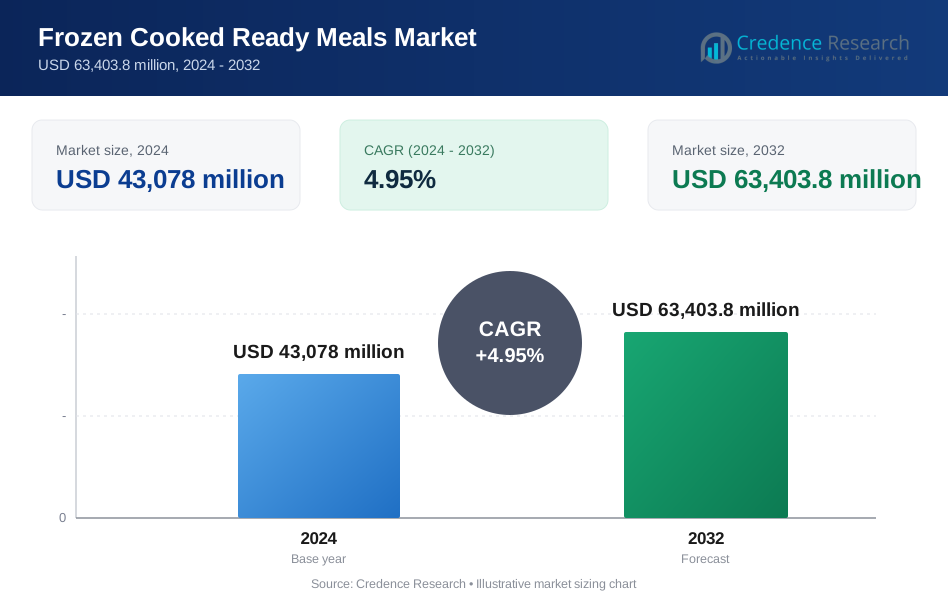
The Frozen Cooked Ready Meals Market size was valued at USD 43,078 million in 2024 and is expected to reach USD 63,403.8 million by 2032, growing at a CAGR of 4.95% during the forecast period.
| REPORT ATTRIBUTE | DETAILS |
|---|---|
| Historical Period | 2020-2023 |
| Base Year | 2024 |
| Forecast Period | 2025-2032 |
| Frozen Cooked Ready Meals Market Size 2024 | USD 43,078 million |
| Frozen Cooked Ready Meals Market, CAGR | 4.95% |
| Frozen Cooked Ready Meals Market Size 2032 | USD 63,403.8 million |
The Frozen Cooked Ready Meals market is driven by rising demand for convenient and time-saving food solutions. Busy lifestyles and urbanization push consumers toward ready-to-heat meals with balanced nutrition. Product innovation, including plant-based and clean-label options, attracts health-conscious buyers. Advanced freezing technologies enhance quality and shelf life, boosting consumer confidence. Expanding retail and online distribution channels improve accessibility. Growing interest in global cuisines and premium offerings further fuels market growth, making frozen ready meals a preferred choice for diverse consumer groups.
North America leads the Frozen Cooked Ready Meals market due to strong retail infrastructure and high demand for convenient meals. Europe follows with a preference for premium, clean-label frozen foods, while Asia Pacific shows rapid growth driven by urbanization and rising incomes. Latin America and the Middle East & Africa are expanding with improved cold chain networks and retail presence. Key players include Simplot Global Food, Pinnacle Foods, Kerry Group, and Nestlé, focusing on innovation, sustainable packaging, and diverse product offerings.
Market Insights
- The Frozen Cooked Ready Meals market was valued at USD 43,078 million in 2024 and is projected to reach USD 63,403.8 million by 2032, growing at a CAGR of 4.95%.
- Rising demand for convenient and quick-to-prepare meals is a major driver, supported by busy lifestyles and urbanization.
- Market trends include the launch of plant-based, clean-label, and premium meal options to attract health-conscious consumers.
- Leading players focus on product innovation, sustainable packaging, and partnerships with retailers and e-commerce platforms to strengthen their presence.
- Key restraints include consumer perception of frozen meals as processed food and high operational costs for maintaining cold chain infrastructure.
- North America leads due to strong retail and online networks, while Asia Pacific records the fastest growth with urbanization and improving cold storage facilities.
- Competitive pressure from private-label brands pushes companies to differentiate through quality, flavor innovation, and pricing strategies, while digital marketing drives consumer engagement.
Market Drivers
Rising Demand for Convenient and Time-Saving Food Solutions
The Frozen Cooked Ready Meals market is driven by the growing demand for quick meal options. Busy lifestyles encourage consumers to choose products that save cooking time. It offers pre-prepared meals that only require heating, appealing to working professionals and students. Growing urbanization supports higher consumption in cities where time is limited. Manufacturers focus on improving taste and variety to meet consumer expectations. Expanding product availability across retail and online platforms boosts adoption further.
- For instance, Cook Trading Ltd opened its 100th shop in Poynton, Cheshire in March 2024.
Expansion of Retail and E-Commerce Distribution Networks
A key driver is the widening distribution reach through supermarkets, hypermarkets, and online channels. Retailers allocate more shelf space to frozen cooked meals to capture rising demand. E-commerce platforms provide wider product access and convenient delivery options. It enables manufacturers to reach consumers in remote and urban areas equally. Strong cold chain infrastructure ensures product quality and freshness. Promotional discounts and bundled offers encourage repeat purchases and trial among new customers.
- For instance, Amy’s Kitchen offers a Veggie Loaf and Organic Mashed Potatoes meal in 10 oz size.
Product Innovation and Health-Focused Offerings
Innovation drives market growth through new flavors, cuisines, and packaging. Brands introduce healthier options with reduced sodium, preservatives, and clean labels to attract health-conscious buyers. It strengthens consumer trust and widens the target base. Plant-based and protein-rich meal launches meet shifting dietary preferences. Premiumization strategies target consumers willing to pay for higher quality meals. Functional ingredients and sustainable sourcing improve brand image and support differentiation.
Globalization of Food Preferences and Rising Disposable Income
Global exposure to diverse cuisines increases demand for international meal options. The Frozen Cooked Ready Meals market benefits from rising disposable incomes, enabling more frequent purchases. It encourages consumers to try premium and specialty dishes. Tourism and cultural exchange spread global food trends to new regions. Economic development in emerging markets expands the middle-class population seeking convenient food solutions. Growing focus on affordable yet high-quality meals sustains market momentum worldwide.
Market Trends
Growing Popularity of Plant-Based and Health-Oriented Meals
The Frozen Cooked Ready Meals market is seeing a surge in demand for plant-based and nutritious options. Consumers look for meals with clean labels, high protein, and low additives. It aligns with the rising focus on wellness and weight management. Manufacturers expand vegetarian, vegan, and gluten-free ranges to capture this audience. Functional ingredients like probiotics and superfoods enhance nutritional value. Premium health-focused offerings drive repeat purchases among health-conscious buyers.
- For instance, Cedarlane Foods offers several tray-meals with a serving size of 284 g, though the protein content varies by product, the Vegan Lasagna, served in a 10 oz (284 g) tray, contains 17 g of protein, while the Vegan Lentil Shepherd's Pie has 9 g of protein per 284 g serving.
Adoption of Advanced Freezing and Packaging Technologies
Technological innovation supports product quality and shelf-life improvement. Modern freezing techniques lock in flavor and nutrients more effectively. It reduces waste and maintains texture after reheating. Vacuum-sealed and microwave-ready packaging enhances convenience for consumers. Manufacturers invest in sustainable packaging solutions to meet environmental regulations. These upgrades create differentiation and boost consumer trust in product safety.
- For instance, CJ Schwan's (formerly Schwan's Food Service, a subsidiary of CJ CheilJedang) offers a range of quick-frozen egg rolls under its MINH® and other brands, the MINH® 3 oz Egg Rolls, which come in varieties such as pork and vegetable, chicken and vegetable, and breakfast, are designed for the foodservice industry, particularly convenience stores. These products are pre-cooked, quick-frozen to preserve freshness, and weigh 3.00 oz (approx. 85 g) each.
Rising Demand from Online Grocery and Delivery Platforms
Digital retail is reshaping food purchasing behavior globally. The Frozen Cooked Ready Meals market benefits from online ordering convenience and rapid delivery services. It allows consumers to explore wider meal choices not always available in stores. Subscription models and personalized meal kits gain popularity among busy households. E-commerce platforms use targeted promotions to increase category visibility. This shift strengthens direct-to-consumer relationships and drives recurring sales.
Global Expansion of Ethnic and Gourmet Meal Varieties
Consumers show interest in trying global cuisines from the comfort of home. Brands introduce gourmet, restaurant-style frozen meals to meet this demand. It brings diversity to product portfolios and encourages premium segment growth. Regional and fusion flavors cater to adventurous eaters seeking novelty. Collaborations with chefs and restaurants boost authenticity and appeal. Expanding menu options enhance brand positioning and improve competitiveness worldwide.
Market Challenges Analysis
Concerns Over Nutritional Quality and Perception of Processed Foods
The Frozen Cooked Ready Meals market faces challenges linked to consumer perception of processed food. Some buyers view frozen meals as less healthy compared to fresh alternatives. It creates hesitation among health-conscious consumers and limits adoption in premium segments. High sodium and preservative content in certain products raise nutritional concerns. Brands must reformulate recipes to offer clean-label and balanced options. Educating consumers about improved quality and safety standards is necessary to rebuild trust.
Supply Chain Complexity and Rising Operational Costs
Maintaining a strong cold chain is essential for product quality and compliance. The Frozen Cooked Ready Meals market encounters cost pressures from refrigeration, energy, and logistics. It increases production expenses and impacts profitability for manufacturers. Fluctuations in raw material prices create further uncertainty in pricing strategies. Supply disruptions or equipment failures can lead to product loss and waste. Investment in efficient distribution networks and resilient infrastructure is critical to manage these risks.
Market Opportunities
Expansion into Emerging Markets and Untapped Consumer Segments
The Frozen Cooked Ready Meals market holds strong potential in developing economies with growing middle-class populations. Rising urbanization and improving cold chain infrastructure create favorable conditions for market penetration. It enables wider access to affordable and premium meal options in new regions. Young consumers and working professionals are key target groups driving adoption. Localized flavors and region-specific recipes can boost acceptance and repeat purchases. Strategic partnerships with retailers and distributors help strengthen market presence.
Integration of Technology and Focus on Sustainable Solutions
Smart manufacturing and automation present opportunities to improve efficiency and reduce costs. The Frozen Cooked Ready Meals market can benefit from digital tools that optimize inventory and demand forecasting. It allows brands to minimize waste and maintain consistent supply. Eco-friendly packaging and responsible sourcing appeal to sustainability-focused consumers. Collaboration with food delivery platforms creates direct-to-consumer channels and boosts brand loyalty. Innovative marketing campaigns and product personalization further enhance growth prospects.
Market Segmentation Analysis:
By Product Type:
The Frozen Cooked Ready Meals market is divided into vegetarian and non-vegetarian meals. Non-vegetarian meals lead demand due to higher global consumption of meat-based dishes. It attracts consumers seeking protein-rich and balanced meals. Vegetarian meals are growing steadily with the rise of plant-based diets and flexitarian lifestyles. Brands innovate with meat alternatives and globally inspired vegetarian recipes to appeal to health-conscious buyers. This diversification supports stronger penetration across multiple consumer segments.
- For instance, Lean Cuisine presents vegetarian frozen ready meals all under 400 calories per meal.
By Packaging Type:
The market includes pouches, trays, bags, and boxes. Trays dominate sales due to their convenience and ability to maintain product integrity. It ensures portion control and easy reheating, making them popular for single-serve meals. Pouches are gaining traction due to lightweight design and reduced storage space requirements. Bags and boxes serve bulk and family-size meal categories, supporting value-driven purchases. Packaging innovations focus on sustainability, with recyclable and eco-friendly materials becoming a priority.
- For instance, Mosaic Foods offers a ready meal bowl sized 364 g with 27 g protein per serving.
By Distribution Channel:
Supermarkets and hypermarkets hold the largest share. Wide availability, strong brand presence, and attractive in-store promotions drive higher sales. It provides consumers with variety and competitive pricing, encouraging impulse purchases. Online retail is expanding rapidly due to convenience and home delivery options. Foodservice and restaurant partnerships introduce frozen cooked meals into menus, widening exposure. Convenience stores and specialty stores play an important role in catering to niche and local demands, creating a balanced distribution network for sustained growth.
Segments:
Based on Product Type:
- Vegetarian meals
- Non-vegetarian meals
Based on Packaging Type:
- Pouches
- Trays
- Bags
- Boxes
Based on Distribution Channel:
- Supermarkets/hypermarkets
- Convenience stores
- Online retail
- Specialty stores
- Foodservice/restaurants
Based on the Geography:
- North America
- U.S.
- Canada
- Mexico
- Europe
- UK
- France
- Germany
- Italy
- Spain
- Russia
- Belgium
- Netherlands
- Austria
- Sweden
- Poland
- Denmark
- Switzerland
- Rest of Europe
- Asia Pacific
- China
- Japan
- South Korea
- India
- Australia
- Thailand
- Indonesia
- Vietnam
- Malaysia
- Philippines
- Taiwan
- Rest of Asia Pacific
- Latin America
- Brazil
- Argentina
- Peru
- Chile
- Colombia
- Rest of Latin America
- Middle East
- UAE
- KSA
- Israel
- Turkey
- Iran
- Rest of Middle East
- Africa
- Egypt
- Nigeria
- Algeria
- Morocco
- Rest of Africa
Regional Analysis
North America
North America holds the largest share of the Frozen Cooked Ready Meals market, accounting for 34% of global revenue. Strong demand comes from busy working populations seeking convenient, ready-to-eat meal solutions. It benefits from widespread retail networks and highly developed cold chain infrastructure that ensure product availability. Major brands focus on product innovation, offering healthier and premium options to meet evolving preferences. Rising popularity of plant-based and clean-label frozen meals drives steady growth. The presence of leading manufacturers and aggressive promotional strategies further strengthen market dominance. Consumers in the United States and Canada increasingly rely on frozen ready meals as part of daily dining, supporting consistent volume sales across retail and online platforms.
Europe
Europe represents 29% of the Frozen Cooked Ready Meals market, driven by a strong tradition of frozen food consumption. Consumers in countries like the UK, Germany, and France prefer premium, high-quality frozen meals that deliver convenience and taste. It benefits from advanced freezing technologies and well-established distribution networks. The market sees steady demand from both supermarkets and online channels, with private-label offerings gaining ground. Clean-label and organic meal options are expanding to cater to health-conscious buyers. Growth is supported by the popularity of ethnic cuisines and chef-inspired dishes in frozen form. Sustainability initiatives and eco-friendly packaging gain traction, aligning with strict European regulations and consumer expectations.
Asia Pacific
Asia Pacific holds 21% of the market share and is the fastest-growing region. Rising urbanization and busy lifestyles in China, India, and Southeast Asia increase demand for convenient meal options. It benefits from rapid development of cold chain infrastructure and expanding modern retail outlets. Local players and global brands invest in product localization to suit regional tastes. Growing middle-class population and higher disposable incomes drive adoption of premium meal options. Online grocery platforms and food delivery services boost access to frozen cooked meals, especially in metropolitan cities. The market continues to expand with new product launches that introduce international flavors to a diverse consumer base.
Latin America
Latin America accounts for 9% of the Frozen Cooked Ready Meals market, supported by growing interest in convenience food. Brazil and Mexico are leading contributors due to strong retail presence and expanding e-commerce adoption. It experiences rising demand among working professionals and students seeking affordable, quick meal solutions. Manufacturers focus on introducing budget-friendly packs and family-sized portions to match local consumption habits. Increased awareness about food safety and quality enhances consumer trust in frozen meals. Expansion of supermarket chains in urban areas improves product availability and visibility. Promotional discounts and local flavor innovation help stimulate market penetration.
Middle East & Africa
The Middle East & Africa region contributes 7% to the global market share and shows gradual growth. Urbanization and rising disposable incomes create opportunities for frozen cooked meal adoption. It benefits from growing presence of international retail chains and improved cold storage facilities. Demand is strong for halal-certified and culturally relevant meal options. Tourism and expatriate populations influence demand for diverse cuisines and premium ready-meal offerings. Brands invest in marketing campaigns to build awareness and encourage trial. Continued infrastructure development and retail expansion are expected to boost sales in the coming years, unlocking new opportunities in untapped markets.
Key Player Analysis
- Simplot Global Food
- Pinnacle Foods
- Kerry Group
- FRoSTA
- Nestlé
- Conagra Brands
- General Mills
- Kraft Heinz
- Oetker
Competitive Analysis
The leading players in the Frozen Cooked Ready Meals market include Simplot Global Food, Pinnacle Foods, Kerry Group, FRoSTA, Nestlé, Conagra Brands, General Mills, Kraft Heinz, and Dr. Oetker. These companies dominate the market through extensive product portfolios, global distribution networks, and continuous innovation. They invest in research and development to introduce diverse meal options that cater to changing consumer preferences, including plant-based, low-sodium, and clean-label offerings. Strategic mergers and acquisitions strengthen their market share and allow entry into high-growth regions, while partnerships with retailers and e-commerce platforms enhance accessibility and visibility. Competition in the market is intense, encouraging brands to focus on differentiation through quality, taste, and sustainable packaging. Companies are leveraging advanced freezing technologies to ensure better nutrient retention and longer shelf life. Marketing efforts emphasize convenience, health benefits, and variety to capture a broad consumer base. The growth of private-label brands increases price competition, pushing established players to innovate and maintain premium positioning. Investments in cold chain infrastructure and efficient logistics remain critical to ensuring consistent product availability. By combining innovation, strong distribution, and consumer engagement, these companies maintain a competitive edge and continue to shape the future of the global market.
Recent Developments
- In 2025, Conagra Brands launched more than 50 new frozen foods including single-serve, multi-serve meals, vegetable side dishes, gluten-free and plant-based meals, expanding their frozen meal portfolio
- In 2025, Nestlé issued a recall for several Lean Cuisine and Stouffer’s frozen meals over potential foreign material (wood-like) contamination.
- In 2024, Kerry Group continuing beyond the horizon sustainability strategy, partnering with customers to drive growth and innovation in frozen meal solutions.
Report Coverage
The research report offers an in-depth analysis based on Product Type, Packaging Type, Distribution Channel and Geography. It details leading market players, providing an overview of their business, product offerings, investments, revenue streams, and key applications. Additionally, the report includes insights into the competitive environment, SWOT analysis, current market trends, as well as the primary drivers and constraints. Furthermore, it discusses various factors that have driven market expansion in recent years. The report also explores market dynamics, regulatory scenarios, and technological advancements that are shaping the industry. It assesses the impact of external factors and global economic changes on market growth. Lastly, it provides strategic recommendations for new entrants and established companies to navigate the complexities of the market.
Future Outlook
- The market is expected to grow steadily with rising demand for convenient meal solutions.
- Innovation in flavors and packaging will attract a wider consumer base.
- Plant-based and clean-label meals will gain higher adoption among health-conscious buyers.
- Online retail and quick-commerce platforms will strengthen product accessibility and sales.
- Brands will focus on sustainable packaging and eco-friendly production practices.
- Premium and gourmet frozen meals will appeal to consumers seeking restaurant-style experiences.
- Regional players will expand offerings with localized flavors to capture niche markets.
- Investments in advanced freezing technologies will improve product quality and shelf life.
- Strategic partnerships with foodservice providers will create new revenue streams.
- Marketing campaigns will emphasize nutrition, convenience, and affordability to boost consumption.
Request a Free Sample
Fill in your details and we'll send you a free sample report.
- Sample data tables & charts
- Research methodology
Need a Custom Version of This Report?
Tailor the scope, geography, or segments to your exact requirements.
- Custom geography or segment scope
- Direct access to our analyst team
Frequently Asked Questions
What is the current market size for Frozen Cooked Ready Meals market, and what is its projected size in 2032?
At what Compound Annual Growth Rate is the Frozen Cooked Ready Meals Market projected to grow between 2025 and 2032?
What are the primary factors fueling the growth of the Frozen Cooked Ready Meals market?
Who are the leading companies in the Frozen Cooked Ready Meals Market?
Which region commanded the largest share of the Frozen Cooked Ready Meals market in 2024?
Table of Content
Chapter 1. Report Introduction
- 1.1 Report Description & Purpose
- 1.1.1 Report Title & Market Definition
- 1.1.2 Unique Selling Propositions (USP) & Key Differentiators
- 1.1.3 Value Proposition for Stakeholders
- 1.2 Research Objectives
- 1.2.1 Market Sizing Objectives (Volume & Revenue)
- 1.2.2 Segmentation Objectives
- 1.2.3 Competitive Intelligence Objectives
- 1.2.4 Forecast & Scenario Objectives
- 1.3 Report Scope
- 1.3.1 Frozen Cooked Ready Meals Scope – Types & Subtypes Covered
- 1.3.2 Geographic Scope – Regions & Countries Covered
- 1.3.3 Historical Period, Base Year & Forecast Period (2024; forecast to 2032)
- 1.3.4 Inclusions & Exclusions
- 1.4 HS Code & Classification Framework
- 1.5 Currency, Units & Pricing Basis
- 1.6 Target Stakeholders
- 1.7 Limitations & Assumptions
Chapter 2. Executive Summary
- 2.1 Global Frozen Cooked Ready Meals Market Snapshot
- 2.1.1 Market Size – Historical (2024) & Forecast (2024-2032) (2024: USD 43,078 million → 2032: USD 63,403.8 million)
- 2.1.2 Volume & Revenue – Global Totals
- 2.1.3 Key Market Highlights – Top Five Facts
- 2.2 Frozen Cooked Ready Meals Market Segmentation Snapshot
- 2.2.1 Market Split by Region – 2024 vs. 2032
- 2.3 Competitive Snapshot
- 2.3.1 Top 10 Players by Revenue Share – 2024
- 2.3.2 Top 10 Players by Volume Share – 2024
- 2.3.3 Recent Strategic Developments (18-Month Summary)
- 2.4 Key Investment Highlights & Strategic Conclusions
Chapter 3. Frozen Cooked Ready Meals Market Dynamics & Industry Analysis
- 3.1 Market Overview & Context
- 3.1.1 Frozen Cooked Ready Meals Market Position in the Broader Automotive Value Chain
- 3.1.2 OEM vs. Replacement Market Dynamics
- 3.1.3 Market Maturity & Development Stage by Region
- 3.2 Frozen Cooked Ready Meals Market Drivers
- 3.3 Frozen Cooked Ready Meals Market Restraints & Challenges
- 3.4 Frozen Cooked Ready Meals Market Opportunities
- 3.5 Porter's Five Forces Analysis
- 3.5.1 Threat of New Entrants
- 3.5.2 Bargaining Power of Suppliers
- 3.5.3 Bargaining Power of Buyers
- 3.5.4 Threat of Substitutes
- 3.5.5 Competitive Rivalry – Intensity Assessment
- 3.6 Frozen Cooked Ready Meals Value Chain Analysis
- 3.6.1 Upstream – Raw Material/Input Suppliers
- 3.6.1.1 Raw Material/Input 1
- 3.6.1.2 Raw Material/Input 2
- 3.6.1.3 Raw Material/Input 3
- 3.6.2 Midstream – Production/Manufacturing/Service Delivery
- 3.6.2.1 Production/Process Overview
- 3.6.2.2 Key Facility Locations & Capacity by Manufacturer
- 3.6.3 Downstream – Distribution & End Consumer
- 3.6.3.1 Primary Channel – B2B/OEM
- 3.6.3.2 Secondary Channels – Dealer, Retail, Online, Direct
- 3.6.4 Value Chain Profitability Analysis
- 3.6.1 Upstream – Raw Material/Input Suppliers
- 3.7 PESTEL Analysis
- 3.7.1 Political Factors
- 3.7.2 Economic Factors
- 3.7.3 Social Factors
- 3.7.4 Technological Factors
- 3.7.5 Environmental Factors
- 3.7.6 Legal Factors
- 3.8 Frozen Cooked Ready Meals Supply Chain Analysis
- 3.8.1 Raw Material/Input Supply Risk Assessment
- 3.8.2 Manufacturing Concentration Risk (Geographic Exposure)
- 3.8.3 Trade Disruption Impact Analysis
- 3.9 Regulatory & Policy Landscape
Note: The regulatory and policy landscape section covers regulations based on their applicability to the market, Frozen Cooked Ready Meals category, geography, and scope of the study. Only regulatory frameworks with a material impact on operations, compliance, trade, sustainability, or market access are analyzed in detail.
Chapter 4. Key Investment Pockets & Opportunity Analysis
- 4.1 Frozen Cooked Ready Meals Market Attractiveness Analysis
- 4.1.1 By Region – Investment Attractiveness Matrix (Volume × CAGR)
- 4.2 Absolute Revenue Growth Opportunity
- 4.2.1 By Region – Absolute USD Growth Through 2032
- 4.3 Incremental Volume Opportunity
- 4.3.1 By Region – Incremental Volume Through 2032
- 4.3.2 Segment – Incremental Volume
- 4.4 Emerging Submarket Opportunity Deep Dive (Subject to Applicability)
- 4.5 Emerging Market Opportunity Scorecards
- 4.5.1 United States
- 4.5.2 Europe
- 4.5.3 Asia
- 4.5.4 Middle East & Africa
Note: Emerging Market Opportunity Scorecards will be included based on relevance and strategic importance. Regions listed are indicative and may vary depending on data availability and market dynamics.
Chapter 5. Frozen Cooked Ready Meals Import-Export Analysis & Trade Flows
- 5.1 Global Trade Overview
- 5.1.1 Global Export Value by Country (2024)
- 5.1.2 Global Export Volume by Country (2024)
- 5.1.3 Global Import Value by Country (2024)
- 5.1.4 Global Import Volume by Country (2024)
- 5.1.5 Net Trade Balance by Country (2024)
- 5.2 Export Analysis – Segment
- 5.2.1 Type 1 (HS Code)
- 5.2.2 Type 2 (HS Code)
- 5.2.3 Type 3 (HS Code)
- 5.2.4 Type 4 (HS Code)
- 5.2.5 Type 5 (HS Code)
- 5.3 Import Analysis – Segment
- 5.3.1 Type 1 (HS Code)
- 5.3.2 Type 2 (HS Code)
- 5.3.3 Type 3 (HS Code)
- 5.3.4 Type 4 (HS Code)
- 5.3.5 Type 5 (HS Code)
- 5.4 Average Unit Trade Prices
- 5.4.1 Average Export Price – Segment & Country
- 5.4.2 Average Import Price – Segment & Source Country
- 5.4.3 Price Trends (2024)
- 5.5 Key Trade Route Analysis
- 5.5.1 Trade Route 1
- 5.5.2 Trade Route 2
- 5.5.3 Trade Route 3
- 5.5.4 Trade Route 4
- 5.5.5 Trade Route 5
- 5.6 Trade Policy Impact Assessment
- 5.6.1 US Anti-Dumping & Section 301 Tariffs
- 5.6.2 EU Customs Union Impact
- 5.6.3 Major Free Trade Agreements
- 5.6.4 USMCA Rules of Origin
Note: Trade policy analysis will be included only where relevant to the Frozen Cooked Ready Meals market.
Chapter 6. Competitive Landscape & Company Benchmarking
- 6.1 Frozen Cooked Ready Meals Market Concentration & Structure
- 6.1.1 Herfindahl-Hirschman Index (HHI) – vs. 2024
- 6.1.2 Tier 1, Tier 2 & Tier 3 Market Structure
- 6.1.3 Global, Regional & Local Player Dynamics
- 6.2 Frozen Cooked Ready Meals Market Share Analysis – 2024
- 6.2.1 Global Revenue Share by Company
- 6.2.2 Global Volume Share by Company
- 6.2.3 Regional Revenue Share
- 6.2.4 Market Share Evolution ( vs. 2024)
- 6.2.5 OEM Segment Share by Company
- 6.2.6 Replacement Segment Share by Company
- 6.3 Production/Delivery Capacity & Facility Analysis
- 6.3.1 Global Installed Capacity
- 6.3.2 Capacity Utilization Rates
- 6.3.3 Production/Output Volume
- 6.3.4 Facility Locations & Capacity Map
- 6.3.5 Planned Capacity Additions
- 6.4 Frozen Cooked Ready Meals Competitive Benchmarking Matrix
- 6.4.1 Revenue, Volume, CAGR & Profitability Comparison
- 6.4.2 Channel Revenue Mix
- 6.4.3 Geographic Revenue Exposure
- 6.4.4 R&D Intensity
- 6.4.5 Sustainability Maturity
- 6.5 Strategic Developments in Frozen Cooked Ready Meals (Last 24 Months)
- 6.5.1 Mergers, Acquisitions & Divestments
- 6.5.2 New Frozen Cooked Ready Meals Launches
- 6.5.3 Facility Expansions
- 6.5.4 Strategic Alliances, Joint Ventures & Partnerships
- 6.5.5 Distribution Expansion & Market Entry
- 6.5.6 Sustainability & ESG Initiatives
- 6.6 Competitive Strategy Mapping
- 6.6.1 Leader, Challenger, Follower & Niche Classification
- 6.6.2 Pricing Strategy Comparison
- 6.6.3 Channel Strategy Matrix
Note: Strategic developments are included based on their materiality and the availability of reliable information.
Chapter 7. Global Frozen Cooked Ready Meals Market – By Distribution Channel
- 7.1 Segment Overview
- 7.1.1 Volume & Revenue Split by Channel (2024 & 2032)
- 7.1.2 Channel Mix Evolution (2024-2032)
Chapter 8. Regional Market Analysis – Global Overview
- 8.1 Global Regional Overview
- 8.1.1 Regional Volume Share
- 8.1.2 Regional Revenue Share
- 8.1.3 Regional Volume by Region
- 8.1.4 Regional Revenue by Region
- 8.1.5 Regional Forecast Through 2032
- 8.2 Cross-Regional Segment Analysis
- 8.2.1 By Distribution Channel
- 8.2.2 By Brand/Price Tier
Chapter 9. North America Frozen Cooked Ready Meals Market
- 9.1 United States
- 9.2 Canada
- 9.3 Mexico
Chapter 10. Europe Frozen Cooked Ready Meals Market
- 10.1 Germany
- 10.2 France
- 10.3 Italy
- 10.4 United Kingdom
- 10.5 Spain
- 10.6 Poland
- 10.7 Russia
- 10.8 Netherlands
- 10.9 Belgium
- 10.10 Sweden
- 10.11 Denmark
- 10.12 Norway
- 10.13 Rest of Europe
Chapter 11. Asia Pacific Frozen Cooked Ready Meals Market
- 11.1 China
- 11.2 India
- 11.3 Japan
- 11.4 South Korea
- 11.5 Thailand
- 11.6 Indonesia
- 11.7 Vietnam
- 11.8 Malaysia
- 11.9 Australia
- 11.10 Rest of Asia Pacific
Chapter 12. Latin America Frozen Cooked Ready Meals Market
- 12.1 Brazil
- 12.2 Argentina
- 12.3 Colombia
- 12.4 Chile
- 12.5 Rest of Latin America
Chapter 13. Middle East Frozen Cooked Ready Meals Market
- 13.1 Saudi Arabia
- 13.2 United Arab Emirates
- 13.3 Turkey
- 13.4 Israel
- 13.5 Iran
- 13.6 Rest of the Middle East
Chapter 14. Africa Frozen Cooked Ready Meals Market
- 14.1 South Africa
- 14.2 Egypt
- 14.3 Nigeria
- 14.4 Morocco
- 14.5 Rest of Africa
Chapter 15. Frozen Cooked Ready Meals Company Profiles
- 15.1 [Company 01]
- 15.1.1 Company Overview
- 15.1.2 Key Management Personnel
- 15.1.3 Products & Services Portfolio
- 15.1.4 Financial Performance
- 15.1.5 Key Market Focus & Geographic Presence
- 15.1.6 Recent Developments & Strategic Initiatives
Note: The company profile list is preliminary and may change based on research findings, market developments, data availability, and client requirements.
Chapter 16. Appendices
- Appendix A – List of Abbreviations & Acronyms
- Appendix B – Industry Classification Code Reference – Full Series
- Appendix C – Production & Capacity Data Tables
- Appendix D – End-Use & Demand Base Tables
- Appendix E – Consumption & Replacement Rate Assumptions
- Appendix F – ASP Reference Tables
- Appendix G – Manufacturing & Facility Database
- Appendix H – Import-Export Data Tables
- Appendix I – Regulatory Summary Tables
- Appendix J – Primary Research Participant List (Anonymized)
- Appendix K – Primary Research Questionnaire Framework
- Appendix L – Data Sources & Bibliography
- Appendix M – Market Size Divergence & Source Comparison
Chapter 17. Research Methodology
- 17.1 Research Framework & Philosophy
- 17.2 Secondary Research – Sources, Hierarchy & Data Extraction
- 17.3 Data Modeling – Bottom-Up & Top-Down Market Sizing
- 17.4 Primary Research – Stakeholder Framework, LOI & Sample Sizes
- 17.5 Forecast Methodology – Regression, Scenario & Sensitivity Analysis
- 17.6 Quality Control – Four-Layer Validation Framework
- 17.7 Limitations & Standard Assumptions
- 17.8 Disclaimer
