
| REPORT ATTRIBUTE | DETAILS |
|---|---|
| Historical Period | 2020-2023 |
| Base Year | 2024 |
| Forecast Period | 2025-2032 |
| Fruit Jam, Jelly, and Preserves Market Size 2024 | USD 5,650 million |
| Fruit Jam, Jelly, and Preserves Market, CAGR | 4.3% |
| Fruit Jam, Jelly, and Preserves Market Size 2032 | USD 7,913 million |
Market Overview
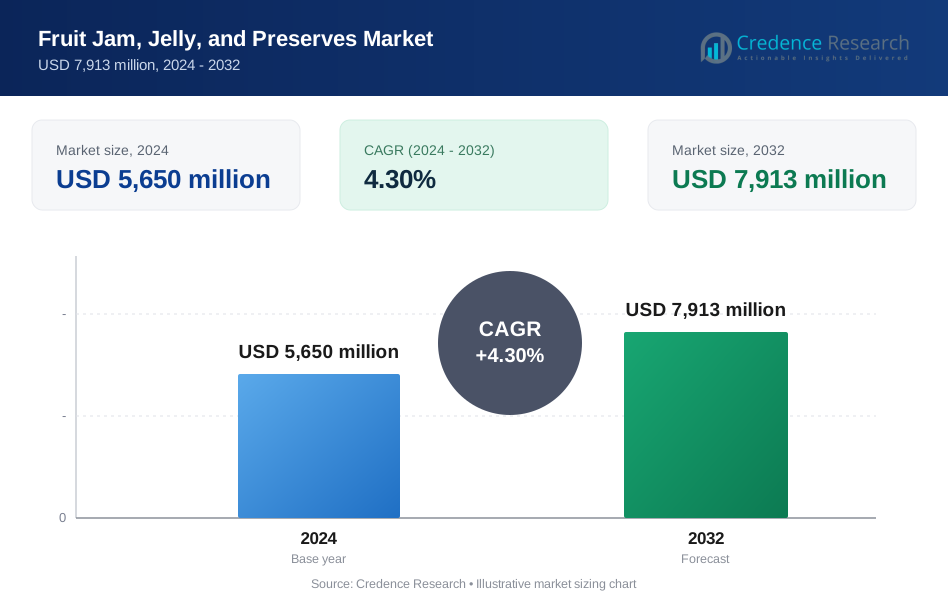
Fruit Jam, Jelly, and Preserves Market size was valued at USD 5,650 million in 2024 and is anticipated to reach USD 7,913 million by 2032, at a CAGR of 4.3% during the forecast period (2024-2032).
The growth of the Fruit Jam, Jelly, and Preserves Market is primarily driven by increasing consumer preference for convenient breakfast options and the rising popularity of natural and organic food products. Health-conscious consumers are increasingly opting for low-sugar and preservative-free spreads, prompting manufacturers to innovate with clean-label ingredients. Additionally, the expanding foodservice industry and growing demand from the bakery and confectionery sectors are boosting market growth. Rising disposable incomes and urbanization in emerging economies further support product adoption. Key market trends include the introduction of exotic fruit flavors, premium and artisanal product lines, and sustainable packaging solutions. Manufacturers are also leveraging e-commerce platforms to reach a broader customer base and enhance brand visibility. The combination of evolving consumer preferences and product diversification continues to create new growth opportunities, positioning the market for steady expansion over the forecast period.
The Fruit Jam, Jelly, and Preserves Market spans several key regions, including North America, Europe, and Asia Pacific, each demonstrating unique consumption patterns and growth drivers. North America leads with strong demand for premium, organic, and low-sugar products, supported by advanced retail infrastructure. Europe follows closely, where traditional breakfast cultures and growing health consciousness drive steady consumption. Asia Pacific presents the fastest growth potential, fueled by rising urbanization, disposable incomes, and the adoption of Western-style eating habits. Major players in the market include The J.M. Smucker Company, Unilever PLC, Ferrero Group, Conagra Brands, Inc., and B&G Foods, Inc., among others. These companies focus on product innovation, expanding their flavor portfolios, and enhancing clean-label offerings to meet evolving consumer preferences. They also invest in sustainable packaging and regional market penetration strategies to strengthen their competitive positions globally. The combination of established multinationals and emerging regional players shapes the dynamic competitive landscape.
Market Insights
- The Fruit Jam, Jelly, and Preserves Market was valued at USD 5,650 million in 2024 and is projected to reach USD 7,913 million by 2032, growing at a CAGR of 4.3% during the forecast period.
- Rising consumer preference for natural and organic fruit spreads drives the market, supported by increasing health awareness and demand for clean-label products.
- Flavor innovation remains a key trend, with manufacturers introducing exotic, regional, and limited-edition fruit blends to attract diverse customer segments.
- The market faces challenges due to growing concerns over high sugar content and the use of artificial additives, pressuring producers to reformulate products while maintaining taste and shelf life.
- Supply chain volatility and fluctuating raw material prices, especially for fruits and packaging, impact production costs and product pricing strategies.
- North America holds the largest market share, driven by high demand for premium and artisanal spreads, followed by Europe, which emphasizes organic and sustainable products. Asia Pacific is the fastest-growing region, fueled by rising disposable incomes and changing dietary habits.
- Key players focus on expanding their product portfolios with health-oriented and functional options, leveraging e-commerce and modern retail channels to reach a broader consumer base globally.
Market Drivers
Rising Demand for Convenient and Ready-to-Eat Food Products
Busy lifestyles and shifting dietary habits have led consumers to seek quick and hassle-free meal options. This change in consumer behavior significantly contributes to the growth of the Fruit Jam, Jelly, and Preserves Market. Spreads are a staple in breakfasts and snacks, offering both taste and convenience without the need for preparation. The product’s long shelf life and easy storage further support its popularity among households and foodservice providers. It is widely used as a topping or filling in bakery items, enhancing versatility. Consumers continue to incorporate these products into daily routines, fueling consistent market demand.
- For instance, the increasing preference for convenient breakfast options has significantly boosted demand for fruit spreads, with consumers favoring ready-to-eat products.
Growing Popularity of Natural, Organic, and Clean-Label Ingredients
Consumers are increasingly focusing on health and wellness, prompting a shift toward natural and organic food options. The Fruit Jam, Jelly, and Preserves Market benefits from this trend as manufacturers respond with cleaner formulations. Products made with real fruit, reduced sugar, and no artificial preservatives or additives are gaining momentum. It aligns well with the expectations of label-conscious buyers seeking transparency and nutritional value. Brands that emphasize organic certification and sustainably sourced ingredients attract a wider audience. The market is expanding its footprint through health-focused innovation.
- For instance, the demand for organic and sugar-free fruit spreads has risen due to growing health consciousness among consumers.
Expanding Application in Bakery, Dairy, and Foodservice Sectors
Wider usage across various food categories has boosted the visibility and consumption of jams, jellies, and preserves. The Fruit Jam, Jelly, and Preserves Market is experiencing growth through its integration into baked goods, dairy products, and desserts. Foodservice outlets and cafes regularly use these products in menu items, from pastries to smoothies. It enhances flavor, texture, and visual appeal, supporting repeat purchases and menu innovation. Manufacturers are developing industry-specific packaging formats to cater to commercial buyers. This cross-industry demand contributes significantly to market resilience.
Rising Urbanization and Disposable Income in Emerging Economies
Economic development and increasing urbanization across Asia-Pacific, Latin America, and parts of Africa are opening new avenues for market expansion. The Fruit Jam, Jelly, and Preserves Market is gaining traction among urban households with growing purchasing power and evolving food preferences. It fits well into modern lifestyles characterized by smaller households and greater reliance on packaged foods. Retail penetration is improving in tier-2 and tier-3 cities, supported by better cold chain infrastructure. Rising awareness of global food trends also plays a role in increasing consumption. These factors create a favorable environment for long-term market growth.
Market Trends
Expansion of E-commerce and Direct-to-Consumer Sales Channels
Online retail continues to reshape how consumers purchase pantry staples. The Fruit Jam, Jelly, and Preserves Market is expanding its presence through e-commerce platforms, subscription boxes, and brand-owned websites. It enables producers to reach a broader audience while gathering valuable consumer data for targeted marketing. Online channels also support product education and brand storytelling through digital content. Specialty brands use these platforms to highlight their ingredient sourcing and manufacturing processes. The digital shift is driving innovation in packaging and fulfillment strategies.
- For instance, e-commerce sales of fruit jams, jellies, and preserves have surged, contributing to a 30% increase in total market revenue over the last two years.
Emergence of Exotic and Regionally-Inspired Flavors to Attract Diverse Consumers
Consumer preferences are shifting toward unique and regionally inspired flavor profiles. The Fruit Jam, Jelly, and Preserves Market is responding with a wide range of offerings that include exotic fruits such as mango, passion fruit, guava, and mixed berry blends. It allows brands to cater to multicultural palates and differentiate their products in a competitive landscape. Limited-edition seasonal flavors are also gaining attention in premium and specialty food segments. These innovations appeal to both younger consumers and global food enthusiasts seeking new taste experiences. Flavor diversification supports repeat purchases and strengthens brand loyalty.
- For instance, the growing trend of premiumization in the food industry has led to increased demand for exotic fruit spreads, including mango, passion fruit, and guava blends.
Growing Focus on Premium, Artisanal, and Gourmet Product Lines
Premiumization is influencing consumer choices across the packaged food industry. The Fruit Jam, Jelly, and Preserves Market is seeing a rise in demand for artisanal products made in small batches with high fruit content and minimal processing. It reflects a broader consumer desire for quality over quantity and a willingness to pay more for authentic products. These offerings often feature glass packaging, craft labels, and storytelling elements that emphasize origin and production methods. Brands use these cues to appeal to health-conscious and environmentally aware buyers. The trend is reshaping shelf presentation and influencing pricing strategies.
Increased Interest in Low-Sugar and Functional Product Varieties
Health trends are influencing product innovation across the spreadable fruit segment. The Fruit Jam, Jelly, and Preserves Market is evolving with a stronger focus on low-sugar, reduced-calorie, and fortified options. It meets the needs of diabetics, fitness-conscious individuals, and aging populations seeking better nutrition. Brands are introducing products made with natural sweeteners like stevia and monk fruit to retain taste while reducing sugar content. Functional ingredients such as chia seeds, probiotics, and added fiber are also being introduced. These value-added formulations are reshaping consumer expectations and expanding product lines.
Market Challenges Analysis
Rising Health Concerns Related to Sugar Content and Artificial Additives
Increasing awareness about the health impacts of high sugar intake poses a significant challenge to the Fruit Jam, Jelly, and Preserves Market. Consumers are more cautious about consuming products with high fructose corn syrup, artificial preservatives, and synthetic flavor enhancers. It pressures manufacturers to reformulate existing products to align with clean-label expectations while maintaining taste and shelf life. Reformulation often increases production costs and may impact product consistency. Regulatory bodies are also tightening guidelines on sugar content and ingredient labeling, adding complexity to product development. These challenges can limit the market appeal among health-focused consumers and slow down sales growth in certain demographics.
Fluctuating Raw Material Prices and Supply Chain Constraints
Volatility in the prices of raw materials such as fruits, sugar, and packaging materials impacts profit margins across the Fruit Jam, Jelly, and Preserves Market. It becomes difficult for producers to maintain competitive pricing while ensuring consistent product quality. Seasonal availability of fruits and climate-related disruptions affect the supply chain, creating procurement challenges for manufacturers. Transportation and storage costs also increase due to the perishable nature of ingredients. It can lead to production delays or force reliance on fruit concentrates that may not meet consumer expectations for freshness. These factors complicate inventory planning and can hinder timely market delivery.
- For instance, seasonal availability of fruits and climate-related disruptions have led to procurement challenges for manufacturers, affecting production schedules.
Market Opportunities
Expansion into Emerging Markets with Rising Middle-Class Population
Rapid urbanization and rising disposable incomes in emerging economies present strong growth prospects for the Fruit Jam, Jelly, and Preserves Market. It can gain significant traction in regions where Western-style breakfasts and packaged food consumption are on the rise. Increasing retail infrastructure and better cold chain logistics support product availability across supermarkets and convenience stores. Manufacturers can tap into regional flavor preferences to build local relevance and brand affinity. Smaller, affordable packaging formats can help attract price-sensitive consumers without compromising quality. The market has the potential to scale rapidly in tier-2 and tier-3 cities where food habits are evolving.
Innovation in Health-Oriented and Functional Product Lines
Growing consumer interest in health and wellness opens new avenues for product innovation. The Fruit Jam, Jelly, and Preserves Market can capitalize on demand for low-sugar, organic, and fortified options by developing functional spreads with added nutrients. It allows brands to target niche segments such as diabetic, fitness, and aging populations. Using natural sweeteners and superfruit ingredients can enhance nutritional value while retaining flavor appeal. Companies can also explore probiotic-infused spreads to meet rising interest in gut health. These offerings can command premium pricing and strengthen brand positioning in competitive markets.
Market Segmentation Analysis:
By Type:
Based on type, the market is segmented into jam, jelly, and preserves. Jam holds the largest share due to its widespread use and high fruit content, offering a balance between taste and texture. Jelly appeals to consumers seeking a smoother consistency, while preserves attract those preferring chunkier fruit pieces and a more natural appeal. The Fruit Jam, Jelly, and Preserves Market continues to see innovation across all three segments to cater to varied consumer preferences.
By Packaging:
By packaging, glass jars remain the preferred choice due to their premium feel and recyclability. Plastic jars offer cost efficiency and durability, making them suitable for mass-market products. Squeezable pouches are gaining popularity among younger consumers and families due to ease of use and reduced mess. It helps brands target convenience-focused buyers in both urban and suburban markets.
By Distribution Channel:
Based on distribution channel, supermarkets and hypermarkets dominate due to wide product availability and consumer trust. Convenience stores support impulse purchases in urban areas with limited time for grocery shopping. Online retail is emerging as a strong channel, offering access to niche brands and direct-to-consumer engagement.
Segments:
Based on Type:
- Jam
- Jelly
- Preserves
Based on Packaging:
- Glass Jars
- Plastic Jars
- Squeezable Pouches
Based on Distribution Channel:
- Supermarkets/Hypermarkets
- Convenience Stores
- Online Retail
Based on Sweetener Type:
- Sugar
- Artificial Sweeteners
- Natural Sweeteners
Based on the Geography:
- North America
- U.S.
- Canada
- Mexico
- Europe
- UK
- France
- Germany
- Italy
- Spain
- Russia
- Belgium
- Netherlands
- Austria
- Sweden
- Poland
- Denmark
- Switzerland
- Rest of Europe
- Asia Pacific
- China
- Japan
- South Korea
- India
- Australia
- Thailand
- Indonesia
- Vietnam
- Malaysia
- Philippines
- Taiwan
- Rest of Asia Pacific
- Latin America
- Brazil
- Argentina
- Peru
- Chile
- Colombia
- Rest of Latin America
- Middle East
- UAE
- KSA
- Israel
- Turkey
- Iran
- Rest of Middle East
- Africa
- Egypt
- Nigeria
- Algeria
- Morocco
- Rest of Africa
Regional Analysis
North America
North America dominates the Fruit Jam, Jelly, and Preserves Market with a market share of approximately 31% in 2024. High consumer demand for packaged and premium breakfast spreads continues to support regional growth. The United States accounts for the majority of sales in this region, driven by product variety, brand familiarity, and strong distribution networks. It benefits from rising demand for low-sugar, organic, and artisanal options that align with evolving health preferences. Glass packaging and clean-label formulations are helping premium brands expand shelf presence. Canada contributes to regional growth through niche imports and growing interest in functional fruit-based products. The market remains competitive, with brands leveraging innovation to retain customer loyalty.
Europe
Europe holds the second-largest share, contributing around 28% of the global Fruit Jam, Jelly, and Preserves Market in 2024. The region’s long-standing breakfast culture and preference for fruit spreads maintain steady demand. It continues to adapt to changing consumer priorities by offering eco-conscious packaging, natural sweeteners, and regional fruit blends. Countries like Germany, the UK, and France lead consumption, with domestic brands focusing on tradition and origin-based marketing. Supermarkets and discount retail chains push sales through both branded and private-label products. Regulatory pressure on sugar content and additives is also shaping reformulation strategies. The regional market remains stable, supported by brand heritage and innovation in healthy alternatives.
Asia Pacific
Asia Pacific is the fastest-growing region and holds a market share of about 22% in 2024, with significant expansion expected through 2032. Urbanization, rising disposable income, and changing dietary patterns are key growth drivers in China, India, and Southeast Asia. The Fruit Jam, Jelly, and Preserves Market in this region is gaining momentum through increasing exposure to Western breakfast habits and availability of international brands. It presents a strong opportunity for growth through affordable, localized offerings and health-forward product lines. E-commerce and modern retail formats are enabling access to a wider consumer base. Regional manufacturers are also introducing value-focused options with extended shelf life to meet rising demand.
Key Player Analysis
- Hero Group
- B&G Foods, Inc.
- Unilever PLC
- Ferrero Group
- Wilkin & Sons Ltd.
- Andros Group
- Orkla ASA
- Baxter & Sons
- The J.M. Smucker Company
- Conagra Brands, Inc.
Competitive Analysis
The Fruit Jam, Jelly, and Preserves Market features intense competition among established global players such as The J.M. Smucker Company, Conagra Brands, Inc., Unilever PLC, B&G Foods, Inc., Ferrero Group, Andros Group, Wilkin & Sons Ltd., Hero Group, Orkla ASA, and Baxter & Sons. These companies maintain strong market positions through continuous product innovation, expanding flavor portfolios, and investing in health-focused and organic variants to meet evolving consumer preferences. Leading players emphasize brand loyalty by promoting premium quality, clean-label ingredients, and sustainable packaging solutions. They leverage extensive distribution networks, including supermarkets, convenience stores, and rapidly growing online retail platforms, to maximize reach and consumer engagement. Strategic acquisitions and partnerships also strengthen their market presence, allowing access to regional markets and niche segments. Innovation remains a key competitive factor, with companies launching low-sugar, fortified, and probiotic-infused products to capture health-conscious consumers. Marketing campaigns focus on storytelling around natural ingredients and heritage recipes to differentiate products in a crowded marketplace. Furthermore, these players invest in advanced supply chain management to mitigate raw material price fluctuations and ensure consistent product availability. Overall, the competitive landscape in the Fruit Jam, Jelly, and Preserves Market revolves around innovation, quality, sustainability, and broad distribution, enabling leading companies to sustain growth and market share in a dynamic environment.
Recent Developments
- In March 2024, Chupa Chups, a confectionery brand from Perfetti Van Melle, launched three new shapes, cat, feet, and crawlers, as part of its sour jelly collection expansion. The new range comprises three distinct bags – rockat, crazyfeet, and crawlers, offering a wide array of flavors like watermelon, orange, strawberry, cola, lime, apple, and blackcurrant.
- In February 2023, Tiptree, a brand that produces jam under Wilkin & Sons Ltd, partnered with Antobot to provide cost-effective robotics for sustainable fruit production.
- In January 2023, Perfetti Van Melle expanded its portfolio with the launch of HFSS-compliant jellies, Fruit-tella Curiosities, under its brand, "Fruit-tella." As per the brand’s claim, the products are made with 30% reduced sugar, real fruit juice, and natural colorings and flavors.
- In January 2023, Welch Food Inc., as a part of market expansion, entered into a partnership with a foodservice manufacturing company, DYMA Brands, to distribute its jams and jellies in Europe.
Market Concentration & Characteristics
The Fruit Jam, Jelly, and Preserves Market exhibits a moderately concentrated structure with several leading multinational companies holding significant market shares alongside numerous regional and local players. It balances strong brand loyalty among established firms with opportunities for smaller manufacturers to cater to niche segments such as organic, artisanal, and health-focused products. Market leaders leverage extensive distribution networks, robust supply chains, and significant marketing budgets to maintain dominance. The market demonstrates a blend of traditional production methods and innovative approaches, including the development of low-sugar and functional spreads. Consumer preferences for natural ingredients and sustainable packaging increasingly influence competitive dynamics. While global players focus on product diversification and geographic expansion, regional companies emphasize local fruit varieties and cultural flavors to differentiate themselves. It reflects a dynamic environment where innovation, quality, and responsiveness to consumer trends drive market positioning. This mix of concentrated leadership and emerging niche competitors characterizes the competitive landscape and shapes future growth opportunities within the Fruit Jam, Jelly, and Preserves Market.
Report Coverage
The research report offers an in-depth analysis based on Type, Packaging, Distribution Channel, Sweetener Type and Geography. It details leading market players, providing an overview of their business, product offerings, investments, revenue streams, and key applications. Additionally, the report includes insights into the competitive environment, SWOT analysis, current market trends, as well as the primary drivers and constraints. Furthermore, it discusses various factors that have driven market expansion in recent years. The report also explores market dynamics, regulatory scenarios, and technological advancements that are shaping the industry. It assesses the impact of external factors and global economic changes on market growth. Lastly, it provides strategic recommendations for new entrants and established companies to navigate the complexities of the market.
Future Outlook
- The Fruit Jam, Jelly, and Preserves Market will experience steady growth driven by rising health consciousness among consumers.
- Demand for low-sugar and organic products will continue to increase, influencing product development strategies.
- Innovation in packaging, including eco-friendly and convenient formats, will enhance consumer appeal and reduce environmental impact.
- Expansion into emerging markets will offer new revenue streams due to changing dietary habits and increased urbanization.
- E-commerce platforms will play a crucial role in broadening market reach and providing personalized consumer experiences.
- Companies will focus on clean-label formulations, minimizing artificial additives and preservatives.
- Functional ingredients such as probiotics and superfruits will gain popularity within product lines.
- Collaboration between manufacturers and local farmers will strengthen supply chain transparency and quality control.
- Private-label products will grow in prominence, particularly in value-conscious markets.
- Continuous marketing efforts highlighting natural ingredients and traditional recipes will reinforce brand loyalty and attract new customers.
Request a Free Sample
Fill in your details and we'll send you a free sample report.
- Sample data tables & charts
- Research methodology
Need a Custom Version of This Report?
Tailor the scope, geography, or segments to your exact requirements.
- Custom geography or segment scope
- Direct access to our analyst team
Frequently Asked Questions
What is the current size of the Fruit Jam, Jelly, and Preserves Market?
What factors are driving the growth of the Fruit Jam, Jelly, and Preserves Market?
What are the key segments within the Fruit Jam, Jelly, and Preserves Market?
Who are the major players in the Fruit Jam, Jelly, and Preserves Market?
Table of Content
Chapter 1 Market Segmentation
- 1.1 Segmentation Framework
- 1.1.1 Product and Service Classification
- 1.1.2 Application and End-Use Classification
- 1.1.3 Technology and Solution Classification
- 1.1.4 Customer and Distribution Channel Classification
- 1.1.5 Geographic Segmentation
- 1.1.6 Market Segment Definitions and Boundaries
Chapter 2 Introduction
- 2.1 Report Objectives and Scope
- 2.2 Product Definition and Industry Terminology
- 2.3 Market Inclusions and Exclusions
- 2.4 Research Process
- 2.4.1 Primary Research and Expert Interviews
- 2.4.2 Secondary Research and Source Review
- 2.4.3 Top-Down and Bottom-Up Estimation
- 2.4.4 Data Triangulation and Verification
- 2.5 Market Size Measurement Basis
- 2.5.1 2024: USD 5,650 million → 2032: USD 7,913 million
- 2.6 Historical and Forecast Reference Periods
- 2.6.1 Base Year: 2024
- 2.6.2 Forecast Period: 2024-2032
- 2.7 Research Assumptions and Limitations
Chapter 3 Executive Summary
- 3.1 Market Snapshot and Key Findings
- 3.2 Base-Year Market Size, 2024
- 3.3 Forecast Market Size, 2032
- 3.4 Revenue and Volume Growth Outlook
- 3.5 Key Demand and Supply Indicators
- 3.6 Leading Market Segments
- 3.7 Fastest-Growing Market Opportunities
- 3.8 Regional Performance Highlights
- 3.9 Technology and Industry Transformation
- 3.10 Competitive Landscape Summary
- 3.11 Analyst View and Strategic Implications
Chapter 4 Global Fruit Jam, Jelly, and Preserves Market Trends and Developments
- 4.1 Historical Industry Development
- 4.2 Recent Market Trends and Developments
- 4.3 Demand and Customer Behavior Trends
- 4.4 Technology and Product Innovation
- 4.5 Artificial Intelligence, Automation and Digitalization
- 4.6 Local Manufacturing and Supply Chain Realignment
- 4.7 Industry Partnerships, Mergers and Acquisitions
- 4.8 Sustainability and Circular Economy Developments
- 4.9 Government and Private Sector Investment Trends
- 4.10 Emerging Business Models and Commercialization
- 4.11 Industry Developments and Announcements
Chapter 5 Global Fruit Jam, Jelly, and Preserves Market Production, Supply and Demand Analysis
- 5.1 Demand Trend and Consumption Analysis
- 5.2 Demand Forecast, 2024-2032
- 5.3 Production and Output Trend
- 5.4 Production and Output Forecast, 2024-2032
- 5.5 Installed Capacity and Capacity Utilization
- 5.6 Company-Wise Production Plants and Statistics
- 5.6.1 Installed Production Capacity
- 5.6.2 Actual Production
- 5.6.3 Planned Capacity and Expansion Targets
- 5.7 Supply Chain Structure and Procurement Trends
- 5.8 Supply-Demand Gap and Bottlenecks
- 5.9 Import Dependence and Sourcing Structure
- 5.10 Contract Manufacturing and Outsourcing
- 5.11 Regional Supply and Demand Concentration
Chapter 6 Global Fruit Jam, Jelly, and Preserves Market Pricing Analysis
- 6.1 Pricing Structure and Measurement
- 6.2 Historical Pricing Trends
- 6.3 Pricing Outlook, 2024-2032
- 6.4 Average Selling Price and Unit Economics
- 6.5 Pricing by Product and Market Segment
- 6.6 Geographic Pricing Differences
- 6.7 Key Input, Energy, Labor and Logistics Costs
- 6.8 Contract Pricing and Purchasing Models
- 6.9 Pricing Sensitivity and Competitive Positioning
- 6.10 Price, Margin and Profitability Implications
Chapter 7 Global Fruit Jam, Jelly, and Preserves Market Dynamics
- 7.1 Market Growth Drivers
- 7.1.1 Demand-Side Drivers
- 7.1.2 Technology and Innovation Drivers
- 7.1.3 Infrastructure and Investment Drivers
- 7.1.4 Regulatory and Policy Drivers
- 7.2 Market Restraints
- 7.2.1 Cost and Affordability Constraints
- 7.2.2 Technology and Adoption Barriers
- 7.2.3 Supply Chain and Operational Constraints
- 7.3 Market Challenges
- 7.3.1 Competitive Pressure and Margin Erosion
- 7.3.2 Skills, Infrastructure and Implementation Gaps
- 7.4 Emerging Market Opportunities
- 7.5 Market Dynamics Impact and Time-Horizon Assessment
Chapter 8 Global Fruit Jam, Jelly, and Preserves Value Chain Analysis
- 8.1 Industry Value Chain Overview
- 8.2 Upstream Suppliers and Critical Inputs
- 8.3 Technology and Component Providers
- 8.4 Manufacturing or Service Delivery
- 8.5 Distribution, Channel Partners and Integrators
- 8.6 Downstream Applications and End Users
- 8.7 Value Addition and Profit Pools
- 8.8 Vertical Integration and Outsourcing
- 8.9 Supplier Concentration and Risk
- 8.10 Supply Chain Localization and Resilience
Chapter 9 Global Fruit Jam, Jelly, and Preserves Market Regulations and Policies
- 9.1 Relevant Laws, Standards and Compliance Frameworks
- 9.2 Product, Service, Safety and Quality Requirements
- 9.3 Government Policies, Incentives and Subsidies
- 9.4 Imports, Exports and Trade Barriers
- 9.5 Public Procurement and Local Content Requirements
- 9.6 Environmental and Sustainability Compliance
- 9.7 Upcoming Policy Changes and Market Implications
Chapter 10 Global Fruit Jam, Jelly, and Preserves Market Hotspots and Opportunities
- 10.1 Market Opportunity Mapping and Growth Hotspots
- 10.2 High-Growth Applications and Customer Groups
- 10.3 Underserved Markets and White-Space Opportunities
- 10.4 Emerging Technology and Product Opportunities
- 10.5 New Capacity and Investment Hotspots
- 10.6 Market Entry and Expansion Opportunities
- 10.7 Distribution and Partnership Opportunities
- 10.8 Near-Term and Long-Term Commercial Potential
- 10.9 Opportunity Attractiveness and Execution Risks
Chapter 11 Global Fruit Jam, Jelly, and Preserves Market Outlook, 2024-2032
- 11.1 Market Size and Analysis
- 11.1.1 Revenue (Market Measurement: 2024: USD 5,650 million → 2032: USD 7,913 million)
- 11.1.2 Market Volume and Quantity Sold
- 11.1.3 Historical Market Size
- 11.1.4 Base-Year Market Size, 2024
- 11.2 Market Forecast, 2024-2032
- 11.2.1 Revenue Forecast to 2032
- 11.2.2 Volume Forecast to 2032
- 11.2.3 CAGR and Year-on-Year Growth
- 11.2.4 Incremental Revenue Opportunity
- 11.3 Forecast Assumptions and Scenario Analysis
- 11.3.1 Base-Case Forecast
- 11.3.2 Optimistic and Conservative Scenarios
- 11.3.3 Technology, Pricing and Policy Sensitivities
- 11.4 Market Attractiveness and Growth Outlook
Chapter 12 Global Fruit Jam, Jelly, and Preserves Market Segmentation and Outlook
- 12.1 Segmentation Summary and Market Shares, 2024
- 12.2 Largest and Fastest-Growing Segments
- 12.3 Segment Growth Comparison
- 12.4 Segment Attractiveness and Priority Matrix
Chapter 13 Global Fruit Jam, Jelly, and Preserves Geographic Market Outlook, 2024-2032
- 13.1 Regional Market Size and Share, 2024
- 13.2 Regional Market Forecast, 2024-2032
- 13.3 Regional Pricing, Production and Demand Differences
- 13.4 North America
- 13.4.1 United States
- 13.4.2 Canada
- 13.4.3 Mexico
- 13.5 Europe
- 13.5.1 Germany
- 13.5.2 France
- 13.5.3 Italy
- 13.5.4 United Kingdom
- 13.5.5 Spain
- 13.5.6 Poland
- 13.5.7 Russia
- 13.5.8 Netherlands
- 13.5.9 Belgium
- 13.5.10 Sweden
- 13.5.11 Denmark
- 13.5.12 Norway
- 13.5.13 Rest of Europe
- 13.6 Asia Pacific
- 13.6.1 China
- 13.6.2 India
- 13.6.3 Japan
- 13.6.4 South Korea
- 13.6.5 Thailand
- 13.6.6 Indonesia
- 13.6.7 Vietnam
- 13.6.8 Malaysia
- 13.6.9 Australia
- 13.6.10 Rest of Asia Pacific
- 13.7 Latin America
- 13.7.1 Brazil
- 13.7.2 Argentina
- 13.7.3 Colombia
- 13.7.4 Chile
- 13.7.5 Rest of Latin America
- 13.8 Middle East
- 13.8.1 Saudi Arabia
- 13.8.2 United Arab Emirates
- 13.8.3 Turkey
- 13.8.4 Israel
- 13.8.5 Iran
- 13.8.6 Rest of the Middle East
- 13.9 Africa
- 13.9.1 South Africa
- 13.9.2 Egypt
- 13.9.3 Nigeria
- 13.9.4 Morocco
- 13.9.5 Rest of Africa
- 13.10 Regional Investment, Policy and Supply Chain Differences
- 13.11 Regional Competitive Landscape
- 13.12 Geographic Growth Hotspots
Chapter 14 Global Fruit Jam, Jelly, and Preserves Technology, Innovation and Sustainability Outlook
- 14.1 Technology Landscape and Maturity
- 14.2 Product, Process and Service Innovation
- 14.3 AI, Automation and Digital Tools in the Industry
- 14.4 Technology Adoption and Performance Benchmarking
- 14.5 Innovation Pipeline and R&D Investment
- 14.6 Patent and Intellectual Property Trends
- 14.7 Energy Efficiency and Resource Management
- 14.8 Sustainability, Recycling and Circularity
- 14.9 Technology Roadmap, 2024-2032
- 14.10 Risks of Obsolescence and Technology Substitution
Chapter 15 Global Fruit Jam, Jelly, and Preserves Market Key Strategic Imperatives
- 15.1 Growth and Market Entry Priorities
- 15.2 High-Return Products and Segments
- 15.3 Pricing, Profitability and Cost Optimization
- 15.4 Technology Investment and Product Differentiation
- 15.5 Supply Chain Localization and Resilience
- 15.6 Distribution and Customer Acquisition
- 15.7 Partnership, Acquisition and Capacity Strategy
- 15.8 Regional Expansion Priorities
- 15.9 Short-, Medium- and Long-Term Actions
Chapter 16 Competition Outlook
- 16.1 Industry Competition Characteristics
- 16.2 Market Structure and Concentration
- 16.3 Market Share and Competitive Positioning, 2024
- 16.4 Company-Wise Revenue and Product Benchmarking
- 16.5 Production and Service Capacity Benchmarking
- 16.6 Technology, Pricing and Differentiation
- 16.7 Regional Footprint and Distribution Strength
- 16.8 Mergers, Acquisitions and Strategic Alliances
- 16.9 New Entrants and Competitive Threats
- 16.10 Porter's Five Forces and Industry Attractiveness
- 16.11 Competitive Outlook, 2024-2032
Chapter 17 Company Profiles
- 17.1 Company Coverage and Selection Criteria
- 17.2 Leading Market Participants – Standard Profile Structure
- 17.2.1 Business Description
- 17.2.2 Company Ownership and Geographic Presence
- 17.2.3 Product and Service Portfolio
- 17.2.4 Manufacturing and Operating Footprint
- 17.2.5 Production Capacity and Expansion Plans
- 17.2.6 Financial Performance and Investment
- 17.2.7 Market Share and Competitive Position
- 17.2.8 Technology and Innovation Capabilities
- 17.2.9 Strategic Alliances or Partnerships
- 17.2.10 Recent Developments
- 17.2.11 Growth Strategy and Outlook
- 17.3 Other Relevant Market Participants
Note: Every listed company is profiled on the structure shown under the first company. The company list is preliminary and may change based on research findings, market developments, data availability and client requirements.
Chapter 18 Disclaimer
- 18.1 Research and Forecast Disclaimer
- 18.2 Data Source and Estimation Limitations
Note: The depth of individual sections depends on data availability for this market. Volume, capacity, trade and other unit-based metrics are included where applicable.
