
India Industrial Tapes Market Size and Outlook
How big is the India Industrial Tapes market?
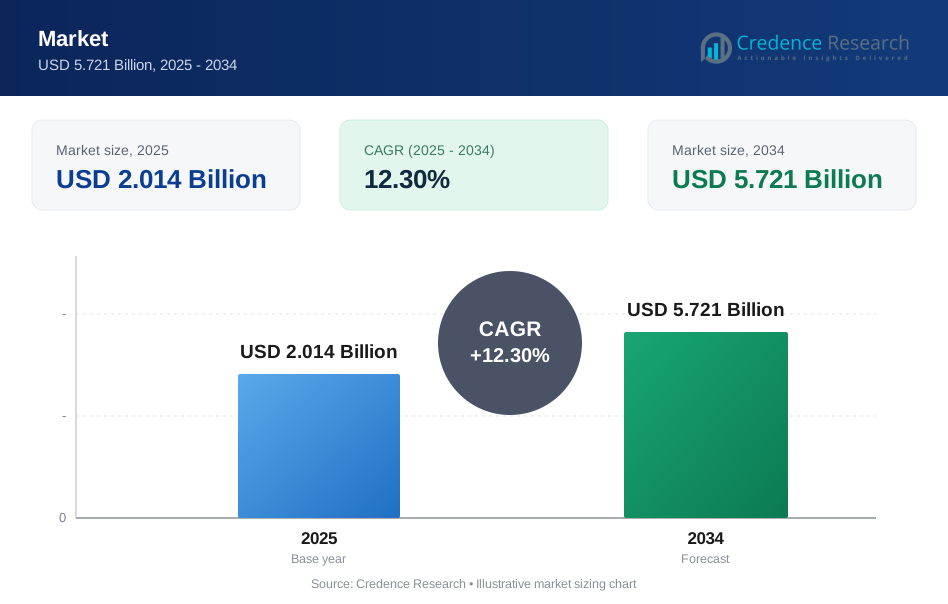
The India Industrial Tapes market was valued at USD 2.014 billion in 2025 and is projected to reach USD 5.721 billion by 2034, reflecting a robust CAGR of 12.30% over the forecast period. These figures represent a strong growth trajectory driven by expanding end-user industries and evolving application requirements.
India's industrial tapes market is experiencing significant expansion, underpinned by rapid industrialization, infrastructure development, and the proliferation of manufacturing activities. The market has evolved from basic adhesive solutions to advanced tapes tailored for specialized applications in automotive, electronics, construction, and logistics. This evolution is fueled by the need for efficient bonding, insulation, protection, and mounting solutions that enhance operational efficiency and product quality.
Operationally, the adoption of advanced adhesive technologies and high-performance backing materials has improved tape durability, temperature resistance, and application versatility. Customers are increasingly prioritizing tapes that offer strong adhesion, ease of use, and compatibility with automated assembly lines. Procurement decisions are influenced by regulatory compliance, sustainability considerations, and the need to reduce downtime and maintenance costs, driving suppliers to innovate and differentiate their offerings.
Geographically, the market is characterized by strong demand across all major regions, with West India leading in market share due to its concentration of manufacturing and industrial hubs. Competitive positioning is shaped by the ability to offer customized solutions, robust distribution networks, and technical support. The principal condition affecting the outlook is the pace of industrial investment and infrastructure upgrades, which directly impacts tape consumption and supplier revenue.
Report Attributes
| Attribute | Detail |
|---|---|
| Historical period | 2018-2024 |
| Base year | 2025 |
| Forecast period | 2025-2034 |
| Base-year market size | USD 2.014 Billion |
| Forecast-year market size | USD 5.721 Billion |
| Revenue CAGR (2025-2034) | 12.30% |
| Segments covered | Product type, Application, Backing material, Adhesive technology, End user |
| Geographic scope | India (East, West, South, North) |
| Measurement basis | Revenue (USD Billion) |
India Industrial Tapes Market Key Indicators
- India's automotive production exceeded 25 million vehicles in 2023, supporting strong demand for industrial tapes in assembly, bonding, and surface protection applications. This production scale drives procurement of high-performance tapes for both OEM and aftermarket uses.
- The electronics manufacturing sector in India grew by over 15% in 2024, with increased adoption of industrial tapes for insulation, component mounting, and EMI shielding. This trend is expected to continue as electronics exports rise.
- Construction spending in India reached USD 640 billion in 2024, with infrastructure projects fueling demand for tapes used in sealing, insulation, and surface protection. Government initiatives such as Smart Cities and Make in India amplify this effect.
- Regulatory standards for adhesives and tapes, including ISI and RoHS compliance, are increasingly influencing procurement decisions, favoring suppliers with certified products and sustainable manufacturing practices.
Market Size and Growth Outlook From 2025 to 2034
What is the India Industrial Tapes market forecast for 2034?
The India Industrial Tapes market is forecast to reach USD 5.721 billion by 2034, growing at a CAGR of 12.30% from the 2025 base year. This outlook reflects sustained demand across manufacturing, automotive, and construction sectors.
| Year or period | Metric | Value | Basis |
|---|---|---|---|
| 2018-2024 | Historical period | - | Reported |
| 2025 | Base-year market size | USD 2.014 Billion | Estimate |
| 2025-2034 | Revenue CAGR | 12.30% | Forecast interval |
| 2034 | Forecast-year market size | USD 5.721 Billion | Forecast |
Market growth will be shaped by rising adoption in high-value applications, increased replacement cycles, and a shift toward premium, specialty tapes. Nominal revenue gains will also reflect product mix upgrades and value-added services.
India Industrial Tapes Market Scope
The India Industrial Tapes market covers adhesive tapes used in industrial applications, including filament, aluminum, duct, adhesive transfer, and other specialty tapes. Customers span manufacturing, automotive, construction, logistics, electrical, and electronics sectors. Applications include packaging, masking, surface protection, bonding, sealing, insulation, and splicing. The market excludes consumer tapes and focuses on revenue generated from industrial end users within India. Measurement is based on supplier revenue from tape sales.
| Category | Segments |
|---|---|
| By Product type | Filament tapes, aluminum tapes, duct tapes, adhesive transfer tapes, others |
| By Application | Packaging, masking, surface protection, bonding/mounting, sealing, insulation, splicing, others |
| By Backing material | Polypropylene, paper, PVC, others |
| By Adhesive technology | Pressure-sensitive, solvent-based, hot-melt-based, acrylic-based |
| By End user | Manufacturing, automotive, construction, logistics, electrical, electronics, others |
| By Region | East India, West India, South India, North India |
What this report answers
This report provides actionable insights for market entry, product portfolio optimization, pricing strategies, regional prioritization, and competitive benchmarking in the India Industrial Tapes market.
India Industrial Tapes Market Segmentation Insights
The India Industrial Tapes market is segmented by product type, application, backing material, adhesive technology, and end user. Each dimension addresses specific industrial requirements, enabling suppliers to target diverse customer needs and optimize product portfolios for growth.
By Product type
Filament tapes and specialty tapes drive value-added growth
Filament tapes are widely used for bundling, reinforcement, and heavy-duty packaging, offering high tensile strength and reliability. Aluminum tapes are favored in HVAC and electrical insulation due to their thermal conductivity and resistance to moisture. Duct tapes and adhesive transfer tapes serve versatile roles in repair, mounting, and assembly, while specialty tapes address niche industrial needs. The "others" category includes emerging products tailored for specific applications, reflecting ongoing innovation.
| Segment | Base-year share | Revenue model | Growth profile |
|---|---|---|---|
| Filament tapes | - | Volume and value sales | Strong, driven by packaging and logistics |
| Aluminum tapes | - | Project-based sales | Steady, with HVAC and electrical demand |
| Duct tapes | - | General-purpose sales | Stable, broad industrial use |
| Adhesive transfer tapes | - | Custom and OEM sales | Growing, with electronics and automotive |
| Others | - | Niche applications | Emerging, innovation-driven |
By Application
Packaging remains the dominant application, leveraging industrial tapes for secure, efficient, and tamper-evident sealing. Masking tapes are essential in painting, surface preparation, and finishing processes, particularly in automotive and construction. Surface protection tapes safeguard components during manufacturing and logistics, reducing damage and rework. Bonding/mounting, sealing, insulation, and splicing tapes address specialized needs in electronics, electrical, and infrastructure projects, supporting higher-value sales and recurring demand.
By Backing material
Polypropylene is the preferred backing material for its strength, flexibility, and cost-effectiveness, making it suitable for high-volume packaging and general industrial use. Paper-backed tapes are chosen for masking and temporary applications, offering easy removal and environmental benefits. PVC-backed tapes provide superior durability and electrical insulation, supporting growth in electrical and electronics segments. The "others" category includes advanced polymers and composites for demanding environments.
By Adhesive technology
Pressure-sensitive adhesives dominate the market, valued for their ease of application, instant bonding, and compatibility with automated processes. Solvent-based adhesives are used where chemical resistance and high-temperature performance are required, though environmental regulations are encouraging a shift toward hot-melt and acrylic-based alternatives. Hot-melt adhesives offer fast setting and strong bonds, while acrylic-based adhesives provide UV resistance and long-term durability, supporting adoption in electronics and outdoor applications.
By End user
Manufacturing is the largest end-user segment, with industrial tapes integral to assembly, packaging, and process optimization. The automotive sector drives demand for high-performance tapes in bonding, mounting, and surface protection, supporting lightweighting and automation. Construction and infrastructure projects require tapes for sealing, insulation, and splicing, while logistics relies on tapes for secure packaging and shipment integrity. Electrical and electronics end users demand tapes with specialized properties for insulation, EMI shielding, and component assembly. The "others" segment includes emerging industries and niche applications.
Detailed Segmentation Coverage
- By Product type: Filament tapes; aluminum tapes; duct tapes; adhesive transfer tapes; others.
- By Application: Packaging; masking; surface protection; bonding/mounting; sealing; insulation; splicing; others.
- By Backing material: Polypropylene; paper; PVC; others.
- By Adhesive technology: Pressure-sensitive; solvent-based; hot-melt-based; acrylic-based.
- By End user: Manufacturing; automotive; construction; logistics; electrical; electronics; others.
Request a Free Sample
Fill in your details and we'll send you a free sample report.
- Sample data tables & charts
- Research methodology
Market Dynamics
India Industrial Tapes Market Recent Trends
The India Industrial Tapes market is witnessing trends such as the adoption of eco-friendly materials, increased automation in application processes, product customization, and the expansion of local manufacturing. These trends are reshaping supplier strategies, product portfolios, and competitive dynamics.
Eco-friendly and sustainable tapes gain traction
Environmental regulations and customer preferences are driving the adoption of tapes made from recyclable materials and low-VOC adhesives. Suppliers are investing in green manufacturing processes and certifications to differentiate their offerings. This trend is particularly strong in automotive, electronics, and export-oriented segments, where compliance with global standards is critical. The shift toward sustainability is expected to accelerate as regulatory scrutiny intensifies and buyers prioritize eco-friendly procurement.
Automation and process integration in tape application
Manufacturers are increasingly integrating automated tape application systems into assembly lines to improve efficiency, consistency, and throughput. Automated solutions reduce labor costs, minimize errors, and enable the use of advanced tapes in high-speed production environments. This trend is most pronounced in automotive and electronics manufacturing, where precision and repeatability are essential. Suppliers offering technical support and integration services are gaining a competitive edge.
Product customization and specialty tape development
Demand for customized tapes tailored to specific industrial applications is rising. End users seek tapes with unique properties such as high-temperature resistance, electrical insulation, or chemical compatibility. Suppliers are responding with R&D investments and collaborative product development, targeting niche markets and value-added applications. Customization enhances customer loyalty and supports premium pricing, but requires agile manufacturing and close customer engagement.
Expansion of local manufacturing and distribution networks
To meet growing demand and reduce lead times, both domestic and multinational suppliers are expanding local production facilities and distribution networks. This expansion improves market access, lowers logistics costs, and enables faster response to customer needs. Regional manufacturing hubs are emerging in West and South India, supporting just-in-time delivery and technical support. The trend also mitigates supply chain risks associated with imports and global disruptions.
India Industrial Tapes Market Opportunities
The biggest opportunities in the India Industrial Tapes market lie in specialty applications, underserved regions, sustainable product lines, and value-added services. Suppliers that address these areas can unlock new revenue streams and strengthen market positioning.
Specialty tapes for electronics and high-tech manufacturing
Electronics and high-tech manufacturing present significant white space for specialty tapes with advanced properties such as EMI shielding, thermal management, and miniaturization compatibility. The unmet need is for tapes that meet stringent performance and regulatory requirements. Suppliers must invest in R&D and collaborate with OEMs to develop tailored solutions. Success depends on technical support, rapid prototyping, and the ability to scale production. Execution risk includes high development costs and evolving customer specifications.
Penetration into underserved regions and emerging clusters
East India and emerging industrial clusters offer untapped potential for industrial tapes, particularly in construction, logistics, and light manufacturing. The unmet need is for reliable supply, technical training, and localized product adaptation. Suppliers must establish distribution partnerships, invest in customer education, and adapt pricing strategies to local market conditions. The principal risk is logistical complexity and lower initial demand, requiring a phased market entry approach.
Sustainable and regulatory-compliant product lines
There is growing demand for tapes that comply with environmental and safety regulations, including RoHS, ISI, and low-VOC standards. The opportunity lies in developing and marketing certified, eco-friendly tapes for automotive, electronics, and export markets. Suppliers must invest in green chemistry, certification processes, and transparent supply chains. The main risk is the higher cost of sustainable materials and the need to educate buyers on total cost of ownership.
Value-added services and technical support
Offering value-added services such as application engineering, on-site training, and process optimization can differentiate suppliers and deepen customer relationships. The unmet need is for technical expertise that helps end users maximize tape performance and reduce operational costs. Suppliers must build skilled teams and invest in customer engagement platforms. Execution risk includes the cost of service delivery and the challenge of scaling support across diverse customer segments.
India Industrial Tapes Market Challenges
The main barriers to adoption in the India Industrial Tapes market include price sensitivity, supply chain complexity, and the need for technical qualification. These constraints affect supplier margins, market access, and the pace of technology adoption across end-user industries.
Price sensitivity and cost pressures
Many industrial customers in India operate under tight budget constraints, making price a critical factor in tape procurement decisions. This sensitivity limits the adoption of premium or specialty tapes, especially in cost-driven sectors such as logistics and construction. Suppliers face pressure to balance quality and affordability, often resulting in margin compression. The challenge persists due to intense competition and the prevalence of low-cost alternatives, which can undermine investments in innovation and product differentiation.
Supply chain and distribution complexity
The fragmented nature of India's industrial landscape creates challenges in reaching customers across diverse regions and sectors. Distribution networks must navigate logistical hurdles, including transportation infrastructure, inventory management, and last-mile delivery. These complexities can lead to longer lead times, stockouts, and inconsistent service levels, affecting customer satisfaction and repeat business. Suppliers must invest in robust logistics and local partnerships to overcome these barriers, but execution remains challenging in underserved regions.
Technical qualification and customer education
Adoption of advanced tapes often requires technical qualification, process adaptation, and end-user training. Many customers lack awareness of the benefits and application techniques for specialty tapes, leading to resistance or suboptimal usage. Suppliers must provide technical support, demonstrations, and training to facilitate adoption, which can be resource-intensive. The challenge is compounded by varying standards and requirements across industries, necessitating tailored engagement strategies and ongoing education efforts.
Trade and Supply Context
India Industrial Tapes Supply Conditions in 2025
India's industrial tapes market is primarily supplied by domestic manufacturers, with a growing presence of multinational companies establishing local production facilities. While import dependence exists for certain specialty tapes and raw materials, most high-volume products are sourced locally, supporting supply chain resilience and cost competitiveness. Export activity is limited, with the market focused on meeting domestic industrial demand.
India Industrial Tapes Market Growth Drivers
Growth in the India Industrial Tapes market is driven by expanding automotive manufacturing, rising electronics and electrical production, increased construction and infrastructure activity, and the shift toward advanced adhesive technologies. These factors collectively support robust demand across end-user industries and applications.
Expanding automotive manufacturing
The rapid growth of India's automotive sector is a major driver for industrial tapes, as manufacturers seek efficient bonding, mounting, and surface protection solutions. Tapes are integral to lightweighting, automation, and quality control in vehicle assembly. OEMs and component suppliers prioritize tapes that offer strong adhesion, durability, and compatibility with automated processes. However, cyclical fluctuations in automotive production and evolving regulatory standards can moderate demand growth.
Growing electronics and electrical production
India's electronics and electrical manufacturing sector is expanding, fueled by government incentives and rising domestic consumption. Industrial tapes are essential for insulation, EMI shielding, and component assembly in electronics production. The shift toward miniaturization and higher performance requirements increases demand for specialty tapes with advanced properties. Supply chain integration and technical support are critical for suppliers to capture this opportunity, though price sensitivity remains a constraint.
Evidence. India's electronics manufacturing output grew by over 15% in 2024, supporting increased procurement of industrial tapes for assembly and insulation applications.
Rising construction and infrastructure activity
Large-scale infrastructure projects and urbanization are driving demand for industrial tapes in sealing, insulation, and surface protection. Construction companies and contractors use tapes to improve efficiency, reduce rework, and meet regulatory standards for safety and durability. The adoption of advanced tapes is further supported by government initiatives such as Smart Cities and affordable housing programs. However, project delays and budget constraints can impact tape consumption in this segment.
Adoption of advanced adhesive technologies
The transition from traditional adhesives to advanced pressure-sensitive, hot-melt, and acrylic-based technologies is reshaping the market. These solutions offer improved performance, environmental compliance, and process efficiency, appealing to manufacturers seeking to optimize operations. Suppliers investing in R&D and technical support are well-positioned to capture premium segments. The pace of technology adoption is influenced by customer education, regulatory requirements, and the availability of cost-effective alternatives.
Driver Impact Summary
| Driver | Expected Market Effect | Geographic Relevance | Impact Timeline |
|---|---|---|---|
| Expanding automotive manufacturing | Increased recurring demand for high-performance tapes in assembly and protection | West, North, South India | Medium term |
| Growing electronics and electrical production | Rising adoption of specialty tapes for insulation and component mounting | South, West India | Short to medium term |
| Rising construction and infrastructure activity | Broader use of tapes in sealing, insulation, and surface protection | North, West, East India | Medium to long term |
| Adoption of advanced adhesive technologies | Shift toward premium, compliant, and efficient tape solutions | All regions | Long term |
India Industrial Tapes Market Geographical Outlook
West India leads the India Industrial Tapes market with a 31% share, followed by South India at 28%, North India at 26%, and East India at 15%. This distribution reflects the concentration of industrial and manufacturing activities across these regions, shaping demand and supplier strategies.
West India
West India, accounting for 31% of the market, is the principal hub for industrial tapes demand due to its strong manufacturing base in Maharashtra and Gujarat. The region benefits from a dense network of automotive, electronics, and chemical industries, driving procurement of advanced tapes for assembly, packaging, and process optimization. Robust infrastructure, port connectivity, and favorable industrial policies enhance supplier access and distribution efficiency. Competitive intensity is high, with both multinational and domestic players investing in local production and technical support centers. Regulatory compliance and sustainability initiatives are increasingly shaping procurement decisions, favoring suppliers with certified and eco-friendly products.
South India
South India holds a 28% share, supported by its dynamic electronics, electrical, and automotive sectors in states like Tamil Nadu and Karnataka. The region's industrial parks and export-oriented manufacturing clusters create sustained demand for specialty tapes in electronics assembly, insulation, and surface protection. Access to skilled labor, proximity to ports, and government incentives for electronics manufacturing further boost market growth. Suppliers are responding with localized product development and technical training programs to address evolving customer requirements. Distribution networks are well-established, but price sensitivity and the need for rapid delivery remain key considerations for buyers.
North India
North India represents 26% of the market, anchored by Delhi NCR, Haryana, and Uttar Pradesh. The region's construction boom, infrastructure upgrades, and expanding logistics sector drive demand for tapes used in sealing, insulation, and packaging. Policy initiatives such as Smart Cities and industrial corridor development are accelerating tape adoption in both public and private projects. Competitive dynamics are shaped by the presence of large distributors and regional specialists, with procurement often influenced by project timelines and regulatory standards. Market access is facilitated by strong transportation links and a growing base of industrial customers.
East India
East India, with a 15% share, is an emerging market for industrial tapes, driven by infrastructure development, mining, and light manufacturing in states like West Bengal and Odisha. While demand is currently lower than other regions, government investment in industrial corridors and logistics infrastructure is expected to stimulate growth. Suppliers face challenges related to distribution reach and customer awareness, but opportunities exist for tailored solutions in construction, packaging, and electrical applications. Competitive entry is facilitated by lower market saturation, though execution risks include logistical complexity and price competition.
Recent Developments and Strategic Implications
February 2025 — Henkel: Henkel launched an Application Engineering Center in Chennai for its electronics adhesives business and announced plans for an electronics adhesive materials manufacturing plant at its Kurkumbh site near Pune. The investment combines local application development with planned manufacturing to support electronics assembly, thermal management and high-performance bonding.
April 2025 — Avery Dennison: Avery Dennison announced its first India-based RFID inlays and labels production facility in Pune and introduced the AD Cobra inlay, designed for Indian operating conditions. The investment expands domestic production of functional adhesive-backed materials for manufacturing and logistics.
May 2025 — Hindustan Adhesives: Hindustan Adhesives announced board approval to increase its stake in PT Bagla Group Indonesia from 51% to 99.99%. The proposed transaction would strengthen control over overseas manufacturing and trade channels for adhesive-coated products.
September 2025 — tesa: tesa opened a Customer Solution Center in Chennai offering adhesive tape evaluation, teardown studies, hands-on training and joint solution development. The center supports automotive, electronics and packaging customers with application engineering and customized bonding solutions.
September 2025 — Hindustan Adhesives: Hindustan Adhesives reported completion of planned capacity expansions at its Kutch, Gujarat, facility for BOPP packaging tapes targeting international markets. The company also reported acquiring machinery for self-adhesive tear tapes and constructing a new factory in Howrah, West Bengal.
June 2026 — Henkel: Henkel announced that its Kurkumbh site had achieved carbon-neutral production for Scope 1 and Scope 2 emissions through full electrification and 100% renewable electricity sourcing. The development strengthens the site's sustainability credentials for industrial customers and export supply chains.
Need a Custom Version of This Report?
Tailor the scope, geography, or segments to your exact requirements.
- Custom geography or segment scope
- Direct access to our analyst team
India Industrial Tapes Market Competitive Analysis
The leading companies in the India Industrial Tapes market include 3M India Ltd., Pidilite Industries Ltd., Tesa Tapes India Pvt. Ltd., Avery Dennison India, Ajit Industries Private Limited (AIPL), Hindustan Adhesives Ltd. (Bagla Group), Henkel Adhesives Technologies India, Nitto Denko India Pvt. Ltd., Lohmann India Pvt. Ltd., and Gripking Tapes India Pvt. Ltd. These firms compete on innovation, distribution, and technical support rather than price alone.
The competitive landscape is characterized by a mix of multinational corporations and strong domestic players. Established companies leverage their global R&D, brand reputation, and technical expertise to offer a broad portfolio of industrial tapes tailored to local requirements. Regional specialists focus on cost-effective solutions and agile service, often excelling in distribution reach and customer responsiveness. Differentiation is achieved through product innovation, compliance with regulatory standards, and the ability to provide customized solutions for niche applications.
Switching costs are moderate, as buyers can evaluate alternative suppliers based on performance, price, and service. However, long-term relationships, technical support, and after-sales service create stickiness, especially in high-value segments such as automotive and electronics. Recent years have seen increased investment in local manufacturing, partnerships with distributors, and expansion of technical support centers to enhance market access and customer engagement. The market remains dynamic, with new entrants targeting underserved regions and specialty applications, while established players defend share through continuous innovation and service excellence.
Key Companies
- 3M India Ltd.
- Pidilite Industries Ltd.
- Tesa Tapes India Pvt. Ltd.
- Avery Dennison India
- Ajit Industries Private Limited (AIPL)
- Hindustan Adhesives Ltd. (Bagla Group)
- Henkel Adhesives Technologies India
- Nitto Denko India Pvt. Ltd.
- Lohmann India Pvt. Ltd.
- Gripking Tapes India Pvt. Ltd.
Frequently Asked Questions
What is the India Industrial Tapes market size in 2025?
What is its forecast value by 2034?
What is the expected CAGR?
Which product or service segment leads the market?
Which region leads the market?
What drives demand in this market?
Who are the major companies in this market?
What are the main challenges and opportunities in this market?
Table of Content
Chapter 1. Report Introduction
- 1.1 Report Description & Purpose
- 1.1.1 Report Title & Market Definition
- 1.1.2 Unique Selling Propositions (USP) & Key Differentiators
- 1.1.3 Value Proposition for Stakeholders
- 1.2 Research Objectives
- 1.2.1 Market Sizing Objectives (Volume & Revenue) (Volume Where Applicable)
- 1.2.2 Segmentation Objectives
- 1.2.3 Competitive Intelligence Objectives
- 1.2.4 Forecast & Scenario Objectives
- 1.3 Report Scope
- 1.3.1 India Industrial Tapes Market Size, Share and Forecast 2034 Scope – Segments & Subsegments Covered
- 1.3.2 Geographic Scope – Selected Country & Subnational Markets Covered
- 1.3.3 Historical Period, Base Year & Forecast Period (2018-2025; forecast to 2034)
- 1.3.4 Inclusions & Exclusions
- 1.4 Industry Classification & Applicable Codes
- 1.5 Currency, Measurement Units & Valuation Basis
- 1.6 Target Stakeholders
- 1.7 Limitations & Assumptions
Chapter 2. Executive Summary
- 2.1 India Industrial Tapes Market Size, Share and Forecast 2034 Snapshot
- 2.1.1 Market Size – Historical (2018-2025) & Forecast (2025-2034) (2025: USD 2.014 Billion → 2034: USD 5.721 Billion)
- 2.1.2 Volume & Revenue – National Totals (Volume Where Applicable)
- 2.1.3 Key Market Highlights – Top Five Facts
- 2.2 India Industrial Tapes Market Size, Share and Forecast 2034 Segmentation Snapshot
- 2.2.1 Market Split – By Product type – 2025 vs. 2034 (Volume & Revenue) (Volume Where Applicable)
- 2.2.2 Market Split – By Application – 2025 vs. 2034 (Volume & Revenue) (Volume Where Applicable)
- 2.2.3 Market Split – By Backing material – 2025 vs. 2034 (Volume & Revenue) (Volume Where Applicable)
- 2.2.4 Market Split – By Adhesive technology – 2025 vs. 2034 (Volume & Revenue) (Volume Where Applicable)
- 2.2.5 Market Split – By End user – 2025 vs. 2034 (Volume & Revenue) (Volume Where Applicable)
- 2.2.6 Market Split by Subnational Area – 2025 vs. 2034
- 2.3 Competitive Snapshot
- 2.3.1 Top 10 Players by Revenue Share – 2025
- 2.3.2 Top 10 Players by Volume Share – 2025 (Volume Where Applicable)
- 2.3.3 Recent Strategic Developments (18-Month Summary)
- 2.4 Key Investment Highlights & Strategic Conclusions
Chapter 3. India Industrial Tapes Market Size, Share and Forecast 2034 Dynamics & Industry Analysis
- 3.1 Market Overview & Context
- 3.1.1 India Industrial Tapes Market Size, Share and Forecast 2034 Position in the Broader Industry Value Chain
- 3.1.2 Demand Structure & Purchasing Dynamics
- 3.1.3 Market Maturity & Development Stage Across Domestic Markets
- 3.2 India Industrial Tapes Market Size, Share and Forecast 2034 Drivers
- 3.3 India Industrial Tapes Market Size, Share and Forecast 2034 Restraints & Challenges
- 3.4 India Industrial Tapes Market Size, Share and Forecast 2034 Opportunities
- 3.5 Porter's Five Forces Analysis
- 3.5.1 Threat of New Entrants
- 3.5.2 Bargaining Power of Suppliers
- 3.5.3 Bargaining Power of Buyers
- 3.5.4 Threat of Substitutes
- 3.5.5 Competitive Rivalry – Intensity Assessment
- 3.6 India Industrial Tapes Market Size, Share and Forecast 2034 Value Chain Analysis
- 3.6.1 Upstream – Key Inputs, Resources & Suppliers
- 3.6.1.1 Key Input/Resource 1
- 3.6.1.2 Key Input/Resource 2
- 3.6.1.3 Key Input/Resource 3
- 3.6.2 Midstream – Core Operations & Value Creation
- 3.6.2.1 Operating Model & Process Overview
- 3.6.2.2 Key Operating Locations & Capabilities by Company
- 3.6.3 Downstream – Market Channels & End Users
- 3.6.3.1 Direct Sales & Customer Engagement Channels
- 3.6.3.2 Indirect Sales, Intermediaries & Partner Channels
- 3.6.4 Value Chain Profitability Analysis
- 3.6.1 Upstream – Key Inputs, Resources & Suppliers
- 3.7 PESTEL Analysis
- 3.7.1 Political Factors
- 3.7.2 Economic Factors
- 3.7.3 Social Factors
- 3.7.4 Technological Factors
- 3.7.5 Environmental Factors
- 3.7.6 Legal Factors
- 3.8 India Industrial Tapes Market Size, Share and Forecast 2034 Supply Chain Analysis
- 3.8.1 Critical Input & Resource Availability Risk Assessment
- 3.8.2 Supplier & Operational Concentration Risk (Geographic Exposure)
- 3.8.3 Supply & Service Disruption Impact Analysis
- 3.9 National & Subnational Regulatory Landscape
Note: The regulatory and policy landscape section covers regulations based on their applicability to the market, India Industrial Tapes Market Size, Share and Forecast 2034 category, geography, and scope of the study. Only regulatory frameworks with a material impact on operations, compliance, trade, sustainability, or market access are analyzed in detail.
Chapter 4. Key Investment Pockets & Opportunity Analysis
- 4.1 India Industrial Tapes Market Size, Share and Forecast 2034 Attractiveness Analysis
- 4.1.1 By Subnational Area – Investment Attractiveness Matrix (Market Size × CAGR)
- 4.1.2 By Product type – Investment Attractiveness Matrix
- 4.1.3 By Application – Investment Attractiveness Matrix
- 4.1.4 By Backing material – Investment Attractiveness Matrix
- 4.1.5 By Adhesive technology – Investment Attractiveness Matrix
- 4.1.6 By End user – Investment Attractiveness Matrix
- 4.2 Absolute Revenue Growth Opportunity
- 4.2.1 By Subnational Area – Absolute Revenue Growth Through 2034
- 4.2.2 By Product type – Absolute Revenue Growth
- 4.2.3 By Application – Absolute Revenue Growth
- 4.2.4 By Backing material – Absolute Revenue Growth
- 4.2.5 By Adhesive technology – Absolute Revenue Growth
- 4.2.6 By End user – Absolute Revenue Growth
- 4.3 Incremental Demand Opportunity
- 4.3.1 By Subnational Area – Incremental Demand Through 2034
- 4.3.2 By Product type – Incremental Demand
- 4.4 Emerging Submarket Opportunity Deep Dive (Subject to Applicability)
- 4.5 Priority Domestic Market Opportunity Scorecards
- 4.5.1 Priority Domestic Market 1
- 4.5.2 Priority Domestic Market 2
- 4.5.3 Priority Domestic Market 3
- 4.5.4 Priority Domestic Market 4
Note: Domestic market scorecards cover relevant states, provinces, territories, cities, or economic zones within the selected country. Numbered entries are populated with market names suited to the national administrative structure and research scope. Geographic share tables use one consistent, nonoverlapping set of areas.
Chapter 5. India Industrial Tapes Market Size, Share and Forecast 2034 Cross-Border Trade & Market Access Analysis
- 5.1 National Trade & International Partner Overview
- 5.1.1 Export Value by Destination Country (2018-2025)
- 5.1.2 Export Volume by Destination Country (2018-2025) (Where Applicable)
- 5.1.3 Import Value by Source Country (2018-2025)
- 5.1.4 Import Volume by Source Country (2018-2025) (Where Applicable)
- 5.1.5 National & Partner-Country Trade Balances (2018-2025)
- 5.2 Export Analysis – By Product type
- 5.2.1 Category 1 (Applicable Classification Code)
- 5.2.2 Category 2 (Applicable Classification Code)
- 5.2.3 Category 3 (Applicable Classification Code)
- 5.2.4 Category 4 (Applicable Classification Code)
- 5.2.5 Category 5 (Applicable Classification Code)
- 5.3 Import Analysis – By Product type
- 5.3.1 Category 1 (Applicable Classification Code)
- 5.3.2 Category 2 (Applicable Classification Code)
- 5.3.3 Category 3 (Applicable Classification Code)
- 5.3.4 Category 4 (Applicable Classification Code)
- 5.3.5 Category 5 (Applicable Classification Code)
- 5.4 Cross-Border Pricing & Transaction Benchmarks
- 5.4.1 Export Pricing – By Product type & Destination Country
- 5.4.2 Import Pricing – By Product type & Source Country
- 5.4.3 Price Trends (2018-2025)
- 5.5 Key Cross-Border Trade & Delivery Routes
- 5.5.1 Cross-Border Trade/Delivery Route 1
- 5.5.2 Cross-Border Trade/Delivery Route 2
- 5.5.3 Cross-Border Trade/Delivery Route 3
- 5.5.4 Cross-Border Trade/Delivery Route 4
- 5.5.5 Cross-Border Trade/Delivery Route 5
- 5.6 Trade Policy & Market Access Impact Assessment
- 5.6.1 Tariff & Non-Tariff Barriers
- 5.6.2 National Participation in Regional Trade & Economic Frameworks
- 5.6.3 Bilateral & Multilateral Trade Agreements
- 5.6.4 Cross-Border Operating, Licensing & Localization Requirements
Note: This chapter covers international trade relevant to India Industrial Tapes Market Size, Share and Forecast 2034 in the selected country. Exports are analyzed by destination and imports by source. Domestic interregional flows are excluded from international trade totals. Goods, services, and digital offerings use applicable classifications; volume and route analyses apply only where meaningful.
Chapter 6. Competitive Landscape & Company Benchmarking
- 6.1 India Industrial Tapes Market Size, Share and Forecast 2034 Concentration & Structure
- 6.1.1 Herfindahl-Hirschman Index (HHI) – 2018 vs. 2025
- 6.1.2 Leading, Mid-Sized & Emerging Player Structure
- 6.1.3 Multinational, National & Local Player Dynamics
- 6.2 India Industrial Tapes Market Size, Share and Forecast 2034 Share Analysis – 2025
- 6.2.1 National Revenue Share by Company
- 6.2.2 National Volume Share by Company (Volume Where Applicable)
- 6.2.3 Company Revenue Share by Subnational Area
- 6.2.4 Market Share Evolution (2018 vs. 2025)
- 6.2.5 Company Market Share by Key Segment
- 6.2.6 Company Market Share by Customer Group
- 6.3 Operating Scale, Capacity & Infrastructure Analysis
- 6.3.1 National Operating Scale & Supply Capacity
- 6.3.2 Resource Utilization & Operating Efficiency
- 6.3.3 Output, Service Delivery & Activity Metrics
- 6.3.4 Operating Footprint & Infrastructure Map
- 6.3.5 Planned Operational & Capacity Expansion
- 6.4 India Industrial Tapes Market Size, Share and Forecast 2034 Competitive Benchmarking Matrix
- 6.4.1 Revenue, Growth, Profitability & Operating Metric Comparison
- 6.4.2 Channel Revenue Mix
- 6.4.3 Revenue Exposure Across Domestic Markets
- 6.4.4 R&D Intensity
- 6.4.5 Sustainability Maturity
- 6.5 Strategic Developments in India Industrial Tapes Market Size, Share and Forecast 2034 (Last 24 Months)
- 6.5.1 Mergers, Acquisitions & Divestments
- 6.5.2 New Products, Services & Solutions in India Industrial Tapes Market Size, Share and Forecast 2034
- 6.5.3 Operational & Infrastructure Expansions
- 6.5.4 Strategic Alliances, Joint Ventures & Partnerships
- 6.5.5 Distribution Expansion & Market Entry
- 6.5.6 Sustainability & ESG Initiatives
- 6.6 Competitive Strategy Mapping
- 6.6.1 Leader, Challenger, Follower & Niche Classification
- 6.6.2 Pricing Strategy Comparison
- 6.6.3 Channel Strategy Matrix
Note: Strategic developments are included based on their materiality and the availability of reliable information.
Chapter 7. India Industrial Tapes Market Size, Share and Forecast 2034 – By Product type
- 7.1 Segment Overview
- 7.1.1 Market Volume Share (2018, 2025 & 2026) (Volume Where Applicable)
- 7.1.2 Market Revenue Share (2018, 2025 & 2026)
- 7.1.3 Market Forecast Through 2034
- 7.1.4 Key Growth Drivers & Restraints
- 7.1.5 Leading Companies & Offerings
- 7.2 Subsegments Covered – By Product type
- Filament tapes
- aluminum tapes
- duct tapes
- adhesive transfer tapes
- others
Chapter 8. India Industrial Tapes Market Size, Share and Forecast 2034 – By Application
- 8.1 Segment Overview
- 8.1.1 Market Volume Share (2018, 2025 & 2026) (Volume Where Applicable)
- 8.1.2 Market Revenue Share (2018, 2025 & 2026)
- 8.1.3 Market Forecast Through 2034
- 8.1.4 Key Growth Drivers & Restraints
- 8.1.5 Leading Companies & Offerings
- 8.2 Subsegments Covered – By Application
- Packaging
- masking
- surface protection
- bonding/mounting
- sealing
- insulation
- splicing
- others
Chapter 9. India Industrial Tapes Market Size, Share and Forecast 2034 – By Backing material
- 9.1 Segment Overview
- 9.1.1 Market Volume Share (2018, 2025 & 2026) (Volume Where Applicable)
- 9.1.2 Market Revenue Share (2018, 2025 & 2026)
- 9.1.3 Market Forecast Through 2034
- 9.1.4 Key Growth Drivers & Restraints
- 9.1.5 Leading Companies & Offerings
- 9.2 Subsegments Covered – By Backing material
- Polypropylene
- paper
- PVC
- others
Chapter 10. India Industrial Tapes Market Size, Share and Forecast 2034 – By Adhesive technology
- 10.1 Segment Overview
- 10.1.1 Market Volume Share (2018, 2025 & 2026) (Volume Where Applicable)
- 10.1.2 Market Revenue Share (2018, 2025 & 2026)
- 10.1.3 Market Forecast Through 2034
- 10.1.4 Key Growth Drivers & Restraints
- 10.1.5 Leading Companies & Offerings
- 10.2 Subsegments Covered – By Adhesive technology
- Pressure-sensitive
- solvent-based
- hot-melt-based
- acrylic-based
Chapter 11. India Industrial Tapes Market Size, Share and Forecast 2034 – By End user
- 11.1 Segment Overview
- 11.1.1 Market Volume Share (2018, 2025 & 2026) (Volume Where Applicable)
- 11.1.2 Market Revenue Share (2018, 2025 & 2026)
- 11.1.3 Market Forecast Through 2034
- 11.1.4 Key Growth Drivers & Restraints
- 11.1.5 Leading Companies & Offerings
- 11.2 Subsegments Covered – By End user
- Manufacturing
- automotive
- construction
- logistics
- electrical
- electronics
- others
Chapter 12. India Industrial Tapes Market Size, Share and Forecast 2034 – By Sales & Delivery Channel
- 12.1 Segment Overview
- 12.1.1 Volume & Revenue Split by Channel (2025 & 2034) (Volume Where Applicable)
- 12.1.2 Channel Mix Evolution (2018-2034)
Chapter 13. Subnational Market Analysis – Country Overview
- 13.1 Domestic Geographic Market Overview
- 13.1.1 Subnational Volume Share (Where Applicable)
- 13.1.2 Subnational Revenue Share
- 13.1.3 Market Volume by Subnational Area (Where Applicable)
- 13.1.4 Market Revenue by Subnational Area
- 13.1.5 Subnational Forecasts Through 2034
- 13.2 Cross-Area Segment Analysis Within the Country
- 13.2.1 By Product type
- 13.2.2 By Application
- 13.2.3 By Backing material
- 13.2.4 By Adhesive technology
- 13.2.5 By End user
- 13.2.6 By Sales & Delivery Channel
- 13.2.7 By Competitive Positioning & Price Tier
Chapter 14. India Industrial Tapes Market Size, Share and Forecast 2034 – Priority Domestic Market 1
Chapter 15. India Industrial Tapes Market Size, Share and Forecast 2034 – Priority Domestic Market 2
Chapter 16. India Industrial Tapes Market Size, Share and Forecast 2034 – Priority Domestic Market 3
Chapter 17. India Industrial Tapes Market Size, Share and Forecast 2034 – Priority Domestic Market 4
Chapter 18. India Industrial Tapes Market Size, Share and Forecast 2034 Company Profiles
- 18.1 "3M India Ltd.
- 18.1.1 Company Overview
- 18.1.2 Key Management Personnel
- 18.1.3 Products & Services Portfolio
- 18.1.4 Financial Performance
- 18.1.5 Domestic Market Focus & Local Operating Presence
- 18.1.6 Recent Developments & Strategic Initiatives
- 18.2 Pidilite Industries Ltd.
- 18.3 Tesa Tapes India Pvt. Ltd.
- 18.4 Avery Dennison India
- 18.5 Ajit Industries Private Limited (AIPL)
- 18.6 Hindustan Adhesives Ltd. (Bagla Group)
- 18.7 Henkel Adhesives Technologies India
- 18.8 Nitto Denko India Pvt. Ltd.
- 18.9 Lohmann India Pvt. Ltd. and Gripking Tapes India Pvt. Ltd."
Note: The company profile list is preliminary and may change based on research findings, market developments, data availability, and client requirements.
Chapter 19. Appendices
- Appendix A – List of Abbreviations & Acronyms
- Appendix B – Industry Classification Code Reference – Full Series
- Appendix C – Supply, Output & Operating Capacity Data Tables
- Appendix D – End-Use & Demand Base Tables
- Appendix E – Demand, Adoption & Usage Assumptions
- Appendix F – Pricing & Revenue Metric Reference Tables
- Appendix G – Company Operations & Infrastructure Database
- Appendix H – Cross-Border Trade & Activity Data Tables (Where Applicable)
- Appendix I – Regulatory Summary Tables
- Appendix J – Primary Research Participant List (Anonymized)
- Appendix K – Primary Research Questionnaire Framework
- Appendix L – Data Sources & Bibliography
- Appendix M – Market Size Divergence & Source Comparison
Chapter 20. Research Methodology
- 20.1 Research Framework & Philosophy
- 20.2 Secondary Research – Sources, Hierarchy & Data Extraction
- 20.3 Data Modeling – National Market Sizing & Subnational Allocation
- 20.4 Primary Research – Stakeholder Framework, LOI & Sample Sizes
- 20.5 Forecast Methodology – Regression, Scenario & Sensitivity Analysis
- 20.6 Quality Control – Four-Layer Validation Framework
- 20.7 Limitations & Standard Assumptions
- 20.8 Disclaimer
