
| REPORT ATTRIBUTE | DETAILS |
|---|---|
| Historical Period | 2019-2022 |
| Base Year | 2023 |
| Forecast Period | 2024-2032 |
| Military Tent and Shelter Market Size 2023 | USD 1,026.71 million |
| Military Tent and Shelter Market, CAGR | 2.25% |
| Military Tent and Shelter Market Size 2032 | USD 1,254.35 million |
Market Overview
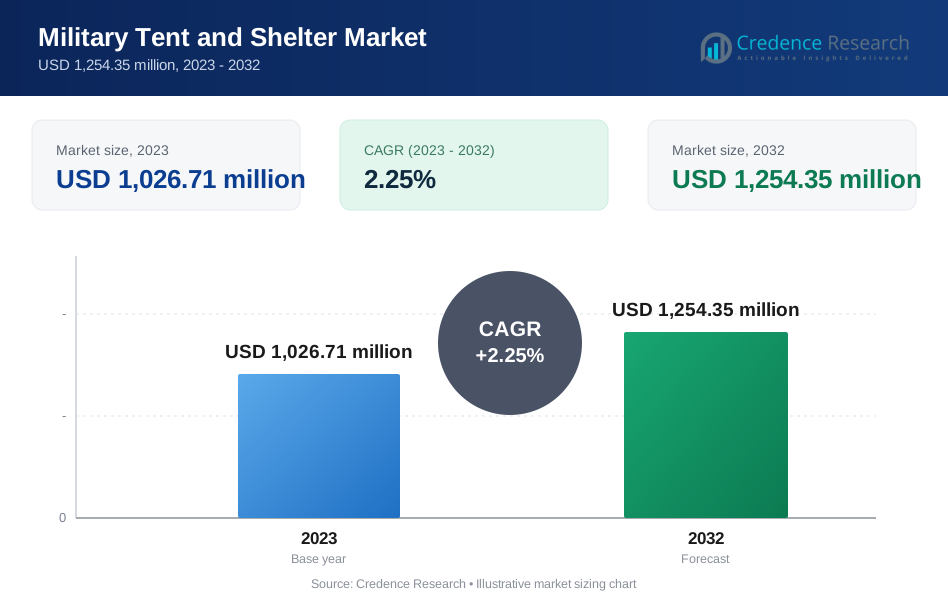
The global Military Tent and Shelter Market is expected to grow from USD 1,026.71 million in 2023 to USD 1,254.35 million by 2032, at a compound annual growth rate (CAGR) of 2.25%.
The global military tent and shelter market is driven by increasing defense budgets, the rising demand for portable and efficient shelter solutions for military operations, and the need for rapid deployment in diverse environments. The growing focus on improving soldier mobility and flexibility in challenging terrains has led to advancements in lightweight, durable, and weather-resistant materials. Furthermore, the rise in military modernization programs and the expanding need for disaster relief operations are contributing to market growth. Trends indicate a shift towards multifunctional shelters, incorporating advanced technologies such as climate control and modular designs. The integration of smart features in tents and shelters, aimed at improving operational efficiency and soldier comfort, is also gaining traction. As global military expenditures continue to rise and geopolitical tensions persist, the demand for advanced military tents and shelters is expected to remain robust, ensuring sustained market expansion.
The global military tent and shelter market is influenced by distinct regional dynamics, with key players strategically catering to specific geographic areas. North America, particularly the U.S., leads in military spending and technology advancements, driving demand for high-quality, durable shelter systems. Europe follows closely, with major defense contractors and military operations driving demand across NATO nations. The Asia-Pacific region is witnessing significant growth, fueled by increasing military investments in countries like China, India, and Japan, requiring advanced, rapidly deployable shelters. The Middle East and Africa face geopolitical tensions, boosting demand for tactical shelters in conflict zones. Key players in the market include HDT Global, AAR Corp, Eureka! Tents, Losberger GmbH, Marshall Aerospace and Defence Group, Röder Group, and Zeppelin GmbH, among others, each contributing to regional solutions with specialized products designed to withstand extreme conditions and meet military operational needs.
Market Insights
- The global military tent and shelter market was valued at USD 1,026.71 million in 2023 and is projected to reach USD 1,254.35 million by 2032, growing at a CAGR of 2.25%.
- Increased military spending globally is a major driver, with governments allocating larger budgets for equipment and infrastructure, including tents and shelters.
- Geopolitical tensions and conflicts are fueling demand for military shelters as they are necessary for rapid deployment and establishing temporary bases.
- Technological advancements are enhancing shelter durability, mobility, and integration of features like climate control and renewable energy solutions.
- Key market players include HDT Global, AAR Corp, Losberger GmbH, and Eureka! Tents, offering advanced shelter systems for military use.
- High costs related to the initial investment and maintenance of shelters can limit market growth.
- North America and Europe are major markets, with the Asia-Pacific region showing significant growth due to rising military investments.
Market Drivers
Increased Military Spending
Governments across the globe are allocating substantial budgets to strengthen their military capabilities, fueling demand for various military equipment, including tents and shelters. As nations prioritize defense infrastructure, the need for durable, portable shelters that can support troops in diverse environments is growing. For instance, global military expenditure reached an all-time high of $2,443 billion in 2023, driven by heightened geopolitical tensions and conflicts. This increased spending, combined with a focus on modernizing military assets, directly drives the expansion of the military tent and shelter market.
Geopolitical Tensions and Conflicts
Ongoing geopolitical tensions and conflicts are a significant factor driving the demand for military tents and shelters. In regions experiencing instability, troops are often deployed to temporary bases, necessitating reliable and efficient shelter solutions. For example, the ongoing war in Ukraine and escalating tensions in Asia and the Middle East have led to increased military spending and demand for portable shelters. Whether for combat operations or peacekeeping missions, the need for shelters that can quickly be set up in harsh and unpredictable conditions has surged. This trend is expected to continue as geopolitical uncertainties persist globally.
Counterterrorism Operations
The global fight against terrorism further amplifies the need for military tents and shelters. Counterterrorism operations frequently require rapid deployment of forces to remote or hostile areas, where traditional infrastructure is lacking. For instance, counterterrorism operations often necessitate the use of lightweight, easily transportable shelters to provide quick and effective shelter for personnel on the move. This increased reliance on swift, flexible shelter solutions is contributing significantly to market growth.
Humanitarian Aid and Disaster Relief
Military tents and shelters play a crucial role in humanitarian aid and disaster relief efforts. Following natural disasters or in times of humanitarian crises, temporary housing and infrastructure are often required to accommodate displaced populations and support recovery operations. The military’s involvement in such missions demands durable and efficient shelter solutions, further driving the need for advanced military tents and shelters worldwide.
Market Trends
Increased Focus on Rapid Deployment and Mobility
The demand for military tents and shelters is increasingly driven by the need for rapid deployment and mobility. Manufacturers are responding with lightweight and portable designs, ensuring that tents and shelters can be easily transported to remote or difficult-to-access locations. For instance, the U.S. Army's rapid global mobility strategy emphasizes the importance of lightweight and easily deployable shelters to support diverse military operations. Modular configurations have become a popular trend, offering flexible customization to meet specific operational needs, whether for military operations, disaster relief, or humanitarian efforts. Additionally, advancements in rapid deployment technologies are accelerating the speed at which these shelters are set up. Innovations such as inflatable structures and pre-fabricated components are enabling faster assembly, minimizing time spent on installation, and improving the efficiency of military and emergency response operations.
Technological Advancements
Technological innovation is playing a crucial role in enhancing the performance and functionality of military tents and shelters. Advanced materials, including high-performance fabrics and durable composites, are being used to improve the durability, weight, and overall strength of these shelters, enabling them to withstand extreme environmental conditions. For instance, new materials like composites and metamaterials offer superior strength-to-weight ratios, enabling the creation of rapidly deployable and easily transportable shelters. Integrated climate control systems are another key advancement, providing optimal temperature and humidity conditions in harsh climates, which is critical for maintaining the health and well-being of personnel. Moreover, energy-efficient solutions, such as solar power and renewable energy sources, are being incorporated into shelter designs to reduce reliance on traditional power supplies. Tents and shelters are also being designed with accommodations for advanced communication and surveillance systems, further enhancing their utility in complex military and field operations.
Growing Demand for Specialized Solutions
The growing complexity of military operations and field deployments has led to an increasing demand for specialized tent and shelter solutions. Medical tents and shelters, for example, are essential for treating casualties and providing healthcare services in the field, while command and control centers are necessary for coordinating operations and ensuring secure communication. These specialized solutions are designed to support specific functions, such as logistics and storage, which are crucial for maintaining supply chains and distributing equipment efficiently. As military operations continue to evolve, there is a strong need for shelters that can serve multiple functions and adapt to the unique demands of various missions.
Increased Emphasis on Sustainability
Sustainability is becoming an important focus in the development of military tents and shelters. Manufacturers are exploring eco-friendly materials and sustainable manufacturing processes to reduce the environmental impact of these products. Energy-efficient designs, such as advanced insulation and ventilation systems, help minimize energy consumption while maintaining shelter comfort. Additionally, there is a growing emphasis on recycling and reusing materials, extending the lifespan of tents and shelters and reducing waste. This shift toward sustainability not only aligns with global environmental goals but also ensures that military tents and shelters are more cost-effective and resource-efficient over time.
Market Challenges Analysis
High Costs and Maintenance Challenges
The development and procurement of advanced military tents and shelters require substantial initial investments, which can be a significant financial burden for defense budgets. These shelters often utilize specialized materials and cutting-edge technologies, increasing the overall cost of production and acquisition. In addition to high upfront costs, maintenance is a critical challenge. Military tents and shelters are frequently exposed to harsh environmental conditions, such as extreme temperatures, strong winds, and heavy rain, which can accelerate wear and tear. As a result, regular maintenance and repairs are necessary to ensure their functionality and safety, adding to the long-term costs of shelter systems. For instance, the maintenance of large area maintenance shelters (LAMS) used by the U.S. Air Force and Army requires significant resources to keep them operational in extreme conditions. This continuous need for upkeep can place a strain on military budgets, especially for operations in remote or hostile environments, where access to maintenance services may be limited or costly.
Supply Chain Disruptions and Environmental Impact
Global supply chain disruptions pose a significant challenge for the timely production and deployment of military tents and shelters. Geopolitical tensions, natural disasters, or global crises such as pandemics can impact the availability of critical raw materials and components. For instance, the COVID-19 pandemic severely disrupted global supply chains, affecting the availability of essential materials for military equipment. These disruptions can delay manufacturing processes, affecting the readiness of shelter systems for deployment. Additionally, the logistics of transporting large quantities of military tents and shelters to remote or challenging locations can be complex and costly. This not only increases the overall expense of military operations but also presents logistical hurdles in ensuring that shelters are delivered promptly to where they are needed most. Environmental concerns further exacerbate these challenges, as the disposal of used shelters contributes to waste generation and pollution. The transportation of large volumes of military equipment, including tents and shelters, also has a significant carbon footprint, raising concerns about the sustainability of such operations. Moreover, as the military continues to evolve, technological obsolescence presents another risk. Rapid advancements in materials and technology mean that older shelter systems may become less effective or outdated, potentially compromising their utility in modern military operations. Additionally, the increasing reliance on digital technologies in military shelters makes them vulnerable to cybersecurity threats, posing risks to the security and functionality of these systems.
Market Opportunities
The global military tent and shelter market presents several significant opportunities driven by advancements in technology and the evolving needs of military operations. As defense budgets continue to rise globally, there is an increasing demand for advanced, deployable shelter systems that provide quick, efficient, and versatile solutions for military personnel in diverse environments. The growing focus on mobility and rapid deployment creates opportunities for manufacturers to develop lightweight, modular, and easily transportable shelter designs. Innovations in materials, such as high-performance fabrics and durable composites, further open up avenues for creating shelters that can withstand extreme weather conditions while remaining lightweight and durable. Additionally, the integration of smart technologies, including climate control, communication systems, and energy-efficient solutions, is creating demand for more advanced and multifunctional shelter systems that cater to the modern needs of military operations.
Furthermore, the increasing involvement of military forces in humanitarian aid and disaster relief operations presents additional growth opportunities for the market. Military tents and shelters are essential in providing temporary housing and infrastructure during crises, and as the frequency of natural disasters and humanitarian emergencies rises, the need for these shelters will continue to grow. Emerging markets, particularly in regions like Asia-Pacific and the Middle East, are also showing significant potential. Geopolitical tensions and rising defense spending in these regions are driving the demand for military tents and shelters, presenting opportunities for manufacturers to expand their market presence. With a focus on sustainability and the development of eco-friendly materials, manufacturers can tap into the growing demand for environmentally responsible solutions, offering long-term growth potential in the market.
Market Segmentation Analysis:
By Type:
The global military tent and shelter market is primarily segmented by type into tent shelters, modular shelters, and inflatable shelters. Tent Shelters dominate the market due to their versatility, ease of setup, and affordability. They are commonly used in various military operations, including base camps and field operations. Modular Shelters are gaining popularity due to their flexibility, allowing customization to meet specific operational needs. They are used extensively for command posts, medical shelters, and storage facilities, offering expanded functionality and adaptability. Inflatable Shelters represent an emerging segment, known for their rapid deployment and ease of transportation. Their lightweight structure and quick setup make them ideal for emergency and tactical operations. The demand for these shelter types is influenced by the military’s evolving need for quick, mobile, and sustainable solutions that can withstand diverse environmental conditions.
By Application:
The market is also segmented by application, including military, emergency response, medical/EMT, humanitarian, and other uses. The Military segment holds the largest share, driven by the rising defense budgets and the need for temporary housing and operational bases. Emergency Response shelters are crucial during natural disasters and humanitarian crises, playing a key role in providing rapid shelter solutions. Medical/EMT shelters are increasingly in demand, offering field hospitals and treatment areas in combat zones or during emergencies. The Humanitarian segment is expanding as global conflicts and climate-related disasters drive the need for temporary shelters. The Other category includes specialized uses such as command centers and storage units. As global geopolitical tensions and climate-related events intensify, these applications continue to offer substantial growth opportunities, particularly in regions facing frequent crises or increased military operations.
Segments:
Based on Type:
- Tent Shelters
- Modular Shelters
- Inflatable Shelters
Based on Application:
- Military
- Emergency response
- Medical/EMT
- Humanitarian
- Other
Based on Material:
- Fabric
- Composite Materials
- Metal Frames
Based on Function:
- Command Posts
- Medical Shelters
- Sleeping Tents
Based on the Geography:
- North America
- U.S.
- Canada
- Mexico
- Europe
- UK
- France
- Germany
- Italy
- Spain
- Russia
- Belgium
- Netherlands
- Austria
- Sweden
- Poland
- Denmark
- Switzerland
- Rest of Europe
- Asia Pacific
- China
- Japan
- South Korea
- India
- Australia
- Thailand
- Indonesia
- Vietnam
- Malaysia
- Philippines
- Taiwan
- Rest of Asia Pacific
- Latin America
- Brazil
- Argentina
- Peru
- Chile
- Colombia
- Rest of Latin America
- Middle East
- UAE
- KSA
- Israel
- Turkey
- Iran
- Rest of Middle East
- Africa
- Egypt
- Nigeria
- Algeria
- Morocco
- Rest of Africa
Regional Analysis
North America
North America holds a significant market share in the global military tent and shelter market, accounting for approximately 30% of the overall revenue. This dominance is primarily attributed to the substantial defense budgets of the United States, which continue to drive demand for advanced military shelter solutions. The U.S. military is heavily involved in global operations, requiring portable and reliable shelters for troops and various field operations. In addition to military applications, North America’s involvement in emergency response and humanitarian efforts also contributes to the region's strong demand for military tents and shelters. The presence of key manufacturers and technological advancements in materials and construction techniques further strengthens North America's position in the market.
Europe
Europe holds a market share of around 25% in the global military tent and shelter market. Several factors contribute to this, including the high demand for shelters from European defense forces, especially in countries like Germany, France, and the UK. The region's increasing involvement in NATO-led operations and peacekeeping missions necessitates a steady supply of deployable shelters for troops. Moreover, Europe faces frequent geopolitical tensions and natural disasters, further propelling the need for emergency response shelters. Technological innovations, including advanced materials and integration of climate control systems, are also driving the European market. The EU's emphasis on humanitarian aid and disaster relief operations, particularly in Africa and the Middle East, is another significant factor contributing to the market growth in this region.
Asia-Pacific
The Asia-Pacific region is expected to witness the highest growth rate in the global military tent and shelter market, with an estimated market share of 20%. The rapid expansion of military capabilities in countries such as China, India, and Japan has significantly increased the demand for advanced military shelters. The region’s growing geopolitical tensions, especially in the South China Sea and with neighboring countries, drive the need for tactical shelters for defense purposes. Additionally, the frequent occurrence of natural disasters, such as earthquakes and typhoons, fuels demand for emergency response shelters. As countries in the region continue to modernize their armed forces and increase defense spending, the market for military tents and shelters is expected to continue its robust growth.
Middle East & Africa
The Middle East and Africa hold a market share of approximately 15% in the global military tent and shelter market. This region's demand for military shelters is driven by ongoing conflicts, particularly in countries like Syria, Iraq, and Yemen. These areas require large-scale shelter solutions for both military and humanitarian purposes. The region also faces severe climate conditions, including extreme temperatures and sandstorms, which demand highly durable and adaptable shelter solutions. Military operations in these regions often require rapid deployment and mobility, which boosts the demand for lightweight, modular, and inflatable shelters. Furthermore, the Middle East’s role in providing humanitarian aid, particularly in refugee camps, contributes to the market’s expansion. As geopolitical tensions persist, the need for military tents and shelters is expected to grow steadily in this region.
Key Player Analysis
- HDT Global
- AAR Corp
- Eureka! Tents
- Losberger GmbH
- Marshall Aerospace and Defence Group
- Röder Group
- Zeppelin GmbH
- Kampa
- Sierra Designs
- Mont
- Oase Outdoors
- Hyke & Byke
- Zempire
- Zhonghai Minsheng
Competitive Analysis
The global military tent and shelter market is highly competitive, with several key players dominating the landscape. Leading companies such as HDT Global, AAR Corp, Eureka! Tents, Losberger GmbH, Marshall Aerospace and Defence Group, Röder Group, Zeppelin GmbH, Kampa, Sierra Designs, Mont, Oase Outdoors, Hyke & Byke, Zempire, and Zhonghai Minsheng are at the forefront of innovation and development in this sector. These players focus on offering a wide range of shelters, including tent shelters, modular shelters, and inflatable shelters, tailored for military, emergency response, medical, and humanitarian applications. For instance, HDT Global has developed rapidly deployable shelters that integrate advanced climate control and energy-efficient systems. These companies leverage advanced technologies to enhance the durability, mobility, and rapid deployment capabilities of their products. Additionally, they are incorporating energy-efficient solutions, climate control systems, and sustainable materials to meet the evolving demands of military operations. Strategic partnerships, acquisitions, and investments in R&D are also key strategies employed by these players to strengthen their market position. Despite the competition, challenges like high initial costs and supply chain disruptions present barriers for many companies. However, the market's growth potential, especially in emerging regions such as Asia-Pacific and the Middle East, offers lucrative opportunities for these industry leaders to expand their presence and capture new market share.
Recent Developments
- In April 2024, AAR Corp. started the construction of a new facility in Wood Dale, Illinois. The facility is intended to accommodate all 737 types including the 737-10, and give AAR an extra 80,000+ square feet of hangar and storage space.
- In April 2024, the HDT Global entered into a USD 432 million contract to supply the U.S. Army with rigid wall shelters. They are designed to improve operational energy efficiency, optimize commonality, promote sustainability, and reduce lifespan costs. HDT's rigid wall shelters are designed for multi-domain operations and will facilitate the U.S. Army's modernization, mobilization, and protection efforts.
- In April 2024, The Israeli defense ministry announced that it is purchasing 40,000 tents ahead of an evacuation of the southern Gaza city of Rafah, which Israel has said it plans to assault to destroy the remaining battalions of the Hamas militant group.
- In November 2023, At Base Williamtown, the Royal Australian Air Force tested a temporary shelter designed to protect and conceal aircraft from explosives and surveillance. This trial is part of an ongoing effort to inform the Air Force of future dispersed aircraft redeployment solutions that support agile operation concepts using alternative passive defense techniques and materials.
- In October 2023, In response to operational gaps in the context of an ongoing battle with China in Ladakh, India's Armed Forces entered emergency procurement contracts amounting to around USD 28 million. Acquisitions shall include missiles, weapons, ammunition, drones, communication systems, surveillance equipment, and vehicles. Overall, the army has won over 70 capital procurements, with 65 and 35 contracts signed between the Air Force and Navy.
- In May 2023, Weatherhaven Global Resources, a provider of temporary infrastructure solutions, and Compotech signed a partnership agreement to exclusively market Compotech's protection products internationally, starting in Canada, NATO, ANZAC, or Saudi Arabian markets.
- In February 2023, In southern Turkey and northern Syria, communities from all over the world continue to mobilize in order to provide urgent relief for more than 20 million people who have been affected by earthquakes. The President of Turkey has also said that in the area of 13.5 million earthquake victims, 1.6 million people are in demand for shelter.
Market Concentration & Characteristics
The global military tent and shelter market exhibits moderate to high concentration, with a few key players holding a significant share. The market is characterized by a competitive landscape where companies like HDT Global, AAR Corp, Eureka! Tents, Losberger GmbH, and Marshall Aerospace and Defence Group lead the charge. These players specialize in providing a diverse range of shelter solutions, such as tent shelters, modular shelters, and inflatable shelters, that cater to the needs of military, emergency response, and humanitarian sectors. The market’s dynamics are largely influenced by technological advancements in materials, modular design, and rapid deployment capabilities, allowing for customized solutions to meet the unique demands of military operations. While the market is concentrated, there is room for regional players and niche suppliers to capture market share through specialization and localized services. In terms of characteristics, the market is driven by continuous innovation to improve the durability, mobility, and functionality of shelters, especially under extreme environmental conditions. Companies are focusing on enhancing product features such as climate control, energy efficiency, and communication integration. However, challenges such as high costs, supply chain disruptions, and environmental concerns persist. Overall, the market's future is marked by a growing emphasis on mobility, advanced materials, and sustainability, alongside rising demand in emerging regions.
Report Coverage
The research report offers an in-depth analysis based on Type, Application, Material, Function and Geography. It details leading market players, providing an overview of their business, product offerings, investments, revenue streams, and key applications. Additionally, the report includes insights into the competitive environment, SWOT analysis, current market trends, as well as the primary drivers and constraints. Furthermore, it discusses various factors that have driven market expansion in recent years. The report also explores market dynamics, regulatory scenarios, and technological advancements that are shaping the industry. It assesses the impact of external factors and global economic changes on market growth. Lastly, it provides strategic recommendations for new entrants and established companies to navigate the complexities of the market.
Future Outlook
- The global military tent and shelter market is projected to grow at a steady rate, driven by increasing defense budgets and rising geopolitical tensions.
- Demand for rapid deployment and mobility will lead to innovations in lightweight and modular shelter designs.
- Technological advancements in materials will enhance the durability and performance of military tents and shelters.
- Increasing adoption of energy-efficient solutions, such as solar-powered tents, will help reduce operational costs.
- The growing focus on sustainability will encourage manufacturers to explore eco-friendly materials and recycling options.
- Rising demand from emerging markets, particularly in Asia-Pacific and the Middle East, will drive market expansion.
- The market will see increased integration of advanced features like climate control and communication systems in military shelters.
- Humanitarian and emergency response applications will continue to be significant contributors to market growth.
- The need for specialized shelters, such as medical and command posts, will increase due to changing military and operational requirements.
- Competitive pressures will intensify, leading to mergers, partnerships, and acquisitions among key market players to expand their product offerings and regional presence.
Request a Free Sample
Fill in your details and we'll send you a free sample report.
- Sample data tables & charts
- Research methodology
Need a Custom Version of This Report?
Tailor the scope, geography, or segments to your exact requirements.
- Custom geography or segment scope
- Direct access to our analyst team
Frequently Asked Questions
What is the current size of the Global Military Tent and Shelter market?
What factors are driving the growth of the Global Military Tent and Shelter market?
What are the key segments within the Global Military Tent and Shelter market?
What are some challenges faced by the Global Military Tent and Shelter market?
Who are the major players in the Global Military Tent and Shelter market?
Table of Content
Chapter 1. Report Introduction
- 1.1 Report Description & Purpose
- 1.1.1 Report Title & Market Definition
- 1.1.2 Unique Selling Propositions (USP) & Key Differentiators
- 1.1.3 Value Proposition for Stakeholders
- 1.2 Research Objectives
- 1.2.1 Market Sizing Objectives (Volume & Revenue)
- 1.2.2 Segmentation Objectives
- 1.2.3 Competitive Intelligence Objectives
- 1.2.4 Forecast & Scenario Objectives
- 1.3 Report Scope
- 1.3.1 Military Tent and Shelter Scope – Types & Subtypes Covered
- 1.3.2 Geographic Scope – Regions & Countries Covered
- 1.3.3 Historical Period, Base Year & Forecast Period (2023; forecast to 2032)
- 1.3.4 Inclusions & Exclusions
- 1.4 HS Code & Classification Framework
- 1.5 Currency, Units & Pricing Basis
- 1.6 Target Stakeholders
- 1.7 Limitations & Assumptions
Chapter 2. Executive Summary
- 2.1 Global Military Tent and Shelter Market Snapshot
- 2.1.1 Market Size – Historical (2023) & Forecast (2023-2032) (2023: USD 1,026.71 million → 2032: USD 1,254.35 million)
- 2.1.2 Volume & Revenue – Global Totals
- 2.1.3 Key Market Highlights – Top Five Facts
- 2.2 Military Tent and Shelter Market Segmentation Snapshot
- 2.2.1 Market Split by Region – 2023 vs. 2032
- 2.3 Competitive Snapshot
- 2.3.1 Top 10 Players by Revenue Share – 2023
- 2.3.2 Top 10 Players by Volume Share – 2023
- 2.3.3 Recent Strategic Developments (18-Month Summary)
- 2.4 Key Investment Highlights & Strategic Conclusions
Chapter 3. Military Tent and Shelter Market Dynamics & Industry Analysis
- 3.1 Market Overview & Context
- 3.1.1 Military Tent and Shelter Market Position in the Broader Automotive Value Chain
- 3.1.2 OEM vs. Replacement Market Dynamics
- 3.1.3 Market Maturity & Development Stage by Region
- 3.2 Military Tent and Shelter Market Drivers
- 3.3 Military Tent and Shelter Market Restraints & Challenges
- 3.4 Military Tent and Shelter Market Opportunities
- 3.5 Porter's Five Forces Analysis
- 3.5.1 Threat of New Entrants
- 3.5.2 Bargaining Power of Suppliers
- 3.5.3 Bargaining Power of Buyers
- 3.5.4 Threat of Substitutes
- 3.5.5 Competitive Rivalry – Intensity Assessment
- 3.6 Military Tent and Shelter Value Chain Analysis
- 3.6.1 Upstream – Raw Material/Input Suppliers
- 3.6.1.1 Raw Material/Input 1
- 3.6.1.2 Raw Material/Input 2
- 3.6.1.3 Raw Material/Input 3
- 3.6.2 Midstream – Production/Manufacturing/Service Delivery
- 3.6.2.1 Production/Process Overview
- 3.6.2.2 Key Facility Locations & Capacity by Manufacturer
- 3.6.3 Downstream – Distribution & End Consumer
- 3.6.3.1 Primary Channel – B2B/OEM
- 3.6.3.2 Secondary Channels – Dealer, Retail, Online, Direct
- 3.6.4 Value Chain Profitability Analysis
- 3.6.1 Upstream – Raw Material/Input Suppliers
- 3.7 PESTEL Analysis
- 3.7.1 Political Factors
- 3.7.2 Economic Factors
- 3.7.3 Social Factors
- 3.7.4 Technological Factors
- 3.7.5 Environmental Factors
- 3.7.6 Legal Factors
- 3.8 Military Tent and Shelter Supply Chain Analysis
- 3.8.1 Raw Material/Input Supply Risk Assessment
- 3.8.2 Manufacturing Concentration Risk (Geographic Exposure)
- 3.8.3 Trade Disruption Impact Analysis
- 3.9 Regulatory & Policy Landscape
Note: The regulatory and policy landscape section covers regulations based on their applicability to the market, Military Tent and Shelter category, geography, and scope of the study. Only regulatory frameworks with a material impact on operations, compliance, trade, sustainability, or market access are analyzed in detail.
Chapter 4. Key Investment Pockets & Opportunity Analysis
- 4.1 Military Tent and Shelter Market Attractiveness Analysis
- 4.1.1 By Region – Investment Attractiveness Matrix (Volume × CAGR)
- 4.2 Absolute Revenue Growth Opportunity
- 4.2.1 By Region – Absolute USD Growth Through 2032
- 4.3 Incremental Volume Opportunity
- 4.3.1 By Region – Incremental Volume Through 2032
- 4.3.2 Segment – Incremental Volume
- 4.4 Emerging Submarket Opportunity Deep Dive (Subject to Applicability)
- 4.5 Emerging Market Opportunity Scorecards
- 4.5.1 United States
- 4.5.2 Europe
- 4.5.3 Asia
- 4.5.4 Middle East & Africa
Note: Emerging Market Opportunity Scorecards will be included based on relevance and strategic importance. Regions listed are indicative and may vary depending on data availability and market dynamics.
Chapter 5. Military Tent and Shelter Import-Export Analysis & Trade Flows
- 5.1 Global Trade Overview
- 5.1.1 Global Export Value by Country (2023)
- 5.1.2 Global Export Volume by Country (2023)
- 5.1.3 Global Import Value by Country (2023)
- 5.1.4 Global Import Volume by Country (2023)
- 5.1.5 Net Trade Balance by Country (2023)
- 5.2 Export Analysis – Segment
- 5.2.1 Type 1 (HS Code)
- 5.2.2 Type 2 (HS Code)
- 5.2.3 Type 3 (HS Code)
- 5.2.4 Type 4 (HS Code)
- 5.2.5 Type 5 (HS Code)
- 5.3 Import Analysis – Segment
- 5.3.1 Type 1 (HS Code)
- 5.3.2 Type 2 (HS Code)
- 5.3.3 Type 3 (HS Code)
- 5.3.4 Type 4 (HS Code)
- 5.3.5 Type 5 (HS Code)
- 5.4 Average Unit Trade Prices
- 5.4.1 Average Export Price – Segment & Country
- 5.4.2 Average Import Price – Segment & Source Country
- 5.4.3 Price Trends (2023)
- 5.5 Key Trade Route Analysis
- 5.5.1 Trade Route 1
- 5.5.2 Trade Route 2
- 5.5.3 Trade Route 3
- 5.5.4 Trade Route 4
- 5.5.5 Trade Route 5
- 5.6 Trade Policy Impact Assessment
- 5.6.1 US Anti-Dumping & Section 301 Tariffs
- 5.6.2 EU Customs Union Impact
- 5.6.3 Major Free Trade Agreements
- 5.6.4 USMCA Rules of Origin
Note: Trade policy analysis will be included only where relevant to the Military Tent and Shelter market.
Chapter 6. Competitive Landscape & Company Benchmarking
- 6.1 Military Tent and Shelter Market Concentration & Structure
- 6.1.1 Herfindahl-Hirschman Index (HHI) – vs. 2023
- 6.1.2 Tier 1, Tier 2 & Tier 3 Market Structure
- 6.1.3 Global, Regional & Local Player Dynamics
- 6.2 Military Tent and Shelter Market Share Analysis – 2023
- 6.2.1 Global Revenue Share by Company
- 6.2.2 Global Volume Share by Company
- 6.2.3 Regional Revenue Share
- 6.2.4 Market Share Evolution ( vs. 2023)
- 6.2.5 OEM Segment Share by Company
- 6.2.6 Replacement Segment Share by Company
- 6.3 Production/Delivery Capacity & Facility Analysis
- 6.3.1 Global Installed Capacity
- 6.3.2 Capacity Utilization Rates
- 6.3.3 Production/Output Volume
- 6.3.4 Facility Locations & Capacity Map
- 6.3.5 Planned Capacity Additions
- 6.4 Military Tent and Shelter Competitive Benchmarking Matrix
- 6.4.1 Revenue, Volume, CAGR & Profitability Comparison
- 6.4.2 Channel Revenue Mix
- 6.4.3 Geographic Revenue Exposure
- 6.4.4 R&D Intensity
- 6.4.5 Sustainability Maturity
- 6.5 Strategic Developments in Military Tent and Shelter (Last 24 Months)
- 6.5.1 Mergers, Acquisitions & Divestments
- 6.5.2 New Military Tent and Shelter Launches
- 6.5.3 Facility Expansions
- 6.5.4 Strategic Alliances, Joint Ventures & Partnerships
- 6.5.5 Distribution Expansion & Market Entry
- 6.5.6 Sustainability & ESG Initiatives
- 6.6 Competitive Strategy Mapping
- 6.6.1 Leader, Challenger, Follower & Niche Classification
- 6.6.2 Pricing Strategy Comparison
- 6.6.3 Channel Strategy Matrix
Note: Strategic developments are included based on their materiality and the availability of reliable information.
Chapter 7. Global Military Tent and Shelter Market – By Distribution Channel
- 7.1 Segment Overview
- 7.1.1 Volume & Revenue Split by Channel (2023 & 2032)
- 7.1.2 Channel Mix Evolution (2023-2032)
Chapter 8. Regional Market Analysis – Global Overview
- 8.1 Global Regional Overview
- 8.1.1 Regional Volume Share
- 8.1.2 Regional Revenue Share
- 8.1.3 Regional Volume by Region
- 8.1.4 Regional Revenue by Region
- 8.1.5 Regional Forecast Through 2032
- 8.2 Cross-Regional Segment Analysis
- 8.2.1 By Distribution Channel
- 8.2.2 By Brand/Price Tier
Chapter 9. North America Military Tent and Shelter Market
- 9.1 United States
- 9.2 Canada
- 9.3 Mexico
Chapter 10. Europe Military Tent and Shelter Market
- 10.1 Germany
- 10.2 France
- 10.3 Italy
- 10.4 United Kingdom
- 10.5 Spain
- 10.6 Poland
- 10.7 Russia
- 10.8 Netherlands
- 10.9 Belgium
- 10.10 Sweden
- 10.11 Denmark
- 10.12 Norway
- 10.13 Rest of Europe
Chapter 11. Asia Pacific Military Tent and Shelter Market
- 11.1 China
- 11.2 India
- 11.3 Japan
- 11.4 South Korea
- 11.5 Thailand
- 11.6 Indonesia
- 11.7 Vietnam
- 11.8 Malaysia
- 11.9 Australia
- 11.10 Rest of Asia Pacific
Chapter 12. Latin America Military Tent and Shelter Market
- 12.1 Brazil
- 12.2 Argentina
- 12.3 Colombia
- 12.4 Chile
- 12.5 Rest of Latin America
Chapter 13. Middle East Military Tent and Shelter Market
- 13.1 Saudi Arabia
- 13.2 United Arab Emirates
- 13.3 Turkey
- 13.4 Israel
- 13.5 Iran
- 13.6 Rest of the Middle East
Chapter 14. Africa Military Tent and Shelter Market
- 14.1 South Africa
- 14.2 Egypt
- 14.3 Nigeria
- 14.4 Morocco
- 14.5 Rest of Africa
Chapter 15. Military Tent and Shelter Company Profiles
- 15.1 [Company 01]
- 15.1.1 Company Overview
- 15.1.2 Key Management Personnel
- 15.1.3 Products & Services Portfolio
- 15.1.4 Financial Performance
- 15.1.5 Key Market Focus & Geographic Presence
- 15.1.6 Recent Developments & Strategic Initiatives
Note: The company profile list is preliminary and may change based on research findings, market developments, data availability, and client requirements.
Chapter 16. Appendices
- Appendix A – List of Abbreviations & Acronyms
- Appendix B – Industry Classification Code Reference – Full Series
- Appendix C – Production & Capacity Data Tables
- Appendix D – End-Use & Demand Base Tables
- Appendix E – Consumption & Replacement Rate Assumptions
- Appendix F – ASP Reference Tables
- Appendix G – Manufacturing & Facility Database
- Appendix H – Import-Export Data Tables
- Appendix I – Regulatory Summary Tables
- Appendix J – Primary Research Participant List (Anonymized)
- Appendix K – Primary Research Questionnaire Framework
- Appendix L – Data Sources & Bibliography
- Appendix M – Market Size Divergence & Source Comparison
Chapter 17. Research Methodology
- 17.1 Research Framework & Philosophy
- 17.2 Secondary Research – Sources, Hierarchy & Data Extraction
- 17.3 Data Modeling – Bottom-Up & Top-Down Market Sizing
- 17.4 Primary Research – Stakeholder Framework, LOI & Sample Sizes
- 17.5 Forecast Methodology – Regression, Scenario & Sensitivity Analysis
- 17.6 Quality Control – Four-Layer Validation Framework
- 17.7 Limitations & Standard Assumptions
- 17.8 Disclaimer
