
| REPORT ATTRIBUTE | DETAILS |
|---|---|
| Historical Period | 2019-2022 |
| Base Year | 2023 |
| Forecast Period | 2024-2032 |
| North America Organic Fertilizers Market Size 2023 | USD 2,897.63 Million |
| North America Organic Fertilizers Market, CAGR | 7.00% |
| North America Organic Fertilizers Market Size 2032 | USD 5,327.17 Million |
Market Overview
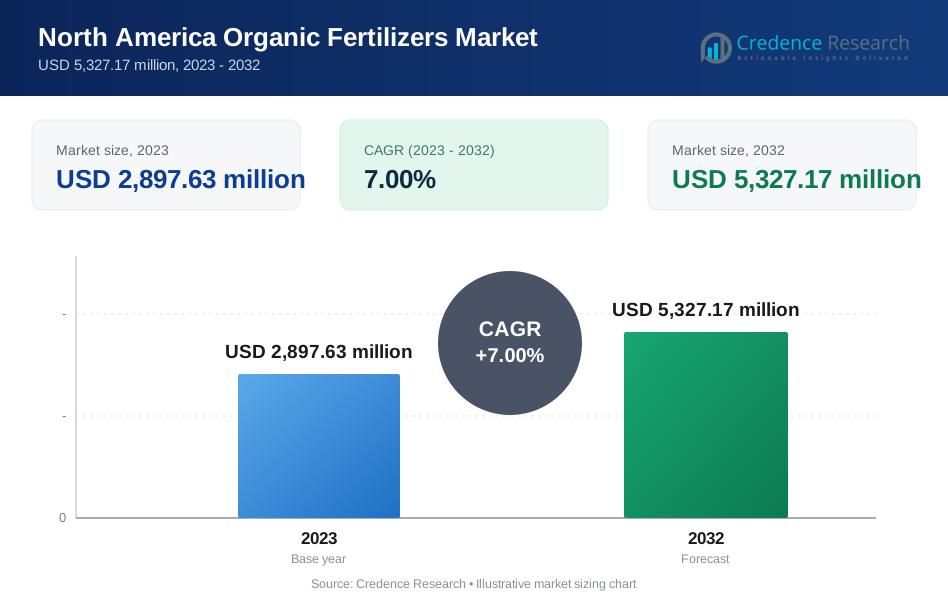
The North America Organic Fertilizers Market is projected to grow from USD 2,897.63 million in 2023 to an estimated USD 5,327.17 million by 2032, with a compound annual growth rate (CAGR) of 7.00% from 2024 to 2032. This substantial growth is driven by increasing consumer awareness about the benefits of organic products, government initiatives supporting sustainable agriculture, and the rising demand for organic food. The market's expansion is further fueled by the escalating adoption of organic farming practices across North America, as farmers seek to improve soil health, reduce dependency on chemical fertilizers, and cater to the growing demand for organic produce. This positive trend is expected to continue, bolstering the market's growth trajectory over the forecast period.
Market drivers and trends contributing to this growth include the increasing preference for organic food products among health-conscious consumers and the heightened awareness of environmental sustainability. Additionally, government regulations and subsidies promoting the use of organic fertilizers are significantly propelling the market forward. Technological advancements in organic fertilizer production and the development of innovative products are also key trends, providing enhanced nutrient content and improved efficiency. Furthermore, the integration of precision farming techniques with organic fertilizers is gaining traction, offering farmers better crop management and higher yields.
Geographically, the United States and Canada are the leading markets for organic fertilizers in North America, with significant contributions from the agricultural sectors in both countries. The United States, in particular, is witnessing robust growth due to its large-scale organic farming operations and supportive government policies. Canada is also experiencing notable growth, driven by the increasing adoption of organic farming practices and consumer demand for organic products. Key players in the North America Organic Fertilizers Market include ScottsMiracle-Gro Company, BioStar Organics, True Organic Products Inc., and Midwestern BioAg. These companies are actively engaged in research and development activities, strategic partnerships, and mergers and acquisitions to strengthen their market positions and expand their product portfolios.
Market Drivers
Growing Consumer Awareness and Demand for Organic Products
One of the primary drivers of the North America Organic Fertilizers Market is the increasing consumer awareness and demand for organic products. For instance, as consumers become more health-conscious and environmentally aware, they are turning towards organic food products that are perceived as safer and more nutritious. This shift towards a healthier lifestyle has significantly boosted the demand for organic produce, which, in turn, has driven the adoption of organic farming practices. Organic fertilizers play a crucial role in organic farming by providing essential nutrients to the soil and plants without the harmful effects associated with chemical fertilizers. This growing consumer preference for organic food is a critical factor propelling the market's growth, as it encourages farmers to switch to organic farming methods, thereby increasing the demand for organic fertilizers.
Government Support and Regulatory Policies
Government support and favorable regulatory policies are significant drivers in the North America Organic Fertilizers Market. For instance, various government initiatives aimed at promoting sustainable agriculture and reducing the environmental impact of conventional farming practices have positively impacted the market. Governments in North America have implemented policies that provide subsidies and incentives to farmers who adopt organic farming practices. Additionally, stringent regulations on the use of chemical fertilizers and pesticides have led to a shift towards organic alternatives. These supportive measures not only help in preserving the environment but also encourage farmers to use organic fertilizers, thereby driving market growth. The alignment of government policies with sustainable agricultural practices ensures a steady increase in the adoption of organic fertilizers across the region.
Advancements in Organic Fertilizer Production Technology
Technological advancements in the production of organic fertilizers have significantly contributed to the growth of the North America Organic Fertilizers Market. Innovations in manufacturing processes have led to the development of high-quality organic fertilizers that are more efficient and effective in enhancing soil fertility and crop yield. Advanced technologies have enabled the production of specialized organic fertilizers that cater to specific crop needs and soil conditions. For instance, bio-based fertilizers that use microorganisms to enhance nutrient availability in the soil are gaining popularity. These technological improvements not only improve the performance of organic fertilizers but also make them more competitive with conventional chemical fertilizers. The continuous innovation in organic fertilizer production is expected to drive market growth by providing farmers with more reliable and efficient organic solutions.
Increasing Adoption of Sustainable Farming Practices
The increasing adoption of sustainable farming practices is another major driver of the North America Organic Fertilizers Market. Sustainable farming practices emphasize the use of natural resources and environmentally friendly methods to enhance agricultural productivity. Organic farming, which relies on organic fertilizers, is a key component of sustainable agriculture. Farmers are increasingly adopting sustainable practices to improve soil health, reduce the environmental impact of farming, and ensure long-term agricultural productivity. Organic fertilizers, which improve soil structure and increase microbial activity, are essential for maintaining soil fertility and sustainability. The growing recognition of the long-term benefits of sustainable farming practices is encouraging farmers to shift towards organic fertilizers, thereby driving market growth. Additionally, the adoption of precision farming techniques, which optimize the use of organic fertilizers, further supports the market's expansion.
Market Trends
Increased Utilization of Bio-based Fertilizers
One of the prominent trends in the North America Organic Fertilizers Market is the increased utilization of bio-based fertilizers. For instance, these fertilizers, derived from natural sources such as composted vegetable waste or manure, are gaining popularity due to their eco-friendly nature and ability to enhance soil health. Bio-based fertilizers not only provide essential nutrients to plants but also improve soil structure and microbial activity, making them a sustainable alternative to chemical fertilizers.
Integration of Precision Farming Techniques
The integration of precision farming techniques with organic fertilizers is another significant trend. For instance, precision farming involves using advanced technologies such as GPS to map the fields and remote sensing to monitor soil conditions, optimizing the application of organic fertilizers. By precisely targeting the areas that need nutrients, farmers can reduce waste and improve crop yields. This trend is driving the adoption of organic fertilizers as they are more compatible with precision farming methods, enhancing their efficiency and effectiveness.
Growth in Organic Farming Acreage
The expansion of organic farming acreage across North America is a crucial trend influencing the organic fertilizers market. For instance, as more farmers in regions like California and Vermont convert their conventional farms to organic practices, the demand for organic fertilizers is rising. This growth is fueled by increasing consumer demand for organic food and the financial incentives provided by governments to support organic farming. The trend towards larger organic farming operations is expected to continue, further boosting the market.
Innovative Product Development
There is a notable trend towards the development of innovative organic fertilizer products. For instance, manufacturers are investing in research and development to create specialized fertilizers that cater to specific crop needs and soil conditions. Innovations such as slow-release organic fertilizers, liquid organic fertilizers, and nutrient-enriched formulations are gaining traction. These advanced products offer better nutrient availability and longer-lasting effects, meeting the diverse requirements of modern organic farming.
Rise of Urban and Community Gardening
The rise of urban and community gardening is another trend impacting the organic fertilizers market. With increasing urbanization, many city dwellers are engaging in gardening and small-scale farming. These urban farmers prefer organic fertilizers for their eco-friendly properties and ability to improve soil health. The growing popularity of urban gardening initiatives is driving the demand for organic fertilizers in smaller packaging and convenient forms.
Focus on Soil Health and Sustainability
There is a growing focus on soil health and sustainability in the agricultural sector. Farmers and agronomists are increasingly recognizing the importance of maintaining healthy soil for long-term productivity. Organic fertilizers, which enhance soil structure, increase organic matter, and promote microbial activity, are becoming the preferred choice for sustainable farming practices. This trend towards prioritizing soil health is significantly boosting the adoption of organic fertilizers.
Increased Awareness and Education
Increased awareness and education about the benefits of organic fertilizers are also driving market growth. Various organizations, including government bodies, agricultural institutions, and non-profits, are conducting educational programs and workshops to inform farmers about the advantages of organic fertilizers. These initiatives are helping to dispel myths about organic farming and encouraging more farmers to switch to organic fertilizers, thus supporting market expansion.
Market Restraints and Challenges
High Production Costs
One of the primary restraints in the North America Organic Fertilizers Market is the high production costs associated with organic fertilizers. The process of producing organic fertilizers, especially bio-based ones, involves significant investment in raw materials, labor, and technology. Unlike synthetic fertilizers, organic fertilizers require natural and often more expensive inputs, such as animal manure, compost, and plant residues. These high production costs can result in higher prices for organic fertilizers, making them less competitive compared to their chemical counterparts. This cost factor can deter small-scale farmers and those with limited budgets from adopting organic fertilizers, thereby restraining market growth.
Limited Availability and Distribution Challenges
The limited availability and distribution challenges of organic fertilizers pose significant barriers to market expansion. Organic fertilizers are often produced on a smaller scale compared to synthetic fertilizers, resulting in limited availability in some regions. Furthermore, the distribution network for organic fertilizers is not as well-established as that for chemical fertilizers. This can lead to difficulties in accessing organic fertilizers, particularly for farmers in remote or rural areas. The lack of a robust distribution network hinders the widespread adoption of organic fertilizers and restricts market growth.
Lack of Awareness and Knowledge Among Farmers
Another challenge in the North America Organic Fertilizers Market is the lack of awareness and knowledge among farmers about the benefits and proper usage of organic fertilizers. Many farmers are accustomed to using chemical fertilizers and may be skeptical about the efficacy of organic alternatives. Additionally, the transition to organic farming practices requires a significant change in approach, which can be daunting for farmers without proper guidance and education. The lack of comprehensive training programs and resources to educate farmers about organic fertilizers and their benefits can impede market growth.
Inconsistent Quality and Efficacy
Inconsistent quality and efficacy of organic fertilizers can also act as a restraint in the market. Unlike synthetic fertilizers, which have standardized compositions, the nutrient content in organic fertilizers can vary significantly based on the source and production process. This inconsistency can lead to unpredictable results in terms of crop yield and soil fertility. Farmers may be hesitant to rely on organic fertilizers if they cannot guarantee consistent performance. Ensuring uniform quality and efficacy in organic fertilizers remains a challenge for manufacturers and a concern for farmers.
Regulatory and Certification Challenges
Regulatory and certification challenges present another significant barrier to the growth of the North America Organic Fertilizers Market. The process of certifying organic fertilizers is stringent and can be time-consuming and costly for manufacturers. Compliance with various regional and national regulations requires continuous monitoring and adherence to specific standards, which can be burdensome. Additionally, the lack of harmonization in organic certification standards across different regions can create confusion and complexity for producers and consumers alike. These regulatory hurdles can slow down the market entry of new organic fertilizer products and limit their availability.
Market Segmentation Analysis
By Source
Plant-based organic fertilizers, derived from plant residues, green manure, compost, and other plant materials, are rich in nutrients and enhance soil structure and fertility. Their demand is growing due to their sustainability and soil health benefits. Animal-based organic fertilizers, sourced from manure, bone meal, blood meal, and other by-products, provide high levels of nitrogen and phosphorus, essential for robust plant growth and increased crop yields. Their effectiveness in promoting plant development drives their popularity. Mineral-based organic fertilizers, derived from naturally occurring mineral deposits, supply essential micronutrients and are increasingly used to correct soil nutrient deficiencies and optimize crop production.
By Crop Type
The North America Organic Fertilizers Market spans several key crop segments, each benefiting from the application of organic fertilizers. In the cereals and grains segment, including wheat, corn, barley, and rice, organic fertilizers enhance soil fertility and boost yields, responding to the growing demand for organic cereals and grains. The oilseeds and pulses segment, covering crops like soybeans, canola, sunflower, and various pulses, sees improved soil nutrient content and better crop growth and yield due to organic fertilizers, driven by increasing consumption. For fruits and vegetables, which include leafy greens, root vegetables, and fruit-bearing plants, organic fertilizers are essential for healthy growth and soil quality, catering to the rising consumer preference for organic produce. Additionally, the others category, comprising herbs, spices, and ornamental plants, benefits from the vital role organic fertilizers play in enhancing soil health and plant growth, supported by the diversification of crop production in this segment.
By Nutrition Content
Organic fertilizers in the North America market are categorized by their organic content levels. Fertilizers with up to 60% organic substance are nutrient-rich and ideal for intensive organic farming, significantly enhancing soil health and crop productivity. Those with 40% to 60% organic content offer a balanced nutrient supply, making them versatile and suitable for a variety of crops and soil conditions, thus gaining popularity among farmers. Fertilizers with 20% to 40% organic content serve as supplementary nutrient sources, often used alongside other organic amendments to optimize soil fertility and promote robust crop growth.
By Form
Dry organic fertilizers, available in granular or powdered form, are easy to apply and store, making them popular in large-scale farming operations due to their long-lasting effects on soil health and fertility. Their convenience and effectiveness drive their demand. Meanwhile, liquid organic fertilizers, which allow for quick nutrient absorption by plants, are particularly useful in foliar feeding and fertigation systems. The growing adoption of advanced farming techniques is boosting the demand for these liquid fertilizers, as they offer efficient nutrient delivery and improved crop performance.
Segments
Based on Source
- Plant-Based Organic Fertilizers
- Animal-Based Organic Fertilizers
- Mineral-Based Organic Fertilizers
Based on Crop Type
- Cereals and Grains
- Oilseeds and Pulses
- Fruits and Vegetables
- Others
Based on Nutrition Content
- Presence of Organic Substance up to 60%
- Presence of Organic Substance from 40% to 60%
- Presence of Organic Substance from 20% to 40%
Based on Form
- Dry Organic Fertilizers
- Liquid Organic Fertilizers
Regional Analysis
United States (65%):
The United States holds the largest share of the North America Organic Fertilizers Market, accounting for approximately 65% of the market. The country's dominance is driven by its well-established organic farming sector and strong consumer demand for organic products. The United States Department of Agriculture (USDA) has implemented numerous programs and policies that support organic farming practices, further boosting the adoption of organic fertilizers. The increasing awareness of environmental sustainability and health benefits associated with organic food is also propelling market growth. Moreover, the presence of major market players and advanced agricultural technologies facilitates the widespread use of organic fertilizers in the United States.
Canada (25%):
Canada represents around 25% of the North America Organic Fertilizers Market. The country is witnessing significant growth in organic farming, supported by favorable government policies and consumer preferences for organic products. The Canadian government has been proactive in promoting sustainable agricultural practices through various initiatives and subsidies for organic farmers. The growing trend of urban gardening and organic food consumption in Canada is driving the demand for organic fertilizers. Additionally, Canada's robust agricultural sector and increasing export opportunities for organic products are contributing to the market's expansion. The emphasis on soil health and sustainable farming practices aligns well with the rising use of organic fertilizers in the country.
Mexico (10%):
Mexico accounts for approximately 10% of the North America Organic Fertilizers Market. The market in Mexico is growing steadily, driven by the increasing adoption of organic farming practices and rising consumer demand for organic products. The Mexican government's efforts to promote sustainable agriculture and reduce the environmental impact of conventional farming methods are supporting the growth of the organic fertilizers market. Mexico's favorable climatic conditions for a variety of crops also provide ample opportunities for organic farming. Additionally, the expansion of export markets for Mexican organic produce is encouraging farmers to adopt organic fertilizers to meet international standards and demand.
Key players
- Tata Chemicals Limited
- BioFert Manufacturing Inc.
- Cascade Agronomics LLC
- Cedar Grove Composting Inc.
- B. Stone & Sons Inc.
- Morgan Composting Inc.
- Suståne Natural Fertilizer Inc.
- The Espoma Company
- The Rich Lawn Company LLC
- Walt's Organic Fertilizers Co.
Competitive Analysis
The North America Organic Fertilizers Market is characterized by intense competition among several key players, each striving to enhance their market presence through product innovation and strategic partnerships. Tata Chemicals Limited and The Espoma Company are leading the market with their extensive product portfolios and strong distribution networks. BioFert Manufacturing Inc. and Suståne Natural Fertilizer Inc. are recognized for their high-quality, eco-friendly products and commitment to sustainability. Companies like Cedar Grove Composting Inc. and Morgan Composting Inc. focus on producing compost-based fertilizers, catering to the growing demand for organic soil amendments. The market also sees significant contributions from regional players like Cascade Agronomics LLC and Walt's Organic Fertilizers Co., who emphasize localized production and tailored solutions for specific agricultural needs. Continuous investment in research and development, coupled with expanding distribution channels, remains crucial for maintaining competitive advantage in this dynamic market.
Recent Developments
In December 2023, Yara strategically acquired Agribios Italiana's organic-based fertilizer business to enhance its organic product offerings. This acquisition aligns with Yara's commitment to promoting regenerative agriculture and improving soil health. By integrating Agribios Italiana's innovative organic solutions, Yara aims to expand its market presence and provide farmers with advanced, sustainable fertilization options. This move underscores Yara's dedication to supporting sustainable farming practices and addressing the growing demand for organic fertilizers in the agriculture sector.
In March 2023, Perfect Blend, a natural fertilizers company based in Othello, U.S., received a USD 2.6 million grant to expand its production facility. This funding enabled the company to increase the manufacturing of natural fertilizers made from raw manure and fish waste. The investment is expected to boost local production in Washington state, providing significant benefits to local growers by supplying high-quality, eco-friendly fertilizers. Perfect Blend's expansion demonstrates a strong commitment to sustainable agriculture and supports the local agricultural economy.
In October 2022, West Virginia University received a USD 750,000 grant from the United States Department of Agriculture (USDA) to study the use of manure as fertilizers in agricultural fields. The research team aims to develop solutions that minimize the risk of pathogen and insect infestations when using manure-based fertilizers. This funding supports crucial research into sustainable fertilization methods, contributing to improved agricultural practices and promoting the safe and effective use of organic fertilizers. The project highlights the importance of academic research in advancing sustainable agriculture.
Market Concentration and Characteristics
The North America Organic Fertilizers Market is characterized by moderate market concentration, with a mix of large multinational corporations and numerous regional and local players. Leading companies such as Tata Chemicals Limited, The Espoma Company, and Suståne Natural Fertilizer Inc. dominate the market, leveraging extensive product portfolios and robust distribution networks. These key players are complemented by smaller, specialized companies like BioFert Manufacturing Inc. and Morgan Composting Inc., which focus on niche segments and localized production. The market is driven by innovation, with continuous investments in research and development to produce high-quality, eco-friendly fertilizers that cater to the increasing demand for sustainable agricultural practices. The presence of both established and emerging players fosters a competitive environment, promoting advancements in organic fertilizer technology and production.
Report Coverage
The research report offers an in-depth analysis based on Source, Crop Type, Nutrition Content and Form. It details leading market players, providing an overview of their business, product offerings, investments, revenue streams, and key applications. Additionally, the report includes insights into the competitive environment, SWOT analysis, current market trends, as well as the primary drivers and constraints. Furthermore, it discusses various factors that have driven market expansion in recent years. The report also explores market dynamics, regulatory scenarios, and technological advancements that are shaping the industry. It assesses the impact of external factors and global economic changes on market growth. Lastly, it provides strategic recommendations for new entrants and established companies to navigate the complexities of the market.
Future Outlook
- The North America Organic Fertilizers Market is projected to continue its robust growth, driven by increasing consumer demand for organic products and sustainable farming practices.
- Ongoing innovations in organic fertilizer production technologies will enhance product efficiency and effectiveness, supporting higher crop yields and better soil health.
- The acreage under organic farming is expected to expand significantly, with more farmers transitioning from conventional to organic practices to meet rising consumer preferences.
- Continued government incentives and regulatory support for organic farming will play a crucial role in driving the market, encouraging more farmers to adopt organic fertilizers.
- Both private and public sector investments in organic fertilizer research and development will rise, leading to the introduction of new, high-quality organic fertilizer products.
- Educational initiatives and increased awareness about the benefits of organic farming and fertilizers will further boost market adoption among farmers and consumers alike.
- A stronger focus on sustainability and environmental conservation will drive the demand for organic fertilizers as they help in maintaining soil health and reducing chemical usage.
- The rise of urban and community gardening will contribute to the market growth, as city dwellers increasingly prefer organic fertilizers for their gardening needs.
- The integration of organic fertilizers with precision farming techniques will enhance nutrient management, reduce waste, and improve overall farm productivity.
- The United States will remain the largest market, while Canada and Mexico will witness significant growth, supported by favorable agricultural policies and growing organic farming initiatives.
Request a Free Sample
Fill in your details and we'll send you a free sample report.
- Sample data tables & charts
- Research methodology
Need a Custom Version of This Report?
Tailor the scope, geography, or segments to your exact requirements.
- Custom geography or segment scope
- Direct access to our analyst team
Frequently Asked Questions
What is the projected growth of the North America Organic Fertilizers Market?
What are the main drivers of market growth?
Which regions are leading in the North America Organic Fertilizers Market?
What are the key trends in the market?
Who are the major players in the market?
Table of Content
Chapter 1. Report Introduction
- 1.1 Report Description & Purpose
- 1.1.1 Report Title & Market Definition
- 1.1.2 Unique Selling Propositions (USP) & Key Differentiators
- 1.1.3 Value Proposition for Stakeholders
- 1.2 Research Objectives
- 1.2.1 Market Sizing Objectives (Volume & Revenue)
- 1.2.2 Segmentation Objectives
- 1.2.3 Competitive Intelligence Objectives
- 1.2.4 Forecast & Scenario Objectives
- 1.3 Report Scope
- 1.3.1 North America Organic Fertilizers Scope – Types & Subtypes Covered
- 1.3.2 Geographic Scope – Regions & Countries Covered
- 1.3.3 Historical Period, Base Year & Forecast Period (2023; forecast to 2032)
- 1.3.4 Inclusions & Exclusions
- 1.4 HS Code & Classification Framework
- 1.5 Currency, Units & Pricing Basis
- 1.6 Target Stakeholders
- 1.7 Limitations & Assumptions
Chapter 2. Executive Summary
- 2.1 Global North America Organic Fertilizers Market Snapshot
- 2.1.1 Market Size – Historical (2023) & Forecast (2023-2032) (2023: USD 2,897.63 million → 2032: USD 5,327.17 million)
- 2.1.2 Volume & Revenue – Global Totals
- 2.1.3 Key Market Highlights – Top Five Facts
- 2.2 North America Organic Fertilizers Market Segmentation Snapshot
- 2.2.1 Market Split by Region – 2023 vs. 2032
- 2.3 Competitive Snapshot
- 2.3.1 Top 10 Players by Revenue Share – 2023
- 2.3.2 Top 10 Players by Volume Share – 2023
- 2.3.3 Recent Strategic Developments (18-Month Summary)
- 2.4 Key Investment Highlights & Strategic Conclusions
Chapter 3. North America Organic Fertilizers Market Dynamics & Industry Analysis
- 3.1 Market Overview & Context
- 3.1.1 North America Organic Fertilizers Market Position in the Broader Automotive Value Chain
- 3.1.2 OEM vs. Replacement Market Dynamics
- 3.1.3 Market Maturity & Development Stage by Region
- 3.2 North America Organic Fertilizers Market Drivers
- 3.3 North America Organic Fertilizers Market Restraints & Challenges
- 3.4 North America Organic Fertilizers Market Opportunities
- 3.5 Porter's Five Forces Analysis
- 3.5.1 Threat of New Entrants
- 3.5.2 Bargaining Power of Suppliers
- 3.5.3 Bargaining Power of Buyers
- 3.5.4 Threat of Substitutes
- 3.5.5 Competitive Rivalry – Intensity Assessment
- 3.6 North America Organic Fertilizers Value Chain Analysis
- 3.6.1 Upstream – Raw Material/Input Suppliers
- 3.6.1.1 Raw Material/Input 1
- 3.6.1.2 Raw Material/Input 2
- 3.6.1.3 Raw Material/Input 3
- 3.6.2 Midstream – Production/Manufacturing/Service Delivery
- 3.6.2.1 Production/Process Overview
- 3.6.2.2 Key Facility Locations & Capacity by Manufacturer
- 3.6.3 Downstream – Distribution & End Consumer
- 3.6.3.1 Primary Channel – B2B/OEM
- 3.6.3.2 Secondary Channels – Dealer, Retail, Online, Direct
- 3.6.4 Value Chain Profitability Analysis
- 3.6.1 Upstream – Raw Material/Input Suppliers
- 3.7 PESTEL Analysis
- 3.7.1 Political Factors
- 3.7.2 Economic Factors
- 3.7.3 Social Factors
- 3.7.4 Technological Factors
- 3.7.5 Environmental Factors
- 3.7.6 Legal Factors
- 3.8 North America Organic Fertilizers Supply Chain Analysis
- 3.8.1 Raw Material/Input Supply Risk Assessment
- 3.8.2 Manufacturing Concentration Risk (Geographic Exposure)
- 3.8.3 Trade Disruption Impact Analysis
- 3.9 Regulatory & Policy Landscape
Note: The regulatory and policy landscape section covers regulations based on their applicability to the market, North America Organic Fertilizers category, geography, and scope of the study. Only regulatory frameworks with a material impact on operations, compliance, trade, sustainability, or market access are analyzed in detail.
Chapter 4. Key Investment Pockets & Opportunity Analysis
- 4.1 North America Organic Fertilizers Market Attractiveness Analysis
- 4.1.1 By Region – Investment Attractiveness Matrix (Volume × CAGR)
- 4.2 Absolute Revenue Growth Opportunity
- 4.2.1 By Region – Absolute USD Growth Through 2032
- 4.3 Incremental Volume Opportunity
- 4.3.1 By Region – Incremental Volume Through 2032
- 4.3.2 Segment – Incremental Volume
- 4.4 Emerging Submarket Opportunity Deep Dive (Subject to Applicability)
- 4.5 Emerging Market Opportunity Scorecards
- 4.5.1 United States
- 4.5.2 Europe
- 4.5.3 Asia
- 4.5.4 Middle East & Africa
Note: Emerging Market Opportunity Scorecards will be included based on relevance and strategic importance. Regions listed are indicative and may vary depending on data availability and market dynamics.
Chapter 5. North America Organic Fertilizers Import-Export Analysis & Trade Flows
- 5.1 Global Trade Overview
- 5.1.1 Global Export Value by Country (2023)
- 5.1.2 Global Export Volume by Country (2023)
- 5.1.3 Global Import Value by Country (2023)
- 5.1.4 Global Import Volume by Country (2023)
- 5.1.5 Net Trade Balance by Country (2023)
- 5.2 Export Analysis – Segment
- 5.2.1 Type 1 (HS Code)
- 5.2.2 Type 2 (HS Code)
- 5.2.3 Type 3 (HS Code)
- 5.2.4 Type 4 (HS Code)
- 5.2.5 Type 5 (HS Code)
- 5.3 Import Analysis – Segment
- 5.3.1 Type 1 (HS Code)
- 5.3.2 Type 2 (HS Code)
- 5.3.3 Type 3 (HS Code)
- 5.3.4 Type 4 (HS Code)
- 5.3.5 Type 5 (HS Code)
- 5.4 Average Unit Trade Prices
- 5.4.1 Average Export Price – Segment & Country
- 5.4.2 Average Import Price – Segment & Source Country
- 5.4.3 Price Trends (2023)
- 5.5 Key Trade Route Analysis
- 5.5.1 Trade Route 1
- 5.5.2 Trade Route 2
- 5.5.3 Trade Route 3
- 5.5.4 Trade Route 4
- 5.5.5 Trade Route 5
- 5.6 Trade Policy Impact Assessment
- 5.6.1 US Anti-Dumping & Section 301 Tariffs
- 5.6.2 EU Customs Union Impact
- 5.6.3 Major Free Trade Agreements
- 5.6.4 USMCA Rules of Origin
Note: Trade policy analysis will be included only where relevant to the North America Organic Fertilizers market.
Chapter 6. Competitive Landscape & Company Benchmarking
- 6.1 North America Organic Fertilizers Market Concentration & Structure
- 6.1.1 Herfindahl-Hirschman Index (HHI) – vs. 2023
- 6.1.2 Tier 1, Tier 2 & Tier 3 Market Structure
- 6.1.3 Global, Regional & Local Player Dynamics
- 6.2 North America Organic Fertilizers Market Share Analysis – 2023
- 6.2.1 Global Revenue Share by Company
- 6.2.2 Global Volume Share by Company
- 6.2.3 Regional Revenue Share
- 6.2.4 Market Share Evolution ( vs. 2023)
- 6.2.5 OEM Segment Share by Company
- 6.2.6 Replacement Segment Share by Company
- 6.3 Production/Delivery Capacity & Facility Analysis
- 6.3.1 Global Installed Capacity
- 6.3.2 Capacity Utilization Rates
- 6.3.3 Production/Output Volume
- 6.3.4 Facility Locations & Capacity Map
- 6.3.5 Planned Capacity Additions
- 6.4 North America Organic Fertilizers Competitive Benchmarking Matrix
- 6.4.1 Revenue, Volume, CAGR & Profitability Comparison
- 6.4.2 Channel Revenue Mix
- 6.4.3 Geographic Revenue Exposure
- 6.4.4 R&D Intensity
- 6.4.5 Sustainability Maturity
- 6.5 Strategic Developments in North America Organic Fertilizers (Last 24 Months)
- 6.5.1 Mergers, Acquisitions & Divestments
- 6.5.2 New North America Organic Fertilizers Launches
- 6.5.3 Facility Expansions
- 6.5.4 Strategic Alliances, Joint Ventures & Partnerships
- 6.5.5 Distribution Expansion & Market Entry
- 6.5.6 Sustainability & ESG Initiatives
- 6.6 Competitive Strategy Mapping
- 6.6.1 Leader, Challenger, Follower & Niche Classification
- 6.6.2 Pricing Strategy Comparison
- 6.6.3 Channel Strategy Matrix
Note: Strategic developments are included based on their materiality and the availability of reliable information.
Chapter 7. Global North America Organic Fertilizers Market – By Distribution Channel
- 7.1 Segment Overview
- 7.1.1 Volume & Revenue Split by Channel (2023 & 2032)
- 7.1.2 Channel Mix Evolution (2023-2032)
Chapter 8. Regional Market Analysis – Global Overview
- 8.1 Global Regional Overview
- 8.1.1 Regional Volume Share
- 8.1.2 Regional Revenue Share
- 8.1.3 Regional Volume by Region
- 8.1.4 Regional Revenue by Region
- 8.1.5 Regional Forecast Through 2032
- 8.2 Cross-Regional Segment Analysis
- 8.2.1 By Distribution Channel
- 8.2.2 By Brand/Price Tier
Chapter 9. North America North America Organic Fertilizers Market
- 9.1 United States
- 9.2 Canada
- 9.3 Mexico
Chapter 10. Europe North America Organic Fertilizers Market
- 10.1 Germany
- 10.2 France
- 10.3 Italy
- 10.4 United Kingdom
- 10.5 Spain
- 10.6 Poland
- 10.7 Russia
- 10.8 Netherlands
- 10.9 Belgium
- 10.10 Sweden
- 10.11 Denmark
- 10.12 Norway
- 10.13 Rest of Europe
Chapter 11. Asia Pacific North America Organic Fertilizers Market
- 11.1 China
- 11.2 India
- 11.3 Japan
- 11.4 South Korea
- 11.5 Thailand
- 11.6 Indonesia
- 11.7 Vietnam
- 11.8 Malaysia
- 11.9 Australia
- 11.10 Rest of Asia Pacific
Chapter 12. Latin America North America Organic Fertilizers Market
- 12.1 Brazil
- 12.2 Argentina
- 12.3 Colombia
- 12.4 Chile
- 12.5 Rest of Latin America
Chapter 13. Middle East North America Organic Fertilizers Market
- 13.1 Saudi Arabia
- 13.2 United Arab Emirates
- 13.3 Turkey
- 13.4 Israel
- 13.5 Iran
- 13.6 Rest of the Middle East
Chapter 14. Africa North America Organic Fertilizers Market
- 14.1 South Africa
- 14.2 Egypt
- 14.3 Nigeria
- 14.4 Morocco
- 14.5 Rest of Africa
Chapter 15. North America Organic Fertilizers Company Profiles
- 15.1 [Company 01]
- 15.1.1 Company Overview
- 15.1.2 Key Management Personnel
- 15.1.3 Products & Services Portfolio
- 15.1.4 Financial Performance
- 15.1.5 Key Market Focus & Geographic Presence
- 15.1.6 Recent Developments & Strategic Initiatives
Note: The company profile list is preliminary and may change based on research findings, market developments, data availability, and client requirements.
Chapter 16. Appendices
- Appendix A – List of Abbreviations & Acronyms
- Appendix B – Industry Classification Code Reference – Full Series
- Appendix C – Production & Capacity Data Tables
- Appendix D – End-Use & Demand Base Tables
- Appendix E – Consumption & Replacement Rate Assumptions
- Appendix F – ASP Reference Tables
- Appendix G – Manufacturing & Facility Database
- Appendix H – Import-Export Data Tables
- Appendix I – Regulatory Summary Tables
- Appendix J – Primary Research Participant List (Anonymized)
- Appendix K – Primary Research Questionnaire Framework
- Appendix L – Data Sources & Bibliography
- Appendix M – Market Size Divergence & Source Comparison
Chapter 17. Research Methodology
- 17.1 Research Framework & Philosophy
- 17.2 Secondary Research – Sources, Hierarchy & Data Extraction
- 17.3 Data Modeling – Bottom-Up & Top-Down Market Sizing
- 17.4 Primary Research – Stakeholder Framework, LOI & Sample Sizes
- 17.5 Forecast Methodology – Regression, Scenario & Sensitivity Analysis
- 17.6 Quality Control – Four-Layer Validation Framework
- 17.7 Limitations & Standard Assumptions
- 17.8 Disclaimer
