
| REPORT ATTRIBUTE | DETAILS |
|---|---|
| Historical Period | 2020-2023 |
| Base Year | 2024 |
| Forecast Period | 2025-2032 |
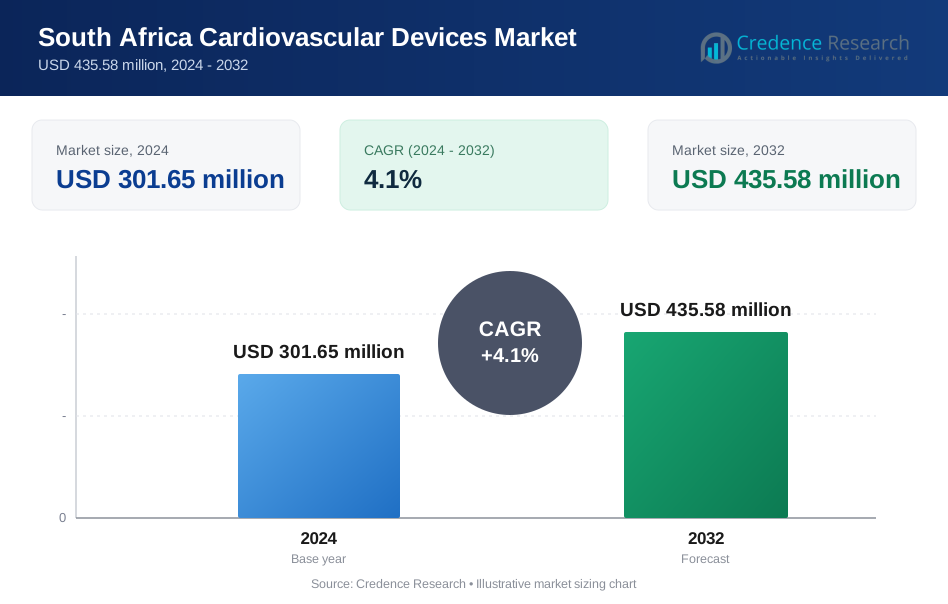
| South Africa Cardiovascular Devices Market Size 2024 | USD 301.65 million |
| South Africa Cardiovascular Devices Market, CAGR | 4.1% |
| South Africa Cardiovascular Devices Market Size 2032 | USD 435.58 million |
Market Overview
The South Africa Cardiovascular Devices Market is projected to grow from USD 301.65 million in 2024 to an estimated USD 435.58 million by 2032, with a compound annual growth rate (CAGR) of 4.1% from 2025 to 2032. This growth is driven by increasing healthcare infrastructure improvements and the rising prevalence of cardiovascular diseases in the country.
Key drivers fueling the market include a growing aging population, a rise in lifestyle-related diseases such as hypertension and diabetes, and increasing healthcare access. Additionally, advancements in diagnostic and therapeutic devices, particularly minimally invasive procedures, are playing a critical role in improving patient outcomes. The shift toward digital health solutions, including remote monitoring devices, is expected to accelerate the adoption of cardiovascular devices.
Geographically, South Africa remains the largest market for cardiovascular devices in the region, driven by its robust healthcare system and investment in medical technologies. Key players in the market include prominent companies such as Medtronic, Abbott Laboratories, Philips Healthcare, and GE Healthcare. These companies are focusing on expanding their presence in the country through strategic collaborations and the introduction of advanced, cost-effective cardiovascular solutions to cater to the growing demand.
Market Insights
- The South Africa Cardiovascular Devices Market is projected to grow from USD 301.65 million in 2024 to USD 435.58 million by 2032, with a CAGR of 4.1%. This growth is driven by increasing healthcare infrastructure and a rising prevalence of cardiovascular diseases.
- The global cardiovascular devices market is projected to grow from USD 72,115.60 million in 2024 to USD 133,700.94 million by 2032, with a CAGR of 7.1% from 2025 to 2032, driven by increasing cardiovascular diseases and advancements in medical technology.
- Key drivers include an aging population, the increasing incidence of lifestyle-related diseases like hypertension and diabetes, and a growing focus on healthcare access and quality.
- Advances in diagnostic and therapeutic devices, particularly minimally invasive procedures, are enhancing patient outcomes and driving the adoption of cardiovascular devices in South Africa.
- The growing demand for remote monitoring devices and digital health solutions is helping to accelerate the adoption of cardiovascular technologies, enabling continuous monitoring and timely interventions.
- High costs of advanced cardiovascular devices and limited access to healthcare infrastructure in rural areas may hinder the widespread adoption of these technologies.
- Gauteng and the Western Cape hold the largest market shares, benefiting from robust healthcare systems, while other regions are expected to grow with government initiatives improving healthcare access.
- Prominent companies like Medtronic, Abbott Laboratories, Philips Healthcare, and GE Healthcare are expanding their presence, focusing on affordable and advanced cardiovascular solutions tailored to South Africa’s growing healthcare needs.
Report Scope
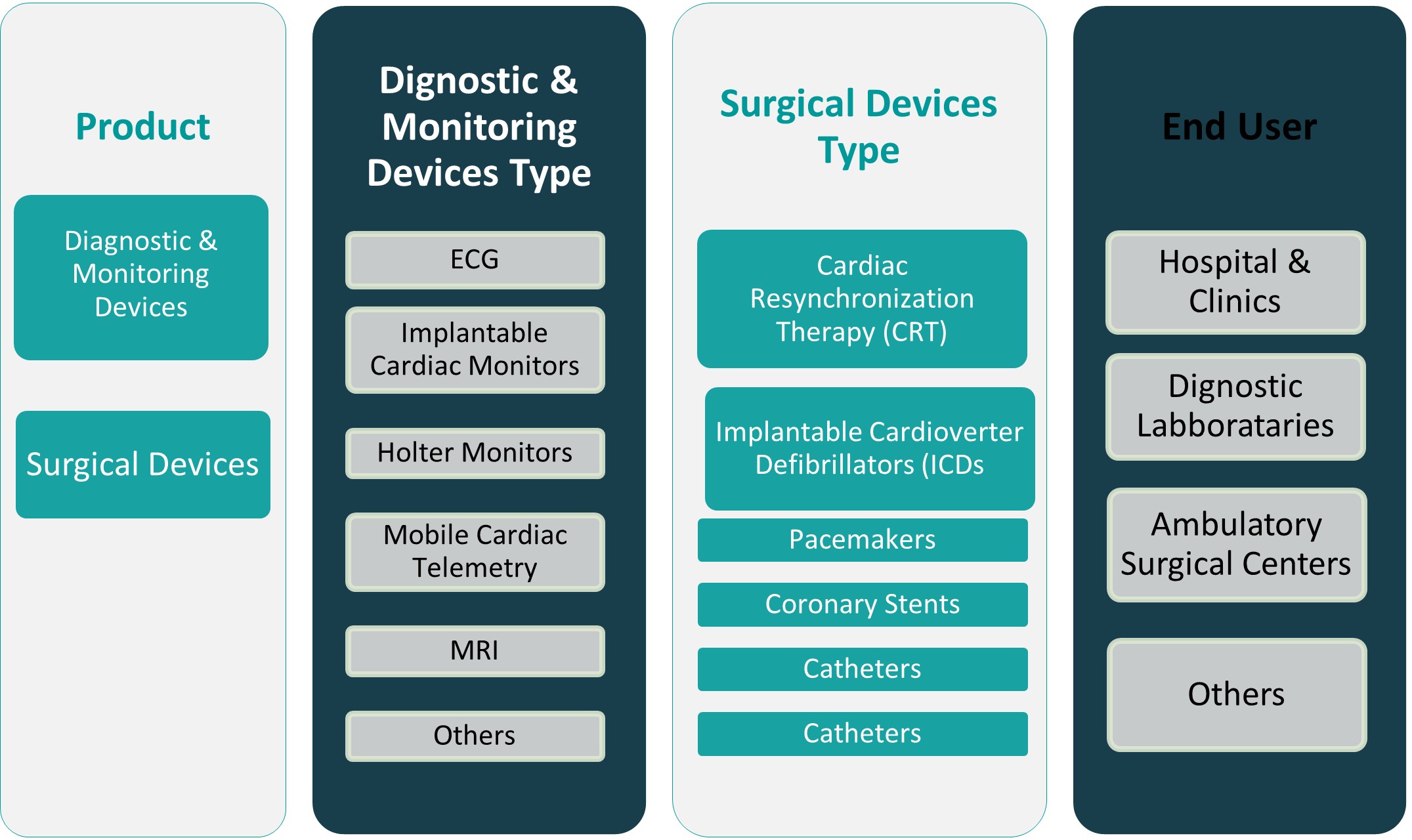
This report segments the South Africa Cardiovascular Devices Market as follows:
Market Drivers
Rising Prevalence of Cardiovascular Diseases
Cardiovascular diseases (CVDs) are among the leading causes of mortality and morbidity in South Africa. The increasing prevalence of conditions such as hypertension, heart failure, and coronary artery disease is significantly driving the demand for cardiovascular devices. According to the Heart and Stroke Foundation South Africa, for instance, cardiovascular disease accounts for nearly 215 deaths per day in the country. Nearly one-third of South African adults (33.7%) have hypertension, which is a major risk factor for heart disease. In addition to hypertension, rising cases of diabetes, obesity, and high cholesterol—often linked to lifestyle choices—are contributing to an elevated risk of cardiovascular diseases. This growing burden is resulting in an increased need for advanced diagnostic, therapeutic, and monitoring devices, which are integral to managing and treating these diseases. As the population ages, this trend is expected to continue, further intensifying the demand for high-quality cardiovascular devices.
Technological Advancements in Cardiovascular Devices
The rapid advancement of cardiovascular technologies is a key driver of market growth. Innovations in cardiovascular devices, such as implantable cardioverter defibrillators (ICDs), stents, and pacemakers, have significantly improved patient outcomes, making these devices more accessible and effective. Additionally, there has been considerable progress in non-invasive diagnostic technologies, such as digital stethoscopes, remote monitoring tools, and ECG devices, which are gaining traction in both hospitals and outpatient settings. For instance, South African hospitals have increasingly adopted remote cardiac monitoring systems to enhance patient care. The introduction of wearable devices, like smartwatches with built-in ECG functionality, has also created a paradigm shift in the management of cardiovascular health, allowing for continuous monitoring and early detection of potential issues. Furthermore, minimally invasive surgical techniques using advanced devices such as robotic-assisted surgery systems are gaining ground due to their ability to reduce patient recovery times and healthcare costs. These technological advancements are creating significant opportunities for the market by improving treatment efficacy, reducing risks, and lowering healthcare costs.
Government Initiatives and Healthcare Reforms
South Africa’s government is playing an essential role in driving the growth of the cardiovascular devices market through various healthcare reforms and initiatives aimed at improving the quality of care and accessibility to advanced medical technologies. The government’s National Health Insurance (NHI) plan, which is being gradually rolled out, is expected to enhance access to healthcare services, including cardiovascular care, for a larger portion of the population. Under the NHI, the government aims to increase the availability of essential health services, which will include cardiovascular care in both rural and urban regions. In addition, public health campaigns targeting risk factors such as smoking, alcohol consumption, and poor dietary habits are encouraging the adoption of preventive care measures, which in turn helps reduce the long-term burden on healthcare systems. With these initiatives, the demand for cardiovascular devices is expected to rise as the healthcare infrastructure strengthens and more people gain access to essential care.
Aging Population and Growing Demand for Healthcare Services
South Africa’s aging population is a significant driver of the cardiovascular devices market. The number of elderly individuals in the country is steadily increasing, with projections indicating that by 2030, approximately 13% of South Africa’s population will be aged 60 and above. As people age, the risk of developing cardiovascular diseases increases, leading to higher demand for cardiovascular devices, including diagnostic tools, implants, and monitoring systems. Elderly patients often require more specialized care, including long-term monitoring of heart conditions and the use of devices such as pacemakers or stents to manage their conditions. This demographic shift is driving healthcare providers to adapt and invest in more advanced medical devices to meet the growing needs of elderly patients. Additionally, the expanding middle class, coupled with a higher focus on preventive healthcare, is driving increased awareness of cardiovascular diseases, which encourages early diagnosis and treatment with the use of advanced cardiovascular devices. As a result, the market for cardiovascular devices is expanding rapidly, supported by both the aging population and increased healthcare demand.
Market Trends
Increasing Adoption of Minimally Invasive Procedures
The growing preference for minimally invasive procedures is one of the most significant trends shaping the South Africa cardiovascular devices market. These procedures are associated with smaller incisions, reduced recovery times, and lower risks compared to traditional surgeries, making them an attractive option for patients and healthcare providers alike. Technologies such as catheter-based interventions, robotic-assisted surgeries, and laser treatments for cardiovascular conditions are gaining popularity. As a result, devices like stents, balloon catheters, and pacemakers are increasingly being used in these less invasive treatments. For instance, hospitals in Johannesburg and Cape Town have expanded their use of robotic-assisted catheter procedures to improve precision and patient outcomes. Additionally, South Africa’s cardiology sector is seeing increased investment in hybrid operating rooms that integrate real-time imaging with interventional cardiology, enhancing procedural accuracy and efficiency. With the ongoing advancements in device technology, healthcare professionals are able to perform more precise and efficient interventions. This trend is further supported by patients’ growing preference for quicker recovery times, contributing to a surge in demand for these advanced cardiovascular devices in South Africa’s healthcare facilities.
Growth in Remote Monitoring and Wearable Devices
Remote monitoring and wearable devices are experiencing rapid adoption in South Africa’s cardiovascular devices market, driven by advancements in digital health and telemedicine. These devices, such as smartwatches and ECG monitors, allow for continuous monitoring of heart health, offering patients and healthcare providers real-time data on cardiovascular health. Remote monitoring also allows for early detection of potential issues such as arrhythmias or heart failure, enabling timely intervention and reducing the need for in-hospital visits. For instance, AI-powered ECG analysis tools are now being deployed in South African hospitals to enhance diagnostic accuracy and streamline patient management. This trend is particularly beneficial in South Africa’s rural areas, where access to healthcare facilities is limited. For instance, government-backed telemedicine initiatives are expanding digital health infrastructure to improve accessibility. With the increasing demand for digital health solutions and the growing penetration of mobile devices, this trend is expected to accelerate in the coming years, making cardiovascular health management more accessible and efficient.
Shift Towards Digital Health and AI Integration
The integration of artificial intelligence (AI) and digital health solutions into cardiovascular care is another major trend in the South Africa market. AI-powered tools are increasingly being utilized for the diagnosis and management of cardiovascular diseases, offering improved accuracy and speed in detecting abnormalities such as blockages, arrhythmias, and heart attacks. Machine learning algorithms are being used to analyze patient data, allowing for personalized treatment plans and better prediction of patient outcomes. Additionally, AI-enabled imaging systems, such as echocardiograms and CT scans, are enhancing diagnostic capabilities. This shift toward AI and digital health is enabling healthcare providers to offer more precise and data-driven cardiovascular care. As the South African healthcare system continues to evolve, AI and digital tools will play a crucial role in transforming cardiovascular diagnostics, treatment, and patient management.
Focus on Cost-Effective and Sustainable Cardiovascular Devices
Cost-effectiveness and sustainability are increasingly influencing the demand for cardiovascular devices in South Africa. Healthcare facilities, especially in the public sector, are facing budget constraints, prompting a shift towards more affordable devices that offer long-term value without compromising on quality. Manufacturers are responding to this demand by developing cost-effective cardiovascular devices, including affordable pacemakers, stents, and diagnostic tools. Additionally, there is a growing emphasis on sustainable practices, with companies focusing on eco-friendly materials and reducing the environmental impact of device production. This trend aligns with global movements toward sustainability, making it a significant factor in shaping the future of the cardiovascular devices market. Healthcare providers are now prioritizing solutions that provide both clinical efficacy and cost-efficiency, especially in resource-constrained settings. As the demand for affordable healthcare grows, this trend will likely continue to gain traction in South Africa’s cardiovascular devices sectr.
Market Challenges
Limited Access to Advanced Healthcare Infrastructure
One of the major challenges facing the South Africa cardiovascular devices market is the disparity in healthcare infrastructure between urban and rural areas. While major cities like Johannesburg and Cape Town have access to world-class medical facilities, rural regions often suffer from limited access to healthcare services, including cardiovascular care. This issue significantly hampers the widespread adoption of advanced cardiovascular devices such as implantable devices (e.g., pacemakers, stents) and diagnostic equipment (e.g., echocardiogram machines, ECG systems). Many rural healthcare facilities are under-equipped, lacking the necessary devices and trained professionals to perform complex cardiovascular procedures. Furthermore, the cost of maintaining high-tech medical equipment in underfunded public hospitals remains a persistent issue. For instance, South African hospitals have increasingly adopted remote cardiac monitoring systems to improve patient outcomes, but rural facilities struggle with implementation due to infrastructure limitations. These infrastructure limitations not only restrict patient access to advanced care but also pose a barrier to market expansion, especially for new, high-cost cardiovascular devices. In 2024, South African medical technology firms introduced portable echocardiography devices designed for use in remote clinics, aiming to enhance early detection of cardiovascular diseases in underserved regions. To address this challenge, significant investments in healthcare infrastructure and more equitable distribution of medical technologies across regions are essential. However, these changes require long-term government commitment and substantial financial resources, which are often not immediately available.
High Cost of Cardiovascular Devices
The high cost of cardiovascular devices remains another significant challenge in the South African market. Many advanced cardiovascular devices, such as coronary stents, pacemakers, and diagnostic systems, can be prohibitively expensive, especially for public healthcare institutions that are often under financial pressure. These high costs make it difficult for a significant portion of the population to access necessary treatments, particularly in the public sector, which serves the majority of South Africans. The pricing issue is exacerbated by the reliance on imported medical devices, which further increases costs due to exchange rate fluctuations, import duties, and transportation fees. While private healthcare facilities can absorb these costs to some extent, the affordability of cardiovascular devices for a large portion of the population remains a challenge. Manufacturers and policymakers are now exploring ways to make cardiovascular care more accessible by developing cost-effective solutions, such as locally produced devices or financial support schemes, but overcoming the affordability barrier requires substantial innovation and collaboration between the government, industry, and healthcare providers. Without solutions to mitigate costs, access to life-saving cardiovascular treatments will remain limited for a significant portion of the population.
Market Opportunities
Expansion of Healthcare Access and Government Initiatives
A significant market opportunity exists in the ongoing expansion of healthcare access across South Africa, particularly through government initiatives like the National Health Insurance (NHI) program. The NHI aims to provide universal healthcare coverage, making it easier for the population, especially in underserved rural areas, to access advanced medical technologies, including cardiovascular devices. This initiative is expected to increase demand for cardiovascular diagnostic tools, therapeutic devices, and monitoring systems. As the government invests in modernizing healthcare infrastructure, the market for cardiovascular devices will see steady growth, providing opportunities for manufacturers to expand their product offerings. Moreover, with an increased focus on preventive care and early detection, there is a growing demand for non-invasive cardiovascular devices and wearable monitoring systems that can track heart health in real-time. Companies that can develop affordable, cost-effective solutions tailored to local needs are well-positioned to tap into this expanding market.
Technological Advancements and Innovations
The South African market also presents opportunities in the development and adoption of next-generation cardiovascular devices driven by technological advancements. Innovations such as AI-powered diagnostic tools, remote monitoring systems, and minimally invasive surgical devices are gaining traction globally and are increasingly being integrated into South African healthcare facilities. The increasing trend toward digital health, telemedicine, and wearable devices also offers a significant growth potential for cardiovascular device manufacturers. As South Africa continues to embrace these cutting-edge technologies, companies that can provide affordable, locally adaptable, and efficient solutions are likely to capitalize on the growing demand. Additionally, with a rising number of cardiovascular patients seeking treatment, the introduction of innovative devices designed to improve patient outcomes and reduce treatment costs will drive market growth in the long term.
Market Segmentation Analysis
By Product
The South Africa cardiovascular devices market is primarily segmented into diagnostic & monitoring devices and surgical devices. Diagnostic and monitoring devices hold a significant share of the market due to the increasing demand for early detection, diagnosis, and ongoing monitoring of cardiovascular diseases. Devices such as electrocardiograms (ECGs), echocardiograms, and Holter monitors are widely used in healthcare settings to detect arrhythmias, heart failure, and other cardiac conditions. These diagnostic tools are critical in managing cardiovascular health and are in high demand due to the rising prevalence of heart diseases in South Africa. Surgical devices, on the other hand, include products like pacemakers, stents, catheter-based intervention systems, and coronary artery bypass grafts (CABGs). With the growing need for treatment options for patients with severe heart conditions, surgical devices are increasingly being adopted. Minimally invasive surgical devices, such as balloon catheters and stents, are gaining traction due to their advantages of quicker recovery times and fewer complications compared to traditional open-heart surgeries. The market for these surgical devices is expected to expand as more hospitals and clinics adopt cutting-edge technologies to treat cardiovascular diseases.
By End User
The market is also segmented based on end users, which include hospitals & clinics, diagnostic laboratories, ambulatory surgical centers, and others. Hospitals and clinics dominate the end-user segment due to their crucial role in the treatment and management of cardiovascular diseases. They serve as primary care providers where diagnostic tests and treatments are conducted, including surgeries and ongoing management of heart patients. As cardiovascular diseases become more prevalent, the demand for high-quality diagnostic and surgical equipment in hospitals and clinics is on the rise. Diagnostic laboratories are another significant end user, as these facilities focus on performing heart-related diagnostic tests and procedures such as ECG, stress tests, and blood tests to determine heart health. The rising number of specialized diagnostic laboratories that offer advanced testing solutions creates an opportunity for increased adoption of cardiovascular devices. Ambulatory surgical centers are also seeing a rise in the demand for cardiovascular devices due to their focus on outpatient surgeries, particularly for non-invasive procedures like stent placements or catheterizations. The ability to perform such surgeries outside of traditional hospital settings makes ambulatory surgical centers an important contributor to the market, providing access to efficient and cost-effective cardiovascular care.
Segments
Based on Product
- Diagnostic & Monitoring Devices
- Surgical Devices
Based on End User
- Hospitals & Clinics
- Diagnostic Laboratories
- Ambulatory Surgical Centers
- Others
Based on Diagnostic & Monitoring Devices Type
- ECG
- Implantable Cardiac Monitors
- Holter Monitors
- Mobile Cardiac Telemetry
- MRI
- Others
Based on Surgical Devices Type
- Cardiac Resynchronization Therapy (CRT)
- Implantable Cardioverter Defibrillators (ICDs
- Pacemakers
- Coronary Stents
- Catheters
Based on Region
- KwaZulu-Natal
- Eastern Cape
- Limpopo
- Northern Cape
Regional Analysis
Gauteng Region (45%)
Gauteng, which includes major metropolitan areas like Johannesburg and Pretoria, holds the largest market share in the South Africa cardiovascular devices market, accounting for approximately 45% of the total market. The region is home to the country’s most developed healthcare infrastructure, including private and public hospitals, specialized clinics, and diagnostic centers that utilize advanced cardiovascular technologies. Gauteng's hospitals, especially those in Johannesburg, are at the forefront of adopting cutting-edge cardiovascular devices such as pacemakers, stents, and diagnostic equipment like ECGs and echocardiograms. The region benefits from a higher concentration of medical professionals, advanced training centers, and access to global medical device manufacturers, making it a hub for both the demand and supply of cardiovascular devices.
Western Cape Region (30%)
The Western Cape, with Cape Town as its economic and healthcare center, holds a significant market share of approximately 30%. This region’s market growth is driven by its high standard of healthcare services, with several renowned private and public hospitals offering state-of-the-art cardiovascular care. The Western Cape is also a key area for research and development in the healthcare sector, further spurring the demand for innovative cardiovascular devices. While the urban areas of Cape Town dominate, there is also growing recognition of the need to expand healthcare services to more remote areas in the region, leading to an increase in the adoption of portable diagnostic devices and telemedicine solutions.
Key players
- Abbott
- GE HealthCare
- Edwards Lifesciences Corporation
- Siemens Healthcare GmbH
- BIOTRONIK SE & Co. KG
- Cardinal Health
- Medtronic
- Boston Scientific Corporation
- Johnson & Johnson Services, Inc
- Cordis (a Cardinal Health company)
- Stryker South Africa
- WELLCOR
- Acerus Pharmaceuticals
Competitive Analysis
The South Africa cardiovascular devices market is highly competitive, with several global and local players offering a wide range of products. Abbott, Medtronic, and Boston Scientific Corporation are leading the market with their comprehensive portfolios of cardiovascular diagnostic and therapeutic devices, such as stents, pacemakers, and diagnostic imaging systems. These companies are investing heavily in innovation and expanding their presence through strategic partnerships and acquisitions. GE HealthCare and Siemens Healthcare also hold significant market shares, particularly in diagnostic imaging and monitoring devices, with advanced technologies driving market demand. Edwards Lifesciences and BIOTRONIK focus on specialized cardiovascular devices such as heart valves and implantable devices, carving out a niche in the high-end segment. Local players like WELLCOR and Stryker South Africa are gaining traction by offering more affordable, region-specific solutions, addressing the growing need for cost-effective cardiovascular care in rural areas.
Recent Developments
- In February 2025, Abbott issued a safety notification for certain Assurity and Endurity pacemakers due to potential epoxy mixing issues during manufacturing, which could lead to device malfunction.
- In April 2025, GE HealthCare launched the Revolution™ Vibe CT system featuring Unlimited One-Beat Cardiac imaging and AI solutions, enhancing cardiac imaging capabilities.
- In April 2025, Medtronic reported promising evidence for its Affera™ pulsed field ablation technologies in treating atrial fibrillation patients.
- In May 2024, Siemens Healthineers announced new cardiology applications with artificial intelligence for the Acuson Sequoia ultrasound system, including a new 4D transesophageal (TEE) transducer for cardiology exams.
- In February 2025, Philips developed a miniaturized intracardiac transducer, enabling higher-resolution views of cardiac structures and functions, benefiting structural heart disease and electrophysiology procedures.
- In March 2025, Boston Scientific announced the acquisition of SoniVie Ltd. to expand its interventional cardiology therapies offerings with ultrasound-based renal denervation technology.
- In June 2024, Biovac Institute entered a partnership with Sanofi to locally manufacture inactivated polio vaccines in Africa, aiming to serve the potential needs of over 40 African countries.
Market Concentration and Characteristics
The South Africa cardiovascular devices market is moderately concentrated, with several global and local players dominating the landscape. Large multinational companies such as Abbott, Medtronic, Boston Scientific, and GE HealthCare hold significant market shares due to their extensive product portfolios, strong distribution networks, and ongoing investments in technological innovations. These companies lead the market in both diagnostic and therapeutic cardiovascular devices, offering advanced solutions such as stents, pacemakers, and diagnostic imaging systems. However, there is also a growing presence of local players like Stryker South Africa and WELLCOR, who cater to the demand for more affordable and region-specific products, particularly in rural and underserved areas. The market is characterized by increasing competition, with companies focusing on expanding their geographic reach, improving product affordability, and adopting technological advancements to meet the rising demand for advanced cardiovascular care. This competitive environment is expected to foster further innovation and improve the accessibility of cardiovascular devices across South Africa.
Report Coverage
The research report offers an in-depth analysis based on Product, End User, Diagnostic & Monitoring Devices Type, Surgical Devices Type and Region. It details leading market players, providing an overview of their business, product offerings, investments, revenue streams, and key applications. Additionally, the report includes insights into the competitive environment, SWOT analysis, current market trends, as well as the primary drivers and constraints. Furthermore, it discusses various factors that have driven market expansion in recent years. The report also explores market dynamics, regulatory scenarios, and technological advancements that are shaping the industry. It assesses the impact of external factors and global economic changes on market growth. Lastly, it provides strategic recommendations for new entrants and established companies to navigate the complexities of the market.
Future Outlook
- Continued investment in healthcare infrastructure, driven by the National Health Insurance (NHI) initiative, will increase access to advanced cardiovascular devices across the country. This expansion will fuel market growth, particularly in underserved regions.
- The trend towards minimally invasive procedures, supported by advancements in device technology, will lead to higher demand for catheter-based and robotic-assisted cardiovascular devices. This shift will enhance treatment efficiency and patient recovery.
- The increasing prevalence of lifestyle-related diseases such as hypertension, diabetes, and obesity will drive the demand for cardiovascular devices. Early detection and ongoing management will become essential, further boosting the market.
- The integration of artificial intelligence (AI) and machine learning in diagnostic tools will improve accuracy and efficiency in cardiovascular disease detection. These innovations will provide more personalized treatment options for patients.
- Remote monitoring devices and wearable technologies will gain traction, enabling continuous cardiovascular health management. This will lead to broader adoption of smart devices like ECG monitors and heart rate trackers.
- With budget constraints in the public healthcare sector, there will be increased demand for affordable and cost-effective cardiovascular devices. Manufacturers will focus on producing high-quality yet economical solutions to meet this need.
- Government efforts to improve healthcare access in rural areas will lead to greater adoption of portable and easy-to-use cardiovascular devices. Mobile health units and telemedicine will facilitate this expansion.
- Stringent regulations and a push for local manufacturing will drive the development of region-specific cardiovascular devices. This will make devices more affordable and better suited to the local healthcare environment.
- Strategic partnerships between international companies and local distributors or healthcare providers will strengthen the market presence. These collaborations will facilitate the introduction of advanced technologies to South Africa’s healthcare system.
- The South African government’s focus on expanding healthcare services and reducing disparities will continue to drive market demand. Public health campaigns will also raise awareness, encouraging early intervention and regular use of cardiovascular devices.
Request a Free Sample
Fill in your details and we'll send you a free sample report.
- Sample data tables & charts
- Research methodology
Need a Custom Version of This Report?
Tailor the scope, geography, or segments to your exact requirements.
- Custom geography or segment scope
- Direct access to our analyst team
Frequently Asked Questions
What is the projected market size of the South Africa Cardiovascular Devices Market in 2024 and 2032?
What is the expected compound annual growth rate (CAGR) for the South Africa Cardiovascular Devices Market?
How is the adoption of digital health solutions impacting the cardiovascular devices market in South Africa?
Who are the key players in the South Africa Cardiovascular Devices Market?
Table of Content
Chapter 1. Report Introduction
- 1.1 Report Description & Purpose
- 1.1.1 Report Title & Market Definition
- 1.1.2 Unique Selling Propositions (USP) & Key Differentiators
- 1.1.3 Value Proposition for Stakeholders
- 1.2 Research Objectives
- 1.2.1 Market Sizing Objectives (Volume & Revenue)
- 1.2.2 Segmentation Objectives
- 1.2.3 Competitive Intelligence Objectives
- 1.2.4 Forecast & Scenario Objectives
- 1.3 Report Scope
- 1.3.1 South Africa Cardiovascular Devices Scope – Types & Subtypes Covered
- 1.3.2 Geographic Scope – Regions & Countries Covered
- 1.3.3 Historical Period, Base Year & Forecast Period (2024; forecast to 2032)
- 1.3.4 Inclusions & Exclusions
- 1.4 HS Code & Classification Framework
- 1.5 Currency, Units & Pricing Basis
- 1.6 Target Stakeholders
- 1.7 Limitations & Assumptions
Chapter 2. Executive Summary
- 2.1 Global South Africa Cardiovascular Devices Market Snapshot
- 2.1.1 Market Size – Historical (2024) & Forecast (2024-2032) (2024: USD 301.65 million → 2032: USD 435.58 million)
- 2.1.2 Volume & Revenue – Global Totals
- 2.1.3 Key Market Highlights – Top Five Facts
- 2.2 South Africa Cardiovascular Devices Market Segmentation Snapshot
- 2.2.1 Market Split by Region – 2024 vs. 2032
- 2.3 Competitive Snapshot
- 2.3.1 Top 10 Players by Revenue Share – 2024
- 2.3.2 Top 10 Players by Volume Share – 2024
- 2.3.3 Recent Strategic Developments (18-Month Summary)
- 2.4 Key Investment Highlights & Strategic Conclusions
Chapter 3. South Africa Cardiovascular Devices Market Dynamics & Industry Analysis
- 3.1 Market Overview & Context
- 3.1.1 South Africa Cardiovascular Devices Market Position in the Broader Automotive Value Chain
- 3.1.2 OEM vs. Replacement Market Dynamics
- 3.1.3 Market Maturity & Development Stage by Region
- 3.2 South Africa Cardiovascular Devices Market Drivers
- 3.3 South Africa Cardiovascular Devices Market Restraints & Challenges
- 3.4 South Africa Cardiovascular Devices Market Opportunities
- 3.5 Porter's Five Forces Analysis
- 3.5.1 Threat of New Entrants
- 3.5.2 Bargaining Power of Suppliers
- 3.5.3 Bargaining Power of Buyers
- 3.5.4 Threat of Substitutes
- 3.5.5 Competitive Rivalry – Intensity Assessment
- 3.6 South Africa Cardiovascular Devices Value Chain Analysis
- 3.6.1 Upstream – Raw Material/Input Suppliers
- 3.6.1.1 Raw Material/Input 1
- 3.6.1.2 Raw Material/Input 2
- 3.6.1.3 Raw Material/Input 3
- 3.6.2 Midstream – Production/Manufacturing/Service Delivery
- 3.6.2.1 Production/Process Overview
- 3.6.2.2 Key Facility Locations & Capacity by Manufacturer
- 3.6.3 Downstream – Distribution & End Consumer
- 3.6.3.1 Primary Channel – B2B/OEM
- 3.6.3.2 Secondary Channels – Dealer, Retail, Online, Direct
- 3.6.4 Value Chain Profitability Analysis
- 3.6.1 Upstream – Raw Material/Input Suppliers
- 3.7 PESTEL Analysis
- 3.7.1 Political Factors
- 3.7.2 Economic Factors
- 3.7.3 Social Factors
- 3.7.4 Technological Factors
- 3.7.5 Environmental Factors
- 3.7.6 Legal Factors
- 3.8 South Africa Cardiovascular Devices Supply Chain Analysis
- 3.8.1 Raw Material/Input Supply Risk Assessment
- 3.8.2 Manufacturing Concentration Risk (Geographic Exposure)
- 3.8.3 Trade Disruption Impact Analysis
- 3.9 Regulatory & Policy Landscape
Note: The regulatory and policy landscape section covers regulations based on their applicability to the market, South Africa Cardiovascular Devices category, geography, and scope of the study. Only regulatory frameworks with a material impact on operations, compliance, trade, sustainability, or market access are analyzed in detail.
Chapter 4. Key Investment Pockets & Opportunity Analysis
- 4.1 South Africa Cardiovascular Devices Market Attractiveness Analysis
- 4.1.1 By Region – Investment Attractiveness Matrix (Volume × CAGR)
- 4.2 Absolute Revenue Growth Opportunity
- 4.2.1 By Region – Absolute USD Growth Through 2032
- 4.3 Incremental Volume Opportunity
- 4.3.1 By Region – Incremental Volume Through 2032
- 4.3.2 Segment – Incremental Volume
- 4.4 Emerging Submarket Opportunity Deep Dive (Subject to Applicability)
- 4.5 Emerging Market Opportunity Scorecards
- 4.5.1 United States
- 4.5.2 Europe
- 4.5.3 Asia
- 4.5.4 Middle East & Africa
Note: Emerging Market Opportunity Scorecards will be included based on relevance and strategic importance. Regions listed are indicative and may vary depending on data availability and market dynamics.
Chapter 5. South Africa Cardiovascular Devices Import-Export Analysis & Trade Flows
- 5.1 Global Trade Overview
- 5.1.1 Global Export Value by Country (2024)
- 5.1.2 Global Export Volume by Country (2024)
- 5.1.3 Global Import Value by Country (2024)
- 5.1.4 Global Import Volume by Country (2024)
- 5.1.5 Net Trade Balance by Country (2024)
- 5.2 Export Analysis – Segment
- 5.2.1 Type 1 (HS Code)
- 5.2.2 Type 2 (HS Code)
- 5.2.3 Type 3 (HS Code)
- 5.2.4 Type 4 (HS Code)
- 5.2.5 Type 5 (HS Code)
- 5.3 Import Analysis – Segment
- 5.3.1 Type 1 (HS Code)
- 5.3.2 Type 2 (HS Code)
- 5.3.3 Type 3 (HS Code)
- 5.3.4 Type 4 (HS Code)
- 5.3.5 Type 5 (HS Code)
- 5.4 Average Unit Trade Prices
- 5.4.1 Average Export Price – Segment & Country
- 5.4.2 Average Import Price – Segment & Source Country
- 5.4.3 Price Trends (2024)
- 5.5 Key Trade Route Analysis
- 5.5.1 Trade Route 1
- 5.5.2 Trade Route 2
- 5.5.3 Trade Route 3
- 5.5.4 Trade Route 4
- 5.5.5 Trade Route 5
- 5.6 Trade Policy Impact Assessment
- 5.6.1 US Anti-Dumping & Section 301 Tariffs
- 5.6.2 EU Customs Union Impact
- 5.6.3 Major Free Trade Agreements
- 5.6.4 USMCA Rules of Origin
Note: Trade policy analysis will be included only where relevant to the South Africa Cardiovascular Devices market.
Chapter 6. Competitive Landscape & Company Benchmarking
- 6.1 South Africa Cardiovascular Devices Market Concentration & Structure
- 6.1.1 Herfindahl-Hirschman Index (HHI) – vs. 2024
- 6.1.2 Tier 1, Tier 2 & Tier 3 Market Structure
- 6.1.3 Global, Regional & Local Player Dynamics
- 6.2 South Africa Cardiovascular Devices Market Share Analysis – 2024
- 6.2.1 Global Revenue Share by Company
- 6.2.2 Global Volume Share by Company
- 6.2.3 Regional Revenue Share
- 6.2.4 Market Share Evolution ( vs. 2024)
- 6.2.5 OEM Segment Share by Company
- 6.2.6 Replacement Segment Share by Company
- 6.3 Production/Delivery Capacity & Facility Analysis
- 6.3.1 Global Installed Capacity
- 6.3.2 Capacity Utilization Rates
- 6.3.3 Production/Output Volume
- 6.3.4 Facility Locations & Capacity Map
- 6.3.5 Planned Capacity Additions
- 6.4 South Africa Cardiovascular Devices Competitive Benchmarking Matrix
- 6.4.1 Revenue, Volume, CAGR & Profitability Comparison
- 6.4.2 Channel Revenue Mix
- 6.4.3 Geographic Revenue Exposure
- 6.4.4 R&D Intensity
- 6.4.5 Sustainability Maturity
- 6.5 Strategic Developments in South Africa Cardiovascular Devices (Last 24 Months)
- 6.5.1 Mergers, Acquisitions & Divestments
- 6.5.2 New South Africa Cardiovascular Devices Launches
- 6.5.3 Facility Expansions
- 6.5.4 Strategic Alliances, Joint Ventures & Partnerships
- 6.5.5 Distribution Expansion & Market Entry
- 6.5.6 Sustainability & ESG Initiatives
- 6.6 Competitive Strategy Mapping
- 6.6.1 Leader, Challenger, Follower & Niche Classification
- 6.6.2 Pricing Strategy Comparison
- 6.6.3 Channel Strategy Matrix
Note: Strategic developments are included based on their materiality and the availability of reliable information.
Chapter 7. Global South Africa Cardiovascular Devices Market – By Distribution Channel
- 7.1 Segment Overview
- 7.1.1 Volume & Revenue Split by Channel (2024 & 2032)
- 7.1.2 Channel Mix Evolution (2024-2032)
Chapter 8. Regional Market Analysis – Global Overview
- 8.1 Global Regional Overview
- 8.1.1 Regional Volume Share
- 8.1.2 Regional Revenue Share
- 8.1.3 Regional Volume by Region
- 8.1.4 Regional Revenue by Region
- 8.1.5 Regional Forecast Through 2032
- 8.2 Cross-Regional Segment Analysis
- 8.2.1 By Distribution Channel
- 8.2.2 By Brand/Price Tier
Chapter 9. North America South Africa Cardiovascular Devices Market
- 9.1 United States
- 9.2 Canada
- 9.3 Mexico
Chapter 10. Europe South Africa Cardiovascular Devices Market
- 10.1 Germany
- 10.2 France
- 10.3 Italy
- 10.4 United Kingdom
- 10.5 Spain
- 10.6 Poland
- 10.7 Russia
- 10.8 Netherlands
- 10.9 Belgium
- 10.10 Sweden
- 10.11 Denmark
- 10.12 Norway
- 10.13 Rest of Europe
Chapter 11. Asia Pacific South Africa Cardiovascular Devices Market
- 11.1 China
- 11.2 India
- 11.3 Japan
- 11.4 South Korea
- 11.5 Thailand
- 11.6 Indonesia
- 11.7 Vietnam
- 11.8 Malaysia
- 11.9 Australia
- 11.10 Rest of Asia Pacific
Chapter 12. Latin America South Africa Cardiovascular Devices Market
- 12.1 Brazil
- 12.2 Argentina
- 12.3 Colombia
- 12.4 Chile
- 12.5 Rest of Latin America
Chapter 13. Middle East South Africa Cardiovascular Devices Market
- 13.1 Saudi Arabia
- 13.2 United Arab Emirates
- 13.3 Turkey
- 13.4 Israel
- 13.5 Iran
- 13.6 Rest of the Middle East
Chapter 14. Africa South Africa Cardiovascular Devices Market
- 14.1 South Africa
- 14.2 Egypt
- 14.3 Nigeria
- 14.4 Morocco
- 14.5 Rest of Africa
Chapter 15. South Africa Cardiovascular Devices Company Profiles
- 15.1 [Company 01]
- 15.1.1 Company Overview
- 15.1.2 Key Management Personnel
- 15.1.3 Products & Services Portfolio
- 15.1.4 Financial Performance
- 15.1.5 Key Market Focus & Geographic Presence
- 15.1.6 Recent Developments & Strategic Initiatives
Note: The company profile list is preliminary and may change based on research findings, market developments, data availability, and client requirements.
Chapter 16. Appendices
- Appendix A – List of Abbreviations & Acronyms
- Appendix B – Industry Classification Code Reference – Full Series
- Appendix C – Production & Capacity Data Tables
- Appendix D – End-Use & Demand Base Tables
- Appendix E – Consumption & Replacement Rate Assumptions
- Appendix F – ASP Reference Tables
- Appendix G – Manufacturing & Facility Database
- Appendix H – Import-Export Data Tables
- Appendix I – Regulatory Summary Tables
- Appendix J – Primary Research Participant List (Anonymized)
- Appendix K – Primary Research Questionnaire Framework
- Appendix L – Data Sources & Bibliography
- Appendix M – Market Size Divergence & Source Comparison
Chapter 17. Research Methodology
- 17.1 Research Framework & Philosophy
- 17.2 Secondary Research – Sources, Hierarchy & Data Extraction
- 17.3 Data Modeling – Bottom-Up & Top-Down Market Sizing
- 17.4 Primary Research – Stakeholder Framework, LOI & Sample Sizes
- 17.5 Forecast Methodology – Regression, Scenario & Sensitivity Analysis
- 17.6 Quality Control – Four-Layer Validation Framework
- 17.7 Limitations & Standard Assumptions
- 17.8 Disclaimer
