
| REPORT ATTRIBUTE | DETAILS |
|---|---|
| Historical Period | 2019-2022 |
| Base Year | 2023 |
| Forecast Period | 2024-2032 |
| South Korea Police Modernization Market Size 2024 | USD 87.87 million |
| South Korea Police Modernization Market, CAGR | 7.06% |
| South Korea Police Modernization MarketSize 2032 | USD 151.71 million |
Market Overview
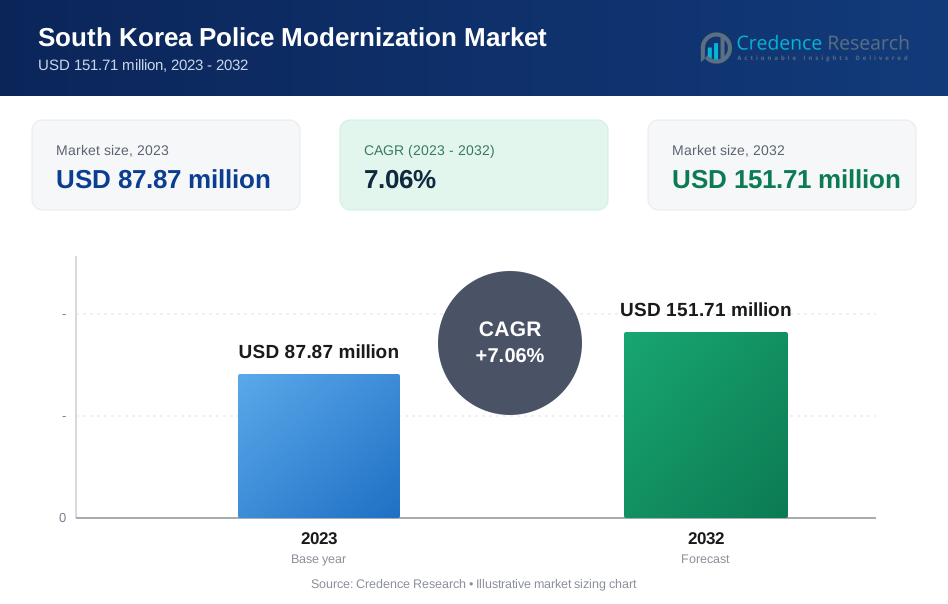
The South Korea Police Modernization project is set to grow from an investment of USD 87.87 million in 2023 to USD 151.71 million by 2032, reflecting a compound annual growth rate (CAGR) of 7.06%.
The South Korea Police Modernization market is driven by the country’s push for advanced law enforcement technologies and infrastructure upgrades. The increasing adoption of smart policing tools, such as AI-driven surveillance systems, automated patrol vehicles, and real-time data analytics, enhances operational efficiency and public safety. Moreover, the government’s focus on improving police response times and integrating digital technologies into law enforcement practices is fueling market growth. Rising urbanization and the need for enhanced security in metropolitan areas further contribute to demand for modernized policing solutions. Investments in state-of-the-art equipment, such as drones, body cameras, and integrated communication systems, are accelerating this trend.
The geographical analysis of South Korea Police Modernization highlights key regions such as the Seoul Metropolitan Area, Gyeonggi Province, and Busan, where significant investments are being made in law enforcement technology. These areas are experiencing a rise in the adoption of AI-driven surveillance, predictive policing tools, and advanced emergency response systems. The modernization efforts are largely concentrated in urban regions, with a focus on improving efficiency, public safety, and law enforcement capabilities. Key players in this market include major technology providers such as NEC Corporation, Hitachi, Huawei Technologies, Panasonic, Samsung Electronics, and Fujitsu. These companies are playing a crucial role in supplying advanced hardware, software, and integrated solutions to modernize police forces across South Korea. Their contributions support the development of smarter, more responsive policing systems aimed at improving safety and crime prevention throughout the country.
Market Insights
- The South Korea Police Modernization market is valued at USD 87.87 million in 2023 and is expected to reach USD 151.71 million by 2032, growing at a CAGR of 7.06%.
- The market is driven by the increasing adoption of AI, machine learning, and predictive analytics for enhanced crime prevention and law enforcement.
- Technological advancements in surveillance systems, automated patrol vehicles, and real-time data analytics are key market trends.
- Key players such as NEC Corporation, Hitachi, Huawei, and Panasonic dominate the market, providing integrated solutions for police modernization.
- High implementation costs and concerns over privacy and data security are the major market restraints.
- The Seoul Metropolitan and Gyeonggi regions are leading the adoption of modern police technologies, with significant government investment.
- There is a growing trend of integrating smart city infrastructure with law enforcement to improve public safety and operational efficiency.
Market Drivers
Technological Advancements
A key driver of South Korea's police modernization is the rapid integration of advanced technologies. The adoption of AI-driven surveillance systems, facial recognition software, and real-time data analytics enhances law enforcement capabilities. For instance, the South Korean police have implemented AI-driven predictive policing tools to identify crime hotspots and allocate resources more effectively. These technologies enable quicker identification of suspects, improved monitoring of public spaces, and more efficient crime-solving processes. As the police force increasingly relies on these innovative tools, the market sees a growing demand for upgraded equipment and software solutions to improve efficiency and accuracy in policing.
Government Initiatives
The South Korean government plays a significant role in driving police modernization through various initiatives and policies. Significant investments are being made to modernize the police force, which includes infrastructure development, upgrading communication systems, and implementing state-of-the-art policing tools. For instance, the South Korean government has announced plans to revive the conscripted police system to strengthen crime prevention capabilities. These efforts aim to enhance public safety, improve police response times, and better manage resources across the country. With the government's continued financial commitment, the modernization of law enforcement agencies is expected to remain a priority in the coming years, further driving market growth.
Urbanization and Increased Security Needs
Rapid urbanization in South Korea has led to a higher demand for efficient policing and public safety solutions. As cities expand, the need for more sophisticated law enforcement capabilities becomes critical to address the challenges of maintaining safety in densely populated areas. The increase in population density has raised the stakes for police forces, pushing the adoption of smart technologies like automated patrol vehicles, drones, and surveillance systems. These solutions help law enforcement agencies maintain control and security in large metropolitan areas.
Focus on Efficiency and Accountability
A growing focus on improving police efficiency and accountability is driving the demand for modernization. The adoption of body cameras, digital records, and integrated communication systems enables better transparency and accountability within the police force. These tools also support efforts to streamline operations, reduce human error, and increase overall productivity. As the police force seeks to enhance its public image and ensure effective service delivery, the market for modern policing tools and solutions continues to expand.
Market Trends
Adoption of AI and Automation
One prominent trend in South Korea’s police modernization is the growing adoption of artificial intelligence (AI) and automation in law enforcement operations. AI technologies, such as predictive policing software and facial recognition systems, are being integrated into daily police work to enhance crime detection and prevention. For instance, the South Korean police have implemented AI-driven predictive policing tools to identify crime hotspots and allocate resources more effectively. Automated patrols and surveillance drones are also becoming common, enabling law enforcement to monitor large areas efficiently and respond to incidents more rapidly. These innovations are transforming traditional policing methods and driving the trend toward more technology-driven police operations.
Smart City Integration
As South Korea continues to develop its smart cities, there is an increasing trend to integrate police modernization efforts with urban digital infrastructure. The collaboration between police forces and smart city technologies is enabling more seamless communication, data-sharing, and incident management. For instance, the smart city integrated platform in cities like Anyang links various incident information with CCTV footage to improve urban control and emergency response. Smart traffic systems, intelligent street lighting, and real-time crime reporting apps are becoming essential components of modern law enforcement. This integration ensures that the police force can respond to emergencies quickly, while also making crime prevention more proactive through data-driven insights.
Focus on Data-Driven Decision Making
Data-driven decision-making is another growing trend in South Korea’s police modernization. Police forces are increasingly relying on big data, analytics, and cloud-based platforms to analyze crime patterns, optimize resource allocation, and improve strategic planning. By leveraging vast amounts of data from various sources, including surveillance cameras, social media, and public databases, law enforcement agencies can make informed decisions about where to allocate personnel and resources. This shift towards data-centric approaches allows for more targeted and effective policing strategies.
Enhanced Public-Private Collaboration
The trend of enhanced public-private collaboration is gaining momentum as South Korea’s police force modernizes. Police departments are partnering with technology companies and private-sector organizations to access advanced tools and expertise in areas like cybersecurity, surveillance technologies, and digital forensics. These collaborations enable law enforcement agencies to benefit from the latest innovations in security technologies, allowing them to stay ahead of emerging threats. As the demand for sophisticated policing solutions continues to rise, the role of private sector involvement in police modernization is expected to expand further.
Market Challenges Analysis
High Implementation Costs
A significant challenge faced by the South Korean police modernization market is the high implementation costs associated with upgrading technology and infrastructure. The adoption of advanced technologies, such as AI-driven surveillance systems, drones, and smart policing tools, requires substantial investment in both equipment and training. For instance, the South Korean government spent 3.4 billion won over five years to develop less-lethal handguns and plans to spend an additional 8.6 billion won to supply these weapons to police officers. For many police departments, securing the necessary funding to implement these technologies can be a barrier. While the government is actively supporting these efforts, the financial commitment needed to maintain and upgrade infrastructure, as well as to ensure cybersecurity, is an ongoing concern. These high costs may limit the speed at which police forces can fully modernize across all regions, particularly in smaller or less-funded areas.
Privacy and Ethical Concerns
Another challenge is the growing concern over privacy and ethical implications of modernizing police forces with technologies like facial recognition, AI surveillance, and data collection systems. The increased surveillance capabilities of law enforcement agencies have raised public concerns about personal privacy, data security, and potential misuse of information. Ensuring that the use of these technologies complies with legal and ethical standards is crucial for maintaining public trust. Striking a balance between improving public safety and protecting individual rights poses a complex challenge for the government and law enforcement agencies. Addressing these issues requires comprehensive regulations and transparent policies to ensure that technological advancements do not infringe upon civil liberties.
Market Opportunities
The South Korea Police Modernization market presents several opportunities for growth, particularly in the adoption of emerging technologies. As law enforcement agencies continue to integrate AI, machine learning, and data analytics into their operations, there is significant potential for innovation in predictive policing, surveillance, and crime prevention. Technology companies specializing in AI-driven security systems, facial recognition, and automated patrol vehicles stand to benefit from the increasing demand for these solutions. Furthermore, the growing trend of smart city development provides a unique opportunity for the integration of policing solutions with urban infrastructure, creating a more cohesive and efficient approach to public safety. The government’s ongoing commitment to funding modernization efforts opens up avenues for technology providers to collaborate with law enforcement agencies and support the evolution of smart policing in South Korea.
Another key opportunity lies in the demand for cybersecurity solutions as police forces modernize their operations. With the increased reliance on digital technologies, protecting sensitive data and ensuring the integrity of surveillance systems are becoming critical. This creates opportunities for cybersecurity firms to offer solutions that safeguard police networks, data storage, and communications. Additionally, the trend toward more transparent and data-driven policing presents a chance for firms specializing in big data analytics, cloud storage, and digital record management to support law enforcement agencies in improving their operational efficiency. As South Korea's police modernization efforts expand, these technological opportunities will play a crucial role in shaping the future of law enforcement in the country.
Market Segmentation Analysis:
By Component:
The South Korea Police Modernization market is segmented by component into hardware, software, and services, each contributing significantly to the overall market growth. Hardware components include advanced surveillance equipment, AI-driven cameras, automated patrol vehicles, and other critical infrastructure. These tools play a vital role in enhancing operational efficiency and improving police response times. Software solutions, particularly AI algorithms and predictive analytics platforms, enable data-driven decision-making, crime analysis, and resource optimization. These technologies help law enforcement agencies anticipate and prevent criminal activities more effectively. Services, such as system integration, training, and technical support, further enable the seamless deployment and maintenance of hardware and software solutions. The ongoing demand for integrated systems and continuous updates in security technologies supports robust growth in this segment, driving the overall modernization efforts in South Korea's police force.
By Application:
The South Korea Police Modernization market is also segmented by application into crime prevention, law enforcement operations, emergency response, and traffic management. Crime prevention applications leverage advanced technologies like predictive analytics and surveillance systems to identify crime hotspots and potential threats. This proactive approach helps in reducing crime rates and ensuring public safety. In law enforcement operations, AI-based systems enhance police efficiency by automating routine tasks, facilitating better resource allocation, and improving case resolution times. Emergency response systems, incorporating AI and real-time data, improve response times during critical incidents. These systems enable faster coordination among police units, reducing delays during emergencies. Lastly, traffic management applications, powered by intelligent traffic systems, help manage congestion, enforce traffic laws, and prevent accidents. The growing need for efficient and responsive law enforcement in these areas underscores the market’s potential across multiple applications, further driving technological advancements and investments.
Segments:
Based on Component:
- Hardware
- Software
- Services
Based on Application:
- Crime Prevention
- Law Enforcement Operations
- Emergency Response
- Traffic Management
Based on End-user:
- National Police Forces
- Local and Regional Law Enforcement Agencies
Based on Technology:
- Communication Systems
- Surveillance Systems
- Cybersecurity Solutions
- Protective Equipment
Based on the Geography:
- Seoul Metropolitan Region
- Gyeonggi Province
- Busan and Ulsan Regions
- Daegu Region
Regional Analysis
Seoul Metropolitan Region
The Seoul Metropolitan Region holds the largest market share in the South Korea Police Modernization market, accounting for approximately 35% of the total market. As the capital and most populous city, Seoul faces unique challenges in managing public safety due to its dense population and high crime rates. This region has seen significant investments in smart policing technologies, including AI-based surveillance systems, automated patrol vehicles, and advanced crime analytics platforms. The government’s emphasis on transforming Seoul into a smart city has also driven demand for integrated public safety solutions, fostering a growing need for modernized police operations. Additionally, the high levels of technological infrastructure and connectivity in Seoul create favorable conditions for the adoption of cutting-edge policing technologies. Given its prominence as the nation's political and economic center, the demand for advanced law enforcement solutions is expected to remain strong, maintaining the region's dominant position in the market.
Gyeonggi Province
Gyeonggi Province, which surrounds Seoul, is the second-largest market for police modernization, accounting for approximately 25% of the total market share. As the most populous province in South Korea, Gyeonggi faces growing demands for improved public safety solutions, particularly in rapidly expanding suburban areas. The region has increasingly adopted modern policing technologies, driven by the need for enhanced crime prevention and efficient law enforcement across its vast urban and rural areas. Smart traffic management systems, AI surveillance, and advanced emergency response solutions are becoming integral to the region’s public safety infrastructure. The local government’s focus on maintaining security and managing the growing urban population in Gyeonggi provides significant opportunities for the police modernization market to expand. The region's proximity to Seoul also allows for greater collaboration between municipalities, accelerating the adoption of modern policing tools.
Busan and Ulsan Regions
The Busan and Ulsan regions account for around 20% of the South Korea Police Modernization market share. These cities, as major industrial and port hubs, face specific challenges in maintaining public safety, such as managing large-scale events, ensuring maritime security, and addressing the demands of urbanization. With a growing focus on enhancing law enforcement operations and emergency response capabilities, Busan and Ulsan have increasingly invested in AI-powered crime prevention tools, real-time data analytics, and smart surveillance solutions. Additionally, the demand for traffic management technologies has risen significantly, as these regions experience high volumes of transportation and logistics activity. The government's emphasis on improving police infrastructure in these areas, coupled with the need for efficient law enforcement solutions, is expected to drive continued investment in the modernization of police forces in Busan and Ulsan.
Daegu Region
The Daegu region holds a market share of approximately 10% in the South Korea Police Modernization market. Although it is smaller compared to the Seoul Metropolitan and Gyeonggi provinces, Daegu’s police force is increasingly adopting modern technologies to address growing urbanization and enhance public safety. As the fourth-largest city in South Korea, Daegu faces challenges related to crime prevention, traffic management, and emergency response. The adoption of smart policing solutions, such as AI-driven surveillance and traffic monitoring systems, has been gaining traction. The provincial government has prioritized the modernization of police infrastructure, with a particular focus on improving police mobility and response times during critical incidents. The continued investment in public safety technologies in Daegu reflects the region’s commitment to enhancing law enforcement capabilities while maintaining the city’s rapid development.
Key Player Analysis
- NEC Corporation
- Hitachi, Ltd.
- Huawei Technologies Co., Ltd.
- Panasonic Corporation
- Samsung Electronics Co., Ltd.
- Fujitsu Limited
- Toshiba Corporation
- Hikvision Digital Technology Co., Ltd.
- ZTE Corporation
- Bharat Electronics Limited
Competitive Analysis
The South Korea Police Modernization market is highly competitive, with several key players offering innovative solutions to transform law enforcement operations. Leading companies such as NEC Corporation, Hitachi, Huawei Technologies, Panasonic, Samsung Electronics, Fujitsu, Toshiba Corporation, Hikvision Digital Technology, ZTE Corporation, and Bharat Electronics Limited are driving technological advancements in the sector. These companies provide a wide range of products, including AI-driven surveillance systems, predictive analytics platforms, automated patrol vehicles, and traffic management solutions. For instance, a survey by the Korean National Police Agency (KNPA) highlighted the significant impact of AI-driven surveillance systems and predictive analytics platforms on improving public safety and operational efficiency. The competition is fueled by the increasing demand for more efficient, responsive, and data-driven policing tools, with a strong emphasis on enhancing public safety and crime prevention. Several players in the market are excelling in providing smart surveillance technologies, such as facial recognition systems, which are becoming integral to modern policing. Additionally, advancements in communication and networking technologies are crucial for ensuring seamless coordination among law enforcement agencies. Hardware solutions, including smart cameras, communication devices, and integrated systems, are key differentiators in the market. As the need for advanced security solutions grows, companies are focusing on improving their offerings to meet the evolving demands of law enforcement agencies. The market’s competitive landscape is marked by continuous innovation and collaboration between technology providers and government authorities to deliver tailored, region-specific solutions. This ensures that law enforcement agencies can adopt the most effective technologies to enhance their operational efficiency and response times in real-time situations.
Recent Developments
- In January 2025, Airbus delivered two new H225M helicopters to the French Armament General Directorate (DGA), which will be utilized for various law enforcement and military operations. These helicopters are part of a broader modernization effort to enhance aerial capabilities for security missions.
- In December 2024, Axon announced that Loomis US is deploying over 2,000 Axon Body 4 cameras as part of its commitment to enhancing safety and transparency for its armored service technicians across the United States.
- In October 2024, Leonardo announced a contract with the UAE Defense Ministry for a comprehensive upgrade of its secure communications network. This initiative aims to enhance national security through advanced encryption and improved IT infrastructure resilience against cyber threats.
- In October 2024, Motorola Solutions introduced a new real-time crime center solution that integrates 9-1-1 call intelligence into police operations. This technology enhances situational awareness and expedites responses to critical incidents.
- In September 2024, Thales Defense & Security Inc. was awarded a contract by the U.S. Army for an additional 2,705 AN/PRC-148F radios as part of its tactical radio modernization program. This order emphasizes Thales's role in enhancing secure communications within military operations.
- In June 2024, Cisco announced new AI-powered innovations across its security portfolio aimed at enhancing law enforcement capabilities. The introduction of Cisco Security Cloud Control is designed to unify management for security solutions, improving incident response times and overall security posture for police departments.
Market Concentration & Characteristics
The market concentration of South Korea Police Modernization is relatively moderate, with a mix of local and international players competing for market share. While a few large multinational companies dominate the technological space, particularly in AI-driven surveillance and communication systems, local players also hold significant influence, particularly in integrating region-specific solutions. This blend of global and regional companies ensures a diverse range of products and services available to law enforcement agencies across the country. The market is characterized by rapid technological innovation, driven by advancements in AI, big data analytics, and smart city infrastructure, which are all crucial for enhancing police operations and public safety. Key characteristics of the market include a high level of collaboration between government agencies and technology providers to ensure the effective implementation of modern policing systems. There is also a focus on improving cost-efficiency, scalability, and data security, as police departments seek to modernize while managing public resources. Furthermore, the market is witnessing an increasing demand for integrated solutions that combine hardware, software, and services for a comprehensive modernization approach. As a result, market players are continually innovating and adjusting their strategies to meet the evolving needs of law enforcement, ensuring they remain competitive in a fast-paced technological landscape.
Report Coverage
The research report offers an in-depth analysis based on Component, Application, End-user, Technology and Geography. It details leading market players, providing an overview of their business, product offerings, investments, revenue streams, and key applications. Additionally, the report includes insights into the competitive environment, SWOT analysis, current market trends, as well as the primary drivers and constraints. Furthermore, it discusses various factors that have driven market expansion in recent years. The report also explores market dynamics, regulatory scenarios, and technological advancements that are shaping the industry. It assesses the impact of external factors and global economic changes on market growth. Lastly, it provides strategic recommendations for new entrants and established companies to navigate the complexities of the market.
Future Outlook
- The South Korea Police Modernization market is expected to continue its growth, driven by increased investments in AI and machine learning technologies.
- Law enforcement agencies will increasingly adopt predictive policing tools to prevent crimes and optimize resource allocation.
- Smart city initiatives will integrate police modernization efforts, enhancing public safety and urban security.
- AI-driven surveillance and facial recognition technologies will become more widespread in crime prevention and investigation.
- Increased demand for cybersecurity solutions will rise as police forces digitalize their operations and store sensitive data.
- The market will see greater collaboration between government agencies and private technology providers to ensure seamless implementation of modern policing tools.
- Real-time data analytics will be crucial in improving decision-making processes and response times in emergency situations.
- Automated systems, such as self-driving patrol vehicles, will gain more traction, improving law enforcement efficiency.
- There will be a continued focus on improving data security and protecting the integrity of police networks.
- The integration of AI in traffic management and law enforcement operations will streamline processes and enhance public safety across South Korea.
Request a Free Sample
Fill in your details and we'll send you a free sample report.
- Sample data tables & charts
- Research methodology
Need a Custom Version of This Report?
Tailor the scope, geography, or segments to your exact requirements.
- Custom geography or segment scope
- Direct access to our analyst team
Frequently Asked Questions
What is the current size of the South Korea Police Modernization market?
What factors are driving the growth of the South Korea Police Modernization market?
What are the key segments within the South Korea Police Modernization market?
What are some challenges faced by the South Korea Police Modernization market?
Who are the major players in the South Korea Police Modernization market?
Table of Content
Chapter 1. Report Introduction
- 1.1 Report Description & Purpose
- 1.1.1 Report Title & Market Definition
- 1.1.2 Unique Selling Propositions (USP) & Key Differentiators
- 1.1.3 Value Proposition for Stakeholders
- 1.2 Research Objectives
- 1.2.1 Market Sizing Objectives (Volume & Revenue)
- 1.2.2 Segmentation Objectives
- 1.2.3 Competitive Intelligence Objectives
- 1.2.4 Forecast & Scenario Objectives
- 1.3 Report Scope
- 1.3.1 South Korea Police Modernization Scope – Types & Subtypes Covered
- 1.3.2 Geographic Scope – Regions & Countries Covered
- 1.3.3 Historical Period, Base Year & Forecast Period (2023; forecast to 2032)
- 1.3.4 Inclusions & Exclusions
- 1.4 HS Code & Classification Framework
- 1.5 Currency, Units & Pricing Basis
- 1.6 Target Stakeholders
- 1.7 Limitations & Assumptions
Chapter 2. Executive Summary
- 2.1 Global South Korea Police Modernization Market Snapshot
- 2.1.1 Market Size – Historical (2023) & Forecast (2023-2032) (2023: USD 87.87 million → 2032: USD 151.71 million)
- 2.1.2 Volume & Revenue – Global Totals
- 2.1.3 Key Market Highlights – Top Five Facts
- 2.2 South Korea Police Modernization Market Segmentation Snapshot
- 2.2.1 Market Split by Region – 2023 vs. 2032
- 2.3 Competitive Snapshot
- 2.3.1 Top 10 Players by Revenue Share – 2023
- 2.3.2 Top 10 Players by Volume Share – 2023
- 2.3.3 Recent Strategic Developments (18-Month Summary)
- 2.4 Key Investment Highlights & Strategic Conclusions
Chapter 3. South Korea Police Modernization Market Dynamics & Industry Analysis
- 3.1 Market Overview & Context
- 3.1.1 South Korea Police Modernization Market Position in the Broader Automotive Value Chain
- 3.1.2 OEM vs. Replacement Market Dynamics
- 3.1.3 Market Maturity & Development Stage by Region
- 3.2 South Korea Police Modernization Market Drivers
- 3.3 South Korea Police Modernization Market Restraints & Challenges
- 3.4 South Korea Police Modernization Market Opportunities
- 3.5 Porter's Five Forces Analysis
- 3.5.1 Threat of New Entrants
- 3.5.2 Bargaining Power of Suppliers
- 3.5.3 Bargaining Power of Buyers
- 3.5.4 Threat of Substitutes
- 3.5.5 Competitive Rivalry – Intensity Assessment
- 3.6 South Korea Police Modernization Value Chain Analysis
- 3.6.1 Upstream – Raw Material/Input Suppliers
- 3.6.1.1 Raw Material/Input 1
- 3.6.1.2 Raw Material/Input 2
- 3.6.1.3 Raw Material/Input 3
- 3.6.2 Midstream – Production/Manufacturing/Service Delivery
- 3.6.2.1 Production/Process Overview
- 3.6.2.2 Key Facility Locations & Capacity by Manufacturer
- 3.6.3 Downstream – Distribution & End Consumer
- 3.6.3.1 Primary Channel – B2B/OEM
- 3.6.3.2 Secondary Channels – Dealer, Retail, Online, Direct
- 3.6.4 Value Chain Profitability Analysis
- 3.6.1 Upstream – Raw Material/Input Suppliers
- 3.7 PESTEL Analysis
- 3.7.1 Political Factors
- 3.7.2 Economic Factors
- 3.7.3 Social Factors
- 3.7.4 Technological Factors
- 3.7.5 Environmental Factors
- 3.7.6 Legal Factors
- 3.8 South Korea Police Modernization Supply Chain Analysis
- 3.8.1 Raw Material/Input Supply Risk Assessment
- 3.8.2 Manufacturing Concentration Risk (Geographic Exposure)
- 3.8.3 Trade Disruption Impact Analysis
- 3.9 Regulatory & Policy Landscape
Note: The regulatory and policy landscape section covers regulations based on their applicability to the market, South Korea Police Modernization category, geography, and scope of the study. Only regulatory frameworks with a material impact on operations, compliance, trade, sustainability, or market access are analyzed in detail.
Chapter 4. Key Investment Pockets & Opportunity Analysis
- 4.1 South Korea Police Modernization Market Attractiveness Analysis
- 4.1.1 By Region – Investment Attractiveness Matrix (Volume × CAGR)
- 4.2 Absolute Revenue Growth Opportunity
- 4.2.1 By Region – Absolute USD Growth Through 2032
- 4.3 Incremental Volume Opportunity
- 4.3.1 By Region – Incremental Volume Through 2032
- 4.3.2 Segment – Incremental Volume
- 4.4 Emerging Submarket Opportunity Deep Dive (Subject to Applicability)
- 4.5 Emerging Market Opportunity Scorecards
- 4.5.1 United States
- 4.5.2 Europe
- 4.5.3 Asia
- 4.5.4 Middle East & Africa
Note: Emerging Market Opportunity Scorecards will be included based on relevance and strategic importance. Regions listed are indicative and may vary depending on data availability and market dynamics.
Chapter 5. South Korea Police Modernization Import-Export Analysis & Trade Flows
- 5.1 Global Trade Overview
- 5.1.1 Global Export Value by Country (2023)
- 5.1.2 Global Export Volume by Country (2023)
- 5.1.3 Global Import Value by Country (2023)
- 5.1.4 Global Import Volume by Country (2023)
- 5.1.5 Net Trade Balance by Country (2023)
- 5.2 Export Analysis – Segment
- 5.2.1 Type 1 (HS Code)
- 5.2.2 Type 2 (HS Code)
- 5.2.3 Type 3 (HS Code)
- 5.2.4 Type 4 (HS Code)
- 5.2.5 Type 5 (HS Code)
- 5.3 Import Analysis – Segment
- 5.3.1 Type 1 (HS Code)
- 5.3.2 Type 2 (HS Code)
- 5.3.3 Type 3 (HS Code)
- 5.3.4 Type 4 (HS Code)
- 5.3.5 Type 5 (HS Code)
- 5.4 Average Unit Trade Prices
- 5.4.1 Average Export Price – Segment & Country
- 5.4.2 Average Import Price – Segment & Source Country
- 5.4.3 Price Trends (2023)
- 5.5 Key Trade Route Analysis
- 5.5.1 Trade Route 1
- 5.5.2 Trade Route 2
- 5.5.3 Trade Route 3
- 5.5.4 Trade Route 4
- 5.5.5 Trade Route 5
- 5.6 Trade Policy Impact Assessment
- 5.6.1 US Anti-Dumping & Section 301 Tariffs
- 5.6.2 EU Customs Union Impact
- 5.6.3 Major Free Trade Agreements
- 5.6.4 USMCA Rules of Origin
Note: Trade policy analysis will be included only where relevant to the South Korea Police Modernization market.
Chapter 6. Competitive Landscape & Company Benchmarking
- 6.1 South Korea Police Modernization Market Concentration & Structure
- 6.1.1 Herfindahl-Hirschman Index (HHI) – vs. 2023
- 6.1.2 Tier 1, Tier 2 & Tier 3 Market Structure
- 6.1.3 Global, Regional & Local Player Dynamics
- 6.2 South Korea Police Modernization Market Share Analysis – 2023
- 6.2.1 Global Revenue Share by Company
- 6.2.2 Global Volume Share by Company
- 6.2.3 Regional Revenue Share
- 6.2.4 Market Share Evolution ( vs. 2023)
- 6.2.5 OEM Segment Share by Company
- 6.2.6 Replacement Segment Share by Company
- 6.3 Production/Delivery Capacity & Facility Analysis
- 6.3.1 Global Installed Capacity
- 6.3.2 Capacity Utilization Rates
- 6.3.3 Production/Output Volume
- 6.3.4 Facility Locations & Capacity Map
- 6.3.5 Planned Capacity Additions
- 6.4 South Korea Police Modernization Competitive Benchmarking Matrix
- 6.4.1 Revenue, Volume, CAGR & Profitability Comparison
- 6.4.2 Channel Revenue Mix
- 6.4.3 Geographic Revenue Exposure
- 6.4.4 R&D Intensity
- 6.4.5 Sustainability Maturity
- 6.5 Strategic Developments in South Korea Police Modernization (Last 24 Months)
- 6.5.1 Mergers, Acquisitions & Divestments
- 6.5.2 New South Korea Police Modernization Launches
- 6.5.3 Facility Expansions
- 6.5.4 Strategic Alliances, Joint Ventures & Partnerships
- 6.5.5 Distribution Expansion & Market Entry
- 6.5.6 Sustainability & ESG Initiatives
- 6.6 Competitive Strategy Mapping
- 6.6.1 Leader, Challenger, Follower & Niche Classification
- 6.6.2 Pricing Strategy Comparison
- 6.6.3 Channel Strategy Matrix
Note: Strategic developments are included based on their materiality and the availability of reliable information.
Chapter 7. Global South Korea Police Modernization Market – By Distribution Channel
- 7.1 Segment Overview
- 7.1.1 Volume & Revenue Split by Channel (2023 & 2032)
- 7.1.2 Channel Mix Evolution (2023-2032)
Chapter 8. Regional Market Analysis – Global Overview
- 8.1 Global Regional Overview
- 8.1.1 Regional Volume Share
- 8.1.2 Regional Revenue Share
- 8.1.3 Regional Volume by Region
- 8.1.4 Regional Revenue by Region
- 8.1.5 Regional Forecast Through 2032
- 8.2 Cross-Regional Segment Analysis
- 8.2.1 By Distribution Channel
- 8.2.2 By Brand/Price Tier
Chapter 9. North America South Korea Police Modernization Market
- 9.1 United States
- 9.2 Canada
- 9.3 Mexico
Chapter 10. Europe South Korea Police Modernization Market
- 10.1 Germany
- 10.2 France
- 10.3 Italy
- 10.4 United Kingdom
- 10.5 Spain
- 10.6 Poland
- 10.7 Russia
- 10.8 Netherlands
- 10.9 Belgium
- 10.10 Sweden
- 10.11 Denmark
- 10.12 Norway
- 10.13 Rest of Europe
Chapter 11. Asia Pacific South Korea Police Modernization Market
- 11.1 China
- 11.2 India
- 11.3 Japan
- 11.4 South Korea
- 11.5 Thailand
- 11.6 Indonesia
- 11.7 Vietnam
- 11.8 Malaysia
- 11.9 Australia
- 11.10 Rest of Asia Pacific
Chapter 12. Latin America South Korea Police Modernization Market
- 12.1 Brazil
- 12.2 Argentina
- 12.3 Colombia
- 12.4 Chile
- 12.5 Rest of Latin America
Chapter 13. Middle East South Korea Police Modernization Market
- 13.1 Saudi Arabia
- 13.2 United Arab Emirates
- 13.3 Turkey
- 13.4 Israel
- 13.5 Iran
- 13.6 Rest of the Middle East
Chapter 14. Africa South Korea Police Modernization Market
- 14.1 South Africa
- 14.2 Egypt
- 14.3 Nigeria
- 14.4 Morocco
- 14.5 Rest of Africa
Chapter 15. South Korea Police Modernization Company Profiles
- 15.1 [Company 01]
- 15.1.1 Company Overview
- 15.1.2 Key Management Personnel
- 15.1.3 Products & Services Portfolio
- 15.1.4 Financial Performance
- 15.1.5 Key Market Focus & Geographic Presence
- 15.1.6 Recent Developments & Strategic Initiatives
Note: The company profile list is preliminary and may change based on research findings, market developments, data availability, and client requirements.
Chapter 16. Appendices
- Appendix A – List of Abbreviations & Acronyms
- Appendix B – Industry Classification Code Reference – Full Series
- Appendix C – Production & Capacity Data Tables
- Appendix D – End-Use & Demand Base Tables
- Appendix E – Consumption & Replacement Rate Assumptions
- Appendix F – ASP Reference Tables
- Appendix G – Manufacturing & Facility Database
- Appendix H – Import-Export Data Tables
- Appendix I – Regulatory Summary Tables
- Appendix J – Primary Research Participant List (Anonymized)
- Appendix K – Primary Research Questionnaire Framework
- Appendix L – Data Sources & Bibliography
- Appendix M – Market Size Divergence & Source Comparison
Chapter 17. Research Methodology
- 17.1 Research Framework & Philosophy
- 17.2 Secondary Research – Sources, Hierarchy & Data Extraction
- 17.3 Data Modeling – Bottom-Up & Top-Down Market Sizing
- 17.4 Primary Research – Stakeholder Framework, LOI & Sample Sizes
- 17.5 Forecast Methodology – Regression, Scenario & Sensitivity Analysis
- 17.6 Quality Control – Four-Layer Validation Framework
- 17.7 Limitations & Standard Assumptions
- 17.8 Disclaimer
