
| REPORT ATTRIBUTE | DETAILS |
|---|---|
| Historical Period | 2019-2022 |
| Base Year | 2023 |
| Forecast Period | 2024-2032 |
| U.S. Polymer Clay Market Size 2023 | USD 9,228.27 Million |
| U.S. Polymer Clay Market, CAGR | 3.32% |
| U.S. Polymer Clay Market Size 2032 | USD 12,406.45 Million |
Market Overview
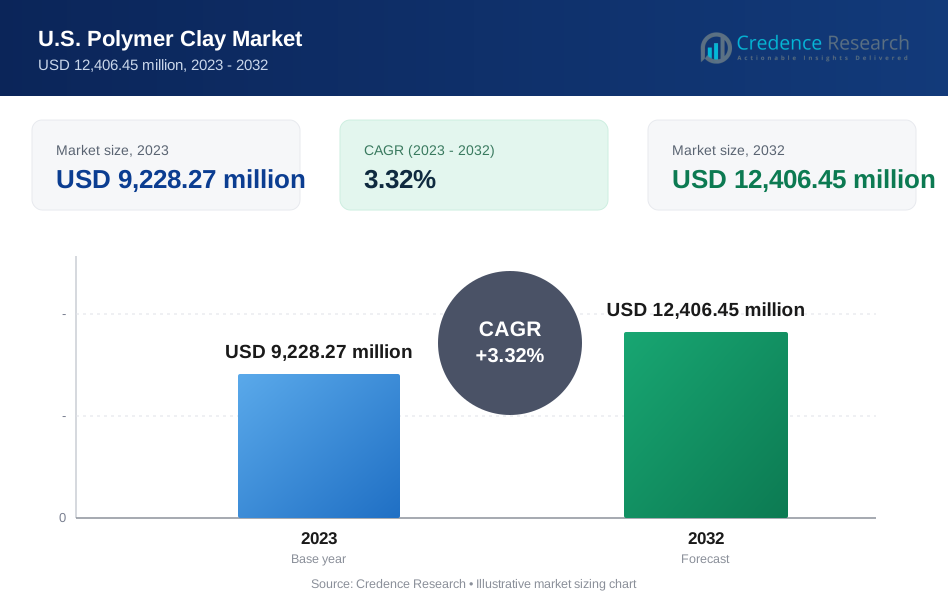
The U.S. Polymer Clay Market is projected to grow from USD 9,228.27 million in 2023 to an estimated USD 12,406.45 million by 2032, with a compound annual growth rate (CAGR) of 3.32% from 2024 to 2032. This substantial market growth is driven by the increasing popularity of DIY crafts and hobbies among various age groups, the versatility of polymer clay in artistic and professional applications, and its widespread use in educational settings. The steady demand from both amateur crafters and professional artists continues to propel the market forward, reflecting the material's adaptability and wide-ranging appeal.
Key market drivers include the growing trend of handmade crafts and personalized items, which has led to a surge in demand for polymer clay. The rise of online platforms and social media has further amplified this trend, providing crafters with more opportunities to showcase and sell their creations. Additionally, innovations in polymer clay formulations that enhance ease of use, durability, and color variety are attracting more users. Trends such as eco-friendly and non-toxic materials are also influencing market dynamics, as consumers become more environmentally conscious.
Geographically, the U.S. polymer clay market is well-distributed, with significant consumption in regions with a strong presence of craft stores and educational institutions. Key players in the market, such as Polyform Products Company, Van Aken International, and American Art Clay Co., Inc., dominate the landscape with their extensive product offerings and robust distribution networks. These companies are continuously innovating to meet the evolving needs of consumers, thereby maintaining their competitive edge. The market is also seeing contributions from smaller, specialized manufacturers who cater to niche markets and bespoke demands, further diversifying the competitive landscape.
Market Drivers
Rising Popularity of DIY Crafts and Hobbies
The surge in DIY crafts and hobbies significantly drives the U.S. polymer clay market. The growing interest in handmade crafts, fueled by social media platforms like Instagram, Pinterest, and YouTube, encourages more individuals to explore creative activities involving polymer clay. The versatility of polymer clay makes it ideal for a range of projects, from jewelry making and home décor to intricate sculptures and model making. This trend has led to increased sales of polymer clay products, as more people seek materials for their crafting needs. The availability of numerous online tutorials and workshops further supports this interest, making it easier for beginners to learn and experiment with polymer clay, thus expanding the customer base.
Educational and Therapeutic Applications
Polymer clay's use in educational and therapeutic settings is another critical market driver. Schools and educational institutions incorporate polymer clay into their art curriculums to foster creativity and fine motor skills among students. Its ease of use and safety make it an excellent choice for classroom activities. Additionally, polymer clay is widely used in art therapy, where it helps individuals express emotions and improve mental health. The tactile and malleable nature of polymer clay can be particularly beneficial for children and adults with developmental disorders, offering a medium to enhance their cognitive and motor skills. These applications not only boost the demand for polymer clay but also highlight its importance beyond traditional crafting uses. The United States holds 75% share of the North American market in 2024. The market in the United States is growing due to a large community of crafters, DIY culture, and demand for handcrafted goods.
Innovations in Polymer Clay Formulations
Continuous innovations in polymer clay formulations play a significant role in market growth. Manufacturers are developing new types of polymer clay that offer enhanced properties such as increased durability, flexibility, and a broader range of colors. These advancements make polymer clay more appealing to both amateur crafters and professional artists. For instance, the introduction of oven-bake and air-dry polymer clays provides users with more options for their projects, catering to different preferences and needs. Moreover, eco-friendly and non-toxic formulations align with the growing consumer demand for sustainable and safe crafting materials. These innovations not only attract new users but also encourage existing customers to purchase newer, improved products.
Expanding E-commerce and Online Marketplaces
The expansion of e-commerce and online marketplaces has significantly impacted the U.S. polymer clay market. Online platforms like Amazon, Etsy, and specialized craft supply websites have made it easier for consumers to access a wide variety of polymer clay products. These platforms offer convenience, competitive pricing, and a vast selection of products, catering to both casual hobbyists and professional artists. The ability to purchase polymer clay and related tools online has broadened the market reach, enabling suppliers to tap into previously inaccessible customer segments. Furthermore, online marketplaces provide a platform for independent artists and small businesses to sell polymer clay creations, promoting the use of polymer clay and driving further market demand.
Market Trends
Sustainability and Eco-Friendly Products
Consumers are increasingly prioritizing sustainability, leading to a rising demand for eco-friendly and non-toxic polymer clay products. Manufacturers are responding by developing clays made from environmentally friendly materials and safer chemical formulations. These sustainable options appeal to eco-conscious consumers and align with broader industry trends towards greener products.
Customization and Personalization
The trend of customization and personalization continues to gain momentum in the U.S. polymer clay market. Crafters and artists are seeking unique and personalized clay products to create bespoke items such as jewelry, home décor, and miniature models. This trend drives demand for a wider variety of polymer clay colors, finishes, and special effects, allowing users to tailor their creations to specific preferences and styles.
Integration with Digital Platforms
The integration of digital platforms with polymer clay crafting is a notable trend. Online tutorials, virtual workshops, and social media communities have become essential resources for both novice and experienced crafters. Platforms like YouTube and Instagram offer a plethora of instructional videos and creative ideas, while Etsy provides a marketplace for selling handcrafted polymer clay items. This digital integration enhances accessibility, learning, and community engagement within the polymer clay market.
Growth in DIY Crafting Kits
There is a growing popularity of DIY crafting kits that include polymer clay. These kits, often marketed towards beginners and children, provide all necessary materials and instructions to complete specific projects. They make polymer clay crafting more accessible and enjoyable, encouraging more people to try their hand at creating with polymer clay. This trend also helps manufacturers to bundle products and boost sales. The United States holds 75% share of the North American market in 2024. The market in the United States is growing due to a large community of crafters, DIY culture, and demand for handcrafted goods.
Innovative Clay Formulations
Innovation in polymer clay formulations continues to shape the market. New varieties of polymer clay, such as those with unique textures, glow-in-the-dark properties, and enhanced flexibility, are attracting attention. These innovations cater to the evolving needs of artists and hobbyists, enabling them to experiment with new techniques and create more complex designs. Such advancements keep the market dynamic and exciting.
Emphasis on Art Therapy
The therapeutic benefits of polymer clay are increasingly recognized, leading to its use in art therapy. Polymer clay's tactile nature and ease of manipulation make it an ideal medium for therapeutic activities, helping individuals improve motor skills, express emotions, and reduce stress. This trend is particularly prominent in educational and healthcare settings, where polymer clay is used to support mental health and developmental therapies.
Collaborations and Partnerships
Collaborations and partnerships among polymer clay manufacturers, artists, and influencers are becoming more common. These partnerships help brands reach new audiences, promote product innovations, and inspire creative applications of polymer clay. Influencer marketing, in particular, has proven effective in showcasing the versatility of polymer clay and driving consumer interest and engagement.
Market Restraints and Challenges
Environmental Concerns
Despite the growing trend towards sustainability, the production and disposal of polymer clay can still pose environmental challenges. Traditional polymer clays are often made from polyvinyl chloride (PVC), which is derived from non-renewable petroleum resources. The manufacturing process and disposal of PVC products can lead to environmental pollution, raising concerns among eco-conscious consumers. As awareness about these issues increases, the market faces pressure to develop and adopt more sustainable practices, which can be costly and time-consuming.
Health and Safety Issues
Polymer clay, especially when not used correctly, can pose health and safety risks. Improper baking or exposure to high temperatures can release harmful fumes, leading to potential health hazards. Additionally, some users may have allergic reactions to certain chemical components in polymer clay. These health concerns can deter consumers, particularly parents and educators, from purchasing polymer clay products, thereby limiting market growth. Addressing these issues requires rigorous safety testing and clear usage instructions, which can add to production costs.
Market Saturation and Competition
The U.S. polymer clay market is becoming increasingly saturated, with numerous brands and products vying for consumer attention. This high level of competition can make it challenging for new entrants to gain a foothold and for existing players to maintain their market share. Companies must continuously innovate and differentiate their products to stay competitive, which can strain resources and impact profitability. Additionally, the presence of cheaper, lower-quality alternatives can undermine the perceived value of high-quality polymer clay products.
Economic Factors
Economic downturns and fluctuations can significantly impact the U.S. polymer clay market. During periods of economic uncertainty, consumers tend to reduce discretionary spending, which includes spending on hobbies and crafts. This reduction in consumer spending can lead to decreased sales and profitability for polymer clay manufacturers and retailers. Moreover, the costs of raw materials, transportation, and labor can fluctuate due to economic conditions, further affecting the market's stability and growth potential.
Technological and Skill Barriers
While polymer clay is relatively easy to use, creating high-quality, intricate designs often requires a certain level of skill and experience. This skill barrier can limit the market to more experienced crafters, excluding potential customers who may find the learning curve too steep. Furthermore, the technological aspect, such as the need for specific baking equipment, can be a deterrent for some users. Overcoming these barriers requires extensive education and outreach efforts, which can be resource-intensive for companies.
Market Segmentation Analysis
By Product Form
Solid polymer clay, the most commonly used form, is favored for its versatility and ease of use. Available in various colors, it can be molded into intricate shapes, making it popular among hobbyists and professional artists. This segment dominates the market due to its widespread application in jewelry making, arts and sculpture, and educational settings. Its ability to be baked and hardened into durable pieces contributes to its high demand. On the other hand, liquid polymer clay offers unique applications that solid clay cannot provide, such as coating surfaces, glazing, and adding intricate details to projects. This form is gaining traction in specialized arts and crafts, particularly for creating faux enamel, image transfers, and intricate surface designs. Its flexibility and unique properties make it a growing segment, though it remains smaller compared to solid polymer clay.
By Application
Polymer clay is extensively used in various applications, prominently in jewelry making, where its versatility supports the creation of a wide range of customized accessories, from beads to intricate pendants, fueled by the DIY trend and online marketplaces like Etsy. It is also a preferred material in the manufacturing of toys and novelty items due to its safety, non-toxicity, and moldability, appealing to both children and adults for educational and entertainment purposes. Artists and sculptors highly favor polymer clay for its adaptability, ease of use, and wide color range, making it ideal for creating intricate sculptures and models, significantly contributing to market growth. Additionally, polymer clay is used in decorative crockery and ceramic products, appreciated for its ability to mimic ceramics and its durability after baking, attracting more artisans and crafters. Beyond these segments, polymer clay's versatility extends to applications in home décor, stationery, and even scientific and industrial prototypes, showcasing its broad and innovative usage potential.
By End Use
The U.S. polymer clay market comprises three main segments: residential, commercial, and industrial. The residential segment, the largest, covers individual consumers using polymer clay for hobbies, DIY projects, and educational purposes, driven by the increasing popularity of home crafting and the support of online tutorials and community engagement. The commercial segment includes businesses and professionals, such as jewelry designers, craft stores, and educational institutions, benefiting from the professionalization of crafting, as many turn their hobbies into businesses, boosting market growth. Although smaller, the industrial segment utilizes polymer clay in industrial prototypes, product design, and specialized applications, driven by the material's adaptability and precision in prototyping and model-making.
Segments
Based on Product Form
- Solid
- Liquid
Based on Application
- Jewelry Making
- Manufacturing of Toys and Novelty Items
- Arts and Sculpture Making
- Crockery and Ceramic Products
- Others
Based on End Use
- Residential
- Commercial
- Industrial
Regional Analysis
South (30%):
The South represents approximately 30% of the U.S. polymer clay market, making it the largest regional contributor. This region includes states such as Texas, Florida, and Georgia, which have seen significant population growth and economic development. The rising popularity of DIY crafts and the presence of large retail chains and craft stores drive the demand for polymer clay. Additionally, the South's educational institutions increasingly incorporate polymer clay into their art curriculums, further bolstering market growth. The region's warm climate and community-oriented culture also support numerous outdoor craft fairs and markets, providing ample opportunities for polymer clay sales.
West (25%):
The West region, encompassing states like California, Oregon, and Washington, accounts for around 25% of the market share. This region is known for its innovative and eco-conscious consumer base, which drives demand for sustainable and non-toxic polymer clay products. California, in particular, is a major hub for the arts and crafts industry, with a high concentration of professional artists and hobbyists. The presence of numerous art schools, craft stores, and online marketplaces in the West supports the robust demand for polymer clay. Additionally, the region's tech-savvy population leverages digital platforms for learning and purchasing polymer clay products, enhancing market accessibility.
Key players
- Van Aken International
- Staedtler Mars
- Polyform Products
- American Art Clay
Competitive Analysis
The U.S. polymer clay market is highly competitive, with key players like Van Aken International, Staedtler Mars, Polyform Products, and American Art Clay leading the industry. Van Aken International is known for its high-quality polymer clay and innovative products, catering to both professional artists and hobbyists. Staedtler Mars offers a diverse range of polymer clays renowned for their durability and color variety, appealing to a broad customer base. Polyform Products, a dominant player, is widely recognized for its popular Sculpey brand, which includes various formulations for different applications. American Art Clay specializes in educational products, providing safe and easy-to-use polymer clays ideal for schools and therapy sessions. These companies compete by continuously innovating, expanding their product lines, and leveraging robust distribution networks to maintain their market positions and meet the evolving demands of consumers.
Recent Developments
In May 2019, Levine Leichtman introduced its latest range of polymer clay products, featuring Sculpey III, Premo, and a solid clay conditioner. Each product in this line comes with a distinct color palette, offering artists and hobbyists a variety of options to enhance their creative projects. These new additions are designed to meet the diverse needs of polymer clay users, providing high-quality materials for both intricate and everyday crafting.
To meet growing customer demand, German manufacturer Staedtler Mars GmbH & Co. KG expanded its FIMO line in September 2019 by introducing three new liquid colors: black, silver, and gold. These additions provide greater versatility and creativity for polymer clay enthusiasts, allowing for more sophisticated and varied designs. The new liquid colors enhance the existing FIMO product range, supporting Staedtler Mars’s commitment to innovation and customer satisfaction.
Market Concentration and Characteristics
The U.S. polymer clay market is moderately concentrated, with a few key players such as Van Aken International, Staedtler Mars, Polyform Products, and American Art Clay dominating the landscape. These companies leverage extensive product portfolios, robust distribution networks, and continuous innovation to maintain their competitive edge. The market is characterized by a high level of product differentiation, catering to various consumer needs from hobbyists and educational institutions to professional artists. Key characteristics include a strong focus on sustainability, the rising popularity of DIY crafts, and the integration of digital platforms for marketing and sales, which collectively drive market growth and consumer engagement.
Report Coverage
The research report offers an in-depth analysis based on Product Form, Application and End Use. It details leading market players, providing an overview of their business, product offerings, investments, revenue streams, and key applications. Additionally, the report includes insights into the competitive environment, SWOT analysis, current market trends, as well as the primary drivers and constraints. Furthermore, it discusses various factors that have driven market expansion in recent years. The report also explores market dynamics, regulatory scenarios, and technological advancements that are shaping the industry. It assesses the impact of external factors and global economic changes on market growth. Lastly, it provides strategic recommendations for new entrants and established companies to navigate the complexities of the market.
Future Outlook
- Manufacturers will increasingly adopt sustainable practices and materials, addressing environmental concerns and catering to eco-conscious consumers.
- Innovations in polymer clay formulations, including enhanced durability and flexibility, will continue to attract a broader user base and expand application possibilities.
- The growth of e-commerce platforms will provide consumers with easier access to a wide variety of polymer clay products, driving market expansion.
- The incorporation of polymer clay in educational curriculums will rise, fostering creativity and fine motor skills among students and boosting market demand.
- The ongoing popularity of DIY crafts and personalized items will sustain high demand for polymer clay, encouraging more people to engage in crafting activities.
- Continuous efforts to develop safer, non-toxic polymer clay formulations will enhance product appeal, particularly among parents and educators.
- The use of polymer clay in therapeutic settings will grow, leveraging its benefits for mental health and developmental therapies, thereby expanding its market reach.
- Increasing collaborations between U.S. and international companies will enhance product offerings and introduce innovative techniques and styles to the market.
- Companies will diversify their product lines to include niche markets, such as professional artists and specialized crafts, catering to specific consumer needs and preferences.
- Enhanced digital marketing strategies, including social media and influencer partnerships, will increase consumer engagement and awareness, driving sales and market growth.
Request a Free Sample
Fill in your details and we'll send you a free sample report.
- Sample data tables & charts
- Research methodology
Need a Custom Version of This Report?
Tailor the scope, geography, or segments to your exact requirements.
- Custom geography or segment scope
- Direct access to our analyst team
Frequently Asked Questions
What is the projected growth of the U.S. Polymer Clay Market?
What are the key drivers of the U.S. Polymer Clay Market?
How does the U.S. polymer clay market benefit from e-commerce platforms?
What role does innovation play in the U.S. Polymer Clay Market?
Who are the key players in the U.S. Polymer Clay Market?
Table of Content
Chapter 1. Report Introduction
- 1.1 Report Description & Purpose
- 1.1.1 Report Title & Market Definition
- 1.1.2 Unique Selling Propositions (USP) & Key Differentiators
- 1.1.3 Value Proposition for Stakeholders
- 1.2 Research Objectives
- 1.2.1 Market Sizing Objectives (Volume & Revenue) (Volume Where Applicable)
- 1.2.2 Segmentation Objectives
- 1.2.3 Competitive Intelligence Objectives
- 1.2.4 Forecast & Scenario Objectives
- 1.3 Report Scope
- 1.3.1 U.S. Polymer Clay Scope – Segments & Subsegments Covered
- 1.3.2 Geographic Scope – Regions & Countries Covered
- 1.3.3 Historical Period, Base Year & Forecast Period (2023; forecast to 2032)
- 1.3.4 Inclusions & Exclusions
- 1.4 Industry Classification & Applicable Codes
- 1.5 Currency, Measurement Units & Valuation Basis
- 1.6 Target Stakeholders
- 1.7 Limitations & Assumptions
Chapter 2. Executive Summary
- 2.1 Global U.S. Polymer Clay Market Snapshot
- 2.1.1 Market Size – Historical (2023) & Forecast (2023-2032) (2023: USD 9,228.27 million → 2032: USD 12,406.45 million)
- 2.1.2 Volume & Revenue – Global Totals (Volume Where Applicable)
- 2.1.3 Key Market Highlights – Top Five Facts
- 2.2 U.S. Polymer Clay Market Segmentation Snapshot
- 2.2.1 Market Split by Region – 2023 vs. 2032
- 2.3 Competitive Snapshot
- 2.3.1 Top 10 Players by Revenue Share – 2023
- 2.3.2 Top 10 Players by Volume Share – 2023 (Volume Where Applicable)
- 2.3.3 Recent Strategic Developments (18-Month Summary)
- 2.4 Key Investment Highlights & Strategic Conclusions
Chapter 3. U.S. Polymer Clay Market Dynamics & Industry Analysis
- 3.1 Market Overview & Context
- 3.1.1 U.S. Polymer Clay Market Position in the Broader Industry Value Chain
- 3.1.2 Demand Structure & Purchasing Dynamics
- 3.1.3 Market Maturity & Development Stage by Region
- 3.2 U.S. Polymer Clay Market Drivers
- 3.3 U.S. Polymer Clay Market Restraints & Challenges
- 3.4 U.S. Polymer Clay Market Opportunities
- 3.5 Porter's Five Forces Analysis
- 3.5.1 Threat of New Entrants
- 3.5.2 Bargaining Power of Suppliers
- 3.5.3 Bargaining Power of Buyers
- 3.5.4 Threat of Substitutes
- 3.5.5 Competitive Rivalry – Intensity Assessment
- 3.6 U.S. Polymer Clay Value Chain Analysis
- 3.6.1 Upstream – Key Inputs, Resources & Suppliers
- 3.6.1.1 Key Input/Resource 1
- 3.6.1.2 Key Input/Resource 2
- 3.6.1.3 Key Input/Resource 3
- 3.6.2 Midstream – Core Operations & Value Creation
- 3.6.2.1 Operating Model & Process Overview
- 3.6.2.2 Key Operating Locations & Capabilities by Company
- 3.6.3 Downstream – Market Channels & End Users
- 3.6.3.1 Direct Sales & Customer Engagement Channels
- 3.6.3.2 Indirect Sales, Intermediaries & Partner Channels
- 3.6.4 Value Chain Profitability Analysis
- 3.6.1 Upstream – Key Inputs, Resources & Suppliers
- 3.7 PESTEL Analysis
- 3.7.1 Political Factors
- 3.7.2 Economic Factors
- 3.7.3 Social Factors
- 3.7.4 Technological Factors
- 3.7.5 Environmental Factors
- 3.7.6 Legal Factors
- 3.8 U.S. Polymer Clay Supply Chain Analysis
- 3.8.1 Critical Input & Resource Availability Risk Assessment
- 3.8.2 Supplier & Operational Concentration Risk (Geographic Exposure)
- 3.8.3 Supply & Service Disruption Impact Analysis
- 3.9 Regulatory & Policy Landscape
Note: The regulatory and policy landscape section covers regulations based on their applicability to the market, U.S. Polymer Clay category, geography, and scope of the study. Only regulatory frameworks with a material impact on operations, compliance, trade, sustainability, or market access are analyzed in detail.
Chapter 4. Key Investment Pockets & Opportunity Analysis
- 4.1 U.S. Polymer Clay Market Attractiveness Analysis
- 4.1.1 By Region – Investment Attractiveness Matrix (Market Size × CAGR)
- 4.2 Absolute Revenue Growth Opportunity
- 4.2.1 By Region – Absolute Revenue Growth Through 2032
- 4.3 Incremental Demand Opportunity
- 4.3.1 By Region – Incremental Demand Through 2032
- 4.3.2 Segment – Incremental Demand
- 4.4 Emerging Submarket Opportunity Deep Dive (Subject to Applicability)
- 4.5 Priority Market Opportunity Scorecards
- 4.5.1 United States
- 4.5.2 Europe
- 4.5.3 Asia
- 4.5.4 Middle East & Africa
Note: Priority market opportunity scorecards reflect the geographic scope and strategic relevance of the study. Listed markets are indicative and may be adapted to the industry.
Chapter 5. U.S. Polymer Clay Cross-Border Trade & Market Access Analysis
- 5.1 International Trade & Cross-Border Activity Overview
- 5.1.1 Global Export Value by Country (2023)
- 5.1.2 Global Export Volume by Country (2023) (Volume Where Applicable)
- 5.1.3 Global Import Value by Country (2023)
- 5.1.4 Global Import Volume by Country (2023) (Volume Where Applicable)
- 5.1.5 Net Trade Balance by Country (2023)
- 5.2 Export Analysis – Segment
- 5.2.1 Category 1 (Applicable Classification Code)
- 5.2.2 Category 2 (Applicable Classification Code)
- 5.2.3 Category 3 (Applicable Classification Code)
- 5.2.4 Category 4 (Applicable Classification Code)
- 5.2.5 Category 5 (Applicable Classification Code)
- 5.3 Import Analysis – Segment
- 5.3.1 Category 1 (Applicable Classification Code)
- 5.3.2 Category 2 (Applicable Classification Code)
- 5.3.3 Category 3 (Applicable Classification Code)
- 5.3.4 Category 4 (Applicable Classification Code)
- 5.3.5 Category 5 (Applicable Classification Code)
- 5.4 Cross-Border Pricing & Transaction Benchmarks
- 5.4.1 Export Pricing – Segment & Country
- 5.4.2 Import Pricing – Segment & Source Country
- 5.4.3 Price Trends (2023)
- 5.5 Key Cross-Border Trade & Delivery Routes
- 5.5.1 Cross-Border Trade/Delivery Route 1
- 5.5.2 Cross-Border Trade/Delivery Route 2
- 5.5.3 Cross-Border Trade/Delivery Route 3
- 5.5.4 Cross-Border Trade/Delivery Route 4
- 5.5.5 Cross-Border Trade/Delivery Route 5
- 5.6 Trade Policy & Market Access Impact Assessment
- 5.6.1 Tariff & Non-Tariff Barriers
- 5.6.2 Regional Trade & Economic Integration Frameworks
- 5.6.3 Bilateral & Multilateral Trade Agreements
- 5.6.4 Cross-Border Operating, Licensing & Localization Requirements
Note: This chapter applies where cross-border trade or delivery is relevant to U.S. Polymer Clay. Goods, services, and digital offerings are assessed using applicable classifications and transaction measures. Import-export volumes, trade balances, and route analyses are included only where meaningful to the market.
Chapter 6. Competitive Landscape & Company Benchmarking
- 6.1 U.S. Polymer Clay Market Concentration & Structure
- 6.1.1 Herfindahl-Hirschman Index (HHI) – vs. 2023
- 6.1.2 Leading, Mid-Sized & Emerging Player Structure
- 6.1.3 Global, Regional & Local Player Dynamics
- 6.2 U.S. Polymer Clay Market Share Analysis – 2023
- 6.2.1 Global Revenue Share by Company
- 6.2.2 Global Volume Share by Company (Volume Where Applicable)
- 6.2.3 Regional Revenue Share
- 6.2.4 Market Share Evolution ( vs. 2023)
- 6.2.5 Company Market Share by Key Segment
- 6.2.6 Company Market Share by Customer Group
- 6.3 Operating Scale, Capacity & Infrastructure Analysis
- 6.3.1 Global Operating Scale & Supply Capacity
- 6.3.2 Resource Utilization & Operating Efficiency
- 6.3.3 Output, Service Delivery & Activity Metrics
- 6.3.4 Operating Footprint & Infrastructure Map
- 6.3.5 Planned Operational & Capacity Expansion
- 6.4 U.S. Polymer Clay Competitive Benchmarking Matrix
- 6.4.1 Revenue, Growth, Profitability & Operating Metric Comparison
- 6.4.2 Channel Revenue Mix
- 6.4.3 Geographic Revenue Exposure
- 6.4.4 R&D Intensity
- 6.4.5 Sustainability Maturity
- 6.5 Strategic Developments in U.S. Polymer Clay (Last 24 Months)
- 6.5.1 Mergers, Acquisitions & Divestments
- 6.5.2 New Products, Services & Solutions in U.S. Polymer Clay
- 6.5.3 Operational & Infrastructure Expansions
- 6.5.4 Strategic Alliances, Joint Ventures & Partnerships
- 6.5.5 Distribution Expansion & Market Entry
- 6.5.6 Sustainability & ESG Initiatives
- 6.6 Competitive Strategy Mapping
- 6.6.1 Leader, Challenger, Follower & Niche Classification
- 6.6.2 Pricing Strategy Comparison
- 6.6.3 Channel Strategy Matrix
Note: Strategic developments are included based on their materiality and the availability of reliable information.
Chapter 7. Global U.S. Polymer Clay Market – By Sales & Delivery Channel
- 7.1 Segment Overview
- 7.1.1 Volume & Revenue Split by Channel (2023 & 2032) (Volume Where Applicable)
- 7.1.2 Channel Mix Evolution (2023-2032)
Chapter 8. Regional Market Analysis – Global Overview
- 8.1 Global Regional Overview
- 8.1.1 Regional Volume Share (Volume Where Applicable)
- 8.1.2 Regional Revenue Share
- 8.1.3 Regional Volume by Region (Volume Where Applicable)
- 8.1.4 Regional Revenue by Region
- 8.1.5 Regional Forecast Through 2032
- 8.2 Cross-Regional Segment Analysis
- 8.2.1 By Sales & Delivery Channel
- 8.2.2 By Competitive Positioning & Price Tier
Chapter 9. North America U.S. Polymer Clay Market
- 9.1 United States
- 9.2 Canada
- 9.3 Mexico
Chapter 10. Europe U.S. Polymer Clay Market
- 10.1 Germany
- 10.2 France
- 10.3 Italy
- 10.4 United Kingdom
- 10.5 Spain
- 10.6 Poland
- 10.7 Russia
- 10.8 Netherlands
- 10.9 Belgium
- 10.10 Sweden
- 10.11 Denmark
- 10.12 Norway
- 10.13 Rest of Europe
Chapter 11. Asia Pacific U.S. Polymer Clay Market
- 11.1 China
- 11.2 India
- 11.3 Japan
- 11.4 South Korea
- 11.5 Thailand
- 11.6 Indonesia
- 11.7 Vietnam
- 11.8 Malaysia
- 11.9 Australia
- 11.10 Rest of Asia Pacific
Chapter 12. Latin America U.S. Polymer Clay Market
- 12.1 Brazil
- 12.2 Argentina
- 12.3 Colombia
- 12.4 Chile
- 12.5 Rest of Latin America
Chapter 13. Middle East U.S. Polymer Clay Market
- 13.1 Saudi Arabia
- 13.2 United Arab Emirates
- 13.3 Turkey
- 13.4 Israel
- 13.5 Iran
- 13.6 Rest of the Middle East
Chapter 14. Africa U.S. Polymer Clay Market
- 14.1 South Africa
- 14.2 Egypt
- 14.3 Nigeria
- 14.4 Morocco
- 14.5 Rest of Africa
Chapter 15. U.S. Polymer Clay Company Profiles
- 15.1 [Company 01]
- 15.1.1 Company Overview
- 15.1.2 Key Management Personnel
- 15.1.3 Products & Services Portfolio
- 15.1.4 Financial Performance
- 15.1.5 Key Market Focus & Geographic Presence
- 15.1.6 Recent Developments & Strategic Initiatives
Note: The company profile list is preliminary and may change based on research findings, market developments, data availability, and client requirements.
Chapter 16. Appendices
- Appendix A – List of Abbreviations & Acronyms
- Appendix B – Industry Classification Code Reference – Full Series
- Appendix C – Supply, Output & Operating Capacity Data Tables
- Appendix D – End-Use & Demand Base Tables
- Appendix E – Demand, Adoption & Usage Assumptions
- Appendix F – Pricing & Revenue Metric Reference Tables
- Appendix G – Company Operations & Infrastructure Database
- Appendix H – Cross-Border Trade & Activity Data Tables (Where Applicable)
- Appendix I – Regulatory Summary Tables
- Appendix J – Primary Research Participant List (Anonymized)
- Appendix K – Primary Research Questionnaire Framework
- Appendix L – Data Sources & Bibliography
- Appendix M – Market Size Divergence & Source Comparison
Chapter 17. Research Methodology
- 17.1 Research Framework & Philosophy
- 17.2 Secondary Research – Sources, Hierarchy & Data Extraction
- 17.3 Data Modeling – Bottom-Up & Top-Down Market Sizing
- 17.4 Primary Research – Stakeholder Framework, LOI & Sample Sizes
- 17.5 Forecast Methodology – Regression, Scenario & Sensitivity Analysis
- 17.6 Quality Control – Four-Layer Validation Framework
- 17.7 Limitations & Standard Assumptions
- 17.8 Disclaimer
