
| REPORT ATTRIBUTE | DETAILS |
|---|---|
| Historical Period | 2019-2022 |
| Base Year | 2023 |
| Forecast Period | 2024-2032 |
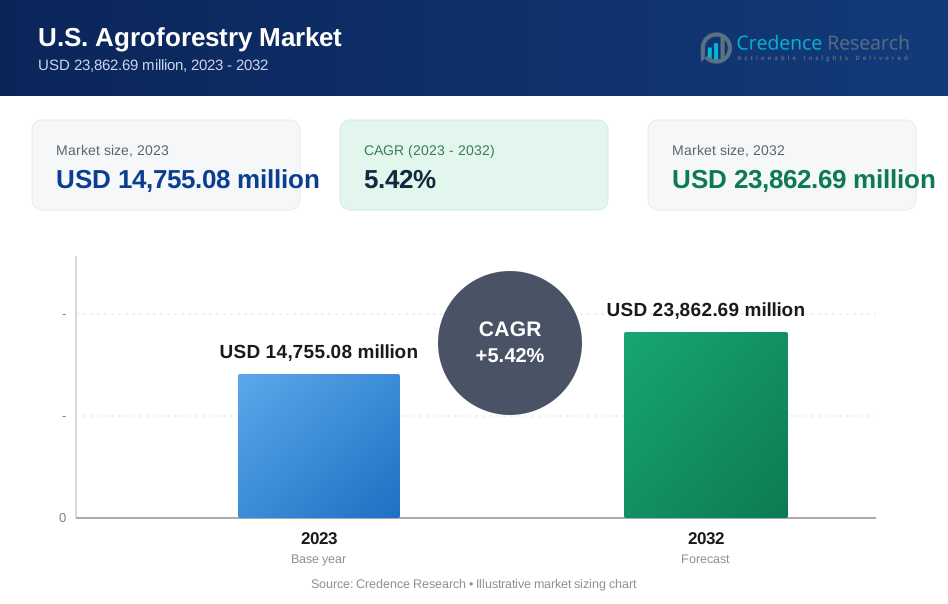
| U.S. Agroforestry Market Size 2023 | USD 14,755.08 million |
| U.S. Agroforestry Market, CAGR | 5.42% |
| U.S. Agroforestry Market Size 2032 | USD 23,862.69 million |
Market Overview
The U.S. Agroforestry Market is projected to witness substantial growth, with its value expected to increase from USD 14,755.08 million in 2023 to USD 23,862.69 million by 2032, reflecting a notable CAGR of 5.42%.
The U.S. agroforestry market is being propelled by several key drivers and trends. Increasing consumer demand for sustainable agricultural practices, coupled with growing awareness of the environmental benefits of agroforestry systems, is fueling market growth. Moreover, government initiatives promoting agroforestry as a means to enhance soil health, biodiversity, and carbon sequestration are further stimulating adoption. Technological advancements in agroforestry practices, such as precision agriculture and remote sensing technologies, are also driving market expansion by improving efficiency and productivity. Additionally, the integration of agroforestry into climate change mitigation and resilience strategies is amplifying its significance in the agricultural sector.
In the U.S. Agroforestry Market, geographical analysis reveals a diverse landscape of adoption, with key players contributing to its growth and dynamism. States such as Missouri, Oregon, and California exhibit strong potential due to their proactive approach to sustainable land management and robust agricultural infrastructure. Leading players such as Agroforestry Systems Inc., Weyerhaeuser, and the Center for Agroforestry (University of Missouri) play pivotal roles in driving innovation and promoting best practices in agroforestry across various regions. Additionally, organizations like the Center for International Forestry Research and World Agroforestry (CIFOR-ICRAF) contribute valuable research insights, further enriching the U.S. agroforestry landscape.
Market Drivers
Environmental Benefits and Conservation:
There’s a growing recognition of the environmental benefits of agroforestry in the U.S. These systems promote biodiversity, improve soil health, reduce erosion, and enhance water quality. Additionally, they can help mitigate climate change by sequestering carbon dioxide. For instance, agroforestry practices can sequester 2 to 4 tons of carbon per acre per year in plant biomass and soil, as well as through a reduction in practices that contribute to GHG emissions. Government programs and incentives are increasingly focused on these environmental benefits, reflecting a shift towards sustainable land management practices.
Specialty Markets and Consumer Demand:
U.S. consumers are showing a growing interest in locally-produced, sustainable, and ethically-sourced food products. For instance, a survey found that over 42 percent of Americans aged between 50 and 64 stated that they prefer buying locally grown food products. Agroforestry practices can cater to this demand by producing specialty fruits, nuts, mushrooms, and other high-value crops alongside traditional commodities. This aligns with the trend of consumers seeking transparency and traceability in their food supply chains, driving the demand for agroforestry products.
Improved Farm Profitability and Risk Reduction:
By diversifying income streams with the addition of tree products, agroforestry can help farmers increase overall farm profitability and spread economic risk. This is particularly appealing in times of volatile commodity prices. With the potential for higher returns from specialty crops and the added resilience to market fluctuations, agroforestry offers a viable strategy for enhancing farm income and sustainability. For instance, according to a report, well-designed agroforestry systems can increase crop yields as much as 56 percent by increasing per-land-unit area productivity.
Resilient Agricultural Systems:
Agroforestry practices can contribute to building more resilient agricultural systems in the U.S. Trees in these systems can provide windbreaks, improve water infiltration during droughts, and offer habitat for beneficial insects that help control pests. This resilience is crucial in the face of climate change-induced challenges, helping farmers adapt to shifting environmental conditions while maintaining productivity. For instance, agroforestry the intentional integration of trees and shrubs into crop and animal farming systems to create environmental, economic, and social benefits currently represents less than 2% of U.S. agriculture.
Market Trends
Integration with Regenerative Agriculture:
Similar to other regions, the U.S. is witnessing a surge in incorporating agroforestry into broader regenerative agriculture approaches. This innovative strategy combines practices like cover cropping, no-till farming, and composting alongside trees to create more resilient and productive agricultural systems. For instance, since 2018, 25% of produce sold in the USA is organic, an indicator of the demand and potential growth for regenerative agriculture. Regenerative agricultural practices are in place across 63% of farms in North America, according to a 2020 study by Sustainalytics. By harnessing the complementary benefits of agroforestry and regenerative practices, farmers can enhance soil health, sequester carbon, and improve overall ecosystem resilience, contributing to sustainable food production and environmental stewardship.
Focus on Pollinator Health and Specialty Products:
There’s a growing emphasis in the U.S. on using flowering tree species and shrubs in agroforestry systems to support pollinator populations. This strategic integration is critical for many agricultural crops and can also lead to the production of honey or other hive products. For instance, plant pollination by animals is critical for healthy ecosystems and an estimated 85% of the world’s flowering plants depend on animals, mostly insects, like bees, for pollination. In fact, pollination is essential to food security and roughly 35% of global crop production is dependent on pollination by animals. Additionally, there’s an increasing interest in cultivating niche, high-value products like essential oils, medicinal herbs, and specialty mushrooms under the protective canopy of trees. By focusing on pollinator health and diversifying product offerings, agroforestry practitioners can tap into emerging markets and meet evolving consumer preferences for sustainable and unique agricultural products.
Market Challenges Analysis
Limited Public Awareness and Market Development:
While interest in sustainable agriculture is growing, public awareness of agroforestry and its benefits in the U.S. remains relatively low. Additionally, some farmers might lack the knowledge or expertise required to implement these practices effectively. Educational programs, demonstration projects, and technical assistance can play a crucial role in overcoming this challenge. Moreover, compared to traditional commodities, established market channels for many agroforestry products are less developed in the U.S. This can make it difficult for farmers to find buyers and secure fair prices for their produce. Developing robust marketing infrastructure, including processing facilities, storage units, and efficient distribution networks, is essential for market growth and creating demand for agroforestry products.
Financial Assistance and Policy Support:
Similar to other regions, the long-term benefits of agroforestry, like improved soil health and carbon sequestration, might not resonate with farmers struggling to meet immediate financial needs. Government incentives, cost-share programs, or loan guarantees specifically for agroforestry practices could help address this challenge. However, while there are some government programs that support agroforestry, the level of financial assistance and policy support in the U.S. lags behind some other countries. Increased funding for research, extension services, and incentive programs can significantly boost the adoption of agroforestry practices. Additionally, navigating the complex regulatory landscape related to land use, forestry, and agricultural practices can be challenging for farmers considering agroforestry. Streamlining regulations and providing clear guidelines for agroforestry systems can incentivize wider adoption and facilitate compliance. Moreover, in some regions of the U.S., land tenure insecurity can be a barrier to adopting long-term practices like agroforestry. For absentee landowners or those with short-term leases, the initial investment in trees might not be seen as worthwhile. Encouraging long-term land management practices through land ownership policies or secure leasing arrangements could be beneficial in addressing this issue and fostering greater adoption of agroforestry practices.
Market Segmentation Analysis:
By System:
The U.S. agroforestry market can be segmented based on the type of system employed by farmers. Agrisilvicultural systems integrate trees with agricultural crops, offering benefits such as soil conservation and enhanced biodiversity. Silvopastoral systems combine trees with livestock grazing, providing shade and forage while mitigating erosion. Agrosilvopastoral systems integrate trees, crops, and livestock, optimizing land use efficiency and diversifying income streams. Additionally, other agroforestry systems encompass a range of innovative approaches tailored to specific environmental conditions and farming objectives. Each system offers unique advantages, catering to diverse agricultural landscapes and farmer preferences.
By Product:
Furthermore, the U.S. agroforestry market can be analyzed based on the variety of products cultivated within these systems. Timber and lumber, along with fiber crops, constitute essential outputs, contributing to the wood products industry and supporting sustainable forestry practices. Fruits and nuts cultivated in agroforestry systems offer high-value produce, appealing to consumers seeking locally grown and organic options. Vegetables and herbs thrive in agroforestry environments, benefitting from the microclimatic conditions provided by tree cover. Moreover, medicinal plants represent a niche segment, harnessing the therapeutic properties of various botanical species. Additionally, other agroforestry products encompass a diverse array of specialty crops, ranging from ornamental plants to culinary herbs, catering to niche markets and expanding the economic viability of agroforestry practices.
Segments:
Based on System
- Agrisilvicultural Systems
- Silvopastoral Systems
- Agrosilvopastoral Systems
- Others
Based on Product
- Timber & lumber and Fiber Crops
- Fruits and Nuts
- Vegetables and Herbs
- Medicinal Plants
- Others
Based on the Geography:
- Midwest (Iowa, Illinois, Minnesota)
- Southeast (Florida, Georgia, Alabama)
- Northeast (New York, Pennsylvania, Massachusetts)
- West Coast (California, Oregon, Washington)
- Southwest
- Rocky Mountains
- Alaska
Regional Analysis
Midwest region
The Midwest region, comprising states like Iowa, Illinois, and Minnesota, holds the largest market share at approximately 30%. This dominance can be attributed to the region's vast expanse of fertile agricultural land, well-established farming communities, and a strong emphasis on sustainable practices. Additionally, the region's commitment to research and development in agroforestry has played a crucial role in driving market growth.
Southeast region
The Southeast region, including states such as Florida, Georgia, and Alabama, accounts for around 25% of the market share. This region's humid subtropical climate and diverse ecosystems have fostered the adoption of agroforestry systems that integrate crops, livestock, and trees. The presence of large-scale commercial operations, coupled with a growing interest in sustainable agricultural practices, has further contributed to the market's growth in this region.
Key Player Analysis
- Agroforestry Systems Inc.
- Weyerhaeuser
- Green Resources
- Center for Agroforestry (University of Missouri)
- Center for International Forestry Research and World Agroforestry (CIFOR-ICRAF)
- Rainforest Alliance
- EcoPlanet Bamboo
- TerraCarbon LLC
Competitive Analysis
In the competitive landscape of the U.S. Agroforestry Market, notable players such as Agroforestry Systems Inc., Weyerhaeuser, and Green Resources dominate with their extensive experience and commitment to sustainable land management. These companies offer comprehensive solutions ranging from innovative system designs and consulting services to timber production, carbon sequestration projects, and community development initiatives. Additionally, research institutions like the Center for Agroforestry at the University of Missouri and global organizations like the Center for International Forestry Research and World Agroforestry (CIFOR-ICRAF) contribute valuable insights and knowledge dissemination, enriching the market with best practices and advancements. Collaborative efforts with entities like Rainforest Alliance, EcoPlanet Bamboo, and TerraCarbon LLC further reinforce the market's growth trajectory by promoting responsible practices, certification schemes, and carbon offset opportunities, ultimately driving sustainability and profitability in the agroforestry sector.
Market Concentration & Characteristics
The U.S. agroforestry market exhibits a moderate level of market concentration with several key players contributing to its dynamics. While there are numerous smaller enterprises and research institutions actively engaged in promoting agroforestry practices, a few major corporations, such as Weyerhaeuser and Green Resources, wield significant influence due to their extensive experience, resources, and diversified portfolios encompassing forestry, land management, and sustainability initiatives. This concentration is characterized by a focus on sustainable land use, carbon sequestration projects, and innovative agroforestry solutions tailored to diverse agricultural landscapes. Additionally, collaboration between industry stakeholders, research institutions, and government agencies further enhances market characteristics by fostering knowledge exchange, technology transfer, and policy development aimed at promoting agroforestry adoption and addressing environmental challenges. As consumer demand for sustainable products continues to grow, market concentration is likely to evolve, with emphasis shifting towards responsible practices, certification schemes, and ecosystem services that drive long-term sustainability and profitability in the agroforestry sector.
Report Coverage
The research report offers an in-depth analysis based on System, Product and Geography. It details leading market players, providing an overview of their business, product offerings, investments, revenue streams, and key applications. Additionally, the report includes insights into the competitive environment, SWOT analysis, current market trends, as well as the primary drivers and constraints. Furthermore, it discusses various factors that have driven market expansion in recent years. The report also explores market dynamics, regulatory scenarios, and technological advancements that are shaping the industry. It assesses the impact of external factors and global economic changes on market growth. Lastly, it provides strategic recommendations for new entrants and established companies to navigate the complexities of the market.
Future Outlook
- Continued Growth: The U.S. agroforestry market is poised for steady expansion driven by increasing awareness of its environmental and economic benefits.
- Technological Integration: Advancements in precision agriculture and remote sensing technologies will enhance efficiency and productivity in agroforestry systems.
- Climate Resilience: Agroforestry practices will play a crucial role in building resilience to climate change-induced challenges, such as droughts and extreme weather events.
- Market Diversification: Growing consumer demand for specialty products, such as organic fruits, nuts, and medicinal herbs, will drive market diversification and niche opportunities.
- Policy Support: Continued government incentives and policies promoting sustainable land management practices will incentivize agroforestry adoption.
- Carbon Markets: Recognition of agroforestry's role in carbon sequestration will lead to the development of carbon credit markets, providing additional revenue streams for farmers.
- Research and Innovation: Ongoing research efforts and technological innovations will drive advancements in agroforestry practices and product development.
- Education and Outreach: Increased outreach and educational programs will raise awareness and facilitate knowledge transfer to farmers, landowners, and stakeholders.
- International Collaboration: Collaboration with global organizations and knowledge sharing initiatives will enrich the U.S. agroforestry market with best practices and insights from around the world.
- Sustainable Development Goals: Alignment with sustainable development goals will position agroforestry as a key solution for achieving food security, biodiversity conservation, and climate resilience in the U.S. agricultural sector.
Request a Free Sample
Fill in your details and we'll send you a free sample report.
- Sample data tables & charts
- Research methodology
Need a Custom Version of This Report?
Tailor the scope, geography, or segments to your exact requirements.
- Custom geography or segment scope
- Direct access to our analyst team
Frequently Asked Questions
What is the current size of the U.S. Agroforestry Market?
What factors are driving the growth of the U.S. Agroforestry Market?
What are the key segments within the U.S. Agroforestry Market?
What are some challenges faced by the U.S. Agroforestry Market?
Who are the major players in the U.S. Agroforestry Market?
Which segment is leading the market share?
Table of Content
Chapter 1. Report Introduction
- 1.1 Report Description & Purpose
- 1.1.1 Report Title & Market Definition
- 1.1.2 Unique Selling Propositions (USP) & Key Differentiators
- 1.1.3 Value Proposition for Stakeholders
- 1.2 Research Objectives
- 1.2.1 Market Sizing Objectives (Volume & Revenue)
- 1.2.2 Segmentation Objectives
- 1.2.3 Competitive Intelligence Objectives
- 1.2.4 Forecast & Scenario Objectives
- 1.3 Report Scope
- 1.3.1 U.S. Agroforestry Scope – Types & Subtypes Covered
- 1.3.2 Geographic Scope – Regions & Countries Covered
- 1.3.3 Historical Period, Base Year & Forecast Period (2023; forecast to 2032)
- 1.3.4 Inclusions & Exclusions
- 1.4 HS Code & Classification Framework
- 1.5 Currency, Units & Pricing Basis
- 1.6 Target Stakeholders
- 1.7 Limitations & Assumptions
Chapter 2. Executive Summary
- 2.1 Global U.S. Agroforestry Market Snapshot
- 2.1.1 Market Size – Historical (2023) & Forecast (2023-2032) (2023: USD 14,755.08 million → 2032: USD 23,862.69 million)
- 2.1.2 Volume & Revenue – Global Totals
- 2.1.3 Key Market Highlights – Top Five Facts
- 2.2 U.S. Agroforestry Market Segmentation Snapshot
- 2.2.1 Market Split by Region – 2023 vs. 2032
- 2.3 Competitive Snapshot
- 2.3.1 Top 10 Players by Revenue Share – 2023
- 2.3.2 Top 10 Players by Volume Share – 2023
- 2.3.3 Recent Strategic Developments (18-Month Summary)
- 2.4 Key Investment Highlights & Strategic Conclusions
Chapter 3. U.S. Agroforestry Market Dynamics & Industry Analysis
- 3.1 Market Overview & Context
- 3.1.1 U.S. Agroforestry Market Position in the Broader Automotive Value Chain
- 3.1.2 OEM vs. Replacement Market Dynamics
- 3.1.3 Market Maturity & Development Stage by Region
- 3.2 U.S. Agroforestry Market Drivers
- 3.3 U.S. Agroforestry Market Restraints & Challenges
- 3.4 U.S. Agroforestry Market Opportunities
- 3.5 Porter's Five Forces Analysis
- 3.5.1 Threat of New Entrants
- 3.5.2 Bargaining Power of Suppliers
- 3.5.3 Bargaining Power of Buyers
- 3.5.4 Threat of Substitutes
- 3.5.5 Competitive Rivalry – Intensity Assessment
- 3.6 U.S. Agroforestry Value Chain Analysis
- 3.6.1 Upstream – Raw Material/Input Suppliers
- 3.6.1.1 Raw Material/Input 1
- 3.6.1.2 Raw Material/Input 2
- 3.6.1.3 Raw Material/Input 3
- 3.6.2 Midstream – Production/Manufacturing/Service Delivery
- 3.6.2.1 Production/Process Overview
- 3.6.2.2 Key Facility Locations & Capacity by Manufacturer
- 3.6.3 Downstream – Distribution & End Consumer
- 3.6.3.1 Primary Channel – B2B/OEM
- 3.6.3.2 Secondary Channels – Dealer, Retail, Online, Direct
- 3.6.4 Value Chain Profitability Analysis
- 3.6.1 Upstream – Raw Material/Input Suppliers
- 3.7 PESTEL Analysis
- 3.7.1 Political Factors
- 3.7.2 Economic Factors
- 3.7.3 Social Factors
- 3.7.4 Technological Factors
- 3.7.5 Environmental Factors
- 3.7.6 Legal Factors
- 3.8 U.S. Agroforestry Supply Chain Analysis
- 3.8.1 Raw Material/Input Supply Risk Assessment
- 3.8.2 Manufacturing Concentration Risk (Geographic Exposure)
- 3.8.3 Trade Disruption Impact Analysis
- 3.9 Regulatory & Policy Landscape
Note: The regulatory and policy landscape section covers regulations based on their applicability to the market, U.S. Agroforestry category, geography, and scope of the study. Only regulatory frameworks with a material impact on operations, compliance, trade, sustainability, or market access are analyzed in detail.
Chapter 4. Key Investment Pockets & Opportunity Analysis
- 4.1 U.S. Agroforestry Market Attractiveness Analysis
- 4.1.1 By Region – Investment Attractiveness Matrix (Volume × CAGR)
- 4.2 Absolute Revenue Growth Opportunity
- 4.2.1 By Region – Absolute USD Growth Through 2032
- 4.3 Incremental Volume Opportunity
- 4.3.1 By Region – Incremental Volume Through 2032
- 4.3.2 Segment – Incremental Volume
- 4.4 Emerging Submarket Opportunity Deep Dive (Subject to Applicability)
- 4.5 Emerging Market Opportunity Scorecards
- 4.5.1 United States
- 4.5.2 Europe
- 4.5.3 Asia
- 4.5.4 Middle East & Africa
Note: Emerging Market Opportunity Scorecards will be included based on relevance and strategic importance. Regions listed are indicative and may vary depending on data availability and market dynamics.
Chapter 5. U.S. Agroforestry Import-Export Analysis & Trade Flows
- 5.1 Global Trade Overview
- 5.1.1 Global Export Value by Country (2023)
- 5.1.2 Global Export Volume by Country (2023)
- 5.1.3 Global Import Value by Country (2023)
- 5.1.4 Global Import Volume by Country (2023)
- 5.1.5 Net Trade Balance by Country (2023)
- 5.2 Export Analysis – Segment
- 5.2.1 Type 1 (HS Code)
- 5.2.2 Type 2 (HS Code)
- 5.2.3 Type 3 (HS Code)
- 5.2.4 Type 4 (HS Code)
- 5.2.5 Type 5 (HS Code)
- 5.3 Import Analysis – Segment
- 5.3.1 Type 1 (HS Code)
- 5.3.2 Type 2 (HS Code)
- 5.3.3 Type 3 (HS Code)
- 5.3.4 Type 4 (HS Code)
- 5.3.5 Type 5 (HS Code)
- 5.4 Average Unit Trade Prices
- 5.4.1 Average Export Price – Segment & Country
- 5.4.2 Average Import Price – Segment & Source Country
- 5.4.3 Price Trends (2023)
- 5.5 Key Trade Route Analysis
- 5.5.1 Trade Route 1
- 5.5.2 Trade Route 2
- 5.5.3 Trade Route 3
- 5.5.4 Trade Route 4
- 5.5.5 Trade Route 5
- 5.6 Trade Policy Impact Assessment
- 5.6.1 US Anti-Dumping & Section 301 Tariffs
- 5.6.2 EU Customs Union Impact
- 5.6.3 Major Free Trade Agreements
- 5.6.4 USMCA Rules of Origin
Note: Trade policy analysis will be included only where relevant to the U.S. Agroforestry market.
Chapter 6. Competitive Landscape & Company Benchmarking
- 6.1 U.S. Agroforestry Market Concentration & Structure
- 6.1.1 Herfindahl-Hirschman Index (HHI) – vs. 2023
- 6.1.2 Tier 1, Tier 2 & Tier 3 Market Structure
- 6.1.3 Global, Regional & Local Player Dynamics
- 6.2 U.S. Agroforestry Market Share Analysis – 2023
- 6.2.1 Global Revenue Share by Company
- 6.2.2 Global Volume Share by Company
- 6.2.3 Regional Revenue Share
- 6.2.4 Market Share Evolution ( vs. 2023)
- 6.2.5 OEM Segment Share by Company
- 6.2.6 Replacement Segment Share by Company
- 6.3 Production/Delivery Capacity & Facility Analysis
- 6.3.1 Global Installed Capacity
- 6.3.2 Capacity Utilization Rates
- 6.3.3 Production/Output Volume
- 6.3.4 Facility Locations & Capacity Map
- 6.3.5 Planned Capacity Additions
- 6.4 U.S. Agroforestry Competitive Benchmarking Matrix
- 6.4.1 Revenue, Volume, CAGR & Profitability Comparison
- 6.4.2 Channel Revenue Mix
- 6.4.3 Geographic Revenue Exposure
- 6.4.4 R&D Intensity
- 6.4.5 Sustainability Maturity
- 6.5 Strategic Developments in U.S. Agroforestry (Last 24 Months)
- 6.5.1 Mergers, Acquisitions & Divestments
- 6.5.2 New U.S. Agroforestry Launches
- 6.5.3 Facility Expansions
- 6.5.4 Strategic Alliances, Joint Ventures & Partnerships
- 6.5.5 Distribution Expansion & Market Entry
- 6.5.6 Sustainability & ESG Initiatives
- 6.6 Competitive Strategy Mapping
- 6.6.1 Leader, Challenger, Follower & Niche Classification
- 6.6.2 Pricing Strategy Comparison
- 6.6.3 Channel Strategy Matrix
Note: Strategic developments are included based on their materiality and the availability of reliable information.
Chapter 7. Global U.S. Agroforestry Market – By Distribution Channel
- 7.1 Segment Overview
- 7.1.1 Volume & Revenue Split by Channel (2023 & 2032)
- 7.1.2 Channel Mix Evolution (2023-2032)
Chapter 8. Regional Market Analysis – Global Overview
- 8.1 Global Regional Overview
- 8.1.1 Regional Volume Share
- 8.1.2 Regional Revenue Share
- 8.1.3 Regional Volume by Region
- 8.1.4 Regional Revenue by Region
- 8.1.5 Regional Forecast Through 2032
- 8.2 Cross-Regional Segment Analysis
- 8.2.1 By Distribution Channel
- 8.2.2 By Brand/Price Tier
Chapter 9. North America U.S. Agroforestry Market
- 9.1 United States
- 9.2 Canada
- 9.3 Mexico
Chapter 10. Europe U.S. Agroforestry Market
- 10.1 Germany
- 10.2 France
- 10.3 Italy
- 10.4 United Kingdom
- 10.5 Spain
- 10.6 Poland
- 10.7 Russia
- 10.8 Netherlands
- 10.9 Belgium
- 10.10 Sweden
- 10.11 Denmark
- 10.12 Norway
- 10.13 Rest of Europe
Chapter 11. Asia Pacific U.S. Agroforestry Market
- 11.1 China
- 11.2 India
- 11.3 Japan
- 11.4 South Korea
- 11.5 Thailand
- 11.6 Indonesia
- 11.7 Vietnam
- 11.8 Malaysia
- 11.9 Australia
- 11.10 Rest of Asia Pacific
Chapter 12. Latin America U.S. Agroforestry Market
- 12.1 Brazil
- 12.2 Argentina
- 12.3 Colombia
- 12.4 Chile
- 12.5 Rest of Latin America
Chapter 13. Middle East U.S. Agroforestry Market
- 13.1 Saudi Arabia
- 13.2 United Arab Emirates
- 13.3 Turkey
- 13.4 Israel
- 13.5 Iran
- 13.6 Rest of the Middle East
Chapter 14. Africa U.S. Agroforestry Market
- 14.1 South Africa
- 14.2 Egypt
- 14.3 Nigeria
- 14.4 Morocco
- 14.5 Rest of Africa
Chapter 15. U.S. Agroforestry Company Profiles
- 15.1 [Company 01]
- 15.1.1 Company Overview
- 15.1.2 Key Management Personnel
- 15.1.3 Products & Services Portfolio
- 15.1.4 Financial Performance
- 15.1.5 Key Market Focus & Geographic Presence
- 15.1.6 Recent Developments & Strategic Initiatives
Note: The company profile list is preliminary and may change based on research findings, market developments, data availability, and client requirements.
Chapter 16. Appendices
- Appendix A – List of Abbreviations & Acronyms
- Appendix B – Industry Classification Code Reference – Full Series
- Appendix C – Production & Capacity Data Tables
- Appendix D – End-Use & Demand Base Tables
- Appendix E – Consumption & Replacement Rate Assumptions
- Appendix F – ASP Reference Tables
- Appendix G – Manufacturing & Facility Database
- Appendix H – Import-Export Data Tables
- Appendix I – Regulatory Summary Tables
- Appendix J – Primary Research Participant List (Anonymized)
- Appendix K – Primary Research Questionnaire Framework
- Appendix L – Data Sources & Bibliography
- Appendix M – Market Size Divergence & Source Comparison
Chapter 17. Research Methodology
- 17.1 Research Framework & Philosophy
- 17.2 Secondary Research – Sources, Hierarchy & Data Extraction
- 17.3 Data Modeling – Bottom-Up & Top-Down Market Sizing
- 17.4 Primary Research – Stakeholder Framework, LOI & Sample Sizes
- 17.5 Forecast Methodology – Regression, Scenario & Sensitivity Analysis
- 17.6 Quality Control – Four-Layer Validation Framework
- 17.7 Limitations & Standard Assumptions
- 17.8 Disclaimer
