
| REPORT ATTRIBUTE | DETAILS |
|---|---|
| Historical Period | 2020-2023 |
| Base Year | 2024 |
| Forecast Period | 2025-2032 |
| Whipping Cream Market Size 2024 | USD 967.5 Million |
| Whipping Cream Market, CAGR | 5.42% |
| Whipping Cream Market Size 2032 | USD 1475.2 Million |
Market Overview:
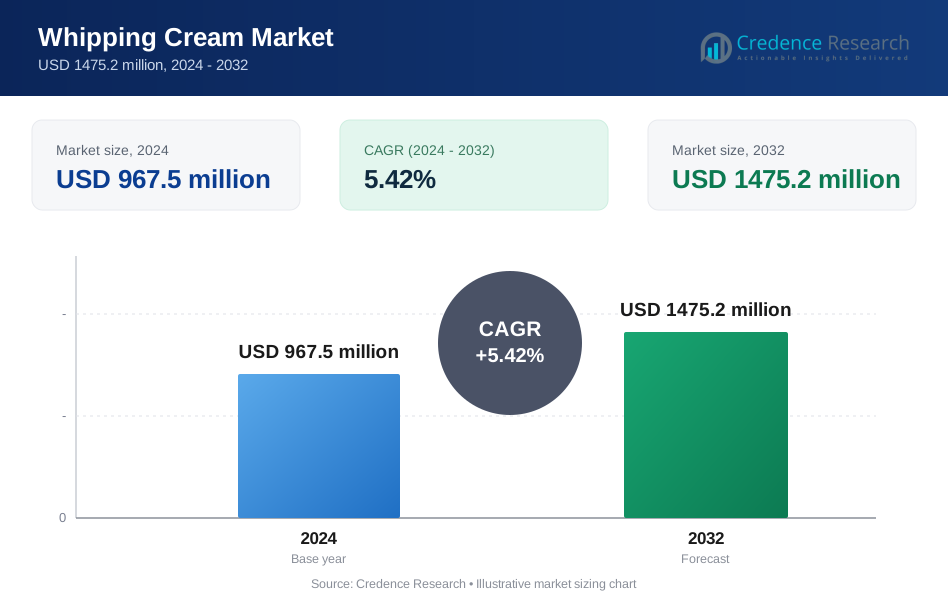
The Whipping Cream Market size was valued at USD 967.5 million in 2024 and is anticipated to reach USD 1475.2 million by 2032, at a CAGR of 5.42% during the forecast period (2024-2032).
Several factors are propelling the growth of the whipping cream market. The increasing consumer preference for premium dairy products with higher fat content has resulted in higher consumption of whipping cream in foodservice and retail. Furthermore, the growing demand for whipped toppings and creams in the production of cakes, pastries, and ice creams is significantly boosting market expansion. Additionally, the adoption of whipping cream in non-dairy alternatives and plant-based products is gaining traction, driven by the rising number of health-conscious consumers and the demand for lactose-free options. The growing awareness about the nutritional benefits of whipping cream and its versatility in various culinary applications is also contributing to market growth. Innovations in product formulations and flavors are further expanding the variety of whipping cream offerings, catering to a broader consumer base.
Regionally, North America holds the largest share of the whipping cream market, driven by the high consumption of dairy products and the thriving foodservice industry. The region's established presence of premium dessert and bakery chains contributes significantly to the demand for whipping cream. Europe follows closely, with a significant portion of demand attributed to the region’s strong preference for bakery and confectionery products. Consumer trends in Europe also indicate a rise in interest for artisanal and high-quality whipping creams. The Asia Pacific region is expected to witness the highest growth rate during the forecast period due to the increasing adoption of western food culture and the rising disposable income of consumers. Additionally, the growing popularity of desserts and beverages incorporating whipping cream is further driving demand in the region. Latin America and the Middle East are also experiencing steady growth, with evolving consumer tastes and expanding food industries driving market demand. These regions are increasingly embracing global food trends, including the use of whipping cream in diverse culinary applications.
Market Insights:
- The whipping cream market is valued at USD 967.5 million in 2024 and is expected to reach USD 1475.2 million by 2032, growing at a CAGR of 5.42%.
- Increasing consumer demand for premium dairy products with higher fat content is driving the growth of the whipping cream market.
- The rise in popularity of plant-based and lactose-free whipping cream alternatives is expanding the market by catering to health-conscious consumers.
- Whipping cream is increasingly used in savory dishes, sauces, and beverages, enhancing its versatility and demand across various culinary applications.
- North America holds a 35% market share, driven by high dairy consumption and the popularity of premium dessert products.
- Europe holds a 30% market share, with demand largely driven by the bakery and confectionery sectors and growing interest in plant-based alternatives.
- The Asia Pacific region is expected to experience the highest growth rate due to rising disposable incomes and the adoption of western food trends.
Market Drivers:
Growing Consumer Preference for Premium Dairy Products
The increasing demand for premium dairy products is a significant driver of the whipping cream market. Consumers are increasingly inclined towards high-fat dairy options that offer superior taste and texture. This trend has contributed to a rise in the consumption of whipping cream, particularly in foodservice and retail sectors. The growing focus on indulgent and gourmet food experiences is pushing the demand for whipping cream in desserts and beverages. Shifting consumer preferences toward richer, more luxurious dairy ingredients also play a key role in expanding the market.
Rising Demand for Whipped Toppings in Food and Beverage Applications
The demand for whipped toppings in cakes, pastries, and ice creams is driving the growth of the whipping cream market. These applications are essential in both consumer and commercial settings, where whipping cream is used to create visually appealing and delicious products. With the growing popularity of home baking and food delivery services, whipping cream has become an indispensable ingredient in the preparation of diverse food items. The increasing number of food establishments seeking to innovate with desserts and beverages is further fueling the adoption of whipping cream.
- For instance, Pillsbury™ Whipped Frosting comes in a 12 oz container that is ideal for frosting up to 24 cupcakes, as confirmed by the brand's official announcement.
Health Consciousness and Rise of Non-Dairy Alternatives
Health-conscious consumers are pushing the adoption of non-dairy alternatives, which has impacted the whipping cream market. Plant-based and lactose-free whipping creams are gaining popularity among individuals with dietary restrictions or preferences for plant-based diets. These alternatives offer similar functionality to traditional whipping cream, without compromising on taste or texture. The growing availability of plant-based whipping cream options in both retail and foodservice settings is making it more accessible to a broader consumer base.
- For instance, Country Crock Plant Cream Heavy Whipping Cream Alternative contains 4.5 grams of fat per 1-tablespoon serving and 45 calories, offering a dairy-free option for consumers seeking plant-based products.
Innovations in Product Offerings and Applications
Innovations within the whipping cream market are helping cater to evolving consumer demands. Manufacturers are focusing on diversifying their product lines to offer a wider variety of whipping creams, such as reduced-fat and flavored variants. These innovations enable consumers to enjoy different culinary experiences while addressing dietary preferences. The availability of specialty whipping creams tailored to specific needs, such as organic or low-sugar formulations, is expanding its application across various segments, from bakery products to beverages.
Market Trends:
Increase in Demand for Plant-Based and Lactose-Free Whipping Cream Alternatives
A notable trend in the whipping cream market is the growing preference for plant-based and lactose-free alternatives. Health-conscious consumers and those with dietary restrictions are shifting towards these options, seeking products that align with their lifestyle choices. These alternatives cater to a wide range of consumers, including vegans, individuals with lactose intolerance, and those avoiding animal-based products for health reasons. Whipping cream manufacturers are responding to this trend by introducing plant-based versions made from ingredients such as coconut, soy, and almond milk. This shift reflects a broader movement toward clean-label and allergen-free products, further expanding the potential market reach.
- For instance, ANDFOODS in New Zealand developed a lentil-based whipping cream and successfully raised $2.7 million in commercialization funding to bring this innovative plant-based product to manufacturing scale using advanced fermentation technology.
Rising Popularity of Whipping Cream in Non-Dessert Applications
Whipping cream is also gaining traction beyond traditional dessert applications, which is reshaping its role in the culinary industry. It is increasingly being incorporated into savory dishes, soups, sauces, and even beverages. Chefs and home cooks are experimenting with whipping cream in various cooking techniques, enhancing the texture and flavor of a wide range of foods. The trend of using whipping cream in both sweet and savory preparations is driving its demand in diverse market segments. This growing versatility of whipping cream in non-dessert applications is opening new opportunities for product innovation and market expansion.
- For instance, Kerry Group reported that its dairy division successfully developed a whipping cream product for savory applications that allows chefs to create smooth sauces containing 25 grams of fat per 100 grams, enhancing culinary textures without compromising flavor.
Market Challenges Analysis:
Fluctuating Dairy Prices and Supply Chain Instability
One of the significant challenges facing the whipping cream market is the volatility in dairy prices. Fluctuations in the prices of raw materials, such as milk and cream, directly impact the cost structure of whipping cream production. Supply chain disruptions, caused by factors such as climate change, transportation issues, or labor shortages, further exacerbate these price fluctuations. These uncertainties make it difficult for manufacturers to maintain consistent pricing, which can hinder market growth and profitability. The instability of supply chains also poses a challenge in meeting growing consumer demand, particularly in regions with limited access to dairy production.
Competition from Alternative Cream Products
The increasing availability of non-dairy cream substitutes is another challenge facing the whipping cream market. Plant-based and lactose-free alternatives are becoming more mainstream, offering consumers options that meet specific dietary needs. These alternatives, such as coconut cream and almond milk-based creams, often provide lower prices and cater to a growing segment of health-conscious and environmentally aware consumers. As a result, traditional whipping cream faces stiff competition, especially in regions where plant-based diets are gaining popularity. This competition challenges manufacturers to innovate and maintain a competitive edge while preserving the appeal of traditional whipping cream.
Market Opportunities:
Expansion of Whipping Cream in Emerging Markets
The whipping cream market presents significant opportunities in emerging markets, particularly in Asia Pacific and Latin America. As urbanization and disposable incomes increase, consumers in these regions are increasingly adopting western food trends, including the use of whipping cream in desserts and beverages. The expanding foodservice industry, driven by the rise in café culture and fast-casual dining, creates demand for whipping cream as a key ingredient. Manufacturers can capitalize on this growth by tailoring their products to local preferences and offering convenient, region-specific formulations. The growing middle-class population and changing consumer lifestyles further boost the market potential for whipping cream in these regions.
Innovative Product Developments in Health-Conscious Segments
Another opportunity lies in the development of health-focused whipping cream products. With rising awareness about health and wellness, consumers are seeking lower-calorie, lower-fat, and organic options in their food ingredients. Whipping cream manufacturers can tap into this trend by introducing reduced-fat, sugar-free, or plant-based whipping cream variants that cater to the growing demand for healthier alternatives. By innovating to meet these dietary preferences, manufacturers can expand their customer base and capture a larger share of the market, especially among health-conscious individuals and those with specific dietary needs.
Market Segmentation Analysis:
By Product
The market is primarily divided into dairy-based and non-dairy whipping cream. Dairy-based whipping cream holds the largest share due to its rich texture and traditional use in a variety of food applications. Non-dairy whipping cream, made from plant-based ingredients like coconut, soy, and almond, is growing rapidly in response to the increasing demand for lactose-free and vegan options. This segment is expanding as more consumers seek alternatives that align with their dietary preferences.
- For instance, Rich Products Corporation launched On Top Oat Milk Soft Whip, with each case containing 12 cartons and offering a 365-day frozen shelf life, supporting thousands of foodservice venues in North America.
By Application
Whipping cream is used in multiple applications, including bakery, confectionery, dairy products, beverages, and sauces. The bakery and confectionery segments are the largest consumers, as whipping cream is essential in the preparation of cakes, pastries, and ice cream. The growing demand for premium, indulgent desserts fuels its consumption. Beverages, particularly coffee and cocktails, also use whipping cream for topping and flavoring, contributing significantly to market growth.
- For instance, Starbucks adds whipped cream topping to its popular Caramel Macchiato, which sells approximately 4 million cups monthly in the U.S. alone, demonstrating the significant role of whipping cream in beverage indulgence.
By Distribution Channel
The distribution of whipping cream occurs through various channels, including supermarkets/hypermarkets, online retail, convenience stores, and specialty stores. Supermarkets and hypermarkets dominate due to their wide reach and ability to offer a variety of products to consumers. Online retail is emerging as a strong channel, driven by the convenience of home delivery and growing consumer interest in specialty whipping creams. Specialty stores, focusing on organic or gourmet products, are gaining traction, meeting the needs of health-conscious and premium product consumers.
Segmentations:
- By Product:
- Dairy-Based Whipping Cream
- Non-Dairy Whipping Cream
- By Application:
- Bakery
- Confectionery
- Dairy Products
- Beverages
- Sauces
- By Distribution Channel:
- Supermarkets/Hypermarkets
- Online Retail
- Convenience Stores
- Specialty Stores
- By Region:
- North America
- Europe
- Asia Pacific
- Latin America
- Middle East & Africa
Regional Analysis:
North America: Leading the Whipping Cream Market
North America accounts for the largest market share of 35% in the whipping cream market, driven by high consumption of dairy products and a robust foodservice industry. The United States and Canada are key contributors, where whipping cream is widely used in bakery, confectionery, and beverage applications. The growing popularity of premium, indulgent foods and desserts among consumers supports the strong demand for whipping cream in the region. The established presence of well-known food chains and a thriving café culture further propel market growth. Innovations in product offerings, such as organic and lactose-free variants, also cater to health-conscious consumers in North America, ensuring continued demand.
Europe: Strong Demand for Bakery and Confectionery Products
Europe holds a market share of 30% in the whipping cream market, driven by the region’s strong preference for bakery and confectionery products. Countries like Germany, France, and the UK continue to be major consumers, where whipping cream plays a vital role in the preparation of cakes, pastries, and ice creams. The region is also experiencing growing interest in plant-based and dairy-free whipping cream alternatives, especially in response to the rise of veganism and lactose intolerance. The European market benefits from well-established dairy supply chains and a high level of consumer awareness about product quality, which continues to foster market expansion.
Asia Pacific: Rapid Growth in Emerging Markets
The Asia Pacific region holds a market share of 20% in the whipping cream market, with rapid growth expected during the forecast period. With increasing urbanization and rising disposable income, consumers in countries like China, India, and Japan are adopting western food trends, which include the use of whipping cream in various culinary applications. The growing demand for baked goods, ice creams, and beverages further fuels the market in these regions. Additionally, the increasing popularity of desserts and café culture provides ample opportunities for manufacturers to expand their footprint in the Asia Pacific market. Rising consumer awareness and demand for premium products also support market growth in this region.
Key Player Analysis:
- Rich Products & Solutions Pvt Ltd
- Hanan Products Co., Inc.
- LACTALIS
- GCMMF
- Conagra Brands
- Gay Lea Foods Co-operative Ltd.
- Cabot Creamery
- Borden Dairy
- Gruenewald Manufacturing Company, Inc.
- Granarolo S.p.A
Competitive Analysis:
The whipping cream market is highly competitive, with key players focusing on product innovation and diversification to meet the growing demand. Leading companies such as Nestlé, Danone, and Lactalis dominate the market due to their strong brand presence and extensive distribution networks. These companies are investing in the development of plant-based and lactose-free whipping cream options to cater to health-conscious consumers. Regional players are also strengthening their positions by offering specialized products tailored to local tastes and dietary preferences. With rising demand for premium and organic whipping creams, companies are focusing on quality and sustainability to maintain competitive advantage. The market is also seeing increased competition from non-dairy cream alternatives, such as coconut and almond-based products, which are gaining traction among consumers with dietary restrictions. Manufacturers are focusing on expanding their product portfolios and distribution channels to capture a larger market share across regions.
Recent Developments:
- In June 2025, GCMMF (Amul) partnered with Cooperativa Ganadera del Valle de los Pedroches (COVAP) to launch Amul Milk in Spain and the European Union.
- In June 2025, Conagra Brands introduced more than 50 new frozen food products aimed at meeting diverse consumer preferences.
Market Concentration & Characteristics:
The whipping cream market exhibits moderate concentration, with key players such as Nestlé, Danone, and Lactalis holding significant market share. These companies dominate due to their established brand presence, extensive distribution networks, and broad product portfolios. However, regional players are increasingly gaining ground by offering specialized products, such as plant-based and organic whipping creams, to cater to specific consumer preferences. The market is characterized by strong competition driven by consumer demand for premium and health-conscious options. Manufacturers are focusing on innovations in product formulations and expanding their product ranges to include non-dairy alternatives. The presence of both global and regional players ensures a diverse range of products, making the market dynamic and responsive to changing consumer trends. Whipping cream's versatility in culinary applications across foodservice, retail, and home kitchens further fuels competition in the market.
Report Coverage:
The research report offers an in-depth analysis based on Product, Application, Distribution Channel and Region. It details leading market players, providing an overview of their business, product offerings, investments, revenue streams, and key applications. Additionally, the report includes insights into the competitive environment, SWOT analysis, current market trends, as well as the primary drivers and constraints. Furthermore, it discusses various factors that have driven market expansion in recent years. The report also explores market dynamics, regulatory scenarios, and technological advancements that are shaping the industry. It assesses the impact of external factors and global economic changes on market growth. Lastly, it provides strategic recommendations for new entrants and established companies to navigate the complexities of the market.
Future Outlook:
- The global whipping cream market is projected to experience sustained growth, driven by the expansion of the foodservice industry and evolving consumer preferences toward premium dairy products.
- Technological advancements in dairy processing and packaging are enhancing product shelf life and quality, contributing to market growth.
- Asia Pacific is emerging as a lucrative market due to rising disposable income and changing dietary patterns in the region.
- The foodservice industry remains a dominant end-user segment, accounting for a substantial share of the market demand.
- Online retail channels are gaining traction, offering consumers convenience and a wider range of product choices.
- Innovations in flavor and texture are expanding the application scope of dairy whipping cream in various culinary uses.
- Environmental concerns are pushing manufacturers toward sustainable packaging solutions, influencing market dynamics.
- The introduction of novel plant sources, including pea protein and aquafaba, has expanded product variety and appeal.
- Advancements in plant-based emulsifiers and stabilizers contribute to improved creaminess and whipping performance, closely mimicking traditional dairy whipped cream.
- Collaborations between foodservice providers and vegan whipped cream producers are enhancing market visibility and adoption.
Request a Free Sample
Fill in your details and we'll send you a free sample report.
- Sample data tables & charts
- Research methodology
Need a Custom Version of This Report?
Tailor the scope, geography, or segments to your exact requirements.
- Custom geography or segment scope
- Direct access to our analyst team
Frequently Asked Questions
What is the current size of the Whipping Cream Market?
What factors are driving the growth of the Whipping Cream Market?
What are the key segments within the Whipping Cream Market?
What are some challenges faced by the Whipping Cream Market?
Who are the major players in the Whipping Cream Market?
Which segment is leading the market share?
Table of Content
Chapter 1. Report Introduction
- 1.1 Report Description & Purpose
- 1.1.1 Report Title & Market Definition
- 1.1.2 Unique Selling Propositions (USP) & Key Differentiators
- 1.1.3 Value Proposition for Stakeholders
- 1.2 Research Objectives
- 1.2.1 Market Sizing Objectives (Volume & Revenue)
- 1.2.2 Segmentation Objectives
- 1.2.3 Competitive Intelligence Objectives
- 1.2.4 Forecast & Scenario Objectives
- 1.3 Report Scope
- 1.3.1 Whipping Cream Scope – Types & Subtypes Covered
- 1.3.2 Geographic Scope – Regions & Countries Covered
- 1.3.3 Historical Period, Base Year & Forecast Period (2024; forecast to 2032)
- 1.3.4 Inclusions & Exclusions
- 1.4 HS Code & Classification Framework
- 1.5 Currency, Units & Pricing Basis
- 1.6 Target Stakeholders
- 1.7 Limitations & Assumptions
Chapter 2. Executive Summary
- 2.1 Global Whipping Cream Market Snapshot
- 2.1.1 Market Size – Historical (2024) & Forecast (2024-2032) (2024: USD 967.5 million → 2032: USD 1475.2 million)
- 2.1.2 Volume & Revenue – Global Totals
- 2.1.3 Key Market Highlights – Top Five Facts
- 2.2 Whipping Cream Market Segmentation Snapshot
- 2.2.1 Market Split by Region – 2024 vs. 2032
- 2.3 Competitive Snapshot
- 2.3.1 Top 10 Players by Revenue Share – 2024
- 2.3.2 Top 10 Players by Volume Share – 2024
- 2.3.3 Recent Strategic Developments (18-Month Summary)
- 2.4 Key Investment Highlights & Strategic Conclusions
Chapter 3. Whipping Cream Market Dynamics & Industry Analysis
- 3.1 Market Overview & Context
- 3.1.1 Whipping Cream Market Position in the Broader Automotive Value Chain
- 3.1.2 OEM vs. Replacement Market Dynamics
- 3.1.3 Market Maturity & Development Stage by Region
- 3.2 Whipping Cream Market Drivers
- 3.3 Whipping Cream Market Restraints & Challenges
- 3.4 Whipping Cream Market Opportunities
- 3.5 Porter's Five Forces Analysis
- 3.5.1 Threat of New Entrants
- 3.5.2 Bargaining Power of Suppliers
- 3.5.3 Bargaining Power of Buyers
- 3.5.4 Threat of Substitutes
- 3.5.5 Competitive Rivalry – Intensity Assessment
- 3.6 Whipping Cream Value Chain Analysis
- 3.6.1 Upstream – Raw Material/Input Suppliers
- 3.6.1.1 Raw Material/Input 1
- 3.6.1.2 Raw Material/Input 2
- 3.6.1.3 Raw Material/Input 3
- 3.6.2 Midstream – Production/Manufacturing/Service Delivery
- 3.6.2.1 Production/Process Overview
- 3.6.2.2 Key Facility Locations & Capacity by Manufacturer
- 3.6.3 Downstream – Distribution & End Consumer
- 3.6.3.1 Primary Channel – B2B/OEM
- 3.6.3.2 Secondary Channels – Dealer, Retail, Online, Direct
- 3.6.4 Value Chain Profitability Analysis
- 3.6.1 Upstream – Raw Material/Input Suppliers
- 3.7 PESTEL Analysis
- 3.7.1 Political Factors
- 3.7.2 Economic Factors
- 3.7.3 Social Factors
- 3.7.4 Technological Factors
- 3.7.5 Environmental Factors
- 3.7.6 Legal Factors
- 3.8 Whipping Cream Supply Chain Analysis
- 3.8.1 Raw Material/Input Supply Risk Assessment
- 3.8.2 Manufacturing Concentration Risk (Geographic Exposure)
- 3.8.3 Trade Disruption Impact Analysis
- 3.9 Regulatory & Policy Landscape
Note: The regulatory and policy landscape section covers regulations based on their applicability to the market, Whipping Cream category, geography, and scope of the study. Only regulatory frameworks with a material impact on operations, compliance, trade, sustainability, or market access are analyzed in detail.
Chapter 4. Key Investment Pockets & Opportunity Analysis
- 4.1 Whipping Cream Market Attractiveness Analysis
- 4.1.1 By Region – Investment Attractiveness Matrix (Volume × CAGR)
- 4.2 Absolute Revenue Growth Opportunity
- 4.2.1 By Region – Absolute USD Growth Through 2032
- 4.3 Incremental Volume Opportunity
- 4.3.1 By Region – Incremental Volume Through 2032
- 4.3.2 Segment – Incremental Volume
- 4.4 Emerging Submarket Opportunity Deep Dive (Subject to Applicability)
- 4.5 Emerging Market Opportunity Scorecards
- 4.5.1 United States
- 4.5.2 Europe
- 4.5.3 Asia
- 4.5.4 Middle East & Africa
Note: Emerging Market Opportunity Scorecards will be included based on relevance and strategic importance. Regions listed are indicative and may vary depending on data availability and market dynamics.
Chapter 5. Whipping Cream Import-Export Analysis & Trade Flows
- 5.1 Global Trade Overview
- 5.1.1 Global Export Value by Country (2024)
- 5.1.2 Global Export Volume by Country (2024)
- 5.1.3 Global Import Value by Country (2024)
- 5.1.4 Global Import Volume by Country (2024)
- 5.1.5 Net Trade Balance by Country (2024)
- 5.2 Export Analysis – Segment
- 5.2.1 Type 1 (HS Code)
- 5.2.2 Type 2 (HS Code)
- 5.2.3 Type 3 (HS Code)
- 5.2.4 Type 4 (HS Code)
- 5.2.5 Type 5 (HS Code)
- 5.3 Import Analysis – Segment
- 5.3.1 Type 1 (HS Code)
- 5.3.2 Type 2 (HS Code)
- 5.3.3 Type 3 (HS Code)
- 5.3.4 Type 4 (HS Code)
- 5.3.5 Type 5 (HS Code)
- 5.4 Average Unit Trade Prices
- 5.4.1 Average Export Price – Segment & Country
- 5.4.2 Average Import Price – Segment & Source Country
- 5.4.3 Price Trends (2024)
- 5.5 Key Trade Route Analysis
- 5.5.1 Trade Route 1
- 5.5.2 Trade Route 2
- 5.5.3 Trade Route 3
- 5.5.4 Trade Route 4
- 5.5.5 Trade Route 5
- 5.6 Trade Policy Impact Assessment
- 5.6.1 US Anti-Dumping & Section 301 Tariffs
- 5.6.2 EU Customs Union Impact
- 5.6.3 Major Free Trade Agreements
- 5.6.4 USMCA Rules of Origin
Note: Trade policy analysis will be included only where relevant to the Whipping Cream market.
Chapter 6. Competitive Landscape & Company Benchmarking
- 6.1 Whipping Cream Market Concentration & Structure
- 6.1.1 Herfindahl-Hirschman Index (HHI) – vs. 2024
- 6.1.2 Tier 1, Tier 2 & Tier 3 Market Structure
- 6.1.3 Global, Regional & Local Player Dynamics
- 6.2 Whipping Cream Market Share Analysis – 2024
- 6.2.1 Global Revenue Share by Company
- 6.2.2 Global Volume Share by Company
- 6.2.3 Regional Revenue Share
- 6.2.4 Market Share Evolution ( vs. 2024)
- 6.2.5 OEM Segment Share by Company
- 6.2.6 Replacement Segment Share by Company
- 6.3 Production/Delivery Capacity & Facility Analysis
- 6.3.1 Global Installed Capacity
- 6.3.2 Capacity Utilization Rates
- 6.3.3 Production/Output Volume
- 6.3.4 Facility Locations & Capacity Map
- 6.3.5 Planned Capacity Additions
- 6.4 Whipping Cream Competitive Benchmarking Matrix
- 6.4.1 Revenue, Volume, CAGR & Profitability Comparison
- 6.4.2 Channel Revenue Mix
- 6.4.3 Geographic Revenue Exposure
- 6.4.4 R&D Intensity
- 6.4.5 Sustainability Maturity
- 6.5 Strategic Developments in Whipping Cream (Last 24 Months)
- 6.5.1 Mergers, Acquisitions & Divestments
- 6.5.2 New Whipping Cream Launches
- 6.5.3 Facility Expansions
- 6.5.4 Strategic Alliances, Joint Ventures & Partnerships
- 6.5.5 Distribution Expansion & Market Entry
- 6.5.6 Sustainability & ESG Initiatives
- 6.6 Competitive Strategy Mapping
- 6.6.1 Leader, Challenger, Follower & Niche Classification
- 6.6.2 Pricing Strategy Comparison
- 6.6.3 Channel Strategy Matrix
Note: Strategic developments are included based on their materiality and the availability of reliable information.
Chapter 7. Global Whipping Cream Market – By Distribution Channel
- 7.1 Segment Overview
- 7.1.1 Volume & Revenue Split by Channel (2024 & 2032)
- 7.1.2 Channel Mix Evolution (2024-2032)
Chapter 8. Regional Market Analysis – Global Overview
- 8.1 Global Regional Overview
- 8.1.1 Regional Volume Share
- 8.1.2 Regional Revenue Share
- 8.1.3 Regional Volume by Region
- 8.1.4 Regional Revenue by Region
- 8.1.5 Regional Forecast Through 2032
- 8.2 Cross-Regional Segment Analysis
- 8.2.1 By Distribution Channel
- 8.2.2 By Brand/Price Tier
Chapter 9. North America Whipping Cream Market
- 9.1 United States
- 9.2 Canada
- 9.3 Mexico
Chapter 10. Europe Whipping Cream Market
- 10.1 Germany
- 10.2 France
- 10.3 Italy
- 10.4 United Kingdom
- 10.5 Spain
- 10.6 Poland
- 10.7 Russia
- 10.8 Netherlands
- 10.9 Belgium
- 10.10 Sweden
- 10.11 Denmark
- 10.12 Norway
- 10.13 Rest of Europe
Chapter 11. Asia Pacific Whipping Cream Market
- 11.1 China
- 11.2 India
- 11.3 Japan
- 11.4 South Korea
- 11.5 Thailand
- 11.6 Indonesia
- 11.7 Vietnam
- 11.8 Malaysia
- 11.9 Australia
- 11.10 Rest of Asia Pacific
Chapter 12. Latin America Whipping Cream Market
- 12.1 Brazil
- 12.2 Argentina
- 12.3 Colombia
- 12.4 Chile
- 12.5 Rest of Latin America
Chapter 13. Middle East Whipping Cream Market
- 13.1 Saudi Arabia
- 13.2 United Arab Emirates
- 13.3 Turkey
- 13.4 Israel
- 13.5 Iran
- 13.6 Rest of the Middle East
Chapter 14. Africa Whipping Cream Market
- 14.1 South Africa
- 14.2 Egypt
- 14.3 Nigeria
- 14.4 Morocco
- 14.5 Rest of Africa
Chapter 15. Whipping Cream Company Profiles
- 15.1 [Company 01]
- 15.1.1 Company Overview
- 15.1.2 Key Management Personnel
- 15.1.3 Products & Services Portfolio
- 15.1.4 Financial Performance
- 15.1.5 Key Market Focus & Geographic Presence
- 15.1.6 Recent Developments & Strategic Initiatives
Note: The company profile list is preliminary and may change based on research findings, market developments, data availability, and client requirements.
Chapter 16. Appendices
- Appendix A – List of Abbreviations & Acronyms
- Appendix B – Industry Classification Code Reference – Full Series
- Appendix C – Production & Capacity Data Tables
- Appendix D – End-Use & Demand Base Tables
- Appendix E – Consumption & Replacement Rate Assumptions
- Appendix F – ASP Reference Tables
- Appendix G – Manufacturing & Facility Database
- Appendix H – Import-Export Data Tables
- Appendix I – Regulatory Summary Tables
- Appendix J – Primary Research Participant List (Anonymized)
- Appendix K – Primary Research Questionnaire Framework
- Appendix L – Data Sources & Bibliography
- Appendix M – Market Size Divergence & Source Comparison
Chapter 17. Research Methodology
- 17.1 Research Framework & Philosophy
- 17.2 Secondary Research – Sources, Hierarchy & Data Extraction
- 17.3 Data Modeling – Bottom-Up & Top-Down Market Sizing
- 17.4 Primary Research – Stakeholder Framework, LOI & Sample Sizes
- 17.5 Forecast Methodology – Regression, Scenario & Sensitivity Analysis
- 17.6 Quality Control – Four-Layer Validation Framework
- 17.7 Limitations & Standard Assumptions
- 17.8 Disclaimer
