January 26, 2026
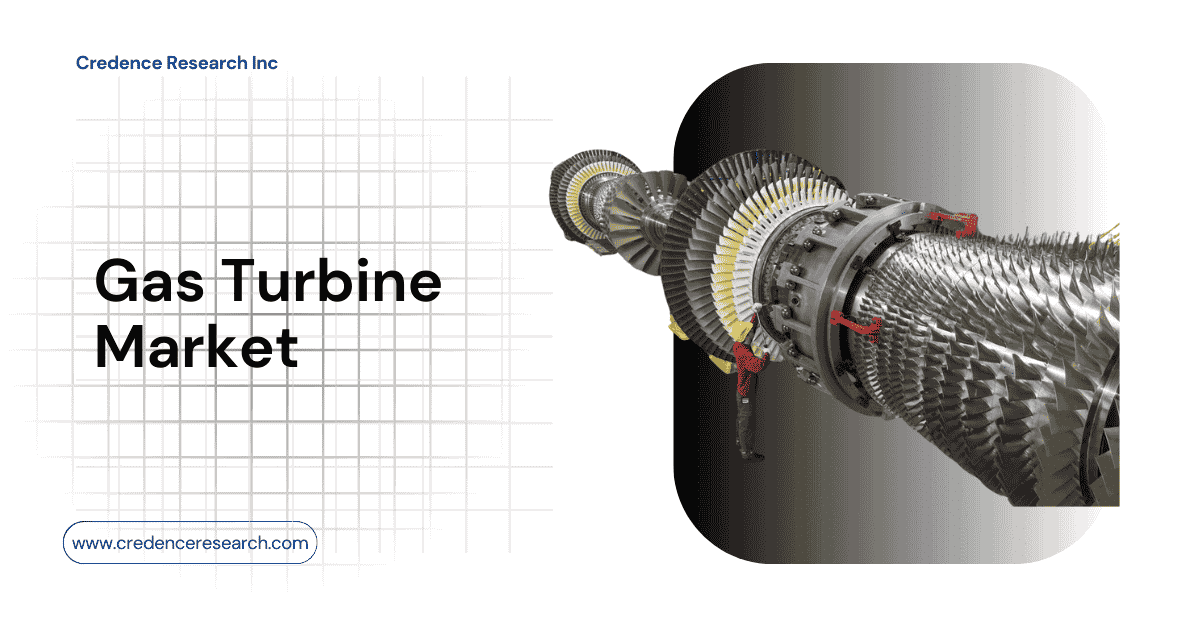
The Global Gas Turbine Market was valued at USD 13,379.41 million in 2018 and reached USD 27,358.34 million in 2024. The market is projected to expand to USD 54,957.00 million by 2032. Growth reflects an 8.49% compound annual growth rate during the forecast period. Rising power demand and wider adoption of gas as a transition fuel continue to support long-term expansion. Utilities and industries rely on gas turbines to meet reliability needs while supporting cleaner energy goals.
Gas turbines play a key role in power generation systems because they provide fast start capability and stable output. Power demand continues to rise due to population growth, urban development, and industrial expansion. Grid operators require flexible generation assets that can respond quickly to demand changes. Gas turbines support peak load management and grid balancing needs. Their ability to integrate with renewable energy systems strengthens their role in modern power networks.
Asia Pacific leads the Global Gas Turbine Market with about 48.6% share. Growth in the region is driven by rapid urbanization, expanding power grids, and strong utility investments. Governments across the region prioritize electricity access and grid reliability. New power plants support industrial growth and urban infrastructure. Grid expansion programs remain active across emerging and developed economies.
North America holds nearly 26.9% share of the Global Gas Turbine Market by 2032. The regional market size increased from USD 3,643.81 million in 2018 to USD 7,326.84 million in 2024. It is projected to reach USD 14,783.98 million by 2032, expanding at a CAGR of 8.5 during the forecast period. Growth reflects strong grid modernization programs and replacement of aging thermal assets.
Utilities across North America invest in gas turbines to support renewable energy integration. Variable wind and solar output increases the need for fast-ramping power sources. Gas turbines provide stable frequency control and backup capacity. Industrial users adopt captive gas turbine systems to manage energy costs and ensure supply reliability. These trends support steady equipment demand.
The United States leads the North America market due to abundant shale gas resources. Low fuel costs improve the economics of gas-fired generation. Power producers continue to retire older coal plants and replace them with gas-based units. Canada supports growth through efficiency upgrades and emissions reduction programs. Mexico expands capacity to meet rising electricity demand and improve grid reliability. Together, these factors strengthen the regional outlook.
Europe accounts for around 16.8% share of the Global Gas Turbine Market. Growth in the region is supported by the need for flexible backup power for renewable-heavy grids. Wind and solar capacity continues to expand across European countries. Gas turbines provide dispatchable power that supports grid stability. Utilities invest in modern units with higher efficiency and lower emissions to meet regulatory standards.
By turbine design type, heavy-duty gas turbines account for roughly 70% of total market share. Their dominance reflects widespread use in utility-scale power plants and combined cycle configurations. These turbines deliver high output and long operating life. They are well suited for baseload and mid-load applications. Utilities favor heavy-duty designs for large capacity installations and long-term reliability.
Aero-derivative gas turbines hold about 30% share of the Global Gas Turbine Market. Demand for these units is supported by their fast-start capability and operational flexibility. Utilities use aero-derivative turbines for peaking power and grid balancing. Industrial facilities adopt them for captive power and backup generation. Their compact size and efficiency support use in remote and space-constrained locations.
The rising need for flexible and reliable power generation infrastructure continues to support market growth. Utilities face increasing pressure to maintain grid stability. Demand fluctuations require rapid response generation assets. Gas turbines provide quick startup and shutdown capability. Grid operators value their role in frequency control and reserve capacity. Industrial zones rely on stable power to avoid production losses.
Power shortages in developing regions push capacity expansion plans. Governments invest in new power plants to support economic growth. Infrastructure upgrades sustain procurement cycles for gas turbine equipment. Combined cycle plants gain attention due to higher efficiency compared with simple cycle systems. These trends support steady demand across regions.
Despite positive growth drivers, the market faces cost-related constraints. Large-scale gas turbine projects require high upfront investment. Financing approvals often extend project development timelines. Interest rate volatility affects project feasibility and cost planning. Developers face budget overruns during construction due to material and labor cost changes.
Equipment customization increases procurement complexity. Project-specific design requirements extend manufacturing lead times. Long delivery schedules delay capacity additions. Smaller markets face adoption challenges due to limited financing options. These factors restrain faster deployment in some regions.
Technology improvements continue to address cost and efficiency challenges. Manufacturers focus on improving turbine performance and durability. Advanced materials support higher operating temperatures and improved efficiency. Digital monitoring systems help reduce maintenance costs and downtime. These developments improve lifecycle economics for operators.
The Global Gas Turbine Market is expected to maintain steady expansion through 2032. Regional growth patterns reflect differences in energy policy, fuel availability, and grid needs. Asia Pacific remains the largest and fastest-growing region. North America benefits from fuel supply advantages and grid upgrades. Europe focuses on flexibility to support renewable integration.
Market participants continue to adapt to changing energy landscapes. Investment decisions reflect long-term power demand trends and policy frameworks. Gas turbines remain a core component of modern power systems. Their flexibility, reliability, and efficiency support their role in global energy infrastructure.
Key Player Analysis:
- General Electric
- Siemens Energy
- Mitsubishi Power
- Ansaldo Energia
- MAN Energy Solutions
Segmentation:
By Turbine Design Type
- Heavy-Duty Gas Turbines
- Aero-Derivative Gas Turbines
By Application (Energy & Power Only)
- Power Generation
- Industrial Power & Captive Generation
- Oil & Gas (Non-propulsion)
By End-User
- Utility Companies
- Independent Power Producers (IPPs)
- Oil & Gas Companies
- Industrial & Commercial Users
By Technology
- Simple Cycle
- Combined Cycle
- Cogeneration (CHP)
By Capacity Range
- Below 50 MW
- 50–200 MW
- Above 200 MW
By Fuel Type
- Natural Gas
- Hydrogen-Blended Gas
- Synthetic & Low-Carbon Fuels
- Dual-Fuel
By Component
- Combustion Systems
- Turbine Blades & Rotors
- Compressors
- Generators
- Control & Monitoring Systems
- Heat Recovery Steam Generators (HRSGs)
By Region
- North America
- U.S.
- Canada
- Mexico
- Europe
- Germany
- France
- U.K.
- Italy
- Spain
- Rest of Europe
- Asia Pacific
- China
- Japan
- India
- South Korea
- South-east Asia
- Rest of Asia Pacific
- Latin America
- Brazil
- Argentina
- Rest of Latin America
- Middle East & Africa
- GCC Countries
- South Africa
- Rest of the Middle East and Africa
Contact Us
Credence Research Inc,
Tower C-1105 , S 25,
Akash Tower, Vishal Nahar,
Pimple Nilakh, Haveli,
Pune – 411027, India