
Biobased Degreaser Market to Reach USD 1,575.4 Million Driven by Environmental Regulations and Demand for VOC-Free Cleaning Solutions
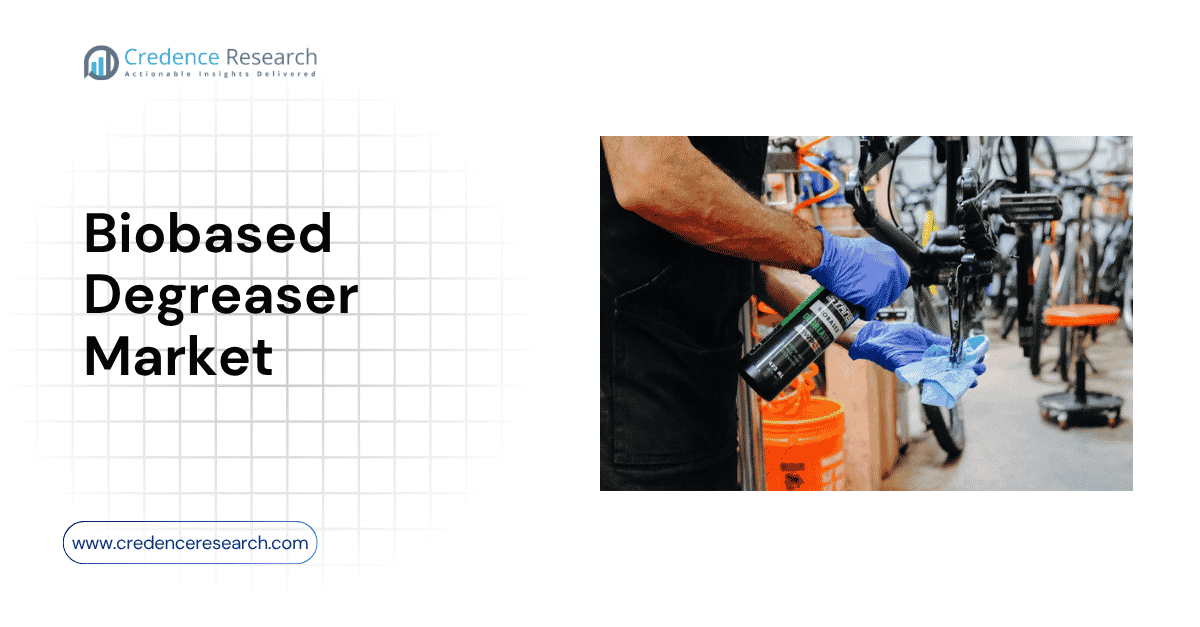
Credence Research has published a new research report titled “Biobased Degreaser Market By Product (Soy-based degreasers, Citrus-based degreasers, Corn-based degreasers, Others); By Source (Coconut Oil, Palm oil, Sunflower oil, Linseed oil, Others); By End-User (Industrial Cleaning, Automotive, Oil and Gas, Food and Beverages, Aerospace, Healthcare, Agriculture, Others) – Growth, Share, Opportunities & Competitive Analysis, 2025 – 2032” According to the study, the Biobased Degreaser Market was valued at USD 1,073 million in 2024 and is projected to reach USD 1,575.4 million by 2032, expanding at a CAGR of 4.92% during the forecast period. Market growth is supported by rising environmental regulations, increasing demand for non-toxic cleaning products, and growing adoption of biodegradable formulations across industrial, commercial, automotive, and institutional cleaning applications.
The Biobased Degreaser Market is gaining steady momentum as industries shift away from conventional petroleum-based solvents toward safer and more sustainable cleaning solutions. Biobased degreasers are formulated from renewable feedstocks such as soy, citrus, coconut oil, and other plant-derived sources, offering lower toxicity, reduced VOC emissions, and improved worker safety. These products are increasingly used in manufacturing plants, workshops, transportation facilities, food processing units, and maintenance operations where effective grease removal must align with environmental compliance and occupational safety standards.
Rising Environmental Regulations and VOC Restrictions
Stricter environmental regulations are one of the strongest drivers of the Biobased Degreaser Market. Governments and regulatory bodies increasingly restrict the use of petroleum-based solvents, high-VOC cleaners, and hazardous chemical degreasers due to concerns related to air pollution, worker exposure, and environmental contamination. Industrial users are shifting toward biobased degreasers to meet compliance requirements while maintaining cleaning efficiency. This regulatory pressure is especially strong in North America and Europe, where workplace safety standards and sustainability policies encourage adoption of safer cleaning alternatives.
Growing Demand for Non-Toxic Industrial Cleaning Solutions
Industries increasingly prioritize cleaning products that reduce health risks for workers and improve indoor air quality. Biobased degreasers offer lower toxicity and fewer harmful emissions compared with conventional solvent-based products. This makes them suitable for factories, automotive workshops, food processing plants, warehouses, and commercial maintenance operations. As companies strengthen ESG goals and workplace safety programs, demand for non-toxic and biodegradable cleaning solutions continues to rise.
Growing Use in Food Processing and Facility Hygiene Applications
Rising hygiene requirements across food processing plants, commercial kitchens, and institutional facilities are creating additional demand for biobased degreasers. These environments require effective removal of oils, fats, grease, and residues while minimizing worker exposure to harsh chemicals. Biobased degreasers are increasingly preferred because they offer strong cleaning performance, lower toxicity, reduced odor, and better compatibility with sustainability-focused procurement standards. As food manufacturers and facility managers strengthen sanitation protocols and shift toward safer cleaning chemistry, demand for plant-derived, biodegradable degreasing solutions is expected to grow steadily.
Expansion of Sustainable Manufacturing Practices
Manufacturers across automotive, aerospace, machinery, and electronics industries are adopting sustainable production practices to reduce environmental impact. Biobased degreasers support these goals by lowering chemical waste, improving biodegradability, and reducing dependence on fossil-derived solvents. Companies also use greener cleaning agents to support environmental certifications and customer sustainability requirements. This shift strengthens demand from industrial buyers seeking cleaning solutions that combine performance with environmental responsibility.
Rising Adoption in Automotive and Heavy Equipment Maintenance
Automotive repair shops, fleet operators, construction equipment companies, and industrial maintenance providers are increasingly using biobased degreasers for engine cleaning, parts washing, equipment maintenance, and grease removal. These applications require strong cleaning performance without damaging surfaces or exposing workers to harsh chemicals. Biobased formulations offer a balance of cleaning power, user safety, and environmental compliance, making them attractive for maintenance-intensive sectors.
Biobased Degreaser Market Trends and Opportunities
Growth of High-Performance Biodegradable Formulations
Manufacturers are investing in advanced formulations that improve degreasing strength, surface compatibility, and cleaning speed. Earlier biobased products were often viewed as less powerful than conventional solvents, but innovation in surfactants, plant-based solvents, and enzyme-assisted cleaning has significantly improved performance. This trend creates opportunities for companies that can offer industrial-grade products with certified biodegradability and low environmental impact.
Rising Preference for Soy-Based and Coconut-Oil-Based Products
Soy-based degreasers continue to gain strong adoption due to their renewable origin, high solvency, and compatibility with industrial cleaning needs. Coconut-oil-based formulations also expand rapidly because of their natural surfactant properties and strong biodegradability. These feedstocks support product differentiation and help manufacturers meet rising demand for plant-derived cleaning solutions.
Increasing Use in Institutional and Commercial Cleaning
Commercial buildings, schools, hospitals, hotels, and public facilities increasingly prefer safer cleaning products to reduce exposure risks and improve sustainability credentials. Biobased degreasers are gaining traction in kitchens, maintenance rooms, mechanical areas, and facility management operations. Growing procurement of green-certified cleaning products by institutions creates long-term opportunities for suppliers.
Certification and Eco-Labeling as Competitive Differentiators
Certifications related to biodegradability, low toxicity, low VOC content, and environmental safety are becoming important purchase criteria. Companies that secure recognized certifications and transparent product claims can strengthen trust among industrial buyers and institutional procurement teams. Eco-labeling also helps brands differentiate in a market where performance and sustainability must be clearly validated.
Biobased Degreaser Market Challenges
Higher Cost Compared with Conventional Solvents
Biobased degreasers often carry higher production costs due to renewable feedstock pricing, formulation complexity, and certification expenses. This cost gap can limit adoption among price-sensitive industrial users, especially in emerging markets where conventional solvent-based cleaners remain widely available. Manufacturers must balance performance, sustainability, and affordability to expand adoption across broader customer groups.
Limited Awareness in Industrial Sectors
Many industrial users remain unfamiliar with the performance capabilities of modern biobased degreasers. Some buyers still assume that green cleaning products are less effective than traditional solvent-based alternatives. This perception slows adoption, particularly in heavy-duty sectors such as machinery maintenance, metalworking, and transportation. Supplier education, field demonstrations, and performance validation will be essential to overcome this barrier.
Biobased Degreaser Market Regional Analysis
- North America leads the Biobased Degreaser Market with approximately 35% share, supported by strong regulatory compliance requirements, advanced industrial cleaning standards, and widespread sustainability initiatives. The United States represents the largest regional contributor, driven by demand from manufacturing, automotive, aerospace, facility maintenance, and institutional cleaning sectors. Companies in the region increasingly adopt low-VOC and biodegradable products to meet environmental and occupational safety standards.
- Europe accounts for nearly 28% market share, driven by strict chemical safety regulations, environmental standards, and strong adoption of sustainable cleaning products. Countries such as Germany, France, the U.K., Italy, and Spain support demand through industrial modernization, green procurement policies, and high awareness of eco-labeled cleaning solutions.
- Asia-Pacific holds around 22% share and is the fastest-growing regional market. Rapid industrialization, expanding manufacturing activity, and rising awareness of environmentally responsible cleaning practices support adoption across China, India, Japan, South Korea, and Southeast Asia. The region offers strong long-term growth potential as regulatory frameworks mature and industries shift toward safer chemical alternatives.
Competitive Landscape
The Biobased Degreaser Market includes major chemical companies, specialty cleaning product manufacturers, and sustainability-focused innovators. BASF SE, Dow Chemical Company, Ecolab, Huntsman Corporation, Henkel (China) Investment Co. Ltd., Cortec Corporation, Renewable Lubricants Inc., Soy Technologies LLC, Ecochem, Global Green Tag, Nugeneration Technology, Carroll Company, DEWALT, BIONANO, Victory Polychem, and Uzay Kimaya compete through formulation innovation, product certification, performance improvement, and distribution expansion.
Leading companies focus on developing high-performance, biodegradable, low-VOC, and solvent-free cleaning solutions tailored for industrial and commercial applications. Competitive differentiation increasingly depends on product safety, cleaning efficiency, sustainability credentials, and ability to meet regulatory requirements across global markets.
Biobased Degreaser Market Outlook 2032
The Biobased Degreaser Market is expected to maintain steady growth through 2032 as industrial users increasingly adopt environmentally responsible cleaning solutions. Demand will continue rising across manufacturing, automotive maintenance, food processing, commercial cleaning, and institutional facilities. Regulatory pressure on solvent-based cleaners and growing corporate sustainability commitments will support long-term adoption.
Innovation in plant-derived solvents, biodegradable surfactants, and certified green formulations will shape the next phase of market development. North America and Europe will remain major demand centers due to regulatory maturity, while Asia-Pacific will provide the fastest growth opportunities as industrialization and sustainability awareness expand.
ATTRIBUTE DETAILS
| ATTRIBUTE | DETAILS |
|---|---|
| Research Period | 2020–2032 |
| Base Year | 2024 |
| Forecast Period | 2025–2032 |
| Historical Year | 2020–2023 |
| Unit | USD Million |
| By Product Type (2020–2032; USD Million) | Soy-Based Degreasers; Citrus-Based Degreasers; Water-Based Degreasers; Others |
| By Source (2020–2032; USD Million) | Coconut Oil; Soy; Citrus; Corn; Others |
| By Application (2020–2032; USD Million) | Industrial Cleaning; Automotive; Commercial Cleaning; Food Processing; Institutional Cleaning; Others |
| By Geography (2020–2032; USD Million) | North America; Europe; Asia-Pacific; Latin America; Middle East & |