
Computed Tomography (CT) Market to Reach USD 13,234.42 MN Driven by Fleet Modernization and Rising Diagnostic Scan Volumes
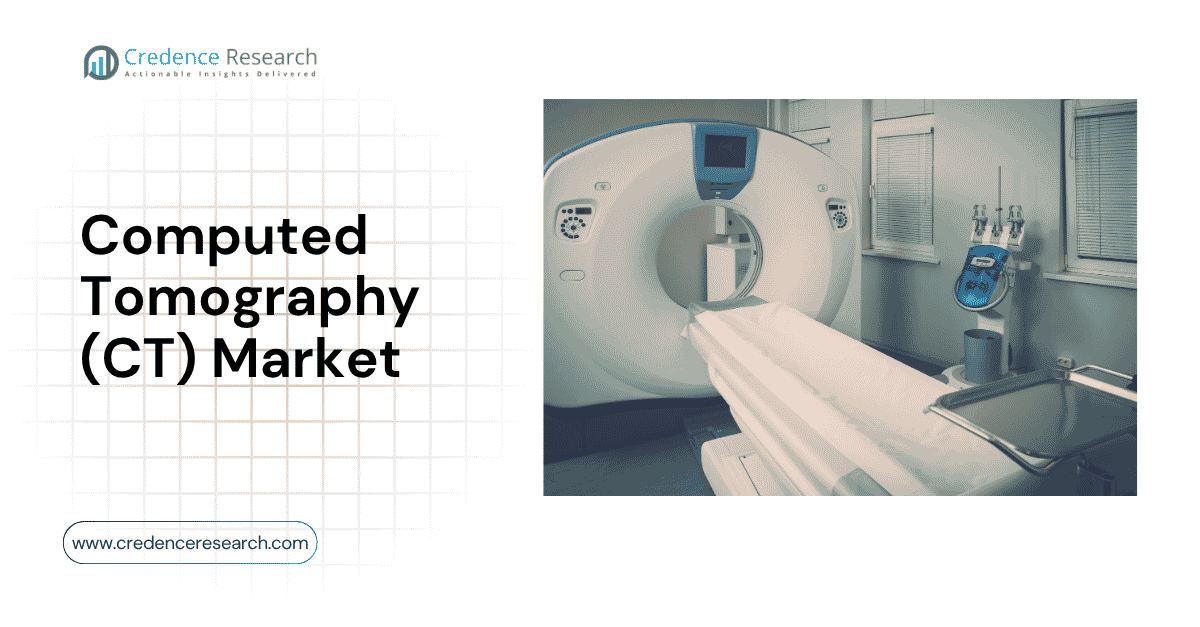
Credence Research has published a new research report titled “Computed Tomography (CT) Market By System Type (Low-slice, Mid-slice, High-slice); By Application (Oncology, Cardiology, Neurology); By Detector Technology (Solid-state, Photon-counting); By Workflow Type (Standalone, AI-enabled) – Growth, Share, Opportunities & Competitive Analysis, 2025 – 2032” According to the study, the Computed Tomography (CT) Market was valued at USD 9,070.00 million in 2025 and is projected to reach USD 13,234.42 million by 2032, expanding at a CAGR of 6.50% during the forecast period. The market is expected to add nearly USD 4,164.42 million in new revenue between 2025 and 2032, supported by continued investment in imaging infrastructure, rising patient scan volumes, and modernization of installed CT fleets across hospitals and diagnostic centers.
Expansion of Emergency and Trauma Care Imaging Networks
Rising investment in emergency departments, trauma centers, and stroke-ready hospitals is creating additional demand for computed tomography systems. CT scanners are essential for rapid diagnosis of head injuries, internal bleeding, pulmonary embolism, stroke, and acute abdominal conditions, where timely imaging directly influences treatment decisions. Hospitals are increasingly installing dedicated CT units near emergency departments to reduce turnaround time and improve patient triage. This trend supports higher equipment utilization and strengthens demand for faster, high-slice CT systems capable of handling urgent, high-volume clinical workflows.
Rising Diagnostic Imaging Volumes Across Healthcare Systems
Increasing scan volumes across hospitals, emergency departments, and diagnostic centers continue to drive CT market growth. CT imaging is widely used for rapid assessment of trauma, stroke, pulmonary disorders, cardiac conditions, and cancer-related complications. Healthcare providers rely on CT systems because they offer fast image acquisition and strong diagnostic clarity. Growing patient demand for timely diagnosis and expanding use of imaging in disease management are encouraging healthcare facilities to upgrade capacity and invest in advanced CT platforms.
Ongoing Fleet Modernization and Replacement Demand
A significant portion of market demand comes from replacement of aging CT scanners with advanced systems that offer improved image quality, lower radiation dose, and faster throughput. Hospitals increasingly replace older equipment with high-slice and AI-enabled CT systems to support complex protocols and improve operational efficiency. Fleet modernization also helps providers meet evolving clinical standards, reduce downtime, and improve patient experience. This replacement cycle is expected to remain a steady growth contributor through 2032.
Strong Adoption in Oncology Imaging
Oncology remains the leading application area for CT systems, accounting for 31.4% share in 2025. CT imaging plays a central role in cancer detection, staging, treatment planning, response assessment, and long-term follow-up. Rising cancer incidence and expanding access to oncology care increase the need for reliable imaging platforms. CT scans are also critical in radiation therapy planning, where accurate anatomical visualization supports targeted treatment delivery.
Growth of High-Slice CT Systems
High-slice CT systems accounted for 42.4% share in 2025, reflecting strong adoption in advanced clinical settings. These systems enable faster image acquisition, improved spatial resolution, and broader coverage, making them suitable for cardiac imaging, oncology, trauma, and vascular applications. Hospitals prefer high-slice scanners because they improve throughput and support complex imaging workflows, especially in high-volume diagnostic departments.
Integration of AI and Advanced Reconstruction Technologies
AI-powered image reconstruction, workflow automation, and dose optimization tools are becoming important differentiators in the CT market. These technologies help improve image quality, reduce scan time, and support radiologists in managing rising imaging volumes. AI-enabled systems also assist with triage, lesion detection, and protocol optimization, creating opportunities for vendors offering intelligent imaging platforms.
Rising Demand for Low-Dose CT Imaging
Healthcare providers increasingly prioritize low-dose CT technologies to reduce radiation exposure while maintaining diagnostic accuracy. This trend is especially important in pediatric imaging, cancer follow-up, lung screening, and repeated surveillance scans. Manufacturers continue to invest in detector improvements and iterative reconstruction algorithms to support safer imaging practices.
Computed Tomography (CT) Market Regional Analysis
- Asia Pacific led the Computed Tomography (CT) Market with 7% revenue share in 2025. Growth is supported by expanding diagnostic capacity, large patient pools, rising healthcare investments, and increasing demand for advanced imaging across China, India, Japan, South Korea, and Southeast Asia.
- North America remains a major market due to high adoption of advanced CT systems, strong reimbursement frameworks, and well-developed hospital networks.
- Europe shows steady demand supported by mature healthcare infrastructure, replacement of older CT fleets, and strong clinical use of advanced imaging protocols.
- Latin America and the Middle East & Africa are gradually expanding CT adoption due to improving healthcare infrastructure, growing private diagnostic networks, and rising disease burden.
Key Market Players
- Siemens Healthineers
- GE HealthCare
- Philips
- Canon Medical
- United Imaging
- Fujifilm
- Neusoft
- Hitachi
- Samsung Medison
- Carestream
ATTRIBUTE DETAILS
| ATTRIBUTE | DETAILS |
| Research Period | 2020–2032 |
| Base Year | 2025 |
| Forecast Period | 2025–2032 |
| Historical Year | 2020–2024 |
| Unit | USD Million |
| By Product Type (2020–2032; USD Million) | Low-Slice CT; Medium-Slice CT; High-Slice CT |
| By Application (2020–2032; USD Million) | Oncology; Cardiology; Neurology; Trauma & Emergency Care; Others |
| By End User (2020–2032; USD Million) | Hospitals; Diagnostic Imaging Centers; Specialty Clinics; Others |
| By Geography (2020–2032; USD Million) | North America; Europe; Asia Pacific; Latin America; Middle East & Africa |