
| REPORT ATTRIBUTE | DETAILS |
|---|---|
| Historical Period | 2020-2023 |
| Base Year | 2024 |
| Forecast Period | 2025-2032 |
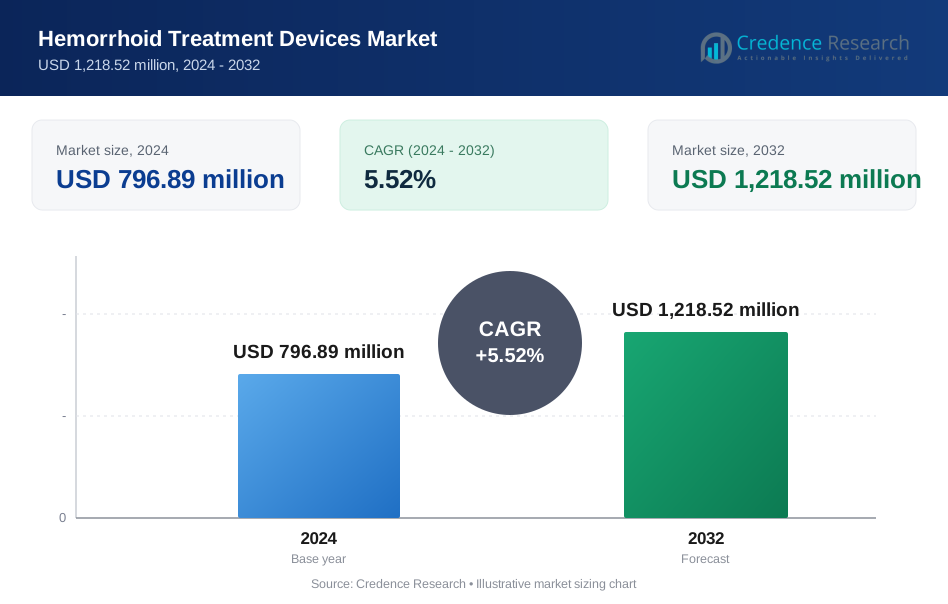
| Hemorrhoid Treatment Devices Market Size 2024 | USD 796.89 million |
| Hemorrhoid Treatment Devices Market, CAGR | 5.52% |
| Hemorrhoid Treatment Devices Market Size 2032 | USD 1,218.52 million |
Market Overview:
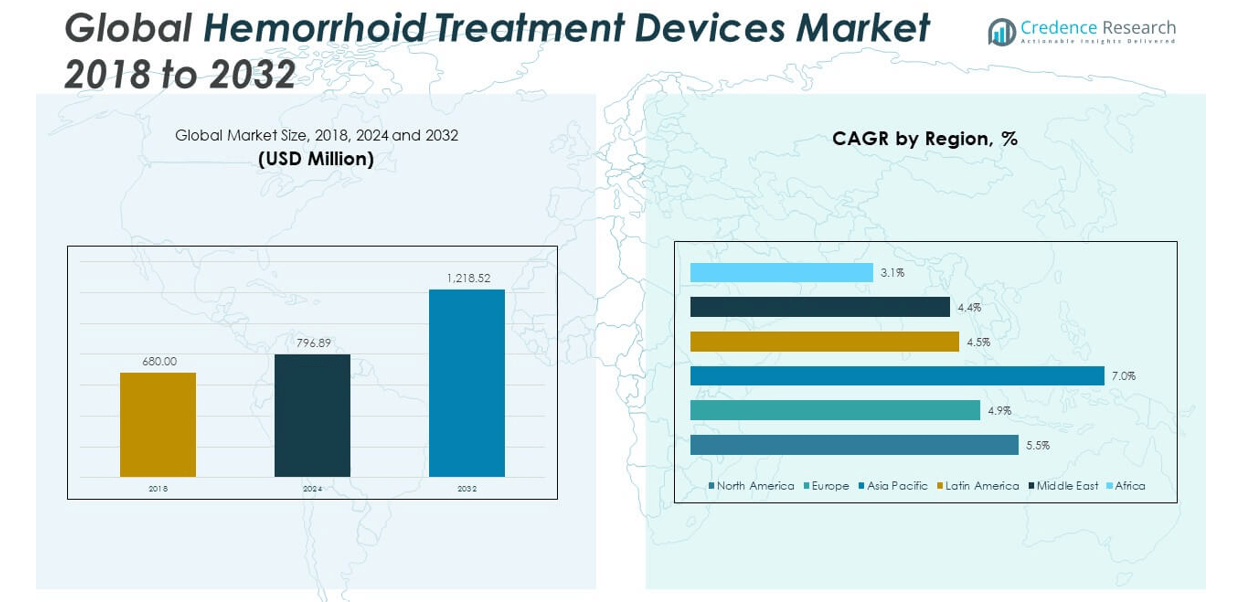
The Global Hemorrhoid Treatment Devices Market size was valued at USD 680.00 million in 2018 to USD 796.89 million in 2024 and is anticipated to reach USD 1,218.52 million by 2032, at a CAGR of 5.52% during the forecast period.
A key driver of the hemorrhoid treatment devices market is the rising prevalence of hemorrhoids due to sedentary lifestyles, aging populations, and poor dietary habits, especially in urban environments. The increasing demand for minimally invasive procedures-such as infrared coagulation, rubber band ligation, cryotherapy, and laser treatments-has encouraged manufacturers to develop innovative, patient-friendly devices that ensure faster recovery, fewer complications, and lower treatment costs. Technological advancements in device design and procedure safety have significantly expanded adoption among healthcare providers. Greater awareness through public health campaigns and early diagnosis is also influencing patient behavior, leading to faster treatment uptake. In addition, the growing availability of outpatient and home-based treatment options is reshaping the care landscape, with patients increasingly seeking convenience and comfort. Supportive regulatory approvals and favorable reimbursement structures in developed markets are also creating a conducive environment for product innovation and commercialization.
Regionally, North America dominates the global hemorrhoid treatment devices market. The region’s growth is driven by the high prevalence of hemorrhoids, advanced healthcare infrastructure, and strong demand for outpatient and minimally invasive procedures. Europe follows closely, supported by widespread adoption of advanced treatment devices, well-established healthcare systems, and proactive screening initiatives. Asia Pacific stands out as the fastest-growing regional market, with countries like China, India, and Japan showing increased investment in healthcare infrastructure and rising demand for cost-effective, non-surgical solutions. Latin America and the Middle East & Africa currently represent smaller shares but show significant growth potential due to expanding access to healthcare, rising medical tourism, and increased awareness about available treatment options. Across regions, hospitals and specialty clinics remain the primary end-users, though the home care segment is gaining attention due to a shift in patient preferences and rising demand for portable treatment devices. Overall, the global market is poised for sustained growth as technological innovation, improved healthcare access, and changing patient preferences continue to shape the future of hemorrhoid treatment.
Market Insights:
- The Global Hemorrhoid Treatment Devices Market was valued at USD 796.89 million in 2024 and is projected to reach USD 1,218.52 million by 2032, growing at a CAGR of 5.52%.
- Rising hemorrhoid cases driven by sedentary lifestyles, aging populations, and poor dietary habits are fueling steady demand for treatment devices.
- Patients and healthcare providers are increasingly opting for minimally invasive procedures like rubber band ligation, infrared coagulation, and laser therapy due to quicker recovery and reduced complications.
- Technological advancements such as portable designs, automated features, and simplified controls are boosting device adoption in both urban and remote settings.
- High cost of advanced devices and limited reimbursement coverage in low- and middle-income countries are key barriers to wider market penetration.
- Lack of awareness and cultural stigma around hemorrhoid conditions lead to delayed diagnosis, underreporting, and lower treatment uptake in certain regions.
- North America remains the leading market due to high prevalence and developed healthcare systems, while Asia Pacific shows the fastest growth, supported by improving access and rising awareness.
Market Drivers:
Rising Prevalence of Hemorrhoids Driven by Sedentary Lifestyles and Aging Population:
The increasing global incidence of hemorrhoids is a primary driver for the Global Hemorrhoid Treatment Devices Market. Sedentary lifestyles, low-fiber diets, obesity, and prolonged sitting are major contributing factors to the rise in cases. The elderly population, which is more prone to hemorrhoidal conditions due to weakened connective tissues and chronic constipation, continues to expand worldwide. It creates consistent demand for effective and accessible treatment solutions. In urban settings, changing dietary patterns and lack of physical activity have further increased the patient base. The market is responding to this demographic trend with more targeted device development. The Global Hemorrhoid Treatment Devices Market benefits directly from this growing patient pool and demand for relief options.
- For instance, The Barrx™ Flex RFA system is a bipolar radiofrequency generator designed for gastrointestinal tissue ablation, primarily used for treating Barrett’s esophagus. It is endorsed by major GI societies and has demonstrated efficacy and safety in clinical guidelines.
Growing Demand for Minimally Invasive Procedures Over Conventional Surgical Interventions:
Minimally invasive hemorrhoid treatments such as rubber band ligation, infrared coagulation, and laser therapy are replacing traditional surgeries. Patients are seeking faster recovery times, lower pain levels, and fewer complications. Healthcare providers are increasingly recommending outpatient treatments due to their efficiency and cost-effectiveness. These procedures require specialized devices, fueling consistent demand in both developed and emerging markets. It is encouraging manufacturers to expand their portfolios and improve treatment delivery. The Global Hemorrhoid Treatment Devices Market continues to shift toward technologies that align with patient preference and physician convenience.
- For instance, Cook Medical’s O’Regan Disposable Hemorrhoid Banding System has been adopted by more than 2,500 clinics worldwide, with clinical studies showing a recurrence rate below 5% at one-year follow-up.
Advancements in Device Technology Enhancing Treatment Outcomes and Provider Adoption:
Continuous innovation in hemorrhoid treatment devices is improving clinical outcomes and simplifying usage for practitioners. Developments in ligation systems, cryotherapy probes, and bipolar energy-based tools allow for better precision and reduced patient discomfort. New device designs offer portability, automation, and compatibility with outpatient settings. Manufacturers are focusing on ease of use and reducing the need for operator training. These features are critical for adoption in resource-limited settings and high-throughput medical facilities. The Global Hemorrhoid Treatment Devices Market is evolving with these technologies that streamline procedures and improve patient satisfaction.
Expansion of Healthcare Access and Rising Awareness Accelerating Early Diagnosis and Treatment:
The expansion of healthcare infrastructure, especially in Asia Pacific, Latin America, and parts of Africa, is improving access to hemorrhoid diagnosis and treatment. Hospitals, ambulatory surgical centers, and specialty clinics are equipping themselves with advanced treatment devices to meet rising demand. Awareness campaigns and public health initiatives are reducing stigma and encouraging earlier intervention. Patients are now more likely to seek professional treatment rather than rely on home remedies or delay care. It supports faster market penetration in underdeveloped regions. The Global Hemorrhoid Treatment Devices Market is leveraging these shifts in awareness and access to increase adoption across new geographies.
Market Trends:
Integration of Smart Technologies and Digital Monitoring in Hemorrhoid Treatment Devices:
A growing trend in the Global Hemorrhoid Treatment Devices Market is the integration of smart technologies into treatment systems. Manufacturers are developing devices with embedded sensors, digital controls, and app-based monitoring features that enhance procedural accuracy and patient follow-up. Smart ligation systems and infrared coagulators with digital feedback mechanisms are gaining traction in advanced clinical setups. These features allow healthcare providers to track procedural metrics and patient responses more efficiently. It supports standardization across facilities and reduces human error in device application. The Global Hemorrhoid Treatment Devices Market is aligning with the broader shift toward digital healthcare and precision-based treatment delivery.
- For example, clinical studies of the Ultroid® Hemorrhoid Management System have documented an 82% success rate among 50 patients, with most experiencing no post-procedural pain, demonstrating the efficacy of digitally monitored, minimally invasive treatments.
Shift Toward Disposable and Single-Use Devices to Improve Hygiene and Safety Standards:
The use of disposable and single-use hemorrhoid treatment devices is increasing across outpatient clinics and ambulatory surgical centers. This shift is driven by heightened infection control measures, stricter sterilization protocols, and growing concerns about cross-contamination. Disposable banding kits, applicators, and probe covers are replacing reusable components in high-volume facilities. It reduces the burden of sterilization while ensuring consistent quality for each procedure. Single-use systems are also preferred in mobile medical units and remote setups where sterilization infrastructure is limited. The Global Hemorrhoid Treatment Devices Market is witnessing strong demand for such hygiene-compliant solutions that enhance operational efficiency and patient safety.
Focus on Compact, Portable Devices to Support Decentralized Treatment Models:
Compact and portable hemorrhoid treatment devices are becoming a key focus area as healthcare shifts toward decentralized models. With the rise of mobile clinics, home-based care, and rural health outreach, devices that are lightweight, battery-operated, and easy to transport are gaining popularity. It allows healthcare providers to extend services beyond urban hospitals and treat patients in underserved regions. Portable ligators, battery-powered coagulators, and simplified delivery systems are being developed to support this transition. The Global Hemorrhoid Treatment Devices Market is adapting to these changes by prioritizing mobility and user-friendly design in product development.
Increased Collaboration Between Manufacturers and Healthcare Institutions for Training and Standardization:
Manufacturers are partnering with hospitals, surgical centers, and training institutions to promote standardized usage of hemorrhoid treatment devices. These collaborations include training programs, device demonstrations, and educational content aimed at improving practitioner proficiency. Standardized protocols reduce variation in treatment outcomes and improve patient satisfaction. It also builds brand trust and encourages long-term adoption of specific device platforms. Manufacturers are using this approach to differentiate their offerings in a competitive market. The Global Hemorrhoid Treatment Devices Market is increasingly shaped by these partnerships that foster better integration between technology providers and healthcare practitioners.
- For example, clinical protocols developed in partnership with device manufacturers have contributed to sustained symptom improvement in patients at three months post-procedure, as observed in studies of the O’Regan system.
Market Challenges Analysis:
High Cost of Advanced Devices and Limited Reimbursement Restricting Adoption in Low-Income Settings:
The Global Hemorrhoid Treatment Devices Market faces a major challenge due to the high cost of advanced devices and limited reimbursement coverage in several countries. Many minimally invasive systems, such as infrared coagulators and bipolar energy devices, involve significant upfront investment, which can deter smaller clinics and public healthcare facilities. In low- and middle-income regions, cost remains a critical barrier for both providers and patients. Reimbursement frameworks often exclude or underpay for outpatient hemorrhoid procedures, reducing financial incentives for providers. It limits access to newer technologies and slows market penetration in cost-sensitive areas. Widening this affordability gap could delay broader adoption across developing markets.
Low Awareness and Cultural Stigma Leading to Delayed Diagnosis and Underreporting:
Low awareness and cultural stigma surrounding hemorrhoid conditions continue to impact early diagnosis and treatment. Many patients avoid discussing symptoms due to embarrassment, leading to delayed consultations and worsening of conditions. This behavior reduces demand for timely interventions and contributes to underreporting, especially in rural and conservative regions. Lack of education about available treatment options also prevents patients from seeking professional help. It limits the effectiveness of outreach campaigns and affects the growth trajectory of the Global Hemorrhoid Treatment Devices Market. Bridging this awareness gap is essential to improve early treatment rates and support sustainable market expansion.
Market Opportunities:
Expanding Demand in Emerging Markets with Growing Healthcare Access and Urbanization:
Emerging economies in Asia Pacific, Latin America, and the Middle East offer untapped potential for the Global Hemorrhoid Treatment Devices Market. Urbanization, rising income levels, and expanding healthcare infrastructure are increasing access to medical services. Governments and private providers are investing in ambulatory care and outpatient facilities, where most hemorrhoid treatments are performed. It creates demand for cost-effective, easy-to-use devices suited for high-volume settings. Local manufacturers entering the market with affordable options can gain competitive advantage. These trends position developing regions as key growth engines over the next decade.
Product Innovation for Home Use and Telehealth Integration Driving New Revenue Streams:
The shift toward home-based care and telehealth services presents strong growth opportunities. Patients are seeking discreet, non-surgical treatment options that can be administered with minimal supervision. Device makers can capitalize by designing portable, intuitive products compatible with remote monitoring tools. It enables better follow-up and improves patient compliance. The Global Hemorrhoid Treatment Devices Market can expand its reach through innovation aligned with digital health ecosystems. New product formats focused on privacy, comfort, and convenience will attract a broader consumer base.
Market Segmentation Analysis:
By Device Type
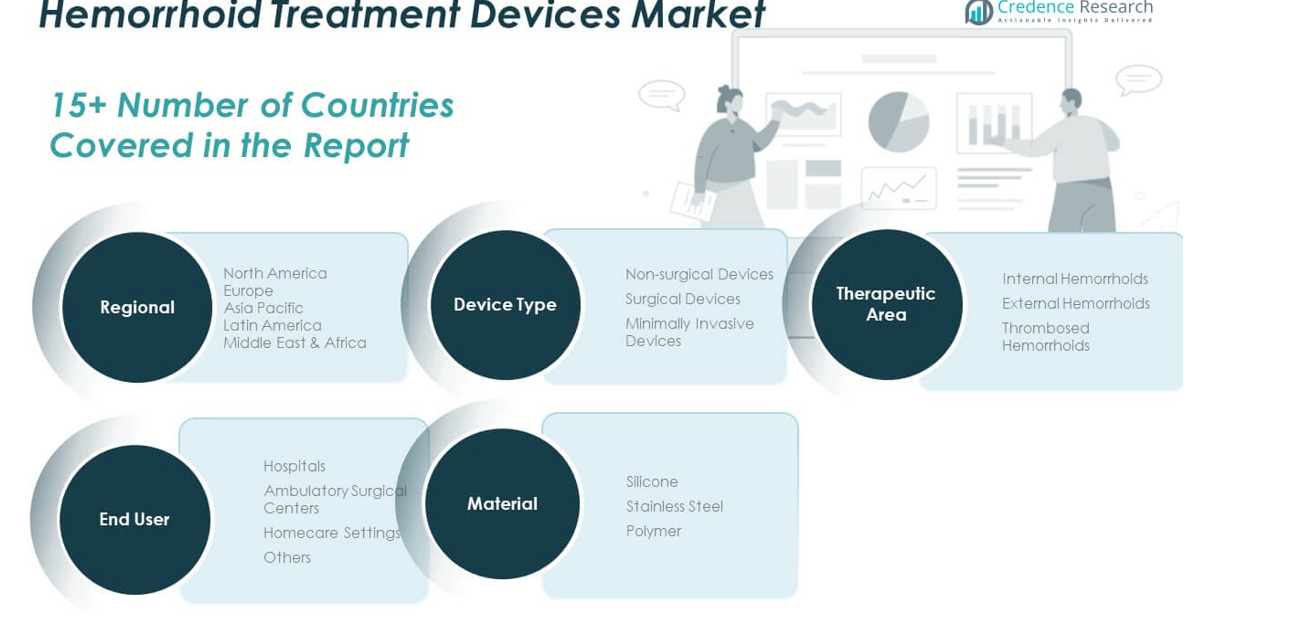
The Global Hemorrhoid Treatment Devices Market includes non-surgical devices, surgical devices, and minimally invasive devices. Minimally invasive devices lead the market due to growing patient demand for low-pain, outpatient solutions. Non-surgical devices remain widely used in homecare and conservative clinical practices. Surgical devices are essential for treating advanced or recurrent cases where non-invasive options are ineffective.
- For instance, Olympus’ THD Doppler System has been used in over 15,000 minimally invasive hemorrhoidectomy procedures in Europe, demonstrating a significant reduction in post-operative pain scores compared to conventional surgery.
By Therapeutic Area
The market is segmented into internal hemorrhoids, external hemorrhoids, and thrombosed hemorrhoids. Devices targeting internal hemorrhoids dominate due to the higher treatment volume and complexity. External hemorrhoids drive steady demand, especially for pain management. Thrombosed hemorrhoids represent a niche but critical segment requiring precise device applications.
- For instance, the Ultroid® Hemorrhoid Management System, developed by Ultroid Technologies, has treated over 250,000 internal hemorrhoid cases globally, reflecting its wide acceptance for this therapeutic area.
By End-user
End-users include hospitals, ambulatory surgical centers, homecare settings, and others. Hospitals account for the largest share due to access to specialized equipment and skilled personnel. Ambulatory surgical centers are expanding, driven by efficiency and patient turnover. Homecare settings are emerging as a growth segment with demand for compact, user-friendly devices that offer discretion and convenience.
By Material
Material types include silicone, stainless steel, and polymer. Silicone and polymers are favored in disposable and comfort-focused products. Stainless steel remains the standard for reusable surgical instruments due to durability and sterilization compatibility. It reflects a material choice driven by safety, reusability, and procedural application.
Segmentation:
By Device Type
- Non-surgical Devices
- Surgical Devices
- Minimally Invasive Devices
By Therapeutic Area
- Internal Hemorrhoids
- External Hemorrhoids
- Thrombosed Hemorrhoids
By End-user
- Hospitals
- Ambulatory Surgical Centers
- Homecare Settings
- Others
By Material
- Silicone
- Stainless Steel
- Polymer
By Region
- North America
- U.S.
- Canada
- Mexico
- Europe
- Germany
- France
- U.K.
- Italy
- Spain
- Rest of Europe
- Asia Pacific
- China
- Japan
- India
- South Korea
- South-east Asia
- Rest of Asia Pacific
- Latin America
- Brazil
- Argentina
- Rest of Latin America
- Middle East & Africa
- GCC Countries
- South Africa
- Rest of the Middle East and Africa
Regional Analysis:
North America
The North America Hemorrhoid Treatment Devices Market size was valued at USD 243.44 million in 2018 to USD 281.78 million in 2024 and is anticipated to reach USD 430.26 million by 2032, at a CAGR of 5.5% during the forecast period. North America holds the largest share of the Global Hemorrhoid Treatment Devices Market, accounting for approximately 35% of global revenue in 2024. Strong demand is supported by high hemorrhoid prevalence, widespread adoption of minimally invasive procedures, and advanced healthcare infrastructure. The U.S. drives most of the regional value due to large-scale hospital networks, high awareness, and favorable reimbursement systems. Canada and Mexico are showing gradual growth, helped by expanding access to ambulatory care services. It continues to lead in terms of technology adoption and product innovation in the hemorrhoid treatment segment.
Europe
The Europe Hemorrhoid Treatment Devices Market size was valued at USD 205.70 million in 2018 to USD 232.91 million in 2024 and is anticipated to reach USD 339.06 million by 2032, at a CAGR of 4.9% during the forecast period. Europe contributes roughly 29% of global market revenue. Strong public health systems, early screening programs, and widespread access to outpatient procedures drive device usage across the region. Germany, France, and the UK are the largest contributors, supported by high procedure volumes and consistent investments in medical technology. It benefits from a stable regulatory environment and growing patient preference for non-surgical treatment options. Regional demand is also supported by aging demographics and increasing healthcare expenditure.
Asia Pacific
The Asia Pacific Hemorrhoid Treatment Devices Market size was valued at USD 145.52 million in 2018 to USD 179.18 million in 2024 and is anticipated to reach USD 306.21 million by 2032, at a CAGR of 7.0% during the forecast period. Asia Pacific is the fastest-growing region in the Global Hemorrhoid Treatment Devices Market, with a 2024 share of around 22%. Countries like China, India, and Japan are driving growth through improved healthcare access, urbanization, and growing awareness. Rising lifestyle-related risk factors and expanding middle-class populations support higher demand for both hospital-based and home-use devices. It shows high adoption potential for affordable, minimally invasive technologies suited to regional cost sensitivities. Government investment in primary and outpatient care infrastructure further strengthens market prospects.
Latin America
The Latin America Hemorrhoid Treatment Devices Market size was valued at USD 41.48 million in 2018 to USD 48.12 million in 2024 and is anticipated to reach USD 68.08 million by 2032, at a CAGR of 4.5% during the forecast period. Latin America holds about 6% share of the global market. Brazil and Argentina lead regional demand due to their large populations and expanding private healthcare sectors. Growth is supported by rising awareness, improved access to outpatient facilities, and gradual adoption of non-invasive procedures. Public health initiatives and medical tourism are also driving investment in device availability. It remains price-sensitive but increasingly open to low-cost, high-impact treatment solutions. Device manufacturers are tapping into regional partnerships to expand distribution and training.
Middle East
The Middle East Hemorrhoid Treatment Devices Market size was valued at USD 29.58 million in 2018 to USD 32.75 million in 2024 and is anticipated to reach USD 45.82 million by 2032, at a CAGR of 4.4% during the forecast period. The region represents around 4% of the Global Hemorrhoid Treatment Devices Market. GCC countries dominate due to strong investments in hospital infrastructure and medical tourism. High prevalence of obesity and sedentary lifestyles is contributing to the hemorrhoid burden. It shows growing demand for minimally invasive options in private healthcare systems. Urban centers are driving adoption, while rural areas remain underserved. Strategic device pricing and local partnerships will be key for future expansion.
Africa
The Africa Hemorrhoid Treatment Devices Market size was valued at USD 14.28 million in 2018 to USD 22.16 million in 2024 and is anticipated to reach USD 29.09 million by 2032, at a CAGR of 3.1% during the forecast period. Africa holds the smallest share in the Global Hemorrhoid Treatment Devices Market, contributing less than 3%. Growth is limited by constrained healthcare infrastructure, lower awareness, and affordability challenges. South Africa and Egypt lead market activity due to relatively advanced medical systems. It presents long-term opportunities as investment in healthcare access expands. Focused awareness campaigns and mobile health services may help increase device penetration in rural and underserved areas.
Key Player Analysis:
- Johnson & Johnson
- Medtronic plc (Ireland)
- Boston Scientific Corporation (USA)
- Cook Medical (USA)
- Becton, Dickinson and Company (BD) (USA)
- Smith & Nephew plc (UK)
- Karl Storz SE & Co. KG (Germany)
- Olympus Corporation (Japan)
- Teleflex Incorporated (USA)
- Applied Medical Resources Corporation (USA)
- Hologic, Inc. (USA)
- Richard Wolf GmbH (Germany)
- Sklar Surgical Instruments (USA)
- Medline Industries, LP (USA)
- BOWA-electronic GmbH & Co. KG (Germany)
- Mermaid Medical A/S (Denmark)
- Purple Surgical (UK)
- Renew Medical, Inc. (USA)
- Neomedic Limited (UK)
Competitive Analysis:
The Global Hemorrhoid Treatment Devices Market is moderately competitive, with several multinational and regional players offering a diverse range of products. Key companies include Johnson & Johnson, Medtronic plc, Boston Scientific Corporation, Cook Medical, and Becton, Dickinson and Company. These firms compete on innovation, pricing, and product portfolio breadth. It continues to attract new entrants focused on minimally invasive and home-use solutions. Companies are investing in R&D to enhance device precision, reduce procedure time, and improve patient comfort. Strategic collaborations with healthcare providers and distributors support market reach and clinical adoption. The market also sees rising participation from Asian manufacturers offering cost-effective solutions tailored for emerging economies. Competitive advantage depends on regulatory approvals, strong clinical outcomes, and effective marketing strategies. The Global Hemorrhoid Treatment Devices Market favors companies that can balance advanced technology with affordability and accessibility across diverse healthcare settings.
Recent Developments:
- In May 2025, Medtronic announced its intent to separate its Diabetes business into a standalone company. This strategic move aims to sharpen Medtronic’s focus on its core MedTech growth areas, potentially freeing resources for innovation in other therapeutic domains, including gastrointestinal and hemorrhoid treatment devices. The separation is expected to be completed within 18 months and is part of Medtronic’s ongoing portfolio management and innovation-driven growth strategy.
- In April 2025, Cook Medical announced a collaboration with Mendaera™ Inc., a Silicon Valley-based healthcare technology company. The partnership focuses on developing advanced, handheld robotic solutions for needle-based interventions, with potential applications in minimally invasive procedures, including those for hemorrhoids. This collaboration aims to enhance procedural precision and expand device capabilities in outpatient and ambulatory settings.
- In January 2025, Karl Storz completed the business transfer of medi-G, expanding its offerings in endoscopic and minimally invasive technologies. Additionally, in April 2025, the company launched the new ENDOFLATOR+, an insufflation device designed to support a range of endoscopic procedures, potentially including those for hemorrhoid treatment.
- In January 2025, BD highlighted its latest innovations in drug delivery at Pharmapack 2025, showcasing new solutions for self-care and biologic administration. While not specific to hemorrhoid devices, BD’s advancements in patient-centered delivery systems and partnerships with biopharmaceutical companies demonstrate its ongoing investment in technologies that could impact the administration of hemorrhoid therapies.
Market Concentration & Characteristics:
The Global Hemorrhoid Treatment Devices Market shows moderate market concentration, with a mix of established medical device companies and emerging players competing across regions. It is characterized by steady innovation, strong clinical demand, and a growing shift toward outpatient and home-based care solutions. Product differentiation relies heavily on ease of use, safety, and procedural efficiency. Larger firms dominate in developed markets through advanced technologies and robust distribution networks, while smaller manufacturers focus on cost-effective solutions for emerging economies. The market reflects a balance between reusable and disposable device preferences, shaped by setting, infection control, and cost considerations. It favors companies that align product development with evolving patient and provider expectations.
Report Coverage:
The research report offers an in-depth analysis based on device type, therapeutic area, end-user, and material. It details leading market players, providing an overview of their business, product offerings, investments, revenue streams, and key applications. Additionally, the report includes insights into the competitive environment, SWOT analysis, current market trends, as well as the primary drivers and constraints. Furthermore, it discusses various factors that have driven market expansion in recent years. The report also explores market dynamics, regulatory scenarios, and technological advancements that are shaping the industry. It assesses the impact of external factors and global economic changes on market growth. Lastly, it provides strategic recommendations for new entrants and established companies to navigate the complexities of the market.
Future Outlook:
- Rising global incidence of hemorrhoids will continue to drive consistent demand for advanced treatment devices.
- Minimally invasive technologies will gain wider adoption due to reduced recovery time and patient preference.
- Home-use and portable devices will see growing interest, especially in markets prioritizing self-care and convenience.
- Emerging economies will contribute significantly to market expansion through improved healthcare infrastructure.
- Product innovation will focus on disposables, digital integration, and pain-reduction features.
- Hospitals and ambulatory surgical centers will remain dominant end-users, supported by procedure volume and device availability.
- Public awareness campaigns and early diagnosis initiatives will improve treatment uptake across regions.
- Strategic partnerships between manufacturers and healthcare providers will strengthen market penetration.
- Regulatory support and favorable reimbursement policies in developed markets will boost device accessibility.
- Competitive pricing and localization strategies will be critical for success in cost-sensitive regions.
Request a Free Sample
Fill in your details and we'll send you a free sample report.
- Sample data tables & charts
- Research methodology
Need a Custom Version of This Report?
Tailor the scope, geography, or segments to your exact requirements.
- Custom geography or segment scope
- Direct access to our analyst team
Frequently Asked Questions
What is the current size of the Global Hemorrhoid Treatment Devices Market?
What are the key segments within the Global Hemorrhoid Treatment Devices Market?
What are some challenges faced by the Global Hemorrhoid Treatment Devices Market?
Who are the major players in the Global Hemorrhoid Treatment Devices Market?
Table of Content
Chapter 1. Report Introduction
- 1.1 Report Description & Purpose
- 1.1.1 Report Title & Market Definition
- 1.1.2 Unique Selling Propositions (USP) & Key Differentiators
- 1.1.3 Value Proposition for Stakeholders
- 1.2 Research Objectives
- 1.2.1 Market Sizing Objectives (Volume & Revenue)
- 1.2.2 Segmentation Objectives
- 1.2.3 Competitive Intelligence Objectives
- 1.2.4 Forecast & Scenario Objectives
- 1.3 Report Scope
- 1.3.1 Hemorrhoid Treatment Devices Scope – Types & Subtypes Covered
- 1.3.2 Geographic Scope – Regions & Countries Covered
- 1.3.3 Historical Period, Base Year & Forecast Period (2024; forecast to 2032)
- 1.3.4 Inclusions & Exclusions
- 1.4 HS Code & Classification Framework
- 1.5 Currency, Units & Pricing Basis
- 1.6 Target Stakeholders
- 1.7 Limitations & Assumptions
Chapter 2. Executive Summary
- 2.1 Global Hemorrhoid Treatment Devices Market Snapshot
- 2.1.1 Market Size – Historical (2024) & Forecast (2024-2032) (2024: USD 796.89 million → 2032: USD 1,218.52 million)
- 2.1.2 Volume & Revenue – Global Totals
- 2.1.3 Key Market Highlights – Top Five Facts
- 2.2 Hemorrhoid Treatment Devices Market Segmentation Snapshot
- 2.2.1 Market Split by Region – 2024 vs. 2032
- 2.3 Competitive Snapshot
- 2.3.1 Top 10 Players by Revenue Share – 2024
- 2.3.2 Top 10 Players by Volume Share – 2024
- 2.3.3 Recent Strategic Developments (18-Month Summary)
- 2.4 Key Investment Highlights & Strategic Conclusions
Chapter 3. Hemorrhoid Treatment Devices Market Dynamics & Industry Analysis
- 3.1 Market Overview & Context
- 3.1.1 Hemorrhoid Treatment Devices Market Position in the Broader Automotive Value Chain
- 3.1.2 OEM vs. Replacement Market Dynamics
- 3.1.3 Market Maturity & Development Stage by Region
- 3.2 Hemorrhoid Treatment Devices Market Drivers
- 3.3 Hemorrhoid Treatment Devices Market Restraints & Challenges
- 3.4 Hemorrhoid Treatment Devices Market Opportunities
- 3.5 Porter's Five Forces Analysis
- 3.5.1 Threat of New Entrants
- 3.5.2 Bargaining Power of Suppliers
- 3.5.3 Bargaining Power of Buyers
- 3.5.4 Threat of Substitutes
- 3.5.5 Competitive Rivalry – Intensity Assessment
- 3.6 Hemorrhoid Treatment Devices Value Chain Analysis
- 3.6.1 Upstream – Raw Material/Input Suppliers
- 3.6.1.1 Raw Material/Input 1
- 3.6.1.2 Raw Material/Input 2
- 3.6.1.3 Raw Material/Input 3
- 3.6.2 Midstream – Production/Manufacturing/Service Delivery
- 3.6.2.1 Production/Process Overview
- 3.6.2.2 Key Facility Locations & Capacity by Manufacturer
- 3.6.3 Downstream – Distribution & End Consumer
- 3.6.3.1 Primary Channel – B2B/OEM
- 3.6.3.2 Secondary Channels – Dealer, Retail, Online, Direct
- 3.6.4 Value Chain Profitability Analysis
- 3.6.1 Upstream – Raw Material/Input Suppliers
- 3.7 PESTEL Analysis
- 3.7.1 Political Factors
- 3.7.2 Economic Factors
- 3.7.3 Social Factors
- 3.7.4 Technological Factors
- 3.7.5 Environmental Factors
- 3.7.6 Legal Factors
- 3.8 Hemorrhoid Treatment Devices Supply Chain Analysis
- 3.8.1 Raw Material/Input Supply Risk Assessment
- 3.8.2 Manufacturing Concentration Risk (Geographic Exposure)
- 3.8.3 Trade Disruption Impact Analysis
- 3.9 Regulatory & Policy Landscape
Note: The regulatory and policy landscape section covers regulations based on their applicability to the market, Hemorrhoid Treatment Devices category, geography, and scope of the study. Only regulatory frameworks with a material impact on operations, compliance, trade, sustainability, or market access are analyzed in detail.
Chapter 4. Key Investment Pockets & Opportunity Analysis
- 4.1 Hemorrhoid Treatment Devices Market Attractiveness Analysis
- 4.1.1 By Region – Investment Attractiveness Matrix (Volume × CAGR)
- 4.2 Absolute Revenue Growth Opportunity
- 4.2.1 By Region – Absolute USD Growth Through 2032
- 4.3 Incremental Volume Opportunity
- 4.3.1 By Region – Incremental Volume Through 2032
- 4.3.2 Segment – Incremental Volume
- 4.4 Emerging Submarket Opportunity Deep Dive (Subject to Applicability)
- 4.5 Emerging Market Opportunity Scorecards
- 4.5.1 United States
- 4.5.2 Europe
- 4.5.3 Asia
- 4.5.4 Middle East & Africa
Note: Emerging Market Opportunity Scorecards will be included based on relevance and strategic importance. Regions listed are indicative and may vary depending on data availability and market dynamics.
Chapter 5. Hemorrhoid Treatment Devices Import-Export Analysis & Trade Flows
- 5.1 Global Trade Overview
- 5.1.1 Global Export Value by Country (2024)
- 5.1.2 Global Export Volume by Country (2024)
- 5.1.3 Global Import Value by Country (2024)
- 5.1.4 Global Import Volume by Country (2024)
- 5.1.5 Net Trade Balance by Country (2024)
- 5.2 Export Analysis – Segment
- 5.2.1 Type 1 (HS Code)
- 5.2.2 Type 2 (HS Code)
- 5.2.3 Type 3 (HS Code)
- 5.2.4 Type 4 (HS Code)
- 5.2.5 Type 5 (HS Code)
- 5.3 Import Analysis – Segment
- 5.3.1 Type 1 (HS Code)
- 5.3.2 Type 2 (HS Code)
- 5.3.3 Type 3 (HS Code)
- 5.3.4 Type 4 (HS Code)
- 5.3.5 Type 5 (HS Code)
- 5.4 Average Unit Trade Prices
- 5.4.1 Average Export Price – Segment & Country
- 5.4.2 Average Import Price – Segment & Source Country
- 5.4.3 Price Trends (2024)
- 5.5 Key Trade Route Analysis
- 5.5.1 Trade Route 1
- 5.5.2 Trade Route 2
- 5.5.3 Trade Route 3
- 5.5.4 Trade Route 4
- 5.5.5 Trade Route 5
- 5.6 Trade Policy Impact Assessment
- 5.6.1 US Anti-Dumping & Section 301 Tariffs
- 5.6.2 EU Customs Union Impact
- 5.6.3 Major Free Trade Agreements
- 5.6.4 USMCA Rules of Origin
Note: Trade policy analysis will be included only where relevant to the Hemorrhoid Treatment Devices market.
Chapter 6. Competitive Landscape & Company Benchmarking
- 6.1 Hemorrhoid Treatment Devices Market Concentration & Structure
- 6.1.1 Herfindahl-Hirschman Index (HHI) – vs. 2024
- 6.1.2 Tier 1, Tier 2 & Tier 3 Market Structure
- 6.1.3 Global, Regional & Local Player Dynamics
- 6.2 Hemorrhoid Treatment Devices Market Share Analysis – 2024
- 6.2.1 Global Revenue Share by Company
- 6.2.2 Global Volume Share by Company
- 6.2.3 Regional Revenue Share
- 6.2.4 Market Share Evolution ( vs. 2024)
- 6.2.5 OEM Segment Share by Company
- 6.2.6 Replacement Segment Share by Company
- 6.3 Production/Delivery Capacity & Facility Analysis
- 6.3.1 Global Installed Capacity
- 6.3.2 Capacity Utilization Rates
- 6.3.3 Production/Output Volume
- 6.3.4 Facility Locations & Capacity Map
- 6.3.5 Planned Capacity Additions
- 6.4 Hemorrhoid Treatment Devices Competitive Benchmarking Matrix
- 6.4.1 Revenue, Volume, CAGR & Profitability Comparison
- 6.4.2 Channel Revenue Mix
- 6.4.3 Geographic Revenue Exposure
- 6.4.4 R&D Intensity
- 6.4.5 Sustainability Maturity
- 6.5 Strategic Developments in Hemorrhoid Treatment Devices (Last 24 Months)
- 6.5.1 Mergers, Acquisitions & Divestments
- 6.5.2 New Hemorrhoid Treatment Devices Launches
- 6.5.3 Facility Expansions
- 6.5.4 Strategic Alliances, Joint Ventures & Partnerships
- 6.5.5 Distribution Expansion & Market Entry
- 6.5.6 Sustainability & ESG Initiatives
- 6.6 Competitive Strategy Mapping
- 6.6.1 Leader, Challenger, Follower & Niche Classification
- 6.6.2 Pricing Strategy Comparison
- 6.6.3 Channel Strategy Matrix
Note: Strategic developments are included based on their materiality and the availability of reliable information.
Chapter 7. Global Hemorrhoid Treatment Devices Market – By Distribution Channel
- 7.1 Segment Overview
- 7.1.1 Volume & Revenue Split by Channel (2024 & 2032)
- 7.1.2 Channel Mix Evolution (2024-2032)
Chapter 8. Regional Market Analysis – Global Overview
- 8.1 Global Regional Overview
- 8.1.1 Regional Volume Share
- 8.1.2 Regional Revenue Share
- 8.1.3 Regional Volume by Region
- 8.1.4 Regional Revenue by Region
- 8.1.5 Regional Forecast Through 2032
- 8.2 Cross-Regional Segment Analysis
- 8.2.1 By Distribution Channel
- 8.2.2 By Brand/Price Tier
Chapter 9. North America Hemorrhoid Treatment Devices Market
- 9.1 United States
- 9.2 Canada
- 9.3 Mexico
Chapter 10. Europe Hemorrhoid Treatment Devices Market
- 10.1 Germany
- 10.2 France
- 10.3 Italy
- 10.4 United Kingdom
- 10.5 Spain
- 10.6 Poland
- 10.7 Russia
- 10.8 Netherlands
- 10.9 Belgium
- 10.10 Sweden
- 10.11 Denmark
- 10.12 Norway
- 10.13 Rest of Europe
Chapter 11. Asia Pacific Hemorrhoid Treatment Devices Market
- 11.1 China
- 11.2 India
- 11.3 Japan
- 11.4 South Korea
- 11.5 Thailand
- 11.6 Indonesia
- 11.7 Vietnam
- 11.8 Malaysia
- 11.9 Australia
- 11.10 Rest of Asia Pacific
Chapter 12. Latin America Hemorrhoid Treatment Devices Market
- 12.1 Brazil
- 12.2 Argentina
- 12.3 Colombia
- 12.4 Chile
- 12.5 Rest of Latin America
Chapter 13. Middle East Hemorrhoid Treatment Devices Market
- 13.1 Saudi Arabia
- 13.2 United Arab Emirates
- 13.3 Turkey
- 13.4 Israel
- 13.5 Iran
- 13.6 Rest of the Middle East
Chapter 14. Africa Hemorrhoid Treatment Devices Market
- 14.1 South Africa
- 14.2 Egypt
- 14.3 Nigeria
- 14.4 Morocco
- 14.5 Rest of Africa
Chapter 15. Hemorrhoid Treatment Devices Company Profiles
- 15.1 [Company 01]
- 15.1.1 Company Overview
- 15.1.2 Key Management Personnel
- 15.1.3 Products & Services Portfolio
- 15.1.4 Financial Performance
- 15.1.5 Key Market Focus & Geographic Presence
- 15.1.6 Recent Developments & Strategic Initiatives
Note: The company profile list is preliminary and may change based on research findings, market developments, data availability, and client requirements.
Chapter 16. Appendices
- Appendix A – List of Abbreviations & Acronyms
- Appendix B – Industry Classification Code Reference – Full Series
- Appendix C – Production & Capacity Data Tables
- Appendix D – End-Use & Demand Base Tables
- Appendix E – Consumption & Replacement Rate Assumptions
- Appendix F – ASP Reference Tables
- Appendix G – Manufacturing & Facility Database
- Appendix H – Import-Export Data Tables
- Appendix I – Regulatory Summary Tables
- Appendix J – Primary Research Participant List (Anonymized)
- Appendix K – Primary Research Questionnaire Framework
- Appendix L – Data Sources & Bibliography
- Appendix M – Market Size Divergence & Source Comparison
Chapter 17. Research Methodology
- 17.1 Research Framework & Philosophy
- 17.2 Secondary Research – Sources, Hierarchy & Data Extraction
- 17.3 Data Modeling – Bottom-Up & Top-Down Market Sizing
- 17.4 Primary Research – Stakeholder Framework, LOI & Sample Sizes
- 17.5 Forecast Methodology – Regression, Scenario & Sensitivity Analysis
- 17.6 Quality Control – Four-Layer Validation Framework
- 17.7 Limitations & Standard Assumptions
- 17.8 Disclaimer
