
| REPORT ATTRIBUTE | DETAILS |
|---|---|
| Historical Period | 2019-2022 |
| Base Year | 2023 |
| Forecast Period | 2024-2032 |
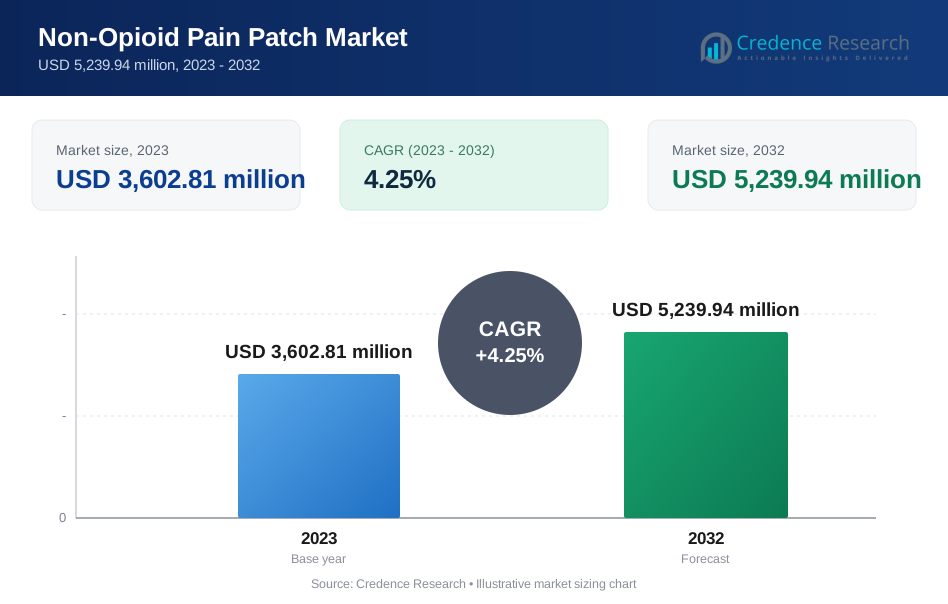
| Non-Opioid Pain Patch Market Size 2023 | USD 3,602.81 Million |
| Non-Opioid Pain Patch Market, CAGR | 4.25% |
| Non-Opioid Pain Patch Market Size 2032 | USD 5,239.94 Million |
Market Overview
The global Non-Opioid Pain Patch Market is projected to grow from USD 3,602.81 million in 2023 to an estimated USD 5,239.94 million by 2032, registering a compound annual growth rate (CAGR) of 4.25% from 2024 to 2032. This growth reflects an increasing preference for non-invasive, non-opioid pain management solutions amid rising awareness about the side effects of opioid-based treatments.
Market drivers include a strong emphasis on reducing opioid dependency and an increasing focus on patient comfort and ease of use. Additionally, technological advancements in transdermal drug delivery and continuous research into non-opioid analgesic compounds are fueling market growth. Trends within the market show a shift towards personalized pain management solutions and the adoption of innovative patch materials that enhance drug delivery and patient compliance.
Geographically, North America holds the largest share of the Non-Opioid Pain Patch market, driven by high healthcare spending and substantial awareness of non-opioid therapies. Europe follows closely due to favorable government initiatives aimed at reducing opioid usage. Meanwhile, Asia-Pacific is expected to witness significant growth during the forecast period, supported by a large patient base and increasing healthcare investments. Key players in this market include Hisamitsu Pharmaceutical, Pfizer, Inc., Teva Pharmaceutical Industries Ltd., and Mylan N.V., who continue to drive innovation and expand their product offerings to meet rising global demand.
Market Drivers
Rising Awareness of Opioid-Related Risks and Demand for Alternative Therapies
With increasing awareness about the severe side effects and addiction risks associated with opioid-based pain management, both healthcare providers and patients are actively seeking safer alternatives. For instance, in 2022, an estimated 6.1 million people in the United States were reported to have an opioid use disorder (OUD), highlighting the urgent need for safer alternatives to opioids, such as non-opioid pain management solutions like transdermal patches. The heightened understanding of opioid risks has spurred healthcare systems and professionals worldwide to endorse non-opioid pain management solutions, like transdermal pain patches, as a safer approach. These patches, which deliver analgesics directly through the skin to the pain site, offer an effective, non-invasive option that minimizes systemic side effects, making them an appealing choice for chronic pain sufferers and those seeking long-term pain relief. This shift away from opioids is likely to continue fueling the adoption of non-opioid pain patches, driving market growth.
Growing Prevalence of Chronic Pain Conditions and an Aging Population
The increasing prevalence of chronic pain conditions such as arthritis, neuropathy, and back pain, especially among the aging population, has significantly boosted the demand for effective pain management solutions. For instance, approximately 50 million adults in the U.S. are living with chronic pain, which underscores the demand for effective pain relief options that do not rely on opioids. As populations age, particularly in regions like North America, Europe, and parts of Asia-Pacific, the number of individuals with chronic pain conditions continues to rise. Non-opioid pain patches offer these patients a consistent, controlled-release pain relief option, enabling them to manage symptoms with minimal interference in daily activities. The growing need for alternative pain relief solutions for aging adults with comorbid conditions also drives healthcare professionals to prescribe non-opioid options, further supporting market expansion.
Technological Advancements in Transdermal Drug Delivery
Innovation in transdermal drug delivery systems has greatly enhanced the efficacy and convenience of non-opioid pain patches. For instance, innovations like micro-needle patches have been developed, which enhance drug absorption and provide longer-lasting pain relief, making them an increasingly viable option for patients seeking alternatives to traditional oral medications. Technological advancements have allowed for more precise drug formulations and enhanced patch materials, leading to increased efficiency in drug absorption and longer-lasting pain relief. Innovations such as improved adhesive materials and controlled-release mechanisms are making non-opioid pain patches more effective and user-friendly, thereby widening their appeal. These advancements not only enhance patient compliance but also position non-opioid patches as a viable option for a wider range of pain management applications. The continuous improvements in patch technology make them increasingly competitive against oral medications and other pain relief modalities.
Supportive Regulatory Environment and Favorable Reimbursement Policies
Governments and regulatory agencies worldwide are increasingly supportive of non-opioid pain management options, which has helped facilitate the entry of new, innovative pain patch products into the market. Many countries, particularly in North America and Europe, are implementing regulations and guidelines to curb opioid prescriptions and encourage the use of alternative treatments. In parallel, several healthcare systems have introduced favorable reimbursement policies for non-opioid pain patches, which help to reduce out-of-pocket costs for patients. This supportive regulatory and reimbursement environment is expected to boost market growth, making non-opioid pain patches more accessible to a broader patient base. These policies reinforce the shift toward safer pain management alternatives, positioning non-opioid pain patches as a critical tool in modern healthcare.
Market Trends
Advancement in Patch Materials and Drug Delivery Technologies
The Global Non-Opioid Pain Patch market is witnessing rapid innovation in patch materials and drug delivery technologies. Companies are investing heavily in research and development to create more effective and comfortable pain patches that enhance patient adherence and efficacy. Innovations in adhesive materials, for instance, have led to patches that remain securely attached even during physical activity, which is crucial for patients with active lifestyles or those who require extended pain relief. Research indicates that the integration of these innovative adhesive materials has resulted in patches that maintain their adhesion during physical activities, allowing for consistent pain relief over extended periods without frequent reapplication. Moreover, advancements in drug delivery technologies, such as controlled-release and micro-needle-based patches, are improving drug absorption and reducing dosage frequency. These technologies enable the sustained release of analgesics over longer periods, allowing for more consistent and prolonged pain relief without the need for frequent reapplication. For example, that microneedle technologies can significantly increase drug absorption rates, enabling sustained analgesic release that can last for hours or even days. This shift toward innovative patch designs enhances the appeal of non-opioid pain patches, positioning them as a competitive alternative to traditional oral analgesics and supporting their expanding role in pain management.
Personalization of Pain Management and Focus on Patient-Centric Solutions
A growing trend in the non-opioid pain patch market is the emphasis on personalized pain management and patient-centric solutions. Manufacturers are increasingly recognizing that pain management needs vary widely between individuals, depending on factors like age, underlying health conditions, and specific pain sources. This has led to the development of customizable and targeted patch solutions designed to cater to different types and intensities of pain. For instance, some patches are formulated specifically for musculoskeletal pain, while others address neuropathic pain, catering to the unique requirements of diverse patient groups.Additionally, companies are prioritizing user-friendly designs, such as transparent and discreet patches, to improve comfort and aesthetics. This focus on personalization not only enhances patient satisfaction but also encourages long-term use, fostering stronger brand loyalty and supporting market growth. These developments align with broader healthcare trends emphasizing individual care and innovative, adaptable solutions that meet specific patient needs. By tailoring products to address diverse pain profiles effectively, manufacturers are positioning themselves to meet the evolving demands of patients seeking effective non-opioid pain management options.
Market Restraints and Challenges
High Costs and Limited Insurance Coverage
One of the major challenges faced by the Global Non-Opioid Pain Patch Market is the high cost associated with advanced pain patch products and limited insurance coverage in certain regions. Compared to traditional pain relief methods, non-opioid pain patches often carry a higher price tag due to their sophisticated drug delivery mechanisms and specialized materials. In many markets, reimbursement policies for non-opioid patches remain underdeveloped or restricted, limiting affordability and access for a significant segment of the patient population. This challenge is especially prevalent in developing economies, where healthcare systems often lack the infrastructure to support alternative, costlier treatments. As a result, patients and healthcare providers may hesitate to adopt these solutions, impeding market penetration and growth. For the market to expand more broadly, stakeholders will need to advocate for more inclusive reimbursement policies and work towards reducing production costs.
Variable Efficacy and Limited Awareness in Developing Regions
The efficacy of non-opioid pain patches can vary based on individual factors such as skin type, pain type, and underlying health conditions, which presents a challenge for universal acceptance. In certain cases, patients may not experience the desired level of pain relief, leading to dissatisfaction and lower compliance. Additionally, awareness of non-opioid pain management options remains low in several developing regions, where traditional pain relief methods are still the primary choice for treatment. Limited awareness is compounded by a lack of adequate training for healthcare providers on the benefits and applications of non-opioid patches, leading to fewer recommendations. The slow adoption rate in these areas hinders the global market’s growth potential. To overcome this barrier, manufacturers and healthcare professionals must invest in educational initiatives, emphasizing the benefits of non-opioid patches to both providers and patients in these regions.
Market Segmentation Analysis
By Type
The non-opioid pain patch market by type includes various options, each catering to specific pain management needs. Lidocaine patches, widely adopted for their minimal side effects, are particularly effective for localized neuropathic pain like post-herpetic neuralgia, supporting their strong market share. Diclofenac patches, known for anti-inflammatory and analgesic properties, are ideal for musculoskeletal and arthritis-related pain, especially in regions with high arthritis prevalence, while growing awareness of non-opioid options further boosts this segment. Methyl Salicylate patches, valued for their warming effect, are popular for acute pain relief in sports injuries and muscle strains, often recommended by physiotherapists. Capsaicin patches, leveraging a unique mechanism to desensitize nerve receptors, provide long-lasting relief for chronic neuropathic pain, particularly for patients unresponsive to conventional treatments. Lastly, the “Others” segment, featuring alternative non-opioid analgesics or combination formulations, addresses niche patient needs and continues to evolve with ongoing research and development.
By Distribution Channel
Hospital pharmacies, retail pharmacies, drug stores, and online channels are the main distribution channels for non-opioid pain patches. Hospital pharmacies play a vital role, particularly in post-surgical and chronic pain management, as hospitals increasingly adopt non-opioid protocols, ensuring specialized options under provider supervision. Retail pharmacies and drug stores represent the largest channel, benefiting from extensive distribution networks and a rise in over-the-counter availability, catering to patients seeking convenient pain relief options. The "Others" segment, including online pharmacies and specialty stores, is rapidly growing due to the convenience of home delivery and accessible product information, driven by the expansion of e-commerce in healthcare, which broadens market reach and raises awareness.
Segments
Based on Type
- Lidocaine Patches
- Diclofenac Patches
- Methyl Salicylate Patches
- Capsaicin Patches
- Others
Based on Distribution Channel
- Hospital Pharmacies
- Retail Pharmacies & Drug Stores
- Others
Based on Region
- North America
- U.S.
- Canada
- Mexico
- Europe
- Germany
- France
- U.K.
- Italy
- Spain
- Rest of Europe
- Asia Pacific
- China
- Japan
- India
- South Korea
- South-east Asia
- Rest of Asia Pacific
- Latin America
- Brazil
- Argentina
- Rest of Latin America
- Middle East & Africa
- GCC Countries
- South Africa
- Rest of the Middle East and Africa
Regional Analysis
North America (38%):
North America holds the largest share of the global non-opioid pain patch market, accounting for approximately 38% of the market. The region’s leadership is attributed to high awareness of opioid-related risks and a strong emphasis on non-opioid alternatives for pain management. The United States, in particular, has witnessed significant governmental and healthcare initiatives aimed at reducing opioid prescriptions, driving demand for non-opioid pain patches. Additionally, the prevalence of chronic pain conditions, such as arthritis and neuropathy, is high in North America, especially among the elderly population, contributing to sustained demand for effective and long-lasting pain relief solutions. The robust healthcare infrastructure, coupled with favorable reimbursement policies for non-opioid treatments, further reinforces the market’s growth in this region.
Europe (27%):
Europe holds a significant market share, approximately 27% of the global market, with high demand across countries like Germany, France, and the United Kingdom. The region benefits from government-led initiatives and policies promoting safer, non-opioid pain management alternatives. This is coupled with a growing elderly population, which is more susceptible to chronic pain conditions and thus drives demand for effective pain management solutions. Additionally, European healthcare systems increasingly emphasize non-invasive treatment options, and the widespread healthcare access in Western Europe ensures that non-opioid patches are readily available. The strong regulatory framework across the European Union supports innovation in pain management technologies, further fueling growth.
Key players
- Sanofi S.A.
- Pfizer Inc.
- GlaxoSmithKline Plc.
- Hisamitsu Pharmaceutical Co., Inc.
- Clarion Brands
- Endo Pharmaceuticals
- TEH SENG Pharmaceutical
- Veridian Healthcare
- Sorrento Therapeutics (SCILEX Pharmaceuticals) Inc.
- Teva Pharmaceutical Industries Ltd.
- Teikoku Seiyaku Co. Ltd.
Competitive Analysis
The global non-opioid pain patch market is highly competitive, with key players leveraging product innovation, strategic collaborations, and mergers to strengthen their positions. Leading companies like Sanofi S.A., Pfizer Inc., and GlaxoSmithKline Plc. benefit from well-established brand recognition and extensive distribution networks, which facilitate their penetration into multiple regional markets. Hisamitsu Pharmaceutical Co., Inc. and Teikoku Seiyaku Co. Ltd. are recognized for their advanced research capabilities and specialized transdermal drug delivery technologies, making them key innovators in the field. Additionally, companies like TEH SENG Pharmaceutical and Veridian Healthcare cater to niche segments and emerging markets, helping them tap into growth potential in underdeveloped regions. The intense competition is characterized by a focus on non-invasive, effective pain management solutions, and companies are increasingly investing in R&D to create differentiated products that meet the growing demand for safer, non-opioid alternatives in pain management.
Recent Developments
- In March 2023, Hisamitsu launched a new lidocaine patch designed for localized pain relief, featuring improved adhesion and extended duration of action, enhancing patient comfort and compliance.
- In June 2023, Clarion Brands expanded its product line by introducing a menthol-based pain relief patch aimed at providing temporary relief for minor aches and pains associated with arthritis and simple backaches.
- In September 2023, Endo Pharmaceuticals announced the development of a novel non-opioid pain patch utilizing a proprietary transdermal delivery system, currently undergoing clinical trials for chronic pain management.
- In July 2023, TEH SENG Pharmaceutical introduced an herbal-based pain relief patch incorporating traditional Chinese medicine principles, targeting muscle and joint pain with natural ingredients.
- In May 2023, Veridian Healthcare launched a line of over-the-counter non-opioid pain patches featuring a blend of menthol and capsaicin, designed for temporary relief of minor aches and pains.
- In April 2023, SCILEX Pharmaceuticals received FDA approval for a new non-opioid pain patch indicated for the management of neuropathic pain associated with diabetic peripheral neuropathy.
- In February 2023, Teva expanded its non-opioid pain management portfolio by acquiring a novel transdermal patch technology aimed at delivering non-opioid analgesics more effectively.
- In January 2023, Teikoku Seiyaku announced a partnership with a biotechnology firm to develop next-generation non-opioid pain patches utilizing advanced drug delivery systems for enhanced efficacy.
Market Concentration and Characteristics
The Global Non-Opioid Pain Patch Market is moderately concentrated, with a mix of large pharmaceutical giants and specialized companies contributing to the competitive landscape. Key players, including Sanofi S.A., Pfizer Inc., Hisamitsu Pharmaceutical Co., and GlaxoSmithKline Plc., dominate the market, leveraging their established distribution channels, brand reputation, and substantial R&D resources. These larger firms benefit from economies of scale and strong relationships with healthcare providers, which bolster their market share. However, smaller companies and regional players like TEH SENG Pharmaceutical and Veridian Healthcare are also gaining traction, particularly in emerging markets, by focusing on affordable, accessible non-opioid alternatives. The market is characterized by a strong emphasis on innovation in transdermal drug delivery systems, driven by rising awareness of opioid-related risks and the need for safe, effective pain management solutions. As the market grows, companies are increasingly investing in product differentiation and technology advancements to meet diverse patient needs and expand into new regions.
Report Coverage
The research report offers an in-depth analysis based on Type, Distribution Channel and Region. It details leading market players, providing an overview of their business, product offerings, investments, revenue streams, and key applications. Additionally, the report includes insights into the competitive environment, SWOT analysis, current market trends, as well as the primary drivers and constraints. Furthermore, it discusses various factors that have driven market expansion in recent years. The report also explores market dynamics, regulatory scenarios, and technological advancements that are shaping the industry. It assesses the impact of external factors and global economic changes on market growth. Lastly, it provides strategic recommendations for new entrants and established companies to navigate the complexities of the market.
Future Outlook
- As awareness of opioid-related risks increases, demand for non-opioid pain management solutions, such as pain patches, is expected to rise steadily.
- Innovations in transdermal drug delivery, including controlled-release and micro-needle technologies, will enhance efficacy and broaden application scope.
- Asia-Pacific, Latin America, and parts of Africa are poised for significant growth as healthcare infrastructure and awareness of non-opioid options improve.
- The trend toward personalized healthcare will likely drive development of customized pain patches, tailored to meet individual pain management needs and conditions.
- Governments worldwide are anticipated to continue supporting non-opioid pain options through favorable policies, further boosting market growth.
- Pharmaceutical companies are expected to increase R&D spending to develop new, innovative non-opioid pain patches that address a range of chronic and acute pain types.
- As the global elderly population grows, so will demand for easy-to-use, non-invasive pain management solutions, making non-opioid patches an attractive option.
- The growing trend of OTC non-opioid pain patches will improve patient accessibility, especially for mild to moderate pain management at home.
- Although promising, the market will face competition from alternative pain therapies, such as physical therapy and oral non-opioid medications.
- Increasing environmental awareness is likely to prompt manufacturers to develop sustainable, eco-friendly materials for pain patches, aligning with global sustainability goals.
Request a Free Sample
Fill in your details and we'll send you a free sample report.
- Sample data tables & charts
- Research methodology
Need a Custom Version of This Report?
Tailor the scope, geography, or segments to your exact requirements.
- Custom geography or segment scope
- Direct access to our analyst team
Frequently Asked Questions
What is the market size of the global Non-Opioid Pain Patch market in 2023 and 2032?
What factors are driving growth in the Non-Opioid Pain Patch market?
Which region holds the largest share in the Non-Opioid Pain Patch market?
Who are the major players in the Non-Opioid Pain Patch market?
Why is there a shift toward non-opioid pain management solutions?
What trends are influencing the Non-Opioid Pain Patch market?
Table of Content
Chapter 1. Report Introduction
- 1.1 Report Description & Purpose
- 1.1.1 Report Title & Market Definition
- 1.1.2 Unique Selling Propositions (USP) & Key Differentiators
- 1.1.3 Value Proposition for Stakeholders
- 1.2 Research Objectives
- 1.2.1 Market Sizing Objectives (Volume & Revenue)
- 1.2.2 Segmentation Objectives
- 1.2.3 Competitive Intelligence Objectives
- 1.2.4 Forecast & Scenario Objectives
- 1.3 Report Scope
- 1.3.1 Non-Opioid Pain Patch Scope – Types & Subtypes Covered
- 1.3.2 Geographic Scope – Regions & Countries Covered
- 1.3.3 Historical Period, Base Year & Forecast Period (2023; forecast to 2032)
- 1.3.4 Inclusions & Exclusions
- 1.4 HS Code & Classification Framework
- 1.5 Currency, Units & Pricing Basis
- 1.6 Target Stakeholders
- 1.7 Limitations & Assumptions
Chapter 2. Executive Summary
- 2.1 Global Non-Opioid Pain Patch Market Snapshot
- 2.1.1 Market Size – Historical (2023) & Forecast (2023-2032) (2023: USD 3,602.81 million → 2032: USD 5,239.94 million)
- 2.1.2 Volume & Revenue – Global Totals
- 2.1.3 Key Market Highlights – Top Five Facts
- 2.2 Non-Opioid Pain Patch Market Segmentation Snapshot
- 2.2.1 Market Split by Region – 2023 vs. 2032
- 2.3 Competitive Snapshot
- 2.3.1 Top 10 Players by Revenue Share – 2023
- 2.3.2 Top 10 Players by Volume Share – 2023
- 2.3.3 Recent Strategic Developments (18-Month Summary)
- 2.4 Key Investment Highlights & Strategic Conclusions
Chapter 3. Non-Opioid Pain Patch Market Dynamics & Industry Analysis
- 3.1 Market Overview & Context
- 3.1.1 Non-Opioid Pain Patch Market Position in the Broader Automotive Value Chain
- 3.1.2 OEM vs. Replacement Market Dynamics
- 3.1.3 Market Maturity & Development Stage by Region
- 3.2 Non-Opioid Pain Patch Market Drivers
- 3.3 Non-Opioid Pain Patch Market Restraints & Challenges
- 3.4 Non-Opioid Pain Patch Market Opportunities
- 3.5 Porter's Five Forces Analysis
- 3.5.1 Threat of New Entrants
- 3.5.2 Bargaining Power of Suppliers
- 3.5.3 Bargaining Power of Buyers
- 3.5.4 Threat of Substitutes
- 3.5.5 Competitive Rivalry – Intensity Assessment
- 3.6 Non-Opioid Pain Patch Value Chain Analysis
- 3.6.1 Upstream – Raw Material/Input Suppliers
- 3.6.1.1 Raw Material/Input 1
- 3.6.1.2 Raw Material/Input 2
- 3.6.1.3 Raw Material/Input 3
- 3.6.2 Midstream – Production/Manufacturing/Service Delivery
- 3.6.2.1 Production/Process Overview
- 3.6.2.2 Key Facility Locations & Capacity by Manufacturer
- 3.6.3 Downstream – Distribution & End Consumer
- 3.6.3.1 Primary Channel – B2B/OEM
- 3.6.3.2 Secondary Channels – Dealer, Retail, Online, Direct
- 3.6.4 Value Chain Profitability Analysis
- 3.6.1 Upstream – Raw Material/Input Suppliers
- 3.7 PESTEL Analysis
- 3.7.1 Political Factors
- 3.7.2 Economic Factors
- 3.7.3 Social Factors
- 3.7.4 Technological Factors
- 3.7.5 Environmental Factors
- 3.7.6 Legal Factors
- 3.8 Non-Opioid Pain Patch Supply Chain Analysis
- 3.8.1 Raw Material/Input Supply Risk Assessment
- 3.8.2 Manufacturing Concentration Risk (Geographic Exposure)
- 3.8.3 Trade Disruption Impact Analysis
- 3.9 Regulatory & Policy Landscape
Note: The regulatory and policy landscape section covers regulations based on their applicability to the market, Non-Opioid Pain Patch category, geography, and scope of the study. Only regulatory frameworks with a material impact on operations, compliance, trade, sustainability, or market access are analyzed in detail.
Chapter 4. Key Investment Pockets & Opportunity Analysis
- 4.1 Non-Opioid Pain Patch Market Attractiveness Analysis
- 4.1.1 By Region – Investment Attractiveness Matrix (Volume × CAGR)
- 4.2 Absolute Revenue Growth Opportunity
- 4.2.1 By Region – Absolute USD Growth Through 2032
- 4.3 Incremental Volume Opportunity
- 4.3.1 By Region – Incremental Volume Through 2032
- 4.3.2 Segment – Incremental Volume
- 4.4 Emerging Submarket Opportunity Deep Dive (Subject to Applicability)
- 4.5 Emerging Market Opportunity Scorecards
- 4.5.1 United States
- 4.5.2 Europe
- 4.5.3 Asia
- 4.5.4 Middle East & Africa
Note: Emerging Market Opportunity Scorecards will be included based on relevance and strategic importance. Regions listed are indicative and may vary depending on data availability and market dynamics.
Chapter 5. Non-Opioid Pain Patch Import-Export Analysis & Trade Flows
- 5.1 Global Trade Overview
- 5.1.1 Global Export Value by Country (2023)
- 5.1.2 Global Export Volume by Country (2023)
- 5.1.3 Global Import Value by Country (2023)
- 5.1.4 Global Import Volume by Country (2023)
- 5.1.5 Net Trade Balance by Country (2023)
- 5.2 Export Analysis – Segment
- 5.2.1 Type 1 (HS Code)
- 5.2.2 Type 2 (HS Code)
- 5.2.3 Type 3 (HS Code)
- 5.2.4 Type 4 (HS Code)
- 5.2.5 Type 5 (HS Code)
- 5.3 Import Analysis – Segment
- 5.3.1 Type 1 (HS Code)
- 5.3.2 Type 2 (HS Code)
- 5.3.3 Type 3 (HS Code)
- 5.3.4 Type 4 (HS Code)
- 5.3.5 Type 5 (HS Code)
- 5.4 Average Unit Trade Prices
- 5.4.1 Average Export Price – Segment & Country
- 5.4.2 Average Import Price – Segment & Source Country
- 5.4.3 Price Trends (2023)
- 5.5 Key Trade Route Analysis
- 5.5.1 Trade Route 1
- 5.5.2 Trade Route 2
- 5.5.3 Trade Route 3
- 5.5.4 Trade Route 4
- 5.5.5 Trade Route 5
- 5.6 Trade Policy Impact Assessment
- 5.6.1 US Anti-Dumping & Section 301 Tariffs
- 5.6.2 EU Customs Union Impact
- 5.6.3 Major Free Trade Agreements
- 5.6.4 USMCA Rules of Origin
Note: Trade policy analysis will be included only where relevant to the Non-Opioid Pain Patch market.
Chapter 6. Competitive Landscape & Company Benchmarking
- 6.1 Non-Opioid Pain Patch Market Concentration & Structure
- 6.1.1 Herfindahl-Hirschman Index (HHI) – vs. 2023
- 6.1.2 Tier 1, Tier 2 & Tier 3 Market Structure
- 6.1.3 Global, Regional & Local Player Dynamics
- 6.2 Non-Opioid Pain Patch Market Share Analysis – 2023
- 6.2.1 Global Revenue Share by Company
- 6.2.2 Global Volume Share by Company
- 6.2.3 Regional Revenue Share
- 6.2.4 Market Share Evolution ( vs. 2023)
- 6.2.5 OEM Segment Share by Company
- 6.2.6 Replacement Segment Share by Company
- 6.3 Production/Delivery Capacity & Facility Analysis
- 6.3.1 Global Installed Capacity
- 6.3.2 Capacity Utilization Rates
- 6.3.3 Production/Output Volume
- 6.3.4 Facility Locations & Capacity Map
- 6.3.5 Planned Capacity Additions
- 6.4 Non-Opioid Pain Patch Competitive Benchmarking Matrix
- 6.4.1 Revenue, Volume, CAGR & Profitability Comparison
- 6.4.2 Channel Revenue Mix
- 6.4.3 Geographic Revenue Exposure
- 6.4.4 R&D Intensity
- 6.4.5 Sustainability Maturity
- 6.5 Strategic Developments in Non-Opioid Pain Patch (Last 24 Months)
- 6.5.1 Mergers, Acquisitions & Divestments
- 6.5.2 New Non-Opioid Pain Patch Launches
- 6.5.3 Facility Expansions
- 6.5.4 Strategic Alliances, Joint Ventures & Partnerships
- 6.5.5 Distribution Expansion & Market Entry
- 6.5.6 Sustainability & ESG Initiatives
- 6.6 Competitive Strategy Mapping
- 6.6.1 Leader, Challenger, Follower & Niche Classification
- 6.6.2 Pricing Strategy Comparison
- 6.6.3 Channel Strategy Matrix
Note: Strategic developments are included based on their materiality and the availability of reliable information.
Chapter 7. Global Non-Opioid Pain Patch Market – By Distribution Channel
- 7.1 Segment Overview
- 7.1.1 Volume & Revenue Split by Channel (2023 & 2032)
- 7.1.2 Channel Mix Evolution (2023-2032)
Chapter 8. Regional Market Analysis – Global Overview
- 8.1 Global Regional Overview
- 8.1.1 Regional Volume Share
- 8.1.2 Regional Revenue Share
- 8.1.3 Regional Volume by Region
- 8.1.4 Regional Revenue by Region
- 8.1.5 Regional Forecast Through 2032
- 8.2 Cross-Regional Segment Analysis
- 8.2.1 By Distribution Channel
- 8.2.2 By Brand/Price Tier
Chapter 9. North America Non-Opioid Pain Patch Market
- 9.1 United States
- 9.2 Canada
- 9.3 Mexico
Chapter 10. Europe Non-Opioid Pain Patch Market
- 10.1 Germany
- 10.2 France
- 10.3 Italy
- 10.4 United Kingdom
- 10.5 Spain
- 10.6 Poland
- 10.7 Russia
- 10.8 Netherlands
- 10.9 Belgium
- 10.10 Sweden
- 10.11 Denmark
- 10.12 Norway
- 10.13 Rest of Europe
Chapter 11. Asia Pacific Non-Opioid Pain Patch Market
- 11.1 China
- 11.2 India
- 11.3 Japan
- 11.4 South Korea
- 11.5 Thailand
- 11.6 Indonesia
- 11.7 Vietnam
- 11.8 Malaysia
- 11.9 Australia
- 11.10 Rest of Asia Pacific
Chapter 12. Latin America Non-Opioid Pain Patch Market
- 12.1 Brazil
- 12.2 Argentina
- 12.3 Colombia
- 12.4 Chile
- 12.5 Rest of Latin America
Chapter 13. Middle East Non-Opioid Pain Patch Market
- 13.1 Saudi Arabia
- 13.2 United Arab Emirates
- 13.3 Turkey
- 13.4 Israel
- 13.5 Iran
- 13.6 Rest of the Middle East
Chapter 14. Africa Non-Opioid Pain Patch Market
- 14.1 South Africa
- 14.2 Egypt
- 14.3 Nigeria
- 14.4 Morocco
- 14.5 Rest of Africa
Chapter 15. Non-Opioid Pain Patch Company Profiles
- 15.1 [Company 01]
- 15.1.1 Company Overview
- 15.1.2 Key Management Personnel
- 15.1.3 Products & Services Portfolio
- 15.1.4 Financial Performance
- 15.1.5 Key Market Focus & Geographic Presence
- 15.1.6 Recent Developments & Strategic Initiatives
Note: The company profile list is preliminary and may change based on research findings, market developments, data availability, and client requirements.
Chapter 16. Appendices
- Appendix A – List of Abbreviations & Acronyms
- Appendix B – Industry Classification Code Reference – Full Series
- Appendix C – Production & Capacity Data Tables
- Appendix D – End-Use & Demand Base Tables
- Appendix E – Consumption & Replacement Rate Assumptions
- Appendix F – ASP Reference Tables
- Appendix G – Manufacturing & Facility Database
- Appendix H – Import-Export Data Tables
- Appendix I – Regulatory Summary Tables
- Appendix J – Primary Research Participant List (Anonymized)
- Appendix K – Primary Research Questionnaire Framework
- Appendix L – Data Sources & Bibliography
- Appendix M – Market Size Divergence & Source Comparison
Chapter 17. Research Methodology
- 17.1 Research Framework & Philosophy
- 17.2 Secondary Research – Sources, Hierarchy & Data Extraction
- 17.3 Data Modeling – Bottom-Up & Top-Down Market Sizing
- 17.4 Primary Research – Stakeholder Framework, LOI & Sample Sizes
- 17.5 Forecast Methodology – Regression, Scenario & Sensitivity Analysis
- 17.6 Quality Control – Four-Layer Validation Framework
- 17.7 Limitations & Standard Assumptions
- 17.8 Disclaimer
