
| REPORT ATTRIBUTE | DETAILS |
|---|---|
| Historical Period | 2020-2023 |
| Base Year | 2024 |
| Forecast Period | 2025-2032 |
| Plus Size Clothing Market Size 2023 | USD 350,000.00 Million |
| Plus Size Clothing Market, CAGR | 4.80% |
| Plus Size Clothing Market Size 2032 | USD 533,727.51 Million |
Market Overview
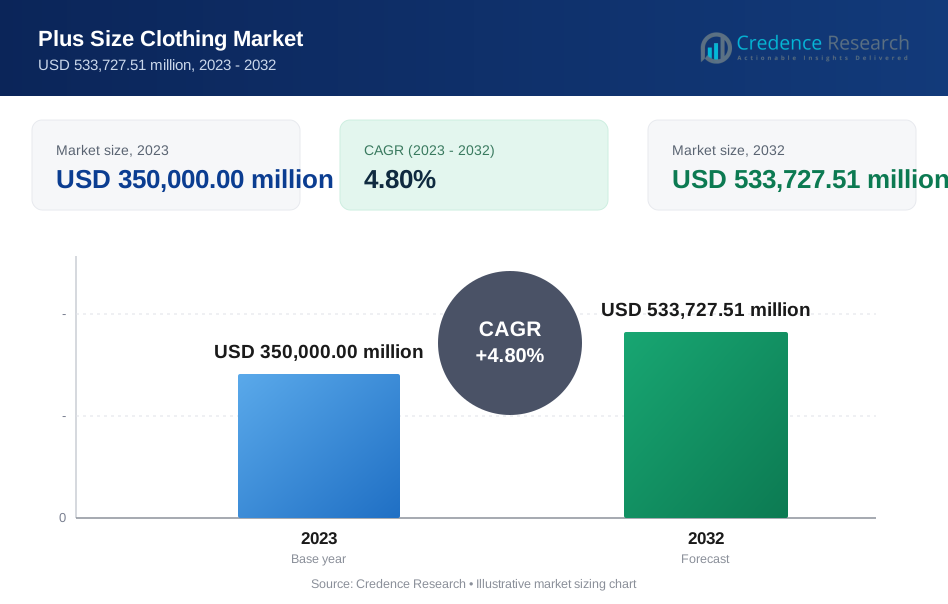
The global Plus Size Clothing Market is projected to grow from USD 350,000.00 million in 2023 to an estimated USD 533,727.51 million by 2032, with a compound annual growth rate (CAGR) of 4.80% from 2024 to 2032. This growth is driven by the increasing demand for fashionable and comfortable plus-size clothing across various regions, as well as the growing consumer awareness regarding body positivity and inclusive fashion.
Key drivers and trends influencing the market include the shift in consumer perception towards body image, the growing demand for size-inclusive clothing options, and the increasing availability of trendy plus-size apparel. Additionally, advancements in fabric technologies and the integration of sustainable practices are expected to create new opportunities in the market. Moreover, the rise of social media influencers promoting body positivity has played a pivotal role in shaping consumer behavior and increasing demand for plus-size clothing.
Geographically, North America holds the largest market share, driven by the high demand for plus-size clothing in the United States and Canada. However, regions such as Europe and Asia-Pacific are expected to witness significant growth, driven by increasing awareness and the rising middle-class population. Key players in the global Plus Size Clothing Market include Nike, ASOS, Torrid, and Target, among others, who are continually expanding their product offerings to cater to the growing demand.
Market Insights
- The global plus-size clothing market is projected to grow from USD 350,000.00 million in 2023 to USD 533,727.51 million by 2032, at a CAGR of 4.80% from 2024 to 2032.
- The growing body positivity movement and the shift in consumer perception towards inclusive fashion are driving demand for stylish and comfortable plus-size clothing.
- The rise of e-commerce platforms and online shopping is expanding access to a wide range of plus-size clothing, further boosting market growth.
- Despite progress, limited availability of fashionable and trendy plus-size clothing continues to be a challenge for some consumers.
- Inconsistent sizing standards across different brands can lead to frustration and high return rates, impacting customer satisfaction.
- North America holds the largest market share, driven by strong demand in the U.S. and Canada, with a focus on inclusive fashion and body diversity.
- The Asia-Pacific region is expected to experience significant growth due to rising disposable income, changing fashion trends, and increasing awareness of body inclusivity.
Market Drivers
Growing Consumer Awareness and Body Positivity Movement
The global Plus Size Clothing Market has witnessed significant growth, driven by increasing consumer awareness surrounding body positivity and diversity in fashion. The body positivity movement, which promotes the acceptance of all body types, has gained significant momentum in recent years. This movement has empowered individuals to embrace their natural bodies, leading to greater demand for inclusive clothing options. For instance, Gen Zs are now the least likely to be trying to tone up; they're more likely to say they're happy with the way they look, and to agree that they've become more body positive over time. As consumers seek clothing that reflects their unique body shapes, many fashion brands have responded by expanding their plus-size offerings. Social media platforms have played a crucial role in normalizing diverse body types and promoting self-love, amplifying the demand for stylish, trendy plus-size clothing. Brands are increasingly aligning with these social and cultural shifts, offering clothing lines that celebrate diversity. Additionally, a growing number of celebrities and influencers in the plus-size community have contributed to shifting societal attitudes and encouraging more inclusive fashion, fueling the market's growth.
Rise of E-Commerce and Online Shopping Platforms
The increasing popularity of online shopping has been another significant driver for the growth of the global plus-size clothing market. E-commerce platforms have provided consumers with convenient access to a wide variety of plus-size clothing brands and styles. For instance, online platforms offer more extensive size ranges and specialized plus size brands compared to traditional brick-and-mortar stores, enhanced by improvements in online shopping technologies such as virtual fitting rooms and size guides. These platforms offer an extensive range of sizes, often including niche and specialized options that may not be readily available in physical stores. With the growth of online shopping, consumers are no longer limited to in-store inventory and can easily access plus-size clothing options from both established and emerging brands. The convenience of online shopping, combined with advanced filtering systems that allow users to search for specific sizes, has further fueled the demand. Additionally, the ease of returning items purchased online has alleviated concerns about fit, making online shopping for plus-size clothing more appealing. This shift towards e-commerce is expected to continue driving the market's growth.
Increased Availability of Trendy and Stylish Plus-Size Clothing
One of the key drivers of the global plus-size clothing market is the expansion of trendy, fashionable, and affordable clothing options designed for plus-size individuals. Historically, the plus-size segment faced limited choices in terms of styles, with many options being perceived as unflattering or outdated. However, the market has evolved significantly, with an increasing number of fashion brands offering contemporary, stylish, and fashion-forward plus-size collections. For instance, Torrid launched a sustainable plus-size collection, featuring garments made from recycled and eco-friendly materials, catering to environmentally conscious consumers. Retailers are now designing clothing that caters to the latest fashion trends, ensuring that plus-size consumers have access to the same level of style as those who wear smaller sizes. Whether it's casual wear, formal attire, or activewear, the availability of trendy and chic clothing in plus sizes has been a driving force behind the market's growth. The increased variety in fabric choices, including stretchable, breathable, and moisture-wicking materials, has also played a crucial role in enhancing the comfort and versatility of plus-size garments, leading to greater satisfaction and loyalty within the market.
Expansion of Retailers and Brands into the Plus-Size Segment
As the demand for inclusive fashion continues to grow, many traditional and luxury brands are expanding their offerings to include plus-size lines. The expansion of these retailers into the plus-size clothing market has further driven its growth, as consumers now have access to a broader range of quality, high-fashion garments in larger sizes. Major brands such as H&M, Zara, and ASOS have invested heavily in plus-size collections, ensuring that their products cater to a wider demographic. For instance, the Henning x Universal Standard collaboration expanded the availability of Henning's businesswear to sizes up to 40, addressing the underserved plus-size market for workwear essentials. Moreover, the rise of dedicated plus-size retailers, including Torrid, Lane Bryant, and Aerie, has created a more competitive landscape, pushing brands to innovate and offer more diverse styles. Additionally, luxury fashion brands are increasingly recognizing the potential of the plus-size market, with several high-end designers launching exclusive collections for plus-size individuals. The entry of both mass-market and luxury brands into the space has not only validated the demand for stylish plus-size clothing but has also helped to shift public perceptions of fashion, making it more inclusive and representative of all body types.
Market Trends
Sustainability and Ethical Fashion
One of the most notable trends in the global plus-size clothing market is the increasing emphasis on sustainability and ethical fashion practices. As consumer awareness regarding environmental issues grows, many plus-size brands are making significant efforts to reduce their ecological footprints. Consumers are now seeking clothing made from organic, recycled, or eco-friendly materials, with an increasing preference for brands that prioritize sustainability. In addition, many plus-size retailers are committing to ethical manufacturing processes, ensuring that their production practices uphold fair labor standards and reduce waste. Brands such as Aerie and ASOS have pioneered this trend by offering sustainable plus-size collections that not only meet the demand for inclusive sizing but also align with the growing movement towards conscious consumerism. The demand for sustainable clothing is expected to grow in the coming years as consumers become more mindful of their environmental impact and are drawn to brands that share their values. This focus on sustainability also extends to packaging, with brands opting for eco-friendly materials, and to the promotion of long-lasting garments. As consumers shift their preferences towards durable and ethical products, it has become increasingly clear that sustainability is not a passing trend but a key factor shaping the future of the global plus-size clothing market. This aligns with the broader retail industry’s shift toward more eco-conscious practices and reflects the consumer-driven demand for clothing that benefits both individuals and the planet.
Inclusive and Diverse Sizing Options
The demand for truly inclusive sizing is one of the most prominent trends in the plus-size clothing market. Traditionally, many brands offered a limited range of sizes, often capping their offerings at size 16 or 18. However, with the increasing recognition of body diversity, more retailers are expanding their size ranges to include a wider spectrum of options. Leading brands like ASOS, Nike, and Target now offer sizes that extend beyond the traditional plus-size range, creating more room for body types that were historically underserved. Moreover, many companies are moving toward offering sizes that fit more than just one category of plus-size, acknowledging that body types differ widely even within this segment. Brands are adopting a more tailored approach to sizing that considers shape as well as size, with options designed for individuals with different body types, such as pear, apple, or hourglass shapes. This trend is driven by the understanding that one-size-fits-all solutions do not cater to the full diversity of the consumer market. By offering a broader range of sizes and fits, brands are positioning themselves as more inclusive and are better able to meet the needs of a growing demographic that demands more personalized clothing. Additionally, the demand for inclusive fashion has led to the rise of niche brands that specialize in providing sizes beyond traditional offerings. These brands focus not just on providing larger sizes but on creating styles that are specifically designed for curvier figures. As a result, the market has seen an increase in innovative designs, fabric choices, and tailoring techniques that cater to the diverse needs of plus-size consumers. This trend signifies a major shift toward inclusivity in fashion and is expected to continue as more brands recognize the growing potential of this market segment.
Technological Integration in Fashion and Fit
Technology is rapidly transforming the plus-size clothing market, with retailers increasingly leveraging technological innovations to enhance fit and shopping experiences. One of the major advancements in this area is the use of artificial intelligence (AI) and machine learning to improve the accuracy of size recommendations. These technologies analyze a customer’s body measurements, purchase history, and preferences to suggest the best-fitting clothing items. For example, brands like Stitch Fix use AI to provide personalized clothing recommendations based on the customer’s size, style, and fit preferences, ensuring a more seamless shopping experience. Additionally, virtual fitting rooms are gaining traction in the plus-size clothing market. These digital tools allow customers to try on clothing virtually by uploading images or inputting body measurements. This technology reduces the uncertainty that often comes with purchasing clothing online, particularly in terms of fit, and addresses the challenges posed by inconsistent sizing across brands. Virtual fitting rooms also provide a more convenient and interactive shopping experience, allowing customers to visualize how clothing will look on their bodies before making a purchase. In line with these developments, some brands are even investing in 3D body scanning technology to create more accurate and customized clothing options. This innovation allows for the design of garments that are tailored to individual measurements, ensuring better fit and comfort. As these technologies continue to evolve, they will likely play a critical role in shaping the future of the plus-size clothing market, offering a more personalized and satisfying shopping experience.
Celebrity Endorsements and Social Media Influence
The influence of social media and celebrity endorsements is a powerful driver of trends in the global plus-size clothing market. In recent years, several high-profile figures in the entertainment industry, such as Ashley Graham, Tess Holliday, and Lizzo, have become vocal advocates for body positivity and inclusive fashion. These celebrities have used their platforms to challenge traditional beauty standards and promote brands that cater to the plus-size community. Their involvement has helped elevate the visibility of plus-size fashion, making it more mainstream and inspiring brands to invest in more inclusive collections. Social media platforms such as Instagram, TikTok, and YouTube have become key channels for discovering plus-size fashion trends, as influencers and everyday consumers share their style choices and outfit ideas. Many plus-size influencers have built massive followings by showcasing how they style their clothing and encouraging body confidence, which in turn has led to increased demand for fashionable and trendy plus-size clothing. These influencers not only promote specific products but also advocate for the normalization of diverse body types in the fashion industry. Furthermore, brands are increasingly collaborating with social media influencers to launch exclusive collections or campaigns targeting the plus-size community. These collaborations help create buzz around new collections, increase brand awareness, and establish deeper connections with the consumer base. As celebrity endorsements and social media continue to play a significant role in shaping fashion trends, the plus-size clothing market is expected to continue evolving and growing.
Market Challenges
Limited Availability of Stylish and Trendy Options
Despite the growing demand for plus-size clothing, one of the significant challenges facing the global plus-size clothing market is the limited availability of stylish and trendy options that cater to a diverse range of body types. Historically, plus-size clothing has been perceived as functional rather than fashionable, with many retailers offering limited designs and outdated styles. While there has been an improvement in the availability of trendy plus-size clothing in recent years, many consumers still struggle to find fashionable options that reflect current trends. Furthermore, some brands continue to offer plus-size clothing as an afterthought rather than integrating it into their mainstream collections. This can result in a lack of variety, limiting consumers’ choices and causing frustration within the plus-size community. As the demand for inclusive fashion grows, retailers must continually adapt to meet consumer expectations by offering a wider variety of designs, patterns, and styles. The challenge lies in striking a balance between producing functional clothing while maintaining fashion-forward designs that appeal to plus-size consumers. This challenge is further compounded by the need to consider fit, comfort, and quality across a wider range of sizes and body types, which requires additional investment in design, materials, and manufacturing processes.
Inconsistent Sizing and Fit Across Brands
Another major challenge in the global plus-size clothing market is the inconsistency of sizing and fit across different brands. While the market for plus-size apparel is expanding, many retailers continue to offer sizes that are not standardized, leading to confusion and dissatisfaction among consumers. The variation in sizing between brands often results in customers needing to try multiple sizes before finding a proper fit, which can be time-consuming and frustrating. This inconsistency is particularly problematic for online shopping, where customers are unable to try on clothes before purchasing. As a result, many consumers abandon their purchases or return items, leading to a poor shopping experience and higher return rates for retailers. Addressing this issue requires a greater focus on developing standardized sizing systems across the industry. Additionally, brands need to invest in better size calibration, quality control, and customer education to reduce the frustration associated with fit and size discrepancies. Improving sizing consistency will not only enhance the shopping experience but also increase consumer loyalty in the long term.
Market Opportunities
Expansion of E-Commerce and Online Retail
The global plus-size clothing market presents a significant opportunity for growth through the expansion of e-commerce and online retail platforms. As online shopping continues to gain traction, consumers are increasingly seeking a convenient and diverse shopping experience that includes a wide range of sizes. E-commerce platforms offer brands the ability to reach a global audience without the constraints of physical store limitations. This is particularly advantageous for plus-size clothing, as traditional brick-and-mortar stores often have limited size options, which can result in underserved consumers. Online platforms also allow for personalized shopping experiences, with tools such as size guides, virtual fitting rooms, and customer reviews, which can improve purchase confidence and reduce return rates. As more consumers shift toward online shopping for plus-size clothing, brands have the opportunity to tap into a broader market segment and enhance brand visibility globally.
Collaboration with Influencers and Celebrity Endorsements
Another lucrative opportunity in the global plus-size clothing market lies in partnerships with social media influencers and celebrity endorsements. Influencers and celebrities who advocate for body positivity have a significant influence on consumer purchasing behavior, especially within the plus-size segment. Collaborations with well-known figures who promote inclusive fashion can enhance brand visibility, increase consumer trust, and drive sales. As body positivity continues to gain momentum, brands that actively engage with diverse voices and promote inclusivity can capture a larger market share. This trend is expected to strengthen as more celebrities and influencers in the plus-size community become key players in shaping consumer demand for stylish and high-quality clothing.
Market Segmentation Analysis
By Type
The plus-size clothing market is categorized into casual wear, sportswear, innerwear, ethnic wear, and formal wear. Casual wear holds a significant share in the market, driven by the increasing demand for comfortable and stylish everyday clothing. Sportswear is experiencing rapid growth due to rising awareness of health and fitness among plus-size individuals. Innerwear remains a crucial segment, with brands focusing on inclusive sizing and improved fit. Ethnic wear demand varies by region, particularly in markets with strong cultural preferences for traditional attire. The formal wear segment is also growing as workplaces embrace inclusivity and brands develop well-fitted professional attire for plus-size consumers.
By Gender
The market is divided into women, men, and children. The women’s plus-size clothing segment dominates due to the high demand for fashionable and size-inclusive options. Many brands have focused their plus-size collections on women, offering an extensive range of styles. The men’s segment is expanding as brands recognize the demand for tailored and stylish plus-size apparel. The children's plus-size clothing market remains a niche but is expected to grow with increasing parental awareness regarding inclusive clothing options for kids.
Segments
Based on Type
- Casual
- Sportswear
- Inner Wear
- Ethnic Wear
- Formal
Based on Gender
- Women
- Men
- Children
Based on Clothing age group
- Below 15
- 16 to 59
- 60 & Above
Based on Pricing
- Mass
- Premium
- Luxury
Based on Distribution Channel
- Offline Sales Channel
- Online Sales Channel
Based on Region
- North America
- U.S.
- Canada
- Mexico
- Europe
- Germany
- France
- U.K.
- Italy
- Spain
- Rest of Europe
- Asia Pacific
- China
- Japan
- India
- South Korea
- South-east Asia
- Rest of Asia Pacific
- Latin America
- Brazil
- Argentina
- Rest of Latin America
- Middle East & Africa
- GCC Countries
- South Africa
- Rest of the Middle East and Africa
Regional Analysis
Northern Italy (45%)
Northern Italy dominates the plus-size clothing market, accounting for nearly 45% of the total market share. This region is home to the country’s fashion capitals, including Milan, which significantly influences fashion trends globally. As a result, the demand for trendy and fashionable plus-size clothing is high. Consumers in this region are more attuned to global fashion trends and seek diverse, stylish options that cater to various body types. The presence of major retail brands and designer labels that now offer plus-size clothing has bolstered the market. Additionally, e-commerce platforms have expanded access to a wide range of plus-size fashion, contributing to growth in both urban and suburban areas of Northern Italy.
Central Italy (30%)
Central Italy, including cities like Rome, Florence, and Naples, represents about 30% of the market share for plus-size clothing. The central region’s market growth is driven by increasing consumer awareness and a cultural shift toward inclusivity in fashion. While traditional retail channels are still important, the region has seen a rise in online shopping for plus-size apparel. Consumers in Central Italy are increasingly seeking both affordable and stylish clothing, with many opting for online shopping due to the variety and ease of access. Furthermore, the fashion industry in cities like Rome has become more inclusive, with many local designers and brands now offering extended sizes.
Key players
- Forever21 Inc.
- MANGO
- H&M Hennes & Mauritz AB
- Hanesbrands Inc.
- FTF IP Company
- Adidas AG
- ASOS PLC
- Capri Holdings Limited
- Hennes & Mauritz AB (H&M)
- Nike, Inc.
- Puma SE
- Punto Fa
Competitive Analysis
The global plus-size clothing market is highly competitive, with several established brands and retailers vying for market share. Companies like Forever21 Inc., H&M, and ASOS have leveraged their large-scale operations and wide product portfolios to cater to the growing demand for size-inclusive clothing. These players often focus on offering trendy, affordable options with a broad size range to appeal to a wide demographic. Nike and Adidas, on the other hand, dominate the activewear segment by incorporating plus-size options into their collections, tapping into the increasing awareness of body positivity in the fitness and sports industries. Brands such as MANGO and Puma SE are also expanding their offerings to cater to diverse body types, focusing on inclusive designs and collaborations with influencers. The competitive landscape is further intensified by the rise of niche plus-size retailers and the growth of e-commerce platforms that provide convenience and variety.
Recent Developments
- In February 2025, Capri Holdings Limited reported its third-quarter fiscal 2025 results, indicating a reevaluation of strategic initiatives to enhance sales trends. The company aims to improve performance in the plus-size segment moving forward, leveraging its luxury brands like Michael Kors and Versace to cater to diverse body types.
- In January 2025, H&M Hennes & Mauritz AB announced an expansion of its plus-size offerings, featuring products in sizes up to 4XL for women and 3XL for men. This initiative aims to enhance inclusivity and meet the growing demand for stylish plus-size clothing.
- In December 2024, ASOS PLC launched a new plus-size line that includes a wider variety of trendy options, focusing on enhancing the online shopping experience with improved size guides and virtual fitting rooms.
- In November 2024, Adidas AG collaborated with 11 Honoré to launch a new activewear collection specifically designed for plus-size consumers, addressing the need for fashionable options that extend beyond traditional luxury fashion.
- In October 2024, MANGO integrated its Violeta line into its main collection, offering a broader range of sizes and styles aimed at increasing accessibility for plus-size consumers globally.
- In September 2024, Hanesbrands Inc. introduced a new line of comfortable and stylish plus-size loungewear, responding to the rising demand for casual wear among plus-size shoppers.
- In August 2024, Nike, Inc. expanded its size offerings in the women's segment up to size 4X, emphasizing performance and style tailored for curvier body types as part of its inclusivity efforts.
- In July 2024, Forever21 Inc. relaunched its plus-size collection with a focus on trendy and affordable options, aiming to attract younger consumers who seek fashionable clothing in larger sizes.
Market Concentration and Characteristics
The global plus-size clothing market exhibits a moderate level of market concentration, with a few large players such as H&M, Nike, Forever21, and ASOS dominating the market share. These key players benefit from extensive product portfolios, established brand recognition, and a broad geographical presence. At the same time, the market also includes a growing number of niche and independent retailers focusing specifically on plus-size fashion, catering to the increasing demand for diverse and inclusive clothing options. The market is characterized by strong competition, with companies striving to innovate in design, fabric technology, and size inclusivity. The rise of e-commerce platforms has further intensified competition, providing consumers with more accessible options and encouraging brands to focus on personalized shopping experiences and better fit solutions. As demand continues to rise for stylish, affordable, and inclusive fashion, the market is expected to witness ongoing innovation and diversification in product offerings.
Report Coverage
The research report offers an in-depth analysis based on Type, Gender, Clothing age group,Pricing, Distribution Channel and Region. It details leading market players, providing an overview of their business, product offerings, investments, revenue streams, and key applications. Additionally, the report includes insights into the competitive environment, SWOT analysis, current market trends, as well as the primary drivers and constraints. Furthermore, it discusses various factors that have driven market expansion in recent years. The report also explores market dynamics, regulatory scenarios, and technological advancements that are shaping the industry. It assesses the impact of external factors and global economic changes on market growth. Lastly, it provides strategic recommendations for new entrants and established companies to navigate the complexities of the market.
Future Outlook
- The rise of e-commerce will continue to drive market growth, making plus-size clothing more accessible to a global audience.
- Retailers will increasingly expand their size ranges, offering more diverse and inclusive options to cater to a wider demographic.
- Consumers will demand more sustainable and eco-friendly clothing, pushing brands to adopt greener manufacturing processes and materials.
- Virtual fitting rooms and AI-powered size recommendations will enhance the online shopping experience, making it easier for customers to find the right fit.
- Celebrity endorsements and influencer partnerships will play a crucial role in promoting plus-size fashion and furthering the body positivity movement.
- The demand for premium and luxury plus-size clothing will rise as more consumers seek high-quality, stylish, and personalized options.
- Brands will focus on technological innovations in fabric, offering more comfortable, breathable, and adaptable materials for plus-size consumers.
- Men’s plus-size fashion will see increased attention from brands, as the market for stylish, size-inclusive men’s apparel expands.
- Smaller, niche brands focusing exclusively on plus-size clothing will continue to thrive, offering specialized and customized options for consumers.
- The plus-size clothing market will experience growth in emerging markets, particularly in regions such as Asia-Pacific and Latin America, as awareness of body diversity increases.
Request a Free Sample
Fill in your details and we'll send you a free sample report.
- Sample data tables & charts
- Research methodology
Market Dynamics
Body Positivity Movement and Inclusive Fashion
The growing body positivity movement and shifting consumer perceptions toward body diversity are driving demand for stylish and comfortable plus-size clothing, encouraging brands to expand their size ranges and offer more inclusive collections.
Expansion of E-Commerce and Online Shopping
The rise of e-commerce platforms has made plus-size clothing more accessible, allowing consumers to shop a wider variety of brands and styles, and providing tools like virtual fitting rooms and detailed size guides to improve the shopping experience.
Increased Availability of Trendy and Stylish Options
Fashion brands are increasingly offering contemporary, fashionable, and affordable plus-size collections, moving beyond basic or outdated designs and ensuring plus-size consumers have access to the latest trends and high-quality garments.
Technological Innovations in Fit and Fabric
Advancements such as AI-powered size recommendations, virtual fitting rooms, and improved fabric technologies are enhancing fit, comfort, and the overall shopping experience for plus-size consumers, reducing return rates and increasing satisfaction.
Celebrity Endorsements and Social Media Influence
Influencers and celebrities advocating for body positivity and inclusive fashion have amplified the visibility of plus-size clothing, shaping consumer preferences and encouraging brands to invest in more diverse and representative product offerings.
Need a Custom Version of This Report?
Tailor the scope, geography, or segments to your exact requirements.
- Custom geography or segment scope
- Direct access to our analyst team
Frequently Asked Questions
What is the market size of the global plus-size clothing market in 2023 and 2032?
What are the main factors driving the growth of the plus-size clothing market?
Which regions are expected to see significant growth in the plus-size clothing market?
What role do social media influencers play in the plus-size clothing market?
Who are the key players in the global plus-size clothing market?
Table of Content
Chapter 1 Market Segmentation
- 1.1 Segmentation Framework
- 1.1.1 Product and Service Classification
- 1.1.2 Application and End-Use Classification
- 1.1.3 Technology and Solution Classification
- 1.1.4 Customer and Distribution Channel Classification
- 1.1.5 Geographic Segmentation
- 1.1.6 Market Segment Definitions and Boundaries
- 1.2 By Type
- 1.2.1 Casual
- 1.2.2 Sportswear
- 1.2.3 Inner Wear
- 1.2.4 Ethnic Wear
- 1.2.5 Formal
- 1.3 By Gender
- 1.3.1 Women
- 1.3.2 Men
- 1.3.3 Children
- 1.4 By Pricing
- 1.4.1 Mass
- 1.4.2 Premium
- 1.4.3 Luxury
Chapter 2 Introduction
- 2.1 Report Objectives and Scope
- 2.2 Product Definition and Industry Terminology
- 2.3 Market Inclusions and Exclusions
- 2.4 Research Process
- 2.4.1 Primary Research and Expert Interviews
- 2.4.2 Secondary Research and Source Review
- 2.4.3 Top-Down and Bottom-Up Estimation
- 2.4.4 Data Triangulation and Verification
- 2.5 Market Size Measurement Basis
- 2.5.1 2023: USD 350,000.00 million → 2032: USD 533,727.51 million
- 2.6 Historical and Forecast Reference Periods
- 2.6.1 Base Year: 2023
- 2.6.2 Forecast Period: 2023-2032
- 2.7 Research Assumptions and Limitations
Chapter 3 Executive Summary
- 3.1 Market Snapshot and Key Findings
- 3.2 Base-Year Market Size, 2023
- 3.3 Forecast Market Size, 2032
- 3.4 Revenue and Volume Growth Outlook
- 3.5 Key Demand and Supply Indicators
- 3.6 Leading Market Segments
- 3.7 Fastest-Growing Market Opportunities
- 3.8 Regional Performance Highlights
- 3.9 Technology and Industry Transformation
- 3.10 Competitive Landscape Summary
- 3.11 Analyst View and Strategic Implications
Chapter 4 Global Plus Size Clothing Market Trends and Developments
- 4.1 Historical Industry Development
- 4.2 Recent Market Trends and Developments
- 4.3 Demand and Customer Behavior Trends
- 4.4 Technology and Product Innovation
- 4.5 Artificial Intelligence, Automation and Digitalization
- 4.6 Local Manufacturing and Supply Chain Realignment
- 4.7 Industry Partnerships, Mergers and Acquisitions
- 4.8 Sustainability and Circular Economy Developments
- 4.9 Government and Private Sector Investment Trends
- 4.10 Emerging Business Models and Commercialization
- 4.11 Industry Developments and Announcements
Chapter 5 Global Plus Size Clothing Market Production, Supply and Demand Analysis
- 5.1 Demand Trend and Consumption Analysis
- 5.2 Demand Forecast, 2023-2032
- 5.3 Production and Output Trend
- 5.4 Production and Output Forecast, 2023-2032
- 5.5 Installed Capacity and Capacity Utilization
- 5.6 Company-Wise Production Plants and Statistics
- 5.6.1 Installed Production Capacity
- 5.6.2 Actual Production
- 5.6.3 Planned Capacity and Expansion Targets
- 5.7 Supply Chain Structure and Procurement Trends
- 5.8 Supply-Demand Gap and Bottlenecks
- 5.9 Import Dependence and Sourcing Structure
- 5.10 Contract Manufacturing and Outsourcing
- 5.11 Regional Supply and Demand Concentration
Chapter 6 Global Plus Size Clothing Market Pricing Analysis
- 6.1 Pricing Structure and Measurement
- 6.2 Historical Pricing Trends
- 6.3 Pricing Outlook, 2023-2032
- 6.4 Average Selling Price and Unit Economics
- 6.5 Pricing by Product and Market Segment
- 6.6 Geographic Pricing Differences
- 6.7 Key Input, Energy, Labor and Logistics Costs
- 6.8 Contract Pricing and Purchasing Models
- 6.9 Pricing Sensitivity and Competitive Positioning
- 6.10 Price, Margin and Profitability Implications
Chapter 7 Global Plus Size Clothing Market Dynamics
- 7.1 Market Growth Drivers
- 7.1.1 Demand-Side Drivers
- 7.1.2 Technology and Innovation Drivers
- 7.1.3 Infrastructure and Investment Drivers
- 7.1.4 Regulatory and Policy Drivers
- 7.2 Market Restraints
- 7.2.1 Cost and Affordability Constraints
- 7.2.2 Technology and Adoption Barriers
- 7.2.3 Supply Chain and Operational Constraints
- 7.3 Market Challenges
- 7.3.1 Competitive Pressure and Margin Erosion
- 7.3.2 Skills, Infrastructure and Implementation Gaps
- 7.4 Emerging Market Opportunities
- 7.5 Market Dynamics Impact and Time-Horizon Assessment
Chapter 8 Global Plus Size Clothing Value Chain Analysis
- 8.1 Industry Value Chain Overview
- 8.2 Upstream Suppliers and Critical Inputs
- 8.3 Technology and Component Providers
- 8.4 Manufacturing or Service Delivery
- 8.5 Distribution, Channel Partners and Integrators
- 8.6 Downstream Applications and End Users
- 8.7 Value Addition and Profit Pools
- 8.8 Vertical Integration and Outsourcing
- 8.9 Supplier Concentration and Risk
- 8.10 Supply Chain Localization and Resilience
Chapter 9 Global Plus Size Clothing Market Regulations and Policies
- 9.1 Relevant Laws, Standards and Compliance Frameworks
- 9.2 Product, Service, Safety and Quality Requirements
- 9.3 Government Policies, Incentives and Subsidies
- 9.4 Imports, Exports and Trade Barriers
- 9.5 Public Procurement and Local Content Requirements
- 9.6 Environmental and Sustainability Compliance
- 9.7 Upcoming Policy Changes and Market Implications
Chapter 10 Global Plus Size Clothing Market Hotspots and Opportunities
- 10.1 Market Opportunity Mapping and Growth Hotspots
- 10.2 High-Growth Applications and Customer Groups
- 10.3 Underserved Markets and White-Space Opportunities
- 10.4 Emerging Technology and Product Opportunities
- 10.5 New Capacity and Investment Hotspots
- 10.6 Market Entry and Expansion Opportunities
- 10.7 Distribution and Partnership Opportunities
- 10.8 Near-Term and Long-Term Commercial Potential
- 10.9 Opportunity Attractiveness and Execution Risks
Chapter 11 Global Plus Size Clothing Market Outlook, 2023-2032
- 11.1 Market Size and Analysis
- 11.1.1 Revenue (Market Measurement: 2023: USD 350,000.00 million → 2032: USD 533,727.51 million)
- 11.1.2 Market Volume and Quantity Sold
- 11.1.3 Historical Market Size
- 11.1.4 Base-Year Market Size, 2023
- 11.2 Market Forecast, 2023-2032
- 11.2.1 Revenue Forecast to 2032
- 11.2.2 Volume Forecast to 2032
- 11.2.3 CAGR and Year-on-Year Growth
- 11.2.4 Incremental Revenue Opportunity
- 11.3 Forecast Assumptions and Scenario Analysis
- 11.3.1 Base-Case Forecast
- 11.3.2 Optimistic and Conservative Scenarios
- 11.3.3 Technology, Pricing and Policy Sensitivities
- 11.4 Market Attractiveness and Growth Outlook
Chapter 12 Global Plus Size Clothing Market Segmentation and Outlook
- 12.1 Segmentation Summary and Market Shares, 2023
- 12.2 Largest and Fastest-Growing Segments
- 12.3 By Type - Market Size and Forecast, 2023-2032
- 12.3.1 Segment Definition and Scope
- 12.3.2 Historical Market Size
- 12.3.3 Revenue Forecast, 2023-2032
- 12.3.4 Volume Forecast, 2023-2032
- 12.3.5 Base-Year Market Share, 2023
- 12.3.6 Segment CAGR and Growth Drivers
- 12.3.7 Subsegment Market Size and Forecast
- 12.3.7.1 Casual
- 12.3.7.2 Sportswear
- 12.3.7.3 Inner Wear
- 12.3.7.4 Ethnic Wear
- 12.3.7.5 Formal
- 12.3.8 Subsegment Pricing and Adoption Trends
- 12.3.9 Leading Suppliers and Competition
- 12.3.10 Regional Demand and Opportunities
- 12.4 By Gender - Market Size and Forecast, 2023-2032
- 12.4.1 Segment Definition and Scope
- 12.4.2 Historical Market Size
- 12.4.3 Revenue Forecast, 2023-2032
- 12.4.4 Volume Forecast, 2023-2032
- 12.4.5 Base-Year Market Share, 2023
- 12.4.6 Segment CAGR and Growth Drivers
- 12.4.7 Subsegment Market Size and Forecast
- 12.4.7.1 Women
- 12.4.7.2 Men
- 12.4.7.3 Children
- 12.4.8 Subsegment Pricing and Adoption Trends
- 12.4.9 Leading Suppliers and Competition
- 12.4.10 Regional Demand and Opportunities
- 12.5 By Pricing - Market Size and Forecast, 2023-2032
- 12.5.1 Segment Definition and Scope
- 12.5.2 Historical Market Size
- 12.5.3 Revenue Forecast, 2023-2032
- 12.5.4 Volume Forecast, 2023-2032
- 12.5.5 Base-Year Market Share, 2023
- 12.5.6 Segment CAGR and Growth Drivers
- 12.5.7 Subsegment Market Size and Forecast
- 12.5.7.1 Mass
- 12.5.7.2 Premium
- 12.5.7.3 Luxury
- 12.5.8 Subsegment Pricing and Adoption Trends
- 12.5.9 Leading Suppliers and Competition
- 12.5.10 Regional Demand and Opportunities
- 12.6 Segment Growth Comparison
- 12.7 Segment Attractiveness and Priority Matrix
Chapter 13 Global Plus Size Clothing Geographic Market Outlook, 2023-2032
- 13.1 Regional Market Size and Share, 2023
- 13.2 Regional Market Forecast, 2023-2032
- 13.3 Regional Pricing, Production and Demand Differences
- 13.4 North America
- 13.4.1 United States
- 13.4.2 Canada
- 13.4.3 Mexico
- 13.5 Europe
- 13.5.1 Germany
- 13.5.2 France
- 13.5.3 Italy
- 13.5.4 United Kingdom
- 13.5.5 Spain
- 13.5.6 Poland
- 13.5.7 Russia
- 13.5.8 Netherlands
- 13.5.9 Belgium
- 13.5.10 Sweden
- 13.5.11 Denmark
- 13.5.12 Norway
- 13.5.13 Rest of Europe
- 13.6 Asia Pacific
- 13.6.1 China
- 13.6.2 India
- 13.6.3 Japan
- 13.6.4 South Korea
- 13.6.5 Thailand
- 13.6.6 Indonesia
- 13.6.7 Vietnam
- 13.6.8 Malaysia
- 13.6.9 Australia
- 13.6.10 Rest of Asia Pacific
- 13.7 Latin America
- 13.7.1 Brazil
- 13.7.2 Argentina
- 13.7.3 Colombia
- 13.7.4 Chile
- 13.7.5 Rest of Latin America
- 13.8 Middle East
- 13.8.1 Saudi Arabia
- 13.8.2 United Arab Emirates
- 13.8.3 Turkey
- 13.8.4 Israel
- 13.8.5 Iran
- 13.8.6 Rest of the Middle East
- 13.9 Africa
- 13.9.1 South Africa
- 13.9.2 Egypt
- 13.9.3 Nigeria
- 13.9.4 Morocco
- 13.9.5 Rest of Africa
- 13.10 Regional Investment, Policy and Supply Chain Differences
- 13.11 Regional Competitive Landscape
- 13.12 Geographic Growth Hotspots
Chapter 14 Global Plus Size Clothing Technology, Innovation and Sustainability Outlook
- 14.1 Technology Landscape and Maturity
- 14.2 Product, Process and Service Innovation
- 14.3 AI, Automation and Digital Tools in the Industry
- 14.4 Technology Adoption and Performance Benchmarking
- 14.5 Innovation Pipeline and R&D Investment
- 14.6 Patent and Intellectual Property Trends
- 14.7 Energy Efficiency and Resource Management
- 14.8 Sustainability, Recycling and Circularity
- 14.9 Technology Roadmap, 2023-2032
- 14.10 Risks of Obsolescence and Technology Substitution
Chapter 15 Global Plus Size Clothing Market Key Strategic Imperatives
- 15.1 Growth and Market Entry Priorities
- 15.2 High-Return Products and Segments
- 15.3 Pricing, Profitability and Cost Optimization
- 15.4 Technology Investment and Product Differentiation
- 15.5 Supply Chain Localization and Resilience
- 15.6 Distribution and Customer Acquisition
- 15.7 Partnership, Acquisition and Capacity Strategy
- 15.8 Regional Expansion Priorities
- 15.9 Short-, Medium- and Long-Term Actions
Chapter 16 Competition Outlook
- 16.1 Industry Competition Characteristics
- 16.2 Market Structure and Concentration
- 16.3 Market Share and Competitive Positioning, 2023
- 16.4 Company-Wise Revenue and Product Benchmarking
- 16.5 Production and Service Capacity Benchmarking
- 16.6 Technology, Pricing and Differentiation
- 16.7 Regional Footprint and Distribution Strength
- 16.8 Mergers, Acquisitions and Strategic Alliances
- 16.9 New Entrants and Competitive Threats
- 16.10 Porter's Five Forces and Industry Attractiveness
- 16.11 Competitive Outlook, 2023-2032
Chapter 17 Company Profiles
- 17.1 Company Coverage and Selection Criteria
- 17.2 H&M Hennes & Mauritz AB
- 17.2.1 Business Description
- 17.2.2 Company Ownership and Geographic Presence
- 17.2.3 Product and Service Portfolio
- 17.2.4 Manufacturing and Operating Footprint
- 17.2.5 Production Capacity and Expansion Plans
- 17.2.6 Financial Performance and Investment
- 17.2.7 Market Share and Competitive Position
- 17.2.8 Technology and Innovation Capabilities
- 17.2.9 Strategic Alliances or Partnerships
- 17.2.10 Recent Developments
- 17.2.11 Growth Strategy and Outlook
- 17.3 Nike, Inc.
- 17.4 ASOS PLC
- 17.5 Forever21 Inc.
- 17.6 Adidas AG
- 17.7 MANGO
- 17.8 Puma SE
- 17.9 Hanesbrands Inc.
- 17.10 Capri Holdings Limited
- 17.11 FTF IP Company
- 17.12 Other Relevant Market Participants
Note: Every listed company is profiled on the structure shown under the first company. The company list is preliminary and may change based on research findings, market developments, data availability and client requirements.
Chapter 18 Disclaimer
- 18.1 Research and Forecast Disclaimer
- 18.2 Data Source and Estimation Limitations
Note: The depth of individual sections depends on data availability for this market. Volume, capacity, trade and other unit-based metrics are included where applicable.

