
NiSource signs 20-year power deal with Microsoft for Indiana data center campus
NiSource Inc. has signed a 20-year energy agreement with Microsoft to serve the technology company's planned data center campus in northwest Indiana, the Merrillville, Indiana-based utility holding company said Oct. 16. The deal adds about 1,100 megawatts to the generation pool of NiSource Generation Company LLC, a unit set up to serve very large new loads, and it is the third hyperscale customer to sign on to that structure after Amazon and Alphabet. Microsoft is expected to begin taking service in 2028 and will fund the generation and transmission needed to serve its load, according to the company.
Key developments
- NiSource and Microsoft signed a long-term energy agreement with a 20-year term, with service expected to start in 2028.
- The GenCo-owned pool of generation assets will grow by about 1,100 MW to serve the campus, and Microsoft will pay for all generation and transmission required to serve its load.
- GenCo has separately contracted 600 MW of battery storage under a long-term tolling agreement, with an affiliate of AGP Group developing and building the facility.
- NiSource now expects total savings for existing NIPSCO electric customers of about $1.75 billion over the life of its data center contracts, up from the $1.4 billion it disclosed earlier, or up to $140 per customer per year.
- The company said it will give more operational and financial detail on its third-quarter earnings call.
How the GenCo model works
NiSource operates Northern Indiana Public Service Company, or NIPSCO, which serves about 500,000 electric customers in northern Indiana. The parent company also serves about 3.3 million natural gas customers across six states under the Columbia Gas and NIPSCO brands. The surge of data center requests in the territory pushed NiSource to separate the cost of serving those loads from the rate base paid by households and small businesses.
The answer was GenCo, a generation company that builds or contracts capacity for large-load customers and charges them for it. NiSource says that arrangement shields existing NIPSCO customers from incremental costs, while contract margins flow back to them as bill savings. The first deal under the model was with Amazon. In April 2026 NiSource added a long-term agreement with an Alphabet subsidiary for a large data center in northern Indiana and expanded its Amazon contract.
Microsoft's interest in the region dates to June 2024, when the Indiana Economic Development Corp. announced the company's plan to invest $1 billion in a data center at Radius Industrial Park in La Porte, on a 489-acre site, with up to 200 jobs expected by the end of 2032. Inside Indiana Business identified the La Porte campus as the site covered by the new power deal.
Industry implications
The agreement shows how quickly the "bring your own power" principle is becoming standard for hyperscale data centers in regulated U.S. markets. Jeff Riles, Microsoft's senior director of energy markets, said in the release that the company has "always been committed to paying our own way." That language mirrors commitments other cloud operators have made as state regulators and consumer advocates press for proof that data center growth will not raise household bills.
For utilities, the deal offers a template. NiSource President and CEO Lloyd Yates framed affordability as "a key pillar of our GenCo model," positioning large-load growth as a way to spread fixed system costs over more energy sales. If the projected savings hold, the model could become a reference point for other vertically integrated utilities negotiating with cloud and AI customers, particularly in states where regulators approve generation plans directly.
The 2028 start date also matters. It signals that Microsoft expects its Indiana capacity to be needed within the current AI infrastructure cycle, and that NiSource believes it can stand up roughly 1,100 MW of pooled resources plus transmission upgrades in about two years.
Competitive and supply chain implications
The 600 MW battery storage contract is the clearest supply chain signal in the announcement. A long-term tolling structure lets GenCo secure dispatchable capacity without owning the asset outright, while AGP Group's affiliate carries development and construction. That approach puts demand on lithium-ion cell and container suppliers, power conversion systems, and interconnection equipment at a time when lead times for high-voltage transformers and switchgear remain long across the United States.
The transmission component carries similar weight. NiSource said the assets Microsoft funds will also upgrade NIPSCO's transmission system and improve grid reliability. That means new orders for substations, conductors and protection gear in the Lake Michigan corridor, and competition for the same engineering and construction labor that Amazon's and Alphabet's Indiana projects already need.
For Microsoft, locking in a 20-year supply contract with a regulated utility reduces exposure to wholesale price swings in the regional market. It also positions the company alongside Amazon and Alphabet in the same utility territory, which could make northwest Indiana one of the denser hyperscale clusters in the Midwest.
Regional implications
Northwest Indiana sits next to the Chicago metro area and its fiber routes, inside the MISO power market, and offers large industrial sites such as Radius Industrial Park. Those traits have drawn three of the largest U.S. cloud operators to the NIPSCO territory in a short span. For La Porte County, the Microsoft project brings construction activity, long-term tax base and a limited number of permanent jobs, consistent with the up to 200 positions the state cited in 2024.
The agreement also feeds into Indiana's broader debate on data center incentives and ratepayer protection. State officials have offered long-term sales tax credits for qualifying data center investments, and the GenCo structure gives NiSource a way to show regulators and residents that the incoming load pays for its own infrastructure.
Credence Research analysis
The Microsoft deal turns NiSource's GenCo from a pilot structure into a repeatable platform. Three hyperscale customers, a growing pooled portfolio and a dedicated battery storage contract suggest the company is building a portfolio-level supply business inside a regulated utility, rather than negotiating one-off tariffs. The key risk is execution. NiSource must deliver about 1,100 MW of pooled capacity and transmission upgrades on a 2028 timeline, while competing for scarce grid equipment and construction labor with its other large-load commitments.
The rising savings estimate, from $1.4 billion to about $1.75 billion, gives NiSource a strong regulatory narrative, but it depends on Microsoft's construction schedule and on regulatory approvals that the company lists among its forward-looking risks. Investors and regulators will look for detail on the generation mix behind the new capacity, how much of it will be gas-fired versus storage and renewables, and how the battery tolling cost is allocated across GenCo customers.
What comes next
- NiSource is expected to share operational and financial details of the Microsoft agreement on its third-quarter 2026 earnings call.
- NiSource will need the regulatory approvals it lists among its risk factors as it expands the GenCo portfolio and related transmission.
- AGP Group's affiliate will move forward with development of the 600 MW battery storage facility under the tolling agreement.
- Microsoft's La Porte site work continues ahead of the 2028 service start under the 20-year term.
Sources
- NiSource: Long-term agreement with Microsoft (Oct. 16, 2026)
- NiSource: Strategic energy infrastructure agreements (April 16, 2026)
- Indiana Economic Development Corp.: Microsoft data center in northwest Indiana (June 4, 2024)
- Inside Indiana Business: NiSource, Microsoft ink deal to power La Porte data center campus
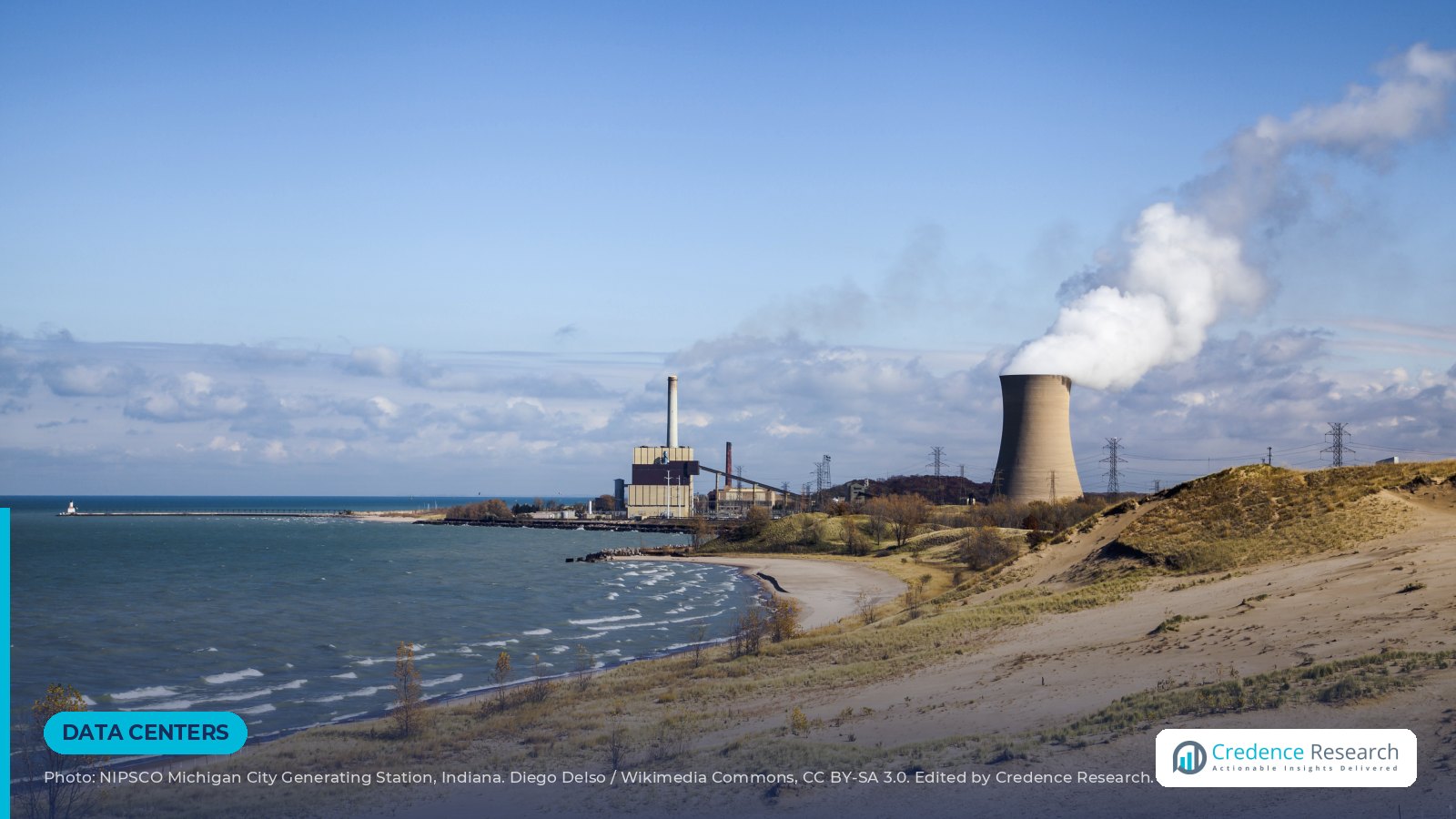
Image: NIPSCO's Michigan City Generating Station on Lake Michigan, Indiana, by Diego Delso via Wikimedia Commons, CC BY-SA 3.0. Cropped and edited by Credence Research.

About the Author

Senior News Editor at Credence Research Inc