
DOE puts $50 million in defense funds behind 290 MW Appalachian Power grid upgrade
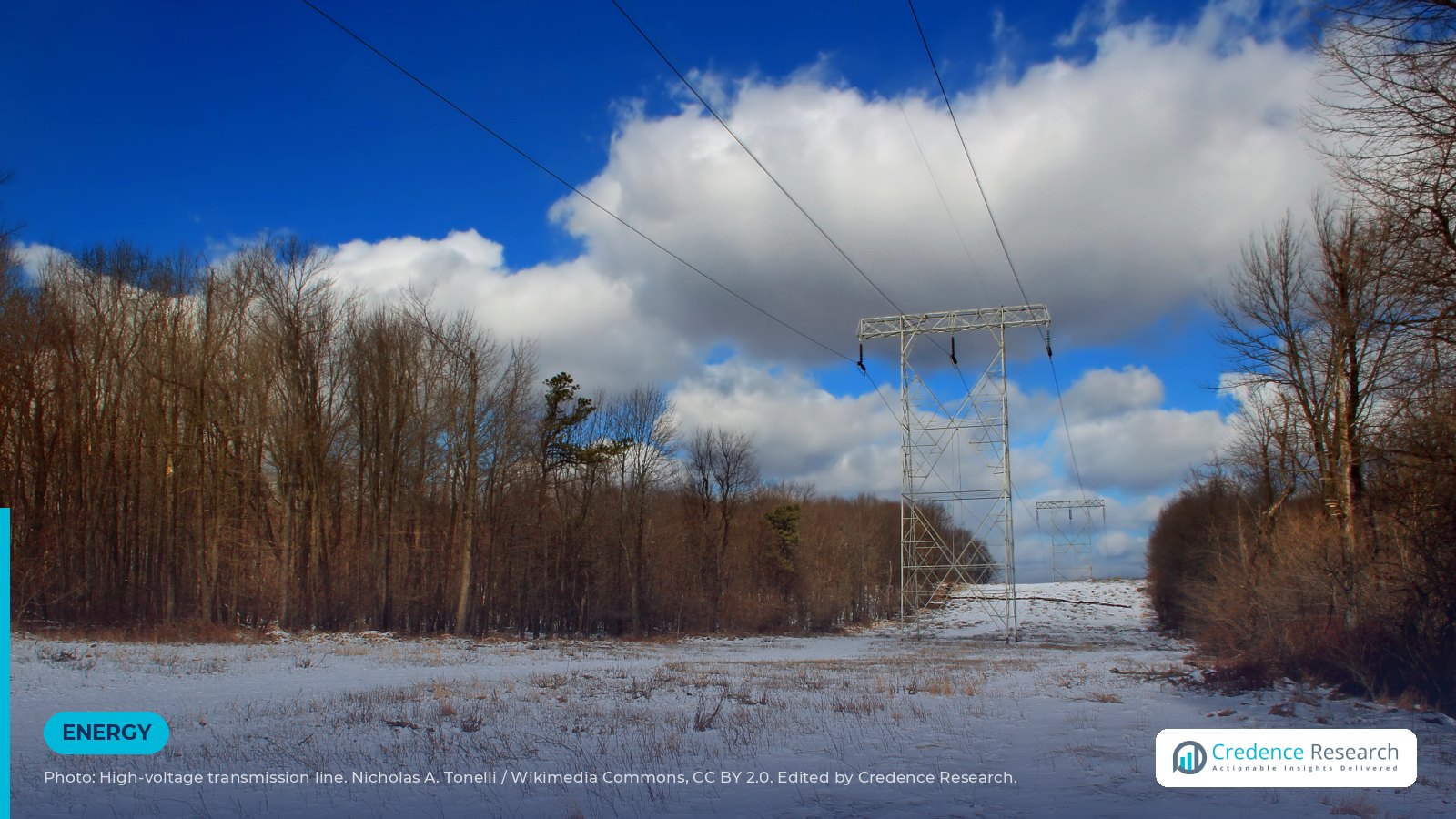
The U.S. Department of Energy said Oct. 16, 2026, that it will put up to $50 million in Defense Production Act funding behind a Virginia and West Virginia transmission project designed to squeeze roughly 290 megawatts of extra capacity out of existing power lines. Energy Secretary Chris Wright announced the award at an Appalachian Power substation in Lynchburg, Virginia, tying the defense statute's grid authority directly to upgrades on a utility's existing wires rather than new rights-of-way.
Key developments
- DOE selected the "Grid Enhancing Technologies for Virginia & West Virginia Large Load Growth" project, led by Virginia Energy with Appalachian Power, Potomac Edison and regional partners, for up to $50 million in DPA funds.
- The 48-month project pairs advanced reconductoring with Dynamic Line Rating on existing transmission corridors and is expected to add about 290 MW of capacity across Appalachian Power's Virginia system.
- DOE said the approach can deliver added capacity one to four years faster than conventional transmission upgrades.
- The money comes from $1 billion appropriated under the Working Families Tax Cut law for energy projects deemed critical to national security, under Presidential Determination No. 2026-10.
- Cardinal News reported that Appalachian Power will receive $40 million of the total and will match the federal grant with its own investment.
How the technology works
Reconductoring replaces the wires on an existing transmission line with advanced conductors, typically built around composite or high-temperature cores, that can carry more current without sagging beyond safe clearances. Because the towers and right-of-way already exist, the work usually avoids the multiyear siting and permitting fights that slow new lines. Dynamic Line Rating takes a software route to the same goal. Sensors measure conductor temperature, wind speed and other conditions so operators can run a line closer to its real-time thermal limit instead of a conservative static rating set for hot, still weather.
According to Cardinal News, the plan calls for rebuilding about 14 miles of Lynchburg-area line with new wires and installing line-monitoring sensors on four transmission lines in western Virginia. Appalachian Power's project page for the New London-Otter Transmission Line Rebuild, in Bedford and Campbell counties, lists construction from summer 2028 through summer 2030, with steel monopoles and lattice towers averaging about 85 feet tall. Because a dynamic rating rises and falls with weather, the 290 MW figure should be read as an expected planning value rather than a fixed nameplate number.
Industry implications
The award signals that federal grid policy now treats existing wires as a strategic asset. In its release, DOE leaned on Presidential Determination No. 2026-10, which classifies transmission lines and conductors, substations, and power-control and protection equipment as essential to national defense. Katie Jereza, assistant secretary for the Office of Electricity, framed the project as a case for making better use of lines already in the ground, a message aimed squarely at utilities weighing slower greenfield projects.
For utilities, the practical draw is speed. Large-load requests, primarily from data centers, are arriving faster than new high-voltage lines can be planned, permitted and built. Appalachian Power's regulatory filings describe that demand as "explosive," according to Cardinal News. Grid-enhancing technologies offer an interim path to connect load while longer-term projects move through review. The DOE award also gives regulators and ratepayer advocates a concrete test of whether federal cost-sharing can lower what customers ultimately pay for capacity additions.
Competitive and supply chain implications
Federal dollars directed specifically at reconductoring and line sensors are a direct demand signal for suppliers of advanced composite-core conductors, line-monitoring hardware and the analytics software that converts sensor readings into operating limits. Those product categories have been niche relative to conventional aluminum conductor steel-reinforced cable, and steady public funding could help them scale manufacturing and shorten lead times. The presidential determination's inclusion of conductors and protection equipment also opens the door to DPA support further up the supply chain, not only at the utility level.
The award also raises competition among utilities for a limited pool of federal money. DOE has been running several grid programs in parallel. Tennessee Lookout reported that on Oct. 13 the agency awarded the Tennessee Valley Authority $250 million under the separate Grid Resilience and Innovation Partnerships program for 84 transmission and distribution projects. Utilities with shovel-ready corridor upgrades, clean engineering studies and state partners willing to lead applications are positioned to capture the next rounds, while those relying solely on greenfield lines may wait longer.
Regional implications
Appalachian Power, a subsidiary of American Electric Power, serves about 540,000 customers in western Virginia, according to Cardinal News, and its territory sits within the PJM Interconnection grid region. Brian Abraham, Appalachian Power's president and chief operating officer, said at the event that the company would consider such investments without federal support but that the grant lowers costs passed to customers, the outlet reported. Rep. John McGuire said parts of the existing grid are 40 to 70 years old.
The timing intersects with a live rate case. Appalachian Power asked Virginia regulators in May for $61 million in additional annual revenue, and a settlement now before the State Corporation Commission would freeze residential rates for a year, Cardinal News reported, with public hearings set to begin Oct. 19. Potomac Edison's role extends the project's reach into West Virginia, although DOE did not specify how much of the 290 MW would serve that state.
Credence Research analysis
The Appalachian Power award is small in dollar terms, but its structure matters more than its size. By routing defense-production authority into reconductoring and dynamic ratings, DOE is placing capacity uplift on existing corridors in the same strategic category as new power plants. That reframing could make grid-enhancing technologies a default first step in utility planning for large loads instead of an afterthought, especially in constrained regions such as PJM where interconnection queues and siting disputes stretch timelines for years.
The open questions are execution and transparency. DOE has not published the specific corridors or a firm split of the 290 MW between reconductoring and Dynamic Line Rating, and Appalachian Power's own schedule for the New London-Otter rebuild extends to 2030, toward the outer edge of the four-year window DOE cited. Regulators will likely want those details before approving any cost recovery for the utility's share. If the project delivers on time, it gives other utilities and state energy offices a working template for pairing federal security funding with private capital to connect new load faster.
What comes next
- DOE and Virginia Energy are expected to negotiate final award terms, scope and schedule for the 48-month project.
- Virginia's State Corporation Commission opens public hearings on Appalachian Power's rate request on Oct. 19, 2026.
- Construction on the New London-Otter rebuild is scheduled to start in summer 2028 and finish by summer 2030, per Appalachian Power.
- Further awards from the $1 billion DPA energy appropriation are likely as DOE works through national security energy projects.
- Watch for DOE or the utility to publish corridor-level capacity figures for the reconductoring and Dynamic Line Rating segments.
Sources
- U.S. Department of Energy: Virginia and West Virginia transmission project to receive Defense Production Act funding
- Appalachian Power: New London-Otter Transmission Line Rebuild Project
- Cardinal News: U.S. energy secretary announces electric grid upgrades across parts of APCo's service area
- Tennessee Lookout: TVA gets $250 million from U.S. Department of Energy for grid upgrades
Image: High-voltage transmission line, by Nicholas A. Tonelli via Wikimedia Commons, CC BY 2.0. Cropped and edited by Credence Research.
.jpg)
About the Author

Senior News Editor at Credence Research Inc