
| REPORT ATTRIBUTE | DETAILS |
|---|---|
| Historical Period | 2020-2023 |
| Base Year | 2024 |
| Forecast Period | 2025-2032 |
| Coconut Wax Candles Market Size 2024 | USD353.93 million |
| Coconut Wax Candles Market, CAGR | 5.83% |
| Coconut Wax Candles Market Size 2032 | USD556.77 million |
Market Overview
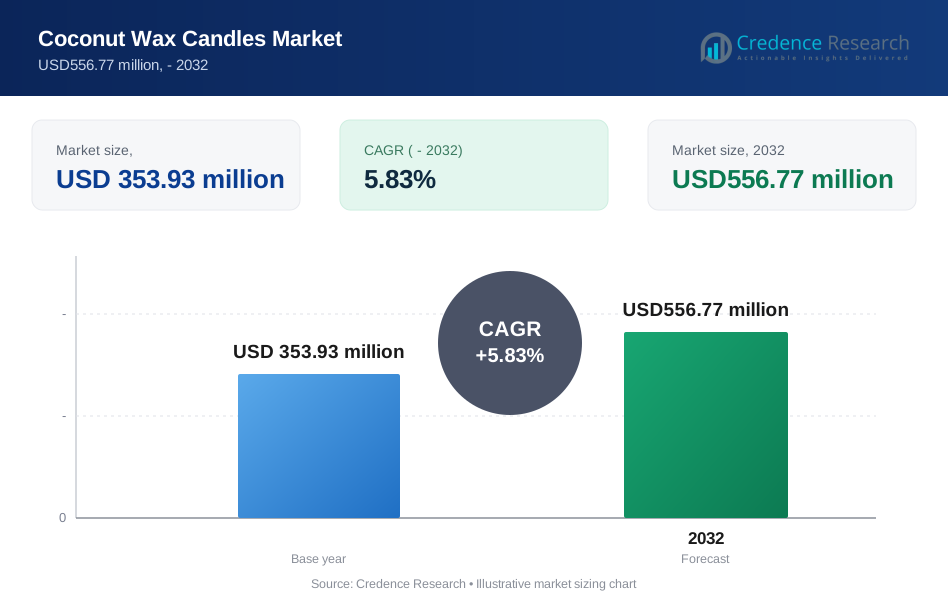
The Global Coconut Wax Candles Market is projected to grow from USD353.93 million in 2024 to an estimated USD556.77 million based on 2032, with a compound annual growth rate (CAGR) of 5.83% from 2025 to 2032. This growth reflects increasing consumer demand for eco-friendly and sustainable alternatives to traditional paraffin-based candles.
The market is primarily driven by growing awareness regarding the health hazards of conventional candles and increasing preference for plant-based wax alternatives. Consumers are actively seeking natural products that align with clean living and green lifestyles. Additionally, trends such as home décor personalization and gifting have propelled demand for premium scented candles. Innovations in fragrance combinations, packaging aesthetics, and eco-conscious branding continue to shape purchasing behavior, especially among younger demographics and urban dwellers.
Geographically, North America holds a dominant share in the global coconut wax candles market, supported by high consumer spending and a strong presence of premium candle brands. Europe follows closely, driven by sustainability regulations and heightened eco-awareness. The Asia Pacific region is emerging as a promising market due to rapid urbanization and a growing middle class. Key players operating in the market include The Yankee Candle Company, P.F. Candle Co., Keap Candles, Lulu Candles, and Eco Candle Co., all of which focus on clean-label formulations and artisanal production methods.
Market Insights
- The global coconut wax candles market is projected to grow from USD353.93 million in 2024 to USD556.77 million by 2032, driven by increasing demand for sustainable and eco-friendly home products.
- Rising consumer preference for natural, plant-based products due to health and environmental concerns is a key driver for market growth, particularly in the wellness and home décor sectors.
- High production costs associated with coconut wax compared to traditional paraffin wax and limited raw material availability may challenge widespread market adoption, particularly in price-sensitive regions.
- North America holds the largest market share, supported by strong consumer spending, high demand for premium products, and a focus on eco-conscious living.
- Europe is experiencing steady growth due to stringent sustainability regulations and a strong preference for clean-burning, eco-friendly products, with key demand from eco-aware consumers.
- The Asia Pacific region is emerging as a high-growth market driven by rapid urbanization, rising disposable incomes, and the adoption of Western home décor trends, expanding coconut wax candle usage.
- Increasing product innovation in fragrances, personalized designs, and sustainable packaging is shaping consumer preferences, with more brands focusing on artisanal and eco-conscious offerings.
Report Scope
This report segments the Global Coconut Wax Candles Market as follows:
Market Drivers
Rising Consumer Awareness Toward Clean and Sustainable Living
One of the most significant drivers of the global coconut wax candles market is the growing consumer shift toward clean and sustainable living. As awareness of environmental issues and health-related concerns continues to rise, consumers are becoming increasingly conscious of the products they use in their homes. Coconut wax candles, being plant-based, biodegradable, and free from toxins such as paraffin, appeal to health-conscious buyers who seek cleaner alternatives. Unlike paraffin candles, which are derived from petroleum and emit harmful substances like toluene and benzene when burned, coconut wax is a renewable resource known for its clean-burning qualities. This aligns with the broader movement toward sustainable consumption, where individuals actively avoid synthetic ingredients and opt for eco-friendly options. Moreover, the minimal environmental impact of coconut cultivation, which often utilizes already-available resources without deforestation, enhances the market appeal of these candles. For instance, studies indicate that coconut wax candles produce significantly less soot compared to paraffin-based alternatives, making them a preferred choice for indoor air quality. As a result, both ethical considerations and personal well-being are encouraging customers to make the switch to coconut wax candles, thereby accelerating market growth.
Expanding Demand from the Wellness and Aromatherapy Industry
The increasing popularity of wellness practices and aromatherapy has significantly contributed to the demand for coconut wax candles. These candles are commonly used in therapeutic environments due to their excellent scent throw, slow burn rate, and compatibility with essential oils. As mental health, mindfulness, and holistic healing become more central to consumer lifestyles, candles are no longer seen merely as decorative items-they are integral to creating calming, sensory-enhancing spaces. Coconut wax’s ability to retain and evenly distribute fragrance oils makes it ideal for use in spas, yoga studios, meditation centers, and at-home relaxation setups. For instance, wellness brands have reported a rise in demand for coconut wax candles due to their superior fragrance retention and slow-burning properties. In addition, wellness influencers, self-care brands, and lifestyle blogs have promoted the use of natural candles for emotional and psychological well-being, thereby increasing their appeal. The demand is further strengthened by the rise of natural beauty and wellness subscription boxes, which often include coconut wax candles as part of curated self-care offerings. This convergence of wellness and home ambience trends plays a vital role in sustaining the long-term growth of the coconut wax candles market.
Growth in Premium Home Décor and Gifting Segments
Another major growth driver is the expansion of the premium home décor and gifting segments, where coconut wax candles have positioned themselves as high-quality, artisanal products. Consumers are increasingly looking for unique, handcrafted goods that enhance home aesthetics and deliver an experiential value. Coconut wax candles, often blended with luxurious essential oils and presented in aesthetically pleasing containers, are perceived as lifestyle products rather than mere functional items. Their popularity has grown during festive seasons, weddings, and special occasions as they offer a blend of sophistication, environmental responsibility, and sensory pleasure. The gifting trend has also been fueled by e-commerce platforms that promote eco-conscious, niche brands to a wider audience. Furthermore, customization options such as personalized scents, packaging, and branding are helping manufacturers cater to the individual tastes of consumers. This personalization trend is particularly influential among millennials and Gen Z consumers who prioritize meaningful and sustainable gift choices. As disposable incomes rise and consumers seek premium experiences at home, the demand for coconut wax candles as aspirational products continues to surge.
Product Innovation and Branding by Artisanal and Independent Manufacturers
Innovative product development and branding strategies by small- and medium-sized enterprises (SMEs) and artisanal brands have played a crucial role in market expansion. Independent manufacturers have capitalized on the growing demand for eco-friendly home products by offering unique candle lines that emphasize transparency, natural ingredients, and small-batch production. These brands often highlight the benefits of coconut wax over traditional waxes, promoting them as cleaner, longer-burning, and better for scent diffusion. Social media marketing, storytelling, and influencer collaborations have helped such brands build loyal customer bases and increase product visibility. Many have leveraged sustainability certifications, cruelty-free labels, and minimalist packaging to resonate with modern consumers who prioritize authenticity and environmental ethics. In addition, the growing popularity of DIY candle-making kits featuring coconut wax is engaging consumers on a participatory level, boosting demand for raw materials and ready-made products alike. These niche but influential players have helped diversify product offerings and keep innovation alive in a market that might otherwise be dominated by large-scale manufacturers. The vibrancy of this artisanal segment continues to push market boundaries and introduce novel uses, formats, and fragrances into the coconut wax candles landscape.
Market Trends
Growing Preference for Plant-Based and Toxin-Free Candle Ingredients
Consumers are increasingly prioritizing health and sustainability, leading to a pronounced shift toward plant-based candle formulations. Coconut wax, derived from the meat of coconuts, is favored for its natural origin and absence of harmful chemicals such as paraffin, phthalates, and synthetic dyes. This trend reflects a broader lifestyle movement where consumers reject petroleum-derived products in favor of clean-label alternatives. For instance, in 2024, leading candle manufacturers invested over $200 million in research and development to enhance coconut wax formulations for mass-market applications. Health-conscious buyers, particularly those with respiratory sensitivities, prefer coconut wax due to its ability to burn cleanly and emit less soot, thereby improving indoor air quality. This preference is further reinforced by certifications such as “vegan,” “cruelty-free,” and “non-toxic,” which elevate brand credibility. Manufacturers are responding by emphasizing ingredient transparency and sourcing ethics in product labeling and marketing. As awareness continues to grow, retailers are dedicating more shelf space to natural candles, and e-commerce platforms are highlighting coconut wax variants in their eco-conscious product sections. This strong preference for natural, sustainable, and safe alternatives is expected to solidify coconut wax candles’ position as a mainstream product in the global home fragrance market.
Rising Demand for Eco-Friendly Packaging and Minimalist Aesthetics
Sustainability concerns are not limited to candle ingredients; they now extend to packaging. Consumers are actively seeking coconut wax candles that feature recyclable, biodegradable, or reusable packaging materials. This shift is driven by growing environmental awareness and a desire to reduce plastic waste. For instance, manufacturers have introduced biodegradable packaging solutions, including compostable labels and recycled paper boxes, with investments exceeding $150 million in sustainable packaging initiatives. In response, manufacturers are adopting glass jars, metal tins, bamboo lids, compostable labels, and recycled paper boxes to meet consumer expectations. Additionally, minimalist and neutral-toned aesthetics are trending across product lines, resonating with modern interior design themes. Simple yet elegant packaging allows products to seamlessly blend into various home décors, enhancing their appeal as lifestyle accessories. The convergence of eco-conscious design and visual sophistication has transformed coconut wax candles into popular items not only for personal use but also for gifting and décor. Branding strategies often combine minimalist visuals with storytelling about sustainable sourcing, further strengthening brand identity and emotional connection with the customer. This trend underscores the need for candle makers to rethink every aspect of their product-from wax composition to outer packaging-to stay competitive in a market where visual and ethical appeal are equally influential.
Increased Market Penetration through D2C and E-Commerce Channels
Direct-to-consumer (D2C) and e-commerce models are significantly reshaping how coconut wax candles reach global audiences. With the rise of online retail and the preference for personalized shopping experiences, independent brands and small businesses are leveraging platforms like Shopify, Etsy, and Amazon to bypass traditional retail limitations. These platforms provide an ideal space to showcase artisanal craftsmanship, natural ingredients, and sustainable values-all attributes that resonate with eco-conscious buyers. Social media marketing, influencer collaborations, and content-driven branding further amplify reach and engagement. Instagram and TikTok, in particular, have become vital tools for showcasing candle-making processes, aesthetic packaging, and customer reviews, building trust and transparency. Subscription boxes and curated wellness kits featuring coconut wax candles are also gaining traction, encouraging repeat purchases and customer loyalty. E-commerce provides flexibility in pricing, customization, and geographic expansion, enabling brands to adapt quickly to consumer feedback and market shifts. As a result, the digital retail ecosystem continues to fuel innovation, accessibility, and global penetration of coconut wax candles, making it a key trend shaping the future of this market.
Expansion of Customization and Scent Personalization Offerings
Personalization is becoming a defining factor in consumer purchasing decisions, and the coconut wax candles market is adapting by offering customized scents, packaging, and branding experiences. Customers now seek products that reflect their identity, mood, and lifestyle, leading brands to develop tailor-made fragrance blends and label designs. From monogrammed jars to scent profiles selected via online quizzes, personalization creates a sense of ownership and emotional connection. This trend is especially prominent in the gifting segment, where bespoke candles are popular for weddings, corporate gifts, and holidays. Some brands even offer interactive experiences, such as virtual candle-making workshops or in-store scent creation stations, to deepen consumer involvement. Additionally, seasonal and mood-based candle collections-such as those inspired by wellness goals or zodiac signs-have emerged as high-performing product lines. This expansion of customization not only enhances customer satisfaction but also encourages higher price points and brand loyalty. As competition intensifies, personalization will remain a strategic tool for differentiation and market retention in the coconut wax candles industry.
Market Challenges
High Production Costs and Limited Raw Material Availability
One of the primary challenges facing the global coconut wax candles market is the relatively high production cost compared to conventional paraffin or soy wax alternatives. Coconut wax requires a complex hydrogenation process and is often blended with other plant-based waxes to achieve the desired consistency, scent throw, and burn time. These additional processing requirements contribute to higher manufacturing expenses. For instance, coconut wax candles are recognized for their clean burn and superior scent throw, but production costs remain elevated due to specialized processing techniques. Moreover, coconuts are predominantly grown in specific tropical regions, such as Southeast Asia and parts of the Pacific, leading to a limited and geographically constrained raw material supply. This reliance on region-specific agricultural output makes the supply chain vulnerable to climate disruptions, labor shortages, and geopolitical factors that can affect coconut farming and export logistics. As a result, fluctuations in raw material prices and transportation costs often impact profit margins and pricing flexibility. Smaller manufacturers and artisanal candle makers, who form a significant portion of this market, may struggle to maintain consistent production at scale while offering competitive prices. This cost-pressure challenge continues to limit mass adoption and poses a barrier to expanding into cost-sensitive consumer segments.
Low Market Penetration in Price-Sensitive and Developing Regions
While coconut wax candles are gaining popularity in developed markets, their penetration remains limited in price-sensitive and emerging economies. High retail prices associated with premium positioning and sustainable attributes often deter consumers in regions where affordability takes precedence over environmental considerations. The luxury and niche status of coconut wax candles restricts their visibility and accessibility in mainstream retail channels across such markets. Additionally, there is limited consumer awareness regarding the environmental and health benefits of coconut wax, leading to a preference for more familiar and budget-friendly alternatives like paraffin or blended wax candles. Without targeted marketing efforts and localized pricing strategies, expanding the global reach of coconut wax candles will remain a significant challenge.
Market Opportunities
Expansion into Wellness and Therapeutic Applications
The growing intersection of home fragrance and wellness presents a substantial opportunity for coconut wax candle manufacturers. With rising global interest in self-care, stress relief, and holistic well-being, consumers are increasingly integrating aromatherapy into their daily routines. Coconut wax, known for its superior scent retention and clean burn, provides an ideal base for essential oil-infused candles aimed at therapeutic use. This aligns with trends in meditation, yoga, and spa-like home environments, where consumers seek calming, natural solutions for emotional balance and relaxation. Brands can leverage this by developing product lines specifically designed for wellness-focused consumers, featuring functional scents like lavender for sleep, eucalyptus for clarity, or citrus for energy. Collaborations with wellness influencers and mental health campaigns can further boost product relevance and demand in this expanding segment.
Growth Potential in Customization and Gifting Segments
The rising demand for personalized products and thoughtful gifting offers a lucrative opportunity for innovation within the coconut wax candles market. Customized fragrance options, engraved packaging, and themed collections are increasingly popular among consumers seeking meaningful and unique gift items. As e-commerce platforms grow and online personalization tools become more accessible, brands can tap into this opportunity to enhance customer engagement and command premium pricing. Seasonal launches, limited-edition collaborations, and curated gift boxes featuring coconut wax candles can attract new audiences and increase repeat purchases. This trend also enables niche players and artisanal brands to differentiate themselves, build brand loyalty, and scale through creative offerings tailored to individual consumer preferences.
Market Segmentation Analysis
By Type
The Global Coconut Wax Candles Market is segmented into scented and unscented coconut wax candles. Scented candles dominate the market share due to their widespread use in aromatherapy, relaxation, and home ambience enhancement. These candles are often infused with essential oils or natural fragrances, making them highly popular among wellness-conscious consumers. Unscented candles, though occupying a smaller portion of the market, cater to users who prefer a subtle or neutral environment, particularly in settings such as dining spaces, religious ceremonies, or allergy-sensitive households. The scented variant is expected to maintain its dominance owing to the rising demand for multi-sensory home experiences.
By Application
In terms of application, the market is categorized into residential, commercial, and others. The residential segment holds a significant share due to the growing popularity of home décor and personal wellness products. Consumers use coconut wax candles for creating soothing environments, especially during leisure or self-care routines. The commercial segment, which includes spas, wellness centers, hotels, and restaurants, is also witnessing rapid growth as businesses aim to elevate customer experiences through ambient lighting and therapeutic scents. The “others” category includes ceremonial and religious applications, where candles hold traditional and spiritual importance.
Segments
Based on Type
- Scented Coconut Wax Candles
- Unscented Coconut Wax Candles
Based on Application
- Residential
- Commercial
- Others
Based on Form
- Jar Candles
- Pillar Candles
- Tealight Candles
- Votive Candles
Based on Distribution Channel
- Online
- Offline
Based on Region
- North America
- U.S.
- Canada
- Mexico
- Europe
- UK
- France
- Germany
- Italy
- Spain
- Russia
- Belgium
- Netherlands
- Austria
- Sweden
- Poland
- Denmark
- Switzerland
- Rest of Europe
- Asia Pacific
- China
- Japan
- South Korea
- India
- Australia
- Thailand
- Indonesia
- Vietnam
- Malaysia
- Philippines
- Taiwan
- Rest of Asia Pacific
- Latin America
- Brazil
- Argentina
- Peru
- Chile
- Colombia
- Rest of Latin America
- Middle East
- UAE
- KSA
- Israel
- Turkey
- Iran
- Rest of Middle East
- Africa
- Egypt
- Nigeria
- Algeria
- Morocco
- Rest of Africa
Regional Analysis
North America (36.4%)
North America dominates the global coconut wax candles market, holding a market share of 36.4%. The region's leadership is driven by strong consumer awareness regarding sustainable and non-toxic products, as well as the high demand for wellness and home fragrance items. The United States contributes significantly to regional growth due to its established culture of candle use in everyday life, from home décor to aromatherapy. Moreover, the presence of prominent brands, a robust e-commerce infrastructure, and increasing demand for premium, plant-based products have sustained the market's expansion. Canada also supports regional growth with its increasing adoption of eco-friendly lifestyles and rising interest in artisanal candles.
Europe (28.1%)
Europe holds the second-largest market share at 28.1%, supported by strong regulatory frameworks around sustainability and chemical safety. European consumers place high value on environmental responsibility and product transparency, which aligns well with the clean-burning and biodegradable characteristics of coconut wax candles. Countries like Germany, France, and the United Kingdom are major contributors, driven by growing demand for organic and plant-based lifestyle products. Retailers across the region are increasingly stocking coconut wax candles to meet consumer expectations, and local brands are emphasizing eco-friendly packaging and sourcing certifications to strengthen their market positioning.
Key players
- Yankee Candle
- Willow and Thyme Home Fragrance
- Mightily Made
- Authentic House
- Shay and Company
Competitive Analysis
The global coconut wax candles market is characterized by the presence of both established brands and emerging artisanal players, creating a competitive yet dynamic landscape. Yankee Candle leads the market with a broad product portfolio, strong distribution networks, and consistent brand recognition. The company’s focus on innovation, scent variety, and seasonal collections helps maintain its competitive edge. In contrast, brands such as Willow and Thyme Home Fragrance, Mightily Made, and Authentic House are gaining traction by emphasizing sustainability, small-batch production, and personalized customer experiences. These players appeal to eco-conscious and premium-oriented consumers. Shay and Company differentiates itself by providing high-quality candle-making supplies and natural waxes, supporting both independent manufacturers and DIY enthusiasts. Overall, the competition is intensifying as consumer demand for clean-label, aesthetically appealing, and environmentally friendly candles continues to grow. Strategic partnerships, product customization, and direct-to-consumer engagement are becoming critical to securing market share and long-term growth.
Recent Developments
- In March 2023, Yankee Candle introduced the "Coconut Beach" fragrance in their Signature Collection, utilizing a soy-wax blend to provide a clean burn and tropical scent experience.
- In January 2025, Willow and Thyme Home Fragrance launched a monthly wax melt subscription service, offering subscribers two packs of their hand-poured soy wax melts each month.
- In 2024, Mightily Made expanded its coconut wax candle collection with new scents such as Tropical Santal, Honey Pine, and Pumpkin Chai, all handcrafted using all-natural coconut wax blends.
- In April 2024, Authentic House detailed its use of sustainable coconut and soy wax blends in candle production, emphasizing eco-friendly practices and sourcing coconuts from family farms.
- In March 2024, Shay and Company introduced the TitanWax 5470 Coconut Soy Apricot blend, designed for smooth, glossy candles.
Market Concentration and Characteristics
The Global Coconut Wax Candles Market exhibits a moderately fragmented structure, characterized by a mix of established multinational brands and a growing number of small-to-medium artisanal manufacturers. While leading players such as Yankee Candle command significant market presence due to their extensive distribution networks and brand recognition, a substantial portion of the market is driven by niche, eco-conscious brands catering to consumers seeking natural, handcrafted, and sustainable products. The market is highly product-driven, with differentiation based on fragrance innovation, packaging aesthetics, and ethical sourcing. As consumer preferences increasingly shift toward clean-label and environmentally friendly alternatives, the market continues to attract new entrants, intensifying competition. The low entry barriers, coupled with rising demand for personalized and wellness-focused products, contribute to the dynamic and evolving nature of this market.
Report Coverage
The research report offers an in-depth analysis based on Type, Application, Form, Distribution Channel and Region. It details leading market players, providing an overview of their business, product offerings, investments, revenue streams, and key applications. Additionally, the report includes insights into the competitive environment, SWOT analysis, current market trends, as well as the primary drivers and constraints. Furthermore, it discusses various factors that have driven market expansion in recent years. The report also explores market dynamics, regulatory scenarios, and technological advancements that are shaping the industry. It assesses the impact of external factors and global economic changes on market growth. Lastly, it provides strategic recommendations for new entrants and established companies to navigate the complexities of the market.
Future Outlook
- The global coconut wax candles market is expected to maintain steady growth, driven by increasing demand for eco-friendly and sustainable home fragrance products.
- As disposable incomes rise in Asia Pacific and Latin America, coconut wax candles are likely to gain traction among middle-class consumers seeking premium lifestyle products.
- Manufacturers will increasingly align product development with wellness trends, incorporating aromatherapy-focused scents and functional benefits like stress relief and mood enhancement.
- Brands are projected to emphasize sustainability credentials such as vegan, cruelty-free, and biodegradable labels to appeal to environmentally conscious consumers.
- D2C strategies will become more prominent as brands leverage online platforms and social media to build stronger customer relationships and enhance personalization.
- Future product lines will likely showcase unique scent profiles, minimalist packaging, and biodegradable containers to meet evolving aesthetic and environmental preferences.
- Recurring subscription services offering curated coconut wax candles are expected to grow, fostering brand loyalty and enhancing consumer convenience.
- Brands may incorporate digital technologies such as QR-coded scent experiences or app-based personalization for added consumer engagement and brand differentiation.
- Retailers are anticipated to expand private-label offerings, while boutique brands will continue to flourish by targeting niche segments and promoting artisanal quality.
- Companies will likely pursue partnerships with lifestyle, wellness, and home décor brands to broaden market reach and introduce co-branded candle collections globally.
Request a Free Sample
Fill in your details and we'll send you a free sample report.
- Sample data tables & charts
- Research methodology
Need a Custom Version of This Report?
Tailor the scope, geography, or segments to your exact requirements.
- Custom geography or segment scope
- Direct access to our analyst team
Frequently Asked Questions
What was the market size of the Global Coconut Wax Candles Market in 2023, and what is its forecast for 2032 along with the CAGR?
What factors are driving the growth of the coconut wax candles market?
How are consumer trends influencing
Who are the key players in the Global Coconut Wax Candles Market?
Table of Content
Chapter 1. Report Introduction
- 1.1 Report Description & Purpose
- 1.1.1 Report Title & Market Definition
- 1.1.2 Unique Selling Propositions (USP) & Key Differentiators
- 1.1.3 Value Proposition for Stakeholders
- 1.2 Research Objectives
- 1.2.1 Market Sizing Objectives (Volume & Revenue) (Volume Where Applicable)
- 1.2.2 Segmentation Objectives
- 1.2.3 Competitive Intelligence Objectives
- 1.2.4 Forecast & Scenario Objectives
- 1.3 Report Scope
- 1.3.1 Coconut Wax Candles Scope – Segments & Subsegments Covered
- 1.3.2 Geographic Scope – Regions & Countries Covered
- 1.3.3 Historical Period, Base Year & Forecast Period (the historical period; forecast to 2032)
- 1.3.4 Inclusions & Exclusions
- 1.4 Industry Classification & Applicable Codes
- 1.5 Currency, Measurement Units & Valuation Basis
- 1.6 Target Stakeholders
- 1.7 Limitations & Assumptions
Chapter 2. Executive Summary
- 2.1 Global Coconut Wax Candles Market Snapshot
- 2.1.1 Market Size – Historical (the historical period) & Forecast (2032) (base year: USD 353.93 million → 2032: USD556.77 million)
- 2.1.2 Volume & Revenue – Global Totals (Volume Where Applicable)
- 2.1.3 Key Market Highlights – Top Five Facts
- 2.2 Coconut Wax Candles Market Segmentation Snapshot
- 2.2.1 Market Split by Region – vs. 2032
- 2.3 Competitive Snapshot
- 2.3.1 Top 10 Players by Revenue Share –
- 2.3.2 Top 10 Players by Volume Share – (Volume Where Applicable)
- 2.3.3 Recent Strategic Developments (18-Month Summary)
- 2.4 Key Investment Highlights & Strategic Conclusions
Chapter 3. Coconut Wax Candles Market Dynamics & Industry Analysis
- 3.1 Market Overview & Context
- 3.1.1 Coconut Wax Candles Market Position in the Broader Industry Value Chain
- 3.1.2 Demand Structure & Purchasing Dynamics
- 3.1.3 Market Maturity & Development Stage by Region
- 3.2 Coconut Wax Candles Market Drivers
- 3.3 Coconut Wax Candles Market Restraints & Challenges
- 3.4 Coconut Wax Candles Market Opportunities
- 3.5 Porter's Five Forces Analysis
- 3.5.1 Threat of New Entrants
- 3.5.2 Bargaining Power of Suppliers
- 3.5.3 Bargaining Power of Buyers
- 3.5.4 Threat of Substitutes
- 3.5.5 Competitive Rivalry – Intensity Assessment
- 3.6 Coconut Wax Candles Value Chain Analysis
- 3.6.1 Upstream – Key Inputs, Resources & Suppliers
- 3.6.1.1 Key Input/Resource 1
- 3.6.1.2 Key Input/Resource 2
- 3.6.1.3 Key Input/Resource 3
- 3.6.2 Midstream – Core Operations & Value Creation
- 3.6.2.1 Operating Model & Process Overview
- 3.6.2.2 Key Operating Locations & Capabilities by Company
- 3.6.3 Downstream – Market Channels & End Users
- 3.6.3.1 Direct Sales & Customer Engagement Channels
- 3.6.3.2 Indirect Sales, Intermediaries & Partner Channels
- 3.6.4 Value Chain Profitability Analysis
- 3.6.1 Upstream – Key Inputs, Resources & Suppliers
- 3.7 PESTEL Analysis
- 3.7.1 Political Factors
- 3.7.2 Economic Factors
- 3.7.3 Social Factors
- 3.7.4 Technological Factors
- 3.7.5 Environmental Factors
- 3.7.6 Legal Factors
- 3.8 Coconut Wax Candles Supply Chain Analysis
- 3.8.1 Critical Input & Resource Availability Risk Assessment
- 3.8.2 Supplier & Operational Concentration Risk (Geographic Exposure)
- 3.8.3 Supply & Service Disruption Impact Analysis
- 3.9 Regulatory & Policy Landscape
Note: The regulatory and policy landscape section covers regulations based on their applicability to the market, Coconut Wax Candles category, geography, and scope of the study. Only regulatory frameworks with a material impact on operations, compliance, trade, sustainability, or market access are analyzed in detail.
Chapter 4. Key Investment Pockets & Opportunity Analysis
- 4.1 Coconut Wax Candles Market Attractiveness Analysis
- 4.1.1 By Region – Investment Attractiveness Matrix (Market Size × CAGR)
- 4.2 Absolute Revenue Growth Opportunity
- 4.2.1 By Region – Absolute Revenue Growth Through 2032
- 4.3 Incremental Demand Opportunity
- 4.3.1 By Region – Incremental Demand Through 2032
- 4.3.2 Segment – Incremental Demand
- 4.4 Emerging Submarket Opportunity Deep Dive (Subject to Applicability)
- 4.5 Priority Market Opportunity Scorecards
- 4.5.1 United States
- 4.5.2 Europe
- 4.5.3 Asia
- 4.5.4 Middle East & Africa
Note: Priority market opportunity scorecards reflect the geographic scope and strategic relevance of the study. Listed markets are indicative and may be adapted to the industry.
Chapter 5. Coconut Wax Candles Cross-Border Trade & Market Access Analysis
- 5.1 International Trade & Cross-Border Activity Overview
- 5.1.1 Global Export Value by Country (the historical period)
- 5.1.2 Global Export Volume by Country (the historical period) (Volume Where Applicable)
- 5.1.3 Global Import Value by Country (the historical period)
- 5.1.4 Global Import Volume by Country (the historical period) (Volume Where Applicable)
- 5.1.5 Net Trade Balance by Country (the historical period)
- 5.2 Export Analysis – Segment
- 5.2.1 Category 1 (Applicable Classification Code)
- 5.2.2 Category 2 (Applicable Classification Code)
- 5.2.3 Category 3 (Applicable Classification Code)
- 5.2.4 Category 4 (Applicable Classification Code)
- 5.2.5 Category 5 (Applicable Classification Code)
- 5.3 Import Analysis – Segment
- 5.3.1 Category 1 (Applicable Classification Code)
- 5.3.2 Category 2 (Applicable Classification Code)
- 5.3.3 Category 3 (Applicable Classification Code)
- 5.3.4 Category 4 (Applicable Classification Code)
- 5.3.5 Category 5 (Applicable Classification Code)
- 5.4 Cross-Border Pricing & Transaction Benchmarks
- 5.4.1 Export Pricing – Segment & Country
- 5.4.2 Import Pricing – Segment & Source Country
- 5.4.3 Price Trends (the historical period)
- 5.5 Key Cross-Border Trade & Delivery Routes
- 5.5.1 Cross-Border Trade/Delivery Route 1
- 5.5.2 Cross-Border Trade/Delivery Route 2
- 5.5.3 Cross-Border Trade/Delivery Route 3
- 5.5.4 Cross-Border Trade/Delivery Route 4
- 5.5.5 Cross-Border Trade/Delivery Route 5
- 5.6 Trade Policy & Market Access Impact Assessment
- 5.6.1 Tariff & Non-Tariff Barriers
- 5.6.2 Regional Trade & Economic Integration Frameworks
- 5.6.3 Bilateral & Multilateral Trade Agreements
- 5.6.4 Cross-Border Operating, Licensing & Localization Requirements
Note: This chapter applies where cross-border trade or delivery is relevant to Coconut Wax Candles. Goods, services, and digital offerings are assessed using applicable classifications and transaction measures. Import-export volumes, trade balances, and route analyses are included only where meaningful to the market.
Chapter 6. Competitive Landscape & Company Benchmarking
- 6.1 Coconut Wax Candles Market Concentration & Structure
- 6.1.1 Herfindahl-Hirschman Index (HHI) – vs.
- 6.1.2 Leading, Mid-Sized & Emerging Player Structure
- 6.1.3 Global, Regional & Local Player Dynamics
- 6.2 Coconut Wax Candles Market Share Analysis –
- 6.2.1 Global Revenue Share by Company
- 6.2.2 Global Volume Share by Company (Volume Where Applicable)
- 6.2.3 Regional Revenue Share
- 6.2.4 Market Share Evolution ( vs. )
- 6.2.5 Company Market Share by Key Segment
- 6.2.6 Company Market Share by Customer Group
- 6.3 Operating Scale, Capacity & Infrastructure Analysis
- 6.3.1 Global Operating Scale & Supply Capacity
- 6.3.2 Resource Utilization & Operating Efficiency
- 6.3.3 Output, Service Delivery & Activity Metrics
- 6.3.4 Operating Footprint & Infrastructure Map
- 6.3.5 Planned Operational & Capacity Expansion
- 6.4 Coconut Wax Candles Competitive Benchmarking Matrix
- 6.4.1 Revenue, Growth, Profitability & Operating Metric Comparison
- 6.4.2 Channel Revenue Mix
- 6.4.3 Geographic Revenue Exposure
- 6.4.4 R&D Intensity
- 6.4.5 Sustainability Maturity
- 6.5 Strategic Developments in Coconut Wax Candles (Last 24 Months)
- 6.5.1 Mergers, Acquisitions & Divestments
- 6.5.2 New Products, Services & Solutions in Coconut Wax Candles
- 6.5.3 Operational & Infrastructure Expansions
- 6.5.4 Strategic Alliances, Joint Ventures & Partnerships
- 6.5.5 Distribution Expansion & Market Entry
- 6.5.6 Sustainability & ESG Initiatives
- 6.6 Competitive Strategy Mapping
- 6.6.1 Leader, Challenger, Follower & Niche Classification
- 6.6.2 Pricing Strategy Comparison
- 6.6.3 Channel Strategy Matrix
Note: Strategic developments are included based on their materiality and the availability of reliable information.
Chapter 7. Global Coconut Wax Candles Market – By Sales & Delivery Channel
- 7.1 Segment Overview
- 7.1.1 Volume & Revenue Split by Channel ( & 2032) (Volume Where Applicable)
- 7.1.2 Channel Mix Evolution (2032)
Chapter 8. Regional Market Analysis – Global Overview
- 8.1 Global Regional Overview
- 8.1.1 Regional Volume Share (Volume Where Applicable)
- 8.1.2 Regional Revenue Share
- 8.1.3 Regional Volume by Region (Volume Where Applicable)
- 8.1.4 Regional Revenue by Region
- 8.1.5 Regional Forecast Through 2032
- 8.2 Cross-Regional Segment Analysis
- 8.2.1 By Sales & Delivery Channel
- 8.2.2 By Competitive Positioning & Price Tier
Chapter 9. North America Coconut Wax Candles Market
- 9.1 United States
- 9.2 Canada
- 9.3 Mexico
Chapter 10. Europe Coconut Wax Candles Market
- 10.1 Germany
- 10.2 France
- 10.3 Italy
- 10.4 United Kingdom
- 10.5 Spain
- 10.6 Poland
- 10.7 Russia
- 10.8 Netherlands
- 10.9 Belgium
- 10.10 Sweden
- 10.11 Denmark
- 10.12 Norway
- 10.13 Rest of Europe
Chapter 11. Asia Pacific Coconut Wax Candles Market
- 11.1 China
- 11.2 India
- 11.3 Japan
- 11.4 South Korea
- 11.5 Thailand
- 11.6 Indonesia
- 11.7 Vietnam
- 11.8 Malaysia
- 11.9 Australia
- 11.10 Rest of Asia Pacific
Chapter 12. Latin America Coconut Wax Candles Market
- 12.1 Brazil
- 12.2 Argentina
- 12.3 Colombia
- 12.4 Chile
- 12.5 Rest of Latin America
Chapter 13. Middle East Coconut Wax Candles Market
- 13.1 Saudi Arabia
- 13.2 United Arab Emirates
- 13.3 Turkey
- 13.4 Israel
- 13.5 Iran
- 13.6 Rest of the Middle East
Chapter 14. Africa Coconut Wax Candles Market
- 14.1 South Africa
- 14.2 Egypt
- 14.3 Nigeria
- 14.4 Morocco
- 14.5 Rest of Africa
Chapter 15. Coconut Wax Candles Company Profiles
- 15.1 [Company 01]
- 15.1.1 Company Overview
- 15.1.2 Key Management Personnel
- 15.1.3 Products & Services Portfolio
- 15.1.4 Financial Performance
- 15.1.5 Key Market Focus & Geographic Presence
- 15.1.6 Recent Developments & Strategic Initiatives
Note: The company profile list is preliminary and may change based on research findings, market developments, data availability, and client requirements.
Chapter 16. Appendices
- Appendix A – List of Abbreviations & Acronyms
- Appendix B – Industry Classification Code Reference – Full Series
- Appendix C – Supply, Output & Operating Capacity Data Tables
- Appendix D – End-Use & Demand Base Tables
- Appendix E – Demand, Adoption & Usage Assumptions
- Appendix F – Pricing & Revenue Metric Reference Tables
- Appendix G – Company Operations & Infrastructure Database
- Appendix H – Cross-Border Trade & Activity Data Tables (Where Applicable)
- Appendix I – Regulatory Summary Tables
- Appendix J – Primary Research Participant List (Anonymized)
- Appendix K – Primary Research Questionnaire Framework
- Appendix L – Data Sources & Bibliography
- Appendix M – Market Size Divergence & Source Comparison
Chapter 17. Research Methodology
- 17.1 Research Framework & Philosophy
- 17.2 Secondary Research – Sources, Hierarchy & Data Extraction
- 17.3 Data Modeling – Bottom-Up & Top-Down Market Sizing
- 17.4 Primary Research – Stakeholder Framework, LOI & Sample Sizes
- 17.5 Forecast Methodology – Regression, Scenario & Sensitivity Analysis
- 17.6 Quality Control – Four-Layer Validation Framework
- 17.7 Limitations & Standard Assumptions
- 17.8 Disclaimer
