
| REPORT ATTRIBUTE | DETAILS |
|---|---|
| Historical Period | 2019-2022 |
| Base Year | 2023 |
| Forecast Period | 2024-2032 |
| DDoS Protection & Mitigation Security Market Size 2023 | USD 4,570.12 million |
| DDoS Protection & Mitigation Security Market, CAGR | 12.5% |
| DDoS Protection & Mitigation Security Market Size 2032 | USD 13,191.69 million |
Market Overview
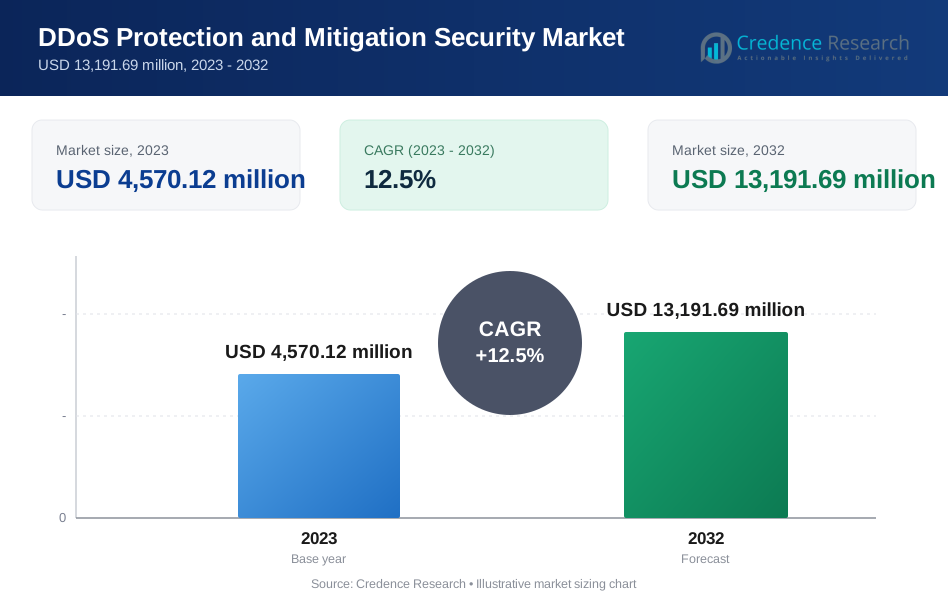
The global DDoS Protection & Mitigation Security Market is projected to grow from USD 4,570.12 million in 2023 to an estimated USD 13,191.69 million by 2032, with a compound annual growth rate (CAGR) of 12.5% from 2024 to 2032. The increasing frequency and sophistication of DDoS attacks across industries are driving the demand for enhanced protection and mitigation solutions.
Key drivers of the DDoS Protection & Mitigation Security Market include the rapid digitalization of businesses, increased reliance on cloud computing, and the rising prevalence of cyberattacks. The market is also influenced by trends such as the adoption of AI-driven security solutions, real-time threat detection, and the shift towards hybrid IT environments. Additionally, the growing focus on regulatory compliance and data protection is pushing organizations to invest in robust security measures.
Geographically, North America holds the largest market share, attributed to the presence of leading cybersecurity vendors and an increasing number of DDoS attacks. However, Asia-Pacific is expected to witness the highest growth during the forecast period due to the rapid digital transformation and rising cybersecurity concerns in emerging economies. Key players in the DDoS Protection & Mitigation Security Market include Cloudflare, Akamai Technologies, Arbor Networks, and Radware, among others, offering advanced security solutions to meet the growing demand.
Market Insights
- The global DDoS Protection & Mitigation Security Market is projected to grow from USD 4,570.12 million in 2023 to USD 13,191.69 million by 2032, driven by increasing cybersecurity threats.
- Key drivers include the rising frequency of DDoS attacks, rapid digital transformation, increased reliance on cloud computing, and growing adoption of AI-driven security solutions.
- High costs associated with advanced DDoS protection solutions and the complexity of securing multi-cloud and hybrid environments may hinder market growth for smaller organizations.
- North America holds the largest market share, with strong cybersecurity infrastructure and increasing DDoS attacks, while Asia-Pacific is expected to experience the highest growth rate.
- The integration of AI and machine learning into DDoS protection solutions is enhancing threat detection capabilities and driving demand for automated mitigation systems.
- With more industries going digital, the need for enhanced DDoS protection has become critical, as organizations seek to protect their networks and critical infrastructure.
- Government regulations and compliance requirements are pushing organizations to adopt comprehensive DDoS mitigation strategies, especially in sectors like BFSI and government.
Market Drivers
Increasing Frequency and Sophistication of DDoS Attacks
The rise in the frequency and complexity of Distributed Denial of Service (DDoS) attacks is a primary driver of the DDoS Protection & Mitigation Security Market. As businesses increasingly rely on digital operations and cloud computing, they face heightened risks from cyberattacks, particularly DDoS attacks that target websites, servers, and critical infrastructure. These attacks can cause significant financial losses, service disruptions, and reputational damage. Sophisticated attackers, including hacktivists, cybercriminals, and state-sponsored entities, now use advanced techniques to overwhelm networks with traffic, rendering traditional security measures ineffective. For instance, in 2024, a major e-commerce platform experienced a DDoS attack lasting over 50 hours during a peak shopping period, resulting in substantial financial losses and customer dissatisfaction. Such incidents highlight the growing demand for specialized solutions capable of defending against large-scale and advanced DDoS threats. With the ability to prevent or mitigate these attacks being vital for business continuity—especially for organizations reliant on online services for revenue generation—the need for robust DDoS protection solutions continues to grow. This trend underscores the urgency for businesses to adopt advanced security measures to safeguard their operations against increasingly sophisticated cyber threats.
Adoption of Cloud Computing and Digital Transformation
The widespread adoption of cloud computing and digital transformation is significantly driving the demand for DDoS protection and mitigation solutions. As organizations migrate operations to the cloud for scalability and flexibility, they also expose themselves to new cybersecurity vulnerabilities, including DDoS attacks. The proliferation of Internet of Things (IoT) devices further expands the attack surface, making industries such as healthcare, manufacturing, and retail more susceptible to these threats. For instance, a healthcare provider in 2024 reported a DDoS attack exploiting vulnerabilities in IoT medical devices, causing critical systems to go offline and delaying patient care. Such incidents emphasize the need for robust mitigation strategies to prevent operational disruptions. As businesses undergo digital transformation, ensuring that cloud-based infrastructure is secure against DDoS attacks becomes paramount. The seamless integration of protection solutions with cloud services is vital for maintaining security without compromising the benefits of digital transformation. Consequently, organizations are increasingly investing in specialized DDoS protection technologies to safeguard their operations while leveraging the advantages of cloud computing. This growing reliance on cloud-based systems continues to accelerate market growth as businesses prioritize cybersecurity resilience.
Regulatory and Compliance Requirements
Stringent regulatory and compliance frameworks are compelling organizations to adopt advanced DDoS protection solutions. Governments worldwide have implemented laws mandating businesses to safeguard critical infrastructure and sensitive data from cyber threats like DDoS attacks. For example, the European Union’s General Data Protection Regulation (GDPR) requires organizations to take necessary actions against such threats, while U.S. agencies like CISA provide guidelines for securing networks from cyberattacks. Non-compliance can lead to severe penalties and reputational damage. For instance, in 2024, a manufacturing company faced a DDoS attack that disrupted online operations and resulted in data breaches, leading to regulatory fines due to non-compliance with data protection laws. These regulations drive businesses across sectors such as finance, healthcare, and telecommunications to enhance cybersecurity strategies by adopting robust DDoS mitigation solutions. Adherence to compliance requirements not only protects organizations from legal consequences but also strengthens their overall cybersecurity posture. As awareness around data protection continues to grow, companies are prioritizing investments in advanced security measures to meet regulatory standards while mitigating risks associated with evolving cyber threats.
Integration of AI and Machine Learning in Security Solutions
The integration of Artificial Intelligence (AI) and Machine Learning (ML) into DDoS protection solutions is revolutionizing cybersecurity by enabling real-time threat detection and response. AI-powered systems analyze traffic patterns, identify anomalies, and deploy mitigation strategies automatically, making them highly effective against sophisticated attacks that evolve rapidly. Unlike traditional reactive measures based on predefined rules, AI-driven solutions proactively adapt to new attack patterns before they reach their peak impact. For instance, in 2024, a financial institution was targeted by a sophisticated DDoS attack that utilized AI techniques to adapt its attack vectors in real-time, evading traditional defenses and causing intermittent service disruptions over several days. Such cases demonstrate how AI-powered tools enhance security efficiency by processing large volumes of data at high speed while providing dynamic defense mechanisms crucial for uninterrupted online services. Businesses such as e-commerce platforms and financial institutions increasingly rely on these technologies to stay ahead of evolving threats while improving their overall cybersecurity resilience. As AI and ML technologies advance further, their integration into DDoS protection solutions will remain a key factor driving market growth by offering enhanced efficiency against complex cyberattacks.
Market Trends
Use of AI and Machine Learning for Real-Time Threat Detection
A prominent trend in the DDoS Protection & Mitigation Security Market is the integration of Artificial Intelligence (AI) and Machine Learning (ML) to enhance real-time threat detection and response capabilities. AI and ML have transformed traditional security systems by enabling them to process vast amounts of data in real-time and recognize attack patterns faster than human intervention or conventional systems. AI-driven security systems are capable of analyzing traffic flows, identifying anomalies, and detecting patterns that might indicate a potential DDoS attack. These systems can automatically adapt to new attack techniques, learning from each attack and improving their detection and mitigation capabilities over time. In addition to improving detection accuracy, AI and ML solutions provide faster response times, which are crucial in minimizing the damage caused by DDoS attacks. The continuous evolution of these technologies allows for greater sophistication in DDoS protection, making it an attractive trend for organizations that need to safeguard their networks and applications against increasingly advanced and persistent attacks. As DDoS attacks become more sophisticated and diverse, organizations are increasingly turning to AI and ML solutions to improve the agility and effectiveness of their security infrastructures.
Emphasis on Automated DDoS Mitigation
Another significant trend in the global DDoS Protection & Mitigation Security Market is the growing emphasis on automated DDoS mitigation. The scale and frequency of DDoS attacks have increased to the point where manual intervention in threat detection and mitigation is no longer feasible. As a result, many organizations are turning to automated systems that can detect and respond to DDoS attacks without human input. Automation reduces the time needed to react to a potential attack and ensures that the security measures are enacted swiftly and consistently. Automated DDoS mitigation solutions leverage machine learning algorithms, traffic analysis, and predefined rule sets to identify and neutralize threats instantly. This ensures that organizations can continue to operate without service disruption even under attack, allowing them to focus on their core business activities. Automated mitigation also reduces the potential for human error and enhances the overall efficiency of DDoS protection systems. As DDoS attacks become more sophisticated, the ability to implement automated mitigation will continue to be a key advantage, especially for businesses that rely on continuous uptime for their online services. The trend toward automation is particularly pronounced in industries such as e-commerce, banking, and telecommunications, where downtime can lead to significant financial losses and reputational damage.
Rise in DDoS-as-a-Service Offerings
A growing trend in the DDoS Protection & Mitigation Security Market is the rise of DDoS-as-a-Service (DDoSaaS) offerings. With the increasing accessibility of cyberattack tools and platforms, even individuals with minimal technical expertise can now launch DDoS attacks for financial gain or malicious intent. DDoSaaS platforms provide attackers with the infrastructure needed to execute large-scale DDoS attacks for a relatively low cost. These platforms have led to a democratization of DDoS attacks, making them more common and difficult to defend against. In response to this, security vendors are offering countermeasures in the form of DDoS protection services that are specifically designed to mitigate the risks associated with DDoSaaS. The rise of such platforms has intensified the need for robust, scalable, and adaptive DDoS protection solutions that can handle diverse attack vectors. Service providers are now offering specialized DDoS protection tailored to counteract these attacks, often in the form of managed services. These services typically involve the continuous monitoring of network traffic, real-time threat detection, and immediate mitigation response. As the number of DDoSaaS platforms grows, the demand for reliable and comprehensive DDoS protection services is expected to increase, further driving the market.
Shift Towards Cloud-Based DDoS Protection Solutions
The global DDoS Protection & Mitigation Security Market is witnessing a significant trend toward the adoption of cloud-based solutions. Traditionally, organizations relied on on-premise security measures to protect their networks and data from cyberattacks, including DDoS attacks. However, with the increasing complexity and scale of cyber threats, businesses are now turning to cloud-based security solutions. These services offer scalable, flexible, and cost-effective protection by leveraging the resources of cloud providers to mitigate DDoS attacks before they even reach an organization’s network. Cloud-based solutions benefit from the cloud’s global reach, enabling them to handle large-scale attacks more effectively and efficiently by employing a distributed network of data centers. For instance, Cloudflare mitigated a record-breaking DDoS attack in October 2024, which peaked at 3.8 Tbps, showcasing the scalability and effectiveness of cloud-based solutions in handling massive attack volumes. This capability ensures that critical services remain operational even under attack. As organizations increasingly shift their operations to the cloud, this trend is expected to grow in importance. Additionally, businesses are prioritizing hybrid cloud environments where on-premise and cloud-based systems work together to protect against DDoS attacks, further driving demand for integrated security solutions tailored to modern cyber threats.
Market Challenges
Evolving and Increasingly Sophisticated DDoS Attacks
One of the primary challenges in the DDoS Protection & Mitigation Security Market is the continuous evolution and growing sophistication of DDoS attacks. As cybercriminals and threat actors become more advanced, DDoS attacks are also becoming increasingly complex and harder to mitigate. Modern DDoS attacks employ a wide range of techniques, including amplification, multi-vector attacks, and the use of botnets consisting of Internet of Things (IoT) devices, which can overwhelm traditional security measures. These attacks are not only more powerful but also more targeted, making it difficult for organizations to defend against them effectively. Attackers can also deploy adaptive strategies, which means that mitigation solutions must continuously evolve to keep up with new tactics and attack methodologies. The need for real-time, dynamic defense mechanisms capable of identifying and neutralizing these advanced threats is placing a significant strain on the resources of businesses. Organizations must invest in cutting-edge technology and expertise to ensure that their DDoS protection solutions remain effective as attack techniques advance. The rapid pace of technological evolution in the attack landscape is a substantial challenge for companies trying to stay ahead and protect their critical infrastructure.
High Cost of Advanced DDoS Protection Solutions
Another challenge faced by organizations in the DDoS Protection & Mitigation Security Market is the high cost associated with advanced security solutions. While the need for effective DDoS mitigation has never been more urgent, implementing comprehensive protection strategies often involves significant financial investment. Cloud-based solutions, real-time monitoring, AI-driven defenses, and managed security services can all require considerable upfront costs, as well as ongoing operational expenses. For smaller organizations, particularly those with limited IT budgets, these expenses can be prohibitive. Additionally, the implementation of DDoS protection requires specialized expertise in cybersecurity, which further adds to the cost burden. While the threat of DDoS attacks presents clear risks, many businesses, especially in developing regions, may struggle to justify the expenditure on security measures when the potential risks of attacks are not always perceived as immediate or guaranteed. This financial challenge can prevent some organizations from adopting the most effective DDoS protection solutions, leaving them vulnerable to attacks. Balancing cost with adequate protection remains a significant hurdle for businesses looking to secure their networks and critical infrastructure.
Market Opportunities
Growth in Cloud Adoption and Hybrid IT Environments
One of the key opportunities in the global DDoS Protection & Mitigation Security Market lies in the rapid growth of cloud adoption and the shift towards hybrid IT environments. As more organizations move their operations, data, and applications to the cloud, they face new cybersecurity risks, including DDoS attacks. Cloud service providers offer scalability and flexibility, but they also present new attack vectors that need to be secured. As businesses increasingly adopt hybrid IT environments—where both on-premise and cloud-based systems are integrated—the need for comprehensive, cloud-based DDoS protection solutions will grow. This presents an opportunity for DDoS protection providers to offer integrated, scalable solutions that can secure both cloud and on-premise infrastructures. Additionally, as businesses expand their reliance on cloud services, there is a significant opportunity for vendors to provide advanced DDoS mitigation solutions that offer real-time threat detection and automatic traffic filtering, ensuring that organizations can maintain continuous service and minimize disruptions. The increasing digital transformation in industries like finance, healthcare, and retail is expected to further drive the demand for robust cloud-based DDoS protection solutions, creating substantial growth opportunities in the market.
Integration of AI and Machine Learning for Enhanced Protection
The integration of Artificial Intelligence (AI) and Machine Learning (ML) technologies in DDoS protection offers a significant market opportunity. AI and ML allow security systems to evolve with new attack methods, making them more capable of detecting and mitigating sophisticated DDoS attacks in real-time. As cyber threats become more advanced, traditional security solutions are often unable to cope with the volume and complexity of modern DDoS attacks. By incorporating AI and ML into their protection solutions, providers can offer proactive, adaptive defenses that can automatically detect anomalies and deploy mitigation strategies, minimizing the impact of attacks. This technology-driven approach presents an opportunity for DDoS protection vendors to differentiate themselves by offering more efficient, scalable, and effective solutions that can keep pace with the evolving threat landscape. As AI and ML technologies continue to mature, businesses will increasingly seek out these advanced security solutions, providing a strong growth trajectory for the DDoS protection market.
Market Segmentation Analysis
By Component The DDoS protection market is divided into three main components: hardware, software, and services. The software segment holds the largest share due to the increasing demand for scalable and adaptable solutions that can provide real-time mitigation and threat analysis. Software tools such as network traffic analyzers, threat mitigation systems, and botnet detection solutions are essential for detecting and mitigating DDoS attacks. The hardware segment, while smaller, is also important, especially in on-premise deployments that require specialized hardware solutions to handle high volumes of network traffic during an attack. Services, including managed security services and consulting, are also gaining traction, as they help organizations develop, implement, and maintain effective DDoS protection strategies.
By Deployment Type The market is primarily segmented by deployment type into on-premise and cloud-based solutions. Cloud-based DDoS protection solutions are growing rapidly due to their scalability, flexibility, and ease of integration with cloud services. These solutions allow businesses to mitigate DDoS attacks in real-time without the need for heavy infrastructure investments. On-premise deployments, on the other hand, remain popular in industries with stringent security requirements, as they allow for more direct control over the security infrastructure. However, hybrid deployments are becoming more common as businesses seek to combine the benefits of both approaches.
Segments
Based on Component
- Hardware
- Software
- Services
Based on Deployment Type
- On-premise
- Cloud-base
Based on Software Type
- Network Traffic Analyzers
- Threat Mitigation Systems
- Botnet Detection & Management software
- Others
Based on End-User
- BFSI (Banking, Financial Services, and Insurance)
- Government & Defense entities
- IT & Telecom sectors
- Manufacturing
- Others
Based on Enterprise Size
- Large Enterprises
- SMEs
Based on Region
- North America
- Europe
- Asia-Pacific
- Middle East and Africa
- Latin Americ
Regional Analysis
North America (42%)
North America holds the largest market share in the global DDoS Protection & Mitigation Security Market, accounting for approximately 42%. The dominance of this region can be attributed to the high levels of digital infrastructure, widespread internet penetration, and the presence of major cybersecurity vendors. The United States, in particular, has a large number of financial institutions, e-commerce companies, and critical infrastructure sectors that rely heavily on robust DDoS protection to safeguard their networks and data. Additionally, the stringent regulatory environment, such as data protection laws like the General Data Protection Regulation (GDPR) in the U.S. and similar mandates in Canada, has compelled organizations to adopt advanced DDoS mitigation strategies. The region's strong focus on technological advancements, including cloud computing and AI-driven security solutions, further drives the demand for DDoS protection.
Europe (30%)
Europe is the second-largest market, contributing around 30% to the global share. The European market is driven by the presence of highly regulated industries, particularly in the finance, government, and telecom sectors, which face constant cyber threats, including DDoS attacks. With the implementation of laws like GDPR, businesses in Europe are increasingly required to adopt comprehensive security measures, including DDoS protection, to comply with regulatory mandates. The increasing adoption of cloud computing and hybrid IT environments in Europe is further contributing to the growing demand for DDoS mitigation solutions. The region is also home to many cybersecurity firms that offer advanced solutions to address evolving cyber threats.
Key players
- Akamai Technologies
- Huawei
- Fortinet
- NetScout
- Imperva
- Cloudflare
- A10 Networks, Inc.
- Fastly, Inc.
- Corero Network Security PLC
- StrataCore, Inc.
- Haltdos
- Indusface Pvt Ltd
- RIOREY
- F5, Inc.
- BT Group plc
Competitive Analysis
The global DDoS Protection & Mitigation Security Market is highly competitive, with key players offering a range of solutions to protect businesses from escalating cyber threats. Akamai Technologies and Cloudflare are prominent players, known for their extensive cloud-based DDoS protection services that provide scalability and flexibility. Fortinet and Imperva focus on robust network security solutions, with advanced threat mitigation capabilities powered by AI and machine learning. NetScout and A10 Networks offer specialized hardware and software solutions that provide real-time traffic analysis and DDoS mitigation. Huawei and BT Group leverage their large-scale network infrastructures to offer integrated DDoS protection solutions. Smaller players like StrataCore, Haltdos, and Indusface Pvt Ltd cater to niche markets, providing targeted, cost-effective solutions. The competition is intensifying as companies innovate and enhance their portfolios to address the evolving threat landscape, with a strong emphasis on automation, real-time mitigation, and AI integration.
Recent Developments
- In October 2024, Akamai introduced the Behavioral DDoS Engine as part of its App & API Protector solution. This new feature leverages machine learning and global intelligence to enhance detection and mitigation of application-layer DDoS attacks. By proactively identifying unusual traffic patterns, it provides robust protection against evolving threats. Additionally, in September 2024, Akamai successfully mitigated a 1.3 Tbps volumetric DDoS attack, showcasing its advanced capabilities in defending against large-scale attacks.
- In November 2023, Huawei partnered with Serverius to innovate anti-DDoS technologies, integrating machine learning for encrypted traffic defense without decryption. Its HiSecEngine AntiDDoS12000 series offers industry-leading performance with collaborative NP and CPU acceleration, achieving up to 2.4 Tbps defense capacity. This collaboration underscores Huawei's commitment to addressing the increasing complexity of DDoS attacks.
- In January 2025, Fortinet addressed a critical zero-day vulnerability (CVE-2024-55591) affecting its FortiOS and FortiProxy products. The company released patches to mitigate exploitation risks and provided indicators of compromise to assist defenders. Fortinet also continues to enhance its FortiDDoS solutions, offering autonomous mitigation for multi-vector attacks with high-speed packet inspection and zero-day defense capabilities.
- In December 2024, NETSCOUT updated its Adaptive DDoS Protection Solution with AI/ML-powered enhancements to its Arbor Edge Defense (AED) and Arbor Enterprise Manager (AEM) products. These updates address the rise in AI-enabled DDoS threats and provide automated detection mechanisms. Earlier in October 2024, AED was recognized as the "Threat Detection Solution of the Year," highlighting its effectiveness in combating dynamic DDoS attacks.
- In January 2025, Cloudflare mitigated a record-breaking DDoS attack peaking at 5.6 Tbps—the largest attack ever recorded. Throughout 2024, Cloudflare blocked over 21.3 million DDoS attacks, representing a 53% increase from the previous year. Its autonomous defense systems continue to evolve, addressing hyper-volumetric threats and new attack techniques such as Memcached and BitTorrent amplification attacks.
- In October 2024, A10 Networks expanded its DDoS protection capabilities by integrating cloud-based mitigation for large-scale volumetric attacks into its A10 Defend portfolio. This complements its on-premises solutions and enhances protection for enterprises facing evolving multi-vector threats.
- In October 2024, Fastly launched its new DDoS Protection solution designed to defend applications and APIs from Layer 7 attacks with one-click activation and automated mitigation. By leveraging its global network infrastructure, Fastly ensures continuous availability for customers across industries like e-commerce and financial services.
Market Concentration and Characteristics
The global DDoS Protection & Mitigation Security Market exhibits a moderate level of market concentration, with a few large players dominating the landscape while numerous smaller vendors cater to niche markets. Major companies such as Akamai Technologies, Cloudflare, Fortinet, and Imperva lead the market, offering comprehensive, cloud-based, and AI-driven solutions that address the growing complexity and volume of DDoS attacks. These leaders are continuously innovating, focusing on advanced technologies like machine learning, real-time traffic analysis, and automated mitigation systems to stay ahead of evolving threats. Smaller players, including regional and specialized firms, provide targeted solutions, often focusing on specific industries or enterprise sizes, contributing to the market's fragmented nature. The market is characterized by high competition, rapid technological advancements, and increasing demand for scalable, cost-effective, and proactive security solutions. As the threat landscape continues to evolve, companies are investing heavily in research and development to enhance their product offerings and maintain a competitive edge.
Report Coverage
The research report offers an in-depth analysis based on Component, Deployment Type, Software Type, End-User, Enterprise Size and Region. It details leading market players, providing an overview of their business, product offerings, investments, revenue streams, and key applications. Additionally, the report includes insights into the competitive environment, SWOT analysis, current market trends, as well as the primary drivers and constraints. Furthermore, it discusses various factors that have driven market expansion in recent years. The report also explores market dynamics, regulatory scenarios, and technological advancements that are shaping the industry. It assesses the impact of external factors and global economic changes on market growth. Lastly, it provides strategic recommendations for new entrants and established companies to navigate the complexities of the market.
Future Outlook
- As cloud adoption continues to rise, the demand for scalable, flexible, and efficient cloud-based DDoS protection solutions will significantly increase. Organizations will increasingly prefer solutions that integrate seamlessly with their cloud environments.
- With businesses adopting hybrid IT infrastructures, there will be a growing need for DDoS protection solutions that can secure both on-premise and cloud systems. This trend will drive the development of integrated security platforms offering comprehensive protection.
- The integration of AI and machine learning will enable faster and more accurate identification of DDoS threats, allowing for real-time mitigation. These technologies will continue to evolve, enhancing the adaptability of security systems to complex attack vectors.
- The increasing number of IoT devices will provide more entry points for DDoS attacks. As a result, solutions focused on securing IoT networks from botnet-driven attacks will see substantial growth.
- As emerging economies experience rapid digital transformation, the demand for DDoS protection solutions will rise. Countries in Asia-Pacific, Latin America, and the Middle East will drive market expansion due to increasing cyberattack risks.
- Government regulations around cybersecurity and data protection will continue to increase, prompting organizations to invest in advanced DDoS protection measures. Compliance with stringent standards like GDPR will be a key driver of market growth.
- Automation in DDoS mitigation will continue to grow, reducing the need for manual intervention during an attack. Automated solutions will provide faster response times and more effective mitigation strategies, enhancing overall system security.
- As cyberattackers employ more sophisticated and multi-vector DDoS attacks, there will be a higher demand for advanced mitigation technologies capable of detecting and mitigating diverse attack patterns in real-time.
- As organizations become more aware of the financial and reputational risks posed by DDoS attacks, they will allocate more resources toward implementing robust protection solutions. Awareness campaigns and case studies will encourage broader adoption.
- Collaborations between DDoS protection providers, cloud service vendors, and cybersecurity firms will become more common. These partnerships will lead to more comprehensive and integrated security solutions that address a wide range of cybersecurity threats.
Request a Free Sample
Fill in your details and we'll send you a free sample report.
- Sample data tables & charts
- Research methodology
Need a Custom Version of This Report?
Tailor the scope, geography, or segments to your exact requirements.
- Custom geography or segment scope
- Direct access to our analyst team
Frequently Asked Questions
What is the market size of the global DDoS Protection & Mitigation Security Market in 2023 and 2032?
What are the key drivers of the DDoS Protection & Mitigation Security Market?
Who are the key players in the global DDoS Protection & Mitigation Security Market?
What trends are influencing the DDoS Protection & Mitigation Security Market?
Table of Content
Chapter 1. Report Introduction
- 1.1 Report Description & Purpose
- 1.1.1 Report Title & Market Definition
- 1.1.2 Unique Selling Propositions (USP) & Key Differentiators
- 1.1.3 Value Proposition for Stakeholders
- 1.2 Research Objectives
- 1.2.1 Market Sizing Objectives (Volume & Revenue)
- 1.2.2 Segmentation Objectives
- 1.2.3 Competitive Intelligence Objectives
- 1.2.4 Forecast & Scenario Objectives
- 1.3 Report Scope
- 1.3.1 DDoS Protection and Mitigation Security Scope – Types & Subtypes Covered
- 1.3.2 Geographic Scope – Regions & Countries Covered
- 1.3.3 Historical Period, Base Year & Forecast Period (2023; forecast to 2032)
- 1.3.4 Inclusions & Exclusions
- 1.4 HS Code & Classification Framework
- 1.5 Currency, Units & Pricing Basis
- 1.6 Target Stakeholders
- 1.7 Limitations & Assumptions
Chapter 2. Executive Summary
- 2.1 Global DDoS Protection and Mitigation Security Market Snapshot
- 2.1.1 Market Size – Historical (2023) & Forecast (2023-2032) (2023: USD 4,570.12 million → 2032: USD 13,191.69 million)
- 2.1.2 Volume & Revenue – Global Totals
- 2.1.3 Key Market Highlights – Top Five Facts
- 2.2 DDoS Protection and Mitigation Security Market Segmentation Snapshot
- 2.2.1 Market Split by Region – 2023 vs. 2032
- 2.3 Competitive Snapshot
- 2.3.1 Top 10 Players by Revenue Share – 2023
- 2.3.2 Top 10 Players by Volume Share – 2023
- 2.3.3 Recent Strategic Developments (18-Month Summary)
- 2.4 Key Investment Highlights & Strategic Conclusions
Chapter 3. DDoS Protection and Mitigation Security Market Dynamics & Industry Analysis
- 3.1 Market Overview & Context
- 3.1.1 DDoS Protection and Mitigation Security Market Position in the Broader Automotive Value Chain
- 3.1.2 OEM vs. Replacement Market Dynamics
- 3.1.3 Market Maturity & Development Stage by Region
- 3.2 DDoS Protection and Mitigation Security Market Drivers
- 3.3 DDoS Protection and Mitigation Security Market Restraints & Challenges
- 3.4 DDoS Protection and Mitigation Security Market Opportunities
- 3.5 Porter's Five Forces Analysis
- 3.5.1 Threat of New Entrants
- 3.5.2 Bargaining Power of Suppliers
- 3.5.3 Bargaining Power of Buyers
- 3.5.4 Threat of Substitutes
- 3.5.5 Competitive Rivalry – Intensity Assessment
- 3.6 DDoS Protection and Mitigation Security Value Chain Analysis
- 3.6.1 Upstream – Raw Material/Input Suppliers
- 3.6.1.1 Raw Material/Input 1
- 3.6.1.2 Raw Material/Input 2
- 3.6.1.3 Raw Material/Input 3
- 3.6.2 Midstream – Production/Manufacturing/Service Delivery
- 3.6.2.1 Production/Process Overview
- 3.6.2.2 Key Facility Locations & Capacity by Manufacturer
- 3.6.3 Downstream – Distribution & End Consumer
- 3.6.3.1 Primary Channel – B2B/OEM
- 3.6.3.2 Secondary Channels – Dealer, Retail, Online, Direct
- 3.6.4 Value Chain Profitability Analysis
- 3.6.1 Upstream – Raw Material/Input Suppliers
- 3.7 PESTEL Analysis
- 3.7.1 Political Factors
- 3.7.2 Economic Factors
- 3.7.3 Social Factors
- 3.7.4 Technological Factors
- 3.7.5 Environmental Factors
- 3.7.6 Legal Factors
- 3.8 DDoS Protection and Mitigation Security Supply Chain Analysis
- 3.8.1 Raw Material/Input Supply Risk Assessment
- 3.8.2 Manufacturing Concentration Risk (Geographic Exposure)
- 3.8.3 Trade Disruption Impact Analysis
- 3.9 Regulatory & Policy Landscape
Note: The regulatory and policy landscape section covers regulations based on their applicability to the market, DDoS Protection and Mitigation Security category, geography, and scope of the study. Only regulatory frameworks with a material impact on operations, compliance, trade, sustainability, or market access are analyzed in detail.
Chapter 4. Key Investment Pockets & Opportunity Analysis
- 4.1 DDoS Protection and Mitigation Security Market Attractiveness Analysis
- 4.1.1 By Region – Investment Attractiveness Matrix (Volume × CAGR)
- 4.2 Absolute Revenue Growth Opportunity
- 4.2.1 By Region – Absolute USD Growth Through 2032
- 4.3 Incremental Volume Opportunity
- 4.3.1 By Region – Incremental Volume Through 2032
- 4.3.2 Segment – Incremental Volume
- 4.4 Emerging Submarket Opportunity Deep Dive (Subject to Applicability)
- 4.5 Emerging Market Opportunity Scorecards
- 4.5.1 United States
- 4.5.2 Europe
- 4.5.3 Asia
- 4.5.4 Middle East & Africa
Note: Emerging Market Opportunity Scorecards will be included based on relevance and strategic importance. Regions listed are indicative and may vary depending on data availability and market dynamics.
Chapter 5. DDoS Protection and Mitigation Security Import-Export Analysis & Trade Flows
- 5.1 Global Trade Overview
- 5.1.1 Global Export Value by Country (2023)
- 5.1.2 Global Export Volume by Country (2023)
- 5.1.3 Global Import Value by Country (2023)
- 5.1.4 Global Import Volume by Country (2023)
- 5.1.5 Net Trade Balance by Country (2023)
- 5.2 Export Analysis – Segment
- 5.2.1 Type 1 (HS Code)
- 5.2.2 Type 2 (HS Code)
- 5.2.3 Type 3 (HS Code)
- 5.2.4 Type 4 (HS Code)
- 5.2.5 Type 5 (HS Code)
- 5.3 Import Analysis – Segment
- 5.3.1 Type 1 (HS Code)
- 5.3.2 Type 2 (HS Code)
- 5.3.3 Type 3 (HS Code)
- 5.3.4 Type 4 (HS Code)
- 5.3.5 Type 5 (HS Code)
- 5.4 Average Unit Trade Prices
- 5.4.1 Average Export Price – Segment & Country
- 5.4.2 Average Import Price – Segment & Source Country
- 5.4.3 Price Trends (2023)
- 5.5 Key Trade Route Analysis
- 5.5.1 Trade Route 1
- 5.5.2 Trade Route 2
- 5.5.3 Trade Route 3
- 5.5.4 Trade Route 4
- 5.5.5 Trade Route 5
- 5.6 Trade Policy Impact Assessment
- 5.6.1 US Anti-Dumping & Section 301 Tariffs
- 5.6.2 EU Customs Union Impact
- 5.6.3 Major Free Trade Agreements
- 5.6.4 USMCA Rules of Origin
Note: Trade policy analysis will be included only where relevant to the DDoS Protection and Mitigation Security market.
Chapter 6. Competitive Landscape & Company Benchmarking
- 6.1 DDoS Protection and Mitigation Security Market Concentration & Structure
- 6.1.1 Herfindahl-Hirschman Index (HHI) – vs. 2023
- 6.1.2 Tier 1, Tier 2 & Tier 3 Market Structure
- 6.1.3 Global, Regional & Local Player Dynamics
- 6.2 DDoS Protection and Mitigation Security Market Share Analysis – 2023
- 6.2.1 Global Revenue Share by Company
- 6.2.2 Global Volume Share by Company
- 6.2.3 Regional Revenue Share
- 6.2.4 Market Share Evolution ( vs. 2023)
- 6.2.5 OEM Segment Share by Company
- 6.2.6 Replacement Segment Share by Company
- 6.3 Production/Delivery Capacity & Facility Analysis
- 6.3.1 Global Installed Capacity
- 6.3.2 Capacity Utilization Rates
- 6.3.3 Production/Output Volume
- 6.3.4 Facility Locations & Capacity Map
- 6.3.5 Planned Capacity Additions
- 6.4 DDoS Protection and Mitigation Security Competitive Benchmarking Matrix
- 6.4.1 Revenue, Volume, CAGR & Profitability Comparison
- 6.4.2 Channel Revenue Mix
- 6.4.3 Geographic Revenue Exposure
- 6.4.4 R&D Intensity
- 6.4.5 Sustainability Maturity
- 6.5 Strategic Developments in DDoS Protection and Mitigation Security (Last 24 Months)
- 6.5.1 Mergers, Acquisitions & Divestments
- 6.5.2 New DDoS Protection and Mitigation Security Launches
- 6.5.3 Facility Expansions
- 6.5.4 Strategic Alliances, Joint Ventures & Partnerships
- 6.5.5 Distribution Expansion & Market Entry
- 6.5.6 Sustainability & ESG Initiatives
- 6.6 Competitive Strategy Mapping
- 6.6.1 Leader, Challenger, Follower & Niche Classification
- 6.6.2 Pricing Strategy Comparison
- 6.6.3 Channel Strategy Matrix
Note: Strategic developments are included based on their materiality and the availability of reliable information.
Chapter 7. Global DDoS Protection and Mitigation Security Market – By Distribution Channel
- 7.1 Segment Overview
- 7.1.1 Volume & Revenue Split by Channel (2023 & 2032)
- 7.1.2 Channel Mix Evolution (2023-2032)
Chapter 8. Regional Market Analysis – Global Overview
- 8.1 Global Regional Overview
- 8.1.1 Regional Volume Share
- 8.1.2 Regional Revenue Share
- 8.1.3 Regional Volume by Region
- 8.1.4 Regional Revenue by Region
- 8.1.5 Regional Forecast Through 2032
- 8.2 Cross-Regional Segment Analysis
- 8.2.1 By Distribution Channel
- 8.2.2 By Brand/Price Tier
Chapter 9. North America DDoS Protection and Mitigation Security Market
- 9.1 United States
- 9.2 Canada
- 9.3 Mexico
Chapter 10. Europe DDoS Protection and Mitigation Security Market
- 10.1 Germany
- 10.2 France
- 10.3 Italy
- 10.4 United Kingdom
- 10.5 Spain
- 10.6 Poland
- 10.7 Russia
- 10.8 Netherlands
- 10.9 Belgium
- 10.10 Sweden
- 10.11 Denmark
- 10.12 Norway
- 10.13 Rest of Europe
Chapter 11. Asia Pacific DDoS Protection and Mitigation Security Market
- 11.1 China
- 11.2 India
- 11.3 Japan
- 11.4 South Korea
- 11.5 Thailand
- 11.6 Indonesia
- 11.7 Vietnam
- 11.8 Malaysia
- 11.9 Australia
- 11.10 Rest of Asia Pacific
Chapter 12. Latin America DDoS Protection and Mitigation Security Market
- 12.1 Brazil
- 12.2 Argentina
- 12.3 Colombia
- 12.4 Chile
- 12.5 Rest of Latin America
Chapter 13. Middle East DDoS Protection and Mitigation Security Market
- 13.1 Saudi Arabia
- 13.2 United Arab Emirates
- 13.3 Turkey
- 13.4 Israel
- 13.5 Iran
- 13.6 Rest of the Middle East
Chapter 14. Africa DDoS Protection and Mitigation Security Market
- 14.1 South Africa
- 14.2 Egypt
- 14.3 Nigeria
- 14.4 Morocco
- 14.5 Rest of Africa
Chapter 15. DDoS Protection and Mitigation Security Company Profiles
- 15.1 [Company 01]
- 15.1.1 Company Overview
- 15.1.2 Key Management Personnel
- 15.1.3 Products & Services Portfolio
- 15.1.4 Financial Performance
- 15.1.5 Key Market Focus & Geographic Presence
- 15.1.6 Recent Developments & Strategic Initiatives
Note: The company profile list is preliminary and may change based on research findings, market developments, data availability, and client requirements.
Chapter 16. Appendices
- Appendix A – List of Abbreviations & Acronyms
- Appendix B – Industry Classification Code Reference – Full Series
- Appendix C – Production & Capacity Data Tables
- Appendix D – End-Use & Demand Base Tables
- Appendix E – Consumption & Replacement Rate Assumptions
- Appendix F – ASP Reference Tables
- Appendix G – Manufacturing & Facility Database
- Appendix H – Import-Export Data Tables
- Appendix I – Regulatory Summary Tables
- Appendix J – Primary Research Participant List (Anonymized)
- Appendix K – Primary Research Questionnaire Framework
- Appendix L – Data Sources & Bibliography
- Appendix M – Market Size Divergence & Source Comparison
Chapter 17. Research Methodology
- 17.1 Research Framework & Philosophy
- 17.2 Secondary Research – Sources, Hierarchy & Data Extraction
- 17.3 Data Modeling – Bottom-Up & Top-Down Market Sizing
- 17.4 Primary Research – Stakeholder Framework, LOI & Sample Sizes
- 17.5 Forecast Methodology – Regression, Scenario & Sensitivity Analysis
- 17.6 Quality Control – Four-Layer Validation Framework
- 17.7 Limitations & Standard Assumptions
- 17.8 Disclaimer
