
| REPORT ATTRIBUTE | DETAILS |
|---|---|
| Historical Period | 2019-2022 |
| Base Year | 2023 |
| Forecast Period | 2024-2032 |
| Mindfulness Meditation Application Market Size 2024 | USD 538.2 Million |
| Mindfulness Meditation Application Market, CAGR | 30.3% |
| Mindfulness Meditation Application Market Size 2032 | USD 4471.97 Million |
Market Overview:
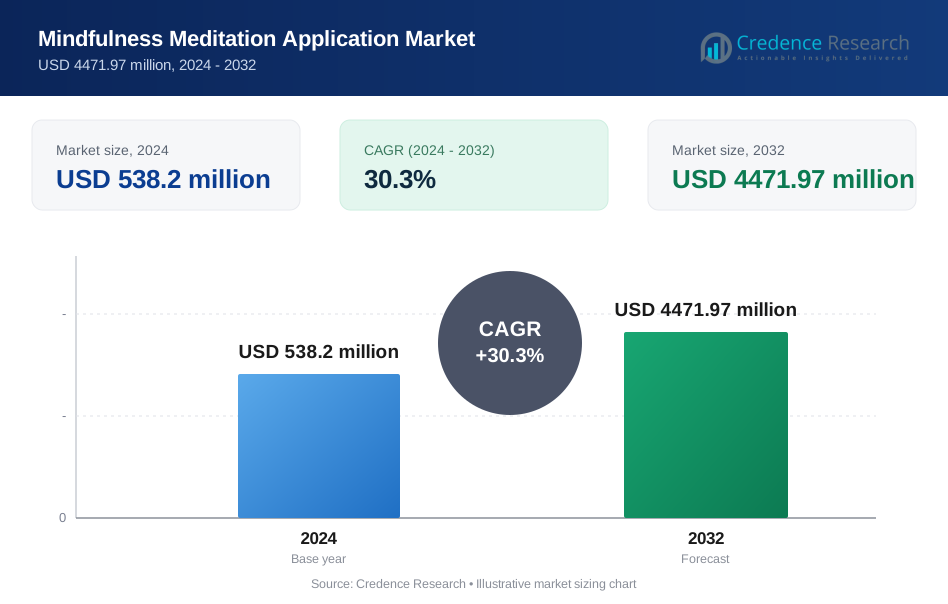
The Mindfulness Meditation Application Market is projected to grow from USD 538.2 million in 2024 to an estimated USD 4471.97 million by 2032, with a compound annual growth rate (CAGR) of 30.3% from 2024 to 2032.
The mindfulness meditation application market is primarily driven by escalating mental health concerns, fueled by increasing stress levels in modern lifestyles. A growing emphasis on preventive healthcare and holistic well-being has significantly boosted demand for meditation apps. Organizations are also incorporating mindfulness practices into their corporate wellness programs, further expanding the market's reach. Technological advancements, such as AI-based customization, audio-visual enhancements, and gamification, have enhanced user engagement and retention. Additionally, increasing penetration of smartphones and widespread internet accessibility have made these apps more readily available, even in remote areas. Supportive government policies and campaigns promoting mental health awareness are also positively influencing market growth.
North America dominates the mindfulness meditation application market, accounting for the largest revenue share, owing to high awareness levels, a tech-savvy population, and robust healthcare infrastructure. The Asia-Pacific region is emerging as the fastest-growing market, driven by increasing adoption of mindfulness practices in countries like India, China, and Japan, where meditation has cultural roots. Europe holds a significant share, with rising demand for stress management solutions amidst a growing work-life imbalance. Meanwhile, Latin America and the Middle East & Africa are experiencing steady growth, supported by improving digital infrastructure and expanding awareness of mental health solutions. The regional dynamics reflect a broadening consumer base across both developed and developing economies.
Market Insights:
- The market is projected to grow significantly, from USD 538.2 million in 2024 to USD 4471.97 million by 2032, with a CAGR of 30.3%.
- Escalating mental health concerns and rising stress levels in modern lifestyles are primary drivers of increased app adoption globally.
- Technological advancements, such as AI-based customization, gamification, and immersive VR/AR features, are enhancing user engagement and retention.
- Corporate wellness programs are expanding the reach of mindfulness apps, as organizations prioritize employee mental well-being and productivity.
- North America dominates the market with a 40% share, driven by high mental health awareness and robust digital infrastructure.
- The Asia-Pacific region is the fastest-growing, with countries like India and China leveraging cultural alignment with meditation practices and rising smartphone penetration.
- Localization of content and government-led campaigns promoting mental health awareness are unlocking new opportunities in emerging and underserved markets globally.
Market Drivers:
Rising Awareness of Mental Health and Well-Being The growing global emphasis on mental health awareness is a pivotal driver of the mindfulness meditation application market. Increasing cases of anxiety, depression, and stress-related disorders have heightened the demand for accessible and effective mental wellness solutions. As people increasingly recognize the importance of mental health alongside physical health, meditation apps have emerged as a convenient and scalable option. These applications provide guided meditation sessions, mindfulness exercises, and stress management tools, catering to a diverse demographic ranging from students to working professionals. For instance, Insight Timer has focused on community building by incorporating social features that allow users to connect with others, join live meditation sessions, and participate in group challenges. The integration of meditation practices into daily routines has become a popular way to combat the pressures of modern lifestyles, significantly boosting app adoption.
Technological Advancements in Meditation Platforms
Technological innovations have revolutionized mindfulness meditation applications, enhancing their functionality and user experience. Features such as artificial intelligence (AI)-driven personalization, voice recognition, and real-time analytics have made meditation more engaging and tailored to individual needs. Gamification elements, such as rewards for regular practice, encourage user consistency and retention. For instance, Muse uses biofeedback technology to enhance meditation practices. Their headbands measure brain activity, heart rate, and breathing patterns, providing real-time feedback to users during meditation sessions. Additionally, the incorporation of virtual reality (VR) and augmented reality (AR) is creating immersive meditation experiences, further broadening the appeal of these apps. These advancements, combined with seamless compatibility across multiple devices, have expanded the reach of meditation applications, making them an integral part of digital wellness ecosystems.
Corporate Wellness Initiatives Driving Adoption
The increasing integration of mindfulness practices into corporate wellness programs is another significant growth driver. Companies are recognizing the benefits of stress reduction, improved focus, and enhanced productivity through meditation, leading to the widespread adoption of meditation apps in workplace settings. Organizations are investing in these tools to promote employee well-being and reduce healthcare costs associated with stress-related illnesses. Mindgram targets corporate wellness programs by offering tailored meditation and mental health resources for employees. Their platform includes features like stress management tools, mindfulness exercises, and mental health assessments, which are integrated into corporate wellness initiatives to improve employee well-being and productivity. The shift toward remote and hybrid work models has further accentuated the importance of accessible mental health resources, encouraging employers to offer mindfulness meditation apps as part of employee benefit packages. This trend is fostering a broader acceptance of mindfulness practices across industries.
Growing Accessibility and Global Penetration
Expanding smartphone penetration and increasing internet connectivity have made mindfulness meditation applications more accessible worldwide. In developing regions, where traditional mental health resources may be scarce, these apps provide an affordable and practical solution for stress management and emotional well-being. For instance, Headspace has partnered with various non-profits to offer free subscriptions to underserved communities, significantly lowering entry barriers. Moreover, rising government initiatives and non-profit campaigns promoting mental health awareness are encouraging the use of digital wellness tools. The availability of free and freemium models further lowers entry barriers, enabling broader adoption across income segments. As a result, mindfulness meditation apps are gaining traction not only in urban centers but also in rural areas, contributing to the market’s sustained growth.
Market Trends:
Personalization and AI Integration Transforming User Experience
A significant trend in the mindfulness meditation application market is the increasing adoption of artificial intelligence (AI) to enhance user experiences. For instance, Headspace uses AI-powered algorithms to analyze user behavior and preferences, providing personalized meditation sessions and tailored wellness plans. AI-powered algorithms analyze user behavior and preferences to provide personalized meditation sessions, goal tracking, and tailored wellness plans. This shift toward customization helps users achieve specific outcomes such as stress reduction, improved sleep, or enhanced focus. In addition, machine learning models refine recommendations over time, ensuring continuous user engagement. As consumers demand individualized solutions, app developers are leveraging AI to create unique offerings, setting a new benchmark for innovation in the industry.
Expansion of Niche Applications and Targeted Solutions
The market is witnessing a proliferation of niche applications catering to specific demographics and needs. For instance, Calm has developed apps designed for children that incorporate playful and interactive elements, while those for senior citizens focus on gentle mindfulness techniques and age-appropriate exercises. Similarly, solutions aimed at new parents provide support for managing sleep deprivation and stress. This segmentation enables companies to tap into diverse consumer bases, fostering market growth. Moreover, apps targeting specialized needs, such as trauma recovery, addiction management, and workplace productivity, are gaining traction, reflecting the increasing demand for tailored mindfulness interventions.
Integration with Wearable Technology
Another notable trend is the integration of mindfulness meditation applications with wearable devices such as fitness trackers and smartwatches. These integrations enable real-time monitoring of physiological parameters, including heart rate, stress levels, and sleep quality, enhancing the user’s mindfulness practice. Wearables not only provide actionable insights but also deliver timely reminders to meditate or take mindful breaks. For instance, Core Meditation Trainer is a prime example, offering real-time feedback through its handheld device that measures heart rate variability and guides users through meditation sessions. This synergy between devices and apps supports seamless user experiences, aligning with the growing consumer preference for holistic wellness ecosystems. As wearable technology continues to advance, its interplay with meditation apps is expected to drive market expansion further.
Increased Focus on Regional and Cultural Relevance
The globalization of mindfulness meditation apps is accompanied by efforts to incorporate regionally and culturally relevant content. Developers are introducing meditation practices rooted in local traditions, languages, and philosophies, ensuring broader acceptance among diverse user groups. For instance, apps offering yoga nidra in South Asia or guided Zen meditation in Japan cater to culturally specific preferences while maintaining global appeal. This localization strategy not only broadens market penetration but also resonates with users seeking authentic and relatable mindfulness experiences. By blending universal accessibility with cultural nuance, app providers are positioning themselves to capture a more inclusive and diversified user base.
Market Challenges Analysis:
High Market Saturation and Intense Competition The mindfulness meditation application market is becoming increasingly saturated, with numerous players offering similar features and services. This intense competition creates challenges for new entrants seeking to establish a foothold in the industry. Established brands often dominate through strong marketing, partnerships, and user retention strategies, leaving little room for smaller or emerging companies. Additionally, the presence of free or low-cost apps puts pressure on developers to differentiate their offerings while maintaining profitability. This market saturation not only limits growth opportunities for individual companies but also fosters user indecision, potentially hindering overall adoption rates.
User Engagement and Retention Issues
Maintaining user engagement and long-term retention remains a significant challenge in this market. While many users download meditation apps with the intention of improving their well-being, only a fraction continue to use them consistently. A lack of immediate, tangible results often leads to user drop-off, especially among those new to mindfulness practices. The subscription-based revenue model further exacerbates this issue, as users may be hesitant to commit financially without sustained engagement. Developers must continually innovate and refine their offerings to address these concerns, often requiring substantial investments in content creation, technology, and user experience design.
Cultural and Accessibility Barriers
Despite increasing global penetration, cultural differences and accessibility challenges pose barriers to market growth. Mindfulness practices may not resonate equally across regions, particularly in areas where mental health remains stigmatized or misunderstood. Additionally, language limitations and the high cost of premium subscriptions can restrict adoption in low-income and non-English-speaking markets. While localization efforts and freemium models address some of these issues, they require significant resource allocation, creating a trade-off for developers between inclusivity and financial sustainability. Overcoming these cultural and economic barriers is critical to unlocking the market’s full potential.
Market Opportunities:
The mindfulness meditation application market presents significant growth opportunities driven by the rising global demand for accessible and affordable mental health solutions. With mental health issues such as stress, anxiety, and burnout on the rise, particularly among younger demographics and working professionals, meditation apps offer a scalable and convenient tool for wellness management. The increasing acceptance of digital health platforms and the integration of mindfulness into daily routines underscore the untapped potential in both developed and developing markets. Furthermore, the proliferation of smartphones and improved internet connectivity, especially in emerging economies, provides an expanding user base for app developers to target.
An emerging opportunity lies in partnerships with corporate wellness programs and healthcare providers. Organizations are increasingly adopting mindfulness practices to improve employee well-being, reduce stress-related absenteeism, and enhance productivity. Similarly, collaboration with healthcare professionals can enable apps to be positioned as complementary tools for therapeutic purposes, opening avenues for endorsements and institutional adoption. Developers can also explore underserved market segments, such as apps tailored to specific health conditions, age groups, or cultural preferences. Additionally, advancements in artificial intelligence and wearable technology integration create opportunities to deliver more personalized and immersive user experiences. By addressing these growing needs and leveraging technological innovations, the mindfulness meditation application market is poised for sustained expansion.
Market Segmentation Analysis:
The mindfulness meditation application market is segmented based on operating system, revenue model, end user, and region.
By Operating System, iOS and Android dominate the market, with Android apps holding the larger share due to the widespread adoption of Android smartphones, particularly in developing economies. iOS apps, however, cater to a more premium segment, offering high-quality user experiences and robust security features. Other operating systems, including web-based platforms, hold a niche share, appealing to users preferring cross-platform accessibility.
By Revenue Model, the market is divided into paid subscriptions and in-app purchases. Paid subscriptions generate the majority of revenue, offering premium features such as personalized programs and ad-free experiences. In-app purchases, including one-time features or guided sessions, appeal to users seeking flexibility without long-term commitments. The freemium model, often a gateway to paid tiers, significantly contributes to user acquisition.
By End User, consumers or individuals represent the largest segment, driven by growing interest in personal mental health management. Business users, however, are an emerging segment as organizations integrate mindfulness apps into wellness programs to enhance employee productivity and well-being.
Segmentation:
By Operating System:
- iOS Apps
- Android Apps
- Others
By Revenue Model:
- Paid Subscription
- In-App Purchase
By End User:
- Consumers/Individuals
- Business Users
By Region:
- North America
- U.S.
- Canada
- Mexico
- Europe
- Germany
- France
- U.K.
- Italy
- Spain
- Rest of Europe
- Asia Pacific
- China
- Japan
- India
- South Korea
- South-east Asia
- Rest of Asia Pacific
- Latin America
- Brazil
- Argentina
- Rest of Latin America
- Middle East & Africa
- GCC Countries
- South Africa
- Rest of the Middle East and Africa
Regional Analysis:
North America
North America holds the largest share in the mindfulness meditation application market, accounting for approximately 40% of the global revenue. This dominance is attributed to high levels of mental health awareness, a tech-savvy population, and a well-established digital infrastructure. The United States, in particular, leads the region with a significant adoption rate of wellness apps among professionals, students, and fitness enthusiasts. Corporate wellness programs are increasingly incorporating meditation apps to improve employee productivity and reduce stress, further driving market growth. Canada also contributes significantly, with rising demand for preventive health solutions and an emphasis on work-life balance. The maturity of the North American market continues to foster innovation, with many app developers originating from this region.
Europe
Europe represents approximately 30% of the global mindfulness meditation application market, driven by growing awareness of mental well-being and a rising focus on holistic health. Countries like Germany, the United Kingdom, and France lead the regional market, with a strong user base among working professionals and students. Government initiatives promoting mental health and stress management, combined with employer-supported wellness programs, are bolstering demand for mindfulness apps. The region's aging population also contributes to the adoption of mindfulness practices, as older users seek tools for stress reduction and cognitive health. Increasing localization efforts, including language-specific content, are enhancing the reach of meditation apps across European countries.
Asia-Pacific
The Asia-Pacific region is the fastest-growing market, capturing about 20% of the global share, with a projected high growth rate in the coming years. This growth is driven by a combination of factors, including cultural acceptance of meditation practices, rising smartphone penetration, and increasing disposable income. Countries like India, China, and Japan are key contributors, with a strong tradition of mindfulness and yoga practices aligning with modern digital platforms. The region's growing middle class and heightened stress levels in urban populations are further fueling app adoption. Localization strategies, including apps offering content rooted in traditional practices like yoga nidra or Zen meditation, are expanding the market's appeal in this culturally diverse region.
Latin America, Middle East, and Africa (LAMEA)
Latin America, the Middle East, and Africa collectively account for roughly 10% of the global market, with steady growth anticipated as digital infrastructure improves. In Latin America, rising mental health awareness, particularly in urban areas, is increasing demand for meditation apps. The Middle East and Africa are also witnessing growth, supported by expanding smartphone adoption and government-led mental health initiatives. However, challenges such as limited internet access and cultural stigma around mental health remain barriers that the market must address to unlock its full potential in these regions.
Key Player Analysis:
- Calm.com, Inc.
- Headspace, Inc.
- Inner Explorer, Inc.
- Meditation Moments B.V.
- Mindfulness Everywhere Ltd.
- Simple Habit, Inc.
- Smiling Mind
- Stop, Breathe, & Think PBC
- Ten Percent Happier
- The Mindfulness App
Competitive Analysis:
The mindfulness meditation application market is characterized by intense competition, with both established players and emerging startups vying for market share. Key industry leaders such as Calm, Headspace, and Insight Timer dominate the landscape, leveraging strong brand recognition, extensive content libraries, and strategic partnerships to maintain their positions. For instance, Calm, Headspace, and Insight Timer are indeed at the forefront, with Calm leading in revenue generation. These companies continuously innovate by integrating advanced technologies like artificial intelligence for personalized experiences and offering cross-platform compatibility. Smaller players and niche applications focus on targeted demographics or specialized features, such as child-friendly meditation programs or culturally specific practices, to differentiate themselves. The rise of free or freemium models adds further competitive pressure, compelling paid platforms to provide higher value through premium content and unique features. Despite market saturation, opportunities exist for new entrants to innovate in underserved areas such as corporate wellness, therapeutic integrations, and regional customization, fostering continued dynamism in the competitive landscape.
Recent Developments:
- In March 2024, Moments of Space launched a pioneering meditation app in partnership with wellness icon Gwyneth Paltrow. The app aims to revolutionize mindfulness by blending ancient Dzogchen teachings with modern technology, featuring a unique 'eyes-open' technique to make meditation accessible to everyone.
- In December 2023, Bear Grylls collaborated with mental health experts and a former TV producer to create Mettle, an app specifically designed for men's mental fitness. The app focuses on improving sleep, managing stress, and enhancing mental focus.
Market Concentration & Characteristics:
The mindfulness meditation application market exhibits a moderate level of concentration, with a few dominant players such as Calm, Headspace, and Insight Timer controlling a significant portion of the global market. These leaders benefit from extensive user bases, strong brand equity, and well-funded operations that enable continuous innovation and marketing efforts. However, the market also includes a diverse array of smaller players and niche applications catering to specific user needs, such as localized content, culturally tailored practices, or specialized demographics. The market is characterized by high competition, rapid technological advancements, and a strong emphasis on user engagement and retention. Freemium pricing models and AI-driven personalization are common features, reflecting the industry's focus on accessibility and customized experiences. While brand loyalty is important, user retention remains a challenge due to the availability of free alternatives and overlapping offerings. This dynamic encourages constant innovation, creating a vibrant and evolving market landscape.
Report Coverage:
The research report offers an in-depth analysis based on By Operating System, By Revenue Model and By End User. It details leading market players, providing an overview of their business, product offerings, investments, revenue streams, and key applications. Additionally, the report includes insights into the competitive environment, SWOT analysis, current market trends, as well as the primary drivers and constraints. Furthermore, it discusses various factors that have driven market expansion in recent years. The report also explores market dynamics, regulatory scenarios, and technological advancements that are shaping the industry. It assesses the impact of external factors and global economic changes on market growth. Lastly, it provides strategic recommendations for new entrants and established companies to navigate the complexities of the market.
Future Outlook:
- Increasing integration of AI and machine learning will enhance personalization and user engagement in meditation applications.
- Expanding adoption of wearable technology will strengthen app functionality through real-time monitoring and data-driven insights.
- Corporate wellness programs will continue to drive growth as employers prioritize mental health initiatives for employee well-being and productivity.
- Localization of content, including language options and culturally relevant practices, will support deeper penetration into emerging markets.
- The rise of subscription-based and freemium models will attract a wider range of users while encouraging app monetization strategies.
- Partnerships with healthcare providers will position meditation apps as complementary tools for managing stress, anxiety, and sleep disorders.
- Innovations in immersive experiences, such as VR and AR integration, will reshape user interactions and broaden app appeal.
- The Asia-Pacific region will emerge as a key growth driver, fueled by rising smartphone usage and cultural alignment with mindfulness practices.
- Increasing government initiatives to promote mental health awareness will boost demand for digital wellness solutions globally.
- Sustainability-focused apps emphasizing eco-conscious practices and mindfulness will attract socially aware consumers.
Request a Free Sample
Fill in your details and we'll send you a free sample report.
- Sample data tables & charts
- Research methodology
Need a Custom Version of This Report?
Tailor the scope, geography, or segments to your exact requirements.
- Custom geography or segment scope
- Direct access to our analyst team
Frequently Asked Questions
What is the projected growth of the mindfulness meditation application market?
What is driving the growth of this market?
Which region holds the largest share in this market?
What are the barriers to market adoption?
Table of Content
Chapter 1. Report Introduction
- 1.1 Report Description & Purpose
- 1.1.1 Report Title & Market Definition
- 1.1.2 Unique Selling Propositions (USP) & Key Differentiators
- 1.1.3 Value Proposition for Stakeholders
- 1.2 Research Objectives
- 1.2.1 Market Sizing Objectives (Volume & Revenue) (Volume Where Applicable)
- 1.2.2 Segmentation Objectives
- 1.2.3 Competitive Intelligence Objectives
- 1.2.4 Forecast & Scenario Objectives
- 1.3 Report Scope
- 1.3.1 Mindfulness Meditation Application Scope – Segments & Subsegments Covered
- 1.3.2 Geographic Scope – Regions & Countries Covered
- 1.3.3 Historical Period, Base Year & Forecast Period (2024; forecast to 2032)
- 1.3.4 Inclusions & Exclusions
- 1.4 Industry Classification & Applicable Codes
- 1.5 Currency, Measurement Units & Valuation Basis
- 1.6 Target Stakeholders
- 1.7 Limitations & Assumptions
Chapter 2. Executive Summary
- 2.1 Global Mindfulness Meditation Application Market Snapshot
- 2.1.1 Market Size – Historical (2024) & Forecast (2024-2032) (2024: USD 538.2 million → 2032: USD 4471.97 million)
- 2.1.2 Volume & Revenue – Global Totals (Volume Where Applicable)
- 2.1.3 Key Market Highlights – Top Five Facts
- 2.2 Mindfulness Meditation Application Market Segmentation Snapshot
- 2.2.1 Market Split by Region – 2024 vs. 2032
- 2.3 Competitive Snapshot
- 2.3.1 Top 10 Players by Revenue Share – 2024
- 2.3.2 Top 10 Players by Volume Share – 2024 (Volume Where Applicable)
- 2.3.3 Recent Strategic Developments (18-Month Summary)
- 2.4 Key Investment Highlights & Strategic Conclusions
Chapter 3. Mindfulness Meditation Application Market Dynamics & Industry Analysis
- 3.1 Market Overview & Context
- 3.1.1 Mindfulness Meditation Application Market Position in the Broader Industry Value Chain
- 3.1.2 Demand Structure & Purchasing Dynamics
- 3.1.3 Market Maturity & Development Stage by Region
- 3.2 Mindfulness Meditation Application Market Drivers
- 3.3 Mindfulness Meditation Application Market Restraints & Challenges
- 3.4 Mindfulness Meditation Application Market Opportunities
- 3.5 Porter's Five Forces Analysis
- 3.5.1 Threat of New Entrants
- 3.5.2 Bargaining Power of Suppliers
- 3.5.3 Bargaining Power of Buyers
- 3.5.4 Threat of Substitutes
- 3.5.5 Competitive Rivalry – Intensity Assessment
- 3.6 Mindfulness Meditation Application Value Chain Analysis
- 3.6.1 Upstream – Key Inputs, Resources & Suppliers
- 3.6.1.1 Key Input/Resource 1
- 3.6.1.2 Key Input/Resource 2
- 3.6.1.3 Key Input/Resource 3
- 3.6.2 Midstream – Core Operations & Value Creation
- 3.6.2.1 Operating Model & Process Overview
- 3.6.2.2 Key Operating Locations & Capabilities by Company
- 3.6.3 Downstream – Market Channels & End Users
- 3.6.3.1 Direct Sales & Customer Engagement Channels
- 3.6.3.2 Indirect Sales, Intermediaries & Partner Channels
- 3.6.4 Value Chain Profitability Analysis
- 3.6.1 Upstream – Key Inputs, Resources & Suppliers
- 3.7 PESTEL Analysis
- 3.7.1 Political Factors
- 3.7.2 Economic Factors
- 3.7.3 Social Factors
- 3.7.4 Technological Factors
- 3.7.5 Environmental Factors
- 3.7.6 Legal Factors
- 3.8 Mindfulness Meditation Application Supply Chain Analysis
- 3.8.1 Critical Input & Resource Availability Risk Assessment
- 3.8.2 Supplier & Operational Concentration Risk (Geographic Exposure)
- 3.8.3 Supply & Service Disruption Impact Analysis
- 3.9 Regulatory & Policy Landscape
Note: The regulatory and policy landscape section covers regulations based on their applicability to the market, Mindfulness Meditation Application category, geography, and scope of the study. Only regulatory frameworks with a material impact on operations, compliance, trade, sustainability, or market access are analyzed in detail.
Chapter 4. Key Investment Pockets & Opportunity Analysis
- 4.1 Mindfulness Meditation Application Market Attractiveness Analysis
- 4.1.1 By Region – Investment Attractiveness Matrix (Market Size × CAGR)
- 4.2 Absolute Revenue Growth Opportunity
- 4.2.1 By Region – Absolute Revenue Growth Through 2032
- 4.3 Incremental Demand Opportunity
- 4.3.1 By Region – Incremental Demand Through 2032
- 4.3.2 Segment – Incremental Demand
- 4.4 Emerging Submarket Opportunity Deep Dive (Subject to Applicability)
- 4.5 Priority Market Opportunity Scorecards
- 4.5.1 United States
- 4.5.2 Europe
- 4.5.3 Asia
- 4.5.4 Middle East & Africa
Note: Priority market opportunity scorecards reflect the geographic scope and strategic relevance of the study. Listed markets are indicative and may be adapted to the industry.
Chapter 5. Mindfulness Meditation Application Cross-Border Trade & Market Access Analysis
- 5.1 International Trade & Cross-Border Activity Overview
- 5.1.1 Global Export Value by Country (2024)
- 5.1.2 Global Export Volume by Country (2024) (Volume Where Applicable)
- 5.1.3 Global Import Value by Country (2024)
- 5.1.4 Global Import Volume by Country (2024) (Volume Where Applicable)
- 5.1.5 Net Trade Balance by Country (2024)
- 5.2 Export Analysis – Segment
- 5.2.1 Category 1 (Applicable Classification Code)
- 5.2.2 Category 2 (Applicable Classification Code)
- 5.2.3 Category 3 (Applicable Classification Code)
- 5.2.4 Category 4 (Applicable Classification Code)
- 5.2.5 Category 5 (Applicable Classification Code)
- 5.3 Import Analysis – Segment
- 5.3.1 Category 1 (Applicable Classification Code)
- 5.3.2 Category 2 (Applicable Classification Code)
- 5.3.3 Category 3 (Applicable Classification Code)
- 5.3.4 Category 4 (Applicable Classification Code)
- 5.3.5 Category 5 (Applicable Classification Code)
- 5.4 Cross-Border Pricing & Transaction Benchmarks
- 5.4.1 Export Pricing – Segment & Country
- 5.4.2 Import Pricing – Segment & Source Country
- 5.4.3 Price Trends (2024)
- 5.5 Key Cross-Border Trade & Delivery Routes
- 5.5.1 Cross-Border Trade/Delivery Route 1
- 5.5.2 Cross-Border Trade/Delivery Route 2
- 5.5.3 Cross-Border Trade/Delivery Route 3
- 5.5.4 Cross-Border Trade/Delivery Route 4
- 5.5.5 Cross-Border Trade/Delivery Route 5
- 5.6 Trade Policy & Market Access Impact Assessment
- 5.6.1 Tariff & Non-Tariff Barriers
- 5.6.2 Regional Trade & Economic Integration Frameworks
- 5.6.3 Bilateral & Multilateral Trade Agreements
- 5.6.4 Cross-Border Operating, Licensing & Localization Requirements
Note: This chapter applies where cross-border trade or delivery is relevant to Mindfulness Meditation Application. Goods, services, and digital offerings are assessed using applicable classifications and transaction measures. Import-export volumes, trade balances, and route analyses are included only where meaningful to the market.
Chapter 6. Competitive Landscape & Company Benchmarking
- 6.1 Mindfulness Meditation Application Market Concentration & Structure
- 6.1.1 Herfindahl-Hirschman Index (HHI) – vs. 2024
- 6.1.2 Leading, Mid-Sized & Emerging Player Structure
- 6.1.3 Global, Regional & Local Player Dynamics
- 6.2 Mindfulness Meditation Application Market Share Analysis – 2024
- 6.2.1 Global Revenue Share by Company
- 6.2.2 Global Volume Share by Company (Volume Where Applicable)
- 6.2.3 Regional Revenue Share
- 6.2.4 Market Share Evolution ( vs. 2024)
- 6.2.5 Company Market Share by Key Segment
- 6.2.6 Company Market Share by Customer Group
- 6.3 Operating Scale, Capacity & Infrastructure Analysis
- 6.3.1 Global Operating Scale & Supply Capacity
- 6.3.2 Resource Utilization & Operating Efficiency
- 6.3.3 Output, Service Delivery & Activity Metrics
- 6.3.4 Operating Footprint & Infrastructure Map
- 6.3.5 Planned Operational & Capacity Expansion
- 6.4 Mindfulness Meditation Application Competitive Benchmarking Matrix
- 6.4.1 Revenue, Growth, Profitability & Operating Metric Comparison
- 6.4.2 Channel Revenue Mix
- 6.4.3 Geographic Revenue Exposure
- 6.4.4 R&D Intensity
- 6.4.5 Sustainability Maturity
- 6.5 Strategic Developments in Mindfulness Meditation Application (Last 24 Months)
- 6.5.1 Mergers, Acquisitions & Divestments
- 6.5.2 New Products, Services & Solutions in Mindfulness Meditation Application
- 6.5.3 Operational & Infrastructure Expansions
- 6.5.4 Strategic Alliances, Joint Ventures & Partnerships
- 6.5.5 Distribution Expansion & Market Entry
- 6.5.6 Sustainability & ESG Initiatives
- 6.6 Competitive Strategy Mapping
- 6.6.1 Leader, Challenger, Follower & Niche Classification
- 6.6.2 Pricing Strategy Comparison
- 6.6.3 Channel Strategy Matrix
Note: Strategic developments are included based on their materiality and the availability of reliable information.
Chapter 7. Global Mindfulness Meditation Application Market – By Sales & Delivery Channel
- 7.1 Segment Overview
- 7.1.1 Volume & Revenue Split by Channel (2024 & 2032) (Volume Where Applicable)
- 7.1.2 Channel Mix Evolution (2024-2032)
Chapter 8. Regional Market Analysis – Global Overview
- 8.1 Global Regional Overview
- 8.1.1 Regional Volume Share (Volume Where Applicable)
- 8.1.2 Regional Revenue Share
- 8.1.3 Regional Volume by Region (Volume Where Applicable)
- 8.1.4 Regional Revenue by Region
- 8.1.5 Regional Forecast Through 2032
- 8.2 Cross-Regional Segment Analysis
- 8.2.1 By Sales & Delivery Channel
- 8.2.2 By Competitive Positioning & Price Tier
Chapter 9. North America Mindfulness Meditation Application Market
- 9.1 United States
- 9.2 Canada
- 9.3 Mexico
Chapter 10. Europe Mindfulness Meditation Application Market
- 10.1 Germany
- 10.2 France
- 10.3 Italy
- 10.4 United Kingdom
- 10.5 Spain
- 10.6 Poland
- 10.7 Russia
- 10.8 Netherlands
- 10.9 Belgium
- 10.10 Sweden
- 10.11 Denmark
- 10.12 Norway
- 10.13 Rest of Europe
Chapter 11. Asia Pacific Mindfulness Meditation Application Market
- 11.1 China
- 11.2 India
- 11.3 Japan
- 11.4 South Korea
- 11.5 Thailand
- 11.6 Indonesia
- 11.7 Vietnam
- 11.8 Malaysia
- 11.9 Australia
- 11.10 Rest of Asia Pacific
Chapter 12. Latin America Mindfulness Meditation Application Market
- 12.1 Brazil
- 12.2 Argentina
- 12.3 Colombia
- 12.4 Chile
- 12.5 Rest of Latin America
Chapter 13. Middle East Mindfulness Meditation Application Market
- 13.1 Saudi Arabia
- 13.2 United Arab Emirates
- 13.3 Turkey
- 13.4 Israel
- 13.5 Iran
- 13.6 Rest of the Middle East
Chapter 14. Africa Mindfulness Meditation Application Market
- 14.1 South Africa
- 14.2 Egypt
- 14.3 Nigeria
- 14.4 Morocco
- 14.5 Rest of Africa
Chapter 15. Mindfulness Meditation Application Company Profiles
- 15.1 [Company 01]
- 15.1.1 Company Overview
- 15.1.2 Key Management Personnel
- 15.1.3 Products & Services Portfolio
- 15.1.4 Financial Performance
- 15.1.5 Key Market Focus & Geographic Presence
- 15.1.6 Recent Developments & Strategic Initiatives
Note: The company profile list is preliminary and may change based on research findings, market developments, data availability, and client requirements.
Chapter 16. Appendices
- Appendix A – List of Abbreviations & Acronyms
- Appendix B – Industry Classification Code Reference – Full Series
- Appendix C – Supply, Output & Operating Capacity Data Tables
- Appendix D – End-Use & Demand Base Tables
- Appendix E – Demand, Adoption & Usage Assumptions
- Appendix F – Pricing & Revenue Metric Reference Tables
- Appendix G – Company Operations & Infrastructure Database
- Appendix H – Cross-Border Trade & Activity Data Tables (Where Applicable)
- Appendix I – Regulatory Summary Tables
- Appendix J – Primary Research Participant List (Anonymized)
- Appendix K – Primary Research Questionnaire Framework
- Appendix L – Data Sources & Bibliography
- Appendix M – Market Size Divergence & Source Comparison
Chapter 17. Research Methodology
- 17.1 Research Framework & Philosophy
- 17.2 Secondary Research – Sources, Hierarchy & Data Extraction
- 17.3 Data Modeling – Bottom-Up & Top-Down Market Sizing
- 17.4 Primary Research – Stakeholder Framework, LOI & Sample Sizes
- 17.5 Forecast Methodology – Regression, Scenario & Sensitivity Analysis
- 17.6 Quality Control – Four-Layer Validation Framework
- 17.7 Limitations & Standard Assumptions
- 17.8 Disclaimer
