
| REPORT ATTRIBUTE | DETAILS |
|---|---|
| Historical Period | 2019-2022 |
| Base Year | 2023 |
| Forecast Period | 2024-2032 |
| Non-Invasive Surgical Wound Closure Market Size 2024 | USD 2195 million |
| Non-Invasive Surgical Wound Closure Market, CAGR | 3.9% |
| Non-Invasive Surgical Wound Closure Market Size 2032 | USD 2980.97 million |
Market Overview:
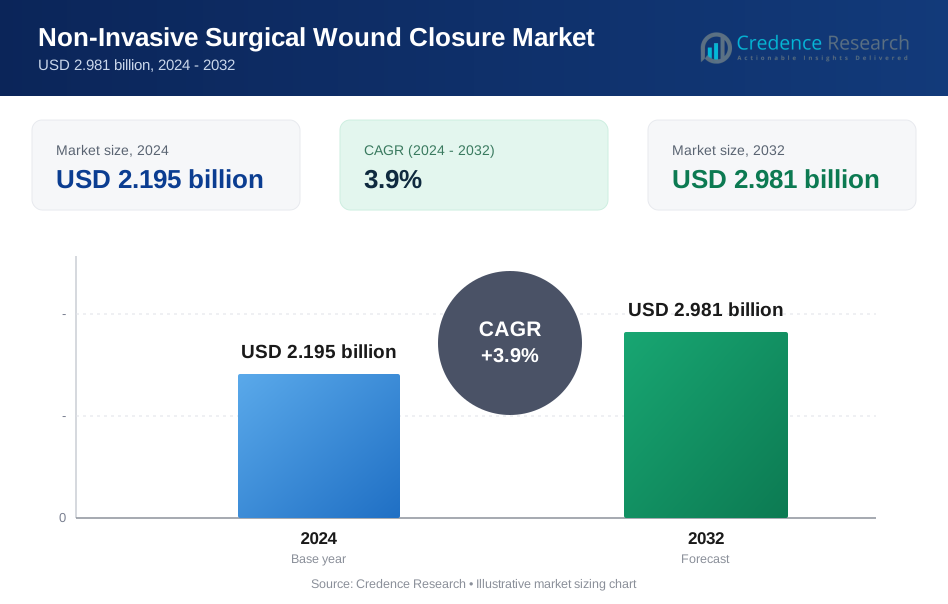
The Non-Invasive Surgical Wound Closure Market is projected to grow from USD 2195 million in 2024 to USD 2980.97 million by 2032, at a compound annual growth rate (CAGR) of 3.9%.
This growth trajectory is attributed to the rising prevalence of chronic wounds, surgical procedures, and an increasing focus on minimizing post-operative complications and recovery time, driven by advancements in medical technologies and increasing demand for efficient, patient-friendly wound management solutions. The noninvasive surgical wound closure market is experiencing significant growth, driven by advancements in medical technologies and increasing demand for efficient, patient-friendly wound management solutions.
The noninvasive surgical wound closure market is driven by several key factors. Growing emphasis on minimizing patient discomfort and scarring is a major driver, as noninvasive technologies like adhesive strips, topical agents, and laser therapies address these concerns effectively. These methods offer benefits such as ease of use, reduced infection risks, and faster healing times, making them increasingly preferred by healthcare providers. The rising geriatric population and the increasing number of surgeries, including cosmetic and reconstructive procedures, further contribute to the demand for noninvasive wound closure solutions. Additionally, the growing adoption of minimally invasive surgeries and a focus on advanced healthcare solutions that improve patient quality of life and reduce healthcare costs are pivotal factors accelerating market growth.
Regionally, North America holds the largest market share, driven by technological advancements, high healthcare expenditure, and a preference for minimally invasive procedures among both healthcare providers and patients. Europe follows closely, with a strong healthcare infrastructure and rising adoption of noninvasive wound closure methods. The Asia Pacific region is expected to experience the highest growth rate, driven by the expanding healthcare sector, increasing awareness of advanced wound care solutions, and improving medical facilities in countries like China and India. The rising prevalence of chronic diseases in this region also provides a favorable environment for the adoption of noninvasive wound closure technologies, further fueling market expansion.
Market Drivers:
Preference for Minimally Invasive Procedures:
The noninvasive surgical wound closure market is primarily driven by the increasing preference for minimally invasive procedures. For instance, a study conducted in 2023 revealed that minimally invasive surgeries now make up about 60% of all surgical procedures globally. As patients and healthcare providers prioritize reduced recovery times and minimal post-operative complications, noninvasive closure techniques such as adhesive strips, sutures, and laser therapies have gained significant traction. These methods not only enhance healing but also reduce the risk of infection, making them highly sought after in various surgical fields, including dermatology, plastic surgery, and orthopedics.
Improved Patient Outcomes and Comfort:
Another key driver is the growing demand for improved patient outcomes and comfort. For instance, Noninvasive wound closure methods help address concerns related to traditional suturing, such as pain, scarring, and prolonged healing. These technologies promote faster recovery, reduced discomfort, and less visible scars, which align with both patient and healthcare provider preferences. The ability to offer high-quality wound care with minimal intervention has made noninvasive options a preferred choice for patients undergoing elective surgeries and minor procedures.
Rising Prevalence of Chronic Diseases:
The rise in chronic diseases, including diabetes and cardiovascular conditions, has also contributed to the market’s growth. For instance, the World Health Organization (WHO) reported in 2021 that nearly 422 million people worldwide have diabetes, a number expected to rise further. Chronic wounds, often resulting from long-term conditions, require effective and efficient closure methods. Noninvasive surgical wound closure solutions are increasingly utilized in managing such wounds, offering benefits like reduced healing times and fewer complications compared to traditional methods. This trend is expected to accelerate as the global prevalence of chronic diseases continues to rise, further driving the demand for noninvasive wound care technologies.
Advancements in Medical Technology:
Lastly, advancements in medical technology and innovation play a critical role in propelling market growth. For instance, Continuous improvements in adhesive products, topical agents, and laser technologies have expanded the scope of noninvasive surgical wound closure applications. As these innovations become more sophisticated, they provide healthcare providers with a wider range of tools to address various types of surgical wounds, thereby enhancing treatment efficacy and promoting broader adoption of noninvasive methods across the healthcare industry.
Market Trends:
Growth in Advanced Adhesive Technologies:
A prominent trend in the noninvasive surgical wound closure market is the growing adoption of advanced adhesive technologies. For instance, Recent innovations in medical adhesives have led to the development of products that provide stronger, longer-lasting bonds with the skin, ensuring superior wound closure. These adhesives are now capable of promoting faster healing while minimizing scarring and reducing the risk of infection. As healthcare providers prioritize patient comfort and efficiency, these advanced adhesive products are increasingly used in both minor and complex surgical procedures.
Integration of Bioactive and Smart Materials:
Another emerging trend is the integration of bioactive and smart materials into noninvasive wound closure products. These materials are designed to accelerate healing by mimicking the natural healing process. For instance, a 2022 study found that bioactive agents, such as antimicrobial substances, can reduce infection rates by up to 35% compared to traditional methods. Bioactive agents such as antimicrobial substances, growth factors, and collagen-based materials are being incorporated into adhesives and wound dressings to enhance tissue regeneration and reduce complications. Furthermore, smart materials that can detect infection or moisture levels and deliver targeted treatments are gaining attention in the market, offering the potential to significantly improve patient outcomes.
Minimally Invasive Cosmetic and Aesthetic Surgery Demand:
The rising demand for minimally invasive cosmetic and aesthetic surgeries is another key trend driving the market. For instance, a survey conducted in 2023 found that minimally invasive procedures accounted for nearly 70% of all cosmetic surgeries. Noninvasive wound closure methods, such as laser-based devices and adhesive strips, are being increasingly used in procedures like facelifts, liposuction, and body contouring, where minimizing scarring is critical. These methods provide superior cosmetic results compared to traditional suturing, making them highly preferred by both patients and surgeons. The growing focus on aesthetic outcomes is likely to continue influencing the demand for noninvasive wound closure solutions.
Expansion of Noninvasive Solutions for Chronic Wounds:
There is a growing trend towards the use of noninvasive closure solutions for chronic wounds, such as diabetic foot ulcers and pressure sores. For instance, the International Diabetes Federation reported in 2022 that approximately 537 million adults are living with diabetes. As the global prevalence of chronic diseases rises, there is an increased need for wound care products that can improve healing while reducing the need for invasive procedures. Noninvasive surgical wound closure technologies, such as hydrocolloid dressings and advanced adhesives, are proving to be effective solutions in managing these long-term wounds, driving their adoption in both clinical and homecare settings.
Market Challenges Analysis:
Limited Awareness and Adoption:
A significant challenge in the noninvasive surgical wound closure market is the limited awareness and adoption of newer technologies. Despite the advantages of noninvasive solutions, such as faster recovery times and reduced scarring, many healthcare professionals remain hesitant to adopt these methods over traditional suturing techniques. This is often due to a lack of understanding of the effectiveness of noninvasive options, particularly in complex or high-risk surgeries. Educating medical practitioners about the benefits and clinical outcomes of these innovative methods is crucial for wider acceptance and adoption.
Regulatory and Compliance Barriers:
Another key challenge in the market is the regulatory hurdles surrounding the approval and commercialization of noninvasive wound closure technologies. The regulatory process for medical devices and wound care products can be time-consuming and costly, particularly when navigating different standards across regions. Companies face challenges in ensuring that their products meet the required safety and efficacy standards, which can delay market entry and increase operational costs. Compliance with varying regulatory frameworks also adds complexity to product development and market expansion, especially for smaller players.
High Costs of Advanced Solutions:
The cost of advanced noninvasive wound closure technologies remains a barrier to widespread adoption. While these solutions offer benefits such as quicker healing and reduced infection risks, their higher initial cost compared to traditional wound closure methods can deter healthcare providers, particularly in cost-sensitive regions or institutions. The challenge lies in balancing the cost of innovation with affordability, ensuring that these technologies are accessible without compromising patient care quality or healthcare budgets.
Resistance to Change from Traditional Methods:
Resistance to change from established wound closure methods presents another challenge in the market. Traditional sutures and staples remain the gold standard in many medical settings due to their long-standing effectiveness and familiarity among healthcare providers. Convincing clinicians to transition to noninvasive alternatives requires not only proving the clinical benefits but also overcoming the inherent reluctance to adopt newer practices in a field where precision and reliability are paramount.
Market Segmentation Analysis:
By Product
The noninvasive surgical wound closure market can be segmented by product type into adhesive strips, topical agents, laser devices, and others. Adhesive strips dominate the market, owing to their ease of use, reduced complication rates, and ability to promote faster healing with minimal scarring. Topical agents, including bioactive ointments and gels, are increasingly being used for their ability to enhance wound healing and provide antimicrobial properties. Laser devices, although more specialized, are gaining traction due to their precision and effectiveness in promoting tissue regeneration with minimal intervention.
By Application
In terms of application, the noninvasive surgical wound closure market is segmented into dermatology, orthopedics, plastic surgery, and general surgery. Dermatology holds the largest share, driven by the growing demand for cosmetic and reconstructive procedures where minimizing scarring is crucial. The plastic surgery segment is also expanding, as noninvasive closure methods offer enhanced cosmetic outcomes. Orthopedic surgeries, particularly those involving soft tissue, benefit from noninvasive closure solutions due to their ability to reduce infection risk and recovery time. General surgeries, including abdominal and laparoscopic surgeries, further contribute to the market's growth as healthcare providers adopt these methods for improved patient outcomes.
By End-User
The market is further segmented by end-user, including hospitals, ambulatory surgical centers (ASCs), and homecare settings. Hospitals are the dominant end-users, as they perform a wide range of surgeries requiring advanced wound care solutions. Ambulatory surgical centers are gaining traction due to the rise in outpatient procedures, and homecare settings are increasingly adopting noninvasive wound closure methods for chronic wound management, driven by patient convenience and cost-effectiveness.
Segmentations:
By Product type:
- Natural
- Synthetic
- Adhesive
- Adhesive barrier products
- Flowable
- Active
- Hemostats
- Mechanical
- Sealants
- Surgical
- Fibrin
By Application:
- Cosmetics
- Orthopedics
- Obstetrics and Gynecology
- Others
By End-User:
- Hospital
- Clinics
- Ambulatory Surgical Centers
- Dermatological Clinical
- Emergency Service Centers
By Region:
- North America
- U.S.
- Canada
- Mexico
- Europe
- UK
- France
- Germany
- Italy
- Spain
- Russia
- Belgium
- Netherlands
- Austria
- Sweden
- Poland
- Denmark
- Switzerland
- Rest of Europe
- Asia Pacific
- China
- Japan
- South Korea
- India
- Australia
- Thailand
- Indonesia
- Vietnam
- Malaysia
- Philippines
- Taiwan
- Rest of Asia Pacific
- Latin America
- Brazil
- Argentina
- Peru
- Chile
- Colombia
- Rest of Latin America
- Middle East
- UAE
- KSA
- Israel
- Turkey
- Iran
- Rest of Middle East
- Africa
- Egypt
- Nigeria
- Algeria
- Morocco
- Rest of Africa
Regional Analysis:
North America
North America holds the largest market share of approximately 40% in the noninvasive surgical wound closure market. The region’s dominance is attributed to its advanced healthcare system, high disposable income, and strong preference for minimally invasive surgeries. For instance, in the United States, minimally invasive surgeries account for around 70% of all surgical procedures. The United States, in particular, is a significant contributor to market growth due to its well-established healthcare infrastructure and the increasing number of outpatient and elective surgeries. The growing demand for aesthetic procedures and chronic wound management further boosts the adoption of noninvasive wound closure technologies. Additionally, North America benefits from continuous innovations in medical devices and favorable reimbursement policies, which encourage the uptake of advanced wound care solutions.
Europe
Europe holds the second-largest market share, accounting for approximately 30% of the global market. The region’s growth is driven by a robust healthcare infrastructure, rising awareness of minimally invasive surgical techniques, and increasing healthcare investments. For instance, a report from 2023 indicated that healthcare investments in Europe have increased by 12% over the past five years. Countries like Germany, France, and the UK are significant contributors to the market, where there is a strong emphasis on reducing post-operative complications and improving patient comfort. The increasing geriatric population in Europe also drives the demand for efficient wound care, particularly in managing chronic conditions such as diabetes.
Asia Pacific
The Asia Pacific region is expected to witness the highest growth rate in the noninvasive surgical wound closure market. This growth can be attributed to the rising healthcare infrastructure, growing awareness about advanced wound care, and the increasing prevalence of chronic diseases such as diabetes and cardiovascular conditions. For instance, the International Diabetes Federation reported that in 2022, there were over 141 million people with diabetes in China alone. Countries like China, India, and Japan are seeing rapid advancements in medical technologies, coupled with a large patient population, driving the demand for noninvasive wound closure solutions. The region’s cost-sensitive market also encourages the adoption of more affordable, noninvasive closure methods.
Rest of the World (RoW)
The Rest of the World (RoW) segment, which includes regions such as Latin America, the Middle East, and Africa, accounts for around 10% of the global market share. The growth in this segment is slower but steady, driven by improving healthcare facilities, rising awareness of advanced wound care solutions, and an increasing focus on healthcare reforms. For instance, in a 2022 survey, it was found that 40% of hospitals in Latin America have upgraded their wound care facilities in the past five years. In Latin America and the Middle East, the demand for aesthetic surgeries is boosting the adoption of noninvasive wound closure technologies. However, the market remains price-sensitive, and access to advanced healthcare solutions is still a challenge in some regions.
Key Player Analysis:
- Advanced Medical Solutions Group Plc
- Ethicon Endo-Surgery, Inc
- Abbott Laboratories
- Baxter International Inc.
- Medtronic, Inc.
- CP Medical, Inc.
- Aesculap AG & Co.KG
- Smith & Nephew
- Surgical Specialties Corporation
- Derma Sciences, Inc.
Competitive Analysis:
The noninvasive surgical wound closure market is highly competitive, with numerous players focusing on innovation and expanding product offerings to meet the growing demand for efficient, minimally invasive solutions. Key market participants include companies such as 3M, Smith & Nephew, Medtronic, and Johnson & Johnson, which dominate the market due to their strong brand presence, extensive product portfolios, and global reach. For example, a 2023 report highlighted that these companies collectively accounted for over 50% of new product launches in the noninvasive wound closure segment. These companies focus on developing advanced adhesive strips, topical agents, and laser-based wound closure devices to cater to various surgical specialties, including dermatology, orthopedics, and plastic surgery. Competition is also driven by the increasing emphasis on reducing patient recovery times and improving cosmetic outcomes. Smaller players are gaining traction by offering specialized, cost-effective products, often targeting specific wound types or medical conditions. Additionally, market players are investing heavily in research and development to introduce new technologies that offer improved healing, reduced infection risks, and enhanced ease of use, which further intensifies competition in the market.
Recent Developments
- Acquisition of Peters Surgical: Advanced Medical Solutions completed the acquisition of Peters Surgical on July 1, 2024. This strategic move is expected to enhance AMS's position in the surgical market by integrating Peters Surgical’s specialty surgical products into its portfolio, thereby broadening its offerings and distribution capabilities.
- Launch of LIQUIFIX™: In September 2024, AMS announced the U.S. launch of LIQUIFIX™, a new product under its LiquiBand brand, aimed at improving wound closure in hernia surgeries. This product was showcased at the American Hernia Society Annual Meeting, reflecting AMS's commitment to advancing surgical wound closure technologies.
- Introduction of ETHIZIA™ Hemostatic Sealing Patch: On November 15, 2023, Ethicon announced the approval of ETHIZIA™, a hemostatic sealing patch designed to control disruptive bleeding in challenging surgical situations. The patch is noted for its unique synthetic polymer technology and has shown to stop bleeding significantly faster than existing solutions.
- Launch of ECHELON LINEAR™ Cutter: In May 2024, Ethicon launched the ECHELON LINEAR™ Cutter, which incorporates advanced technologies to reduce leaks at staple lines during surgeries. This innovative device is designed to enhance surgical outcomes by providing greater control and stability during procedures.
- Launch of Lingo™ Continuous Glucose Monitoring System: In September 2024, Abbott introduced Lingo™, a continuous glucose monitoring system available without a prescription. This product aims to improve health management for individuals interested in monitoring their glucose levels more conveniently.
- FDA Approval for Esprit™ System: In April 2024, Abbott received FDA approval for its Esprit™ below-the-knee system, which is designed for patients with peripheral artery disease. This innovation supports vessel healing and enhances patient care in vascular treatments.
Market Concentration & Characteristics:
The noninvasive surgical wound closure market is moderately concentrated, with a few key players dominating the industry. Major companies such as 3M, Medtronic, Smith & Nephew, and Johnson & Johnson lead the market, leveraging their established brand presence, extensive product portfolios, and global distribution networks. These players invest heavily in research and development to innovate and expand their noninvasive wound care solutions, targeting various surgical specialties like dermatology, plastic surgery, and orthopedics.
The market is characterized by rapid technological advancements, with a strong focus on developing products that offer reduced recovery times, minimal scarring, and improved patient comfort. Companies also emphasize ease of use and cost-effectiveness to cater to both healthcare providers and patients. Additionally, there is increasing competition from smaller, specialized players offering niche solutions in specific segments, such as chronic wound management and cosmetic surgery, further intensifying competition and innovation within the market.
Report Coverage:
The research report offers an in-depth analysis based on By Product Type, By Application and By End-User. It details leading market players, providing an overview of their business, product offerings, investments, revenue streams, and key applications. Additionally, the report includes insights into the competitive environment, SWOT analysis, current market trends, as well as the primary drivers and constraints. Furthermore, it discusses various factors that have driven market expansion in recent years. The report also explores market dynamics, regulatory scenarios, and technological advancements that are shaping the industry. It assesses the impact of external factors and global economic changes on market growth. Lastly, it provides strategic recommendations for new entrants and established companies to navigate the complexities of the market.
Future Outlook:
- The noninvasive surgical wound closure market is expected to continue its growth trajectory, driven by increasing demand for minimally invasive procedures and faster recovery times.
- Advancements in medical adhesives and biomaterials will lead to the development of more effective and comfortable wound closure solutions, enhancing patient outcomes.
- The growing emphasis on aesthetic outcomes in surgeries, particularly in plastic and dermatological procedures, will contribute to the increasing adoption of noninvasive wound closure techniques.
- Rising healthcare expenditures, particularly in emerging markets, will facilitate the adoption of advanced wound closure technologies, broadening the market's reach.
- Innovations in smart wound care, such as self-monitoring systems and antimicrobial coatings, will likely become more prevalent.
- The increasing prevalence of chronic diseases, including diabetes, will drive demand for noninvasive wound closure solutions, particularly for managing chronic and diabetic ulcers.
- The rise in outpatient and minimally invasive surgeries will further accelerate the adoption of noninvasive closure methods.
- Companies are expected to invest heavily in research and development, leading to continuous product innovations and enhancements in wound closure technologies.
- Regulatory approvals for advanced noninvasive products will increase, as medical authorities acknowledge the efficacy and safety of these solutions, facilitating their broader market acceptance.
- The market will experience increased competition, with both established companies and new entrants focusing on cost-effective, innovative solutions to cater to diverse patient needs across various healthcare settings.
Request a Free Sample
Fill in your details and we'll send you a free sample report.
- Sample data tables & charts
- Research methodology
Need a Custom Version of This Report?
Tailor the scope, geography, or segments to your exact requirements.
- Custom geography or segment scope
- Direct access to our analyst team
Frequently Asked Questions
What is the current size of the Non-Invasive Surgical Wound Closure Market?
What factors are driving the growth of the Noninvasive Surgical Wound Closure Market?
What are the key segments within the Noninvasive Surgical Wound Closure Market?
What are some challenges faced by the Noninvasive Surgical Wound Closure Market?
Which segment is leading the market share in the Noninvasive Surgical Wound Closure Market?
Table of Content
Chapter 1. Report Introduction
- 1.1 Report Description & Purpose
- 1.1.1 Report Title & Market Definition
- 1.1.2 Unique Selling Propositions (USP) & Key Differentiators
- 1.1.3 Value Proposition for Stakeholders
- 1.2 Research Objectives
- 1.2.1 Market Sizing Objectives (Volume & Revenue)
- 1.2.2 Segmentation Objectives
- 1.2.3 Competitive Intelligence Objectives
- 1.2.4 Forecast & Scenario Objectives
- 1.3 Report Scope
- 1.3.1 Non-Invasive Surgical Wound Closure Scope – Types & Subtypes Covered
- 1.3.2 Geographic Scope – Regions & Countries Covered
- 1.3.3 Historical Period, Base Year & Forecast Period (2024; forecast to 2032)
- 1.3.4 Inclusions & Exclusions
- 1.4 HS Code & Classification Framework
- 1.5 Currency, Units & Pricing Basis
- 1.6 Target Stakeholders
- 1.7 Limitations & Assumptions
Chapter 2. Executive Summary
- 2.1 Global Non-Invasive Surgical Wound Closure Market Snapshot
- 2.1.1 Market Size – Historical (2024) & Forecast (2024-2032) (2024: USD 2.195 billion → 2032: USD 2.981 billion)
- 2.1.2 Volume & Revenue – Global Totals
- 2.1.3 Key Market Highlights – Top Five Facts
- 2.2 Non-Invasive Surgical Wound Closure Market Segmentation Snapshot
- 2.2.1 Market Split by Region – 2024 vs. 2032
- 2.3 Competitive Snapshot
- 2.3.1 Top 10 Players by Revenue Share – 2024
- 2.3.2 Top 10 Players by Volume Share – 2024
- 2.3.3 Recent Strategic Developments (18-Month Summary)
- 2.4 Key Investment Highlights & Strategic Conclusions
Chapter 3. Non-Invasive Surgical Wound Closure Market Dynamics & Industry Analysis
- 3.1 Market Overview & Context
- 3.1.1 Non-Invasive Surgical Wound Closure Market Position in the Broader Automotive Value Chain
- 3.1.2 OEM vs. Replacement Market Dynamics
- 3.1.3 Market Maturity & Development Stage by Region
- 3.2 Non-Invasive Surgical Wound Closure Market Drivers
- 3.3 Non-Invasive Surgical Wound Closure Market Restraints & Challenges
- 3.4 Non-Invasive Surgical Wound Closure Market Opportunities
- 3.5 Porter's Five Forces Analysis
- 3.5.1 Threat of New Entrants
- 3.5.2 Bargaining Power of Suppliers
- 3.5.3 Bargaining Power of Buyers
- 3.5.4 Threat of Substitutes
- 3.5.5 Competitive Rivalry – Intensity Assessment
- 3.6 Non-Invasive Surgical Wound Closure Value Chain Analysis
- 3.6.1 Upstream – Raw Material/Input Suppliers
- 3.6.1.1 Raw Material/Input 1
- 3.6.1.2 Raw Material/Input 2
- 3.6.1.3 Raw Material/Input 3
- 3.6.2 Midstream – Production/Manufacturing/Service Delivery
- 3.6.2.1 Production/Process Overview
- 3.6.2.2 Key Facility Locations & Capacity by Manufacturer
- 3.6.3 Downstream – Distribution & End Consumer
- 3.6.3.1 Primary Channel – B2B/OEM
- 3.6.3.2 Secondary Channels – Dealer, Retail, Online, Direct
- 3.6.4 Value Chain Profitability Analysis
- 3.6.1 Upstream – Raw Material/Input Suppliers
- 3.7 PESTEL Analysis
- 3.7.1 Political Factors
- 3.7.2 Economic Factors
- 3.7.3 Social Factors
- 3.7.4 Technological Factors
- 3.7.5 Environmental Factors
- 3.7.6 Legal Factors
- 3.8 Non-Invasive Surgical Wound Closure Supply Chain Analysis
- 3.8.1 Raw Material/Input Supply Risk Assessment
- 3.8.2 Manufacturing Concentration Risk (Geographic Exposure)
- 3.8.3 Trade Disruption Impact Analysis
- 3.9 Regulatory & Policy Landscape
Note: The regulatory and policy landscape section covers regulations based on their applicability to the market, Non-Invasive Surgical Wound Closure category, geography, and scope of the study. Only regulatory frameworks with a material impact on operations, compliance, trade, sustainability, or market access are analyzed in detail.
Chapter 4. Key Investment Pockets & Opportunity Analysis
- 4.1 Non-Invasive Surgical Wound Closure Market Attractiveness Analysis
- 4.1.1 By Region – Investment Attractiveness Matrix (Volume × CAGR)
- 4.2 Absolute Revenue Growth Opportunity
- 4.2.1 By Region – Absolute USD Growth Through 2032
- 4.3 Incremental Volume Opportunity
- 4.3.1 By Region – Incremental Volume Through 2032
- 4.3.2 Segment – Incremental Volume
- 4.4 Emerging Submarket Opportunity Deep Dive (Subject to Applicability)
- 4.5 Emerging Market Opportunity Scorecards
- 4.5.1 United States
- 4.5.2 Europe
- 4.5.3 Asia
- 4.5.4 Middle East & Africa
Note: Emerging Market Opportunity Scorecards will be included based on relevance and strategic importance. Regions listed are indicative and may vary depending on data availability and market dynamics.
Chapter 5. Non-Invasive Surgical Wound Closure Import-Export Analysis & Trade Flows
- 5.1 Global Trade Overview
- 5.1.1 Global Export Value by Country (2024)
- 5.1.2 Global Export Volume by Country (2024)
- 5.1.3 Global Import Value by Country (2024)
- 5.1.4 Global Import Volume by Country (2024)
- 5.1.5 Net Trade Balance by Country (2024)
- 5.2 Export Analysis – Segment
- 5.2.1 Type 1 (HS Code)
- 5.2.2 Type 2 (HS Code)
- 5.2.3 Type 3 (HS Code)
- 5.2.4 Type 4 (HS Code)
- 5.2.5 Type 5 (HS Code)
- 5.3 Import Analysis – Segment
- 5.3.1 Type 1 (HS Code)
- 5.3.2 Type 2 (HS Code)
- 5.3.3 Type 3 (HS Code)
- 5.3.4 Type 4 (HS Code)
- 5.3.5 Type 5 (HS Code)
- 5.4 Average Unit Trade Prices
- 5.4.1 Average Export Price – Segment & Country
- 5.4.2 Average Import Price – Segment & Source Country
- 5.4.3 Price Trends (2024)
- 5.5 Key Trade Route Analysis
- 5.5.1 Trade Route 1
- 5.5.2 Trade Route 2
- 5.5.3 Trade Route 3
- 5.5.4 Trade Route 4
- 5.5.5 Trade Route 5
- 5.6 Trade Policy Impact Assessment
- 5.6.1 US Anti-Dumping & Section 301 Tariffs
- 5.6.2 EU Customs Union Impact
- 5.6.3 Major Free Trade Agreements
- 5.6.4 USMCA Rules of Origin
Note: Trade policy analysis will be included only where relevant to the Non-Invasive Surgical Wound Closure market.
Chapter 6. Competitive Landscape & Company Benchmarking
- 6.1 Non-Invasive Surgical Wound Closure Market Concentration & Structure
- 6.1.1 Herfindahl-Hirschman Index (HHI) – vs. 2024
- 6.1.2 Tier 1, Tier 2 & Tier 3 Market Structure
- 6.1.3 Global, Regional & Local Player Dynamics
- 6.2 Non-Invasive Surgical Wound Closure Market Share Analysis – 2024
- 6.2.1 Global Revenue Share by Company
- 6.2.2 Global Volume Share by Company
- 6.2.3 Regional Revenue Share
- 6.2.4 Market Share Evolution ( vs. 2024)
- 6.2.5 OEM Segment Share by Company
- 6.2.6 Replacement Segment Share by Company
- 6.3 Production/Delivery Capacity & Facility Analysis
- 6.3.1 Global Installed Capacity
- 6.3.2 Capacity Utilization Rates
- 6.3.3 Production/Output Volume
- 6.3.4 Facility Locations & Capacity Map
- 6.3.5 Planned Capacity Additions
- 6.4 Non-Invasive Surgical Wound Closure Competitive Benchmarking Matrix
- 6.4.1 Revenue, Volume, CAGR & Profitability Comparison
- 6.4.2 Channel Revenue Mix
- 6.4.3 Geographic Revenue Exposure
- 6.4.4 R&D Intensity
- 6.4.5 Sustainability Maturity
- 6.5 Strategic Developments in Non-Invasive Surgical Wound Closure (Last 24 Months)
- 6.5.1 Mergers, Acquisitions & Divestments
- 6.5.2 New Non-Invasive Surgical Wound Closure Launches
- 6.5.3 Facility Expansions
- 6.5.4 Strategic Alliances, Joint Ventures & Partnerships
- 6.5.5 Distribution Expansion & Market Entry
- 6.5.6 Sustainability & ESG Initiatives
- 6.6 Competitive Strategy Mapping
- 6.6.1 Leader, Challenger, Follower & Niche Classification
- 6.6.2 Pricing Strategy Comparison
- 6.6.3 Channel Strategy Matrix
Note: Strategic developments are included based on their materiality and the availability of reliable information.
Chapter 7. Global Non-Invasive Surgical Wound Closure Market – By Distribution Channel
- 7.1 Segment Overview
- 7.1.1 Volume & Revenue Split by Channel (2024 & 2032)
- 7.1.2 Channel Mix Evolution (2024-2032)
Chapter 8. Regional Market Analysis – Global Overview
- 8.1 Global Regional Overview
- 8.1.1 Regional Volume Share
- 8.1.2 Regional Revenue Share
- 8.1.3 Regional Volume by Region
- 8.1.4 Regional Revenue by Region
- 8.1.5 Regional Forecast Through 2032
- 8.2 Cross-Regional Segment Analysis
- 8.2.1 By Distribution Channel
- 8.2.2 By Brand/Price Tier
Chapter 9. North America Non-Invasive Surgical Wound Closure Market
- 9.1 United States
- 9.2 Canada
- 9.3 Mexico
Chapter 10. Europe Non-Invasive Surgical Wound Closure Market
- 10.1 Germany
- 10.2 France
- 10.3 Italy
- 10.4 United Kingdom
- 10.5 Spain
- 10.6 Poland
- 10.7 Russia
- 10.8 Netherlands
- 10.9 Belgium
- 10.10 Sweden
- 10.11 Denmark
- 10.12 Norway
- 10.13 Rest of Europe
Chapter 11. Asia Pacific Non-Invasive Surgical Wound Closure Market
- 11.1 China
- 11.2 India
- 11.3 Japan
- 11.4 South Korea
- 11.5 Thailand
- 11.6 Indonesia
- 11.7 Vietnam
- 11.8 Malaysia
- 11.9 Australia
- 11.10 Rest of Asia Pacific
Chapter 12. Latin America Non-Invasive Surgical Wound Closure Market
- 12.1 Brazil
- 12.2 Argentina
- 12.3 Colombia
- 12.4 Chile
- 12.5 Rest of Latin America
Chapter 13. Middle East Non-Invasive Surgical Wound Closure Market
- 13.1 Saudi Arabia
- 13.2 United Arab Emirates
- 13.3 Turkey
- 13.4 Israel
- 13.5 Iran
- 13.6 Rest of the Middle East
Chapter 14. Africa Non-Invasive Surgical Wound Closure Market
- 14.1 South Africa
- 14.2 Egypt
- 14.3 Nigeria
- 14.4 Morocco
- 14.5 Rest of Africa
Chapter 15. Non-Invasive Surgical Wound Closure Company Profiles
- 15.1 [Company 01]
- 15.1.1 Company Overview
- 15.1.2 Key Management Personnel
- 15.1.3 Products & Services Portfolio
- 15.1.4 Financial Performance
- 15.1.5 Key Market Focus & Geographic Presence
- 15.1.6 Recent Developments & Strategic Initiatives
Note: The company profile list is preliminary and may change based on research findings, market developments, data availability, and client requirements.
Chapter 16. Appendices
- Appendix A – List of Abbreviations & Acronyms
- Appendix B – Industry Classification Code Reference – Full Series
- Appendix C – Production & Capacity Data Tables
- Appendix D – End-Use & Demand Base Tables
- Appendix E – Consumption & Replacement Rate Assumptions
- Appendix F – ASP Reference Tables
- Appendix G – Manufacturing & Facility Database
- Appendix H – Import-Export Data Tables
- Appendix I – Regulatory Summary Tables
- Appendix J – Primary Research Participant List (Anonymized)
- Appendix K – Primary Research Questionnaire Framework
- Appendix L – Data Sources & Bibliography
- Appendix M – Market Size Divergence & Source Comparison
Chapter 17. Research Methodology
- 17.1 Research Framework & Philosophy
- 17.2 Secondary Research – Sources, Hierarchy & Data Extraction
- 17.3 Data Modeling – Bottom-Up & Top-Down Market Sizing
- 17.4 Primary Research – Stakeholder Framework, LOI & Sample Sizes
- 17.5 Forecast Methodology – Regression, Scenario & Sensitivity Analysis
- 17.6 Quality Control – Four-Layer Validation Framework
- 17.7 Limitations & Standard Assumptions
- 17.8 Disclaimer
