North America Immunology Drugs Market Overview:
The North America Immunology Drugs Market size was valued at USD 23,174.02 MN in 2021 and reached USD 34,194.85 MN in 2025. It is anticipated to reach USD 70,564.69 MN by 2032, growing at a CAGR of 9.11% during the forecast period.
| REPORT ATTRIBUTE |
DETAILS |
| Historical Period |
2021-2024 |
| Base Year |
2025 |
| Forecast Period |
2025-2032 |
| North America Immunology Drugs Market Size 2025 |
USD 34,194.85 million |
| North America Immunology Drugs Market, CAGR |
9.11% |
| North America Immunology Drugs Market Size 2032 |
USD 70,564.69 million |
North America Immunology Drugs Market Insights
- Market growth is supported by rising autoimmune disease burden, biologic therapy adoption, biosimilar entry, expanding inflammatory bowel disease treatment and broader use of targeted immunology drugs.
- Monoclonal Antibody holds a strong position because biologics remain central to treatment of rheumatoid arthritis, psoriatic arthritis, plaque psoriasis, inflammatory bowel disease and related immune-mediated disorders.
- Inflammatory Bowel Disease is gaining strong momentum as companies expand biologic, IL-23 inhibitor and JAK inhibitor treatment options for ulcerative colitis and Crohn’s disease.
- Retail Pharmacies remain a major distribution channel because many immunology drugs are used for long-term outpatient treatment, maintenance dosing and chronic refill management.
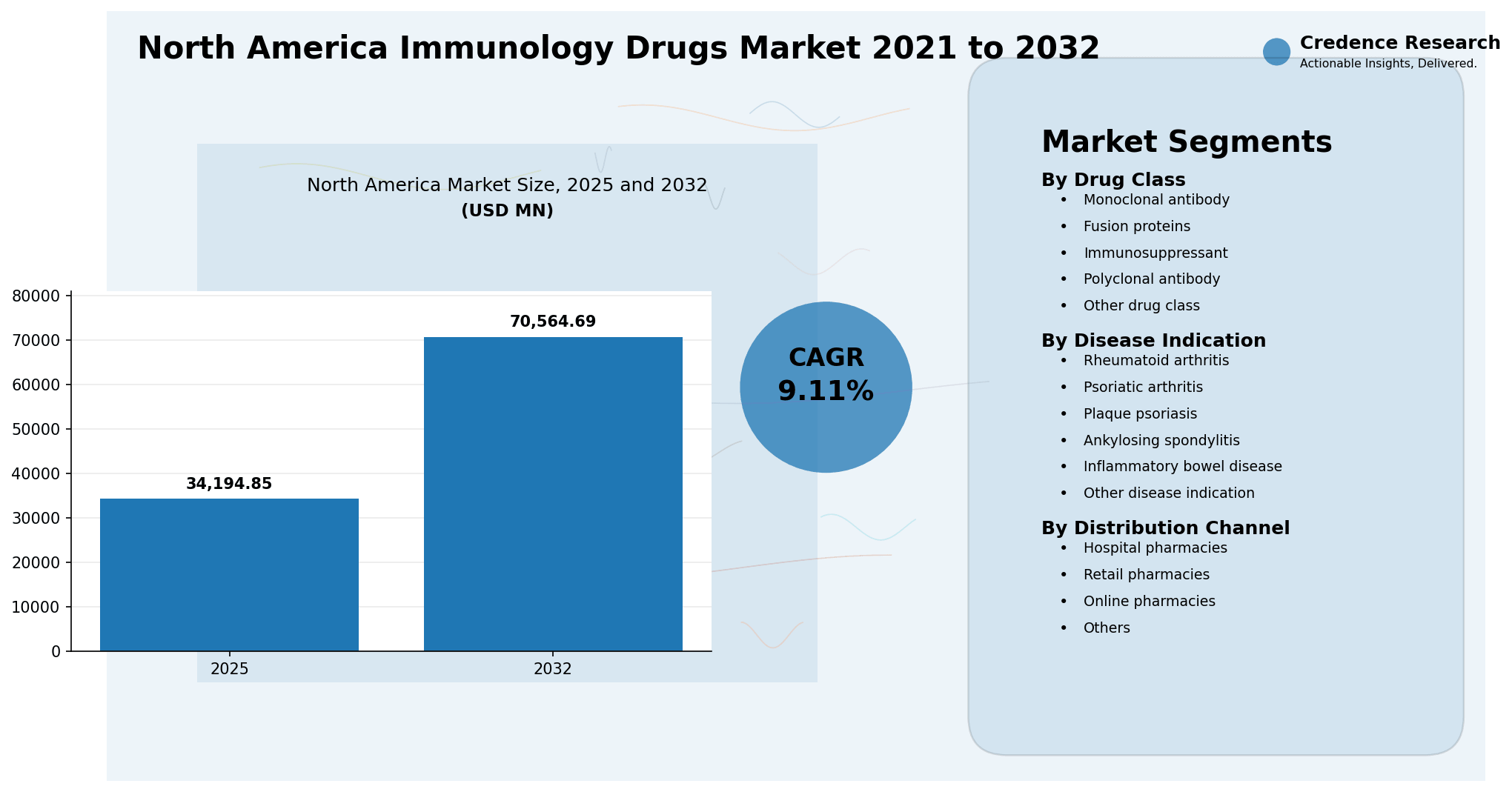
North America Immunology Drugs Market Segment Insights
By drug class
By drug class, Monoclonal Antibody held a strong position in 2025 because biologic therapies are widely used across rheumatoid arthritis, psoriatic arthritis, plaque psoriasis, ankylosing spondylitis and inflammatory bowel disease. These therapies target immune pathways such as TNF, IL-17, IL-23, IL-6 and integrin-mediated inflammation. Fusion Proteins remain relevant in autoimmune care through established biologic mechanisms and long-term clinical use. Immunosuppressant drugs continue to serve patients who need conventional systemic therapy, combination treatment or lower-cost options. Polyclonal Antibody remains a smaller specialized category. Other Drug Class includes JAK inhibitors, small molecules, biosimilars and emerging targeted immunology treatments.
Access crucial information at unmatched prices!
Request your sample report today & start making informed decisions powered by Credence Research Inc.!
Download Sample
By disease indication
By disease indication, Inflammatory Bowel Disease held strong growth momentum in 2025 because Crohn’s disease and ulcerative colitis are shifting toward targeted biologics, JAK inhibitors and IL-23 pathway drugs. Rheumatoid Arthritis remains a major indication due to sustained use of biologics, biosimilars, JAK inhibitors and conventional immunosuppressants. Plaque Psoriasis and Psoriatic Arthritis support strong demand due to high use of monoclonal antibodies and newer interleukin-targeted drugs. Ankylosing Spondylitis benefits from biologic and IL-17 inhibitor adoption. Other Disease Indication includes dermatologic, rheumatologic and gastrointestinal immune-mediated disorders where targeted therapies are expanding.
By distribution channel
By distribution channel, Retail Pharmacies held a strong position in 2025 because many immunology drugs are used through long-term outpatient maintenance therapy. Patients often receive subcutaneous biologics, oral immunosuppressants, JAK inhibitors and supportive medicines through retail or specialty pharmacy-linked channels. Hospital Pharmacies remain important for infused biologics, therapy initiation, acute flare management and complex patient monitoring. Online Pharmacies are gaining traction through home delivery, digital refill reminders and chronic therapy management. Others include specialty pharmacies, mail-order channels and integrated payer-provider distribution models. Channel growth will favor platforms that support adherence, cold-chain handling, prior authorization and patient education.
Key market drivers
Rising autoimmune disease burden
Rising autoimmune disease burden represents a major growth driver for the North America Immunology Drugs Market. Immune-mediated conditions require long-term treatment, frequent monitoring and therapy escalation when conventional drugs fail. Rheumatoid Arthritis, Psoriatic Arthritis, Plaque Psoriasis, Ankylosing Spondylitis and Inflammatory Bowel Disease create recurring demand for Monoclonal Antibody, Fusion Proteins, Immunosuppressant and newer targeted therapies. CDC estimates that 58.5 million U.S. adults have arthritis and 25.7 million report arthritis-attributable activity limitation, while CDC also estimates U.S. inflammatory bowel disease prevalence between 2.4 million and 3.1 million people. This large chronic disease base supports sustained use of hospital, retail and online pharmacy channels. The driver will remain central through 2032 as diagnosis, treatment access and biologic use expand.
Biologic and monoclonal antibody adoption
Biologic and monoclonal antibody adoption is strengthening demand across immune-mediated diseases. Monoclonal antibodies and targeted biologics support improved disease control in patients with moderate to severe rheumatoid arthritis, plaque psoriasis, psoriatic arthritis, ankylosing spondylitis and inflammatory bowel disease. These therapies also command premium pricing and support long-term maintenance use. AbbVie reported full-year 2025 global immunology portfolio net revenues of USD 30.406 billion, including Skyrizi net revenues of USD 17.562 billion, Rinvoq net revenues of USD 8.304 billion and Humira net revenues of USD 4.540 billion. This commercial scale reflects the importance of targeted immunology portfolios. Growth will continue as companies expand labels, improve dosing convenience and compete on differentiated clinical outcomes.
Inflammatory bowel disease treatment expansion
Inflammatory bowel disease treatment expansion supports strong market growth because ulcerative colitis and Crohn’s disease require sustained therapy, escalation pathways and long-term remission management. Newer biologics and oral targeted therapies are expanding options for patients who do not respond to conventional treatment or older biologics. Eli Lilly announced FDA approval of Omvoh for Crohn’s disease in January 2025, expanding its use to the second major type of inflammatory bowel disease, while FDA has also approved Rinvoq as the first oral treatment for adults with moderately to severely active Crohn’s disease after inadequate response or intolerance to one or more TNF blockers. This supports higher demand for advanced therapies across hospital and specialty pharmacy pathways.
Biosimilar entry and treatment access
Biosimilar entry and treatment access are reshaping the North America Immunology Drugs Market. Biosimilars can improve affordability and increase treatment availability for patients requiring biologics for inflammatory diseases. They also create competitive pressure on originator biologics while expanding access for payers, physicians and patients. FDA approved Wezlana, granted to Amgen, as a biosimilar to and interchangeable with Stelara for multiple inflammatory diseases, noting that biosimilar medicines can add safe and effective treatment options with the potential to increase access. Biosimilar adoption will affect pricing, formulary design and patient switching strategies. The driver will remain important as more biologic patents expire and payer-driven access models evolve.
Key Trends and Opportunities
IL-17 and IL-23 pathway innovation accelerates
IL-17 and IL-23 pathway innovation is becoming a major opportunity across plaque psoriasis, psoriatic arthritis, ankylosing spondylitis and inflammatory bowel disease. These mechanisms offer targeted immune modulation and have expanded the role of monoclonal antibodies in chronic inflammatory care. UCB announced U.S. FDA approvals for Bimzelx for active psoriatic arthritis, non-radiographic axial spondyloarthritis and ankylosing spondylitis, adding to its plaque psoriasis use. This trend supports premium biologic growth, especially where patients need deeper skin clearance, joint symptom improvement or broader inflammatory disease control. Companies with strong interleukin pathway portfolios will remain well positioned.
Specialty pharmacy and home administration expand
Specialty pharmacy and home administration are expanding as many immunology drugs shift toward outpatient self-injection, oral therapy and long-term maintenance use. Subcutaneous biologics and oral small molecules allow patients to receive treatment outside hospital settings while maintaining specialist oversight. Retail Pharmacies, Online Pharmacies and specialty pharmacies support prior authorization, refill coordination, cold-chain distribution and adherence programs. This trend reduces infusion-center dependence for selected therapies and improves patient convenience. However, specialty pharmacy models must manage education, safety monitoring and payer documentation. Growth will favor distribution partners that integrate digital support with clinical care pathways.
Biosimilars intensify competition and payer influence
Biosimilars are intensifying competition across established biologic categories. They can lower treatment costs, increase formulary leverage and shift prescribing behavior, especially for mature therapies. Payers may prefer biosimilars to reduce spending, while physicians evaluate switching protocols and patient stability. This creates opportunities for biosimilar developers and challenges originator brands to defend share through outcomes data, device convenience, patient support and next-generation products. The trend will affect monoclonal antibodies, fusion proteins and selected interleukin therapies over time. Companies that combine reliable supply, competitive pricing and strong provider education will capture biosimilar-driven demand.
Key Market Challenges
Pricing pressure and payer restrictions
Pricing pressure and payer restrictions remain key challenges for the North America Immunology Drugs Market. Biologics, JAK inhibitors and specialty immunology therapies can carry high costs, prompting payers to use step therapy, prior authorization and formulary exclusions. Biosimilars improve access but also pressure originator revenue. Patients may face delays, switching requirements or out-of-pocket cost barriers. Manufacturers must show durable clinical benefit, real-world outcomes and value for money to maintain access. This challenge will remain central as immunology portfolios grow and payer scrutiny intensifies.
Safety monitoring and adverse event risk
Safety monitoring and adverse event risk create clinical barriers for advanced immunology drugs. Monoclonal antibodies, immunosuppressants, JAK inhibitors and other targeted agents can affect immune function and require screening, monitoring and patient education. Infection risk, malignancy warnings, laboratory monitoring needs and drug-specific precautions can shape prescribing decisions. Hospital Pharmacies and specialty pharmacies must support safe therapy initiation and continuity. Providers also need clear guidance on switching, combination therapy and flare management. Companies that provide strong safety data and risk-management support will improve adoption.
Complex treatment sequencing
Complex treatment sequencing creates challenges for physicians, payers and patients. Many immune-mediated diseases require stepwise treatment from conventional immunosuppressants to biologics, biosimilars, JAK inhibitors and newer targeted therapies. Patients may switch due to nonresponse, loss of response, safety concerns or payer formulary changes. Sequencing decisions differ by indication, severity, comorbidities and prior therapy exposure. This complexity can slow adoption of newer drugs and increase administrative burden. Stronger biomarkers, real-world evidence and guideline clarity will help optimize treatment pathways.
Regional Analysis
United States
The United States leads the North America Immunology Drugs Market due to its large treated patient population, high use of specialty medicines, broad biologic adoption and strong payer-driven pharmacy infrastructure. Demand is strong across Rheumatoid Arthritis, Plaque Psoriasis, Psoriatic Arthritis, Ankylosing Spondylitis and Inflammatory Bowel Disease. Retail Pharmacies and specialty pharmacies support long-term outpatient therapy, while Hospital Pharmacies manage infused biologics and complex treatment initiation. The U.S. also drives innovation because companies prioritize FDA approvals, label expansions and patient support programs. It is expected to remain the primary revenue contributor through 2032.
Canada
Canada represents a steady immunology drugs market supported by public health systems, private insurance, specialist networks and guideline-based management of autoimmune disease. Demand is strong for biologics, biosimilars, immunosuppressants and targeted therapies across rheumatology, dermatology and gastroenterology. Market access depends on health technology assessments, provincial formularies and reimbursement decisions. Retail Pharmacies and specialty pharmacies play a central role in dispensing, adherence support and patient education. Hospital Pharmacies remain important for infusion-based therapies and complex care. Growth will remain steady as biosimilar policy, biologic adoption and advanced therapy access evolve.
Mexico
Mexico offers a smaller but gradually expanding market within North America. Demand is supported by rising diagnosis of immune-mediated diseases, private health care growth and increasing access to biologics in specialist care settings. Retail Pharmacies remain important for conventional therapies and chronic refills, while Hospital Pharmacies support infused biologics and severe disease management. Online Pharmacies are emerging gradually as patients seek convenience and refill access. Affordability remains a major challenge, increasing the importance of biosimilars and lower-cost treatment pathways. Growth will depend on diagnosis rates, insurance coverage, specialist access and availability of advanced immunology drugs.
Report Attribute Details
| Report Attribute |
Details |
| Historical Period |
2021–2024 |
| Base Year |
2025 |
| Forecast Period |
2025–2032 |
| Market Size in 2021 |
USD 23,174.02 MN |
| Market Size in 2025 |
USD 34,194.85 MN |
| Market Size in 2032 |
USD 70,564.69 MN |
| CAGR |
9.11% |
| Segments Covered |
Drug Class, Disease Indication, Distribution Channel and Geography |
| Key Companies Covered |
Eli Lilly, AbbVie Inc, F. Hoffmann-La Roche Ltd, Amgen Inc, Pfizer, Novartis, Astellas, Alector, ImmuNext, Merck Sharp & Dohme Corp and UCB S. |
North America Immunology Drugs Market Segmentations
By Drug Class
- Monoclonal Antibody
- Fusion Proteins
- Immunosuppressant
- Polyclonal Antibody
- Other Drug Class
By Disease Indication
- Rheumatoid Arthritis
- Psoriatic Arthritis
- Plaque Psoriasis
- Ankylosing Spondylitis
- Inflammatory Bowel Disease
- Other Disease Indication
By Distribution Channel
- Hospital Pharmacies
- Retail Pharmacies
- Online Pharmacies
- Others
Key Players
- Eli Lilly
- AbbVie Inc
- Hoffmann-La Roche Ltd
- Amgen Inc
- Pfizer
- Novartis
- Astellas
- Alector
- ImmuNext
- Merck Sharp & Dohme Corp
- UCB S.
Recent Developments
- In January 2025, Eli Lilly announced FDA approval of Omvoh for Crohn’s disease, expanding its use to the second major type of inflammatory bowel disease after its earlier ulcerative colitis approval.
- In October 2025, AbbVie announced FDA approval of an updated indication statement for Rinvoq for adults with moderately to severely active ulcerative colitis and Crohn’s disease.
- In September 2024, UCB announced U.S. FDA approvals for Bimzelx for active psoriatic arthritis, non-radiographic axial spondyloarthritis and ankylosing spondylitis.
- In 2025, AbbVie reported full-year global immunology portfolio net revenues of USD 30.406 billion, supported by Skyrizi, Rinvoq and Humira.
Shape Your Report to Specific Countries or Regions & Enjoy 30% Off!
Report Coverage
The research report offers an in-depth analysis based on drug class, disease indication, distribution channel and geography. It details leading market players, providing an overview of their business positioning, immunology portfolios, biologic platforms, biosimilar exposure, market access strategies and strategic role in the North America Immunology Drugs Market. The report includes insights into the competitive environment, market trends, growth drivers, restraints and opportunities.
It also examines autoimmune disease burden, biologic adoption, inflammatory bowel disease treatment expansion, biosimilar entry, specialty pharmacy growth and targeted pathway innovation as major factors shaping market development. The report assesses the impact of pricing pressure, payer restrictions, safety monitoring and complex treatment sequencing on market growth. It provides strategic recommendations for pharmaceutical companies, hospital systems, retail pharmacy networks, online pharmacies, payers, specialty distributors, investors and new entrants seeking to navigate North America’s immunology drugs ecosystem.
Future Outlook
- Demand for immunology drugs will continue to rise as autoimmune disease diagnosis, specialty therapy use and chronic treatment needs expand across North America.
- Monoclonal Antibody will remain a leading drug class because biologics are central to moderate to severe immune-mediated disease treatment.
- Fusion Proteins will remain relevant through established use in inflammatory diseases and long-term therapy pathways.
- Immunosuppressant drugs will continue to support baseline treatment, combination therapy and lower-cost care pathways.
- Inflammatory Bowel Disease will gain strong momentum as IL-23 inhibitors, JAK inhibitors and biologics expand in ulcerative colitis and Crohn’s disease.
- Plaque Psoriasis and Psoriatic Arthritis will continue to support premium biologic demand through IL-17 and IL-23 pathway therapies.
- Retail Pharmacies and specialty pharmacies will remain central to long-term outpatient drug access and refill management.
- Hospital Pharmacies will remain important for infused therapies, complex initiation and severe disease management.
- Biosimilars will increase treatment access while pressuring originator biologic pricing and formulary placement.
- Competition will increase as companies compete on efficacy, dosing convenience, safety profile, biosimilar strategy, payer access and patient support.



