Market Overview:
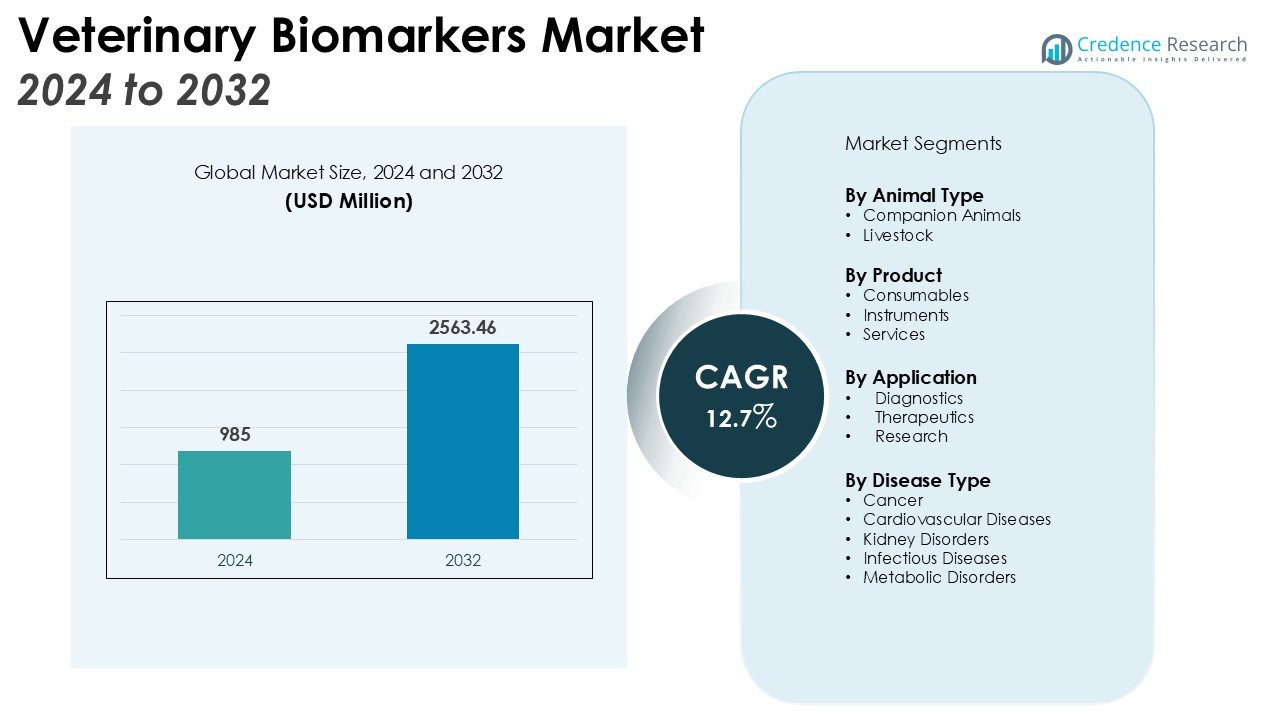
The Veterinary Biomarkers Market size was valued at USD 985 million in 2024 and is anticipated to reach USD 2563.46 million by 2032, at a CAGR of 12.7% during the forecast period (2024-2032).
| REPORT ATTRIBUTE |
DETAILS |
| Historical Period |
2020-2024 |
| Base Year |
2024 |
| Forecast Period |
2025-2032 |
| Veterinary Biomarkers Market Size 2024 |
USD 985 Million |
| Veterinary Biomarkers Market, CAGR |
12.7% |
| Veterinary Biomarkers Market Size 2032 |
USD 2563.46 Million |
The market is primarily driven by the rising prevalence of chronic diseases in animals, such as cancer, cardiovascular diseases, and kidney disorders. Early detection through biomarkers significantly enhances the prognosis of these conditions, leading to better treatment outcomes. Furthermore, the expanding adoption of veterinary diagnostics in both companion animals and livestock, coupled with innovations in genomic technologies and molecular diagnostics, are fueling market growth. Regulatory advancements and the increasing investment in animal health research also contribute to the growth of the veterinary biomarkers market. The growing emphasis on preventive care and personalized treatments in veterinary medicine further accelerates the demand for innovative biomarker solutions.
Regionally, North America holds the largest market share, owing to well-established veterinary healthcare infrastructure, increasing pet adoption, and high expenditure on animal healthcare. Europe follows closely, with notable contributions from the UK and Germany, driven by the demand for advanced diagnostic solutions. The Asia-Pacific region is expected to witness the highest growth rate due to improving veterinary care standards, increasing pet ownership, and rising healthcare investments in emerging economies like China and India. Additionally, the rising awareness of zoonotic diseases and their potential economic impact in emerging regions is further driving market adoption.
Market Insights:
- The Veterinary Biomarkers Market was valued at USD 985 million in 2024 and is projected to reach USD 2563.46 million by 2032, growing at a CAGR of 12.7%. This growth is driven by the rising prevalence of chronic diseases in animals and early detection through biomarkers.
- Technological advancements in molecular diagnostics and genomic technologies are accelerating the adoption of biomarkers in veterinary care, improving early disease detection and personalized treatment.
- Increasing regulatory support and investments in animal health research are creating a favorable environment for market growth, particularly in the development of advanced diagnostic tools for veterinary care.
- The growing emphasis on preventive care is pushing the demand for veterinary biomarkers, enabling early-stage disease detection and better health management for both companion animals and livestock.
- High costs associated with advanced diagnostic tools remain a significant challenge, limiting the widespread adoption of veterinary biomarkers, especially in small practices and emerging markets.
- North America holds the largest share of the Veterinary Biomarkers Market at 40%, followed by Europe with 30%, driven by advanced healthcare infrastructure and rising demand for precision diagnostics.
- The Asia-Pacific region, with a 20% market share, offers significant growth potential due to rising pet ownership, improving veterinary care standards, and increasing demand for biomarker-based diagnostics.
Market Drivers:
Rising Prevalence of Chronic Diseases in Animals
The Veterinary Biomarkers Market is witnessing significant growth due to the increasing prevalence of chronic diseases in animals, including cancer, cardiovascular disorders, and kidney diseases. Early detection through biomarkers is essential in improving diagnosis accuracy and enhancing treatment outcomes. By identifying specific biomarkers associated with these conditions, veterinarians can implement timely interventions, which improves survival rates and quality of life for affected animals. The focus on early-stage detection is driving demand for advanced diagnostic tools in both companion animals and livestock.
- For instance, Oxford BioDynamics has developed the EpiSwitch SCB (Specific Canine Blood) test, a non-invasive blood test for dogs, this advanced diagnostic tool can detect and distinguish between 6 different common canine cancers, including sarcomas and lymphomas, from a single blood sample.
Advancements in Molecular Diagnostics and Genomic Technologies
Advancements in molecular diagnostics and genomic technologies are contributing to the growth of the Veterinary Biomarkers Market. These innovations enable the development of more precise and effective biomarkers that can detect diseases at earlier stages, allowing for better treatment strategies. Genomic profiling has opened new avenues for personalized veterinary medicine, enabling veterinarians to tailor treatment plans based on individual animal genetics. This precision in diagnostics is a key factor driving the increased adoption of biomarkers in veterinary healthcare.
- For instance, the Fecal Dx antigen testing platform from IDEXX Laboratories can uncover up to 5 times more common intestinal parasite infections in dogs and cats than traditional fecal flotation methods by detecting parasite-specific antigens instead of eggs.
Regulatory Advancements in Animal Health
Regulatory advancements are another important driver of the Veterinary Biomarkers Market. Governments and regulatory bodies have started emphasizing the importance of biomarker-based diagnostics in veterinary care, providing a clear framework for their development and application. Such regulations promote the use of biomarkers for disease detection and prevention, ensuring higher standards of veterinary care. These regulatory improvements enhance the market’s credibility and foster increased investment in biomarker research and product development.
Increasing Investment in Animal Health Research
The Veterinary Biomarkers Market is also benefiting from a surge in investment in animal health research. The rising focus on improving animal care, particularly in veterinary diagnostics and treatments, has attracted significant funding. Research institutes and biotech companies are collaborating to develop novel biomarkers that address both common and complex animal diseases. This investment in research is accelerating the market’s growth, as new diagnostic tools and biomarkers are continuously being developed, offering more effective solutions for veterinarians.
Market Trends:
Growth in Personalized Veterinary Medicine
A significant trend driving the Veterinary Biomarkers Market is the increasing adoption of personalized veterinary medicine. The market is witnessing a shift towards customized treatments based on an individual animal’s genetic makeup and specific disease biomarkers. Veterinary practitioners are using advanced genomic and molecular diagnostics to identify disease patterns at the genetic level, enabling tailored treatment regimens. This approach not only improves the efficacy of treatments but also reduces unnecessary interventions, resulting in more cost-effective care. Personalized medicine is gaining popularity, especially in companion animals, where pet owners seek more precise and effective healthcare solutions for their animals.
- For instance, in September 2022, Antech expanded its molecular diagnostics portfolio with the OncoK9 liquid biopsy test. This test represents a significant technological achievement in personalized medicine, as it can detect 30 different types of cancer in dogs from a single blood draw.
Integration of Biomarkers in Preventive Veterinary Care
Another prominent trend is the growing integration of biomarkers into preventive veterinary care. Veterinary professionals are increasingly using biomarkers to monitor the health of animals before symptoms of diseases appear. Biomarkers allow for early detection of potential health issues, providing an opportunity for intervention before the condition worsens. This trend is particularly important in the livestock sector, where early diagnosis can prevent disease outbreaks and minimize economic losses. As preventive care becomes a priority in veterinary medicine, the Veterinary Biomarkers Market is experiencing an uptick in demand for diagnostic tools that focus on long-term health monitoring and disease prevention.
- For instance, in November 2023, Veterinary Pathology Group (VPG) and VolitionRx launched the Nu.Q Vet Cancer Test in the UK and Ireland.
Market Challenges Analysis:
High Costs of Advanced Diagnostic Tools
One of the key challenges facing the Veterinary Biomarkers Market is the high cost associated with advanced diagnostic tools and biomarker-based tests. These technologies require substantial investment in research, development, and manufacturing, which often leads to higher prices for end-users. Veterinary clinics, particularly in emerging markets, may struggle to afford such expensive equipment and tests, limiting widespread adoption. This cost barrier hinders the accessibility of cutting-edge diagnostic services, especially for small animal practices and rural veterinary clinics, where budgets are more constrained. The high initial cost of biomarker-based solutions can slow down market penetration and limit their potential growth.
Regulatory and Standardization Issues
The Veterinary Biomarkers Market also faces challenges related to regulatory hurdles and lack of standardization. While regulatory bodies have made strides in recognizing the importance of biomarkers in animal health, the regulatory approval process remains complex and time-consuming. The absence of universally accepted standards for veterinary biomarkers further complicates the development and adoption of new diagnostic tools. Disparities in regulatory requirements across regions can delay product launches and create uncertainty for manufacturers. Until clear and consistent global guidelines are established, market growth could be hindered by these regulatory complexities.
Market Opportunities:
Expansion in Emerging Markets
The Veterinary Biomarkers Market presents significant opportunities for growth in emerging markets. As veterinary care standards improve and pet ownership rises in developing regions, the demand for advanced diagnostic tools is increasing. With growing investments in animal healthcare infrastructure, these markets offer substantial potential for biomarker-based diagnostic solutions. Manufacturers can leverage these emerging markets by introducing cost-effective, region-specific products that meet local needs. The expansion of veterinary care in countries such as China, India, and Brazil can fuel market growth, creating a strong demand for innovative biomarkers in both companion animals and livestock sectors.
Advancements in Precision Medicine and Disease Prevention
Another promising opportunity for the Veterinary Biomarkers Market lies in the continued advancement of precision medicine and disease prevention. The increasing focus on individualized treatment plans and preventive healthcare for animals opens new avenues for biomarker applications. By developing more accurate and affordable biomarkers, companies can cater to the growing demand for precision veterinary medicine. This approach not only improves treatment outcomes but also enhances the quality of life for animals. Veterinary professionals are increasingly adopting proactive care strategies, creating a favorable environment for the widespread adoption of biomarker-based solutions.
Market Segmentation Analysis:
By Animal Type
The Veterinary Biomarkers Market is divided into companion animals and livestock. Companion animals hold the largest share due to the rising adoption of pets globally, particularly in North America and Europe. The livestock segment is also significant, driven by the need for early disease detection and management in large-scale farming operations.
- For instance, Zoetis has entered into a $1.3 million research collaboration to advance biomarker research, which will help ensure the economic viability of the U.S. dairy industry.
By Product
The market is categorized into consumables, instruments, and services. Consumables dominate the market, especially diagnostic kits and test reagents, due to their frequent use in veterinary diagnostics. Instruments, such as analyzers and genetic testing devices, are experiencing rapid growth as veterinary care increasingly adopts advanced technology. Services, including testing and diagnostic services, play a key role in enabling biomarker-based detection and prevention.
- For instance, IDEXX Laboratories reported a record of nearly 2,400 IDEXX inVue Dx™ analyzer placements in the second quarter of 2025, highlighting the rapid adoption of advanced diagnostic technology.
By Application
The Veterinary Biomarkers Market is segmented into diagnostics, therapeutics, and research. Diagnostics holds the largest share, driven by the growing demand for early disease detection and monitoring in animals. Therapeutics, while smaller, is growing as biomarkers are integrated into personalized veterinary medicine. Research applications are expanding, with advancements in genetic testing and molecular diagnostics contributing to the development of more effective veterinary care solutions.
Segmentations:
By Animal Type
- Companion Animals
- Livestock
By Product
- Consumables
- Instruments
- Services
By Application
- Diagnostics
- Therapeutics
- Research
By Disease Type
- Cancer
- Cardiovascular Diseases
- Kidney Disorders
- Infectious Diseases
- Metabolic Disorders
By Region
- North America
- Europe
- Germany
- France
- U.K.
- Italy
- Spain
- Rest of Europe
- Asia Pacific
- China
- Japan
- India
- South Korea
- South-east Asia
- Rest of Asia Pacific
- Latin America
- Brazil
- Argentina
- Rest of Latin America
- Middle East & Africa
- GCC Countries
- South Africa
- Rest of the Middle East and Africa
Regional Analysis:
North America
North America holds the largest share of the Veterinary Biomarkers Market, accounting for 40% of the global market. This dominance is driven by the region’s advanced veterinary healthcare infrastructure, high pet adoption rates, and strong economic conditions. The United States, in particular, leads the market, fueled by the growing demand for advanced diagnostic solutions in companion animals and livestock. The concentration of veterinary clinics and diagnostic laboratories in this region promotes the adoption of biomarker-based diagnostics. Regulatory frameworks and ongoing investments in animal health research further contribute to the region’s leadership in the market.
Europe
Europe captures a significant portion of the Veterinary Biomarkers Market, contributing 30% to the global share. The demand for veterinary biomarkers in this region is driven by increasing concerns about animal diseases, a focus on preventive care, and the growing adoption of precision medicine. Countries like the United Kingdom, Germany, and France lead the market due to their advanced veterinary healthcare systems. High awareness of zoonotic diseases and strong regulatory standards further support market growth. The rising demand for diagnostic solutions in both companion animals and livestock in these countries fuels the expansion of the market.
Asia-Pacific
The Asia-Pacific region holds a 20% share in the Veterinary Biomarkers Market and is poised for the highest growth. The market expansion in this region is driven by improving veterinary care standards, rising pet ownership, and an increasing demand for high-quality animal products. As developing economies like China, India, and Japan continue to invest in veterinary healthcare infrastructure, the demand for biomarker-based diagnostics is expected to rise. The region’s growing livestock industry, coupled with the increasing adoption of advanced diagnostic solutions, creates significant opportunities for market growth.
Shape Your Report to Specific Countries or Regions & Enjoy 30% Off!
Key Player Analysis:
Competitive Analysis:
The Veterinary Biomarkers Market is highly competitive, with several key players driving innovation and market growth. Leading companies focus on expanding their product portfolios through strategic partnerships, mergers, and acquisitions. These players invest significantly in research and development to introduce advanced diagnostic solutions that cater to both companion animals and livestock. Market leaders, such as IDEXX Laboratories, Zoetis, and Thermo Fisher Scientific, leverage their strong distribution networks and established brand reputations to maintain a competitive edge. They focus on developing accurate, cost-effective, and easy-to-use biomarkers that support early disease detection and personalized veterinary care. The market is also witnessing an influx of smaller biotechnology firms that specialize in genomic technologies and molecular diagnostics, introducing specialized solutions that address niche animal health needs. As demand for preventive care and personalized treatment grows, the competitive landscape of the Veterinary Biomarkers Market is expected to become increasingly dynamic.
Recent Developments:
- In August 2025, Zoetis announced its second-quarter 2025 financial results, reporting an 8% rise in organic operational revenue.
- In June 2025, Zoetis launched AI Masses, a new artificial intelligence-powered feature for its Vetscan Imagyst analyzer, designed to help screen for common skin and lymph node lesions in animals.
- In July 2025, the FDA approved Merck Animal Health’s BRAVECTO® QUANTUM, an injectable suspension that provides dogs with a full year of protection against fleas and ticks with a single dose.
Market Concentration & Characteristics:
The Veterinary Biomarkers Market exhibits moderate concentration, with a few major players holding significant market shares. Leading companies such as IDEXX Laboratories, Zoetis, and Thermo Fisher Scientific dominate the market due to their advanced product offerings and strong brand presence. These companies focus on innovation and technological advancements to maintain a competitive edge, investing heavily in research and development. The market also features a growing number of smaller, specialized players, especially in genomic and molecular diagnostics, targeting niche areas within veterinary care. This diverse competitive landscape fosters innovation while ensuring a steady supply of advanced diagnostic solutions. The market characteristics include high competition, continuous product innovation, and a strong emphasis on early disease detection and personalized care for animals, making it a dynamic sector with opportunities for growth and diversification.
Report Coverage:
The research report offers an in-depth analysis based on Animal Type, Product, Application, Disease Type and Region. It details leading market players, providing an overview of their business, product offerings, investments, revenue streams, and key applications. Additionally, the report includes insights into the competitive environment, SWOT analysis, current market trends, as well as the primary drivers and constraints. Furthermore, it discusses various factors that have driven market expansion in recent years. The report also explores market dynamics, regulatory scenarios, and technological advancements that are shaping the industry. It assesses the impact of external factors and global economic changes on market growth. Lastly, it provides strategic recommendations for new entrants and established companies to navigate the complexities of the market.
Future Outlook:
- The Veterinary Biomarkers Market will continue to expand as the demand for early disease detection and personalized treatment grows.
- Advancements in molecular diagnostics and genomic technologies will play a crucial role in enhancing the accuracy and effectiveness of veterinary biomarkers.
- Increased adoption of preventive healthcare practices will drive the use of biomarkers for monitoring animal health and detecting diseases at earlier stages.
- Companion animals will remain the dominant segment, with rising pet ownership fueling the need for advanced diagnostic solutions.
- Livestock health management will see greater integration of biomarkers as the agriculture industry focuses on disease prevention and cost-effective management.
- Regulatory frameworks around the world will evolve to support the widespread adoption of biomarker-based diagnostics, fostering market growth.
- The focus on research and development will lead to more specialized biomarkers, improving precision medicine for animals.
- Growing awareness of zoonotic diseases will further promote the adoption of veterinary biomarkers to prevent potential outbreaks.
- Emerging markets, particularly in Asia-Pacific, will experience substantial growth as veterinary care standards improve and pet ownership increases.
- Collaboration between biotechnology firms and veterinary healthcare providers will accelerate the development of new diagnostic tools, expanding the market’s potential.



