
EQT agrees to acquire Cleanaway in A$9.3 billion all-cash scheme
EQT Infrastructure VI has agreed to buy Cleanaway Waste Management Ltd., Australia's leading integrated waste management and resource recovery company, in an all-cash scheme of arrangement that implies an enterprise value of about A$9.3 billion. The Swedish investment firm announced the binding Scheme Implementation Deed on Oct. 18, and Cleanaway confirmed the agreement to the Australian Securities Exchange on Oct. 19, with its board unanimously recommending the offer to shareholders.
Key developments
- EQT Infrastructure VI will pay A$3.095 in cash for each Cleanaway share, reduced by any dividends or distributions declared or paid before the deal is implemented.
- The offer implies an enterprise value of about A$9.3 billion and a 32.1% premium to Cleanaway's A$2.37 closing price on Aug. 12, 2026, the last full trading day before the company first disclosed takeover talks.
- A ticking fee of A$0.0002 per share per day applies from June 1, 2027, if implementation slips past May 31, 2027.
- The scheme requires approval from Cleanaway shareholders, the Federal Court of Australia and regulators, and the companies expect implementation by the end of March 2027.
- Cleanaway's board backs the scheme in the absence of a superior proposal and subject to an independent expert concluding it is in shareholders' best interests.
Industry background
Cleanaway runs one of the broadest waste and environmental services networks in Australia. According to its fiscal 2026 annual report, the company employs more than 9,700 people across Australia, New Zealand and the Middle East, operates more than 350 active sites and a national network of 135 licensed facilities, and runs a fleet of more than 6,200 vehicles. Its asset base includes transfer stations, engineered landfills, liquid treatment plants and oil refineries, and it serves about 117,000 customers a year along with roughly 140 local councils.
The business has shifted steadily from collection toward recovery. In fiscal 2026, Cleanaway processed 225,000 metric tons of containers through state container deposit schemes, recycled 475,000 tons of paper and cardboard, recovered 111 million liters of waste oil and captured landfill gas that generated 219.1 gigawatt-hours of electricity. Its Blueprint 2030 strategy targets a more customer-led and digitally enabled business, and active projects include the Circular Plastics Australia recycled resin joint venture, a proposed soft plastics recycling pathway with Viva Energy and a liquid product destruction facility in Dandenong South, Victoria.
Cleanaway reported fiscal 2026 net revenue, excluding landfill levies, of A$3.74 billion and underlying earnings before interest and tax of A$470.2 million, up 14.2% from the prior year. EQT's deal math uses that EBIT figure along with net debt and debt-like items of A$2.29 billion at June 30, 2026.
Industry implications
The agreement signals how global infrastructure capital now views waste management. Landfill airspace, licensed treatment sites and municipal collection contracts are hard to replicate, since new landfills and hazardous waste facilities face long environmental approval processes. Those features give the assets the long-life, contracted profile that infrastructure funds typically seek.
The deal also adds a large Australian platform to an existing EQT portfolio in waste and environmental services. EQT lists Urbaser, Reworld, Encyclis and Arcwood among its holdings in the sector, spanning municipal services, energy-from-waste and environmental remediation. EQT said it plans to work with Cleanaway's management and employees on long-term growth and on supporting Australia's circular economy, which points to continued investment in recycling and recovery capacity.
For industrial customers and councils, the near-term operating effect should be limited. Contracts, licenses and sites remain with Cleanaway, and change-of-control consents for certain material contracts form part of the deal conditions. Over a longer horizon, private ownership can make it easier to fund multi-year projects such as landfill extensions and new processing plants without the pressure of quarterly public market scrutiny.
Competitive and supply chain implications
Cleanaway's network touches several industrial supply chains. Its liquid and hazardous waste services support mining, manufacturing and chemical sites, its refineries recover used oil, and its recycling joint ventures supply recycled PET, HDPE and polypropylene resin to packaging makers. A well-capitalized owner could accelerate investment in these recovery streams, which matter to brand owners working to meet Australian packaging recycled-content targets.
Rival operators, including privately held and municipally linked collectors, will watch whether EQT uses Cleanaway as a consolidation platform. Infrastructure owners often pursue bolt-on acquisitions after a large platform deal. Any material expansion through acquisitions would face review by the Australian Competition and Consumer Commission, which has scrutinized waste sector mergers in the past because local collection and disposal markets can be concentrated.
Regional implications
In Australia, the transaction places a nationally significant waste network under foreign ownership, which brings Foreign Investment Review Board scrutiny. According to Cleanaway's announcement as summarized by Market Index, the scheme needs clearance from FIRB, the ACCC and competition authorities in Kuwait and Saudi Arabia. The Gulf approvals reflect Cleanaway's operations in the Middle East, where its annual report lists activity in the United Arab Emirates, Kuwait, Qatar, Oman and Saudi Arabia.
For New Zealand, the deal transfers ownership of Cleanaway's operations there without immediate operational change. State governments, which manage landfill levies and container deposit schemes, will remain key counterparties for the business regardless of who owns it.
Credence Research analysis
The scheme reflects a broader pattern in which infrastructure funds treat essential environmental services as core infrastructure, alongside toll roads and utilities. Cleanaway's appeal rests on scarce permitted assets, such as landfills, liquid treatment plants and refineries, combined with recurring municipal and commercial contracts. Those characteristics support stable cash flows, while recycling and recovery projects offer growth that requires patient capital. EQT's statement that the fund will be 85% to 90% invested after the deal shows it is committing a large share of a flagship vehicle to a single platform.
The key operational question is capital allocation. Cleanaway's Blueprint 2030 plan already prioritizes margin improvement, digital tools and recovery infrastructure, including the proposed Lucas Heights landfill extension in Sydney and soft plastics recycling. Under private ownership, those projects can be judged over longer horizons, though leverage typically rises in infrastructure buyouts. Customers, councils and regulators will look for continuity in service quality and environmental compliance as ownership changes.
What comes next
- Cleanaway will prepare a scheme booklet for shareholders that includes the independent expert's report.
- Regulators, including FIRB and the ACCC, will review the transaction, along with competition authorities in Kuwait and Saudi Arabia.
- Cleanaway shareholders are expected to vote at a scheme meeting before the end of February 2027.
- Federal Court approval would follow a successful vote, with implementation targeted by the end of March 2027.
- Cleanaway may pay pre-implementation dividends, possibly including a special dividend, according to Market Index; any such payment would reduce the cash consideration by the same amount.
Sources
- EQT: EQT agrees to acquire Cleanaway (Oct. 18, 2026)
- Cleanaway: ASX announcements, Scheme Implementation Deed with EQT Infrastructure (Oct. 19, 2026)
- Cleanaway: Fiscal 2026 Annual Report
- Market Index: ASX 200 live, Oct. 19, 2026
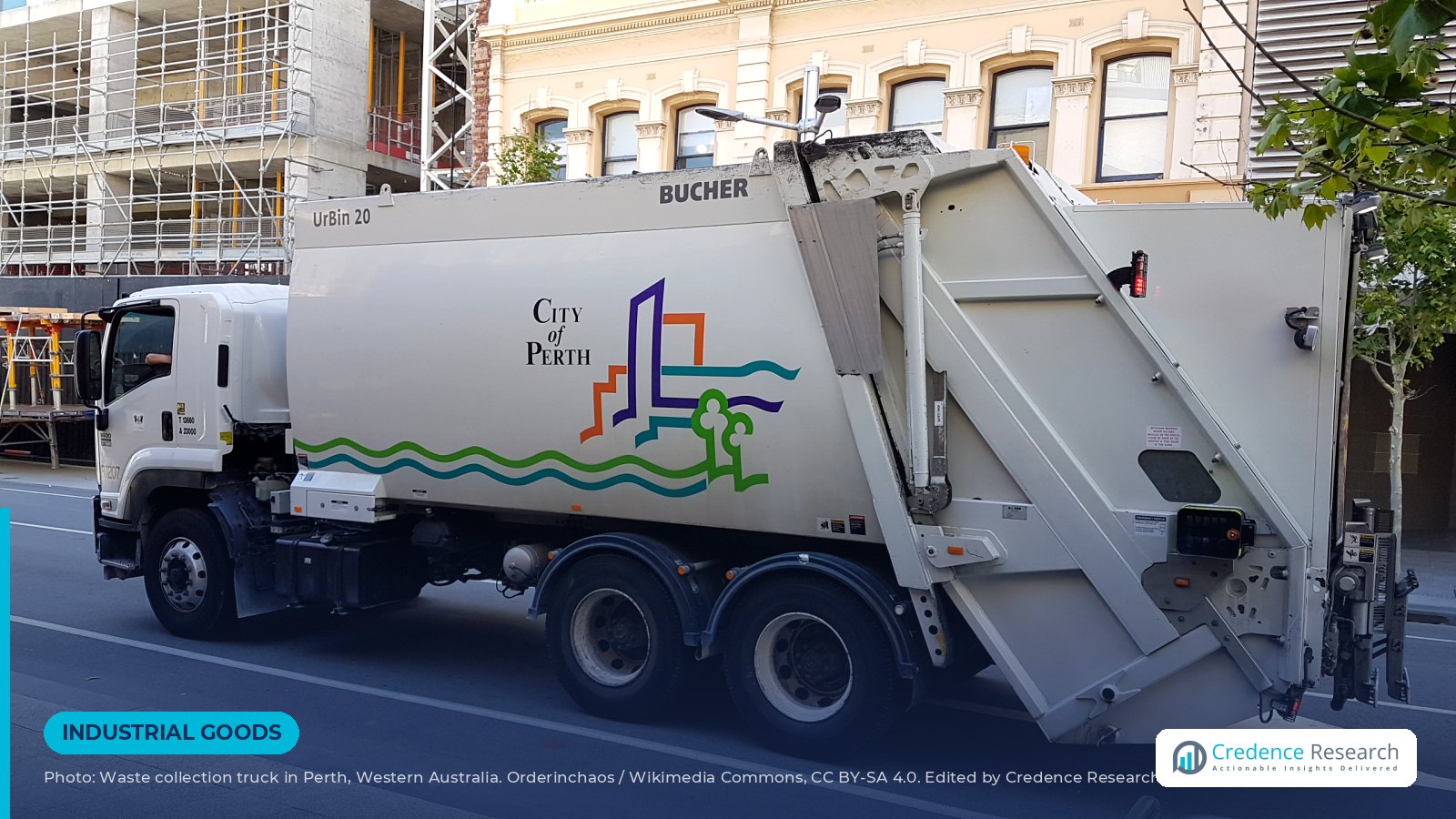
Image: Waste collection truck in Perth, Western Australia, by Orderinchaos via Wikimedia Commons, CC BY-SA 4.0. Cropped and edited by Credence Research.

About the Author

Senior News Editor at Credence Research Inc