
FDA Approves GSK's Jemperli as First Immunotherapy for dMMR Locally Advanced Rectal Cancer
The U.S. Food and Drug Administration has granted accelerated approval to GSK's Jemperli (dostarlimab-gxly) for adults with stage II or III locally advanced rectal cancer that is microsatellite instability-high (MSI-H) or mismatch repair deficient (dMMR), the company said Oct. 19 from Philadelphia. GSK said the decision makes Jemperli the first and only immunotherapy approved in the United States for this group of patients, and it arrived ahead of the February 2027 target action date the agency had set when it accepted the filing in August.
Key developments
- The FDA approved a supplemental Biologics License Application for Jemperli as a single agent in adults with stage II/III MSI-H or dMMR locally advanced rectal cancer, with tumor status determined by an FDA-authorized test for solid tumors.
- The approval rests on the phase II AZUR-1 trial, where 47% of 116 evaluable patients (95% CI 37% to 56%) achieved a sustained clinical complete response for 12 months by independent central review.
- By investigator assessment, 68% of 144 evaluable patients reached that 12-month milestone, and GSK reported no recurrences among responders after a median follow-up of more than two years.
- The filing carried Fast Track, Breakthrough Therapy and Priority Review status plus a National Priority Voucher, which GSK said enabled approval before the scheduled action date.
- Continued approval may depend on verification of clinical benefit in one or more confirmatory trials, and the label notes that the long-term risk of relapse is unknown.
Disease and treatment background
Rectal cancer affects around 770,000 people worldwide each year, according to GSK, and about 5% to 10% of those tumors are dMMR or MSI-H. These tumors carry defects in the cellular machinery that repairs DNA copying errors, which leaves them with a heavy load of mutations. That feature tends to make them visible to the immune system and, as a result, responsive to PD-1 checkpoint inhibitors such as dostarlimab.
The standard approach for locally advanced disease combines chemotherapy, radiation and surgery. GSK noted that this sequence can cause lasting bowel, urinary and sexual dysfunction, infertility and secondary cancers. Earlier research led by Dr. Andrea Cercek at Memorial Sloan Kettering Cancer Center, published in 2020 and 2022, linked dMMR rectal tumors with resistance to neoadjuvant chemotherapy and studied PD-1 blockade alone in this disease. AZUR-1 was designed to test that approach in a larger, global registrational setting.
In AZUR-1, 154 patients with previously untreated disease received 500 mg of dostarlimab intravenously every three weeks for nine cycles over six months. The primary endpoint was a clinical complete response sustained for 12 months, meaning no detectable sign of cancer for at least a year. In an exploratory analysis, 76% of 144 evaluable patients showed no evidence of cancer at one year or more, a figure that includes 12 patients whose complete response was confirmed by pathology after surgery. Serious adverse reactions occurred in 20% of patients, and 3% stopped treatment permanently because of side effects. Fatigue, rash, diarrhea and itching were the most common reactions. GSK said 38 more participants still in follow-up had already reached a clinical complete response and that full interim data will be presented at the ESMO Congress this month.
Industry implications
The approval moves a checkpoint inhibitor into the curative-intent setting for a solid tumor in a way that could let some patients avoid surgery, radiation and chemotherapy entirely. That is a different value proposition from most oncology immunotherapy approvals, which typically add a drug to existing regimens or treat advanced disease. For rectal cancer care teams, a durable complete response with a drug alone shifts the treatment conversation toward organ preservation and active surveillance.
The decision also raises the importance of biomarker testing at diagnosis. The label ties eligibility to an FDA-authorized test, and the Colorectal Cancer Alliance said in GSK's release that testing at diagnosis will be key to finding eligible patients. Pathology labs, diagnostic makers and hospital systems that have not routinely run MMR or MSI testing on early-stage rectal tumors will face pressure to make it standard practice.
Competitive and supply chain implications
Jemperli was discovered by AnaptysBio and licensed to Tesaro in 2014. GSK now handles its research, development, manufacturing and commercialization. The product already holds U.S. approvals in primary advanced or recurrent endometrial cancer, in dMMR recurrent or advanced endometrial cancer after platinum therapy, and in dMMR solid tumors that progressed after prior treatment. The rectal cancer label gives GSK a first-mover position in a setting where no other immunotherapy holds a U.S. approval.
Rival checkpoint inhibitor makers now face a clear benchmark of efficacy and follow-up length if they seek similar labels. On the supply side, curative-intent dosing is finite, nine cycles over six months, rather than open-ended maintenance therapy. That pattern shapes manufacturing planning and infusion capacity differently from long-duration regimens, and it places more weight on rapid patient identification through testing.
Regional implications
The U.S. decision is the first for this indication. GSK said the application was reviewed under Project Orbis, an FDA Oncology Center of Excellence program that lets partner regulators review oncology filings at the same time, and that reviews in participating countries are ongoing. GSK said in August that Jemperli was not approved anywhere for locally advanced rectal cancer, and each regulator will decide independently.
In Europe and other markets, adoption will depend on national approvals, reimbursement decisions and the spread of routine MMR and MSI testing. Health systems with established colorectal screening and molecular pathology networks are likely to move faster, while regions with limited access to biomarker testing may see slower uptake even after approval.
Credence Research analysis
This approval is less about one drug and more about a change in how solid tumors defined by a biomarker can be treated before surgery. The FDA accepted a single-arm study with a 12-month clinical complete response endpoint, while noting that data are still maturing and that relapse risk over the long term is unknown. That combination sets a template other sponsors will try to follow in early-stage dMMR tumors, including colon and gastric cancers, but it also means the durability data GSK presents at ESMO and beyond will be closely scrutinized.
The practical bottleneck is identification, not supply. Only a small share of rectal tumors carry the dMMR or MSI-H profile, so the benefit reaches patients only if testing happens before chemoradiation begins. Diagnostic suppliers, pathology services and care pathways that make testing routine at diagnosis stand to shape how quickly this approach becomes standard. GSK's oncology business gains a differentiated label, and organ preservation becomes a more realistic goal for a defined patient group.
What comes next
- Full interim AZUR-1 data are scheduled for presentation at the ESMO Congress in October 2026.
- Regulatory reviews in Project Orbis partner countries are ongoing, with decisions to be made independently by each agency.
- GSK must verify and describe clinical benefit in confirmatory trial work to keep the accelerated approval.
- Longer follow-up of responders will clarify relapse risk, which the label currently describes as unknown.
- Uptake will depend on wider MMR and MSI testing of newly diagnosed rectal tumors in U.S. cancer centers.
Sources
- GSK: Jemperli approved in US as first and only immunotherapy for adults with MSI-H/dMMR locally advanced rectal cancer (Oct. 19, 2026)
- GSK: Jemperli accepted for priority review by the US FDA (Aug. 24, 2026)
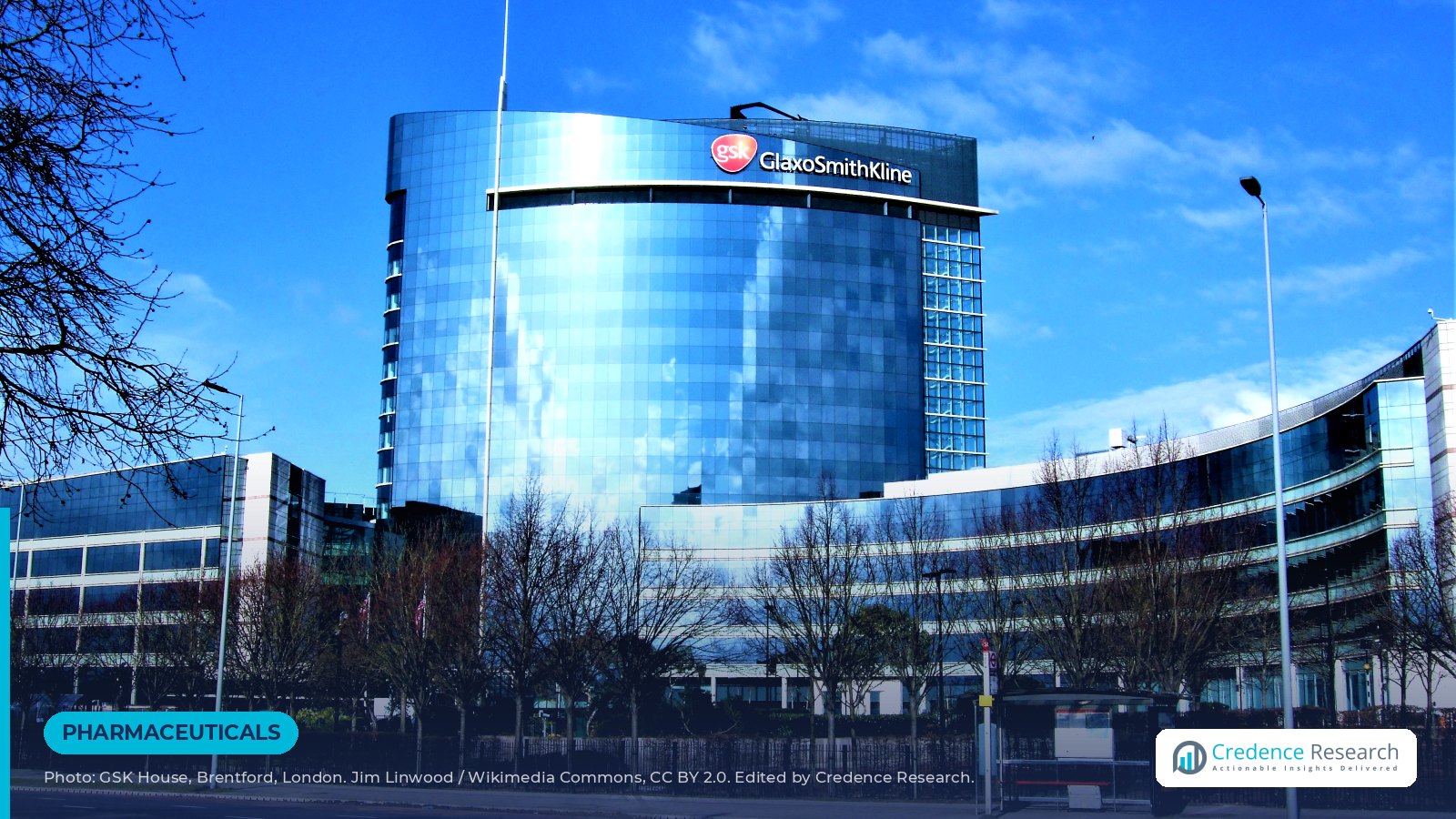
Image: GSK House in Brentford, London, by Jim Linwood via Wikimedia Commons, CC BY 2.0. Cropped and edited by Credence Research.

About the Author

Senior News Editor at Credence Research Inc