
Centrus Energy acquires centrifuge supplier Westerman for $116 million
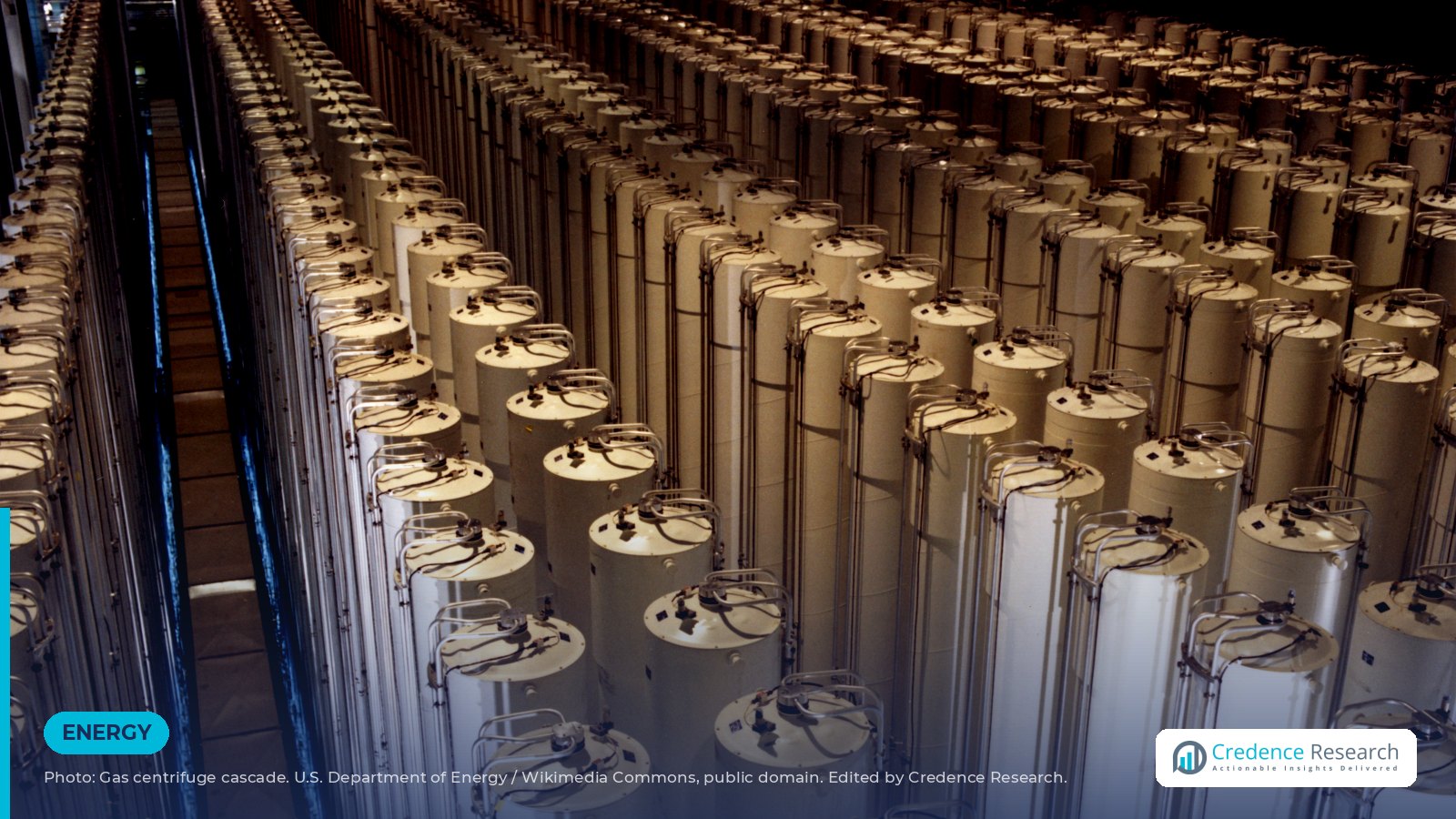
Centrus Energy Corp. has bought Westerman Holdings, LLC, the fabricator that builds centrifuge casings and other major centrifuge components for the U.S. uranium enricher. Announced Oct. 19 from Bethesda, Maryland, the deal is valued at about $116 million. It brings one of Centrus' largest suppliers in-house as the company prepares to scale its enrichment plant in Piketon, Ohio, and its centrifuge manufacturing site in Oak Ridge, Tennessee.
Key developments
- Centrus acquired Westerman for about $116 million, paid with roughly $95 million of cash on hand and $21 million in Centrus equity.
- Westerman, founded in 1909, employs about 400 people at four facilities in Ohio, Oklahoma and Wyoming.
- The fabricator already supplies centrifuge casings and other major centrifuge components to Centrus, along with nuclear-grade products such as UF6 cylinders.
- Westerman will operate under its own name as a Centrus subsidiary. Westerman CEO Jacob Garrett becomes president of Westerman and a vice president of Centrus.
- Centrus expects the deal to add to adjusted earnings per share in the first year after closing. Barclays advised Centrus, and Wachtell, Lipton, Rosen & Katz served as legal counsel.
Enrichment background
Uranium enrichment raises the share of the fissile U-235 isotope in uranium so it can fuel reactors. Most of today's reactor fleet runs on low-enriched uranium (LEU). Many advanced reactor designs call for high-assay, low-enriched uranium (HALEU), which is enriched further. Modern plants do this work with long cascades of gas centrifuges, and the centrifuge machine itself is the most specialized piece of hardware in the chain.
Centrus has produced HALEU at Piketon since 2023 under a U.S. Department of Energy contract that began in 2019, using its AC-100M centrifuge design. On Jan. 6, 2026, the company said DOE had awarded it a $900 million fixed-price base task order to expand the Piketon facility, with options that could raise the total to $1.07 billion. That work covers new HALEU cascades and added LEU output for commercial utilities. Centrus said the first new capacity is expected online in 2029 and that it holds $2.3 billion in contingent LEU purchase commitments from utilities, subject to financing.
On Jan. 23, 2026, Centrus said it would invest more than $560 million over several years to turn its Oak Ridge technology and manufacturing center into a high-rate plant that builds thousands of centrifuges, adding nearly 430 jobs. Machines made in Tennessee are slated to start running in Ohio in 2029. Westerman sits upstream of that plant as a maker of large casings and fabricated components.
Industry implications
The deal shows how nuclear fuel suppliers are treating component capacity as a strategic constraint rather than a purchasing line item. A centrifuge program of this scale depends on a small number of qualified fabricators that can hold nuclear-grade quality standards across thousands of identical parts. Losing or delaying one of them can stall the cascade build. By owning Westerman, Centrus gains direct control over scheduling, quality systems and capital spending at a supplier it already relies on.
The purchase also signals that the industry expects sustained demand for domestic enrichment. U.S. utilities and reactor developers have been working to reduce reliance on imported enriched uranium, and federal funding has shifted toward rebuilding domestic capacity for both LEU and HALEU. Centrus said the integration should lower project costs and improve efficiency, an argument that matters for a fixed-price DOE task order, where cost overruns fall on the contractor.
Competitive and supply chain implications
Vertical integration of this kind is common in defense and aerospace manufacturing but has been less visible in the U.S. fuel cycle, where Centrus has relied on outside fabricators for large centrifuge parts. Centrus now combines enrichment operations, centrifuge assembly in Oak Ridge and a heavy fabrication base in three states. That structure could shorten lead times for casings and UF6 cylinders, which are both needed as the company adds cascades and handles more feed and product material.
The deal also changes Centrus' revenue mix. Westerman serves oil and gas producers and other industrial customers with production equipment and engineered systems, and its boilerplate lists nuclear, marine and industrial markets. Centrus said the acquisition diversifies its revenue beyond nuclear, which gives the company a steadier industrial business alongside a long-cycle enrichment buildout. For other fabricators in the nuclear supply chain, the move may encourage similar approaches from fuel cycle companies and reactor developers that want to secure scarce capacity before it is committed elsewhere.
Regional implications
The acquisition ties together a manufacturing corridor that runs through Ohio, Tennessee, Oklahoma and Wyoming. Ohio stands to gain most directly, since it hosts both Westerman operations and the Piketon enrichment site, where Centrus has said the DOE-funded expansion would support 1,000 construction jobs, 300 new operating jobs and 150 retained positions. Tennessee benefits through the Oak Ridge centrifuge plant, which will consume fabricated components at higher volumes as production ramps.
Westerman's sites in Oklahoma and Wyoming sit in energy-producing regions where its oil and gas customers are based. Centrus said it is committed to growing Westerman alongside its enrichment business, and the company did not announce job cuts or plant changes. Local suppliers to Westerman could see steadier nuclear orders as a result.
Credence Research analysis
The deal is small in dollar terms next to the federal funding behind Centrus' expansion, but it targets a real execution risk. Enrichment buildouts tend to slip because of hardware supply, not demand, and centrifuge casings are among the largest and most precise parts in the machine. Buying the supplier outright, rather than signing longer contracts, suggests Centrus sees fabrication capacity as a bottleneck that money alone cannot quickly solve. The mostly cash structure, with a modest equity component, also indicates the company is willing to spend balance sheet resources to protect its 2029 schedule.
The key test will be whether Westerman can scale nuclear work without weakening its industrial business, which Centrus is counting on for diversification. Running a fabricator that serves both oil and gas customers and a fixed-price federal program requires careful capacity planning. If Centrus can use Westerman to hold costs and timelines at Piketon and Oak Ridge, the model could become a template for other U.S. fuel cycle and advanced reactor companies trying to rebuild an industrial base that shrank over several decades.
What comes next
- Integration of Westerman as a Centrus subsidiary under Jacob Garrett, with the Westerman name retained.
- Finalization of the DOE contract for the Piketon HALEU and LEU expansion, which Centrus said was still pending as of its January announcement.
- Hiring and conversion work at the Oak Ridge centrifuge plant over the next several years.
- Centrus' next quarterly results, which should give the first view of Westerman's contribution to revenue and earnings.
- Startup of the first new enrichment capacity at Piketon, which Centrus expects in 2029.
Sources
- Centrus Energy: Centrus Acquires Westerman Holdings, LLC (Form 8-K exhibit, Oct. 19, 2026)
- Centrus Energy: Centrus Awarded $900 Million to Expand Uranium Enrichment in Ohio (Jan. 6, 2026)
- Centrus Energy: Centrus to Expand Oak Ridge Centrifuge Manufacturing Plant (Jan. 23, 2026)
Image: Gas centrifuge cascade, by the U.S. Department of Energy via Wikimedia Commons, public domain. Cropped and edited by Credence Research.

About the Author

Senior News Editor at Credence Research Inc