
Google to Fund $600 Million in Entergy Arkansas Grid Upgrades for West Memphis Data Center
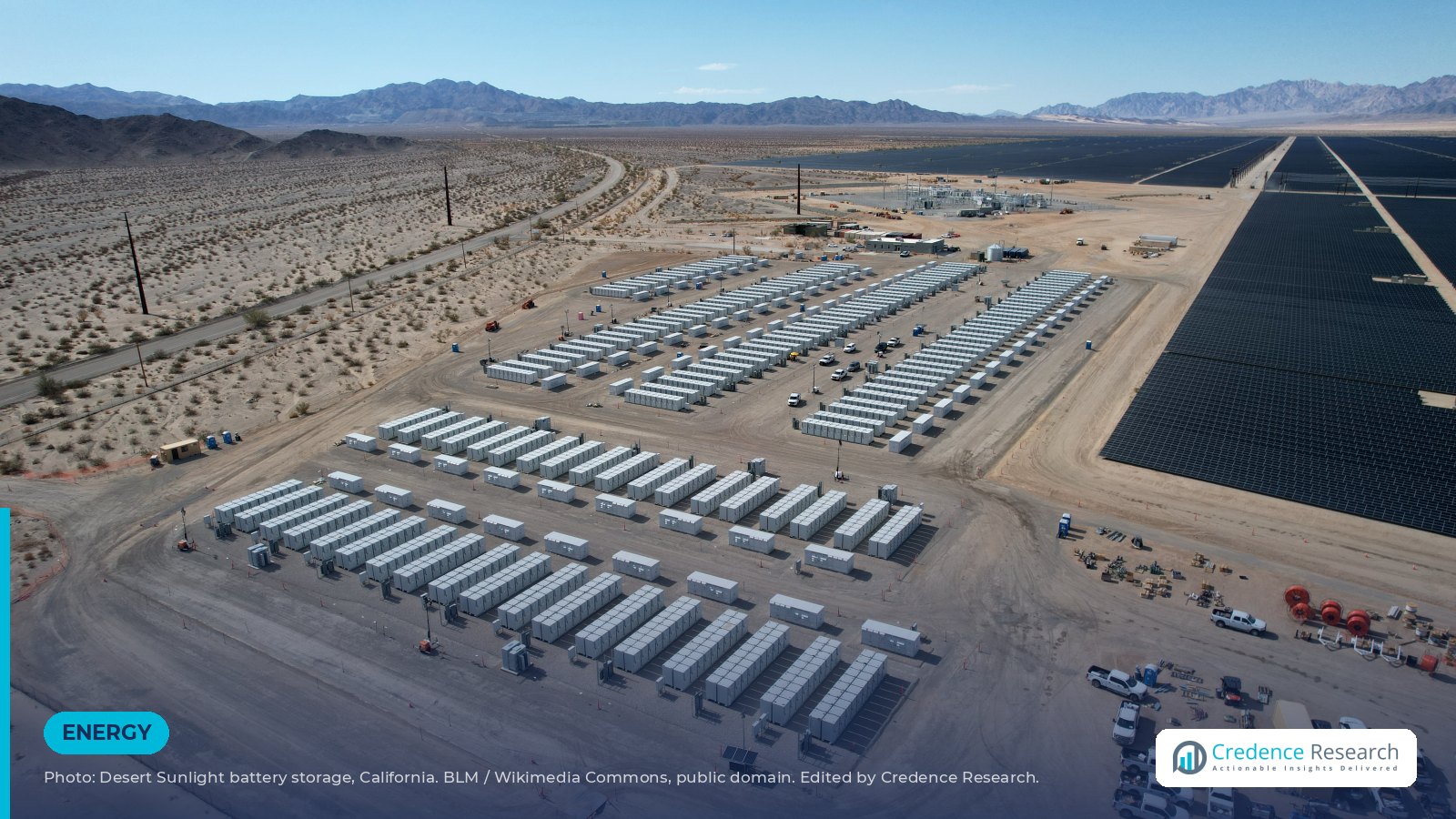
Entergy Arkansas on Monday, Oct. 19, 2026, announced a second phase of electric service for Google's data center campus in West Memphis, Arkansas, under which Google will fund about $600 million in new grid infrastructure along with a solar power purchase agreement. The package, announced from Little Rock, pairs 1,400 megawatt-hours of new battery storage with 440 megawatts of solar output and new transmission, and it now heads to the Arkansas Public Service Commission for review, with service targeted for 2028.
Key developments
- Google will pay for roughly $600 million in planned investment plus a power purchase agreement to serve the expanded West Memphis campus.
- Two battery energy storage systems are planned: 1,000 MWh at Driver Solar near Osceola and 400 MWh at Jones Mill near Hot Springs, both expected online in 2028.
- Entergy Arkansas will buy 440 MW (ac) of solar output from the Big Island facility under construction in Mississippi County.
- Grid work includes an expansion of the Galet substation near West Memphis and two new 230-kilovolt transmission lines.
- Entergy Arkansas estimates at least $500 million in new savings for all customers over 20 years starting in 2028, on top of $1.6 billion identified in phase one.
Industry background
Google announced its first Arkansas data center in October 2025, committing $4 billion in the state through 2027 for the West Memphis campus and related cloud and AI infrastructure. At that time, the company also said it would partner with Entergy to add a 600 MW solar project to the grid and set up a $25 million Energy Impact Fund for energy efficiency and affordability in Crittenden County and nearby communities.
Entergy said the second phase will support Google's plans for additional data center buildings on the site and speed the ramp-up of the original project. Combined with the Arkansas Cypress Solar and battery facility under construction in Jefferson County, the newly announced resources would add more than 1,000 MW of solar and 2,800 MWh of battery storage to the Entergy Arkansas system. A separate Steel River Solar project in northeast Arkansas, developed by Cypress Creek Energy under its own arrangement with Google, will also add capacity but is not part of the utility's filing.
The Big Island component has a regulatory history. Entergy said the solar agreement was added following guidance from the Arkansas Public Service Commission. Trade publication New Project Media reported that the commission in September denied an earlier Entergy application to buy power from the Pattern Energy-developed project, finding the proposed contract cost was not shown to be reasonable for retail customers.
Industry implications
The announcement shows how large technology customers and regulated utilities are restructuring the economics of data center load. Under the original and updated agreements, Google pays the full cost of the power resources serving it, and Entergy said the arrangement produces an estimated $2.1 billion in net benefits toward fixed costs shared by all customers. The new resources will be billed under a new contract rather than through the state's Generating Arkansas Jobs Act rider, and Entergy said there will be no bill increase tied to the project.
That structure responds directly to a concern that regulators across the country have raised as data center demand grows: who pays for the generation and wires built to serve a single large customer. Entergy Arkansas President and CEO Laura Landreaux framed the deal around Google paying 100% of its power needs while lowering costs for others, and Google's global head of energy and power, Amanda Peterson Corio, described the company's role as helping deliver savings to Entergy Arkansas customers.
The heavy weighting toward storage is also notable. Batteries sited at existing solar locations can shift daytime solar output into evening peaks, which matters for a data center that runs around the clock and for a utility managing reliability across 63 counties.
Competitive and supply chain implications
For storage integrators, battery cell suppliers and electrical equipment makers, two utility-scale systems totaling 1,400 MWh with a 2028 in-service target represent firm near-term procurement. Substation expansion and two 230-kV lines will draw on transformers, breakers and conductor, equipment categories where lead times have stretched as utilities and data center developers compete for the same factory slots.
The deal also strengthens the position of solar developers with projects already under construction near load. Big Island, Arkansas Cypress and Steel River all sit within reach of the Mid-South data center corridor, and utilities that can point to customer-funded resources may find faster paths through regulatory review than those seeking to place costs in general rates. Rival hyperscalers weighing sites in the region will be watching how the commission treats the contract terms, which Entergy said will be visible to the commission, its staff and the Arkansas attorney general.
Regional implications
West Memphis sits across the Mississippi River from Memphis, Tennessee, and the campus is the first Google data center in the state. West Memphis Mayor Marco McClendon cast the expansion as evidence that the city is a place where businesses grow and investments make a difference. Google's community commitments include the $25 million Energy Impact Fund and $5 million in energy affordability initiatives announced in July in connection with the Steel River project, aimed at local residents and K-12 schools.
The infrastructure is spread across the state. Batteries near Osceola in Mississippi County and near Hot Springs, solar in Mississippi and Jefferson counties, and transmission near West Memphis distribute construction work and local tax base well beyond Crittenden County. Entergy Arkansas serves about 738,000 customers, and parent Entergy serves more than 3 million customers in four states.
Credence Research analysis
The West Memphis expansion is a clear example of the full-cost model that utilities are adopting to win regulatory approval for data center growth. By ring-fencing the $600 million in infrastructure under a dedicated Google contract and pointing to quantified savings for other ratepayers, Entergy is addressing the core objection that commissions have raised about large-load customers. The September decision on Big Island, as reported, shows that Arkansas regulators are scrutinizing contract costs closely, and the revised filing will test whether customer-funded structures can clear that bar.
The resource mix also signals a practical shift. Rather than relying on new gas generation alone, Entergy is pairing purchased solar with large batteries at existing sites, an approach that can be built on a 2028 timeline if equipment and interconnection proceed as planned. For suppliers, the key variables are the commission's schedule and whether storage and high-voltage equipment can be delivered on time. For other utilities, the filing offers a template for showing regulators that hyperscale demand can strengthen the grid without raising bills.
What comes next
- Entergy Arkansas files the expansion with the Arkansas Public Service Commission, following the commission's recommendations for these agreements.
- Review of contract terms by the commission, its staff and the Arkansas attorney general.
- Construction and procurement for the Driver Solar and Jones Mill battery systems and the Galet substation expansion.
- Completion of the Big Island solar facility in Mississippi County.
- Targeted in-service date of 2028 for the new resources, pending approval, with customer savings beginning that year.
Sources
- Entergy: Entergy Arkansas announces enhanced partnership at Google West Memphis campus
- Google: Investing in American innovation in Arkansas
- New Project Media: Arkansas regulator denies Entergy's application to purchase power from planned 440 MW solar project
Image: Battery energy storage system at the Desert Sunlight solar site in California, by the U.S. Bureau of Land Management (blmcalifornia) via Wikimedia Commons, public domain. Cropped and edited by Credence Research.

About the Author

Senior News Editor at Credence Research Inc