
Volvo Group creates Volvo Mining to combine trucks, machines and autonomous haulage
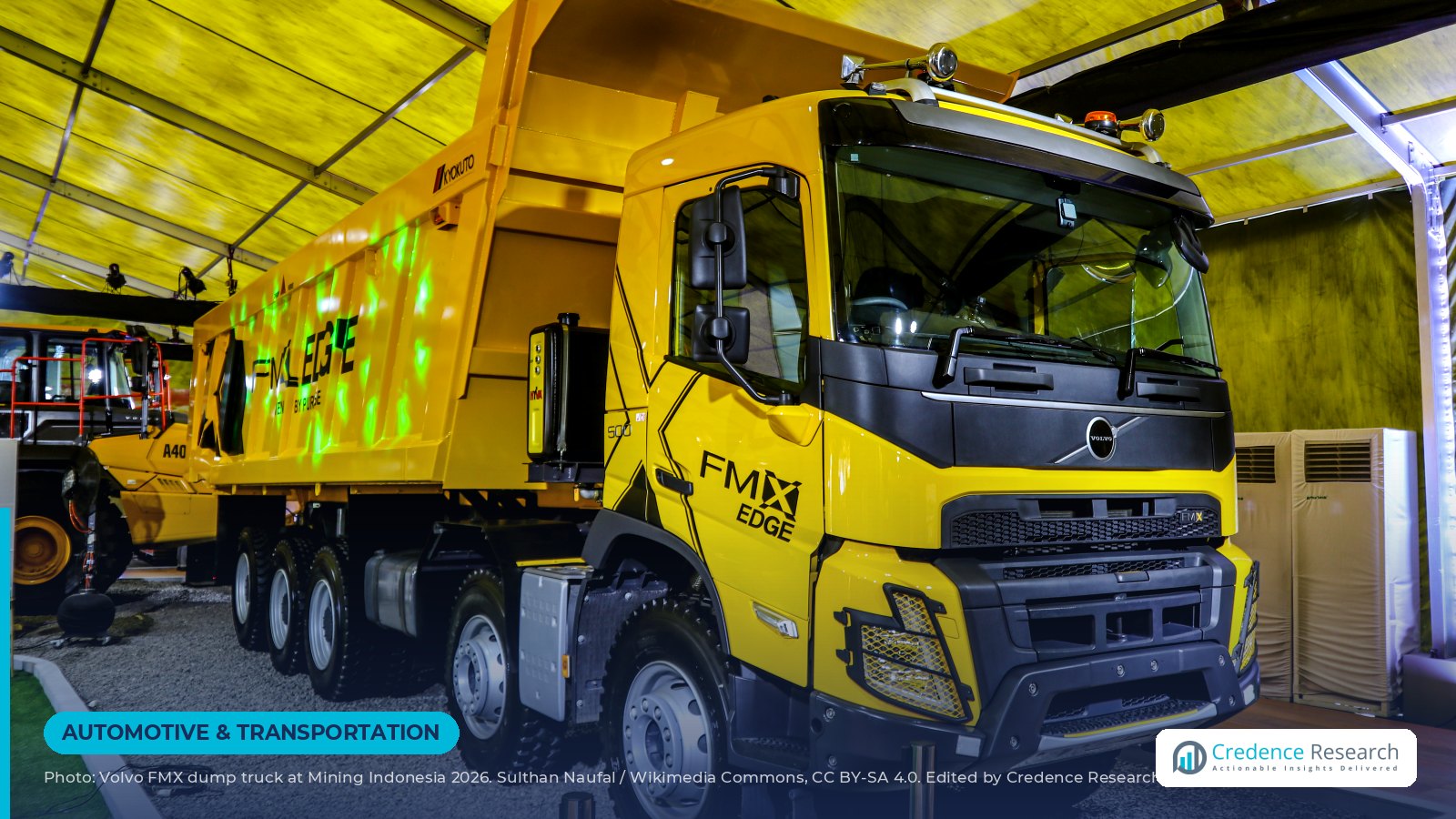
Volvo Group will fold its mining trucks, construction equipment and autonomous haulage into a single business called Volvo Mining, the Swedish manufacturer said on Oct. 19, 2026, from Gothenburg. The new entity launches Jan. 1, 2027, inside Volvo Construction Equipment and will first serve mining companies and contractors in Sweden, Norway and Finland, with a phased rollout to other markets to follow.
Key developments
- Volvo Group is creating Volvo Mining to combine the Group's mining capabilities, expertise and offer into one integrated business selling Volvo trucks, construction equipment and autonomous solutions.
- The entity starts operating on Jan. 1, 2027, and will be hosted within Volvo Construction Equipment (Volvo CE).
- Volvo Mining will have dedicated financial resources, manage the mining product and service portfolio for the Group globally and coordinate mining-related research projects across the Group.
- Initial markets are Sweden, Norway and Finland, with phased expansion planned.
- Per-Erik Lindström, currently senior vice president of Volvo Trucks International, will become head of Volvo Mining on Jan. 1, 2027.
Industry background
Mining fleets are some of the most complex equipment deployments in heavy industry. A typical operation runs excavators, loaders, haulers and on-road or off-road trucks in sequence across excavation, loading, hauling and transport, often at remote sites with harsh weather and limited service access. Volvo said demand for integrated solutions is growing as mines push for higher productivity, lower emissions and stronger safety performance at the same time.
Until now, Volvo Group has addressed that customer base through separate business areas. Volvo CE, founded in 1832, builds haulers, loaders, excavators and a growing range of electric machines and charging equipment. Volvo Trucks supplies medium- and heavy-duty trucks through about 2,500 service points in roughly 130 countries, assembles trucks in 12 countries and delivered about 120,000 trucks worldwide in 2025. Volvo Autonomous Solutions, set up in 2020, sells autonomous transport as a package that includes a purpose-built vehicle, a virtual driver, site infrastructure, uptime support and flow-management systems.
The autonomous unit already has a reference site in the region Volvo Mining will target first. At the Brønnøy Kalk limestone mine in Velfjord, Norway, seven Volvo FH trucks running Volvo's virtual driver had hauled more than 1 million tonnes and covered over 220,000 kilometers by May 2025, according to a Volvo Group release from that month. Volvo removed the safety driver from those trucks in 2023.
Industry implications
The move reflects a shift in how mining customers buy equipment. Instead of sourcing a truck from one supplier, a loader from another and automation software from a third, operators increasingly want a single partner accountable for how the whole haulage chain performs. Volvo Trucks President Roger Alm said in the announcement that a single organization focused only on mining will give customers an end-to-end view and make the Group's offer easier to use. Volvo CE President Melker Jernberg described mining as a strategically important and growing segment that now calls for more focus.
Giving the unit its own financial resources and research coordination matters as much as the sales structure. Autonomous haulage, electrified machines and fleet software all require long development cycles and site-specific validation. A dedicated budget lets Volvo prioritize mining requirements, such as heavy payloads, long duty cycles and mixed-fleet coordination, rather than adapting products designed mainly for construction or road freight.
For mine operators and contractors, the practical effect could be simpler procurement, one service relationship and tighter integration between trucks, loaders and autonomous systems. Volvo Autonomous Solutions President Nils Jaeger said combining its autonomous technology and operating experience with the wider Group portfolio is intended to deliver measurable gains in safety, productivity and efficiency.
Competitive and supply chain implications
Volvo Mining enters a segment where large equipment makers already sell integrated mining fleets, automation and service contracts. By packaging road-derived heavy trucks, construction-class machines and a virtual driver, Volvo is positioning itself for the quarry, contractor and mid-scale mining segment, where flexible, versatile fleets are often preferred over ultra-class haul trucks. That positioning is an inference from Volvo's existing product range, not a stated company strategy.
The structure also affects Volvo's dealer and retail network. Jernberg said Volvo Mining will create customer value together with retail partners, which suggests dealers will remain the front line for sales and service rather than being bypassed by a direct model. For suppliers of sensors, compute platforms, batteries and drivetrain components, a dedicated mining program inside Volvo could mean more defined specifications and longer product cycles tied to mining duty requirements.
Centralizing mining research across the Group may also reduce duplicated development work between Volvo CE, Volvo Trucks and Volvo Autonomous Solutions, which have historically pursued separate roadmaps for their own customer groups.
Regional implications
Starting in the Nordics gives Volvo a home-market base with established mining and quarrying activity, a dense Volvo service footprint and an existing autonomous reference site in Norway. Building the integrated offer close to Volvo's engineering base in Sweden should also shorten feedback loops between customers and the development teams for trucks, machines and autonomy.
The company did not name which markets will follow or give a timeline for the phased expansion. Large mining regions such as Australia, Latin America, Africa and North America would be natural candidates given global mining activity, but Volvo has not committed to any of them. The launch date and initial footprint suggest Volvo intends to prove the integrated model at home before scaling.
Credence Research analysis
Volvo Mining is an organizational change rather than a capital announcement, but it signals how heavy-equipment makers expect value to move in mining. Hardware alone is becoming harder to differentiate. Uptime, autonomy, energy management and site-level productivity are where customers increasingly judge suppliers, and those outcomes depend on how trucks, loaders and software work together. Combining three business areas under one profit-and-loss owner with its own resources is a direct response to that shift.
The key test will be execution. Volvo has to integrate products, service contracts and autonomy deployments that were built by separate organizations, while keeping its dealer partners aligned. The choice of Lindström, who comes from the international truck business, to lead a unit hosted in Volvo CE suggests the Group wants truck and machinery cultures to work as one. If the Nordic launch produces measurable customer results, Volvo will have a template it can extend into larger mining markets.
What comes next
- Jan. 1, 2027: Volvo Mining formally launches within Volvo CE, with Per-Erik Lindström as head.
- Initial commercial activity with mining customers and contractors in Sweden, Norway and Finland.
- Announcements on which markets join the phased expansion and on what timeline.
- Details on how mining-related research projects across Volvo CE, Volvo Trucks and Volvo Autonomous Solutions will be coordinated.
- Possible new integrated contracts that combine trucks, machines and autonomous haulage at a single site.
Sources
- Volvo Group: Volvo Group establishes dedicated entity to capture the growing demand in mining (Oct. 19, 2026)
- Volvo Group: Volvo achieves milestone with over 1 million tonnes hauled autonomously at Brønnøy Kalk (May 28, 2025)
Image: Volvo FMX Edge dump truck at Mining Indonesia 2026, by Sulthan Naufal via Wikimedia Commons, CC BY-SA 4.0. Cropped and edited by Credence Research.

About the Author

Senior News Editor at Credence Research Inc