
EverWind plans $10 billion AI data center and wind build in Nova Scotia
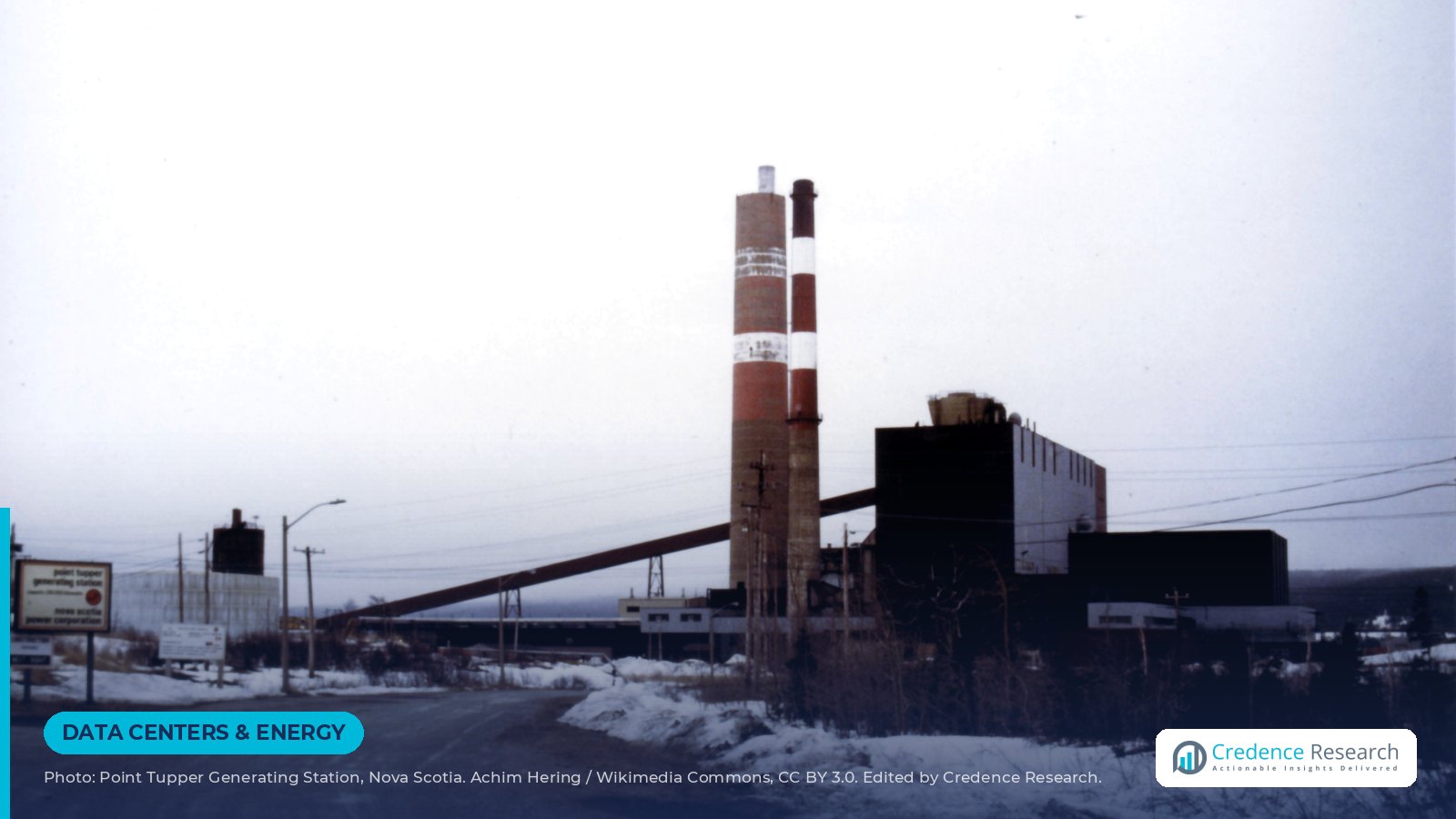
EverWind said Oct. 16 it plans more than $10 billion in private investment in Nova Scotia, pairing an AI data center campus of up to 420 megawatts at its Point Tupper industrial site with a $2 billion onshore wind portfolio. The announcement, which included statements from Premier Tim Houston and two federal officials, said a long-term lease with an unnamed frontier AI developer already covers the campus's first phase.
Key developments
- EverWind plans to develop, build, own and finance a data center campus worth more than $8 billion at its existing Point Tupper site in Richmond County, Cape Breton.
- The campus is planned in two stages: a 95 MW initial phase targeted for late 2027 and a 325 MW expansion targeted for 2028, for 420 MW at full build-out, subject to commercial, technical and regulatory conditions.
- A separate $2 billion investment covers four onshore wind projects: Bear Lake, Windy Ridge, Kmtnuk and Upper Afton.
- The company projects about 2,000 construction positions during the staged build-out and 215 permanent operating positions across the campus and wind portfolio.
- EverWind said it will fund connection, network upgrade and other electricity-system costs attributable to the project, and that the expansion will not connect to the grid until required system studies and approvals are complete.
Project background
EverWind has been developing green hydrogen and ammonia production at Point Tupper, supported by wind generation elsewhere in Nova Scotia. The company said those hydrogen and ammonia plans remain unchanged. The data center campus adds a second, faster-moving use for the same industrial land and wind supply, and gives the company a contracted tenant for its first phase.
The campus design leans on features meant to answer the two concerns that have dogged data center proposals across North America: grid strain and water use. EverWind said the site will include several hundred megawatt hours of battery storage and will be able to reduce or stop drawing grid power when needed to protect system reliability. Cooling will rely on a closed-loop water-glycol system with mostly air-based heat removal. The company estimates water use of about 100,000 liters per day in the first phase and about 500,000 liters per day at full build-out, which it put at roughly 1% of the identified daily safe yield of nearby Landrie Lake.
The announcement follows a shift in provincial policy. As reported by The Canadian Press, Houston said in June that data center discussions would wait until major energy projects such as the Wind West offshore wind initiative were complete, then opened the door to proposals in late September, citing federal data sovereignty rules and geopolitical events. He has said household electricity rates must not rise to serve large industrial users. EverWind said it fully endorses the conditions set by the province and has signed the Government of Canada's Responsible Data Centre Development Principles.
Industry implications
The project reflects a growing pattern in AI infrastructure: developers are going to where power and land can be secured, not only to established data center hubs. A 420 MW campus is large by any standard, and anchoring the first phase with a frontier AI tenant suggests model developers are willing to sign long-term commitments in smaller, power-rich jurisdictions to secure capacity on a 2027 to 2028 timeline.
The pairing of a data center with dedicated wind development is also notable. Rather than relying entirely on existing utility supply, EverWind is building generation in parallel and adding battery storage and curtailment capability on site. That model, if it clears regulatory review, could become a template for how large AI loads win approval in provinces and states where regulators are wary of shifting costs onto residential customers.
For Canada, the project ties directly to the federal push for domestic AI compute. Ottawa's data sovereignty rules give AI developers a reason to place capacity inside the country.
Competitive and supply chain implications
A campus of this size will draw on the same constrained supply chains that every large AI build now competes for: transformers, switchgear, high-voltage interconnection equipment, battery systems and cooling hardware. Lead times for grid equipment remain a gating factor, and the staged design, with 95 MW first, gives EverWind a smaller initial order book while it works through system studies for the larger expansion.
On the generation side, four onshore wind projects at once will require turbines, towers, foundations and specialized installation crews in a province that is also planning offshore wind. The estimate of about 2,000 construction positions is substantial for Cape Breton, where contractors will also serve other energy work.
The ownership structure also matters. EverWind said it is negotiating an ownership stake in the campus for a First Nations consortium led by Membertou Development Corporation, subject to agreements. Indigenous equity participation has become a common feature of major Canadian energy projects and can help projects move through consultation and financing.
Regional implications
For the Strait region, the project would reuse an industrial site that EverWind's chief executive, Trent Vichie, said has supported industry in the region for more than 50 years. The company plans a community benefit program valued in the tens of millions of dollars for the initial phase, with priorities to be set with local communities and the customer. Richmond County Warden Lois Landry said she was encouraged by the project's potential for the county.
The provincial politics remain live. Opposition leaders have called for ratepayer protections to be written into law rather than left to policy commitments, according to The Canadian Press. How regulators and the provincial utility process assess grid impacts will shape whether the 325 MW expansion stays on its 2028 target.
Credence Research analysis
The strongest signal in this announcement is the signed lease. Many large data center proposals are speculative land and power plays; EverWind has a signed tenant, a phased timeline and a commitment to pay its own grid costs. That combination addresses the core objection Houston raised in June and gives the province a concrete proposal to test its conditions against. The unnamed customer limits outside scrutiny, however, and the timeline depends on approvals that have not yet been granted.
The project also shows how hydrogen-focused developers are adapting. Green hydrogen export projects have struggled to secure offtake, while AI compute demand is immediate and backed by well-funded buyers. By keeping its hydrogen plans intact while adding a data center, EverWind can put its wind development and industrial site to work sooner. The flexible-load design, with batteries and the ability to step down grid draw, is likely to be the feature regulators examine most closely, because it determines whether the campus acts as a burden or a reliability asset on a small provincial grid.
What comes next
- Completion of provincial system-planning and utility studies on grid impacts for the campus expansion.
- Final agreements on the First Nations consortium ownership stake led by Membertou Development Corporation.
- Development and permitting progress on the Bear Lake, Windy Ridge, Kmtnuk and Upper Afton wind projects.
- Start of construction toward the 95 MW initial phase, targeted for late 2027.
- Any provincial legislation on ratepayer protections for large data center loads.
Sources
- EverWind: $10 billion investment in Point Tupper data centre campus and renewable energy portfolio (GlobeNewswire, Oct. 16, 2026)
- The Canadian Press via BNN Bloomberg: Nova Scotia premier defends changing his stance on data centre proposals (Oct. 15, 2026)
Image: Point Tupper Generating Station in Point Tupper, Nova Scotia, by Achim Hering via Wikimedia Commons, CC BY 3.0. Cropped and edited by Credence Research.

About the Author

Senior News Editor at Credence Research Inc