
Geely Signs Global Google Partnership to Bring Gemini and Maps to Overseas Vehicles From 2027
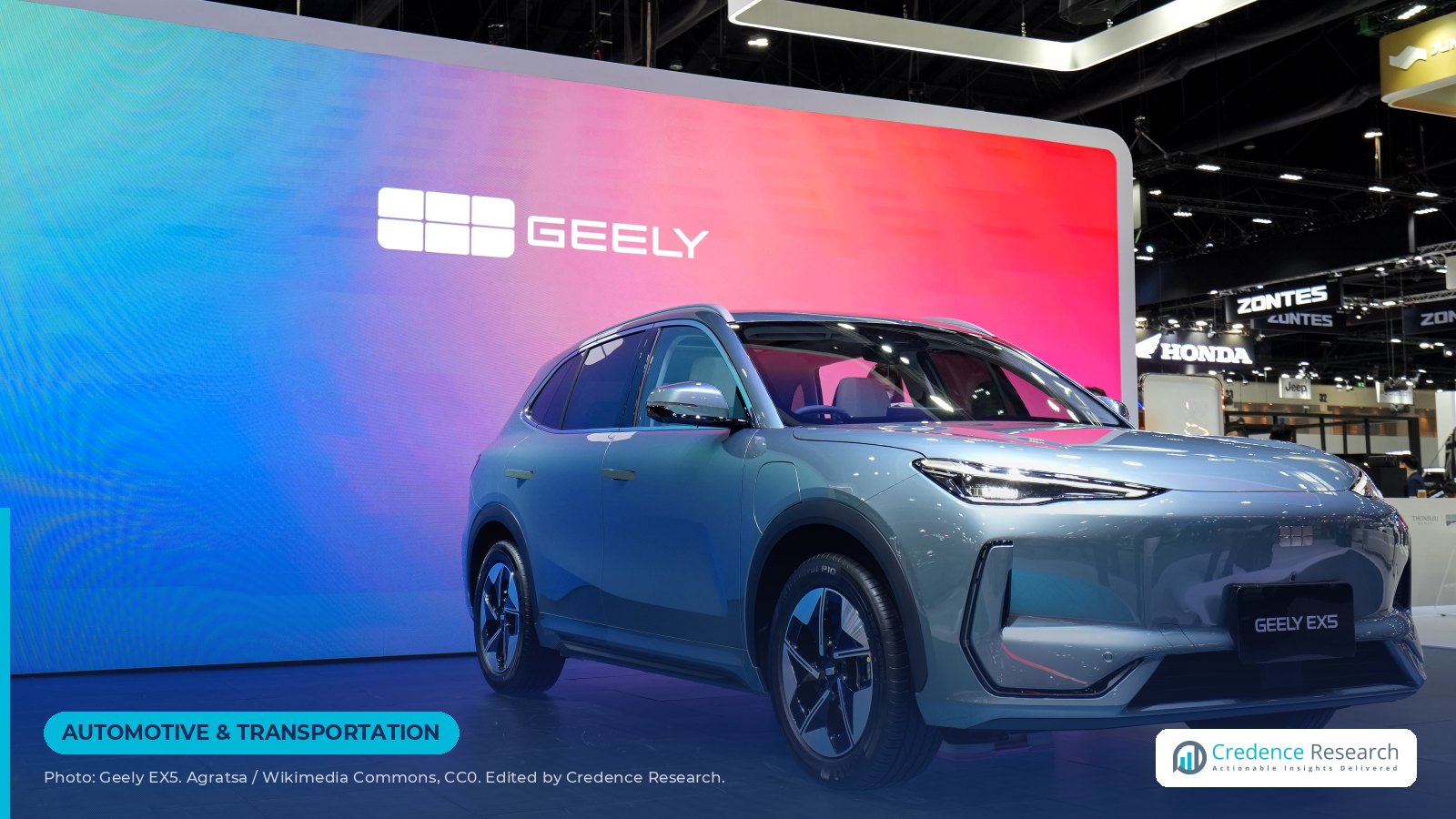
Zhejiang Geely Holding Group has signed a global strategic partnership with Google that will put Google's built-in automotive services, including the Gemini assistant, Google Maps and Google Play, into the digital cockpits of eligible vehicles across its brand portfolio sold outside China. The Hangzhou-based automaker announced the agreement on Oct. 16 and said the first vehicle application is planned for the second half of 2027, in markets other than China and the United States.
Key developments
- Geely Holding Group (ZGH) and Google agreed a global strategic partnership covering all eligible ZGH portfolio brand vehicles in overseas markets where Google services are available.
- The next rollout will cover passenger vehicles from Geely, Lynk & Co, Proton, Riddara and smart, among other group brands, according to the company.
- At launch, eligible vehicles will include Google Gemini, Google Play and Google Maps, with a multimodal voice large model, global navigation, cross-device connectivity and in-vehicle apps.
- The first application is scheduled for the second half of 2027, subject to product, regulatory and market-readiness requirements. China and the U.S. are excluded from the initial scope.
- No financial terms were disclosed. Geely said details on models, markets, features and timing will follow as the rollout progresses.
How Google built-in fits Geely's cockpit strategy
Google built-in is different from phone projection systems such as Android Auto or Apple CarPlay. Instead of mirroring a smartphone, the services run natively on the vehicle's infotainment computer, so navigation, voice control and the app store work without a connected handset and can draw on vehicle data such as battery state of charge. For automakers, that means integrating Google's software stack into the cockpit at the engineering stage rather than adding it as an accessory feature.
The group already has years of experience with that model. Geely said the new agreement builds on the Polestar 2, which has offered built-in Google services since 2020. Google's own list of compatible brands includes Polestar and Volvo, both part of the wider Geely ecosystem, alongside Ford, General Motors, Honda, Lincoln, Mitsubishi Motors, Nissan and Renault. What changes now is reach: the services move from the group's premium Swedish brands into its higher-volume Chinese and Malaysian nameplates.
Dr. Shen Yuan, ZGH's senior vice president and chief technology officer, said in the release that people increasingly expect the same level of convenience and connectivity in their cars as on their other devices. Haris Ramic, Android for Cars product director at Google, said the company was excited to bring Google built-in to more vehicles in ZGH's portfolio.
Industry implications
The deal shows how Chinese automakers are separating their domestic and export software strategies. Inside China, Google services are not available, and local brands compete on in-house or locally sourced cockpit platforms, voice assistants and app ecosystems. Abroad, those same platforms often struggle to match the familiarity and app depth that Western and many Asian buyers expect. By adopting Google built-in for export vehicles, Geely is choosing a widely recognized software layer for overseas buyers while keeping its own domestic approach intact.
The move also reflects the growing role of generative AI in vehicle interfaces. Gemini's inclusion at rollout puts a large language model assistant into mass-market vehicles from brands such as Geely and Proton, not just premium models. That raises the competitive bar for rival exporters that rely on projection systems or proprietary assistants with limited multilingual support.
For Google, the agreement extends Android for Cars into one of the largest multi-brand automotive groups, with brands spanning budget compact cars to premium electric vehicles. Each additional brand on a shared platform strengthens the case for developers to build in-car apps for Google Play.
Competitive and supply chain implications
Standardizing on one cockpit software stack across several export brands could simplify engineering for Geely. Shared navigation, voice and app frameworks reduce the need to localize separate systems for dozens of markets, a task that becomes costly as the group adds countries. It also gives the brands a common base for over-the-air updates and service integration, while leaving room to differentiate on hardware, design and user interface.
The arrangement does create a dependency. Running Google services requires meeting Google's certification and hardware requirements, which shapes chip selection, memory configuration and software validation for export models. Cockpit suppliers and system integrators working with Geely's export programs will need to align with those requirements well ahead of the 2027 launch window.
Competitors will take note. Chinese brands that rely on cockpit software from domestic technology partners may find it harder to offer equivalent native Google services overseas, which could push more of them toward a dual-platform approach of the kind Geely has now formalized.
Regional implications
Because the first application targets markets outside China and the U.S., the rollout is aimed at regions where Geely's brands are actively expanding, including Europe, Southeast Asia, the Middle East, Latin America and Australia. Proton, the Malaysian brand in which Geely holds a stake, gives the partnership an immediate foothold in Southeast Asia. Lynk & Co and smart already sell in several European countries, where buyers are accustomed to Google services on their phones.
The brands named for the next rollout do not currently sell passenger vehicles in the U.S. The release did not explain the China exclusion, but Google's consumer services are not offered in mainland China. Geely said the rollout in each market remains subject to regulatory requirements, which may include data protection and connected-vehicle rules that differ by jurisdiction.
Credence Research analysis
The partnership is less about adding features than about lowering the barrier for Chinese-built vehicles abroad. Hardware and pricing have helped Chinese automakers win overseas buyers, but software familiarity has remained a gap, particularly in Europe. Native Google services address that gap with a known interface, and extending them across several brands in one agreement gives Geely scale that a brand-by-brand approach would not. The 2027 timeline suggests the integration will be designed into upcoming vehicle programs rather than retrofitted to existing ones.
The bigger question is how Geely balances Google's ecosystem with its own data and services ambitions. Native Google services can limit how much of the in-car experience an automaker controls directly, and the group will need to decide where its own apps, voice features and connected services sit alongside Gemini and Google Maps. Execution will depend on how quickly Geely names the first models and markets, and on whether regulators in key export regions raise questions about connected-vehicle data.
What comes next
- Geely is expected to announce the first models, markets and features covered by the partnership as the rollout progresses.
- Cockpit hardware and software for the first eligible export models will need to complete Google certification ahead of launch.
- The first vehicle application is planned for the second half of 2027, outside China and the U.S.
- Additional ZGH brands could be added as eligible vehicles are confirmed in each market.
- Market-by-market regulatory reviews, including data protection rules, will determine launch timing in individual countries.
Sources
- Geely: Geely Auto Group to Offer Customers Greater Choice Through Google Built-In (GlobeNewswire, Oct. 16, 2026)
- Google: Google built-in compatible cars
Image: Geely EX5 on display, by Agratsa via Wikimedia Commons, CC0 (public domain dedication). Cropped and edited by Credence Research.

About the Author

Senior News Editor at Credence Research Inc