
Studsvik signs frame agreement to treat and store Norway's legacy spent nuclear fuel
Swedish nuclear services company Studsvik has signed a frame agreement with Norwegian Nuclear Decommissioning (NND) to transport, treat and store spent fuel from Norway's former research reactors at Halden and Kjeller, the company said Oct. 16. The agreement, signed in Halden, Norway, runs until 2055 and covers about 16.5 tonnes of fuel accumulated over six decades of research reactor operations. Studsvik estimates the total value, including expected work orders, at 3 billion to 4 billion Swedish kronor, and its CEO called it potentially one of the most significant agreements in the company's history.
Key developments
- Studsvik will move spent fuel from the Halden and Kjeller research reactor sites to its licensed facilities at Studsvik, outside Nyköping, Sweden, then inspect and, where needed, treat it, including oxidising metallic uranium fuel.
- Treated fuel will be stored at Studsvik until it is returned to Norway for final disposal.
- NND's estimated contractual minimum is about SEK 875 million, assuming all fuel is transported to Sweden by 2035. Studsvik puts the total value at SEK 3 billion to 4 billion through 2055.
- The work starts with a pre-study that will set the project plan and budget. Work orders are subject to regulatory approvals and permits in both Norway and Sweden.
- Studsvik does not expect the agreement to have a material impact on its 2026 or 2027 results.
Background: Norway's research reactor legacy
Norway never built commercial nuclear power plants, but it ran research reactors for decades at Kjeller, near Oslo, and at Halden in the southeast of the country. The Halden reactor hosted long-running international fuel and materials testing programs, while Kjeller was home to the country's earliest research reactors. Both sites are now in decommissioning, and responsibility for the reactors' legacy has shifted to NND, a state agency under the Ministry of Trade, Industry and Fisheries that manages the decommissioning of Norway's nuclear facilities and its nuclear waste, including spent fuel.
The fuel inventory is unusual. Alongside conventional material, it includes metallic uranium fuel, aluminium-clad fuel and experimental fuels from test programs. According to Studsvik, much of this material cannot be stored long term or disposed of in its current form. Metallic uranium in particular can degrade and react over time, so it has to be converted into a more stable form before it can go into interim storage and, eventually, a repository.
The deal builds on earlier work between the two countries. In 2021, Studsvik signed a contract with Norway's Institute for Energy Technology (IFE) to treat metallic uranium fuel from the JEEP I reactor at Kjeller. The new frame agreement scales that relationship up to cover the broader legacy inventory.
Industry implications
The agreement shows how back-end services are becoming a distinct commercial line in the nuclear sector. Countries that ran research reactors but have no large-scale fuel treatment capability of their own face a choice between building specialized facilities for a small, one-off inventory or contracting with an existing licensed operator. Norway has chosen the second route. NND Director General Pål Mikkelsen said the agency's assessment is that this is the safest route and that it is sound both environmentally and economically.
The contract structure also matters. Alongside work orders, the agreement includes a fixed annual fee covering project management, regulatory work, security and reserved storage capacity. That gives Studsvik a recurring revenue element over a period of nearly three decades, while leaving the bulk of the value tied to work orders that depend on the pre-study and on permits. NND may end the agreement after the pre-study with 12 months' notice, or otherwise after five years with 18 months' notice, so the headline value is not fully locked in.
Competitive and supply chain implications
Few companies in Europe operate licensed hot cell laboratories and treatment facilities capable of handling unconventional spent fuel. Studsvik's site combines hot cell labs, waste treatment and storage under one license, which the company cites as the reason it can take on the project. CEO Karl Thedéen said Norway needs a safe and lasting solution for fuel that has been in temporary storage and that Studsvik has the facilities, the licences and the expertise to deliver it.
For Studsvik, the deal strengthens the long-term base of its Fuel, Materials and Waste Technology business area, and Thedéen said it opens further international opportunities. The company, founded in 1947, has about 540 employees in six countries and serves customers in more than 20 countries. A reference project of this scale could support bids for similar legacy fuel work elsewhere, particularly from research reactor operators that face the same problem of small but technically difficult inventories.
The logistics chain is another factor. Cross-border shipments of spent fuel require licensed transport casks, security arrangements and approvals from authorities in both countries, which is one reason the agreement starts with a pre-study rather than a fixed schedule.
Regional implications
For Norway, the agreement provides a defined path for material that has sat in temporary storage. The fuel will return to Norway for final disposal once treated, so the country keeps ownership of its long-term waste solution while using Swedish capacity for the technically demanding middle step.
For Sweden, the project brings long-term work to the Studsvik site near Nyköping, an established nuclear research and services hub. It also reinforces Nordic cooperation on nuclear back-end services at a time when several European countries are reviewing their nuclear strategies and decommissioning obligations.
Credence Research analysis
The Studsvik and NND agreement is a reminder that the nuclear sector's back end is as important to its credibility as new build. Governments weighing new reactors are paying closer attention to how legacy fuel and waste are handled, and a visible, long-dated solution for Norway's research reactor fuel addresses one of the issues that often stalls public support. The contract design, with a fixed annual fee, a pre-study gate and work orders tied to permits, reflects the uncertainty in projects where regulators in two countries must sign off before material moves.
The gap between the SEK 875 million minimum and the SEK 3 billion to 4 billion estimate is the key number to watch. It shows how much of the value depends on the pre-study outcome and on regulatory timing. For Studsvik, the strategic value may lie less in near-term earnings, which the company says will not be materially affected in 2026 or 2027, and more in positioning as a go-to provider for complex legacy fuel treatment in Europe.
What comes next
- Studsvik and NND will carry out a pre-study to define the project plan and budget.
- The parties will seek the regulatory approvals and permits required in Norway and Sweden before work orders proceed.
- Studsvik said it will provide more information once the project plan and budget are final and permits are in place.
- Under NND's minimum scenario, all fuel would be transported to Sweden by 2035.
- The agreement runs until 2055, with treated fuel returning to Norway for final disposal.
Sources
- Studsvik: Studsvik signs landmark agreement to manage Norway's legacy spent nuclear fuel (Oct. 16, 2026)
- Studsvik release via Inderes regulatory feed
- Studsvik: Hot cell technology overview
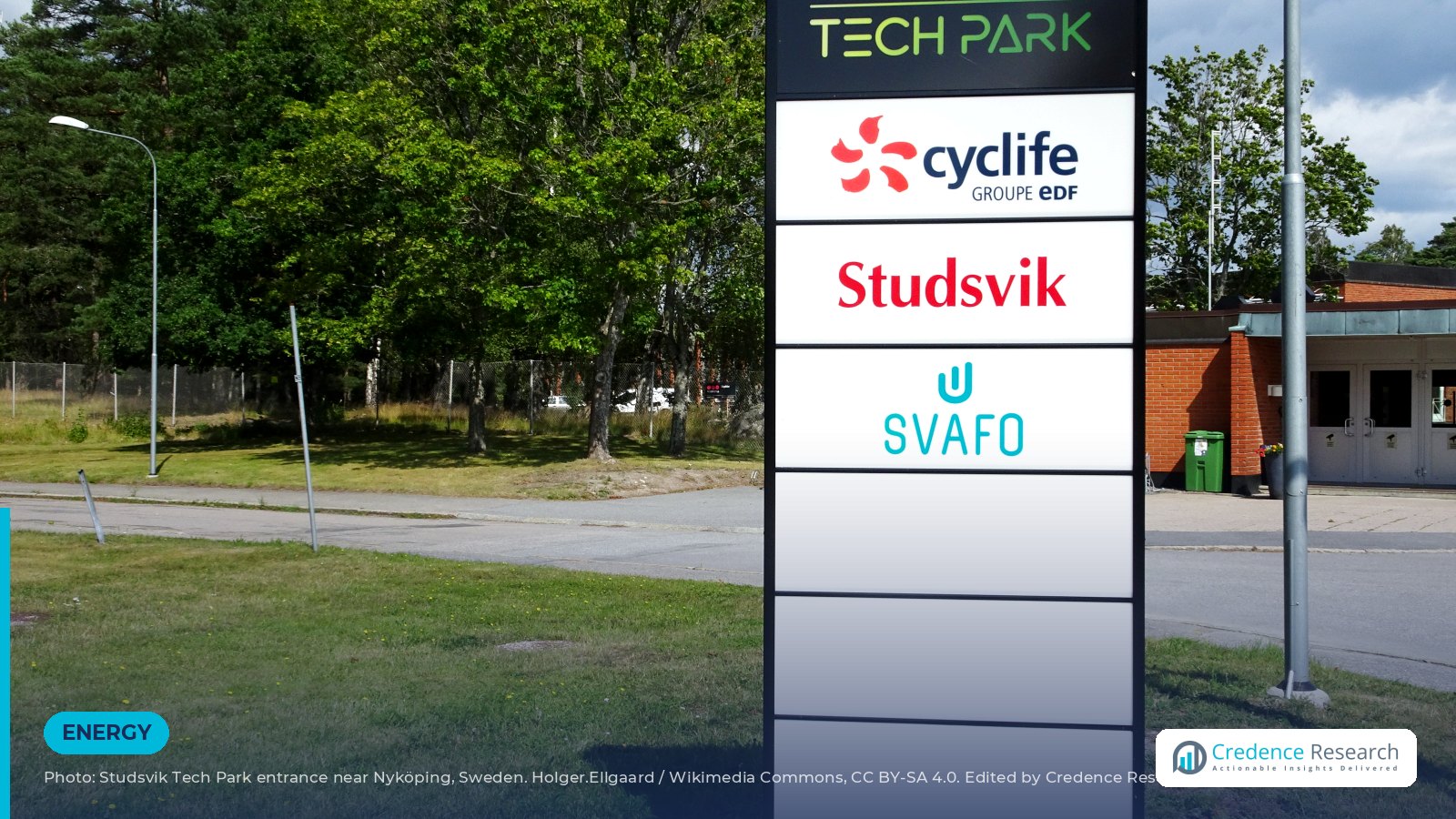
Image: Studsvik Tech Park entrance near Nyköping, Sweden, by Holger.Ellgaard via Wikimedia Commons, CC BY-SA 4.0. Cropped and edited by Credence Research.

About the Author

Senior News Editor at Credence Research Inc