
Silgan and AIP to Acquire Trivium Packaging in $3.4 Billion Metal Packaging Deal
Silgan Holdings Inc. agreed on Oct. 19, 2026, to combine its metal food can and flat cap closures operations with Netherlands-based Trivium Packaging B.V. in a new company backed by funds affiliated with American Industrial Partners. The Norwalk, Connecticut, packaging maker said the new venture, Silgan Metal Containers and Closures, will buy Trivium in an all-cash deal that values the European metal packaging supplier at about $3.4 billion in enterprise value, including debt. Silgan will own 60% of the new company and consolidate it, while AIP funds will hold the remaining 40%.
Key developments
- Silgan MCC will combine Silgan's Metal Containers segment and its Food and Beverage Flat Cap Closures businesses, valued at about $3.8 billion, with Trivium, valued at about $3.4 billion.
- Silgan will receive about $2.3 billion in cash, which it plans to use to retire certain existing debt, and AIP funds will contribute about $1.0 billion of cash equity.
- Silgan's remaining Dispensing and Custom Containers businesses will be grouped into a new wholly owned segment, Silgan Dispensing Solutions.
- Trivium's owners, Ontario Teachers' Pension Plan and Ardagh Group, are selling their stakes; Ardagh said it expects about $90 million in net cash for its roughly 42% holding.
- Silgan's board approved the deal unanimously, and closing is expected in mid-2027 after regulatory approvals and works council consultations.
Deal background
Silgan is a rigid packaging maker with about 120 facilities worldwide. Its business spans dispensing systems and specialty closures for consumer goods, metal containers for food and other products, and custom plastic containers. Trivium operates 57 locations with about 7,200 employees and supplies infinitely recyclable metal packaging to leading consumer brands. Trivium chief executive Michael Mapes said the company serves more than 800 customers.
Trivium was formed in 2019 when Ardagh Group combined its food and specialty metal packaging operations with Exal Corp., with Ontario Teachers' Pension Plan taking the majority stake. Ardagh described its 42% position as a non-core investment, and Executive Chairman Mark Porto said the sale would simplify the group's structure.
The financing is fully committed. A bank group led by Wells Fargo, Goldman Sachs, RBC, Deutsche Bank and BofA is providing debt for Silgan MCC, and AIP-affiliated funds have committed the cash equity. Silgan MCC will be fully consolidated in Silgan's financial statements. Silgan President and CEO Adam Greenlee will sit on the five-member Silgan MCC board alongside Silgan nominees Anthony J. Allott and Shawn C. Fabry, with AIP naming the other two directors.
Industry implications
The deal splits Silgan into two platforms with different customers and capital needs. Metal food cans and closures are a high-volume, capital-heavy business tied to food processors, pet food makers and seasonal vegetable packs. Dispensing systems, such as pumps, sprayers and trigger closures for beauty, home care and health products, rely more on design work and product innovation. By separating the two, Silgan said each business can pursue its own growth path and investment priorities.
The structure also keeps the door open to a later tax-free spin-off of Silgan MCC. Silgan said the timing of any such distribution would depend on integration progress, synergy results, business readiness and market conditions, and that it will control the decision. Brand owners that buy cans from both Silgan and Trivium will soon deal with a single supplier on both sides of the Atlantic.
The companies said they expect about $225 million in annual cost synergies by the end of the third year, drawn from procurement, operations and selling, general and administrative costs.
Competitive and supply chain implications
Metal packaging relies on a concentrated base of tinplate and aluminum sheet suppliers, and steel and aluminum costs have been exposed to trade measures on both sides of the Atlantic. A larger buyer with plants in North America and Europe gains more flexibility to shift volumes between mills and regions. Silgan said the combination will improve supply security for customers, in addition to widening geographic reach and product range.
The deal also changes the landscape for rival can makers such as Crown Holdings, Ball Corp. and Ardagh Metal Packaging, as well as regional European producers. Trivium brings specialty and branded metal packaging that complements Silgan's food can base, while Silgan's flat cap closures add metal lids for jars and bottles. Customers that tender across several suppliers may see fewer independent bidders for some European contracts, which makes the competition reviews a closing condition to watch.
For AIP, an industrial private equity firm with about $18 billion in assets under management, the deal adds a large manufacturing platform. Managing Partner Dino Cusumano described both companies as strong performers.
Regional implications
In North America, Silgan's metal container business is closely tied to domestic food processors and seasonal harvest packs. Trivium's U.S. operations, which trace back in part to the former Exal aluminum container business, add capacity in formats outside traditional food cans. Silgan said the combination brings together complementary North American and European footprints.
Europe is where the deal shifts the footprint most. Trivium is based in the Netherlands, and Ardagh's former food and specialty can plants form much of its European network, adding to Silgan's existing European closures sites such as Hannover, Germany. Works council consultations in several European countries must be completed before closing, and plant-level integration plans will need to address labor agreements. Tighter European Union rules on packaging recyclability could also work in favor of metal formats, which Trivium markets as infinitely recyclable.
Silgan's headquarters will remain in Norwalk, Connecticut.
Credence Research analysis
Silgan is using the Trivium deal to do two things at once: grow its metal business in Europe and reduce its own debt without issuing new shares. The roughly $2.3 billion in cash it receives is a large sum relative to the company's balance sheet, and the 60% stake lets it keep control of the combined can operation while AIP shares the capital load. The setup looks like a staged separation. Silgan keeps the dispensing business, where product engineering and consumer brand relationships matter most, and moves the more capital-intensive can and closure plants into a vehicle that can later stand on its own.
Execution risk sits mainly in the path to a mid-2027 closing and in integration across two continents. The $225 million synergy target depends heavily on procurement and plant rationalization, both of which are sensitive to labor consultations in Europe and to swings in steel and aluminum prices. Customers will watch whether the combined group uses its added scale to protect service levels during seasonal pack peaks or to push harder on pricing. Rival can makers are likely to compete aggressively for any contracts that come up for renewal during the transition.
What comes next
- Antitrust and other regulatory filings in the United States, the European Union and other jurisdictions.
- Works council information and consultation processes in European countries where Trivium and Silgan operate.
- Silgan's third-quarter 2026 results on Oct. 29, 2026, which may add detail on the deal and debt reduction plans.
- Targeted closing in mid-2027, followed by integration and synergy work over three years.
- A possible future tax-free distribution of Silgan MCC, with timing to be decided by Silgan.
Sources
- Silgan Holdings press release (SEC Form 8-K, Exhibit 99.1), Oct. 19, 2026
- Silgan Holdings Form 8-K filing, Oct. 19, 2026
- Ardagh Group announcement on the sale of its Trivium stake, Oct. 19, 2026
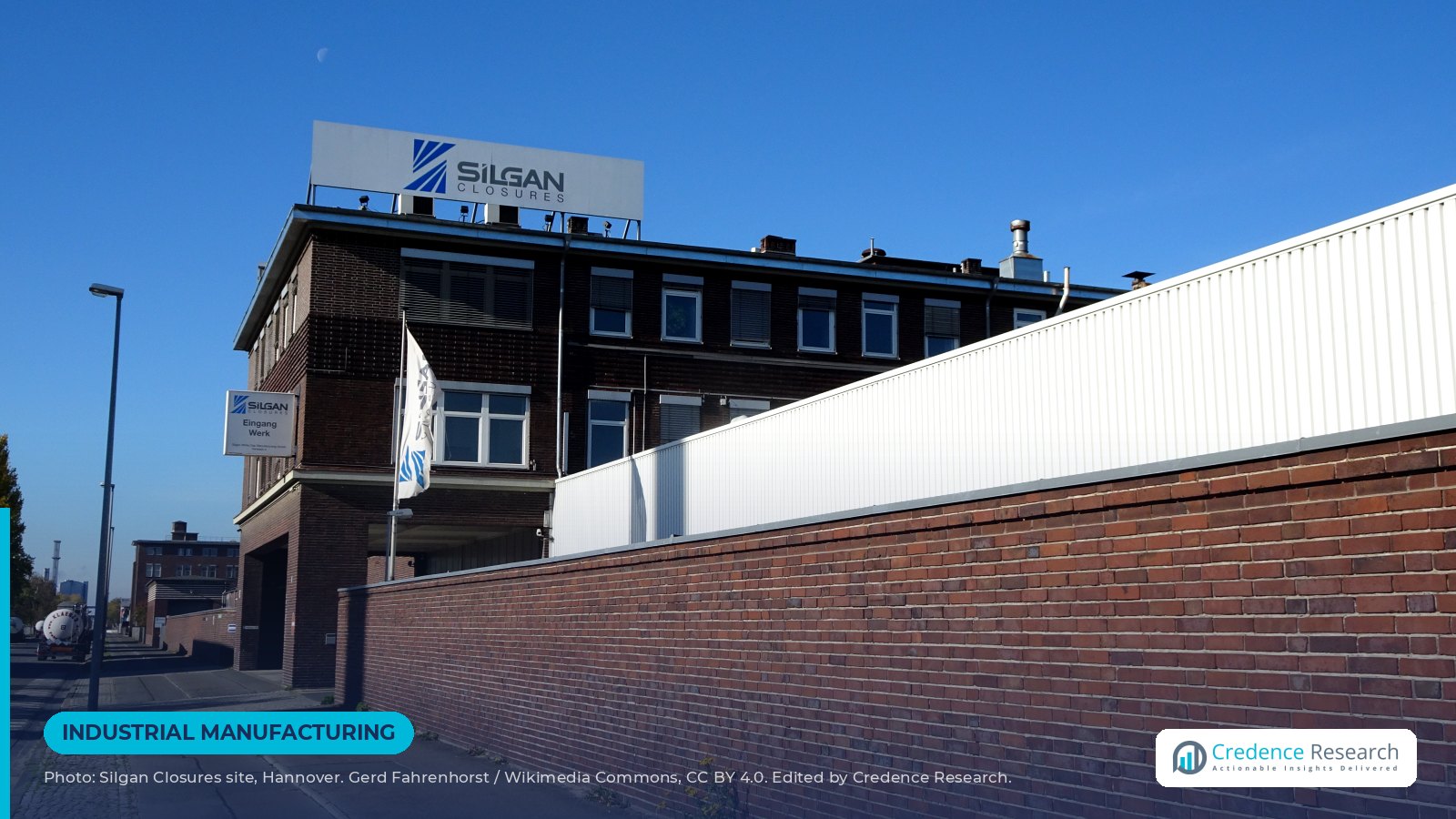
Image: Silgan Closures site on Hansastraße in Hannover, Germany, by Gerd Fahrenhorst via Wikimedia Commons, CC BY 4.0. Cropped and edited by Credence Research.

About the Author

Senior News Editor at Credence Research Inc