
New Hope to Acquire Malabar Resources in All-Scrip Deal for Maxwell Coal Mine
Australian coal producer New Hope Corporation has agreed to take full ownership of Malabar Resources and its Maxwell underground mine near Muswellbrook, New South Wales, through an all-scrip scheme of arrangement. The two companies signed a scheme implementation deed on Oct. 18 and announced the deal on Oct. 19, folding a newly started longwall operation into a group that already runs the nearby Bengalla mine and the New Acland mine in Queensland.
Key developments
- Malabar shareholders will receive 0.5 New Hope shares for each Malabar share, implying A$2.92 per share based on New Hope's Oct. 16 closing price of A$5.84.
- The offer values 100% of Malabar's fully diluted equity at about A$1.8 billion and implies an enterprise value of about A$2.4 billion, including net debt of about A$627 million at June 30, 2026.
- New Hope already holds about 26% of Malabar and will issue about 227.8 million new shares; existing New Hope shareholders would own about 79% of the combined group.
- The Maxwell mine began longwall production in April 2026 and targets up to 5.5 million tonnes a year of saleable coal after ramp-up and a planned longwall expansion.
- Implementation is targeted for March 2027, subject to Malabar shareholder and court approval, Japan Fair Trade Commission clearance and other conditions.
Deal background
Malabar is an unlisted public company whose main asset is Maxwell, an underground mine in the Upper Hunter precinct close to New Hope's Bengalla open-cut operation. Maxwell is approved to extract up to 8 million tonnes a year of run-of-mine coal over 20 years. It combines a bord-and-pillar operation in the Whynot seam with a longwall targeting the Woodlands Hill, Arrowfield and Bowfield seams. First longwall coal was cut from the Woodlands Hill seam in April, and the ramp-up is still underway.
The longwall currently runs a 145-meter face with nameplate capacity of up to about 3 million tonnes a year. Malabar plans to widen it to a 300-meter face capable of up to about 5 million tonnes a year. The coal can be washed to a high-specification thermal product or sold as semi-soft coking coal, which gives the operation a foot in both power generation and steelmaking supply chains. The site includes a coal handling and preparation plant, a train load-out facility and a rail loop linked to the Hunter rail network and the Port of Newcastle, and Malabar holds interests in the Newcastle Coal Infrastructure Group and Port Waratah Coal Services terminals.
The Malabar board, excluding New Hope CEO Rob Bishop, who sits on it as New Hope's nominee, unanimously recommends the scheme, subject to no superior proposal emerging and an independent expert concluding the deal is in the best interests of Malabar shareholders other than New Hope. Bishop said the transaction offers a clear path to unlock the full value of the Maxwell mine for both shareholder groups. Malabar Executive Chairman Wayne Seabrook, who will join the New Hope board along with fellow Malabar nominee Tony Haggarty, said his board views the scheme as an attractive opportunity for its investors.
Industry implications
The deal shows how established Australian coal producers are choosing to grow: by buying approved, operating assets rather than pursuing greenfield projects that face long permitting timelines and financing hurdles. Maxwell already holds a 20-year approval and has passed the technically demanding step of starting a longwall, which removes much of the development risk that typically accompanies new underground mines.
The companies said the combined group would have a clear pathway to about 19 million tonnes a year of saleable production from three assets they describe as first quartile on the cost curve at steady state. They also pointed to Maxwell's resource base, estimated at 2,320 million tonnes as of Feb. 28, 2026, with about 69% in the measured and indicated categories, plus adjoining extension areas that offer further growth options. For a sector where new approvals are scarce, that depth of resource is a strategic asset in its own right.
Paying entirely in shares lets New Hope avoid new acquisition debt. The companies said the larger group would seek to refinance Malabar's existing debt facilities at lower cost, drawing on its greater scale and credit profile.
Competitive and supply chain implications
Placing Maxwell and Bengalla under one owner creates options to share infrastructure, logistics, blending and marketing across neighboring operations. The companies listed procurement, financing and corporate functions as further synergy areas, along with future precinct opportunities across the combined land and tenement package. Pairing Malabar's underground mining expertise with New Hope's open-cut operations and marketing platform is another stated benefit.
Blending flexibility matters for export customers. With thermal coal from Bengalla and coal from Maxwell that can serve either thermal or semi-soft coking markets, the combined group could tailor product specifications more closely to buyer requirements. Rail access to the Port of Newcastle, combined with Malabar's terminal interests, reinforces the group's position along a major coal export corridor.
For mining equipment and services suppliers, the planned longwall widening from 145 meters to 300 meters signals continued demand for underground mining systems, roof support and coal preparation capacity in the Hunter region.
Regional implications
The Upper Hunter remains central to New South Wales' coal economy, and the merger concentrates ownership of two significant operations around Muswellbrook. Consolidation could support more coordinated use of rail, water and land holdings across the precinct, an area the companies flagged for future opportunities.
The requirement for Japan Fair Trade Commission clearance highlights the deal's link to North Asian buyers, a key customer base for Hunter Valley coal. Former Malabar shareholders will also gain exposure to New Acland in Queensland's Darling Downs, widening their geographic footprint beyond the Hunter.
Credence Research analysis
The structure of the deal says as much as its size. By offering scrip rather than cash, New Hope shares Maxwell's remaining ramp-up risk with Malabar's existing investors, who keep exposure to the mine through a listed and more diversified company. That approach makes sense for an asset that has started longwall production but has not yet reached its targeted run rate, since the final value will depend on how smoothly the expansion to a 300-meter face proceeds.
The bigger strategic signal is the premium placed on approved, long-life tonnes. New Hope's stated strategy centers on low-cost, high-quality coal assets with long-life approvals, and Maxwell's 20-year consent and large resource base fit that brief. Whether the combined group reaches its targeted production pathway will hinge on execution at Maxwell, the realization of shared infrastructure and marketing benefits with Bengalla, and successful refinancing of Malabar's debt on better terms.
What comes next
- First court hearing and dispatch of the scheme booklet, including the independent expert's report, expected in December 2026 or January 2027.
- Malabar scheme meeting expected in January or February 2027, requiring approval by 75% of votes cast and a majority of shareholders voting.
- Japan Fair Trade Commission clearance, along with required ASIC and ASX relief, before the second court date.
- Second court hearing, effective date and implementation expected in February or March 2027.
- Continued Maxwell longwall ramp-up and planned expansion to a 300-meter face.
Sources
- New Hope and Malabar: New Hope and Malabar to Combine Through Recommended Scheme of Arrangement (ASX release, Oct. 19, 2026)
- New Hope and Malabar: Transaction presentation (Oct. 19, 2026)
- Malabar Resources: Investor Centre
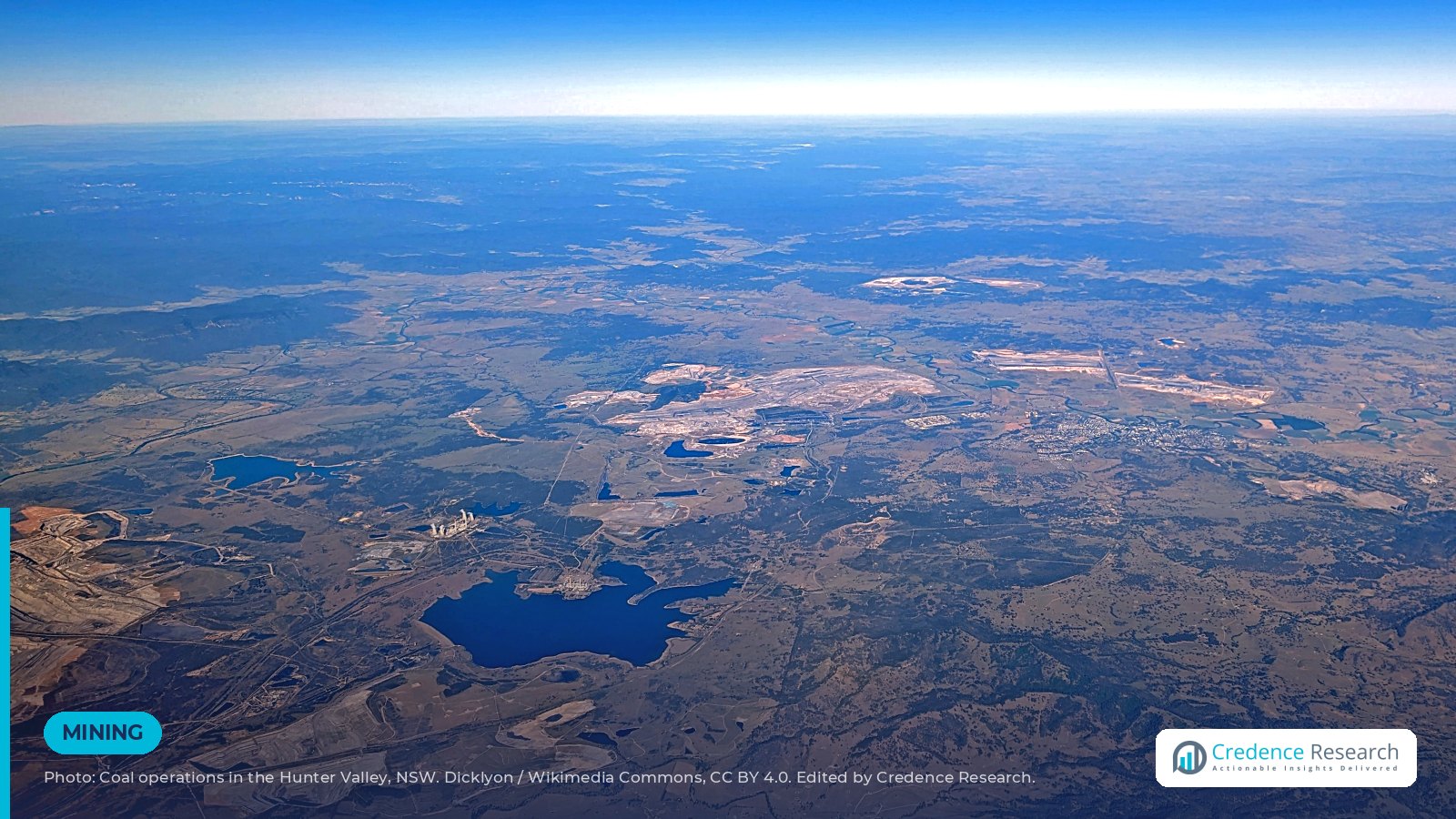
Image: Aerial view of coal operations in the Hunter Valley, New South Wales, by Dicklyon via Wikimedia Commons, CC BY 4.0. Cropped and edited by Credence Research.

About the Author

Senior News Editor at Credence Research Inc