
Sanofi Breaks Ground on Frankfurt Insulin API Plant, Targets Full Production in 2032
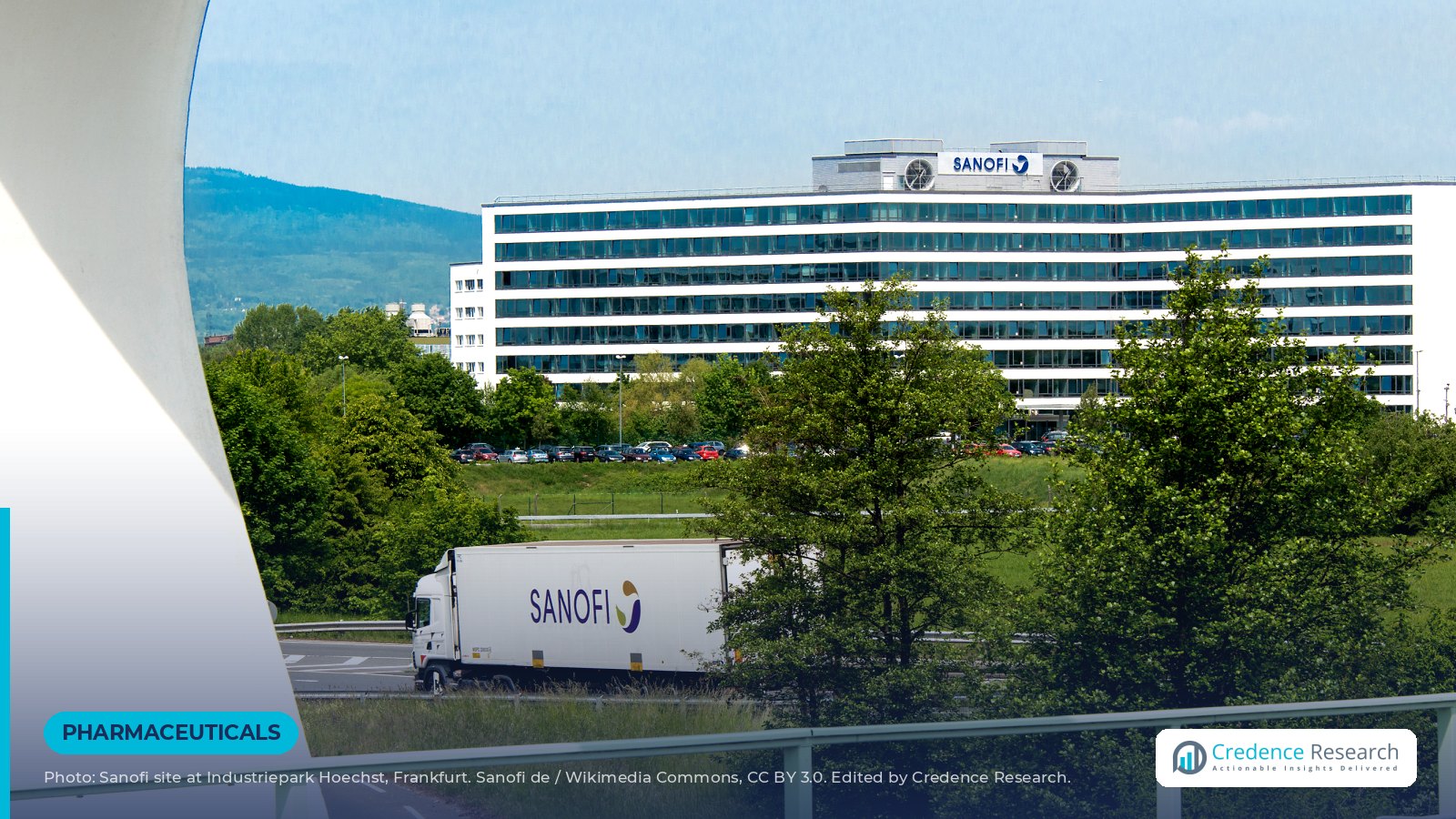
Sanofi broke ground Monday, Oct. 19, 2026, on a new insulin manufacturing facility at its BioCampus in Frankfurt, Germany, a 36,000-square-meter plant designed to produce insulin active pharmaceutical ingredient for patients in Europe and beyond. The French drugmaker said it plans to reach full production of insulin API at the site in 2032, once the facility is fully licensed. The ceremony brought together Sanofi Chief Executive Officer Belén Garijo, Hesse Prime Minister Boris Rhein and Frankfurt Mayor Mike Josef, marking the start of construction on one of the largest single manufacturing projects in the company's European network.
Key developments
- Sanofi started construction of a 36,000-square-meter insulin API facility at its Frankfurt BioCampus, an area the company compares to about five soccer fields.
- Full production of insulin API is planned for 2032, subject to the facility receiving all required licenses.
- The plant will use automation, digital technologies and artificial intelligence across manufacturing and quality processes, according to the company.
- The European Commission approved €400 million in German public support for Sanofi-Aventis Deutschland GmbH in September 2026, structured as compensation for a service of general economic interest to strengthen the resilience of human insulin and insulin analog supply.
- About 4,000 employees at the Frankfurt site already work on insulin, which supplies about 20 insulin products to roughly 15 million people in more than 100 countries each year.
Industry background
Insulin is one of the most strategically sensitive medicines in global health care. Production of the active ingredient relies on recombinant DNA technology, large-scale fermentation and complex purification, and only a handful of companies operate at global scale. That concentration means a single plant outage or regulatory hold can ripple through supply to pharmacies and hospitals across several continents.
Frankfurt has been central to Sanofi's insulin business for decades. The company describes its BioCampus at Industriepark Höchst as one of its largest integrated research and manufacturing sites, with more than a century of manufacturing history in the city. The campus covers the full insulin value chain: API production, filling, device assembly and packaging. Sanofi first announced its plans for the new facility in August 2024. At the time, outlets including Fierce Pharma reported the investment at about €1.3 billion; the groundbreaking release did not restate a figure.
Sanofi said more than 500 million people live with diabetes today. A large share of patients with type 1 diabetes, and many with advanced type 2 diabetes, depend on daily insulin therapy, which makes uninterrupted supply a clinical necessity rather than a commercial preference.
Industry implications
The project signals that originator insulin makers still view in-house API capacity as a core asset, even as newer diabetes and obesity therapies such as GLP-1 receptor agonists attract much of the industry's capital and attention. By committing to a new API plant with a 2032 production target, Sanofi is betting that demand for basal and prandial insulins will remain durable over a multi-decade horizon.
The emphasis on automation and AI in quality processes also reflects a broader shift in biologics manufacturing. Regulators in Europe and the United States have encouraged advanced manufacturing approaches, including continuous processing and real-time release testing, that can reduce batch failures and shorten release times. A greenfield plant gives Sanofi the chance to design those systems in from the start rather than retrofitting older lines.
The long timeline is a reminder of how slowly biologics capacity comes online. Construction, equipment qualification, process validation and regulatory licensing mean the facility will not contribute commercial API for roughly six years, a gap that shapes how payers and health systems should think about near-term supply.
Competitive and supply chain implications
Global insulin supply is concentrated among Novo Nordisk, Eli Lilly and Sanofi, with biosimilar producers such as Biocon and several Chinese manufacturers expanding their presence. Novo Nordisk and Lilly have each announced large manufacturing expansions in recent years, much of it aimed at incretin-based therapies. Sanofi's Frankfurt project keeps its focus squarely on insulin, positioning the company as a dedicated long-term supplier at a time when competitors are shifting capacity toward GLP-1 products.
The European Commission's approval of €400 million in public service compensation is notable for its framing. By treating resilient insulin supply as a service of general economic interest, Germany and the Commission have placed insulin in a category closer to critical infrastructure than ordinary commercial production. That approach could serve as a template for other essential medicines where Europe relies on a small number of producers or on imported active ingredients.
For upstream suppliers, the project points to future demand for bioreactors, chromatography systems, single-use components, cleanroom construction and digital quality platforms. Engineering and construction firms with biologics expertise in Germany are also likely beneficiaries during the build phase.
Regional implications
The project reinforces Hesse's position as one of Germany's main pharmaceutical hubs and supports Frankfurt's long-standing industrial base at Industriepark Höchst. The joint presence of state and city leaders at the ceremony underscores the political weight attached to keeping high-value biologics manufacturing in Germany as energy costs and regulatory complexity weigh on other industrial sectors.
At the European level, the plant aligns with the EU's push to reduce dependence on non-European sources for critical medicines. Shortages of several essential drugs in recent years prompted EU institutions to prioritize domestic production capacity. Garijo tied the investment directly to that debate, saying that maintaining the right investment conditions is essential to Europe's competitiveness.
Because Frankfurt already exports insulin to more than 100 countries, the new API capacity will also matter well beyond Europe, including for markets in Latin America, the Middle East and Asia that rely on imported insulin.
Credence Research analysis
The Frankfurt groundbreaking is less about short-term capacity and more about long-term control of a critical biologic supply chain. Sanofi is pairing a large private investment with public support framed explicitly around supply resilience, which reduces some of the financial risk of a multi-year build while tying the asset to European health security goals. The 2032 production target suggests the company is planning around the eventual replacement of older API lines rather than responding to an immediate shortage.
The bigger strategic signal is the divergence among insulin leaders. While peers are directing much of their new manufacturing capital to incretin therapies, Sanofi is reinforcing its role in insulin. If public authorities increasingly treat insulin as an essential service, producers with modern, licensed European capacity may gain an advantage in procurement and policy discussions. Execution risk remains meaningful: schedule slippage, licensing delays or cost overruns on a project of this scale could push the production date beyond 2032.
What comes next
- Construction and installation of process equipment at the Frankfurt BioCampus through the second half of the decade.
- Qualification, validation and technology transfer of insulin API processes to the new plant.
- Regulatory licensing by European authorities ahead of commercial supply.
- Implementation of the €400 million German support under the conditions approved by the European Commission.
- Full production of insulin API, which Sanofi targets for 2032.
Sources
- Sanofi press release: Sanofi breaks ground on new state-of-the-art insulin manufacturing facility in Germany (Oct. 19, 2026)
- European Commission: Commission approves €400 million German State aid to enhance insulin supply resilience
- Fierce Pharma: Sanofi confirms new insulin plant in Germany (2024)
Image: Sanofi site at Industriepark Höchst in Frankfurt, by Sanofi de via Wikimedia Commons, CC BY 3.0. Cropped and edited by Credence Research.

About the Author

Senior News Editor at Credence Research Inc