
TTM Technologies to Acquire MKS Inc.'s Ophir Optics Business for $650 Million
TTM Technologies Inc. agreed to buy the Ophir Optics business of MKS Inc. for about $650 million in cash, the two companies said on Oct. 19, 2026. The Santa Ana, California-based electronics manufacturer will gain an infrared thermal imaging and laser optics operation with production in Israel and Romania, while MKS narrows its portfolio around its semiconductor and electronics customers. The deal is expected to close in the second quarter of 2027.
Key developments
- TTM Technologies signed a definitive agreement to acquire MKS Inc.'s Ophir Optics business for approximately $650 million in cash, subject to customary closing adjustments.
- Ophir Optics makes high-precision infrared thermal imaging and laser optics for defense, homeland security and industrial customers, with production facilities in Israel and Romania.
- The sale excludes MKS's Ophir Instruments laser characterization business and the Ophir brand, both of which stay with MKS.
- TTM plans to fund the purchase with cash on hand, expected future cash flow and borrowings under its existing revolving credit facility.
- Closing is targeted for the second quarter of 2027, subject to regulatory approvals and certain governmental consents and permits.
Industry background
Infrared optics are the lenses, windows and assemblies that focus heat radiation onto thermal sensors. They sit at the front of the cameras used in targeting pods, border surveillance towers, maritime sensors, drone payloads and industrial inspection systems. Laser optics serve a related role, shaping and steering beams in cutting, welding, marking and sensing equipment. According to MKS, the Ophir Optics unit covers the chain from optical design through camera integration and final testing, and its products are built for land, air, maritime and unmanned platforms.
Within MKS, the business sat in the company's Specialty Industrial market rather than in its core Semiconductor and Electronics & Packaging markets. MKS Chief Executive John T.C. Lee described Ophir Optics as an example of applying MKS technology outside those core areas, and said the sale lets the company capitalize on the value it has built in the unit. MKS said the proceeds will further strengthen its balance sheet. It did not disclose Ophir Optics' revenue or headcount.
TTM, for its part, has moved steadily toward defense and systems work alongside its printed circuit board base. The company describes its products as including mission systems, radio frequency components, RF microwave and microelectronic assemblies, and advanced interconnect products such as printed circuit boards and substrates.
Industry implications
The transaction adds an optical layer to a supplier that already builds the electronic and RF content of many defense systems. TTM CEO Edwin Roks said the deal adds "another important modality" to the company's offering and positions it to provide systems solutions to defense and industrial customers. TTM pointed to growing demand for surveillance and rising industrial use of laser applications as the main reasons for the purchase.
For defense primes, a single supplier that can deliver circuit boards, RF assemblies and infrared optics could simplify qualification and program management on electro-optical and infrared payloads. That matters most for unmanned systems, where sensor packages must be small, light and produced at higher volumes than traditional crewed platforms. The industrial side of the business, which supplies laser optics, gives TTM exposure to factory equipment demand that does not depend on defense budgets.
For MKS, the sale is a portfolio decision. Separating Ophir Optics from Ophir Instruments keeps laser power measurement and beam profiling, which serve MKS's photonics customers, inside the company while shedding a defense-heavy optics operation. MKS said customers of Ophir Instruments will see no change in products, services or support.
Competitive and supply chain implications
Infrared optics depend on specialty materials and precision processes, including diamond turning, polishing and thin-film coating of lenses that transmit long-wave and mid-wave infrared light. Owning that capability in-house would give TTM more control over a component that often sets lead times for thermal camera programs. It also places TTM in closer competition with optics suppliers that sell directly to defense integrators and with vertically integrated camera makers that produce their own lenses.
The purchase lands while TTM is also spending heavily on circuit board capacity. On Oct. 12, the company announced $400 million in planned investments to expand capacity for artificial intelligence infrastructure demand at four facilities in China and at its plant in Penang, Malaysia. That plan is incremental to a previously disclosed $1.2 billion investment commitment for 2025 through 2029. TTM said it will fund both the Asian expansion and the Ophir Optics deal from cash, cash flow and its revolving credit facility, which means the company is now running two large capital programs at once.
The deal's structure also matters for suppliers and customers. Because MKS keeps the Ophir brand, the business TTM acquires will need to operate under a new name after closing, a transition that customers will watch for any effect on part numbers, qualifications and approved-supplier status.
Regional implications
Israel is the center of gravity for the transaction. The production base there gives TTM a foothold in a country with a well-established defense electro-optics industry, and Israeli legal counsel Arnon, Tadmor-Levy is advising TTM while Herzog Fox & Neeman is lead legal advisor to MKS. The companies said closing depends on certain regulatory approvals and governmental consents and permits, without naming the agencies involved.
Romania, the business's second production location, gives the operation a European Union manufacturing site at a time when European governments are increasing defense procurement. For the United States, the deal adds infrared optics to a U.S.-listed defense electronics supplier, while TTM's separate capacity investments remain concentrated in China and Malaysia.
Credence Research analysis
The deal reflects a clear split in strategy between buyer and seller. MKS is concentrating on the semiconductor and electronics packaging customers that drive most of its business and is releasing a unit that served a different set of end users. TTM is doing the opposite, broadening from interconnect and RF hardware into sensing. The pairing suggests that defense-oriented optics are valued more highly inside a company that sells into the same programs than inside a semiconductor equipment supplier.
The execution risk sits in timing and integration. A close in the second quarter of 2027 leaves several months of regulatory review, and the business must carry its customer approvals through a change of ownership and brand. At the same time, TTM is managing a rapid brownfield ramp of AI-related board capacity in Asia. How the company sequences cash and management attention between those two programs is likely to shape how quickly the optics business contributes to its defense systems strategy.
What comes next
- TTM is scheduled to hold its third-quarter 2026 earnings call on Oct. 22, 2026, its first opportunity to discuss the deal with investors in detail.
- The companies will seek the regulatory approvals and governmental consents and permits required for closing.
- The business will need a new name, since the Ophir brand remains with MKS.
- TTM continues its $400 million capacity expansion at four facilities in China and in Penang, Malaysia.
- Closing is expected in the second quarter of 2027.
Sources
- TTM Technologies: Agreement to acquire MKS Inc.'s Ophir Optics business (SEC filing, Oct. 19, 2026)
- MKS Inc.: MKS Inc. to sell its Ophir Optics business to TTM Technologies (Oct. 19, 2026)
- TTM Technologies: $400 million planned investments in China and Malaysia (SEC filing, Oct. 12, 2026)
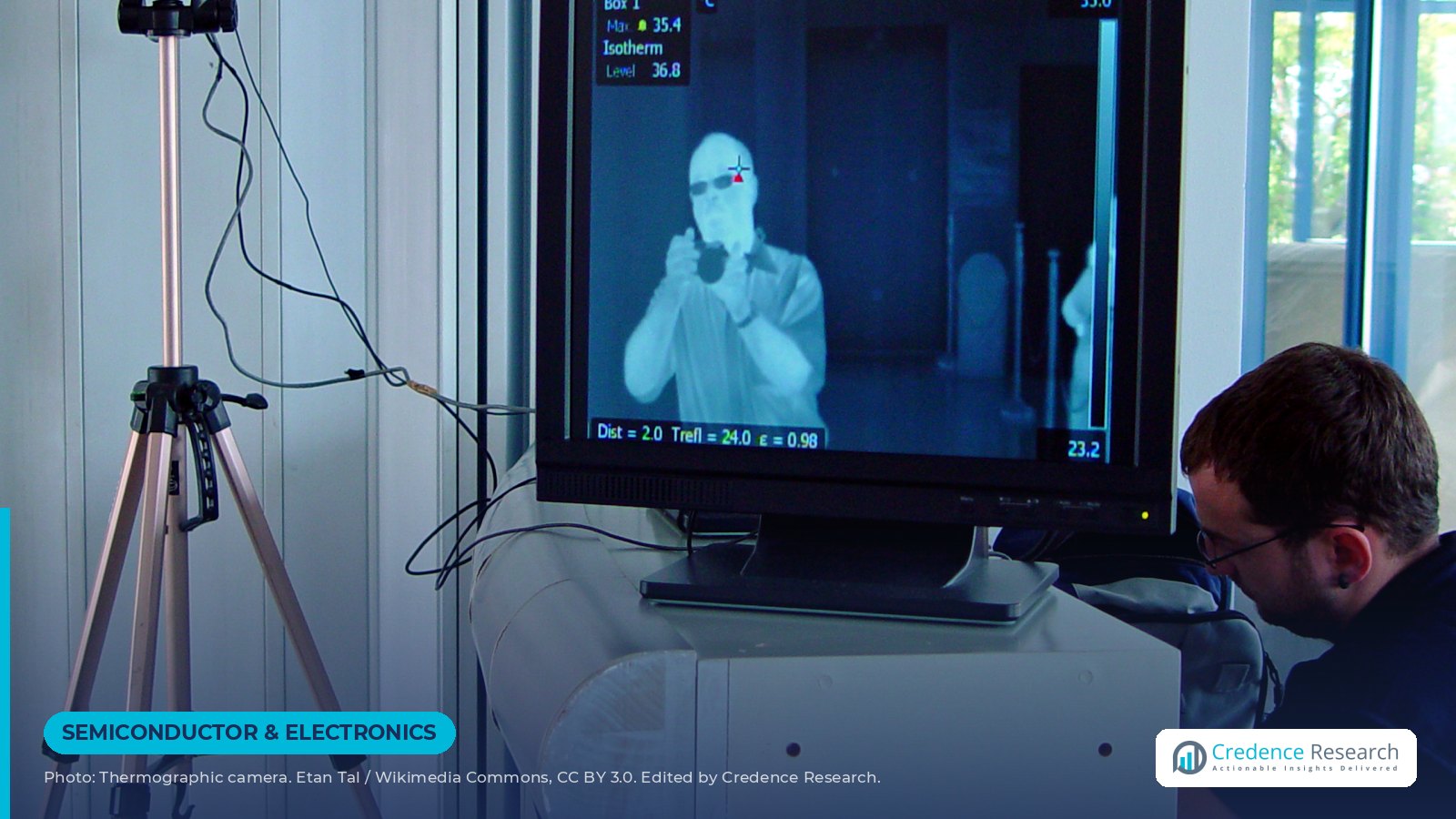
Image: A thermographic camera display, by Etan Tal via Wikimedia Commons, CC BY 3.0. Cropped and edited by Credence Research.

About the Author

Senior News Editor at Credence Research Inc