
| REPORT ATTRIBUTE | DETAILS |
|---|---|
| Historical Period | 2019-2022 |
| Base Year | 2023 |
| Forecast Period | 2024-2032 |
| Employee Recognition Software Market Size 2024 | USD 17,946.2 Million |
| Employee Recognition Software Market, CAGR | 9.9% |
| Employee Recognition Software Market Size 2032 | USD 38,190.38 Million |
Market Overview
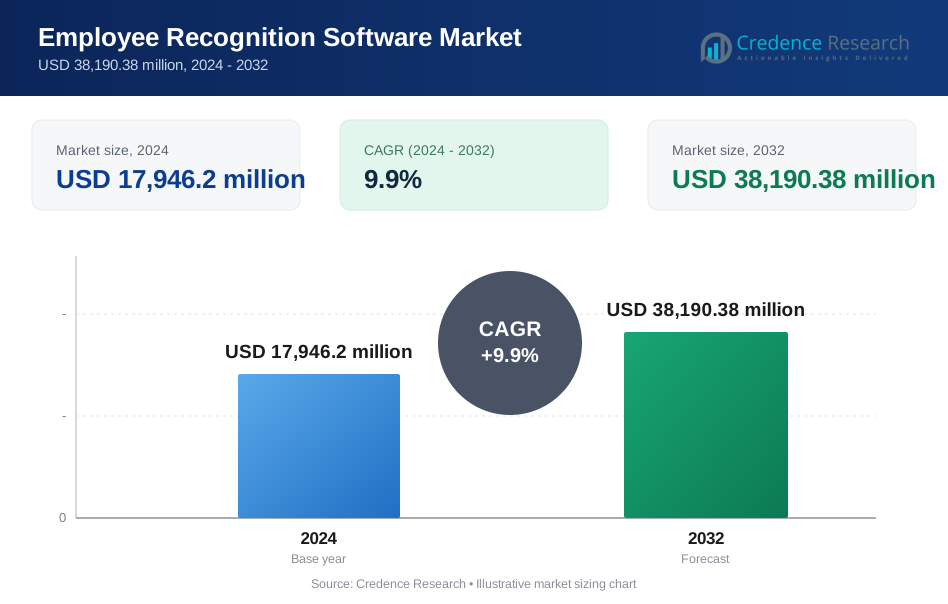
The Employee Recognition Software Market is projected to grow from USD 17,946.2 million in 2024 to USD 38,190.38 million by 2032, reflecting a compound annual growth rate (CAGR) of 9.9%.
The Employee Recognition Software market is driven by increasing demand for enhanced employee engagement and retention strategies across industries. Companies are increasingly adopting these solutions to foster a positive work culture, boost morale, and improve productivity. The growing trend of remote and hybrid work models has further accelerated the need for digital recognition tools that can seamlessly connect with dispersed teams. Additionally, advancements in artificial intelligence (AI) and machine learning are enabling these platforms to offer personalized recognition experiences, improving their effectiveness. The shift towards data-driven decision-making is also influencing the market, as organizations seek insights into employee performance and engagement levels. As the focus on employee well-being and retention intensifies, the market is witnessing significant growth, with businesses recognizing the value of real-time, automated, and scalable recognition solutions that align with broader corporate goals. This trend is expected to continue as organizations prioritize a supportive work environment for their workforce.
The Employee Recognition Software market is experiencing significant growth across various regions, with North America leading the way, holding the largest market share due to early technology adoption and a focus on employee engagement. Europe follows closely, driven by regulatory frameworks like GDPR and the rising demand for secure recognition solutions. The Asia-Pacific region is also expanding rapidly, with companies in China, Japan, and India increasingly adopting digital recognition tools to enhance employee engagement. Key players in the market include Reward Gateway, Terryberry, Awardco, Bonusly, Bucketlist, Workhuman, Nectar, Blueboard, Achievers, and WorkTango (formerly Kazoo). These companies are investing in AI, cloud-based solutions, and strategic partnerships to meet the diverse needs of organizations globally, helping drive the growth of the employee recognition software market.
Market Drivers:
Increasing Focus on Employee Engagement:
Employee recognition software is gaining traction as organizations place greater emphasis on enhancing employee engagement. Studies have shown that engaged employees are more productive, committed, and less likely to leave their jobs. For instance, a survey by Gallup found that organizations with high employee engagement levels are 21% more profitable. As businesses recognize the importance of fostering a motivated workforce, the demand for software solutions that allow for real-time recognition and feedback has surged. This shift toward engagement-focused strategies is a key driver for the growth of the employee recognition software market.
Rise of Remote and Hybrid Work Models:
The growing prevalence of remote and hybrid work arrangements has created a new need for effective communication and employee engagement tools. In this evolving work environment, traditional methods of employee recognition are less effective, prompting organizations to adopt digital recognition platforms. For example, a report by McKinsey & Company highlighted that 55% of companies have adopted hybrid work models, increasing the need for digital engagement tools. These software solutions enable companies to connect with employees regardless of location, offering personalized recognition and fostering a sense of community, even in virtual settings. As remote and hybrid work continues to grow, the market for employee recognition software is expected to expand.
Advancements in Technology:
Technological innovations, particularly in artificial intelligence (AI) and machine learning (ML), are significantly enhancing the capabilities of employee recognition software. These technologies allow platforms to provide personalized and data-driven recognition, tailoring rewards and feedback based on individual preferences and performance. For instance, a report by OrgVitals found that AI-powered employee surveys can identify patterns and trends, providing deeper insights into employee sentiments. AI and ML also enable predictive analytics, which helps organizations identify trends and improve retention strategies. As technology continues to advance, employee recognition platforms are becoming more efficient, automated, and customizable, further driving market demand.
Rising Importance of Employee Retention:
Employee turnover is a costly challenge for many organizations, making retention strategies a priority for business leaders. Recognition has proven to be one of the most effective ways to retain top talent, as employees who feel valued are more likely to stay with a company. For example, a study by Globoforce/WorkHuman found that employees who receive regular recognition are seven times more likely to stay with their current employer for at least another year. As organizations seek cost-effective ways to reduce turnover, the adoption of employee recognition software has become a critical part of retention strategies. This growing focus on employee retention is expected to continue fueling the demand for recognition solutions across industries.
Market Trends:
Personalization and Customization:
One of the leading trends in the employee recognition software market is the increasing focus on personalization and customization. Organizations are moving away from one-size-fits-all solutions, instead opting for platforms that allow them to tailor recognition programs to individual preferences. By leveraging data and insights, companies can offer more personalized rewards and recognition, ensuring that each employee feels valued in a way that aligns with their unique contributions and motivations. For instance, a survey by Empuls found that personalized recognition programs led to a 67% improvement in overall employee satisfaction. This trend enhances the overall impact of recognition programs and boosts employee satisfaction and engagement.
Integration with Other HR Tools:
Employee recognition software is increasingly being integrated with other human resources (HR) tools such as performance management systems, learning management systems, and employee surveys. This integration allows for a seamless flow of information, enabling a more holistic approach to employee engagement and performance management. For example, a report by Vantage Circle highlighted that integrating recognition software with performance management systems improved employee engagement by 21%. By centralizing all HR functions in one platform, organizations can gain valuable insights into employee performance and engagement levels, providing them with the data needed to make informed decisions. As a result, this trend is driving the adoption of integrated employee recognition platforms across various industries.
Mobile-First Solutions:
With the rise of remote work and the increasing reliance on mobile devices, there is a growing trend towards mobile-first employee recognition solutions. Many companies are adopting mobile-friendly platforms that allow employees to access recognition features anytime, anywhere, from their smartphones or tablets. For instance, a report by HONO found that mobile-first recognition solutions increased employee engagement by 30% in remote work settings. This trend is particularly important for organizations with a geographically dispersed workforce, as it ensures that recognition is not limited by location or working hours. Mobile solutions are making recognition more accessible, timely, and engaging, contributing to a more inclusive workplace culture.
Gamification and Social Recognition:
Another significant trend is the integration of gamification and social elements into employee recognition software. By incorporating features such as leaderboards, badges, and social sharing, organizations are making recognition programs more interactive and fun. For example, a study by AmplifAI found that gamification increased employee participation by 90%, while social recognition features enhanced peer-to-peer acknowledgment. Gamification increases employee participation and fosters friendly competition, while social recognition enables employees to publicly acknowledge their peers’ achievements. These elements enhance the overall experience, encouraging greater engagement and fostering a positive, collaborative work environment.
Market Challenges Analysis:
Adoption Resistance and Organizational Buy-In:
One of the major challenges in the employee recognition software market is overcoming resistance to adoption within organizations. Many companies face difficulties in convincing stakeholders of the value of investing in these solutions, especially if they have traditionally relied on manual or informal methods of recognition. Additionally, some organizations struggle with securing buy-in from senior leadership, who may be hesitant to embrace new technologies or skeptical about the return on investment. Without strong organizational support, implementing an effective recognition program can be challenging, limiting the software’s potential impact on employee engagement and morale.
Data Privacy and Security Concerns:
As employee recognition software becomes increasingly integrated with other HR systems, concerns over data privacy and security have emerged as significant challenges. These platforms often store sensitive employee data, such as performance metrics, personal preferences, and feedback, making them attractive targets for cyberattacks. Organizations must ensure that their employee recognition platforms comply with data protection regulations, such as GDPR, and maintain high standards of security to protect employee information. Failing to address these concerns can lead to breaches of trust, legal repercussions, and damage to a company's reputation, making data security a critical factor in the adoption of recognition software.
Market Segmentation Analysis:
By System Type
The EHS market offers solutions categorized into software and services. The software segment dominates due to its ability to provide comprehensive tools for incident management, audit tracking, compliance monitoring, and risk assessment. Advanced analytics and integration capabilities have further enhanced software adoption across industries such as manufacturing, construction, and energy. The services segment, which includes consulting, implementation, and training, continues to grow as organizations seek expert guidance for seamless EHS system deployment and optimization.
By Deployment
Deployment methods in the EHS market are divided into on-premises and cloud-based systems. The cloud-based segment is experiencing significant growth due to its scalability, cost efficiency, and ease of remote access. Organizations, especially small and medium enterprises (SMEs), prefer cloud-based solutions to reduce infrastructure costs and improve operational flexibility. Meanwhile, on-premises systems maintain a steady presence among large enterprises requiring enhanced data control and tailored solutions for complex operational environments.
Segments:
Based on System Type:
- App-based Employee Recognition Systems
- Desktop-based Employee Recognition Systems
Based on Deployment:
- Cloud-based
- On-premise
- Custom-based
Based on Enterprise Size:
- Small Offices (1-9 employees)
- Small Enterprises (10-99 employees)
- Medium-sized Enterprises (100-499 employees)
- Large Enterprises (500-999 employees)
- Very Large Enterprises (1,000+ employees)
Based on Industry:
- Finance
- Manufacturing & Resources
- Distribution Services
- Services
- Public Sector
- Infrastructure
Based on the Geography:
- North America
- U.S.
- Canada
- Mexico
- Europe
- Germany
- France
- U.K.
- Italy
- Spain
- Rest of Europe
- Asia Pacific
- China
- Japan
- India
- South Korea
- South-east Asia
- Rest of Asia Pacific
- Latin America
- Brazil
- Argentina
- Rest of Latin America
- Middle East & Africa
- GCC Countries
- South Africa
- Rest of the Middle East and Africa
Regional Analysis:
North America
North America holds a dominant position in the employee recognition software market, accounting for a significant share of the global market. The region’s leadership is driven by a combination of factors, including early technology adoption, a large number of enterprises focusing on employee engagement, and strong investments in digital transformation. In particular, the United States stands out as a key market, where businesses are increasingly leveraging advanced employee recognition systems, such as AI-driven and cloud-based platforms, to enhance workplace culture and employee retention. Large enterprises, as well as small and medium-sized businesses, are investing in these systems to improve overall productivity, morale, and engagement. The demand for personalized and automated recognition tools has surged, contributing to market growth. Moreover, North America benefits from a robust IT infrastructure, which facilitates the deployment of sophisticated employee recognition solutions. The region is also home to some of the largest and most innovative employee recognition software providers, driving further growth and technological advancement in the market. According to recent market reports, North America is expected to continue holding the largest market share, accounting for approximately 45% of the global employee recognition software market by 2024. With a focus on creating diverse and inclusive work environments, North American organizations are continuing to prioritize technology that fosters employee satisfaction, making this region a strong contributor to the global employee recognition software market.
Europe
Europe is another key region experiencing substantial growth in the employee recognition software market, with the United Kingdom, Germany, and France leading the way. The market in Europe is growing rapidly as businesses increasingly focus on enhancing employee well-being and engagement. Employee recognition platforms are seen as essential tools for promoting positive workplace culture, improving employee retention, and boosting overall job satisfaction. In response to the rising demand, European companies are adopting both cloud-based and on-premise solutions, ensuring a high degree of flexibility and security. Furthermore, the shift towards remote and hybrid work models in Europe has further accelerated the need for digital recognition tools that can be easily integrated across different teams. Additionally, the strong regulatory environment in Europe, especially with the introduction of the General Data Protection Regulation (GDPR), has heightened the focus on secure and compliant recognition systems. Organizations are increasingly seeking platforms that adhere to these regulations, ensuring that employee data is protected while maintaining efficient recognition workflows. In 2023, Europe held approximately 35% of the global market share and is expected to continue experiencing steady growth, with an increasing emphasis on personalized and secure employee recognition solutions. The European market is poised for continued growth, driven by these trends and an increased awareness of the importance of employee recognition in driving business success. With ongoing investments in technology and innovation, Europe’s market share is expected to continue expanding as organizations recognize the value of keeping employees motivated and engaged.
Key Player Analysis:
- Reward Gateway
- Terryberry
- Awardco
- Bonusly
- Bucketlist
- Workhuman
- Nectar
- Blueboard
- Achievers
- WorkTango (formerly Kazoo)
Competitive Analysis:
The employee recognition software market is highly competitive, with several prominent players leading the industry. Companies such as Reward Gateway, Terryberry, Awardco, Bonusly, Bucketlist, Workhuman, Nectar, Blueboard, Achievers, and WorkTango (formerly Kazoo) are at the forefront of this space, offering a range of innovative solutions to enhance employee engagement, morale, and retention. These players differentiate themselves through unique features such as gamification, integration with other HR systems, and customizable recognition programs. Additionally, many of these platforms leverage AI and data analytics to offer personalized recognition experiences and real-time feedback. For example, a survey by McKinsey & Company highlighted that integrating recognition software with other HR tools improved overall employee satisfaction and retention rates. As the demand for employee recognition grows, these companies continue to innovate and evolve, ensuring they meet the changing needs of organizations seeking to improve workplace culture and performance. With a focus on both small businesses and large enterprises, these market leaders are expected to maintain a competitive edge through technological advancements and strategic partnerships.
Recent Developments:
- In March 2023, Terryberry launched a new Offers and Discounts platform designed to assist businesses in supporting their employees during the cost-of-living crisis, offering potential savings of up to £3000 per year. By combining their Employee Benefits and Reward and Recognition platform, Terryberry aims to provide businesses with a seamless experience and a single platform to cultivate a culture of recognition within their organization.
- In August 2023, Xoxoday, a leading global technology company that helps organizations digitize and gamify their engagement, incentive, reward, commissions, and loyalty programs, partnered with Kloudrac, a leading provider of Salesforce consulting and implementation services. This collaboration expanded Xoxoday's reach and offerings to a broader range of Salesforce customers while also providing Kloudrac's clients with access to Xoxoday's innovative suite of engagement, incentive, and rewards solutions.
- In October 2023, Kudos®, the employee recognition platform that transforms workplace cultures with new technology, partnered with UKG, a leading provider of HR, payroll, and workforce management solutions. With a network of 350 technology and services partners, UKG offers one of the largest and most collaborative partner ecosystems in the Human Capital Management (HCM) industry, focused on enhancing employee experiences and improving business outcomes. This partnership allows organizations utilizing both Kudos and the UKG Pro suite to benefit from automated integration, user provisioning, and data updates.
- In April 2024, Kudos® introduced an AI-driven Recognition Assistant, simplifying employee appreciation with personalized messages to boost engagement. By leveraging generative AI, Kudos ensures prompt and thoughtful recognition of team efforts while maintaining complete privacy control and GDPR compliance, prioritizing security within its innovative Recognition Assistant.
Market Concentration & Characteristics:
The employee recognition software market exhibits moderate to high concentration, with a mix of established players and emerging startups driving innovation. Leading companies such as Reward Gateway, Terryberry, Workhuman, and Bonusly dominate the market, offering comprehensive solutions that cater to a diverse range of industries and company sizes. These players maintain competitive advantages through product diversification, integration capabilities with existing HR tools, and personalized recognition features. However, the market also sees growth from smaller, niche providers that focus on specific aspects of employee engagement, such as gamification or mobile-based solutions. The rapid adoption of cloud-based and AI-driven platforms has intensified competition, as organizations increasingly seek scalable, data-driven solutions that align with modern workforce needs. Despite the competitive landscape, the market is characterized by significant collaboration and partnerships, with many players integrating with other HR and business management systems to offer holistic employee engagement solutions.
Report Coverage:
The research report offers an in-depth analysis based on System Type, Deployment, Enterprise size, Industry and Geography. It details leading market players, providing an overview of their business, product offerings, investments, revenue streams, and key applications. Additionally, the report includes insights into the competitive environment, SWOT analysis, current market trends, as well as the primary drivers and constraints. Furthermore, it discusses various factors that have driven market expansion in recent years. The report also explores market dynamics, regulatory scenarios, and technological advancements that are shaping the industry. It assesses the impact of external factors and global economic changes on market growth. Lastly, it provides strategic recommendations for new entrants and established companies to navigate the complexities of the market.
Future Outlook:
- The employee recognition software market is expected to see continued growth driven by the increasing focus on employee engagement and retention.
- Cloud-based solutions will dominate, offering flexibility, scalability, and cost-effectiveness for businesses of all sizes.
- Integration with other HR tools like performance management and payroll systems will become more common, streamlining processes.
- AI and machine learning technologies will play a larger role in personalizing recognition experiences and providing actionable insights.
- Mobile-first platforms will rise in popularity as remote and hybrid work models become more prevalent.
- Gamification features will continue to enhance user engagement and participation in recognition programs.
- Data privacy regulations, such as GDPR, will influence the development of secure and compliant software solutions.
- Small and medium-sized enterprises will increasingly adopt recognition software as solutions become more affordable and accessible.
- Customizable recognition programs will cater to diverse employee preferences, improving overall program effectiveness.
- Employee recognition software will evolve to support diversity and inclusion initiatives, helping businesses create more inclusive workplace cultures.
Request a Free Sample
Fill in your details and we'll send you a free sample report.
- Sample data tables & charts
- Research methodology
Need a Custom Version of This Report?
Tailor the scope, geography, or segments to your exact requirements.
- Custom geography or segment scope
- Direct access to our analyst team
Frequently Asked Questions
What is the current size of the Employee Recognition Software market?
What factors are driving the growth of the Employee Recognition Software market?
What are the key segments within the Employee Recognition Software market?
What are some challenges faced by the Employee Recognition Software market?
Who are the major players in the Employee Recognition Software market?
Table of Content
Chapter 1. Report Introduction
- 1.1 Report Description & Purpose
- 1.1.1 Report Title & Market Definition
- 1.1.2 Unique Selling Propositions (USP) & Key Differentiators
- 1.1.3 Value Proposition for Stakeholders
- 1.2 Research Objectives
- 1.2.1 Market Sizing Objectives (Volume & Revenue)
- 1.2.2 Segmentation Objectives
- 1.2.3 Competitive Intelligence Objectives
- 1.2.4 Forecast & Scenario Objectives
- 1.3 Report Scope
- 1.3.1 Employee Recognition Software Scope – Types & Subtypes Covered
- 1.3.2 Geographic Scope – Regions & Countries Covered
- 1.3.3 Historical Period, Base Year & Forecast Period (2024; forecast to 2032)
- 1.3.4 Inclusions & Exclusions
- 1.4 HS Code & Classification Framework
- 1.5 Currency, Units & Pricing Basis
- 1.6 Target Stakeholders
- 1.7 Limitations & Assumptions
Chapter 2. Executive Summary
- 2.1 Global Employee Recognition Software Market Snapshot
- 2.1.1 Market Size – Historical (2024) & Forecast (2024-2032) (2024: USD 17,946.2 million → 2032: USD 38,190.38 million)
- 2.1.2 Volume & Revenue – Global Totals
- 2.1.3 Key Market Highlights – Top Five Facts
- 2.2 Employee Recognition Software Market Segmentation Snapshot
- 2.2.1 Market Split by Region – 2024 vs. 2032
- 2.3 Competitive Snapshot
- 2.3.1 Top 10 Players by Revenue Share – 2024
- 2.3.2 Top 10 Players by Volume Share – 2024
- 2.3.3 Recent Strategic Developments (18-Month Summary)
- 2.4 Key Investment Highlights & Strategic Conclusions
Chapter 3. Employee Recognition Software Market Dynamics & Industry Analysis
- 3.1 Market Overview & Context
- 3.1.1 Employee Recognition Software Market Position in the Broader Automotive Value Chain
- 3.1.2 OEM vs. Replacement Market Dynamics
- 3.1.3 Market Maturity & Development Stage by Region
- 3.2 Employee Recognition Software Market Drivers
- 3.3 Employee Recognition Software Market Restraints & Challenges
- 3.4 Employee Recognition Software Market Opportunities
- 3.5 Porter's Five Forces Analysis
- 3.5.1 Threat of New Entrants
- 3.5.2 Bargaining Power of Suppliers
- 3.5.3 Bargaining Power of Buyers
- 3.5.4 Threat of Substitutes
- 3.5.5 Competitive Rivalry – Intensity Assessment
- 3.6 Employee Recognition Software Value Chain Analysis
- 3.6.1 Upstream – Raw Material/Input Suppliers
- 3.6.1.1 Raw Material/Input 1
- 3.6.1.2 Raw Material/Input 2
- 3.6.1.3 Raw Material/Input 3
- 3.6.2 Midstream – Production/Manufacturing/Service Delivery
- 3.6.2.1 Production/Process Overview
- 3.6.2.2 Key Facility Locations & Capacity by Manufacturer
- 3.6.3 Downstream – Distribution & End Consumer
- 3.6.3.1 Primary Channel – B2B/OEM
- 3.6.3.2 Secondary Channels – Dealer, Retail, Online, Direct
- 3.6.4 Value Chain Profitability Analysis
- 3.6.1 Upstream – Raw Material/Input Suppliers
- 3.7 PESTEL Analysis
- 3.7.1 Political Factors
- 3.7.2 Economic Factors
- 3.7.3 Social Factors
- 3.7.4 Technological Factors
- 3.7.5 Environmental Factors
- 3.7.6 Legal Factors
- 3.8 Employee Recognition Software Supply Chain Analysis
- 3.8.1 Raw Material/Input Supply Risk Assessment
- 3.8.2 Manufacturing Concentration Risk (Geographic Exposure)
- 3.8.3 Trade Disruption Impact Analysis
- 3.9 Regulatory & Policy Landscape
Note: The regulatory and policy landscape section covers regulations based on their applicability to the market, Employee Recognition Software category, geography, and scope of the study. Only regulatory frameworks with a material impact on operations, compliance, trade, sustainability, or market access are analyzed in detail.
Chapter 4. Key Investment Pockets & Opportunity Analysis
- 4.1 Employee Recognition Software Market Attractiveness Analysis
- 4.1.1 By Region – Investment Attractiveness Matrix (Volume × CAGR)
- 4.2 Absolute Revenue Growth Opportunity
- 4.2.1 By Region – Absolute USD Growth Through 2032
- 4.3 Incremental Volume Opportunity
- 4.3.1 By Region – Incremental Volume Through 2032
- 4.3.2 Segment – Incremental Volume
- 4.4 Emerging Submarket Opportunity Deep Dive (Subject to Applicability)
- 4.5 Emerging Market Opportunity Scorecards
- 4.5.1 United States
- 4.5.2 Europe
- 4.5.3 Asia
- 4.5.4 Middle East & Africa
Note: Emerging Market Opportunity Scorecards will be included based on relevance and strategic importance. Regions listed are indicative and may vary depending on data availability and market dynamics.
Chapter 5. Employee Recognition Software Import-Export Analysis & Trade Flows
- 5.1 Global Trade Overview
- 5.1.1 Global Export Value by Country (2024)
- 5.1.2 Global Export Volume by Country (2024)
- 5.1.3 Global Import Value by Country (2024)
- 5.1.4 Global Import Volume by Country (2024)
- 5.1.5 Net Trade Balance by Country (2024)
- 5.2 Export Analysis – Segment
- 5.2.1 Type 1 (HS Code)
- 5.2.2 Type 2 (HS Code)
- 5.2.3 Type 3 (HS Code)
- 5.2.4 Type 4 (HS Code)
- 5.2.5 Type 5 (HS Code)
- 5.3 Import Analysis – Segment
- 5.3.1 Type 1 (HS Code)
- 5.3.2 Type 2 (HS Code)
- 5.3.3 Type 3 (HS Code)
- 5.3.4 Type 4 (HS Code)
- 5.3.5 Type 5 (HS Code)
- 5.4 Average Unit Trade Prices
- 5.4.1 Average Export Price – Segment & Country
- 5.4.2 Average Import Price – Segment & Source Country
- 5.4.3 Price Trends (2024)
- 5.5 Key Trade Route Analysis
- 5.5.1 Trade Route 1
- 5.5.2 Trade Route 2
- 5.5.3 Trade Route 3
- 5.5.4 Trade Route 4
- 5.5.5 Trade Route 5
- 5.6 Trade Policy Impact Assessment
- 5.6.1 US Anti-Dumping & Section 301 Tariffs
- 5.6.2 EU Customs Union Impact
- 5.6.3 Major Free Trade Agreements
- 5.6.4 USMCA Rules of Origin
Note: Trade policy analysis will be included only where relevant to the Employee Recognition Software market.
Chapter 6. Competitive Landscape & Company Benchmarking
- 6.1 Employee Recognition Software Market Concentration & Structure
- 6.1.1 Herfindahl-Hirschman Index (HHI) – vs. 2024
- 6.1.2 Tier 1, Tier 2 & Tier 3 Market Structure
- 6.1.3 Global, Regional & Local Player Dynamics
- 6.2 Employee Recognition Software Market Share Analysis – 2024
- 6.2.1 Global Revenue Share by Company
- 6.2.2 Global Volume Share by Company
- 6.2.3 Regional Revenue Share
- 6.2.4 Market Share Evolution ( vs. 2024)
- 6.2.5 OEM Segment Share by Company
- 6.2.6 Replacement Segment Share by Company
- 6.3 Production/Delivery Capacity & Facility Analysis
- 6.3.1 Global Installed Capacity
- 6.3.2 Capacity Utilization Rates
- 6.3.3 Production/Output Volume
- 6.3.4 Facility Locations & Capacity Map
- 6.3.5 Planned Capacity Additions
- 6.4 Employee Recognition Software Competitive Benchmarking Matrix
- 6.4.1 Revenue, Volume, CAGR & Profitability Comparison
- 6.4.2 Channel Revenue Mix
- 6.4.3 Geographic Revenue Exposure
- 6.4.4 R&D Intensity
- 6.4.5 Sustainability Maturity
- 6.5 Strategic Developments in Employee Recognition Software (Last 24 Months)
- 6.5.1 Mergers, Acquisitions & Divestments
- 6.5.2 New Employee Recognition Software Launches
- 6.5.3 Facility Expansions
- 6.5.4 Strategic Alliances, Joint Ventures & Partnerships
- 6.5.5 Distribution Expansion & Market Entry
- 6.5.6 Sustainability & ESG Initiatives
- 6.6 Competitive Strategy Mapping
- 6.6.1 Leader, Challenger, Follower & Niche Classification
- 6.6.2 Pricing Strategy Comparison
- 6.6.3 Channel Strategy Matrix
Note: Strategic developments are included based on their materiality and the availability of reliable information.
Chapter 7. Global Employee Recognition Software Market – By Distribution Channel
- 7.1 Segment Overview
- 7.1.1 Volume & Revenue Split by Channel (2024 & 2032)
- 7.1.2 Channel Mix Evolution (2024-2032)
Chapter 8. Regional Market Analysis – Global Overview
- 8.1 Global Regional Overview
- 8.1.1 Regional Volume Share
- 8.1.2 Regional Revenue Share
- 8.1.3 Regional Volume by Region
- 8.1.4 Regional Revenue by Region
- 8.1.5 Regional Forecast Through 2032
- 8.2 Cross-Regional Segment Analysis
- 8.2.1 By Distribution Channel
- 8.2.2 By Brand/Price Tier
Chapter 9. North America Employee Recognition Software Market
- 9.1 United States
- 9.2 Canada
- 9.3 Mexico
Chapter 10. Europe Employee Recognition Software Market
- 10.1 Germany
- 10.2 France
- 10.3 Italy
- 10.4 United Kingdom
- 10.5 Spain
- 10.6 Poland
- 10.7 Russia
- 10.8 Netherlands
- 10.9 Belgium
- 10.10 Sweden
- 10.11 Denmark
- 10.12 Norway
- 10.13 Rest of Europe
Chapter 11. Asia Pacific Employee Recognition Software Market
- 11.1 China
- 11.2 India
- 11.3 Japan
- 11.4 South Korea
- 11.5 Thailand
- 11.6 Indonesia
- 11.7 Vietnam
- 11.8 Malaysia
- 11.9 Australia
- 11.10 Rest of Asia Pacific
Chapter 12. Latin America Employee Recognition Software Market
- 12.1 Brazil
- 12.2 Argentina
- 12.3 Colombia
- 12.4 Chile
- 12.5 Rest of Latin America
Chapter 13. Middle East Employee Recognition Software Market
- 13.1 Saudi Arabia
- 13.2 United Arab Emirates
- 13.3 Turkey
- 13.4 Israel
- 13.5 Iran
- 13.6 Rest of the Middle East
Chapter 14. Africa Employee Recognition Software Market
- 14.1 South Africa
- 14.2 Egypt
- 14.3 Nigeria
- 14.4 Morocco
- 14.5 Rest of Africa
Chapter 15. Employee Recognition Software Company Profiles
- 15.1 [Company 01]
- 15.1.1 Company Overview
- 15.1.2 Key Management Personnel
- 15.1.3 Products & Services Portfolio
- 15.1.4 Financial Performance
- 15.1.5 Key Market Focus & Geographic Presence
- 15.1.6 Recent Developments & Strategic Initiatives
Note: The company profile list is preliminary and may change based on research findings, market developments, data availability, and client requirements.
Chapter 16. Appendices
- Appendix A – List of Abbreviations & Acronyms
- Appendix B – Industry Classification Code Reference – Full Series
- Appendix C – Production & Capacity Data Tables
- Appendix D – End-Use & Demand Base Tables
- Appendix E – Consumption & Replacement Rate Assumptions
- Appendix F – ASP Reference Tables
- Appendix G – Manufacturing & Facility Database
- Appendix H – Import-Export Data Tables
- Appendix I – Regulatory Summary Tables
- Appendix J – Primary Research Participant List (Anonymized)
- Appendix K – Primary Research Questionnaire Framework
- Appendix L – Data Sources & Bibliography
- Appendix M – Market Size Divergence & Source Comparison
Chapter 17. Research Methodology
- 17.1 Research Framework & Philosophy
- 17.2 Secondary Research – Sources, Hierarchy & Data Extraction
- 17.3 Data Modeling – Bottom-Up & Top-Down Market Sizing
- 17.4 Primary Research – Stakeholder Framework, LOI & Sample Sizes
- 17.5 Forecast Methodology – Regression, Scenario & Sensitivity Analysis
- 17.6 Quality Control – Four-Layer Validation Framework
- 17.7 Limitations & Standard Assumptions
- 17.8 Disclaimer
