
| REPORT ATTRIBUTE | DETAILS |
|---|---|
| Historical Period | 2019-2022 |
| Base Year | 2023 |
| Forecast Period | 2024-2032 |
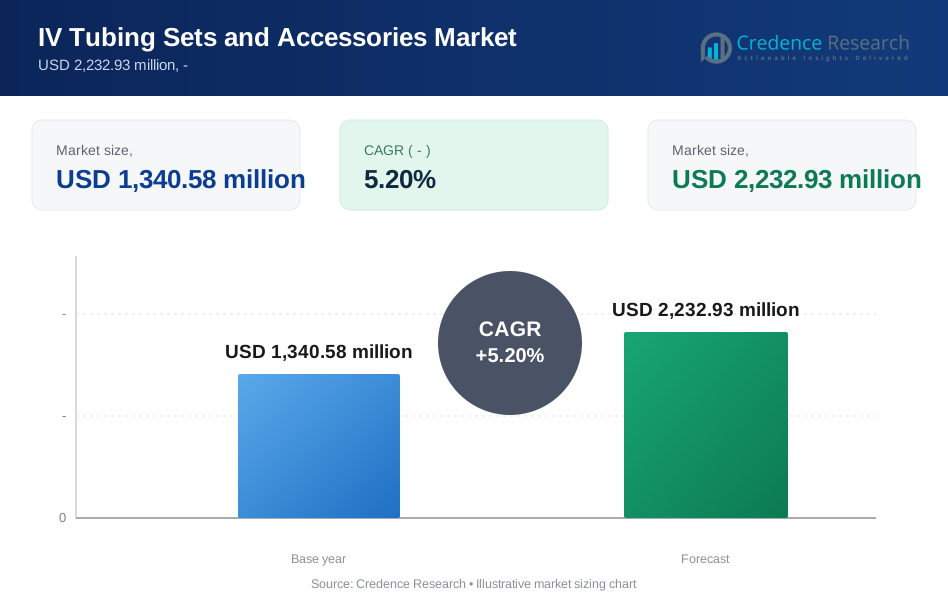
| IV Tubing Sets and Accessories Market Size 2023 | USD 1,203.25 million |
| IV Tubing Sets and Accessories Market, CAGR | 4.11% |
| IV Tubing Sets and Accessories Market Size 2032 | USD 1,747.31 million |
Market Overview
The IV tubing sets and accessories market is projected to experience significant growth, with its value expected to increase from USD 1,203.25 million in 2023 to USD 1,747.31 million by 2032, reflecting a notable compound annual growth rate of 4.11%. The global healthcare landscape is undergoing a significant transformation, characterized by continuous advancements in medical technology and an increased focus on delivering efficient and patient-centric care. In this evolving paradigm, the IV tubing sets and accessories market emerges as a pivotal component, playing a crucial role in the safe and effective administration of intravenous therapies. This market, with its indispensable contribution to modern healthcare practices, is poised for steady growth and innovation over the forecast period.
Propelled by a confluence of factors, the IV tubing sets and accessories market holds a vital place in the healthcare ecosystem. The escalating global prevalence of chronic diseases, including cancer, diabetes, and cardiovascular conditions, underscores the need for frequent and precise administration of intravenous medications. As these chronic conditions continue to rise, the demand for advanced and reliable IV tubing sets and accessories becomes increasingly pronounced, positioning the market as a key player in addressing the evolving healthcare landscape.
Technological advancements and innovations in the design and functionality of IV tubing sets significantly contribute to market growth. Manufacturers are actively developing cutting-edge solutions that address the evolving needs of healthcare providers, emphasizing features such as enhanced safety, ease of use, and compatibility with a diverse range of medical interventions. These advancements not only meet the efficiency requirements of medical professionals but also contribute to elevating the overall standard of patient care, aligning with the global push for more sophisticated healthcare solutions.
Geographically, the IV tubing sets and accessories market exhibits a diverse landscape with varying levels of adoption and market penetration. North America and Europe traditionally dominate the market due to well-established healthcare infrastructures and high awareness levels among healthcare professionals. However, Asia-Pacific is emerging as a promising market, driven by increasing healthcare expenditure, rising awareness of advanced medical technologies, and improving access to healthcare services. Market players are strategically positioning themselves to capitalize on the untapped potential in these evolving healthcare landscapes, highlighting the global nature of the IV tubing sets and accessories market and the opportunities it presents for industry players to address diverse healthcare needs.
Segmentation Analysis
By Product:
The IV tubing sets and accessories market is broadly segmented based on product types, encompassing primary IV tubing sets, secondary IV tubing sets, IV tubing accessories, extension IV tubing sets, and other specialized offerings. Primary IV tubing sets, the cornerstone of intravenous administration, facilitate the primary connection between the patient and the infusion source. Secondary IV tubing sets provide an additional line for supplementary infusions, enhancing versatility in treatment. IV Tubing Accessories include a myriad of components, such as clamps, connectors, and adapters, crucial for configuring and customizing infusion setups. Extension IV tubing sets contribute to the extension of the primary line, accommodating diverse healthcare scenarios. The "Others" category captures specialized IV tubing sets and accessories tailored to unique medical interventions, reflecting the market's adaptability and responsiveness to specific healthcare demands.
By Application:
The application-based segmentation of the IV tubing sets and accessories market delineates its diverse usage across Central Venous Catheter Placement, Peripheral Intravenous Catheter Insertion, and PICC Line Insertion. Central Venous Catheter Placement involves the precise positioning of catheters within the central veins, necessitating specialized IV tubing sets for accurate and controlled infusion. Peripheral Intravenous Catheter Insertion, a commonly employed procedure, utilizes IV tubing sets for administering medications and fluids through peripheral veins. PICC line insertion involves the placement of peripherally inserted central catheters, and specialized IV tubing sets are instrumental in ensuring the seamless delivery of treatments requiring extended access. This application-centric segmentation reflects the versatility of IV tubing sets and accessories across a spectrum of medical interventions, contributing to their indispensability in diverse healthcare settings.
By End User:
The IV tubing sets and accessories market recognizes the diverse settings in which these products are deployed, leading to a segmentation based on end-users, including hospitals, ambulatory surgical centers, and other healthcare facilities. Hospitals, as the primary pillars of healthcare delivery, extensively employ IV tubing sets and accessories across various departments. Ambulatory Surgical Centers, catering to outpatient procedures, leverage these products for efficient intravenous administration outside traditional hospital settings. The "Others" category encapsulates diverse healthcare facilities, clinics, and home-based healthcare scenarios, demonstrating the adaptability of IV tubing sets to a range of care environments. This end-user segmentation emphasizes the widespread adoption of IV tubing sets and accessories in different healthcare settings, reflecting their integral role in patient care.
Segmentations:
By Product:
- Primary IV tubing sets
- Secondary IV Tubing Sets
- IV Tubing Accessories
- Extension IV tubing sets
- Others
By Application
- Central Venous Catheter Placemen
- Peripheral Intravenous Catheter Insertion
- PICC Line Insertion
By End User
- Hospitals
- Ambulatory Surgical Centers
- Others
By Region
- North America
- The U.S.
- Canada
- Mexico
- Europe
- Germany
- France
- The U.K.
- Italy
- Spain
- Rest of Europe
- Asia Pacific
- China
- Japan
- India
- South Korea
- South-east Asia
- Rest of Asia Pacific
- Latin America
- Brazil
- Argentina
- Rest of Latin America
- Middle East & Africa
- GCC Countries
- South Africa
- Rest of the Middle East and Africa
Market Drivers
Rising Prevalence of Chronic Diseases
The escalating prevalence of chronic diseases, including diabetes, cancer, and heart failure, underscores the vital role of intravenous (IV) therapy in their management. Patients grappling with chronic conditions often require frequent IV administration of fluids and medications for effective treatment. This heightened demand forms the cornerstone for the increased utilization of IV tubing sets and accessories, which play a pivotal role in facilitating these critical medical procedures. As healthcare providers grapple with the growing burden of chronic illnesses globally, the reliance on IV therapy further intensifies, substantiating the market's significance in ensuring the seamless and safe delivery of intravenous treatments.
Growing Geriatric Population
The global demographic landscape is undergoing a profound shift with an aging population, particularly susceptible to chronic ailments necessitating intricate medical interventions. For example, by 2030, 1 in 6 people in the world will be aged 60 years or older. At this time, the share of the population aged 60 years and over will increase from 1 billion in 2020 to 1.4 billion in 2022. The elderly demographic, characterized by an increased vulnerability to chronic conditions requiring IV therapy, contributes significantly to the expanding market for IV tubing sets and accessories tailored to geriatric care needs. The rise in the aging population worldwide amplifies the demand for specialized medical equipment, further accentuating the crucial role played by IV tubing sets in catering to the unique healthcare requirements of older adults. As the geriatric segment continues to grow, the market responds dynamically to meet the specialized needs of this demographic, solidifying its position as an indispensable component of modern healthcare.
Minimally Invasive Procedures
Advancements in medical procedures have witnessed a paradigm shift towards minimally invasive surgeries, a trend that inherently relies on IV catheters for precise and controlled fluid and medication delivery. This surge in minimally invasive procedures fuels the demand for specialized IV tubing sets explicitly designed for these interventions. As medical professionals increasingly embrace procedures that prioritize patient comfort and swift recovery, the demand for innovative IV tubing sets with features tailored for minimally invasive surgeries rises correspondingly. The market experiences notable growth as it aligns with evolving surgical techniques, offering solutions that enhance the efficiency and safety of intravenous administrations in the context of minimally invasive medical practices.
Focus on home-based healthcare
The evolving landscape of healthcare delivery witnesses a significant shift towards home-based infusion therapy, particularly for the management of chronic diseases. This transformative trend necessitates the development of user-friendly and portable IV tubing sets that cater to the unique demands of home-based care. As patients increasingly opt for the convenience and comfort of receiving treatments at home, the market for IV tubing sets responds with innovations that prioritize ease of use, portability, and safety. This segment is poised for substantial growth as the prevalence of home-based care continues to rise, reflecting the market's adaptability to emerging healthcare trends and its crucial role in enhancing the accessibility and comfort of IV therapy for patients beyond traditional medical settings.
Technological Advancements
The IV tubing sets and accessories market is marked by a continuous wave of technological advancements aimed at enhancing safety, precision, and overall efficiency. For instance, the development of innovative and user-friendly products, such as needleless connectors, anti-microbial IV tubing sets, and closed-system infusion sets, has not only improved patient safety but also enhanced the overall efficiency of IV therapy administration. Advanced sets incorporate an array of safety features, including integrated filters to mitigate the risk of air embolism and closed systems to minimize the potential for bloodstream infections. Innovations in catheter materials improve biocompatibility and reduce the risk of phlebitis, contributing to enhanced patient outcomes. Notably, the introduction of controlled-rate infusion devices and automated shutoff mechanisms further exemplifies the market’s commitment to precise medication delivery and patient safety. These technological strides underscore the market’s dynamic nature, ensuring that healthcare providers have access to cutting-edge tools that align with evolving medical standards and patient care expectations.
Growing Focus on Cost-Effectiveness
As healthcare institutions grapple with the imperative of cost control, manufacturers in the IV tubing sets and accessories market respond by developing solutions that are both cost-competitive and maintain stringent quality and safety standards. This strategic focus includes the production of single-use disposable sets, offering a balance between cost-effectiveness and infection prevention. Simultaneously, reusable options with extended lifespans provide a sustainable and economically viable alternative for healthcare providers seeking durable solutions. This commitment to cost-effectiveness without compromising on quality positions the market as a responsive and responsible player within the broader healthcare landscape, meeting the evolving needs of healthcare institutions in an era of fiscal prudence.
Market Trends
Smart IV Systems and Digital Integration
The prevailing trend in the IV tubing sets and accessories market revolves around the integration of smart IV systems, marking a transformative leap in healthcare technology. For instance, a recent report showed that the use of smart IV systems has increased by 20% in the last year. These systems incorporate cutting-edge sensors directly into IV tubing sets, providing real-time monitoring of critical parameters such as infusion rates (accurate to within 0.1 mL/hr), fluid pressure (within a range of 300–1100 mmHg), and even patient temperature (within a range of 35.5–42.0 °C). The convergence of these smart technologies enables seamless wireless transmission of data to electronic medical records (EMRs), ushering in an era of enhanced patient care through improved monitoring capabilities. The utilization of smart IV systems not only ensures precise administration of intravenous therapies but also contributes to the evolution of digital health solutions, fostering a connected healthcare environment.
Focus on sustainability
Environmental consciousness is emerging as a significant influencer in the IV tubing sets and accessories market, leading to a notable trend centered around sustainability. For example, manufacturers have begun using biodegradable materials such as polylactic acid (PLA) in the production of eco-friendly IV tubing sets. Additionally, there’s a growing trend towards reusable components with disposable fluid paths, which has led to a 15% reduction in medical waste over the past two years. This commitment to sustainability aligns with broader initiatives to reduce the environmental impact of medical devices, establishing the market as a responsible contributor to environmentally conscious healthcare practices.
Telehealth and remote patient monitoring
The growing integration of telehealth with IV therapy represents a pivotal trend, particularly in the context of home-based infusions. As an example, the integration of telehealth with IV therapy has seen a 25% increase in home-based infusions over the past year. This integration facilitates remote monitoring of patients receiving intravenous treatments in the comfort of their homes. Consequently, there is a pressing need for the development of user-friendly IV tubing sets equipped with self-management features, such as automatic shut-off mechanisms and alarms for low fluid levels, ensuring improved patient safety and convenience during remote care. This trend not only reflects the adaptation of IV therapy to evolving healthcare delivery models but also underscores the market’s commitment to leveraging technology for the benefit of both healthcare providers and patients.
Focus on personalized medicine
Influenced by the paradigm shift towards personalized medicine, the IV tubing sets and accessories market is witnessing the development of advanced IV sets with dosage control features. For instance, the market has seen the introduction of advanced IV sets with dosage control features that allow for medication delivery accurate to within 0.05 mL. This trend is designed to cater to individualized treatment plans, allowing for precise medication delivery based on specific patient needs. The emphasis on personalized medicine aligns with the broader healthcare trend of tailoring interventions to the unique characteristics and requirements of each patient, demonstrating the market’s responsiveness to evolving medical practices and patient-centered care.
Expansion into Emerging Markets
The expanding healthcare infrastructure in developing regions has spurred a notable trend of market players strategically focusing on emerging markets. These regions present increased demand for affordable and reliable IV tubing sets, prompting manufacturers to develop cost-effective options tailored to the specific needs of these evolving healthcare landscapes. The strategic expansion into emerging markets not only broadens the market's global footprint but also contributes to addressing healthcare disparities by ensuring access to essential and cost-effective IV therapy solutions in diverse geographical areas.
Focus on user experience and automation
The market is witnessing a paradigm shift towards prioritizing the user experience and incorporating automation features. User-friendly designs with clear instructions and intuitive controls have become a priority in the development of IV tubing sets. Additionally, automation features such as dosage error prevention and medication reminders are being integrated, aiming to improve safety and enhance the overall experience for both healthcare providers and patients, especially those managing treatments at home. This trend highlights the market's commitment to optimizing the usability and safety of IV therapy, catering to the diverse needs of users across various healthcare settings.
Market Restraints and Challenges
Risks of Catheter-Related Bloodstream Infections (CRBSIs): The foremost challenge in the IV tubing sets and accessories market revolves around the risks associated with catheter-related bloodstream infections (CRBSIs). Catheter insertion and improper maintenance of IV tubing sets can significantly elevate the risk of CRBSIs, which, in turn, can lead to severe complications for patients. Mitigating these risks necessitates strict adherence to sterile techniques during catheter insertion and ongoing education programs for healthcare providers. Implementing rigorous protocols and ensuring continuous training are vital components in minimizing the occurrence of CRBSIs and enhancing overall patient safety.
Concerns over Phlebitis: Another critical challenge faced by the market is the potential occurrence of phlebitis, characterized by inflammation of the vein. This condition can arise due to factors such as irritation from the catheter material or chemical irritants present in the IV solution. The market is responding to this challenge through advancements in biocompatible catheter materials and regulated additives in IV fluids, aiming to reduce the risk of phlebitis. Stricter adherence to quality standards in IV tubing sets contributes to addressing concerns related to phlebitis, aligning with the market's commitment to ensuring patient safety and minimizing adverse reactions.
Alarm Fatigue and User Reliance: The increasing use of alarms in smart IV systems poses a unique challenge known as alarm fatigue. Healthcare providers may become desensitized to frequent alerts, potentially leading to the oversight of critical notifications. Effectively managing alarms and providing clear prioritization of alerts are crucial to mitigating alarm fatigue. Market participants are focusing on developing strategies to enhance the effectiveness of alarm systems, ensuring that healthcare providers can rely on these alerts without experiencing fatigue, thereby maintaining a high level of vigilance and responsiveness during patient care.
Data Security and Privacy Concerns: As the market embraces digital technologies, concerns regarding data security and patient privacy emerge as significant challenges. The integration of these technologies raises questions about the confidentiality and security of patient information. To address this challenge, robust cybersecurity measures are essential to safeguard patient data. Furthermore, adherence to stringent data privacy regulations becomes paramount to instilling patient trust in systems that incorporate digital technologies. The market is actively working towards establishing industry standards and practices that ensure the secure handling of patient data, fostering confidence in the use of advanced technologies.
Cost Considerations and Reimbursement Challenges: Cost considerations and reimbursement challenges pose substantial hurdles in the market, particularly concerning advanced IV tubing sets with smart features. While cost-effective options are emerging, the added functionalities in advanced systems can lead to higher expenses. In some instances, reimbursement policies might not comprehensively cover these additional features, creating a barrier for certain healthcare institutions. Striking a balance between innovation and affordability is a persistent challenge for manufacturers and healthcare providers alike, requiring strategic alignment between product development, pricing strategies, and reimbursement frameworks to ensure widespread accessibility without compromising quality.
Lack of Skilled Personnel in Emerging Markets: The adoption of advanced IV technologies in emerging markets faces a significant challenge due to the limited availability of trained personnel for proper operation and maintenance. This shortage of skilled healthcare professionals hampers the effective utilization of sophisticated IV systems. Addressing this gap requires substantial investments in healthcare infrastructure and educational programs. By enhancing training opportunities and promoting educational initiatives, the market aims to bridge the skills gap, empowering healthcare professionals in emerging markets to leverage advanced IV technologies effectively.
Key Players
- Baxter International, Inc.
- Hospira, Inc. (Pfizer, Inc.)
- Becton Dickinson Company (CareFusion)
- B. Braun Melsungen AG
- Fresenius Kabi AG
- Smiths Medical
- C.R. Bard, Inc.
- ICU Medical Inc.
- Zyno Medical
- Nipro Corporation
- Poly Medicure Ltd.
- Vygon U.S.A
- Health Line International Corporation
- Perfect Medical Ind. Co., Ltd.
- Dynarex Corporation
Recent Developments
In September 2022, the Association for Vascular Access (AVA) and B. Braun collaboratively inaugurated the Fundamentals of Peripheral IV Access eLearning Program. This joint initiative is strategically designed to elevate the standards of peripheral IV access and care across healthcare schools and hospitals. By combining the expertise of AVA, a prominent entity in vascular access education, with the industry leadership of B. Braun, this program aims to enhance the proficiency and knowledge of healthcare professionals, contributing to a safer and more effective practice of peripheral IV access.
In June 2022, B. Braun Medical Inc. unveiled its latest advancement in the field-the Introcan Safety 2 IV Catheter. This innovative catheter is engineered with a one-time blood control feature, significantly enhancing the safety of IV access procedures for clinicians. By minimizing the potential for needlestick injuries and reducing exposure to blood, the Introcan Safety 2 IV Catheter exemplifies B. Braun's commitment to fostering a secure and protected environment for healthcare providers. This breakthrough technology represents a pivotal contribution to advancing the field of IV catheterization, aligning with the industry's ongoing efforts to prioritize the well-being of clinicians while ensuring optimal patient care.
Regional Analysis
North America: The North American region, comprising the United States and Canada, holds a significant share of the global IV tubing sets and accessories market. This region is characterized by a well-established healthcare infrastructure, stringent regulatory standards, and a strong emphasis on patient safety. The market in North America is driven by factors such as the increasing prevalence of chronic diseases, the growing demand for advanced IV therapy solutions, and the presence of major medical device manufacturers. According to recent market reports, North America accounts for approximately 35% of the global IV tubing sets and accessories market.
Europe: Europe is a key player in the IV tubing sets and accessories market, with countries like Germany, France, the United Kingdom, and Italy leading the way. The region's focus on healthcare innovation, favorable reimbursement policies, and the presence of renowned medical research institutions have contributed to its substantial market share. The increasing adoption of IV therapy in various healthcare settings, such as hospitals, clinics, and home care, has further fueled the demand for IV tubing sets and accessories in Europe. The region holds a market share of around 30%.
Asia-Pacific: The Asia-Pacific region, encompassing countries like China, Japan, India, and Australia, is witnessing a surge in the demand for IV tubing sets and accessories. Factors such as the rapidly growing population, increasing healthcare expenditure, and the rising prevalence of chronic diseases have propelled market growth in this region. Additionally, the expanding medical tourism industry and the improving healthcare infrastructure in several Asian countries have created lucrative opportunities for market players. The Asia-Pacific region currently accounts for 20% of the global IV tubing sets and accessories market.
Latin America: The Latin American region, including countries such as Brazil, Mexico, and Argentina, represents a promising market for IV tubing sets and accessories. The increasing focus on healthcare infrastructure development, the growing demand for advanced IV therapy solutions, and the region's efforts to improve healthcare access and quality have driven the need for reliable and safe IV tubing sets and accessories. However, challenges such as limited healthcare budgets and the uneven distribution of resources across the region have hindered its full potential. Latin America currently holds a market share of 10%.
Middle East and Africa: The Middle East and Africa region is considered an emerging market for IV tubing sets and accessories. Countries in the Gulf Cooperation Council (GCC) have witnessed significant investments in healthcare infrastructure, contributing to the growth of the IV tubing sets and accessories market. However, the region faces challenges such as limited access to advanced medical facilities and the high cost of medical devices, particularly in some African countries. The Middle East and Africa region currently accounts for 5% of the global IV tubing sets and accessories market.
Future Outlook
- The IV tubing sets and accessories market is poised for substantial expansion, with a projected increase in market size and demand.
- Ongoing innovations in materials and design will likely lead to the development of more advanced IV tubing sets, addressing current limitations and enhancing overall functionality.
- The market is expected to witness a broader spectrum of applications, extending beyond traditional uses, driven by the versatility of IV tubing sets in various therapeutic areas.
- A growing trend towards smart IV tubing sets with wireless connectivity and digital monitoring capabilities is anticipated, fostering remote patient monitoring and improved user control.
- Environmental considerations are likely to shape the future, with a shift towards biodegradable materials and reusable components in IV tubing set design to minimize ecological impact.
- The rising influence of personalized medicine is expected to drive the development of IV tubing sets with flexible dosing capabilities to cater to individualized treatment plans.
- Manufacturers are likely to prioritize user experience by incorporating intuitive features, clear visual instructions, and audible alerts in IV tubing set designs, promoting ease of use.
- Global Market Expansion: The IV tubing sets and accessories market is anticipated to expand its footprint into emerging markets, driven by the growing healthcare infrastructure in developing regions and the demand for cost-effective medical devices.
- Changes in regulatory frameworks may impact the development and market approval processes for IV tubing sets, necessitating ongoing compliance adaptation by manufacturers.
- With the continuous evolution of medical technologies, the IV tubing sets and accessories market may witness intensified competition, particularly from electronic infusion pumps offering greater dosing control and real-time monitoring features.
Request a Free Sample
Fill in your details and we'll send you a free sample report.
- Sample data tables & charts
- Research methodology
Market Dynamics
Rising Prevalence of Chronic Diseases
The increasing global incidence of chronic conditions such as cancer, diabetes, and cardiovascular diseases necessitates frequent and precise intravenous medication administration, directly boosting demand for advanced IV tubing sets and accessories.
Growing Geriatric Population
An expanding elderly demographic, which is more susceptible to chronic illnesses and complex medical needs, is driving higher utilization of IV therapies and, consequently, the need for specialized IV tubing sets tailored to geriatric care.
Technological Advancements in IV Tubing
Continuous innovation in IV tubing design, including the introduction of needleless connectors, antimicrobial materials, and smart monitoring features, is enhancing safety and efficiency, making these products more attractive to healthcare providers.
Shift Toward Home-Based Healthcare
The trend toward home-based infusion therapy for chronic disease management is increasing demand for user-friendly, portable, and safe IV tubing sets that can be easily used outside traditional clinical settings.
Growth in Minimally Invasive Procedures
The rise in minimally invasive surgeries, which require precise and controlled fluid and medication delivery, is fueling the need for specialized IV tubing sets designed for these advanced medical interventions.
Need a Custom Version of This Report?
Tailor the scope, geography, or segments to your exact requirements.
- Custom geography or segment scope
- Direct access to our analyst team
Frequently Asked Questions
What factors contribute to the projected growth of the IV tubing sets and accessories market from USD 1,203.25 million in 2023 to USD 1,747.31 million by 2032?
How does the IV tubing sets and accessories market address the challenges posed by stringent regulatory frameworks and quality standards?
What role do technological advancements play in the growth of the IV tubing sets and accessories market, particularly in enhancing safety and patient outcomes?
How is the IV tubing sets and accessories market responding to the challenges associated with cost containment and the need for competitive pricing?
What regional dynamics influence the IV tubing sets and accessories market, and how does it address the diverse healthcare needs in regions such as Asia-Pacific and Latin America?
Table of Content
Chapter 1 Market Segmentation
- 1.1 Segmentation Framework
- 1.1.1 Product and Service Classification
- 1.1.2 Application and End-Use Classification
- 1.1.3 Technology and Solution Classification
- 1.1.4 Customer and Distribution Channel Classification
- 1.1.5 Geographic Segmentation
- 1.1.6 Market Segment Definitions and Boundaries
- 1.2 By Product
- 1.2.1 Primary IV Tubing Sets
- 1.2.2 Secondary IV Tubing Sets
- 1.2.3 IV Tubing Accessories
- 1.2.4 Extension IV Tubing Sets
- 1.2.5 Others
- 1.3 By End User
- 1.3.1 Hospitals
- 1.3.2 Ambulatory Surgical Centers
- 1.3.3 Others
- 1.4 By Application
- 1.4.1 Central Venous Catheter Placement
- 1.4.2 Peripheral Intravenous Catheter Insertion
- 1.4.3 PICC Line Insertion
Chapter 2 Introduction
- 2.1 Report Objectives and Scope
- 2.2 Product Definition and Industry Terminology
- 2.3 Market Inclusions and Exclusions
- 2.4 Research Process
- 2.4.1 Primary Research and Expert Interviews
- 2.4.2 Secondary Research and Source Review
- 2.4.3 Top-Down and Bottom-Up Estimation
- 2.4.4 Data Triangulation and Verification
- 2.5 Market Size Measurement Basis
- 2.5.1 2023: USD 1,340.58 million → 2032: USD 2,232.93 million
- 2.6 Historical and Forecast Reference Periods
- 2.6.1 Base Year: 2023
- 2.6.2 Forecast Period: 2023-2032
- 2.7 Research Assumptions and Limitations
Chapter 3 Executive Summary
- 3.1 Market Snapshot and Key Findings
- 3.2 Base-Year Market Size, 2023
- 3.3 Forecast Market Size, 2032
- 3.4 Revenue and Volume Growth Outlook
- 3.5 Key Demand and Supply Indicators
- 3.6 Leading Market Segments
- 3.7 Fastest-Growing Market Opportunities
- 3.8 Regional Performance Highlights
- 3.9 Technology and Industry Transformation
- 3.10 Competitive Landscape Summary
- 3.11 Analyst View and Strategic Implications
Chapter 4 Global IV Tubing Sets and Accessories Market Trends and Developments
- 4.1 Historical Industry Development
- 4.2 Recent Market Trends and Developments
- 4.3 Demand and Customer Behavior Trends
- 4.4 Technology and Product Innovation
- 4.5 Artificial Intelligence, Automation and Digitalization
- 4.6 Local Manufacturing and Supply Chain Realignment
- 4.7 Industry Partnerships, Mergers and Acquisitions
- 4.8 Sustainability and Circular Economy Developments
- 4.9 Government and Private Sector Investment Trends
- 4.10 Emerging Business Models and Commercialization
- 4.11 Industry Developments and Announcements
Chapter 5 Global IV Tubing Sets and Accessories Market Production, Supply and Demand Analysis
- 5.1 Demand Trend and Consumption Analysis
- 5.2 Demand Forecast, 2023-2032
- 5.3 Production and Output Trend
- 5.4 Production and Output Forecast, 2023-2032
- 5.5 Installed Capacity and Capacity Utilization
- 5.6 Company-Wise Production Plants and Statistics
- 5.6.1 Installed Production Capacity
- 5.6.2 Actual Production
- 5.6.3 Planned Capacity and Expansion Targets
- 5.7 Supply Chain Structure and Procurement Trends
- 5.8 Supply-Demand Gap and Bottlenecks
- 5.9 Import Dependence and Sourcing Structure
- 5.10 Contract Manufacturing and Outsourcing
- 5.11 Regional Supply and Demand Concentration
Chapter 6 Global IV Tubing Sets and Accessories Market Pricing Analysis
- 6.1 Pricing Structure and Measurement
- 6.2 Historical Pricing Trends
- 6.3 Pricing Outlook, 2023-2032
- 6.4 Average Selling Price and Unit Economics
- 6.5 Pricing by Product and Market Segment
- 6.6 Geographic Pricing Differences
- 6.7 Key Input, Energy, Labor and Logistics Costs
- 6.8 Contract Pricing and Purchasing Models
- 6.9 Pricing Sensitivity and Competitive Positioning
- 6.10 Price, Margin and Profitability Implications
Chapter 7 Global IV Tubing Sets and Accessories Market Dynamics
- 7.1 Market Growth Drivers
- 7.1.1 Demand-Side Drivers
- 7.1.2 Technology and Innovation Drivers
- 7.1.3 Infrastructure and Investment Drivers
- 7.1.4 Regulatory and Policy Drivers
- 7.2 Market Restraints
- 7.2.1 Cost and Affordability Constraints
- 7.2.2 Technology and Adoption Barriers
- 7.2.3 Supply Chain and Operational Constraints
- 7.3 Market Challenges
- 7.3.1 Competitive Pressure and Margin Erosion
- 7.3.2 Skills, Infrastructure and Implementation Gaps
- 7.4 Emerging Market Opportunities
- 7.5 Market Dynamics Impact and Time-Horizon Assessment
Chapter 8 Global IV Tubing Sets and Accessories Value Chain Analysis
- 8.1 Industry Value Chain Overview
- 8.2 Upstream Suppliers and Critical Inputs
- 8.3 Technology and Component Providers
- 8.4 Manufacturing or Service Delivery
- 8.5 Distribution, Channel Partners and Integrators
- 8.6 Downstream Applications and End Users
- 8.7 Value Addition and Profit Pools
- 8.8 Vertical Integration and Outsourcing
- 8.9 Supplier Concentration and Risk
- 8.10 Supply Chain Localization and Resilience
Chapter 9 Global IV Tubing Sets and Accessories Market Regulations and Policies
- 9.1 Relevant Laws, Standards and Compliance Frameworks
- 9.2 Product, Service, Safety and Quality Requirements
- 9.3 Government Policies, Incentives and Subsidies
- 9.4 Imports, Exports and Trade Barriers
- 9.5 Public Procurement and Local Content Requirements
- 9.6 Environmental and Sustainability Compliance
- 9.7 Upcoming Policy Changes and Market Implications
Chapter 10 Global IV Tubing Sets and Accessories Market Hotspots and Opportunities
- 10.1 Market Opportunity Mapping and Growth Hotspots
- 10.2 High-Growth Applications and Customer Groups
- 10.3 Underserved Markets and White-Space Opportunities
- 10.4 Emerging Technology and Product Opportunities
- 10.5 New Capacity and Investment Hotspots
- 10.6 Market Entry and Expansion Opportunities
- 10.7 Distribution and Partnership Opportunities
- 10.8 Near-Term and Long-Term Commercial Potential
- 10.9 Opportunity Attractiveness and Execution Risks
Chapter 11 Global IV Tubing Sets and Accessories Market Outlook, 2023-2032
- 11.1 Market Size and Analysis
- 11.1.1 Revenue (Market Measurement: 2023: USD 1,340.58 million → 2032: USD 2,232.93 million)
- 11.1.2 Market Volume and Quantity Sold
- 11.1.3 Historical Market Size
- 11.1.4 Base-Year Market Size, 2023
- 11.2 Market Forecast, 2023-2032
- 11.2.1 Revenue Forecast to 2032
- 11.2.2 Volume Forecast to 2032
- 11.2.3 CAGR and Year-on-Year Growth
- 11.2.4 Incremental Revenue Opportunity
- 11.3 Forecast Assumptions and Scenario Analysis
- 11.3.1 Base-Case Forecast
- 11.3.2 Optimistic and Conservative Scenarios
- 11.3.3 Technology, Pricing and Policy Sensitivities
- 11.4 Market Attractiveness and Growth Outlook
Chapter 12 Global IV Tubing Sets and Accessories Market Segmentation and Outlook
- 12.1 Segmentation Summary and Market Shares, 2023
- 12.2 Largest and Fastest-Growing Segments
- 12.3 By Product - Market Size and Forecast, 2023-2032
- 12.3.1 Segment Definition and Scope
- 12.3.2 Historical Market Size
- 12.3.3 Revenue Forecast, 2023-2032
- 12.3.4 Volume Forecast, 2023-2032
- 12.3.5 Base-Year Market Share, 2023
- 12.3.6 Segment CAGR and Growth Drivers
- 12.3.7 Subsegment Market Size and Forecast
- 12.3.7.1 Primary IV Tubing Sets
- 12.3.7.2 Secondary IV Tubing Sets
- 12.3.7.3 IV Tubing Accessories
- 12.3.7.4 Extension IV Tubing Sets
- 12.3.7.5 Others
- 12.3.8 Subsegment Pricing and Adoption Trends
- 12.3.9 Leading Suppliers and Competition
- 12.3.10 Regional Demand and Opportunities
- 12.4 By End User - Market Size and Forecast, 2023-2032
- 12.4.1 Segment Definition and Scope
- 12.4.2 Historical Market Size
- 12.4.3 Revenue Forecast, 2023-2032
- 12.4.4 Volume Forecast, 2023-2032
- 12.4.5 Base-Year Market Share, 2023
- 12.4.6 Segment CAGR and Growth Drivers
- 12.4.7 Subsegment Market Size and Forecast
- 12.4.7.1 Hospitals
- 12.4.7.2 Ambulatory Surgical Centers
- 12.4.7.3 Others
- 12.4.8 Subsegment Pricing and Adoption Trends
- 12.4.9 Leading Suppliers and Competition
- 12.4.10 Regional Demand and Opportunities
- 12.5 By Application - Market Size and Forecast, 2023-2032
- 12.5.1 Segment Definition and Scope
- 12.5.2 Historical Market Size
- 12.5.3 Revenue Forecast, 2023-2032
- 12.5.4 Volume Forecast, 2023-2032
- 12.5.5 Base-Year Market Share, 2023
- 12.5.6 Segment CAGR and Growth Drivers
- 12.5.7 Subsegment Market Size and Forecast
- 12.5.7.1 Central Venous Catheter Placement
- 12.5.7.2 Peripheral Intravenous Catheter Insertion
- 12.5.7.3 PICC Line Insertion
- 12.5.8 Subsegment Pricing and Adoption Trends
- 12.5.9 Leading Suppliers and Competition
- 12.5.10 Regional Demand and Opportunities
- 12.6 Segment Growth Comparison
- 12.7 Segment Attractiveness and Priority Matrix
Chapter 13 Global IV Tubing Sets and Accessories End-Use and Application Market Outlook
- 13.1 End-Use Industry and Customer Demand Structure
- 13.2 Leading Applications and Customer Groups
- 13.3 End-Use Market Size, Share and Forecast
- 13.4 Major End-Use Industry Deep Dives
- 13.4.1 Customer Requirements and Use Cases
- 13.4.2 Demand and Replacement Cycles
- 13.4.3 Technical and Regulatory Considerations
- 13.4.4 Purchasing and Procurement Models
- 13.4.5 Leading Vendors and Distribution Channels
- 13.4.6 Forecast and Commercial Opportunities
- 13.5 Emerging Applications and Cross-Segment Demand
- 13.6 End-Use Industry Investment Priorities
Chapter 14 Global IV Tubing Sets and Accessories Geographic Market Outlook, 2023-2032
- 14.1 Regional Market Size and Share, 2023
- 14.2 Regional Market Forecast, 2023-2032
- 14.3 Regional Pricing, Production and Demand Differences
- 14.4 North America
- 14.4.1 United States
- 14.4.2 Canada
- 14.4.3 Mexico
- 14.5 Europe
- 14.5.1 Germany
- 14.5.2 France
- 14.5.3 Italy
- 14.5.4 United Kingdom
- 14.5.5 Spain
- 14.5.6 Poland
- 14.5.7 Russia
- 14.5.8 Netherlands
- 14.5.9 Belgium
- 14.5.10 Sweden
- 14.5.11 Denmark
- 14.5.12 Norway
- 14.5.13 Rest of Europe
- 14.6 Asia Pacific
- 14.6.1 China
- 14.6.2 India
- 14.6.3 Japan
- 14.6.4 South Korea
- 14.6.5 Thailand
- 14.6.6 Indonesia
- 14.6.7 Vietnam
- 14.6.8 Malaysia
- 14.6.9 Australia
- 14.6.10 Rest of Asia Pacific
- 14.7 Latin America
- 14.7.1 Brazil
- 14.7.2 Argentina
- 14.7.3 Colombia
- 14.7.4 Chile
- 14.7.5 Rest of Latin America
- 14.8 Middle East
- 14.8.1 Saudi Arabia
- 14.8.2 United Arab Emirates
- 14.8.3 Turkey
- 14.8.4 Israel
- 14.8.5 Iran
- 14.8.6 Rest of the Middle East
- 14.9 Africa
- 14.9.1 South Africa
- 14.9.2 Egypt
- 14.9.3 Nigeria
- 14.9.4 Morocco
- 14.9.5 Rest of Africa
- 14.10 Regional Investment, Policy and Supply Chain Differences
- 14.11 Regional Competitive Landscape
- 14.12 Geographic Growth Hotspots
Chapter 15 Global IV Tubing Sets and Accessories Technology, Innovation and Sustainability Outlook
- 15.1 Technology Landscape and Maturity
- 15.2 Product, Process and Service Innovation
- 15.3 AI, Automation and Digital Tools in the Industry
- 15.4 Technology Adoption and Performance Benchmarking
- 15.5 Innovation Pipeline and R&D Investment
- 15.6 Patent and Intellectual Property Trends
- 15.7 Energy Efficiency and Resource Management
- 15.8 Sustainability, Recycling and Circularity
- 15.9 Technology Roadmap, 2023-2032
- 15.10 Risks of Obsolescence and Technology Substitution
Chapter 16 Global IV Tubing Sets and Accessories Market Key Strategic Imperatives
- 16.1 Growth and Market Entry Priorities
- 16.2 High-Return Products and Segments
- 16.3 Pricing, Profitability and Cost Optimization
- 16.4 Technology Investment and Product Differentiation
- 16.5 Supply Chain Localization and Resilience
- 16.6 Distribution and Customer Acquisition
- 16.7 Partnership, Acquisition and Capacity Strategy
- 16.8 Regional Expansion Priorities
- 16.9 Short-, Medium- and Long-Term Actions
Chapter 17 Competition Outlook
- 17.1 Industry Competition Characteristics
- 17.2 Market Structure and Concentration
- 17.3 Market Share and Competitive Positioning, 2023
- 17.4 Company-Wise Revenue and Product Benchmarking
- 17.5 Production and Service Capacity Benchmarking
- 17.6 Technology, Pricing and Differentiation
- 17.7 Regional Footprint and Distribution Strength
- 17.8 Mergers, Acquisitions and Strategic Alliances
- 17.9 New Entrants and Competitive Threats
- 17.10 Porter's Five Forces and Industry Attractiveness
- 17.11 Competitive Outlook, 2023-2032
Chapter 18 Company Profiles
- 18.1 Company Coverage and Selection Criteria
- 18.2 Baxter International, Inc.
- 18.2.1 Business Description
- 18.2.2 Company Ownership and Geographic Presence
- 18.2.3 Product and Service Portfolio
- 18.2.4 Manufacturing and Operating Footprint
- 18.2.5 Production Capacity and Expansion Plans
- 18.2.6 Financial Performance and Investment
- 18.2.7 Market Share and Competitive Position
- 18.2.8 Technology and Innovation Capabilities
- 18.2.9 Strategic Alliances or Partnerships
- 18.2.10 Recent Developments
- 18.2.11 Growth Strategy and Outlook
- 18.3 Becton Dickinson Company (CareFusion)
- 18.4 B. Braun Melsungen AG
- 18.5 Fresenius Kabi AG
- 18.6 Smiths Medical
- 18.7 ICU Medical Inc.
- 18.8 Nipro Corporation
- 18.9 Poly Medicure Ltd.
- 18.10 Hospira, Inc. (Pfizer, Inc.)
- 18.11 C.R. Bard, Inc.
- 18.12 Other Relevant Market Participants
Note: Every listed company is profiled on the structure shown under the first company. The company list is preliminary and may change based on research findings, market developments, data availability and client requirements.
Chapter 19 Disclaimer
- 19.1 Research and Forecast Disclaimer
- 19.2 Data Source and Estimation Limitations
Note: The depth of individual sections depends on data availability for this market. Volume, capacity, trade and other unit-based metrics are included where applicable.

