
| REPORT ATTRIBUTE | DETAILS |
|---|---|
| Historical Period | 2019-2022 |
| Base Year | 2023 |
| Forecast Period | 2024-2032 |
| Railway Signalling Systems Market Size 2023 | USD 15,082.70 Million |
| Railway Signalling Systems Market, CAGR | 7.35% |
| Railway Signalling Systems Market Size 2032 | USD 28,556.01 Million |
Market Overview
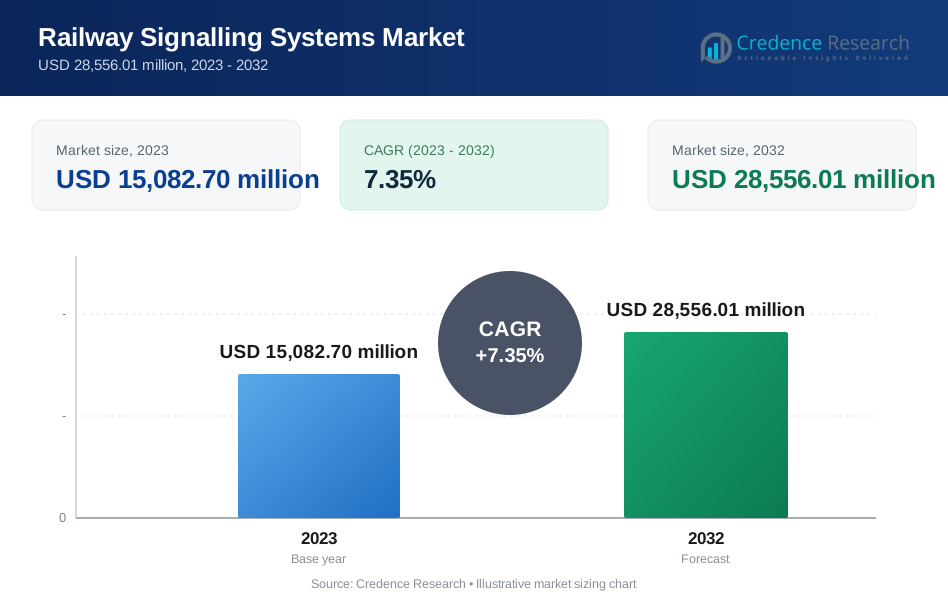
The Railway Signalling Systems Market is projected to grow from USD 15,082.70 million in 2023 to USD 28,556.01 million by 2032, at a compound annual growth rate (CAGR) of 7.35%.
The Global Railway Signalling Systems Market is driven by rising safety and security concerns, coupled with increasing investments in railway infrastructure development. Enhanced demand for traffic management solutions and technological advancements in communication systems fuel market growth. Furthermore, the trend towards implementing automated and interconnected signalling systems that optimize operational efficiency and reduce human errors is accelerating market expansion. These factors, together with global urbanization and the push for sustainable transport solutions, are reshaping the railway industry, making advanced signalling systems crucial for future railway operations.
The Global Railway Signalling Systems Market showcases significant growth across diverse regions, with Europe and Asia-Pacific leading in market share due to extensive infrastructure developments and technological advancements. Europe remains a frontrunner, integrating sophisticated technologies like ETCS to enhance interconnectivity and safety. Meanwhile, Asia-Pacific, led by countries such as China and India, is rapidly expanding its rail network to support urbanization and economic growth. Key players like Siemens AG, Thales, Alstom, and Hitachi Ltd. dominate the market, driving innovation and adoption of advanced signalling systems to meet the increasing demand for efficient and safe railway operations globally.
Market Drivers
Enhancing Rail Safety Through Regulatory Compliance
The increasing demand for safer rail transportation is predominantly driven by tighter regulatory mandates enforced by governments worldwide, focusing on enhancing safety standards across railway operations. For instance, in India, there were 27 train accidents in 2021-22, down from 68 in 2018-19, demonstrating the impact of enhanced safety measures. These regulations come as a response to heightened public concerns over frequent railway accidents and fatalities, prompting calls for improved safety measures. Moreover, insurance companies are playing a crucial role by mandating the adoption of advanced signalling systems, aiming to mitigate risks and reduce insurance premiums, thus further emphasizing the critical need for robust safety protocols in rail transport.
Urban Expansion and Efficient Commuter Services
Rising urbanization and the subsequent growth in commuter traffic present significant challenges for existing railway networks, which are now facing higher levels of congestion. For instance, in the United States, the number of rail passengers increased from 9.96 billion in 2018 to 10.23 billion in 2019, highlighting the growing demand for efficient rail services. To address this, advanced signalling systems are being deployed to efficiently manage and streamline traffic flow. These systems are essential in minimizing delays and enhancing overall passenger satisfaction, proving indispensable in urban centers where the demand for timely and efficient transportation solutions is constantly increasing.
Technological Innovations in Railway Signalling
Recent advancements in technology have substantially influenced the development of modern railway signalling systems. The integration of Communication-Based Train Control (CBTC) systems allows for more precise train tracking and improved capacity utilization, leading to enhanced operational efficiency. Furthermore, the adoption of automation and intelligent signalling systems reduces reliance on human operators, thereby decreasing the potential for human error. The incorporation of Internet of Things (IoT) technologies also enables real-time data collection, enhancing maintenance capabilities and decision-making processes in railway operations.
Strategic Governmental Investments and Sustainability Initiatives
Government investments in railway infrastructure are pivotal in driving the adoption of advanced signalling systems. Through modernization programs and infrastructure development projects, such as the construction of new railway lines and the expansion of existing ones, governments are bolstering the need for sophisticated signalling solutions. Additionally, there is a growing focus on environmental sustainability within the railway sector. Efficient signalling systems contribute to reducing overall carbon emissions and optimizing energy use, aligning with global efforts to promote sustainable transport practices and minimize environmental impact.
Market Trends
Digital Integration and Sustainability Focus in Railway Operations
Incorporating Internet of Things (IoT) and digital technologies into railway signalling systems is another transformative trend. IoT devices are extensively used to collect and analyze real-time data, which enhances operational decision-making and optimizes maintenance routines. For instance, according to a study by the European Union Agency for Cybersecurity (ENISA), by 2020, there were 26 billion devices connected to the internet. The adoption of predictive maintenance technologies powered by digital tools allows for preemptive identification and resolution of potential issues, minimizing downtime and operational costs. Alongside digital integration, there is a growing emphasis on cybersecurity. As signalling systems become more connected, vulnerability assessments and robust protective measures are critical to safeguarding these complex networks from cyber threats. Additionally, the market is experiencing an increasing demand for green technologies and sustainable practices. Energy-efficient signalling systems and the use of sustainable materials during manufacturing and maintenance reflect the industry's commitment to environmental sustainability. These trends vary regionally, influenced by market maturity and specific governmental policies, with developed regions like Europe and North America often leading in implementation, while emerging markets gradually adapt to these advanced technologies.
Technological Advancements and Interoperability in Railway Signalling
The railway signalling systems market is witnessing a significant shift towards the adoption of sophisticated technologies aimed at improving operational efficiencies and safety. Leading the charge are Communication-Based Train Control (CBTC) and the European Train Control System (ETCS), both of which are rapidly gaining traction globally due to their ability to enhance train control precision and capacity utilization. Moreover, the push towards automation and intelligent systems is reshaping traditional railway operations, as these technologies reduce human error and increase the efficiency of train management. To complement these technological advances, there is a concerted effort to standardize signalling systems and protocols. This move towards standardization ensures interoperability across different railway networks, facilitating smoother and more reliable cross-border train operations. International collaborations and partnerships are further strengthening this trend, as industry bodies and organizations work together to forge unified, interoperable solutions that can be implemented worldwide.
Market Challenges Analysis
Financial and Technical Barriers in Railway Signalling Implementation
The modernization of railway signalling systems entails substantial financial and technical challenges that can impede progress. Infrastructure upgrades are often necessary to accommodate new technologies, requiring significant investment. For instance, infrastructure upgrades to accommodate new technologies require substantial investment, with costs for CBTC implementation ranging from $2-10 million per kilometer. The integration of advanced technologies like Communication-Based Train Control (CBTC) and European Train Control System (ETCS) not only adds to the complexity but also increases the costs associated with implementation. These technologies, while beneficial for enhancing train operation precision and capacity, involve intricate systems and sophisticated software that can escalate initial costs and extend deployment timelines. Furthermore, the interoperability of new systems with existing legacy systems presents another layer of complexity. Compatibility issues can arise, necessitating additional modifications or complete overhauls of older systems. Standardization efforts are crucial to ensure seamless operation across diverse networks, yet achieving this can be challenging given the varied technological landscapes of different railway operators.
Cybersecurity Risks and Regulatory Hurdles in Railway Signalling
As railway signalling systems become increasingly interconnected, they also become more susceptible to cybersecurity threats. The vulnerabilities of these networked systems can lead to severe operational disruptions if breached. Implementing robust cybersecurity measures to protect against such threats is not only complex but also resource-intensive, further adding to the costs. In addition to security challenges, the regulatory landscape for railway signalling is intricate and varied across different jurisdictions. Compliance with diverse safety regulations and standards requires substantial effort and resources, complicating the deployment and operation of signalling systems across international borders. The need for specialized expertise to navigate these technical and regulatory environments exacerbates the challenge, as there is a notable shortage of skilled professionals in the field. Attracting and retaining such talent is critical yet difficult, compounding the challenges faced by railway operators as they strive to upgrade their systems in compliance with both technological advancements and regulatory requirements.
Market Segmentation Analysis:
By Type:
The Global Railway Signalling Systems Market is segmented by type into ATP, ATO, CBTC, ETCS, and others. ATP (Automatic Train Protection) ensures safety by preventing trains from exceeding speed limits. ATO (Automatic Train Operation) enhances operational efficiency by automating train controls, which is essential in urban and high-traffic networks. CBTC (Communication-Based Train Control) offers precise control of train movements, enabling closer train spacing and higher network capacity, which is increasingly crucial in densely populated areas. ETCS (European Train Control System) standardizes train control across Europe and is expanding globally, facilitating international rail traffic interoperability. The 'Others' category includes various niche technologies that cater to specific regional and operational needs, ensuring comprehensive coverage across different railway environments.
By Application:
In terms of application, the market is diversified into Urban Transit Systems, Mainline Railways, High-Speed Railways, Freight Railways, and others. Urban Transit Systems are rapidly adopting advanced signalling technologies to manage the growing commuter traffic in metropolitan areas. Mainline Railways, connecting major cities and regions, require robust signalling systems to ensure safe and efficient long-distance travel. High-Speed Railways are focused on integrating systems like ETCS to support high-speed operations and cross-border compatibility. Freight Railways benefit from technologies like ATP and CBTC to enhance track utilization and cargo handling efficiency, crucial for economic logistics operations. The 'Others' segment includes specialized applications such as light rail and tram systems, which require customized signalling solutions to meet their unique operational demands.
Segments:
Based on Type:
- ATP
- ATO
- CBTC
- ETCS
- Others
Based on Application:
- Urban Transit Systems
- Mainline Railways
- High-Speed Railways
- Freight Railways
- Others
Based on Components:
- Control Systems
- Detection Systems
- Communication Systems
- Signalling Devices
- Others
Based on the Geography:
- North America
- U.S.
- Canada
- Mexico
- Europe
- Germany
- France
- U.K.
- Italy
- Spain
- Rest of Europe
- Asia Pacific
- China
- Japan
- India
- South Korea
- South-east Asia
- Rest of Asia Pacific
- Latin America
- Brazil
- Argentina
- Rest of Latin America
- Middle East & Africa
- GCC Countries
- South Africa
- Rest of the Middle East and Africa
Regional Analysis
Europe
Europe maintains a commanding presence, currently holding approximately 35% of the market share. For instance, Europe’s widespread adoption of the European Train Control System (ETCS) is evident in the fact that more than 33,000km of lines are either already running or are contracted to be equipped with ETCS. This dominance is underpinned by stringent regulatory frameworks and a long-standing tradition of railway excellence. Europe's widespread adoption of the European Train Control System (ETCS) standardizes train control and enhances safety across its extensive cross-border railway networks. The region's push towards sustainable and interconnected transportation also drives continuous investment in cutting-edge railway technologies. Furthermore, Europe's commitment to reducing the environmental impact of transport services catalyzes further advancements and adoption of high-efficiency signalling systems.
Asia-Pacific
The Asia-Pacific region, holding around 30% of the global market share, exhibits rapid growth due to its dynamic economic development and significant urbanization. Countries like China and India are spearheading this expansion with massive investments in rail infrastructure as part of broader urban and regional development plans. The burgeoning demand in Asia-Pacific is driven by the need to accommodate increasing passenger and freight volumes, requiring robust, efficient, and safe railway systems.
Key Player Analysis
- Siemens AG
- Hitachi Ltd
- Alsthom SA
- China Railway Signal and Communication Co, Ltd
- Ansaldo STS
- Thales
- Cisco Systems, Inc
- Bombardier Inc
- GE
- CAF Signalling
- Moxa Inc.
- Invensys Rail
- Hyundai Rotem
- Mermec Group
- Klausner Group
- Nokia Networks
- Zhejiang Shenli Railway Equipment
- Wabtec Corporation
Competitive Analysis
In the global railway signalling systems market, key players such as Siemens AG, Thales, Alstom, and Hitachi Ltd drive innovation and market leadership through advanced technology solutions and extensive global reach. These companies lead in developing and deploying complex signalling systems that enhance safety, efficiency, and sustainability in rail transport. Their strategic focus on R&D, coupled with strong customer relationships and robust service networks, positions them competitively in both established and emerging markets. Their collective efforts not only push technological boundaries but also set industry standards, influencing market dynamics and future trends.
Recent Developments
- In April 2024, Siemens Mobility secured first place on Network Rail’s Train Control Systems Framework (TCSF). The company set for a share of contracts to be awarded from the £4bn framework, which will see thousands of miles of Britain’s rail network upgraded over the next decade.
- In May 31, 2024, Hitachi Rail announced the completion of its €1,660m acquisition of Thales’ Ground Transportation Systems (GTS) business, expanding its global presence to 51 countries with the majority of its revenues now coming from higher-return signalling and systems.
- In December 2023, Alstom launched India’s first Digital Experience Centre ever built by a rail OEM. Located in Bangalore and spread over 5000 sq.ft., the Digital Experience will be the hub for executing Urban, Mainline, Freight & Mining (specific market) projects along with the integrated cybersecurity, Security & Telecom and SCADA features.
- In November 2023, Cisco partnered with Deutsche Bahn to implement a secure network infrastructure for its ETCS rollout.
Market Concentration & Characteristics
The Global Railway Signalling Systems Market exhibits a moderate to high level of market concentration, characterized by a few dominant players who have a substantial impact on industry trends and market dynamics. Key companies such as Siemens AG, Thales, Alstom, and Hitachi Ltd command significant market shares, leveraging their extensive R&D capabilities and global operational networks to innovate and meet diverse customer needs. These leaders set industry standards and drive technological advancements, largely dictating the pace and direction of market growth. The market is also defined by its commitment to safety and efficiency, compelling players to continually advance their offerings to meet stringent regulatory standards and customer expectations. Smaller players contribute to market diversity by introducing specialized products and focusing on niche segments, adding to the overall competitive dynamics. This structure fosters a competitive environment where technological leadership and strategic partnerships are crucial for success.
Report Coverage
The research report offers an in-depth analysis based on Type, Application, Components and Geography. It details leading market players, providing an overview of their business, product offerings, investments, revenue streams, and key applications. Additionally, the report includes insights into the competitive environment, SWOT analysis, current market trends, as well as the primary drivers and constraints. Furthermore, it discusses various factors that have driven market expansion in recent years. The report also explores market dynamics, regulatory scenarios, and technological advancements that are shaping the industry. It assesses the impact of external factors and global economic changes on market growth. Lastly, it provides strategic recommendations for new entrants and established companies to navigate the complexities of the market.
Future Outlook
- Continued expansion in emerging markets will drive demand for railway signalling systems as urbanization and economic development persist.
- Increased investments in high-speed rail projects across the globe will stimulate further growth in the railway signalling systems market.
- Technological advancements such as integration of AI and IoT will enhance the efficiency and reliability of railway operations.
- Growing emphasis on safety and regulatory compliance will push for upgrades and adoption of sophisticated signalling technologies.
- Expansion of metro and urban transit systems in major cities worldwide will create new opportunities for market participants.
- Implementation of interoperable systems will become a priority to facilitate seamless cross-border railway operations, especially in Europe.
- Environmental sustainability will influence the development of energy-efficient and eco-friendly signalling solutions.
- Cybersecurity measures will be intensified to protect increasingly digital and connected signalling infrastructures.
- Collaborations and partnerships between key players and regional governments will shape market strategies and infrastructure projects.
- Adoption of predictive maintenance technologies will increase, improving system longevity and reducing downtime in railway signalling.
Request a Free Sample
Fill in your details and we'll send you a free sample report.
- Sample data tables & charts
- Research methodology
Need a Custom Version of This Report?
Tailor the scope, geography, or segments to your exact requirements.
- Custom geography or segment scope
- Direct access to our analyst team
Frequently Asked Questions
What is the current size of the Global Railway Signalling Systems Market?
What factors are driving the growth of the Global Railway Signalling Systems Market?
What are the key segments within the Global Railway Signalling Systems Market?
What are some challenges faced by the Global Railway Signalling Systems Market?
Who are the major players in the Global Railway Signalling Systems Market?
Table of Content
Chapter 1. Report Introduction
- 1.1 Report Description & Purpose
- 1.1.1 Report Title & Market Definition
- 1.1.2 Unique Selling Propositions (USP) & Key Differentiators
- 1.1.3 Value Proposition for Stakeholders
- 1.2 Research Objectives
- 1.2.1 Market Sizing Objectives (Volume & Revenue)
- 1.2.2 Segmentation Objectives
- 1.2.3 Competitive Intelligence Objectives
- 1.2.4 Forecast & Scenario Objectives
- 1.3 Report Scope
- 1.3.1 Railway Signalling Systems Scope – Types & Subtypes Covered
- 1.3.2 Geographic Scope – Regions & Countries Covered
- 1.3.3 Historical Period, Base Year & Forecast Period (2023; forecast to 2032)
- 1.3.4 Inclusions & Exclusions
- 1.4 HS Code & Classification Framework
- 1.5 Currency, Units & Pricing Basis
- 1.6 Target Stakeholders
- 1.7 Limitations & Assumptions
Chapter 2. Executive Summary
- 2.1 Global Railway Signalling Systems Market Snapshot
- 2.1.1 Market Size – Historical (2023) & Forecast (2023-2032) (2023: USD 15,082.70 million → 2032: USD 28,556.01 million)
- 2.1.2 Volume & Revenue – Global Totals
- 2.1.3 Key Market Highlights – Top Five Facts
- 2.2 Railway Signalling Systems Market Segmentation Snapshot
- 2.2.1 Market Split by Region – 2023 vs. 2032
- 2.3 Competitive Snapshot
- 2.3.1 Top 10 Players by Revenue Share – 2023
- 2.3.2 Top 10 Players by Volume Share – 2023
- 2.3.3 Recent Strategic Developments (18-Month Summary)
- 2.4 Key Investment Highlights & Strategic Conclusions
Chapter 3. Railway Signalling Systems Market Dynamics & Industry Analysis
- 3.1 Market Overview & Context
- 3.1.1 Railway Signalling Systems Market Position in the Broader Automotive Value Chain
- 3.1.2 OEM vs. Replacement Market Dynamics
- 3.1.3 Market Maturity & Development Stage by Region
- 3.2 Railway Signalling Systems Market Drivers
- 3.3 Railway Signalling Systems Market Restraints & Challenges
- 3.4 Railway Signalling Systems Market Opportunities
- 3.5 Porter's Five Forces Analysis
- 3.5.1 Threat of New Entrants
- 3.5.2 Bargaining Power of Suppliers
- 3.5.3 Bargaining Power of Buyers
- 3.5.4 Threat of Substitutes
- 3.5.5 Competitive Rivalry – Intensity Assessment
- 3.6 Railway Signalling Systems Value Chain Analysis
- 3.6.1 Upstream – Raw Material/Input Suppliers
- 3.6.1.1 Raw Material/Input 1
- 3.6.1.2 Raw Material/Input 2
- 3.6.1.3 Raw Material/Input 3
- 3.6.2 Midstream – Production/Manufacturing/Service Delivery
- 3.6.2.1 Production/Process Overview
- 3.6.2.2 Key Facility Locations & Capacity by Manufacturer
- 3.6.3 Downstream – Distribution & End Consumer
- 3.6.3.1 Primary Channel – B2B/OEM
- 3.6.3.2 Secondary Channels – Dealer, Retail, Online, Direct
- 3.6.4 Value Chain Profitability Analysis
- 3.6.1 Upstream – Raw Material/Input Suppliers
- 3.7 PESTEL Analysis
- 3.7.1 Political Factors
- 3.7.2 Economic Factors
- 3.7.3 Social Factors
- 3.7.4 Technological Factors
- 3.7.5 Environmental Factors
- 3.7.6 Legal Factors
- 3.8 Railway Signalling Systems Supply Chain Analysis
- 3.8.1 Raw Material/Input Supply Risk Assessment
- 3.8.2 Manufacturing Concentration Risk (Geographic Exposure)
- 3.8.3 Trade Disruption Impact Analysis
- 3.9 Regulatory & Policy Landscape
Note: The regulatory and policy landscape section covers regulations based on their applicability to the market, Railway Signalling Systems category, geography, and scope of the study. Only regulatory frameworks with a material impact on operations, compliance, trade, sustainability, or market access are analyzed in detail.
Chapter 4. Key Investment Pockets & Opportunity Analysis
- 4.1 Railway Signalling Systems Market Attractiveness Analysis
- 4.1.1 By Region – Investment Attractiveness Matrix (Volume × CAGR)
- 4.2 Absolute Revenue Growth Opportunity
- 4.2.1 By Region – Absolute USD Growth Through 2032
- 4.3 Incremental Volume Opportunity
- 4.3.1 By Region – Incremental Volume Through 2032
- 4.3.2 Segment – Incremental Volume
- 4.4 Emerging Submarket Opportunity Deep Dive (Subject to Applicability)
- 4.5 Emerging Market Opportunity Scorecards
- 4.5.1 United States
- 4.5.2 Europe
- 4.5.3 Asia
- 4.5.4 Middle East & Africa
Note: Emerging Market Opportunity Scorecards will be included based on relevance and strategic importance. Regions listed are indicative and may vary depending on data availability and market dynamics.
Chapter 5. Railway Signalling Systems Import-Export Analysis & Trade Flows
- 5.1 Global Trade Overview
- 5.1.1 Global Export Value by Country (2023)
- 5.1.2 Global Export Volume by Country (2023)
- 5.1.3 Global Import Value by Country (2023)
- 5.1.4 Global Import Volume by Country (2023)
- 5.1.5 Net Trade Balance by Country (2023)
- 5.2 Export Analysis – Segment
- 5.2.1 Type 1 (HS Code)
- 5.2.2 Type 2 (HS Code)
- 5.2.3 Type 3 (HS Code)
- 5.2.4 Type 4 (HS Code)
- 5.2.5 Type 5 (HS Code)
- 5.3 Import Analysis – Segment
- 5.3.1 Type 1 (HS Code)
- 5.3.2 Type 2 (HS Code)
- 5.3.3 Type 3 (HS Code)
- 5.3.4 Type 4 (HS Code)
- 5.3.5 Type 5 (HS Code)
- 5.4 Average Unit Trade Prices
- 5.4.1 Average Export Price – Segment & Country
- 5.4.2 Average Import Price – Segment & Source Country
- 5.4.3 Price Trends (2023)
- 5.5 Key Trade Route Analysis
- 5.5.1 Trade Route 1
- 5.5.2 Trade Route 2
- 5.5.3 Trade Route 3
- 5.5.4 Trade Route 4
- 5.5.5 Trade Route 5
- 5.6 Trade Policy Impact Assessment
- 5.6.1 US Anti-Dumping & Section 301 Tariffs
- 5.6.2 EU Customs Union Impact
- 5.6.3 Major Free Trade Agreements
- 5.6.4 USMCA Rules of Origin
Note: Trade policy analysis will be included only where relevant to the Railway Signalling Systems market.
Chapter 6. Competitive Landscape & Company Benchmarking
- 6.1 Railway Signalling Systems Market Concentration & Structure
- 6.1.1 Herfindahl-Hirschman Index (HHI) – vs. 2023
- 6.1.2 Tier 1, Tier 2 & Tier 3 Market Structure
- 6.1.3 Global, Regional & Local Player Dynamics
- 6.2 Railway Signalling Systems Market Share Analysis – 2023
- 6.2.1 Global Revenue Share by Company
- 6.2.2 Global Volume Share by Company
- 6.2.3 Regional Revenue Share
- 6.2.4 Market Share Evolution ( vs. 2023)
- 6.2.5 OEM Segment Share by Company
- 6.2.6 Replacement Segment Share by Company
- 6.3 Production/Delivery Capacity & Facility Analysis
- 6.3.1 Global Installed Capacity
- 6.3.2 Capacity Utilization Rates
- 6.3.3 Production/Output Volume
- 6.3.4 Facility Locations & Capacity Map
- 6.3.5 Planned Capacity Additions
- 6.4 Railway Signalling Systems Competitive Benchmarking Matrix
- 6.4.1 Revenue, Volume, CAGR & Profitability Comparison
- 6.4.2 Channel Revenue Mix
- 6.4.3 Geographic Revenue Exposure
- 6.4.4 R&D Intensity
- 6.4.5 Sustainability Maturity
- 6.5 Strategic Developments in Railway Signalling Systems (Last 24 Months)
- 6.5.1 Mergers, Acquisitions & Divestments
- 6.5.2 New Railway Signalling Systems Launches
- 6.5.3 Facility Expansions
- 6.5.4 Strategic Alliances, Joint Ventures & Partnerships
- 6.5.5 Distribution Expansion & Market Entry
- 6.5.6 Sustainability & ESG Initiatives
- 6.6 Competitive Strategy Mapping
- 6.6.1 Leader, Challenger, Follower & Niche Classification
- 6.6.2 Pricing Strategy Comparison
- 6.6.3 Channel Strategy Matrix
Note: Strategic developments are included based on their materiality and the availability of reliable information.
Chapter 7. Global Railway Signalling Systems Market – By Distribution Channel
- 7.1 Segment Overview
- 7.1.1 Volume & Revenue Split by Channel (2023 & 2032)
- 7.1.2 Channel Mix Evolution (2023-2032)
Chapter 8. Regional Market Analysis – Global Overview
- 8.1 Global Regional Overview
- 8.1.1 Regional Volume Share
- 8.1.2 Regional Revenue Share
- 8.1.3 Regional Volume by Region
- 8.1.4 Regional Revenue by Region
- 8.1.5 Regional Forecast Through 2032
- 8.2 Cross-Regional Segment Analysis
- 8.2.1 By Distribution Channel
- 8.2.2 By Brand/Price Tier
Chapter 9. North America Railway Signalling Systems Market
- 9.1 United States
- 9.2 Canada
- 9.3 Mexico
Chapter 10. Europe Railway Signalling Systems Market
- 10.1 Germany
- 10.2 France
- 10.3 Italy
- 10.4 United Kingdom
- 10.5 Spain
- 10.6 Poland
- 10.7 Russia
- 10.8 Netherlands
- 10.9 Belgium
- 10.10 Sweden
- 10.11 Denmark
- 10.12 Norway
- 10.13 Rest of Europe
Chapter 11. Asia Pacific Railway Signalling Systems Market
- 11.1 China
- 11.2 India
- 11.3 Japan
- 11.4 South Korea
- 11.5 Thailand
- 11.6 Indonesia
- 11.7 Vietnam
- 11.8 Malaysia
- 11.9 Australia
- 11.10 Rest of Asia Pacific
Chapter 12. Latin America Railway Signalling Systems Market
- 12.1 Brazil
- 12.2 Argentina
- 12.3 Colombia
- 12.4 Chile
- 12.5 Rest of Latin America
Chapter 13. Middle East Railway Signalling Systems Market
- 13.1 Saudi Arabia
- 13.2 United Arab Emirates
- 13.3 Turkey
- 13.4 Israel
- 13.5 Iran
- 13.6 Rest of the Middle East
Chapter 14. Africa Railway Signalling Systems Market
- 14.1 South Africa
- 14.2 Egypt
- 14.3 Nigeria
- 14.4 Morocco
- 14.5 Rest of Africa
Chapter 15. Railway Signalling Systems Company Profiles
- 15.1 [Company 01]
- 15.1.1 Company Overview
- 15.1.2 Key Management Personnel
- 15.1.3 Products & Services Portfolio
- 15.1.4 Financial Performance
- 15.1.5 Key Market Focus & Geographic Presence
- 15.1.6 Recent Developments & Strategic Initiatives
Note: The company profile list is preliminary and may change based on research findings, market developments, data availability, and client requirements.
Chapter 16. Appendices
- Appendix A – List of Abbreviations & Acronyms
- Appendix B – Industry Classification Code Reference – Full Series
- Appendix C – Production & Capacity Data Tables
- Appendix D – End-Use & Demand Base Tables
- Appendix E – Consumption & Replacement Rate Assumptions
- Appendix F – ASP Reference Tables
- Appendix G – Manufacturing & Facility Database
- Appendix H – Import-Export Data Tables
- Appendix I – Regulatory Summary Tables
- Appendix J – Primary Research Participant List (Anonymized)
- Appendix K – Primary Research Questionnaire Framework
- Appendix L – Data Sources & Bibliography
- Appendix M – Market Size Divergence & Source Comparison
Chapter 17. Research Methodology
- 17.1 Research Framework & Philosophy
- 17.2 Secondary Research – Sources, Hierarchy & Data Extraction
- 17.3 Data Modeling – Bottom-Up & Top-Down Market Sizing
- 17.4 Primary Research – Stakeholder Framework, LOI & Sample Sizes
- 17.5 Forecast Methodology – Regression, Scenario & Sensitivity Analysis
- 17.6 Quality Control – Four-Layer Validation Framework
- 17.7 Limitations & Standard Assumptions
- 17.8 Disclaimer
