Sports Memorabilia Collectibles Market Overview:
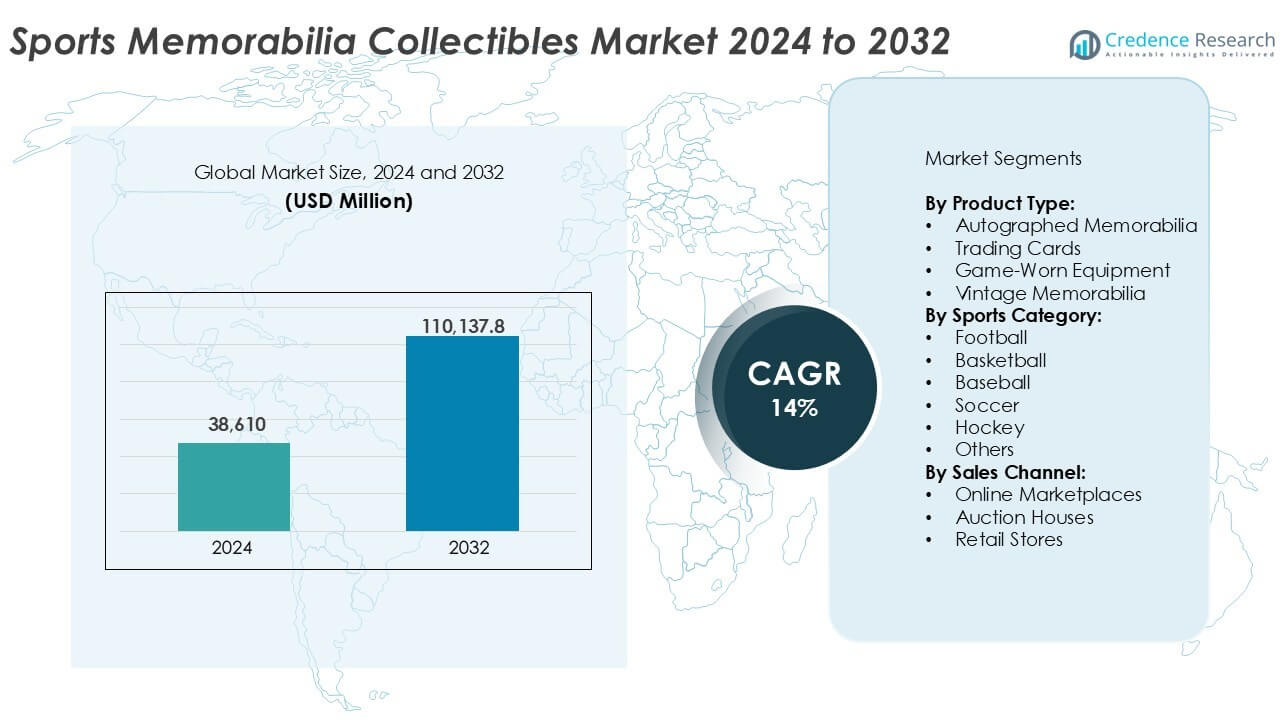
The sports memorabilia collectibles market was valued at $38.61 billion in 2024 and is projected to reach $110.14 billion by 2032, growing at a compound annual growth rate of 14% during the forecast period.
| REPORT ATTRIBUTE |
DETAILS |
| Historical Period |
2020-2023 |
| Base Year |
2024 |
| Forecast Period |
2025-2032 |
| Sports Memorabilia Collectibles Market Size 2024 |
USD 38.61 billion |
| Sports Memorabilia Collectibles Market, CAGR |
5.7% |
| Sports Memorabilia Collectibles Market Size 2032 |
USD 110.14 billion |
Key players including Fanatics Authentic, Topps (Fanatics), Panini Group, eBay Inc., Goldin Auctions and Heritage Auctions lead the market through exclusive licensing agreements, digital innovation and extensive product portfolios covering trading cards, autographed items and game-worn gear. Fanatics, through its control of both Topps and its own platform, has solidified its leadership in the trading card and memorabilia space. eBay remains the largest online resale marketplace, while Panini and Goldin Auctions drive demand through limited-edition releases and celebrity partnerships. North America holds the largest regional share at 45%, fueled by strong collector culture, established sports leagues and tech-enabled distribution channels. Europe and Asia-Pacific follow, with rising demand driven by growing sports engagement and digital access to memorabilia platforms. Competitive intensity remains high, driven by rarity, authentication and fan loyalty.
Sports Memorabilia Collectibles Market Insights
- The sports memorabilia collectibles market was valued at $38.61 billion in 2024 and is projected to reach $110.14 billion by 2032, growing at a CAGR of 14%.
- Key growth drivers include rising sports fandom, athlete endorsements and increasing use of collectibles as alternative investments.
- Trading cards held the largest segment share in 2024 at over 45%, fueled by limited-edition drops and digital grading systems.
- North America dominated the global market with a 45% share, followed by Europe at 22% and Asia-Pacific at 18%, driven by rising online platforms and access to authenticated memorabilia.
- Market growth is restrained by high entry costs, limited accessibility for new collectors and ongoing challenges with counterfeiting and trust in online transactions.
Access crucial information at unmatched prices!
Request your sample report today & start making informed decisions powered by Credence Research Inc.!
Download Sample
Sports Memorabilia Collectibles Market Segmentation Analysis
By product type
In 2024, trading cards dominated the product type segment, accounting for over 45% of total market share. Their popularity is driven by limited-edition releases, grading systems and growing demand among younger collectors and investors. Digital platforms have further boosted accessibility and visibility for rare cards. Autographed memorabilia follows closely, supported by rising celebrity athlete endorsements and authentication services. Game-worn equipment and vintage memorabilia attract niche collectors, but lower volume availability limits their overall share compared to mass-produced trading cards.
- Panini America released the 2023 Prizm Football set with print runs capped at 10 cards for Gold Prizm parallels, while PSA graded approximately 13.5 million trading cards globally in 2023, strengthening buyer trust through standardized authentication.
By sports category
Football emerged as the leading sports category in 2024, holding approximately 30% market share. A strong global fan base, iconic players and consistent media exposure drive demand for football memorabilia. Basketball and baseball follow, supported by league-driven promotions, star power and collector culture in North America. Soccer is gaining rapid momentum due to international tournaments and legendary athlete appeal. Hockey and other niche sports cater to region-specific audiences but represent a smaller portion of total market value.
- Fanatics Collectibles secured exclusive trading card licenses for the NFL and NBA through agreements extending to 2036, supporting annual production volumes exceeding several million licensed cards tied to active league rosters and events.
By sales channel
Online marketplaces led the sales channel segment in 2024, capturing nearly 60% market share, fueled by convenience, global reach and digital authentication tools. E-commerce platforms enable broader access to rare items, while social media influences buying behavior. Auction houses remain important for high-value memorabilia, especially vintage and game-worn items, but serve a smaller, premium-focused clientele. Retail stores maintain a physical presence in key cities and sports arenas, appealing to impulse buyers and casual fans, though their share continues to decline with the digital shift.
Key growth drivers
Rising global sports fandom and athlete endorsements
The global surge in sports fandom has significantly expanded the customer base for memorabilia collectibles. As fan communities grow across continents — especially in Asia-Pacific and Latin America — demand for signed items, game-worn gear and trading cards continues to rise. Major athletes have become cultural icons, and their endorsements amplify the emotional and monetary value of collectibles. Collaborations with athletes for exclusive merchandise drops boost scarcity and buyer interest. Events like the FIFA World Cup, Super Bowl and NBA Finals also drive periodic demand spikes. Media coverage, sports documentaries and social media visibility enhance engagement, encouraging fans to collect and invest in items linked to their favorite players and teams.
- Upper Deck conducted over 200 certified autograph signing sessions with active and retired athletes in 2023, issuing serialized trading cards with on-card signatures verified through its five-step authentication process.
Digitization and authentication technology advancements
Authentication has become central to consumer trust in the collectibles market. Innovations like blockchain-based certificates, holograms and tamper-proof QR codes ensure item legitimacy and reduce fraud. Digital grading systems for trading cards and online verification platforms for autographed memorabilia enhance transparency and attract first-time buyers. These advancements also enable smooth resale transactions, as buyers can instantly confirm an item’s authenticity and condition. Digital collectibles such as NFTs linked to physical memorabilia offer hybrid ownership models and new monetization paths. This tech integration expands the market’s reach by supporting online marketplaces and global transactions with verified trust systems.
- PSA graded approximately 12 million to 15 million trading cards in 2023. The company uses AI-assisted scanning systems and high-resolution imaging for identification and internal data analysis, while human graders determine final condition verification.
Growth in investment-driven collecting
Collectibles are increasingly viewed as alternative investment assets. High-profile auction sales and price appreciation of rare items have drawn investors seeking portfolio diversification. Sports memorabilia offers tangible value backed by athlete performance, historic events and emotional appeal. Limited-edition releases and graded cards can see rapid value growth, making them attractive for short- and long-term gains. Platforms now track market prices, rarity scores and liquidity, helping collectors assess asset potential. Millennials and Gen Z buyers, often interested in both sports and finance, view collectibles as passion-based investments — creating a parallel market dynamic where emotional and economic values intersect.
Key trends and opportunities
Integration of NFTs and phygital collectibles
The fusion of physical memorabilia with blockchain-based digital tokens — known as phygital collectibles — is transforming the market. NFTs linked to real-world items provide proof of ownership, digital utility and easy trading. This model appeals to younger, tech-savvy buyers who prefer hybrid experiences and gamified platforms. Sports leagues and athletes are partnering with blockchain startups to launch limited-edition memorabilia collections that can include both physical items and digital art or access tokens. This trend also enables creators to earn royalties from secondary sales. NFT marketplaces are becoming central hubs for sports fans to discover, purchase and display their collections.
- NBA Top Shot by Dapper Labs has recorded over 13 million NFT transactions since launching in late 2020. Each token is tied to a unique blockchain ID and licensed NBA video moment, enabling verified ownership and on-chain transfer tracking.
Celebrity collaborations and limited-edition drops
Strategic collaborations with athletes, influencers and teams have emerged as a major opportunity. Limited-edition drops create urgency and exclusivity, often selling out within minutes. Platforms such as eBay, StockX and Fanatics capitalize on this trend by hosting timed releases and authenticated launches. These drops include autographed items, game-worn gear and exclusive trading cards featuring special artwork or event themes. The scarcity model drives high resale value, making such collectibles appealing to investors and superfans alike.
Key challenges
Counterfeiting and trust deficit
Counterfeit products remain a major threat to market integrity. Fake autographs, forged certificates and low-quality replicas flood online marketplaces, damaging buyer confidence. New entrants and casual collectors often struggle to distinguish genuine items from fakes. This issue is especially prevalent in high-value categories like vintage memorabilia and rare trading cards. Without robust authentication systems, fraudulent listings can undermine legitimate sellers and stall market growth. Efforts to combat counterfeiting — such as AI-based image verification and third-party grading services — require investment and consumer education.
High entry costs and accessibility barriers
Premium collectibles are becoming increasingly expensive, pricing out casual fans and smaller investors. High-grade trading cards, autographed gear and vintage memorabilia often start in the thousands of dollars, limiting accessibility to affluent collectors. High transaction fees, auction premiums and storage or insurance costs make collecting more complex and less appealing for beginners. Although fractional ownership models and financing options are emerging, they are not yet widespread. This economic barrier restricts market expansion and limits demographic diversity, especially among younger or emerging-market consumers.
Regional analysis
North America
North America led the sports memorabilia collectibles market in 2024, holding over 45% of global market share. The region benefits from strong sports culture, mature collector communities and established resale platforms. High-profile leagues like the NFL, NBA and MLB contribute to consistent demand for autographs, trading cards and game-used items. The U.S. dominates due to deep-rooted fan bases and frequent athlete endorsements. Rising interest in collectibles as investment assets continues to support growth, while tech-driven platforms make memorabilia more accessible to younger demographics.
Europe
Europe accounted for around 22% of the global market in 2024. The region features strong demand across football (soccer), Formula 1 and tennis collectibles. Countries like the United Kingdom, Germany, Italy and Spain drive growth through club merchandising and national team memorabilia sales. High-value auctions and collector events attract international buyers, particularly for vintage and autographed football memorabilia. Growing fandom and rising disposable income among European consumers contribute to steady market expansion, especially in premium segments.
Asia-Pacific
Asia-Pacific captured approximately 18% market share in 2024, emerging as a fast-growing region. Japan, China, South Korea and India show increasing interest in basketball, football and e-sports collectibles. The region benefits from rising middle-class income, growing online marketplace penetration and expanding fan engagement. Japan leads in baseball collectibles, while China and India see rising growth in basketball and cricket memorabilia, respectively. Cross-border platforms and NFT adoption are accelerating regional expansion.
Latin America
Latin America held nearly 8% of global market share in 2024, supported by strong football fandom and emerging online marketplaces. Brazil, Argentina and Mexico lead in memorabilia consumption due to passionate supporter bases and historic sports icons. Demand centers on autographed football items and vintage merchandise linked to national teams and players. The market remains fragmented, with limited authentication infrastructure and inconsistent resale platforms. Rising internet penetration and youth engagement support future potential.
Middle East and Africa
The Middle East and Africa region accounted for around 7% of the global market in 2024. Interest is growing in football, motorsport and cricket-related memorabilia, especially in the UAE, Saudi Arabia and South Africa. High-profile sports events such as the FIFA World Cup and Formula 1 races have raised awareness and demand for exclusive collectibles. Wealthy collectors in the Middle East contribute to high-value sales in autographed and game-used items. Limited local distribution and authentication ecosystems hinder widespread adoption.
Sports Memorabilia Collectibles Market Segmentations:
By Product Type
Autographed Memorabilia
- Trading Cards
- Game-Worn Equipment
- Vintage Memorabilia
By Sports Category
- Football
- Basketball
- Baseball
- Soccer
- Hockey
- Others
By Sales Channel
- Online Marketplaces
- Auction Houses
- Retail Stores
By Geography
- North America
- Europe
- Germany
- France
- U.K.
- Italy
- Spain
- Rest of Europe
- Asia Pacific
- China
- Japan
- India
- South Korea
- South-east Asia
- Rest of Asia Pacific
- Latin America
- Brazil
- Argentina
- Rest of Latin America
- Middle East & Africa
- GCC Countries
- South Africa
- Rest of the Middle East and Africa
Competitive Landscape
The sports memorabilia collectibles market features a competitive landscape shaped by both legacy players and new digital-first platforms. Fanatics Authentic, Topps (Fanatics) and Panini Group dominate through licensing deals with major sports leagues and exclusive player partnerships. eBay Inc. remains a leading resale marketplace, offering accessibility and volume across segments. Premium auction houses such as Goldin Auctions, Heritage Auctions, SCP Auctions and Lelands Auctions cater to high-net-worth collectors with rare, high-value memorabilia. Digital platforms like PWCC Marketplace support authentication, grading and investment insights, making trading cards more appealing to investors. Steiner Sports maintains brand legacy through autographed gear and event-linked sales. Strategic acquisitions, blockchain-based authentication and limited-edition releases are key competitive strategies.
Shape Your Report to Specific Countries or Regions & Enjoy 30% Off!
Key player analysis
- eBay Inc.
- Fanatics Authentic
- Panini Group
- Goldin Auctions
- Topps (Fanatics)
- Steiner Sports
- Heritage Auctions
- PWCC Marketplace
- Lelands Auctions
- SCP Auctions
Recent developments
- In May 2023, Fanatics Collectibles announced the acquisition of PWCC Marketplace, one of the largest sports cards, memorabilia and collectible auction platforms in the world. PWCC also operates the PWCC Vault, an Oregon-based storage facility housing some of the world’s rarest and most valuable sports cards and collectibles.
- In January 2022, Viking Mergers & Acquisitions announced the sale of Creative Sports Enterprises. Founded as a sports card trading firm, the company evolved into a multi-million-dollar sports memorabilia, private signings and wholesale merchandise corporation over 30 years. It specializes in hand-signed items, sports novelties and collectibles featuring major national sports teams and players across the U.S.
Report coverage
The research report offers an in-depth analysis based on product type, sports category, sales channel and geography. It details leading market players, providing an overview of their business, product offerings, investments, revenue streams and key applications. The report also includes insights into the competitive environment, SWOT analysis, current market trends, and primary drivers and constraints. It examines market dynamics, regulatory scenarios and technological advancements shaping the industry, and provides strategic recommendations for new entrants and established companies.
Future outlook
- The market will continue to grow as sports fandom expands across emerging regions.
- Trading cards will retain dominance due to strong demand among collectors and investors.
- Digital authentication tools will play a critical role in building buyer trust.
- Online marketplaces will drive the majority of global sales through wider reach and convenience.
- Collaborations with athletes and limited-edition drops will fuel premium product demand.
- NFTs and phygital collectibles will create new hybrid revenue models.
- Auction houses will gain relevance in high-value vintage and signed memorabilia.
- Rising disposable incomes in Asia-Pacific will accelerate regional market growth.
- Counterfeit prevention technology will become standard to reduce fraud risks.
- Price inflation in rare collectibles may limit accessibility for casual fans.



