Alopecia Treatment / Hair Loss Market Overview:
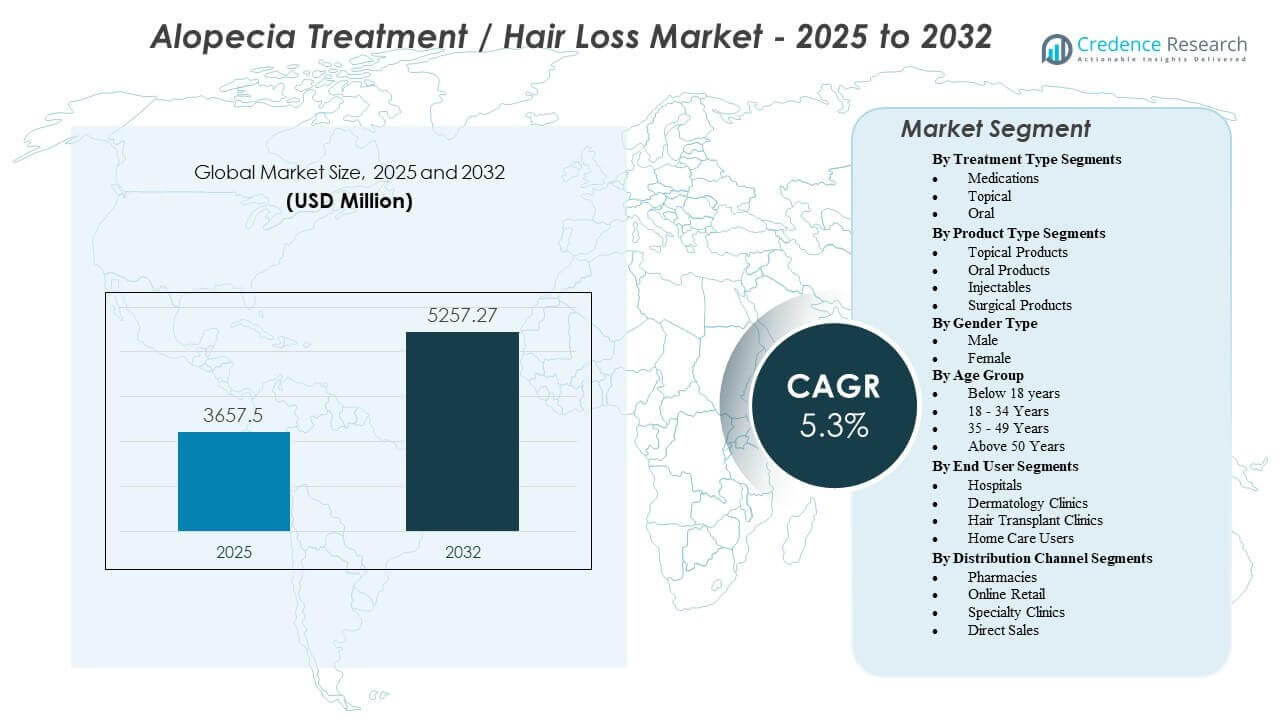
The Alopecia Treatment / Hair Loss Market is projected to grow from USD 3657.5 million in 2025 to an estimated USD 5257.27 million by 2032, with a compound annual growth rate (CAGR) of 5.3% from 2025 to 2032.
| RT ATTRIBUTE |
DETAILS |
| Historical Period |
2020-2023 |
| Base Year |
2024 |
| Forecast Period |
2025-2032 |
| Alopecia Treatment / Hair Loss Market Size 2025 |
USD 3657.5 million |
| Alopecia Treatment / Hair Loss Market, CAGR |
5.3% |
| Alopecia Treatment / Hair Loss Market Size 2032 |
USD 5257.27 million |
Alopecia Treatment / Hair Loss Market Insights:
- Rising prevalence of androgenetic alopecia, higher stress exposure, and growing acceptance of regenerative and non-invasive therapies continue to drive strong adoption across clinical and home-care settings.
- Limited insurance coverage, high treatment costs, and inconsistent results across patient groups restrain wider uptake, especially in developing regions with lower affordability.
- North America leads due to strong medical infrastructure and early adoption of advanced solutions, while Europe maintains steady growth supported by mature dermatology practices.
- Asia Pacific shows the fastest expansion driven by rising aesthetic awareness, growing urban populations, and rapid uptake of modern procedures and digital consultation platforms.
Alopecia Treatment / Hair Loss Market Drivers
Growing Prevalence Across Multiple Alopecia Types
Rising cases of androgenetic alopecia, alopecia areata, and stress-related hair loss strengthen the demand for targeted therapies across the Alopecia Treatment / Hair Loss Market. Patients seek early intervention due to rising awareness of long-term follicle damage. Clinics report higher footfall from younger groups driven by lifestyle stress. Social media boosts awareness of treatment options across urban populations. Dermatologists promote evidence-based therapies that improve visible outcomes. Pharmaceutical firms expand product pipelines to address unmet therapeutic needs. Non-invasive procedures attract patients who prefer minimal downtime. It encourages broader adoption across global markets.
- For instance, Eli Lilly reported that its JAK inhibitor Olumiant achieved ≥80% scalp-hair coverage in 39% of severe alopecia areata patients during its Phase 3 BRAVE-AA2 trial, demonstrating strong clinical impact.
Access crucial information at unmatched prices!
Request your sample report today & start making informed decisions powered by Credence Research Inc.!
Download Sample
Increasing Adoption of Advanced Regenerative Therapies
Improved treatment outcomes support rapid acceptance of regenerative techniques across global clinics. PRP therapy gains traction due to its strong safety profile and quicker recovery periods. Stem-cell-based research expands interest among patients seeking lasting solutions. Device makers introduce upgraded delivery systems that enhance procedural accuracy. Dermatologists embrace combination therapies that improve patient satisfaction. Medical tourism supports adoption in regions with developed cosmetic infrastructure. Digital consultations help patients access expert advice faster. The Alopecia Treatment / Hair Loss Market benefits from growing trust in innovation.
- For instance, HairMax’s LaserBand 82 demonstrated an average increase of 129 new hairs per square inch over 26 weeks in FDA-reviewed clinical studies, with more than 90% of users showing measurable improvement.
Rising Influence of Aesthetic Awareness and Lifestyle Shifts
Higher grooming awareness drives more individuals to seek early remedies for thinning hair. Rising stress levels contribute to greater demand for medical intervention. Lifestyle-linked hormonal imbalance increases patient dependence on long-term therapies. Beauty and wellness platforms highlight treatment benefits through wide social reach. Clinics design personalized plans that improve adherence. Pharmaceutical companies market topical and oral products through strong online outreach. Dermatology centers promote preventive scalp programs to delay severe hair loss. It strengthens market visibility across high-income populations.
Commercial Expansion by Specialized Clinics and Dermatologists
Clinics diversify offerings with laser therapy, hair transplants, and targeted prescription regimens. Specialized centers invest in technology upgrades to improve procedural outcomes. Dermatologists adopt digital tools that support continuous patient engagement. Training programs help professionals deliver standardized treatment experiences. Strong private investment encourages clinic expansion across emerging markets. Pharmaceutical distribution networks widen access to affordable therapies. Consumer demand shifts toward premium services that ensure long-term hair density improvement. The Alopecia Treatment / Hair Loss Market grows due to its expanding clinical ecosystem.
Market Trends
Shift Toward Personalized and Precision-Based Alopecia Management
Clinicians use AI-based scalp analysis tools to design tailored intervention plans. Genomic insights shape interest in precision medicine solutions. Personalized product kits improve user adherence across home-based treatments. Diagnostic platforms track hair density changes to guide therapy adjustments. Brands promote personalized formulations to address varied scalp conditions. Patient preference shifts toward customized options that offer predictable outcomes. Digital reporting systems enhance visibility into treatment progress. The Alopecia Treatment / Hair Loss Market reflects rising preference for tailored care.
- For instance, Fagron NV’s TrichoTest™ analyzes 48 genetic variations across 13 genes and 7 treatment categories, providing clinicians with a specific DNA-mapped report to eliminate the “trial and error” approach in topical treatments.
Growing Popularity of Minimally Invasive and At-Home Devices
Handheld laser caps gain popularity due to ease of use and comfort. Clinics recommend home-based devices to support long-term maintenance. Wearable tools attract younger consumers seeking non-clinical solutions. Technology upgrades improve treatment wavelengths for better follicle stimulation. At-home adoption rises due to rising digital awareness. Subscription-based device plans attract consumers seeking flexible pricing. Online platforms expand device visibility across global regions. It strengthens interest in convenient hair loss management methods.
Expansion of Digital Health Platforms and Virtual Consultations
Tele-dermatology services streamline access to specialists across remote regions. Virtual consultations speed up diagnosis for early-stage hair loss. E-pharmacies widen access to prescription therapies with improved delivery networks. AI-enabled chatbots guide patients toward evidence-based regimens. Digital therapy tracking improves patient accountability. Virtual follow-ups reduce clinic visits and save time. Brands leverage e-commerce platforms to expand product accessibility. The Alopecia Treatment / Hair Loss Market benefits from broader digital integration.
- For instance, the HairMax LaserBand 82 utilizes 82 medical-grade lasers to deliver therapeutic light energy at a 655nm wavelength, achieving a mean increase of 20.2 hair strands per square centimeter in clinical trials.
Rising Interest in Clean-Label and Natural Formulations
Consumers prefer botanical-based solutions that reduce scalp irritation risks. Brands respond with plant-derived serums and mild topical formulations. Herbal blends gain popularity in regions with strong traditional medicine influence. Clean-label marketing increases product visibility among sensitive-skin users. Dermatologists recommend mild formulations for long-term maintenance. Organic scalp care routines attract users seeking preventive support. Product diversification expands choices across natural restoration categories. It strengthens demand for mild and eco-friendly solutions.
Market Challenges Analysis
High Treatment Costs and Limited Insurance Reimbursement
High procedural costs restrict access for large patient groups across multiple regions. Insurance plans rarely cover cosmetic or elective treatment categories. Out-of-pocket payments reduce adherence to long-term regimens. Clinics struggle to retain patients who discontinue due to cost concerns. Lower affordability weakens adoption across developing economies. Pharmaceutical firms face pressure to provide cost-effective formulations. Treatment failure due to delayed initiation increases patient dissatisfaction. The Alopecia Treatment / Hair Loss Market faces constraints linked to affordability and reimbursement gaps.
Variability in Treatment Outcomes and Patient Expectations
Outcomes often vary due to differences in scalp condition, hair cycle stage, and genetics. Patients expect visible results within short timelines. Unrealistic expectations lead to reduced satisfaction across several treatment pathways. Clinics invest more time in patient counselling to manage expectations. Procedural results depend on operator skill and technology quality. Some solutions show limited effectiveness for advanced stages of hair loss. Irregular adherence reduces long-term therapeutic gains. It raises the need for consistent follow-up and advanced treatment monitoring.
Market Opportunities
Expansion of Regenerative Medicine and Novel Drug Pipelines
Biotech firms invest heavily in stem-cell-based regeneration and follicle-reactivation research. Novel drug candidates targeting immune pathways gain global attention. Emerging biologics promise targeted action with fewer side effects. Clinics adopt combination therapy strategies to strengthen outcomes. Research partnerships accelerate product development timelines. Early adoption improves trust in next-generation solutions. Patients show strong interest in therapies that offer long-term hair density improvement. The Alopecia Treatment / Hair Loss Market benefits from expanding R&D momentum.
Growth in Cosmetic Tourism and Premium Care Ecosystems
Medical tourism hubs attract international patients seeking advanced procedures at optimized prices. Clinics invest in luxury facilities that improve treatment experience. Skilled surgeons improve procedural reputation across global centers. Travel partnerships promote bundled therapy packages for transplant seekers. Urban regions witness strong demand for premium services due to rising grooming culture. Marketing campaigns highlight transformative results to draw global attention. Expanding specialty centers support cross-border patient flow. It creates strong commercial opportunities for global providers.
Market Segmentation Analysis:
By Treatment Type Segments
The Alopecia Treatment / Hair Loss Market expands across diverse treatment options that address different severity levels and patient needs. Medications, topical and oral therapies remain first-line choices due to wide accessibility. Laser therapy and PRP gain traction for non-invasive improvement. Hair transplant procedures lead advanced corrective care, while scalp micropigmentation and natural remedies support aesthetic and preventive goals. It benefits from strong clinical adoption across global clinics.
- For instance, Revian Inc. utilizes dual-wavelength LED technology (620nm and 660nm) in its wireless cap, which demonstrated a mean increase of 26.3 hairs per square centimeter compared to 3.1 hairs in the placebo group over a 16-week clinical study.
By Product Type Segments
Topical products maintain strong demand due to easy use and broad distribution across retail channels. Oral products appeal to patients seeking systemic support for progressive hair loss. Injectables gain clinical interest through regenerative approaches that improve follicle activity. Surgical products support transplant procedures that require precision tools and consumables. It sees steady product diversification driven by innovation and patient preference shifts.
By Gender Type
Male users dominate treatment uptake because of high prevalence of androgenetic alopecia. Female users show rising demand linked to hormonal imbalance and stress-related thinning. Brands design dedicated solutions to match unique scalp and follicle characteristics in both groups. It supports balanced product development that targets gender-specific concerns with strong clinical guidance.
By Age Group
Demand is highest among adults aged 18–49 due to early-stage thinning and lifestyle factors. Users above 50 seek advanced restoration therapies due to progressive loss. Younger groups below 18 require specialized evaluation for safe treatment pathways. It benefits from targeted approaches tailored to age-linked biological patterns.
- For instance, Pfizer’s LITFULO™ (ritlecitinib) became the first treatment approved for adolescents aged 12 and older, showing that 13.4% of patients in this younger demographic achieved 80% or more scalp hair coverage within 24 weeks of starting the 50mg daily dose.
By End User Segments
Hospitals manage complex or medical hair loss conditions requiring specialist oversight. Dermatology clinics lead procedural adoption with strong diagnostic capacity. Hair transplant clinics deliver advanced surgical solutions that improve long-term density. Home care users drive growth in over-the-counter and device-based solutions. It reflects strong multi-channel engagement.
By Distribution Channel Segments
Pharmacies support trusted access to medications and clinically recommended topicals. Online retail expands reach through digital convenience and wide product availability. Specialty clinics distribute premium procedural solutions linked to professional care. Direct sales models attract consumers seeking personalized guidance. It gains value from diversified distribution routes that enhance adoption.
Segmentation:
By Treatment Type Segments
- Medications
- Topical
- Oral
- Laser Therapy
- Hair Transplant
- PRP Therapy
- Scalp Micropigmentation
- Natural Remedies
By Product Type Segments
- Topical Products
- Oral Products
- Injectables
- Surgical Products
By Gender Type
By Age Group
- Below 18 years
- 18 – 34 Years
- 35 – 49 Years
- Above 50 Years
By End User Segments
- Hospitals
- Dermatology Clinics
- Hair Transplant Clinics
- Home Care Users
By Distribution Channel Segments
- Pharmacies
- Online Retail
- Specialty Clinics
- Direct Sales
By Region
- North America
- Europe
- Germany
- France
- U.K.
- Italy
- Spain
- Rest of Europe
- Asia Pacific
- China
- Japan
- India
- South Korea
- South-east Asia
- Rest of Asia Pacific
- Latin America
- Brazil
- Argentina
- Rest of Latin America
- Middle East & Africa
- GCC Countries
- South Africa
- Rest of the Middle East and Africa
Regional Analysis:
North America holds the largest share of the Alopecia Treatment / Hair Loss Market due to strong healthcare spending and early adoption of advanced therapies. Dermatology clinics in the United States support high patient volumes with specialized treatment programs. Pharmaceutical companies drive awareness through targeted campaigns and strong retail presence. Hair restoration procedures gain popularity among adults seeking long-term solutions. Digital platforms promote early diagnosis and improve access to specialists. It benefits from a mature clinical ecosystem and strong insurance coverage for medical-grade treatments.
Europe secures the second-largest market share due to widespread acceptance of both medical and cosmetic procedures. Countries such as Germany, France, and the UK lead adoption supported by strong dermatology infrastructure. Patients actively seek minimally invasive therapies that align with rising aesthetic preferences across key cities. Clinics integrate regenerative techniques that improve long-term outcomes. Regulations support the introduction of evidence-based products across retail and clinical channels. It continues to expand due to strong demand for premium procedures.
Asia Pacific records the fastest growth and gains a rising market share driven by expanding urban populations and strong cosmetic awareness. India, China, Japan, and South Korea lead the regional landscape with high demand for affordable and advanced treatment options. Clinics invest in modern technologies that attract younger users facing early-stage hair thinning. Medical tourism strengthens adoption due to competitive pricing and skilled surgeons. Digital marketplaces drive rapid product penetration across home care segments. It benefits from strong economic growth and expanding dermatology networks.
Shape Your Report to Specific Countries or Regions & Enjoy 30% Off!
Key Player Analysis:
- Johnson & Johnson
- Merck & Co. Inc.
- Pfizer Inc.
- Cipla Limited
- Eli Lilly and Company
- GlaxoSmithKline plc (GSK)
- Reddy’s Laboratories Ltd.
- Sun Pharmaceutical Industries Ltd.
- Teva Pharmaceutical Industries Ltd.
- Viatris Inc.
- Aclaris Therapeutics Inc.
- Lexington International (HairMax)
- Theradome
- Apira Science (iGrow)
- Revian Inc.
Competitive Analysis:
The Alopecia Treatment / Hair Loss Market features strong competition driven by pharmaceutical giants, device manufacturers, and specialized clinic chains. Global players such as Johnson & Johnson, Merck, Pfizer, and Sun Pharma invest in topical and oral therapies that remain widely prescribed across dermatology centers. Device companies strengthen market presence through innovative laser systems and wearable solutions that support home-based treatment. Emerging biotech firms introduce targeted therapies that address immune-driven hair loss forms. Clinics offering hair transplants and PRP therapy compete through advanced technologies and bundled service packages. Marketing campaigns highlight visible outcomes to attract users across digital platforms. It remains competitive due to rapid innovation, expanding treatment choices, and strong investment in new therapeutic pathways.
Report Coverage:
The research report offers an in-depth analysis based on Treatment Type Segments, Product Type Segments, Gender Type, Age Group, End User Segments, and Distribution Channel Segments. It details leading market players, providing an overview of their business, product offerings, investments, revenue streams, and key applications. Additionally, the report includes insights into the competitive environment, SWOT analysis, current market trends, as well as the primary drivers and constraints. Furthermore, it discusses various factors that have driven market expansion in recent years. The report also explores market dynamics, regulatory scenarios, and technological advancements that are shaping the industry. It assesses the impact of external factors and global economic changes on market growth. Lastly, it provides strategic recommendations for new entrants and established companies to navigate the complexities of the market.
Future Outlook:
- Growing awareness of early-stage hair loss will increase demand for both medical and cosmetic interventions.
- Advancements in regenerative medicine will expand treatment choices and improve long-term hair density outcomes.
- Rising adoption of combination therapies will strengthen clinical effectiveness across diverse alopecia types.
- Digital platforms will enhance patient access to dermatology specialists and improve treatment continuity.
- PRP and laser devices will gain wider acceptance due to their non-invasive nature and favorable safety profiles.
- Hair transplant procedures will continue to advance with refined techniques and improved graft survival rates.
- Gender-specific and age-specific treatment planning will gain traction across global clinics.
- Clean-label formulations will rise in popularity as consumers seek safer long-term scalp care solutions.
- Medical tourism will strengthen, driven by affordable and high-quality transplant services in emerging regions.
- Expanding research pipelines will introduce targeted therapies that address immune-driven and genetic forms of alopecia.



