
Bioengineered Skin And Skin Substitutes Market Overview:
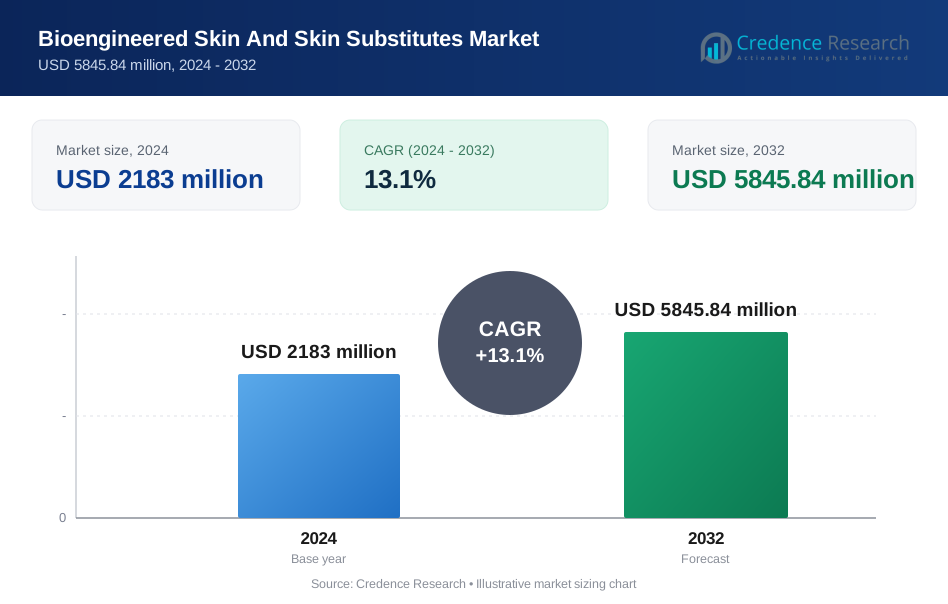
Bioengineered Skin And Skin Substitutes Market size was valued USD 2183 million in 2024 and is anticipated to reach USD 5845.84 million by 2032, at a CAGR of 13.1% during the forecast period.
| REPORT ATTRIBUTE | DETAILS |
|---|---|
| Historical Period | 2020-2023 |
| Base Year | 2024 |
| Forecast Period | 2025-2032 |
| Bioengineered Skin And Skin Substitutes Market Size 2024 | USD 2183 million |
| Bioengineered Skin And Skin Substitutes Market, CAGR | 13.1% |
| Bioengineered Skin And Skin Substitutes Market Size 2032 | USD 5845.84 million |
Bioengineered Skin And Skin Substitutes Market Insights
- Market growth is driven by rising incidence of chronic and complex wounds, increasing adoption of regenerative therapies, and expanding use of advanced tissue-engineered and biosynthetic skin substitutes in acute and long-term care settings.
- Key market trends include a shift toward next-generation tissue-engineered products, growing preference for human donor tissue–derived and biosynthetic substitutes, and increasing integration of regenerative solutions in outpatient and specialty wound care centers.
- Competitive dynamics are defined by continuous product innovation, strong clinical validation, regulatory approvals, and portfolio expansion across chronic and acute wound applications, with human donor tissue–derived products holding the dominant segment share.
- Regionally, North America leads with an exact market share of 38%, supported by advanced healthcare infrastructure, favorable reimbursement, and high adoption of bioengineered skin solutions across hospitals and specialty clinics.

Bioengineered Skin And Skin Substitutes Market Segmentation Analysis:
By Type
By type, human donor tissue–derived products represent the dominant sub-segment in the bioengineered skin and skin substitutes market, holding the largest market share due to their close structural and biological similarity to native human skin. These products are widely adopted in complex wound and burn management because they provide immediate extracellular matrix support, promote rapid cell migration, and enable vascular ingrowth. Acellular animal-derived products follow closely, valued for consistent availability and reduced immunogenicity after processing. Tissue-engineered skin products and biosynthetic skin substitutes are gaining traction as they combine cellular components with scaffold technologies, supporting regenerative healing in severe and non-healing wound scenarios.
- For instance, Vericel Corporation’s Epicel® cultured epidermal autograft is manufactured by expanding a small patient skin biopsy into keratinocyte sheets achieving cell expansion levels of up to 10,000-fold, with each production run generating multiple graft sheets of approximately 50 cm² each, specifically designed for the treatment of large total body surface area burns.
By Application
By application, chronic wounds account for the leading market share, driven by the high prevalence of diabetic foot ulcers, venous leg ulcers, and pressure injuries that require advanced regenerative intervention. Bioengineered skin substitutes are increasingly used to address delayed epithelialization, impaired angiogenesis, and high infection risk associated with long-duration wounds. Acute wounds, including burns, traumatic injuries, and surgical defects, also represent a significant segment, particularly in tertiary care settings. Other applications, such as reconstructive procedures and rare dermatological conditions, contribute steadily as clinical evidence expands for regenerative skin solutions across diverse wound etiologies.
- For instance, Essity Health & Medical’s Cutimed® Sorbact® range utilizes dialkylcarbamoyl chloride (DACC) technology with a hydrophobic fatty-acid carbon chain length of C12–C18, enabling irreversible binding of common wound pathogens such as Staphylococcus aureus and Escherichia coli without the use of chemical antimicrobials, while maintaining dressing integrity across standardized sizes up to 10 × 20 cm for chronic wound coverage.
By End User
By end user, hospitals dominate the bioengineered skin and skin substitutes market, reflecting their role as primary centers for burn care, trauma management, and complex surgical wound treatment. Hospitals benefit from access to multidisciplinary clinical teams, advanced surgical infrastructure, and reimbursement pathways that support the use of high-cost regenerative products. Ambulatory surgical centers are emerging as a fast-growing segment due to shorter procedure times and increasing outpatient wound interventions. Specialty clinics, particularly dedicated wound care centers, also contribute significantly by adopting skin substitutes for chronic wound management, while other end users support niche and long-term care applications.
Key Growth Drivers
Rising Burden of Chronic and Complex Wounds
The increasing prevalence of chronic wounds, including diabetic foot ulcers, pressure ulcers, and venous leg ulcers, is a primary growth driver for the bioengineered skin and skin substitutes market. Aging populations, rising diabetes incidence, and vascular disorders significantly increase the number of patients with delayed or non-healing wounds that require advanced regenerative intervention. Bioengineered skin substitutes provide extracellular matrix support, promote cellular migration, and enhance angiogenesis, making them clinically preferable to conventional dressings. Their ability to accelerate wound closure and reduce complication risk continues to drive adoption across acute and long-term care settings.
- For instance, Tissue Regenix’s dCELL® technology is used to decellularize human and porcine dermal tissue, achieving residual DNA levels below 50 ng per milligram of dry tissue while preserving native collagen architecture with pore sizes ranging from 50 to 150 microns, enabling effective cellular infiltration and neovascularization in chronic wound applications.
Advancements in Regenerative Medicine and Tissue Engineering
Rapid progress in regenerative medicine and tissue engineering technologies strongly supports market growth. Innovations in scaffold design, cellular integration, and biomaterial processing have improved the structural integrity, biocompatibility, and functional performance of bioengineered skin products. Tissue-engineered and biosynthetic substitutes increasingly mimic native skin architecture, enabling improved epithelialization and dermal regeneration. These advancements expand clinical applicability across burns, trauma, and surgical reconstruction. Continued investment in R&D and translational research accelerates product approvals and enhances physician confidence in adopting bioengineered skin solutions for complex wound management.
- For instance, Integra LifeSciences Corporation’s Integra® Dermal Regeneration Template utilizes a bilayer matrix composed of cross-linked bovine tendon collagen and chondroitin-6-sulfate with controlled pore diameters ranging from 70 to 200 microns.
Growing Adoption in Burn and Trauma Care
The rising incidence of burn injuries, traumatic wounds, and complex surgical defects is driving demand for bioengineered skin and skin substitutes. These products provide immediate wound coverage, reduce fluid loss, and lower infection risk in severe injuries where autografting may be delayed or limited. Hospitals and specialized burn centers increasingly integrate skin substitutes into standard treatment protocols to improve healing outcomes and functional recovery. Their role as temporary or permanent dermal replacements supports faster stabilization and reconstructive planning, reinforcing market growth in emergency and high-acuity clinical environments.
Key Trends & Opportunities
Shift Toward Advanced Tissue-Engineered and Biosynthetic Products
A major trend in the market is the transition from traditional donor-derived skin substitutes toward advanced tissue-engineered and biosynthetic products. These solutions offer improved consistency, scalability, and reduced risk of disease transmission or immune rejection. Tissue-engineered constructs combining cells, growth-supporting matrices, and bioactive components are gaining traction in complex wound and burn care. This shift creates opportunities for manufacturers to develop next-generation regenerative platforms with enhanced durability, controlled degradation, and broader clinical indications across acute and chronic wound applications.
- For instance, Stryker’s BIO4® viable tissue matrix is manufactured using a cryopreservation process that maintains living endogenous cells at storage temperatures of −80 °C, preserves all four essential regenerative properties osteoconductive scaffold, osteoinductive signals, osteogenic cells, and angiogenic factors and is supplied in premeasured graft volumes designed for immediate use after thawing within minutes, demonstrating how tissue-engineered platforms are optimized for clinical efficiency and biological performance.
Expansion of Specialized Wound Care and Outpatient Settings
The expansion of specialized wound care centers and outpatient treatment facilities presents a significant opportunity for the bioengineered skin market. As healthcare systems emphasize cost efficiency and reduced hospital stays, advanced skin substitutes are increasingly used in ambulatory surgical centers and specialty clinics. These settings adopt bioengineered products for chronic wound management and post-surgical care, supported by standardized treatment protocols. Improved clinician training and simplified application techniques further enable wider adoption beyond traditional inpatient environments.
- For instance, Organogenesis Inc.’s Apligraf® is a bilayered living skin construct consisting of an epidermal layer of human keratinocytes and a dermal layer of human fibroblasts in a Type I bovine collagen matrix. The total construct is approximately 1.0 mm thick, with each graft measuring 44 cm².
Integration of Personalized and Precision Medicine Approaches
Personalized medicine is emerging as a key opportunity in bioengineered skin development. Manufacturers are exploring customized skin substitutes tailored to patient-specific wound characteristics, comorbidities, and healing capacity. Advances in wound assessment technologies and biomarker-driven treatment selection support more targeted use of regenerative products. This trend enhances clinical outcomes and positions bioengineered skin substitutes as premium solutions for high-risk patients, particularly in elderly and immunocompromised populations.
Key Challenges
High Cost and Reimbursement Limitations
The high cost of bioengineered skin and skin substitutes remains a significant challenge, limiting adoption in cost-sensitive healthcare systems. Manufacturing complexity, stringent regulatory requirements, and specialized storage conditions contribute to elevated pricing. Inconsistent reimbursement policies across regions and care settings further restrict access, particularly in outpatient and long-term care environments. Providers often face financial constraints when integrating these products into routine treatment protocols, slowing market penetration despite demonstrated clinical benefits.
Regulatory and Clinical Adoption Barriers
Strict regulatory pathways and the need for extensive clinical validation pose challenges for market expansion. Bioengineered skin substitutes must meet rigorous safety, efficacy, and quality standards, resulting in prolonged development and approval timelines. Additionally, variability in clinician familiarity and training can hinder widespread adoption. Limited long-term comparative data against established therapies may also slow acceptance, emphasizing the need for continued clinical evidence generation and standardized treatment guidelines to support broader utilization.
Regional Analysis
North America
North America leads the bioengineered skin and skin substitutes market with an estimated 38% market share, supported by advanced healthcare infrastructure, high adoption of regenerative medicine, and strong clinical demand for complex wound and burn management. The region benefits from a high prevalence of chronic wounds, including diabetic foot ulcers and pressure injuries, alongside a well-established network of burn centers and trauma hospitals. Favorable reimbursement frameworks, rapid integration of innovative tissue-engineered products, and strong presence of leading manufacturers further reinforce regional dominance. Continuous clinical research and early adoption of next-generation skin substitutes sustain growth momentum.
Europe
Europe accounts for approximately 30% market share in the bioengineered skin and skin substitutes market, driven by an aging population, rising chronic wound burden, and increasing focus on advanced wound care standards. Countries such as Germany, the UK, and France demonstrate strong adoption due to well-developed public healthcare systems and structured wound care protocols. Regulatory emphasis on product safety and clinical validation supports steady uptake of tissue-engineered and biosynthetic skin substitutes. Additionally, growing investment in regenerative medicine research and expanding specialty wound care centers contribute to sustained regional market expansion.
Asia-Pacific
Asia-Pacific holds around 22% market share and represents the fastest-growing region in the bioengineered skin and skin substitutes market. Growth is fueled by rising diabetes prevalence, increasing burn injury incidence, and improving access to advanced healthcare services across China, India, and Southeast Asia. Expanding hospital infrastructure, growing medical tourism, and increasing awareness of regenerative wound therapies drive adoption. While cost sensitivity remains a factor, gradual improvements in reimbursement coverage and local manufacturing capabilities are enabling broader penetration of bioengineered skin products across both acute and chronic wound care settings.
Latin America
Latin America contributes roughly 6% market share, supported by gradual improvements in healthcare infrastructure and increasing awareness of advanced wound management solutions. Countries such as Brazil and Mexico lead regional adoption due to expanding hospital networks and rising treatment demand for chronic wounds and trauma-related injuries. Although limited reimbursement and budget constraints restrict widespread use, tertiary care hospitals and private healthcare providers increasingly adopt bioengineered skin substitutes for complex cases. Growing investment in specialty wound care clinics and public health initiatives aimed at diabetes management further support moderate regional growth.
Middle East & Africa
The Middle East & Africa region accounts for an estimated 4% market share, with growth driven by rising incidence of diabetes-related wounds, burn injuries, and trauma cases. Gulf Cooperation Council countries lead adoption due to advanced hospital infrastructure, higher healthcare spending, and increasing focus on specialized wound care. In contrast, adoption across parts of Africa remains limited by cost constraints and access challenges. However, gradual improvements in healthcare delivery, expanding burn care units, and increasing clinician awareness of regenerative skin solutions support steady long-term market development.
Bioengineered Skin And Skin Substitutes Market Segmentations:
By Type:
- Human donor tissue-derived products
- Acellular animal-derived products
By Application:
- Acute wounds
- Chronic wounds
By End User:
- Hospitals
- Ambulatory surgical centers
By Geography
- North America
- U.S.
- Canada
- Mexico
- Europe
- Germany
- France
- U.K.
- Italy
- Spain
- Rest of Europe
- Asia Pacific
- China
- Japan
- India
- South Korea
- South-east Asia
- Rest of Asia Pacific
- Latin America
- Brazil
- Argentina
- Rest of Latin America
- Middle East & Africa
- GCC Countries
- South Africa
- Rest of the Middle East and Africa
Competitive Landscape
The competitive landscape of the bioengineered skin and skin substitutes market players such as Vericel Corporation, Essity Aktiebolag (publ) (Essity Health & Medical), Tissue Regenix, 3M, Stryker, Organogenesis Inc., BioTissue, Smith+Nephew, MIMEDX Group, Inc., Integra LifeSciences Corporation. The bioengineered skin and skin substitutes market is highly competitive and driven by continuous innovation in regenerative medicine and advanced wound care technologies. Market participants compete primarily on product efficacy, clinical validation, and the ability to address complex acute and chronic wound indications. Strong emphasis is placed on research and development to enhance scaffold architecture, cellular integration, and biocompatibility, enabling improved healing outcomes and broader clinical adoption. Strategic initiatives such as portfolio expansion, regulatory approvals, and geographic penetration play a critical role in strengthening competitive positioning. Companies also focus on clinician education, standardized treatment protocols, and long-term clinical evidence to support product adoption. As healthcare systems increasingly prioritize advanced wound management solutions, differentiation is shaped by technological sophistication, reliability of performance, and integration across hospital and specialty care settings.
Key Player Analysis
- Vericel Corporation
- Essity Aktiebolag (publ) (Essity Health & Medical)
- Tissue Regenix
- 3M
- Stryker
- Organogenesis Inc.
- BioTissue
- Smith+Nephew
- MIMEDX Group, Inc.
- Integra LifeSciences Corporation
Recent Developments
- In May 2025, SPAN FLOORS indeed introduced an exclusive engineered wood flooring line for staircases in aimed at modern Indian homes as a sophisticated alternative to marble.
- In October 2024, BioLab Holdings, Inc.'s skin substitute brand, BioLab Sciences, launched its newest amniotic membrane tissue product, the Tri-Membrane Wrap. This Wrap features a robust design to protect deep wounds and poorly located areas, utilizing a triple-layer structure of dehydrated Amnion-Chorion-Amnion tissue that increases thickness and tensile strength, allowing for suturing as required.
- In February 2024, German chemical firms Henkel and Covestro collaborate to promote sustainability in adhesives for load-bearing timber construction. Elements like Cross Laminated Timber or Glued Laminated Timber are used in many indoor and outdoor building applications, including staircases, facades, and structural components.
Report Coverage
The research report offers an in-depth analysis based on Type, Application, End-User and Geography. It details leading market players, providing an overview of their business, product offerings, investments, revenue streams, and key applications. Additionally, the report includes insights into the competitive environment, SWOT analysis, current market trends, as well as the primary drivers and constraints. Furthermore, it discusses various factors that have driven market expansion in recent years. The report also explores market dynamics, regulatory scenarios, and technological advancements that are shaping the industry. It assesses the impact of external factors and global economic changes on market growth. Lastly, it provides strategic recommendations for new entrants and established companies to navigate the complexities of the market.
Future Outlook
- Bioengineered skin substitutes will increasingly shift toward advanced tissue-engineered and biosynthetic platforms that more closely replicate native skin structure and function.
- Clinical adoption will expand in chronic wound management as healthcare providers prioritize regenerative solutions for long-duration and high-risk wounds.
- Ongoing advancements in biomaterials and scaffold technologies will improve durability, integration, and ease of application in complex wound settings.
- Personalized and patient-specific skin substitutes will gain traction as precision medicine approaches are integrated into wound care decision-making.
- Use of bioengineered skin products will grow in outpatient and ambulatory care settings as treatment protocols continue to shift away from inpatient care.
- Regulatory pathways will become more streamlined as clinical evidence and real-world outcome data continue to accumulate.
- Manufacturers will increase investment in clinical trials to demonstrate long-term efficacy and cost-effectiveness across broader indications.
- Emerging markets will see rising adoption driven by improving healthcare infrastructure and greater awareness of advanced wound care options.
- Strategic partnerships between medical device companies, research institutions, and healthcare providers will accelerate product innovation and commercialization.
- Integration of digital wound assessment tools with regenerative skin therapies will enhance treatment planning, monitoring, and clinical outcomes.
Request a Free Sample
Fill in your details and we'll send you a free sample report.
- Sample data tables & charts
- Research methodology
Need a Custom Version of This Report?
Tailor the scope, geography, or segments to your exact requirements.
- Custom geography or segment scope
- Direct access to our analyst team
Frequently Asked Questions
What is the current market size for the Bioengineered Skin And Skin Substitutes Market, and what is its projected size in 2032?
At what Compound Annual Growth Rate is the Bioengineered Skin And Skin Substitutes Market projected to grow between 2024 and 2032?
Which Bioengineered Skin And Skin Substitutes Market segment held the largest share in 2024?
What are the primary factors fueling the growth of the Bioengineered Skin And Skin Substitutes Market?
Who are the leading companies in the Bioengineered Skin And Skin Substitutes Market?
Which region commanded the largest share of the Bioengineered Skin And Skin Substitutes Market in 2024?
Table of Content
Chapter 1. Report Introduction
- 1.1 Report Description & Purpose
- 1.1.1 Report Title & Market Definition
- 1.1.2 Unique Selling Propositions (USP) & Key Differentiators
- 1.1.3 Value Proposition for Stakeholders
- 1.2 Research Objectives
- 1.2.1 Market Sizing Objectives (Volume & Revenue) (Volume Where Applicable)
- 1.2.2 Segmentation Objectives
- 1.2.3 Competitive Intelligence Objectives
- 1.2.4 Forecast & Scenario Objectives
- 1.3 Report Scope
- 1.3.1 Bioengineered Skin And Skin Substitutes Scope – Segments & Subsegments Covered
- 1.3.2 Geographic Scope – Regions & Countries Covered
- 1.3.3 Historical Period, Base Year & Forecast Period (2024; forecast to 2032)
- 1.3.4 Inclusions & Exclusions
- 1.4 Industry Classification & Applicable Codes
- 1.5 Currency, Measurement Units & Valuation Basis
- 1.6 Target Stakeholders
- 1.7 Limitations & Assumptions
Chapter 2. Executive Summary
- 2.1 Global Bioengineered Skin And Skin Substitutes Market Snapshot
- 2.1.1 Market Size – Historical (2024) & Forecast (2024-2032) (2024: USD 2183 million → 2032: USD 5845.84 million)
- 2.1.2 Volume & Revenue – Global Totals (Volume Where Applicable)
- 2.1.3 Key Market Highlights – Top Five Facts
- 2.2 Bioengineered Skin And Skin Substitutes Market Segmentation Snapshot
- 2.2.1 Market Split by Region – 2024 vs. 2032
- 2.3 Competitive Snapshot
- 2.3.1 Top 10 Players by Revenue Share – 2024
- 2.3.2 Top 10 Players by Volume Share – 2024 (Volume Where Applicable)
- 2.3.3 Recent Strategic Developments (18-Month Summary)
- 2.4 Key Investment Highlights & Strategic Conclusions
Chapter 3. Bioengineered Skin And Skin Substitutes Market Dynamics & Industry Analysis
- 3.1 Market Overview & Context
- 3.1.1 Bioengineered Skin And Skin Substitutes Market Position in the Broader Industry Value Chain
- 3.1.2 Demand Structure & Purchasing Dynamics
- 3.1.3 Market Maturity & Development Stage by Region
- 3.2 Bioengineered Skin And Skin Substitutes Market Drivers
- 3.3 Bioengineered Skin And Skin Substitutes Market Restraints & Challenges
- 3.4 Bioengineered Skin And Skin Substitutes Market Opportunities
- 3.5 Porter's Five Forces Analysis
- 3.5.1 Threat of New Entrants
- 3.5.2 Bargaining Power of Suppliers
- 3.5.3 Bargaining Power of Buyers
- 3.5.4 Threat of Substitutes
- 3.5.5 Competitive Rivalry – Intensity Assessment
- 3.6 Bioengineered Skin And Skin Substitutes Value Chain Analysis
- 3.6.1 Upstream – Key Inputs, Resources & Suppliers
- 3.6.1.1 Key Input/Resource 1
- 3.6.1.2 Key Input/Resource 2
- 3.6.1.3 Key Input/Resource 3
- 3.6.2 Midstream – Core Operations & Value Creation
- 3.6.2.1 Operating Model & Process Overview
- 3.6.2.2 Key Operating Locations & Capabilities by Company
- 3.6.3 Downstream – Market Channels & End Users
- 3.6.3.1 Direct Sales & Customer Engagement Channels
- 3.6.3.2 Indirect Sales, Intermediaries & Partner Channels
- 3.6.4 Value Chain Profitability Analysis
- 3.6.1 Upstream – Key Inputs, Resources & Suppliers
- 3.7 PESTEL Analysis
- 3.7.1 Political Factors
- 3.7.2 Economic Factors
- 3.7.3 Social Factors
- 3.7.4 Technological Factors
- 3.7.5 Environmental Factors
- 3.7.6 Legal Factors
- 3.8 Bioengineered Skin And Skin Substitutes Supply Chain Analysis
- 3.8.1 Critical Input & Resource Availability Risk Assessment
- 3.8.2 Supplier & Operational Concentration Risk (Geographic Exposure)
- 3.8.3 Supply & Service Disruption Impact Analysis
- 3.9 Regulatory & Policy Landscape
Note: The regulatory and policy landscape section covers regulations based on their applicability to the market, Bioengineered Skin And Skin Substitutes category, geography, and scope of the study. Only regulatory frameworks with a material impact on operations, compliance, trade, sustainability, or market access are analyzed in detail.
Chapter 4. Key Investment Pockets & Opportunity Analysis
- 4.1 Bioengineered Skin And Skin Substitutes Market Attractiveness Analysis
- 4.1.1 By Region – Investment Attractiveness Matrix (Market Size × CAGR)
- 4.2 Absolute Revenue Growth Opportunity
- 4.2.1 By Region – Absolute Revenue Growth Through 2032
- 4.3 Incremental Demand Opportunity
- 4.3.1 By Region – Incremental Demand Through 2032
- 4.3.2 Segment – Incremental Demand
- 4.4 Emerging Submarket Opportunity Deep Dive (Subject to Applicability)
- 4.5 Priority Market Opportunity Scorecards
- 4.5.1 United States
- 4.5.2 Europe
- 4.5.3 Asia
- 4.5.4 Middle East & Africa
Note: Priority market opportunity scorecards reflect the geographic scope and strategic relevance of the study. Listed markets are indicative and may be adapted to the industry.
Chapter 5. Bioengineered Skin And Skin Substitutes Cross-Border Trade & Market Access Analysis
- 5.1 International Trade & Cross-Border Activity Overview
- 5.1.1 Global Export Value by Country (2024)
- 5.1.2 Global Export Volume by Country (2024) (Volume Where Applicable)
- 5.1.3 Global Import Value by Country (2024)
- 5.1.4 Global Import Volume by Country (2024) (Volume Where Applicable)
- 5.1.5 Net Trade Balance by Country (2024)
- 5.2 Export Analysis – Segment
- 5.2.1 Category 1 (Applicable Classification Code)
- 5.2.2 Category 2 (Applicable Classification Code)
- 5.2.3 Category 3 (Applicable Classification Code)
- 5.2.4 Category 4 (Applicable Classification Code)
- 5.2.5 Category 5 (Applicable Classification Code)
- 5.3 Import Analysis – Segment
- 5.3.1 Category 1 (Applicable Classification Code)
- 5.3.2 Category 2 (Applicable Classification Code)
- 5.3.3 Category 3 (Applicable Classification Code)
- 5.3.4 Category 4 (Applicable Classification Code)
- 5.3.5 Category 5 (Applicable Classification Code)
- 5.4 Cross-Border Pricing & Transaction Benchmarks
- 5.4.1 Export Pricing – Segment & Country
- 5.4.2 Import Pricing – Segment & Source Country
- 5.4.3 Price Trends (2024)
- 5.5 Key Cross-Border Trade & Delivery Routes
- 5.5.1 Cross-Border Trade/Delivery Route 1
- 5.5.2 Cross-Border Trade/Delivery Route 2
- 5.5.3 Cross-Border Trade/Delivery Route 3
- 5.5.4 Cross-Border Trade/Delivery Route 4
- 5.5.5 Cross-Border Trade/Delivery Route 5
- 5.6 Trade Policy & Market Access Impact Assessment
- 5.6.1 Tariff & Non-Tariff Barriers
- 5.6.2 Regional Trade & Economic Integration Frameworks
- 5.6.3 Bilateral & Multilateral Trade Agreements
- 5.6.4 Cross-Border Operating, Licensing & Localization Requirements
Note: This chapter applies where cross-border trade or delivery is relevant to Bioengineered Skin And Skin Substitutes. Goods, services, and digital offerings are assessed using applicable classifications and transaction measures. Import-export volumes, trade balances, and route analyses are included only where meaningful to the market.
Chapter 6. Competitive Landscape & Company Benchmarking
- 6.1 Bioengineered Skin And Skin Substitutes Market Concentration & Structure
- 6.1.1 Herfindahl-Hirschman Index (HHI) – vs. 2024
- 6.1.2 Leading, Mid-Sized & Emerging Player Structure
- 6.1.3 Global, Regional & Local Player Dynamics
- 6.2 Bioengineered Skin And Skin Substitutes Market Share Analysis – 2024
- 6.2.1 Global Revenue Share by Company
- 6.2.2 Global Volume Share by Company (Volume Where Applicable)
- 6.2.3 Regional Revenue Share
- 6.2.4 Market Share Evolution ( vs. 2024)
- 6.2.5 Company Market Share by Key Segment
- 6.2.6 Company Market Share by Customer Group
- 6.3 Operating Scale, Capacity & Infrastructure Analysis
- 6.3.1 Global Operating Scale & Supply Capacity
- 6.3.2 Resource Utilization & Operating Efficiency
- 6.3.3 Output, Service Delivery & Activity Metrics
- 6.3.4 Operating Footprint & Infrastructure Map
- 6.3.5 Planned Operational & Capacity Expansion
- 6.4 Bioengineered Skin And Skin Substitutes Competitive Benchmarking Matrix
- 6.4.1 Revenue, Growth, Profitability & Operating Metric Comparison
- 6.4.2 Channel Revenue Mix
- 6.4.3 Geographic Revenue Exposure
- 6.4.4 R&D Intensity
- 6.4.5 Sustainability Maturity
- 6.5 Strategic Developments in Bioengineered Skin And Skin Substitutes (Last 24 Months)
- 6.5.1 Mergers, Acquisitions & Divestments
- 6.5.2 New Products, Services & Solutions in Bioengineered Skin And Skin Substitutes
- 6.5.3 Operational & Infrastructure Expansions
- 6.5.4 Strategic Alliances, Joint Ventures & Partnerships
- 6.5.5 Distribution Expansion & Market Entry
- 6.5.6 Sustainability & ESG Initiatives
- 6.6 Competitive Strategy Mapping
- 6.6.1 Leader, Challenger, Follower & Niche Classification
- 6.6.2 Pricing Strategy Comparison
- 6.6.3 Channel Strategy Matrix
Note: Strategic developments are included based on their materiality and the availability of reliable information.
Chapter 7. Global Bioengineered Skin And Skin Substitutes Market – By Sales & Delivery Channel
- 7.1 Segment Overview
- 7.1.1 Volume & Revenue Split by Channel (2024 & 2032) (Volume Where Applicable)
- 7.1.2 Channel Mix Evolution (2024-2032)
Chapter 8. Regional Market Analysis – Global Overview
- 8.1 Global Regional Overview
- 8.1.1 Regional Volume Share (Volume Where Applicable)
- 8.1.2 Regional Revenue Share
- 8.1.3 Regional Volume by Region (Volume Where Applicable)
- 8.1.4 Regional Revenue by Region
- 8.1.5 Regional Forecast Through 2032
- 8.2 Cross-Regional Segment Analysis
- 8.2.1 By Sales & Delivery Channel
- 8.2.2 By Competitive Positioning & Price Tier
Chapter 9. North America Bioengineered Skin And Skin Substitutes Market
- 9.1 United States
- 9.2 Canada
- 9.3 Mexico
Chapter 10. Europe Bioengineered Skin And Skin Substitutes Market
- 10.1 Germany
- 10.2 France
- 10.3 Italy
- 10.4 United Kingdom
- 10.5 Spain
- 10.6 Poland
- 10.7 Russia
- 10.8 Netherlands
- 10.9 Belgium
- 10.10 Sweden
- 10.11 Denmark
- 10.12 Norway
- 10.13 Rest of Europe
Chapter 11. Asia Pacific Bioengineered Skin And Skin Substitutes Market
- 11.1 China
- 11.2 India
- 11.3 Japan
- 11.4 South Korea
- 11.5 Thailand
- 11.6 Indonesia
- 11.7 Vietnam
- 11.8 Malaysia
- 11.9 Australia
- 11.10 Rest of Asia Pacific
Chapter 12. Latin America Bioengineered Skin And Skin Substitutes Market
- 12.1 Brazil
- 12.2 Argentina
- 12.3 Colombia
- 12.4 Chile
- 12.5 Rest of Latin America
Chapter 13. Middle East Bioengineered Skin And Skin Substitutes Market
- 13.1 Saudi Arabia
- 13.2 United Arab Emirates
- 13.3 Turkey
- 13.4 Israel
- 13.5 Iran
- 13.6 Rest of the Middle East
Chapter 14. Africa Bioengineered Skin And Skin Substitutes Market
- 14.1 South Africa
- 14.2 Egypt
- 14.3 Nigeria
- 14.4 Morocco
- 14.5 Rest of Africa
Chapter 15. Bioengineered Skin And Skin Substitutes Company Profiles
- 15.1 [Company 01]
- 15.1.1 Company Overview
- 15.1.2 Key Management Personnel
- 15.1.3 Products & Services Portfolio
- 15.1.4 Financial Performance
- 15.1.5 Key Market Focus & Geographic Presence
- 15.1.6 Recent Developments & Strategic Initiatives
Note: The company profile list is preliminary and may change based on research findings, market developments, data availability, and client requirements.
Chapter 16. Appendices
- Appendix A – List of Abbreviations & Acronyms
- Appendix B – Industry Classification Code Reference – Full Series
- Appendix C – Supply, Output & Operating Capacity Data Tables
- Appendix D – End-Use & Demand Base Tables
- Appendix E – Demand, Adoption & Usage Assumptions
- Appendix F – Pricing & Revenue Metric Reference Tables
- Appendix G – Company Operations & Infrastructure Database
- Appendix H – Cross-Border Trade & Activity Data Tables (Where Applicable)
- Appendix I – Regulatory Summary Tables
- Appendix J – Primary Research Participant List (Anonymized)
- Appendix K – Primary Research Questionnaire Framework
- Appendix L – Data Sources & Bibliography
- Appendix M – Market Size Divergence & Source Comparison
Chapter 17. Research Methodology
- 17.1 Research Framework & Philosophy
- 17.2 Secondary Research – Sources, Hierarchy & Data Extraction
- 17.3 Data Modeling – Bottom-Up & Top-Down Market Sizing
- 17.4 Primary Research – Stakeholder Framework, LOI & Sample Sizes
- 17.5 Forecast Methodology – Regression, Scenario & Sensitivity Analysis
- 17.6 Quality Control – Four-Layer Validation Framework
- 17.7 Limitations & Standard Assumptions
- 17.8 Disclaimer
