
| REPORT ATTRIBUTE | DETAILS |
|---|---|
| Historical Period | 2019-2022 |
| Base Year | 2023 |
| Forecast Period | 2024-2032 |
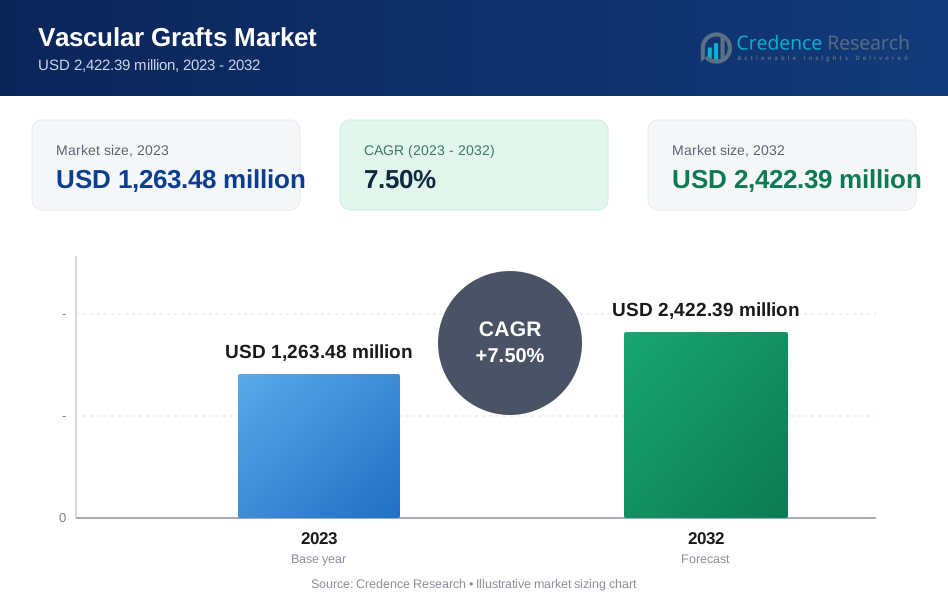
| Vascular Grafts Market Size 2023 | USD 1,263.48 Million |
| Vascular Grafts Market, CAGR | 7.50% |
| Vascular Grafts Market Size 2032 | USD 2,422.39 Million |
Market Overview
The Vascular Grafts Market is projected to grow from USD 1,263.48 million in 2023 to an estimated USD 2,422.39 million by 2032, with a compound annual growth rate (CAGR) of 7.50% from 2024 to 2032. The market growth is driven by the increasing prevalence of cardiovascular diseases, rising demand for minimally invasive surgeries, and advancements in medical technology, particularly in graft materials and design.
Key market drivers include the surge in incidences of vascular disorders, technological innovations in graft development, and the rising demand for synthetic and biological grafts. Trends such as increased investment in healthcare infrastructure and the adoption of advanced vascular repair methods are shaping the market's evolution. The push toward minimally invasive procedures is also gaining traction, further boosting the adoption of vascular grafts globally.
Geographically, North America holds the largest market share due to its well-established healthcare infrastructure and high prevalence of vascular diseases. Europe follows closely, driven by advancements in medical technology and an aging population. The Asia Pacific region is expected to witness the fastest growth due to rising healthcare expenditure and increasing awareness of vascular health. Key players in the market include B. Braun Melsungen AG, LeMaitre Vascular Inc., Terumo Corporation, and Medtronic plc. These companies are actively engaged in product development and strategic partnerships to strengthen their market position.
Market Drivers
Rising Prevalence of Cardiovascular Diseases
The growing incidence of cardiovascular diseases (CVDs) is one of the primary drivers of the vascular grafts market. CVDs, including coronary artery disease, peripheral artery disease, and aneurysms, are leading causes of death globally, with the World Health Organization (WHO) estimating that nearly 17.9 million people die from CVDs each year. Factors such as sedentary lifestyles, poor dietary habits, smoking, and alcohol consumption contribute to the rising prevalence of these diseases. As these conditions often necessitate surgical interventions such as bypass surgeries or aneurysm repair, the demand for vascular grafts continues to increase. Vascular grafts are used to redirect blood flow, replace damaged vessels, or bypass blocked arteries. For patients suffering from severe CVDs, grafts provide a critical solution in ensuring blood flow to vital organs. As the prevalence of CVDs rises, healthcare providers are increasingly relying on advanced graft materials and technologies to perform successful surgeries, improving patient outcomes. The increasing burden of cardiovascular diseases has made it imperative for healthcare systems to adopt cutting-edge vascular graft solutions, thereby driving market growth.
Advancements in Graft Technology and Materials
Technological innovations in the development of vascular grafts have significantly enhanced their performance and adoption. Traditional grafts made from materials like polytetrafluoroethylene (PTFE) and polyethylene terephthalate (PET) are widely used due to their durability and biocompatibility. However, recent advancements in biomaterials and tissue engineering have introduced new graft options, including biologically derived and hybrid grafts, which combine synthetic and biological components. These innovations improve graft patency, reduce complications like infection and graft failure, and promote faster healing. The development of bioengineered grafts has been a significant milestone in vascular surgery. These grafts, designed to mimic natural blood vessels, offer better integration with the patient’s tissue and reduce the risk of immune rejection. Additionally, improvements in minimally invasive vascular graft delivery systems have made surgical procedures less complex, reducing recovery times and hospital stays for patients. As the medical community continues to invest in research and development, the availability of more efficient and reliable grafts will drive the market forward.
Increasing Geriatric Population
The global population is aging at an unprecedented rate, with people over the age of 60 projected to double by 2050, according to the United Nations. The aging population is highly susceptible to vascular diseases due to the natural wear and tear of blood vessels and the cumulative effects of health issues such as hypertension, diabetes, and high cholesterol. Older adults are at greater risk of developing atherosclerosis, aneurysms, and other vascular complications that often require surgical interventions involving vascular grafts. The increase in life expectancy, coupled with the rise in age-related vascular conditions, is expected to boost the demand for vascular grafts. Elderly patients often require durable, biocompatible grafts that can be safely used in complex surgical procedures. The need for advanced graft technology that can reduce the risk of complications in older adults is particularly important, as these patients are more vulnerable to post-surgical complications. Thus, the expanding geriatric population is a key driver of the vascular grafts market, as healthcare providers seek effective solutions to address the growing demand for vascular surgeries.
Shift Towards Minimally Invasive Procedures
The growing preference for minimally invasive surgeries (MIS) in vascular repair and bypass procedures is another key factor driving the vascular grafts market. MIS techniques, such as endovascular aneurysm repair (EVAR) and laparoscopic vascular surgery, offer numerous advantages over traditional open surgeries. These include shorter hospital stays, faster recovery times, reduced scarring, and lower risks of infection. With advancements in imaging technology, surgical instruments, and graft materials, MIS has become more accessible and widespread, further boosting its adoption. Minimally invasive procedures have particularly benefited from the development of flexible, durable, and easily implantable vascular grafts that can be delivered through smaller incisions. In endovascular procedures, for instance, vascular grafts are delivered via catheter-based systems, allowing surgeons to navigate complex anatomy with minimal disruption to surrounding tissues. This trend toward less invasive treatment options has increased patient demand and broadened the scope of vascular graft applications, particularly in patients who are at high risk for complications during traditional surgery. As healthcare systems continue to embrace MIS, the vascular grafts market is set to experience sustained growth.
Market Trends
Increasing Adoption of Bioengineered and Biocompatible Grafts One of the most prominent trends in the vascular grafts market is the growing adoption of bioengineered and biocompatible grafts. Traditional synthetic grafts, such as those made from polytetrafluoroethylene (PTFE) and Dacron, have been widely used in vascular surgeries for decades. However, recent advancements in biotechnology have led to the development of bioengineered grafts, which combine synthetic materials with biological elements to enhance compatibility with the patient’s body. For instance, companies are now developing grafts that integrate human cells or tissues, mimicking the natural structure and function of blood vessels, thereby improving long-term outcomes. Additionally, grafts that use biodegradable polymers are emerging, offering temporary scaffolding to support vessel healing before being absorbed by the body, eliminating the need for additional surgeries. This shift towards biologically advanced grafts is expected to drive innovation and create new growth opportunities within the market.
Rising Demand for Minimally Invasive Vascular Surgeries Another key trend shaping the vascular grafts market is the increasing preference for minimally invasive vascular surgeries. Patients and healthcare providers are increasingly opting for minimally invasive techniques, such as endovascular aneurysm repair (EVAR) and percutaneous coronary intervention (PCI), due to their advantages over traditional open surgeries. For instance, advancements in catheter-based systems have made it possible to deploy vascular grafts through smaller incisions, resulting in reduced recovery times, fewer complications, and shorter hospital stays. This trend is particularly significant in the treatment of aneurysms, peripheral artery disease, and vascular occlusions, where the use of minimally invasive grafts can offer better patient outcomes and lower procedural risks. The growing number of elderly patients and the rising incidence of lifestyle-related vascular diseases are further accelerating the shift towards minimally invasive procedures, driving demand for flexible, durable, and easily implantable grafts in the vascular grafts market.
Market Restraints and Challenges
High Cost of Advanced Vascular Grafts and Procedures
One of the significant challenges restraining the growth of the vascular grafts market is the high cost associated with advanced grafts and vascular surgeries. Bioengineered and biocompatible grafts, while offering superior performance and reduced complications, are often more expensive than traditional synthetic grafts. Additionally, the use of minimally invasive procedures such as endovascular aneurysm repair (EVAR) requires sophisticated equipment and highly skilled medical professionals, further driving up healthcare costs. In regions with limited healthcare funding or insufficient insurance coverage, the affordability of such advanced treatments becomes a barrier for patients, limiting the adoption of vascular grafts. This financial burden can also extend to healthcare providers, especially in developing countries, where resources for specialized medical technologies are scarce. The high cost of these procedures and technologies poses a significant challenge to the widespread use of innovative vascular grafts, particularly in price-sensitive markets.
Complications and Risk of Graft Failure
Another key restraint in the vascular grafts market is the potential for complications, including graft failure, infection, and thrombosis. Despite advancements in graft materials and technologies, vascular surgeries still carry inherent risks, especially for patients with pre-existing conditions such as diabetes or chronic kidney disease. These patients are more prone to infections or poor healing post-surgery, leading to higher rates of graft failure. Moreover, issues like restenosis (re-narrowing of the artery) or blood clots can arise after graft implantation, sometimes necessitating further interventions or replacement surgeries. This not only increases healthcare costs but also discourages patients and providers from opting for vascular graft solutions. Addressing these complications requires continued investment in research and development to enhance graft durability and biocompatibility. However, the persistence of such risks continues to present a notable challenge to market growth.
Market Segmentation Analysis
By Product
Vascular grafts serve various critical roles across different medical conditions. Haemodialysis access grafts are essential for patients with kidney failure, providing a reliable access point for long-term dialysis treatments. Endovascular stent grafts, widely utilized in minimally invasive procedures, are effective in treating aneurysms and arterial blockages, offering both flexibility and durability through catheter-based deployment. Coronary artery bypass grafts (CABG) are crucial for bypassing blocked coronary arteries, significantly improving blood flow to the heart in cases of coronary artery disease. For patients with aortic disease, vascular grafts are specifically designed to repair aneurysms and dissections, often using minimally invasive techniques. Peripheral vascular grafts, used in treating peripheral artery disease (PAD), help restore blood flow to limbs affected by severe arterial blockages. Together, these grafts provide essential solutions for various vascular conditions, enhancing patient outcomes through both traditional and minimally invasive approaches.
By Application
Vascular grafts play a critical role in various medical applications, particularly in the treatment of cardiac aneurysms, where they are used to repair high-risk areas like the aorta. Endovascular stent grafts are preferred for minimally invasive procedures, while traditional vascular grafts are used in open surgeries. For kidney failure patients, haemodialysis access grafts offer a long-term solution for dialysis access. Grafts are also essential in treating vascular occlusions, restoring blood flow in blocked coronary and peripheral arteries. Coronary artery bypass grafting (CABG) remains a key application for addressing severe coronary blockages. Additionally, vascular grafts are utilized in other conditions, including trauma-induced vascular damage and congenital abnormalities, further broadening their medical relevance.
Segments
Based on product
- Haemodialysis Access Grafts
- Endovascular Stent Grafts
- Coronary Artery Based on-Pass Grafts
- Vascular Grafts for Aorta Disease
- Peripheral Vascular Grafts
Based on application
- Cardiac Aneurysm
- Endovascular Stent Graft
- Vascular Graft
- Kidney Failure
- Vascular Occlusion
- Coronary Artery Disease
- Others
Based on raw material
- Synthetic Vascular Grafts
- Polytetrafluoroethylene (PTFE) Grafts
- Polyester Grafts,
- Polyurethane Grafts
- Biological Vascular Grafts
- Autografts
- Allografts
- Xenografts
- Hybrid Vascular Grafts
Based on region
- North America
- U.S.
- Canada
- Mexico
- Europe
- Germany
- France
- U.K.
- Italy
- Spain
- Rest of Europe
- Asia Pacific
- China
- Japan
- India
- South Korea
- South-east Asia
- Rest of Asia Pacific
- Latin America
- Brazil
- Argentina
- Rest of Latin America
- Middle East & Africa
- GCC Countries
- South Africa
- Rest of the Middle East and Africa
Regional Analysis
North America (35%):
North America dominates the global vascular grafts market, accounting for approximately 35% of the total market share. The region's leadership is attributed to its advanced healthcare infrastructure, a high prevalence of cardiovascular diseases, and the widespread adoption of innovative graft technologies. The rising incidence of lifestyle-related diseases such as hypertension, diabetes, and obesity has increased the demand for vascular graft surgeries. In addition, the presence of key market players and a strong focus on research and development (R&D) contribute to the region's significant market share. The U.S., in particular, drives growth in North America due to its high healthcare spending and increasing adoption of minimally invasive surgical techniques. The region is expected to continue its leadership position throughout the forecast period, driven by technological advancements and an aging population.
Europe (28%):
Europe holds the second-largest market share, contributing around 28% to the global vascular grafts market. The region's aging population and increasing prevalence of cardiovascular diseases have driven the demand for vascular grafts. Countries such as Germany, France, and the United Kingdom are major contributors, benefiting from robust healthcare systems and high per capita healthcare expenditure. Additionally, the increasing focus on reducing hospital stays and improving patient outcomes through minimally invasive surgeries is boosting the adoption of vascular grafts in the region. Furthermore, European governments' investment in healthcare infrastructure and medical technologies supports market growth. The presence of leading medical device companies in Europe also contributes to the development of innovative vascular graft solutions, further enhancing the market's expansion.
Key players
- Medtronic
- Terumo Corporation
- LeMaitre Vascular, Inc.
- Getinge AB
- BD (Becton Dickinson)
- Abbott
- Braun Melsungen AG
- L. Gore and Associates, Inc.
- MicroPort Scientific Corporation
- Endologix
Competitive Analysis
The vascular grafts market is highly competitive, driven by the presence of prominent players such as Medtronic, Terumo Corporation, and LeMaitre Vascular, Inc., which lead in innovation and market share. Companies like Getinge AB and BD (Becton Dickinson) have diversified product portfolios, focusing on enhancing graft durability and biocompatibility. Abbott and B. Braun Melsungen AG are recognized for their strong R&D capabilities and global reach, while W. L. Gore and Associates, Inc. is known for its advanced synthetic grafts. MicroPort Scientific Corporation and Endologix have strengthened their market positions through technological advancements and strategic collaborations. Intense competition among these players is driving continuous innovation in graft materials and minimally invasive technologies, benefiting patients by improving outcomes and reducing recovery times. Each of these companies is focusing on expanding their geographical presence and enhancing product quality to maintain a competitive edge in the market.
Recent Developments
- In May 2024, Medtronic is renowned for its Endurant II Stent Graft Systems, widely used in the treatment of abdominal aortic aneurysm.
- In May 2023, Terumo Aortic announced FDA approval of the RelayPro Thoracic Stent-Graft device for the treatment of dissection and transection in the United States.
- In May 2022, Getinge reached record deliveries of vascular grafts after ramping up production at its La Ciotat factory in France.
- March 2024, BD initiated the AGILITY study to evaluate the safety and effectiveness of the BD Vascular Covered Stent for the treatment of Peripheral Arterial Disease (PAD).
- In February 2023, Abbott announced the acquisition of Cardiovascular Systems, Inc. (CSI), a medical device company with an innovative atherectomy system.
- In January 2024, Gore received FDA approval for a lower profile GORE VIABAHN VBX Balloon Expandable Endoprosthesis.
- In April 2024, MicroPort Endovastec completed its first implantation of the Cratos Branched Aortic Stent-Graft System in a pre-market clinical study in the EU and Japan.
- In July 2023, Endologix announced the first patients treated with the DETOUR System for complex Peripheral Artery Disease (PAD) since FDA approval.
Market Concentration and Characteristics
The vascular grafts market is moderately concentrated, with a few major players holding significant market shares. Companies like Medtronic, Terumo Corporation, and W. L. Gore and Associates, Inc. dominate the market, driven by their strong product portfolios, extensive research and development efforts, and global presence. The market is characterized by continuous innovation, with a focus on developing advanced materials such as bioengineered and hybrid grafts, which improve biocompatibility and reduce post-surgical complications. Additionally, the market sees a strong emphasis on minimally invasive surgical techniques, further driving product development. Despite the dominance of key players, smaller companies are also making notable advancements, contributing to increased competition and fostering innovation across the sector.
Report Coverage
The research report offers an in-depth analysis based on product, application, raw material and Region. It details leading market players, providing an overview of their business, product offerings, investments, revenue streams, and key applications. Additionally, the report includes insights into the competitive environment, SWOT analysis, current market trends, as well as the primary drivers and constraints. Furthermore, it discusses various factors that have driven market expansion in recent years. The report also explores market dynamics, regulatory scenarios, and technological advancements that are shaping the industry. It assesses the impact of external factors and global economic changes on market growth. Lastly, it provides strategic recommendations for new entrants and established companies to navigate the complexities of the market.
Future Outlook
- The development of bioengineered and hybrid grafts will continue to improve biocompatibility and long-term outcomes, driving demand for advanced vascular grafts.
- The increasing preference for minimally invasive surgeries, such as endovascular aneurysm repair (EVAR), will fuel the adoption of flexible, durable vascular grafts.
- As cardiovascular diseases remain a leading cause of death globally, the need for vascular grafts in treating arterial blockages and aneurysms will surge.
- The vascular grafts market will see significant growth in emerging regions like Asia Pacific and Latin America due to improving healthcare infrastructure and increasing healthcare expenditure.
- The aging global population will lead to higher demand for vascular grafts, as older adults are more prone to vascular diseases requiring surgical intervention.
- The use of synthetic and bioengineered vascular grafts is expected to rise, driven by ongoing innovations that enhance graft longevity and reduce complications.
- Companies will continue to invest heavily in research and development to create more advanced graft materials, fueling future product innovations and market expansion.
- Key players in the vascular grafts market will engage in collaborations and partnerships to enhance their product portfolios and expand their geographical reach.
- Favorable regulatory frameworks will encourage the introduction of innovative graft technologies, facilitating faster approval processes and market entry.
- The trend toward personalized healthcare solutions will drive the development of grafts tailored to individual patient needs, enhancing surgical outcomes and patient satisfaction.
Request a Free Sample
Fill in your details and we'll send you a free sample report.
- Sample data tables & charts
- Research methodology
Need a Custom Version of This Report?
Tailor the scope, geography, or segments to your exact requirements.
- Custom geography or segment scope
- Direct access to our analyst team
Frequently Asked Questions
What is the projected market size of the vascular grafts market in 2023 and 2032, and what is the CAGR?
What are the main drivers of growth in the vascular grafts market?
Which region holds the largest share in the vascular grafts market?
What role do bioengineered grafts play in the vascular grafts market?
Why is the demand for minimally invasive vascular procedures increasing?
Table of Content
Chapter 1. Report Introduction
- 1.1 Report Description & Purpose
- 1.1.1 Report Title & Market Definition
- 1.1.2 Unique Selling Propositions (USP) & Key Differentiators
- 1.1.3 Value Proposition for Stakeholders
- 1.2 Research Objectives
- 1.2.1 Market Sizing Objectives (Volume & Revenue)
- 1.2.2 Segmentation Objectives
- 1.2.3 Competitive Intelligence Objectives
- 1.2.4 Forecast & Scenario Objectives
- 1.3 Report Scope
- 1.3.1 Vascular Grafts Scope – Types & Subtypes Covered
- 1.3.2 Geographic Scope – Regions & Countries Covered
- 1.3.3 Historical Period, Base Year & Forecast Period (2023; forecast to 2032)
- 1.3.4 Inclusions & Exclusions
- 1.4 HS Code & Classification Framework
- 1.5 Currency, Units & Pricing Basis
- 1.6 Target Stakeholders
- 1.7 Limitations & Assumptions
Chapter 2. Executive Summary
- 2.1 Global Vascular Grafts Market Snapshot
- 2.1.1 Market Size – Historical (2023) & Forecast (2023-2032) (2023: USD 1,263.48 million → 2032: USD 2,422.39 million)
- 2.1.2 Volume & Revenue – Global Totals
- 2.1.3 Key Market Highlights – Top Five Facts
- 2.2 Vascular Grafts Market Segmentation Snapshot
- 2.2.1 Market Split by Region – 2023 vs. 2032
- 2.3 Competitive Snapshot
- 2.3.1 Top 10 Players by Revenue Share – 2023
- 2.3.2 Top 10 Players by Volume Share – 2023
- 2.3.3 Recent Strategic Developments (18-Month Summary)
- 2.4 Key Investment Highlights & Strategic Conclusions
Chapter 3. Vascular Grafts Market Dynamics & Industry Analysis
- 3.1 Market Overview & Context
- 3.1.1 Vascular Grafts Market Position in the Broader Automotive Value Chain
- 3.1.2 OEM vs. Replacement Market Dynamics
- 3.1.3 Market Maturity & Development Stage by Region
- 3.2 Vascular Grafts Market Drivers
- 3.3 Vascular Grafts Market Restraints & Challenges
- 3.4 Vascular Grafts Market Opportunities
- 3.5 Porter's Five Forces Analysis
- 3.5.1 Threat of New Entrants
- 3.5.2 Bargaining Power of Suppliers
- 3.5.3 Bargaining Power of Buyers
- 3.5.4 Threat of Substitutes
- 3.5.5 Competitive Rivalry – Intensity Assessment
- 3.6 Vascular Grafts Value Chain Analysis
- 3.6.1 Upstream – Raw Material/Input Suppliers
- 3.6.1.1 Raw Material/Input 1
- 3.6.1.2 Raw Material/Input 2
- 3.6.1.3 Raw Material/Input 3
- 3.6.2 Midstream – Production/Manufacturing/Service Delivery
- 3.6.2.1 Production/Process Overview
- 3.6.2.2 Key Facility Locations & Capacity by Manufacturer
- 3.6.3 Downstream – Distribution & End Consumer
- 3.6.3.1 Primary Channel – B2B/OEM
- 3.6.3.2 Secondary Channels – Dealer, Retail, Online, Direct
- 3.6.4 Value Chain Profitability Analysis
- 3.6.1 Upstream – Raw Material/Input Suppliers
- 3.7 PESTEL Analysis
- 3.7.1 Political Factors
- 3.7.2 Economic Factors
- 3.7.3 Social Factors
- 3.7.4 Technological Factors
- 3.7.5 Environmental Factors
- 3.7.6 Legal Factors
- 3.8 Vascular Grafts Supply Chain Analysis
- 3.8.1 Raw Material/Input Supply Risk Assessment
- 3.8.2 Manufacturing Concentration Risk (Geographic Exposure)
- 3.8.3 Trade Disruption Impact Analysis
- 3.9 Regulatory & Policy Landscape
Note: The regulatory and policy landscape section covers regulations based on their applicability to the market, Vascular Grafts category, geography, and scope of the study. Only regulatory frameworks with a material impact on operations, compliance, trade, sustainability, or market access are analyzed in detail.
Chapter 4. Key Investment Pockets & Opportunity Analysis
- 4.1 Vascular Grafts Market Attractiveness Analysis
- 4.1.1 By Region – Investment Attractiveness Matrix (Volume × CAGR)
- 4.2 Absolute Revenue Growth Opportunity
- 4.2.1 By Region – Absolute USD Growth Through 2032
- 4.3 Incremental Volume Opportunity
- 4.3.1 By Region – Incremental Volume Through 2032
- 4.3.2 Segment – Incremental Volume
- 4.4 Emerging Submarket Opportunity Deep Dive (Subject to Applicability)
- 4.5 Emerging Market Opportunity Scorecards
- 4.5.1 United States
- 4.5.2 Europe
- 4.5.3 Asia
- 4.5.4 Middle East & Africa
Note: Emerging Market Opportunity Scorecards will be included based on relevance and strategic importance. Regions listed are indicative and may vary depending on data availability and market dynamics.
Chapter 5. Vascular Grafts Import-Export Analysis & Trade Flows
- 5.1 Global Trade Overview
- 5.1.1 Global Export Value by Country (2023)
- 5.1.2 Global Export Volume by Country (2023)
- 5.1.3 Global Import Value by Country (2023)
- 5.1.4 Global Import Volume by Country (2023)
- 5.1.5 Net Trade Balance by Country (2023)
- 5.2 Export Analysis – Segment
- 5.2.1 Type 1 (HS Code)
- 5.2.2 Type 2 (HS Code)
- 5.2.3 Type 3 (HS Code)
- 5.2.4 Type 4 (HS Code)
- 5.2.5 Type 5 (HS Code)
- 5.3 Import Analysis – Segment
- 5.3.1 Type 1 (HS Code)
- 5.3.2 Type 2 (HS Code)
- 5.3.3 Type 3 (HS Code)
- 5.3.4 Type 4 (HS Code)
- 5.3.5 Type 5 (HS Code)
- 5.4 Average Unit Trade Prices
- 5.4.1 Average Export Price – Segment & Country
- 5.4.2 Average Import Price – Segment & Source Country
- 5.4.3 Price Trends (2023)
- 5.5 Key Trade Route Analysis
- 5.5.1 Trade Route 1
- 5.5.2 Trade Route 2
- 5.5.3 Trade Route 3
- 5.5.4 Trade Route 4
- 5.5.5 Trade Route 5
- 5.6 Trade Policy Impact Assessment
- 5.6.1 US Anti-Dumping & Section 301 Tariffs
- 5.6.2 EU Customs Union Impact
- 5.6.3 Major Free Trade Agreements
- 5.6.4 USMCA Rules of Origin
Note: Trade policy analysis will be included only where relevant to the Vascular Grafts market.
Chapter 6. Competitive Landscape & Company Benchmarking
- 6.1 Vascular Grafts Market Concentration & Structure
- 6.1.1 Herfindahl-Hirschman Index (HHI) – vs. 2023
- 6.1.2 Tier 1, Tier 2 & Tier 3 Market Structure
- 6.1.3 Global, Regional & Local Player Dynamics
- 6.2 Vascular Grafts Market Share Analysis – 2023
- 6.2.1 Global Revenue Share by Company
- 6.2.2 Global Volume Share by Company
- 6.2.3 Regional Revenue Share
- 6.2.4 Market Share Evolution ( vs. 2023)
- 6.2.5 OEM Segment Share by Company
- 6.2.6 Replacement Segment Share by Company
- 6.3 Production/Delivery Capacity & Facility Analysis
- 6.3.1 Global Installed Capacity
- 6.3.2 Capacity Utilization Rates
- 6.3.3 Production/Output Volume
- 6.3.4 Facility Locations & Capacity Map
- 6.3.5 Planned Capacity Additions
- 6.4 Vascular Grafts Competitive Benchmarking Matrix
- 6.4.1 Revenue, Volume, CAGR & Profitability Comparison
- 6.4.2 Channel Revenue Mix
- 6.4.3 Geographic Revenue Exposure
- 6.4.4 R&D Intensity
- 6.4.5 Sustainability Maturity
- 6.5 Strategic Developments in Vascular Grafts (Last 24 Months)
- 6.5.1 Mergers, Acquisitions & Divestments
- 6.5.2 New Vascular Grafts Launches
- 6.5.3 Facility Expansions
- 6.5.4 Strategic Alliances, Joint Ventures & Partnerships
- 6.5.5 Distribution Expansion & Market Entry
- 6.5.6 Sustainability & ESG Initiatives
- 6.6 Competitive Strategy Mapping
- 6.6.1 Leader, Challenger, Follower & Niche Classification
- 6.6.2 Pricing Strategy Comparison
- 6.6.3 Channel Strategy Matrix
Note: Strategic developments are included based on their materiality and the availability of reliable information.
Chapter 7. Global Vascular Grafts Market – By Distribution Channel
- 7.1 Segment Overview
- 7.1.1 Volume & Revenue Split by Channel (2023 & 2032)
- 7.1.2 Channel Mix Evolution (2023-2032)
Chapter 8. Regional Market Analysis – Global Overview
- 8.1 Global Regional Overview
- 8.1.1 Regional Volume Share
- 8.1.2 Regional Revenue Share
- 8.1.3 Regional Volume by Region
- 8.1.4 Regional Revenue by Region
- 8.1.5 Regional Forecast Through 2032
- 8.2 Cross-Regional Segment Analysis
- 8.2.1 By Distribution Channel
- 8.2.2 By Brand/Price Tier
Chapter 9. North America Vascular Grafts Market
- 9.1 United States
- 9.2 Canada
- 9.3 Mexico
Chapter 10. Europe Vascular Grafts Market
- 10.1 Germany
- 10.2 France
- 10.3 Italy
- 10.4 United Kingdom
- 10.5 Spain
- 10.6 Poland
- 10.7 Russia
- 10.8 Netherlands
- 10.9 Belgium
- 10.10 Sweden
- 10.11 Denmark
- 10.12 Norway
- 10.13 Rest of Europe
Chapter 11. Asia Pacific Vascular Grafts Market
- 11.1 China
- 11.2 India
- 11.3 Japan
- 11.4 South Korea
- 11.5 Thailand
- 11.6 Indonesia
- 11.7 Vietnam
- 11.8 Malaysia
- 11.9 Australia
- 11.10 Rest of Asia Pacific
Chapter 12. Latin America Vascular Grafts Market
- 12.1 Brazil
- 12.2 Argentina
- 12.3 Colombia
- 12.4 Chile
- 12.5 Rest of Latin America
Chapter 13. Middle East Vascular Grafts Market
- 13.1 Saudi Arabia
- 13.2 United Arab Emirates
- 13.3 Turkey
- 13.4 Israel
- 13.5 Iran
- 13.6 Rest of the Middle East
Chapter 14. Africa Vascular Grafts Market
- 14.1 South Africa
- 14.2 Egypt
- 14.3 Nigeria
- 14.4 Morocco
- 14.5 Rest of Africa
Chapter 15. Vascular Grafts Company Profiles
- 15.1 [Company 01]
- 15.1.1 Company Overview
- 15.1.2 Key Management Personnel
- 15.1.3 Products & Services Portfolio
- 15.1.4 Financial Performance
- 15.1.5 Key Market Focus & Geographic Presence
- 15.1.6 Recent Developments & Strategic Initiatives
Note: The company profile list is preliminary and may change based on research findings, market developments, data availability, and client requirements.
Chapter 16. Appendices
- Appendix A – List of Abbreviations & Acronyms
- Appendix B – Industry Classification Code Reference – Full Series
- Appendix C – Production & Capacity Data Tables
- Appendix D – End-Use & Demand Base Tables
- Appendix E – Consumption & Replacement Rate Assumptions
- Appendix F – ASP Reference Tables
- Appendix G – Manufacturing & Facility Database
- Appendix H – Import-Export Data Tables
- Appendix I – Regulatory Summary Tables
- Appendix J – Primary Research Participant List (Anonymized)
- Appendix K – Primary Research Questionnaire Framework
- Appendix L – Data Sources & Bibliography
- Appendix M – Market Size Divergence & Source Comparison
Chapter 17. Research Methodology
- 17.1 Research Framework & Philosophy
- 17.2 Secondary Research – Sources, Hierarchy & Data Extraction
- 17.3 Data Modeling – Bottom-Up & Top-Down Market Sizing
- 17.4 Primary Research – Stakeholder Framework, LOI & Sample Sizes
- 17.5 Forecast Methodology – Regression, Scenario & Sensitivity Analysis
- 17.6 Quality Control – Four-Layer Validation Framework
- 17.7 Limitations & Standard Assumptions
- 17.8 Disclaimer
