| REPORT ATTRIBUTE | DETAILS |
|---|---|
| Historical Period | 2019-2022 |
| Base Year | 2023 |
| Forecast Period | 2024-2032 |
| Brain Health Devices Market Size 2023 | USD 11254.20 million |
| Brain Health Devices Market, CAGR | 4.50% |
| Brain Health Devices Market Size 2032 | USD 16724.81 million |
Market Insights
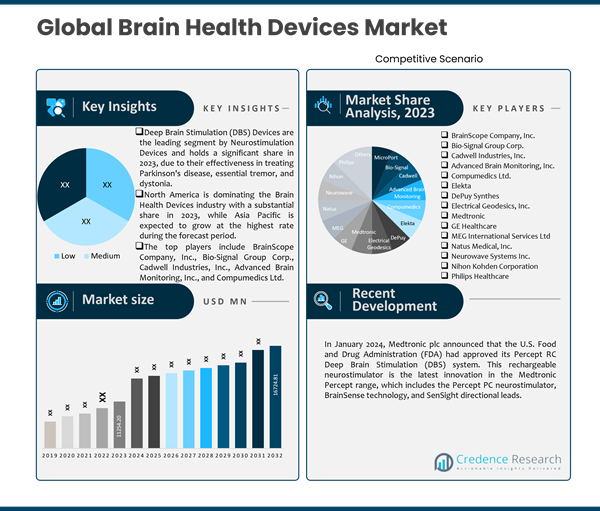
- The global demand for Brain Health Devices was valued at USD 11254.20 million in 2023 and is expected to reach USD 16724.81 million in 2032, growing at a CAGR of 4.50% between 2024 and 2032.
- The Deep Brain Stimulation (DBS) Devices segment was the market leader by Neurostimulation Devices, accounting for the highest share in value in 2023, and the Transcranial Magnetic Stimulation (TMS) Devices segment is expected to grow rapidly throughout the forecast period.
- The MRI Scanners segment was the market leader by Neuroimaging Devices, accounting for the highest share in value in 2023, and the PET and SPECT Scanners segment is expected to grow rapidly throughout the forecast period.
- The Cemented segment was the market leader by Neurosurgical Devices, accounting for the highest share in value in 2023, and the Cementless segment is expected to grow rapidly throughout the forecast period.
- The Intracranial Pressure Monitors segment is predicted to grow fastest over the projection period, while EEG Monitors had the largest share by application in 2023.
- Over the projection period, the Virtual Reality Platforms segment is expected to expand at the fastest rate, and the Neuropsychological Test Batteries segment dominated the market share by Neurocognitive Assessment Devices in 2023.
- North America is dominating the Brain Health Devices industry, with over one-third of the market in 2023.
- The market's primary possibilities include technological advancements and increased focus on mental well-being, along with innovations in neurostimulation, neuroimaging, and telemedicine that offer avenues for personalized care and improved outcomes in neurological disorders.
Executive Summary
Market Definition
Brain health devices refer to a broad range of medical and technological tools designed to monitor, assess, and enhance the health and functionality of the brain. These devices include diagnostic tools like EEG, MRI, and MEG, which are used to capture and analyze brain activity and imaging for the diagnosis of neurological disorders. They also encompass therapeutic devices such as neurostimulators and Transcranial Magnetic Stimulation (TMS) Devices that treat conditions like depression, Parkinson’s disease, and epilepsy by modulating brain activity.
Additionally, cognitive assessment and training tools evaluate cognitive functions and provide exercises to enhance mental capabilities. Moreover, brain health maintenance devices, including sleep monitors and mental wellness tools, are aimed at improving overall brain health. These devices play a crucial role in managing neurological diseases, cognitive disorders, and mental health issues, thereby contributing to improved patient outcomes and quality of life.
Market Overview
The global Brain Health Devices Market has witnessed steady growth in recent years and is expected to grow at a CAGR of 4.50% between 2024 and 2032. The market was valued at USD 11254.20 million in 2023 and is expected to reach USD 16724.81 million in 2032.
The growth of the Brain Health Devices Market is significantly driven by the increasing prevalence of neurological conditions such as Alzheimer's disease, Parkinson's disease, epilepsy, and depression, which has amplified the demand for these devices. This surge is further fueled by an aging population, which is more susceptible to such disorders, thereby creating a larger patient pool requiring advanced brain health solutions. Advances in neurotechnology have played a pivotal role, with innovations in diagnostic and therapeutic devices enabling more accurate and effective treatment of neurological disorders.
Moreover, the growing awareness and emphasis on mental health and cognitive wellness are fueling the growth of the market. Governments and healthcare organizations worldwide are investing in initiatives to promote brain health and assessment for neurological disorders, leading to greater adoption of brain health devices. In July 2023, the World Health Organization (WHO) unveiled an extensive Intersectoral Global Action Plan (IGAP) aimed at improving the coordination and availability of healthcare services for epilepsy and other neurological conditions. Additionally, the rising acceptance and utilization of wearable technology and mobile health applications have made brain health monitoring and management more accessible and convenient for consumers.
The market is also benefiting from substantial investments in research and development by key industry players, aiming to introduce innovative products and expand their applications. Collaboration between medical institutions and tech companies is fostering the development of cutting-edge devices that offer improved accuracy and patient outcomes. Regulatory approvals and support for neurostimulation and brain monitoring devices have further facilitated market expansion, providing confidence to stakeholders regarding the safety and efficacy of these products.
Furthermore, the global brain health devices market is also significantly influenced by changes in lifestyles and increasing work-related stress. Modern lifestyles, characterized by hectic schedules, poor dietary habits, and lack of physical activity, have contributed to a rise in mental health issues such as anxiety, depression, and cognitive decline. As individuals seek solutions to manage stress and maintain mental well-being, the demand for brain health devices has surged. These devices offer ways to monitor and improve cognitive health, making them appealing to those looking to mitigate the negative impacts of their lifestyles.
Segmentation by Neurostimulation Devices
- Deep Brain Stimulation (DBS) Devices are the leading segment by Neurostimulation Devices and held the dominant share in value in 2023. DBS devices have been widely adopted for the treatment of various neurological disorders, particularly Parkinson's disease, which has a high prevalence and substantial patient base. The established efficacy of DBS in managing symptoms of movement disorders and its approval for use in treating other conditions, such as dystonia and epilepsy, contribute to its dominant market position.
- The Transcranial Magnetic Stimulation (TMS) Devices segment is expected to exhibit the highest CAGR during the forecast period. TMS is increasingly recognized for its non-invasive nature and effectiveness in treating conditions such as depression, which has a growing patient population and increasing awareness. The rising demand for alternative treatments to pharmacotherapy, coupled with expanding clinical applications of TMS for other neurological and psychiatric disorders, supports its rapid market growth.
- The Vagus Nerve Stimulation (VNS) Devices segments are anticipated to grow moderately during the forecasted period.
Segmentation by Neuroimaging Devices
- MRI Scanners is the leading segment by Neuroimaging Devices and holds a substantial share in 2023. MRI is a widely adopted imaging modality due to its superior ability to provide detailed images of brain structures without ionizing radiation. It is extensively used for diagnosing a variety of neurological conditions, including tumors, strokes, and degenerative diseases, making it a cornerstone in neuroimaging.
- PET and SPECT Scanners are the fastest-growing subsegment during the forecast period. These scanners offer advanced imaging capabilities by providing functional information about brain activity and metabolic processes. The growing focus on early diagnosis and management of neurodegenerative diseases such as Alzheimer's, where PET and SPECT play a crucial role, is driving the demand for these devices. Additionally, technological advancements and the increasing use of PET and SPECT in research and clinical settings are contributing to their rapid market growth.
- CT Scanners also contribute substantially to the market share.
Segmentation by Neurosurgical Devices
- Neurosurgical Navigation Systems is the leading segment by Neurosurgical Devices and holds a substantial share in 2023. These systems are crucial for enhancing the precision and safety of neurosurgical procedures, allowing surgeons to navigate complex brain structures accurately. Their widespread adoption in various neurosurgical interventions, such as tumor resection, deep brain stimulation implantation, and vascular surgeries, underscores their significant market presence.
- Neuroendoscopes are the fastest-growing subsegment during the forecast period. These instruments enable minimally invasive surgeries, which are increasingly preferred due to their benefits, including reduced recovery times, lower infection rates, and less postoperative pain. The rising incidence of neurological disorders requiring surgical intervention and the ongoing advancements in neuroendoscopy technology, which enhance visualization and surgical outcomes, are driving the rapid growth of this subsegment.
- Cerebrospinal Fluid (CSF) Shunts also contribute substantially to the market share.
Segmentation by Brain Monitoring Devices
- The EEG Monitors held the largest market share by application in terms of value in 2023. EEG is a widely used diagnostic tool for monitoring brain activity by recording electrical signals generated by neurons. It is indispensable in diagnosing and managing various neurological conditions such as epilepsy, sleep disorders, and brain injuries. The versatility of EEG monitors, their non-invasive nature, and their ability to provide real-time data make them essential devices in neurology and critical care settings, contributing to their dominant market position.
- The Intracranial Pressure Monitors is expected to be the fastest-growing segment during the forecasted period. These monitors play a crucial role in monitoring and managing intracranial pressure, which is essential for patients with traumatic brain injury, stroke, intracranial hemorrhage, and other neurological conditions. The increasing incidence of traumatic brain injuries, coupled with the growing recognition of the importance of ICP monitoring in optimizing patient outcomes, is driving the demand for these devices. Moreover, technological advancements aimed at improving the accuracy, reliability, and ease of use of ICP monitors contribute to their rapid market growth.
- The Cerebral Oximeters segment is projected to grow at a moderate CAGR and hold a lower share than the EEG Monitors segment.
Segmentation by Neurocognitive Assessment Devices
- The Neuropsychological Test Batteries held the largest market share in terms of value in 2023. These standardized sets of tests are widely used by healthcare professionals to assess cognitive function and identify deficits associated with neurological conditions such as Alzheimer's disease, dementia, traumatic brain injury, and stroke. Neuropsychological assessments are essential for diagnosis, treatment planning, and monitoring disease progression, making them a cornerstone in neurocognitive evaluation.
- Virtual Reality Platforms are anticipated to be the fastest-growing segment in terms of Neurocognitive Assessment devices. Virtual reality offers advantages such as increased engagement, ecological validity, and customization of assessment tasks, making it appealing for assessing and rehabilitating cognitive functions in neurological disorders. The growing interest in personalized medicine and innovative approaches to neurorehabilitation drives the adoption of virtual reality platforms in both clinical and research settings, contributing to their rapid market growth.
- The Brain-Computer Interface Systems segment is anticipated to contribute significantly to the market growth during the forecasted period.
Segmentation by Region
- North America dominated the Brain Health Devices industry in 2023, fueled by the rising prevalence of neurological disorders, technological advancements, and the presence of major market players.
- Asia Pacific is anticipated to be the fastest-growing market for brain health devices during the forecast period, attributed to the rising prevalence of neurological disorders coupled with an aging population in the region.
- The rest of the world, including Latin America, the Middle East, and Africa, supplies the remaining demand for retail inventory management software.
The rising prevalence of neurological disorders such as Alzheimer's disease, Parkinson's disease, epilepsy, and multiple sclerosis serves as a significant driver for the growth of the brain health devices market in North America. According to the Parkinson's Foundation's 2022 update, nearly one million individuals in the U.S. currently live with Parkinson's disease (PD), a number projected to reach 1.2 million by 2030. Additionally, Parkinson's Canada reported that over 100,000 Canadians are affected by Parkinson's, with more than 25 new diagnoses daily.
Moreover, the presence of major market players in North America, such as Medtronic, GE Healthcare, Philips Healthcare, and Compumedics Limited, significantly contributes to the market's expansion. These companies drive innovation, set industry standards, and ensure a steady supply of advanced brain health devices. For instance, in March 2023, Compumedics Limited announced that it had received 510(k) clearance from the U.S. Food and Drug Administration (FDA) for its Okti high-density EEG amplifier range. Okti represents the culmination of decades of expertise in EEG monitoring and a deep understanding of patient care. It is the world’s first high-density ambulatory EEG amplifier of its kind, and it can also be used for routine and long-term EEG epilepsy monitoring (LTM). This innovation underscores the commitment of market leaders to developing cutting-edge solutions that address the growing demand for brain health devices in North America.
On the other hand, Asia Pacific is anticipated to be the fastest-growing market for Brain Health Devices during the forecast period. This rapid growth can be attributed to the rising prevalence of neurological disorders coupled with an aging population in the region. Countries such as China and India have a significant population, and as a result, a high number of people are diagnosed with neurological disorders such as dementia and Alzheimer's disease. This creates a larger patient pool that requires brain health devices for diagnosis, treatment, and monitoring, in turn driving the growth of the market. According to Alzheimer's Disease International (ADI), the number of people with dementia in the region will increase from 23 million in 2015 to 71 million by 2050.
Moreover, the rapidly growing elderly population in the Asia Pacific region significantly increases the demand for brain health devices. This demand is driven by the higher risk of neurological disorders among the aging demographic, driving the demand for brain health devices for preventative measures, early diagnosis, and treatment of age-related cognitive decline. According to the United Nations, one in four people in Asia and the Pacific will be over 60 years old by 2050. In addition, the population of older persons (aged over 60) in the region will triple between 2010 and 2050, reaching close to 1.3 billion people.
Key Highlights of the Report
The Global Brain Health Devices Market is segmented by Neurostimulation Devices, Neuroimaging Devices, Neurosurgical Devices, Brain Monitoring Devices, Neurocognitive Assessment Devices, and Region. The Deep Brain Stimulation (DBS) Devices segment dominated the market in 2023, holding the largest value share. However, Transcranial Magnetic Stimulation (TMS) Devices are expected to see the fastest growth, and Neuropsychological Test Batteries remain the primary Neurocognitive Assessment device, with North America leading the market growth.
The global brain health devices market is growing rapidly due to advances in neurotechnology, enabling more accurate treatment of neurological disorders like Alzheimer's, Parkinson's, epilepsy, and depression. This demand is amplified by an aging population and greater awareness of mental health and cognitive wellness. Modern lifestyles and rising work-related stress have also driven demand as individuals seek solutions to manage stress and maintain cognitive health. Investments in research and development, along with regulatory support, have led to innovative products and expanded applications. Additionally, increasing healthcare expenditure and improved reimbursement policies enhance the affordability and accessibility of these devices.
Nonetheless, while North America led growth in the Brain Health Devices industry in 2023, driven by advancements in technology, robust healthcare infrastructure, and high awareness and adoption of brain health diagnostics and treatments, Asia Pacific is set for the highest forecasted growth, driven by the rising prevalence of neurological disorders and an aging population, with a significant number of people in countries such as China and India requiring brain health devices for diagnosis, treatment, and monitoring.
What Are The Main Drivers Of The Global Brain Health Devices Market?
The global brain health devices market is growing rapidly due to advances in neurotechnology, enabling more accurate treatment of neurological disorders like Alzheimer's, Parkinson's, epilepsy, and depression. This demand is amplified by an aging population and greater awareness of mental health and cognitive wellness. Modern lifestyles and rising work-related stress have also driven demand as individuals seek solutions to manage stress and maintain cognitive health. Investments in research and development, along with regulatory support, have led to innovative products and expanded applications. Additionally, increasing healthcare expenditure and improved reimbursement policies enhance the affordability and accessibility of these devices.
What are The Major Challenges Faced By The Global Brain Health Devices Market?
The significant expenses linked to implementing and utilizing complex brain monitoring procedures and devices are major challenges to the expansion of the Brain Health Devices Market. These advanced technologies, which frequently integrate cutting-edge neuroimaging methods, advanced sensors, and intricate data processing algorithms, require significant financial commitments from healthcare providers and institutions. In addition to the initial acquisition costs, ongoing expenses such as maintenance, calibration, staff training, and technical assistance serve to further escalate the financial strain.
What Are The Growth Opportunities In The Global Brain Health Devices Market?
The rise of telemedicine and remote monitoring technologies presents a significant opportunity for the future growth of the Brain Health Devices Market. As digital health solutions become more integrated into healthcare systems, brain health devices with remote monitoring and telehealth capabilities are increasingly gaining traction. This trend is particularly relevant given the aging population and the growing need for continuous care management, which remote monitoring can effectively facilitate. By enabling real-time data collection and analysis, these technologies enhance the ability to monitor and manage neurological health, improving patient outcomes and expanding market potential.
Market Drivers
Growing Prevalence of Neurological Conditions
A significant factor driving the growth of the Brain Health Devices Market is the increasing prevalence of neurological conditions such as Alzheimer's disease, Parkinson's disease, epilepsy, and depression, which has substantially amplified the demand for these devices. According to the World Health Organization (WHO), in 2022, approximately 50 million individuals globally are diagnosed with epilepsy, while Parkinson's disease affects 1.5 million people worldwide. Also, the American Academy of Neurology reports that stroke is the third-leading cause of death in the U.S., and Alzheimer’s disease ranks as the sixth. These alarming statistics highlight the extensive public health impact of neurological disorders and underscore the critical need for advanced treatment modalities to improve patient outcomes and well-being.
This escalating demand is further fueled by an aging population, which is more susceptible to neurological disorders. The World Economic Forum predicts that the number of people aged 65 and older will double over the next three decades, reaching 1.6 billion by 2050. Additionally, the WHO projects that by 2030, 1 in 6 people globally will be aged 60 years or over, with the number of individuals aged 80 years or older expected to triple between 2020 and 2050, reaching 426 million. This demographic shift is creating a larger patient pool in need of advanced brain health solutions.
Furthermore, advances in neurotechnology have played a pivotal role in market growth. Innovations in diagnostic and therapeutic devices are enabling more accurate and effective treatment of neurological disorders. These technological advancements, coupled with the increasing prevalence of neurological conditions and the aging global population, are significantly driving the expansion of the Brain Health Devices Market, making it a critical component of modern healthcare.
Market Restraints
High Cost Associated with Complex Brain Monitoring Devices
The considerable costs associated with the adoption and utilization of complex brain monitoring procedures and devices are significantly restraining the growth of the Brain Health Devices Market. These advanced technologies, often incorporating innovative neuroimaging techniques, sophisticated sensors, and intricate data processing algorithms, entail substantial financial investment for healthcare providers and facilities. Beyond the initial procurement expenses, ongoing costs related to maintenance, calibration, staff training, and technical support further amplify the financial burden.
Moreover, the complexity of these devices necessitates specialized expertise for their operation and interpretation of results, requiring additional investments in staff training and skill development. This poses a challenge for healthcare organizations, particularly those with limited resources or expertise in neurology and neuroimaging. For patients, the high cost of brain monitoring procedures and devices can be prohibitive, especially in regions with inadequate healthcare coverage or limited access to specialized neurological care. Affordability concerns may deter individuals from seeking necessary diagnostic evaluations or therapeutic interventions, delaying crucial treatments and exacerbating health outcomes.
Opportunities
Growth of Telemedicine And Remote Monitoring Technologies
The rise of telemedicine and remote monitoring technologies is creating a significant and transformative opportunity for the future growth of the Brain Health Devices Market. As digital health solutions become more deeply integrated into healthcare systems, brain health devices equipped with remote monitoring and telehealth capabilities are increasingly gaining traction. This trend is driven by the growing need for accessible and continuous care management, particularly in the context of an aging population that is more susceptible to neurological disorders.
Remote monitoring technologies enable healthcare providers to collect real-time data on brain activity and cognitive function, allowing for more accurate and timely interventions. This continuous flow of information helps in the early detection of potential issues, ongoing assessment of treatment efficacy, and personalized care adjustments. For patients, particularly those in remote or underserved areas, telehealth capabilities offer the convenience of receiving high-quality care without the need for frequent in-person visits, thereby enhancing patient engagement and adherence to treatment plans.
Moreover, the integration of telemedicine into brain health care supports the management of chronic neurological conditions, which often require long-term monitoring and management. With remote monitoring, clinicians can track disease progression and respond to changes in a patient’s condition more swiftly, potentially reducing hospital admissions and improving overall health outcomes. This is particularly valuable for managing conditions like Alzheimer’s disease, Parkinson’s disease, epilepsy, and chronic migraines.
Furthermore, remote monitoring and telehealth solutions facilitate the collection of large-scale data, which can be used for research and development purposes. The insights gained from this data can drive the creation of new algorithms and improve the accuracy of existing brain health devices, leading to better diagnostic tools and therapeutic options.
Competitive Landscape
Key Players
The global Brain Health Devices Market is highly competitive, with several key players. Some of the major players in the market:
- BrainScope Company, Inc.
- Bio-Signal Group Corp.
- Cadwell Industries, Inc.
- Advanced Brain Monitoring, Inc.
- Compumedics Ltd.
- Elekta
- DePuy Synthes
- Electrical Geodesics, Inc.
- Medtronic
- GE Healthcare
- MEG International Services Ltd.
- Natus Medical, Inc.
- Neurowave Systems Inc.
- Nihon Kohden Corporation
- Philips Healthcare
These organizations prioritize product innovation, partnerships, and collaborations to stay competitive.
The Global Brain Health Devices Market's key players continually seek to stay ahead by launching new products.
In January 2024, Medtronic plc announced that the U.S. Food and Drug Administration (FDA) had approved its Percept RC Deep Brain Stimulation (DBS) system. This rechargeable neurostimulator is the latest innovation in the Medtronic Percept range, which includes the Percept PC neurostimulator, BrainSense technology, and SenSight directional leads. The Percept range is the only sensing-enabled DBS system available, enabling physicians to personalize treatment for patients with movement disorders such as Parkinson's disease, essential tremor, and dystonia, as well as epilepsy.
In November 2023, Advanced Brain Monitoring, Inc. announced the integration of its mobile, wireless, 24-channel EEG system with the Stratus EEG cloud-based clinical software platform for home or hospital seizure monitoring. ABM has pioneered the development of lightweight, easy-to-use systems for acquiring and analyzing EEG, ECG, EMG, and other physiological signals. Stratus' expertise in scaling clinical EEG and assessing seizures and other EEG abnormalities will enhance ABM's NIH-funded research programs, including longitudinal studies on neurodegenerative diseases such as Alzheimer's, Lewy Body, and Parkinson's dementias.
In March 2023, Compumedics Limited announced that it had received 510(k) clearance from the U.S. Food and Drug Administration (FDA) for its Okti high-density EEG amplifier range. Okti represents the culmination of decades of expertise in EEG monitoring and a deep understanding of patient care. It is the world’s first high-density ambulatory EEG amplifier of its kind, and it can also be used for routine and long-term EEG epilepsy monitoring (LTM).
How are Companies Performing in the Brain Health Devices Market?
The global Brain Health Devices Market is highly competitive, with several key players.
Startups are playing a crucial role in driving innovation and growth in the Brain Health Devices industry. These agile and forward-thinking companies are leveraging cutting-edge technology, fresh ideas, and novel approaches to address some of the most pressing challenges in brain health. Their contributions are multifaceted, encompassing the development of new diagnostic tools, therapeutic devices, and digital health platforms that enhance brain health monitoring and treatment.
For example, Cognixion, a startup that has developed a brain-computer interface to help individuals with severe physical disabilities communicate more effectively. Their device combines neurotechnology with artificial intelligence to translate brain signals into digital commands, enabling users to control devices and communicate through a virtual assistant. This innovation not only improves the quality of life for users but also demonstrates the potential of brain health devices to address specific, underserved needs.
Another impactful startup is NeuroPace, which has developed the RNS System, a responsive neurostimulation device designed to treat refractory epilepsy. This implantable device monitors brain activity and delivers targeted electrical stimulation to prevent seizures before they start. The RNS System represents a significant advancement in the treatment of epilepsy, offering a new option for patients who do not respond well to traditional therapies. Moreover, Kernel, a startup focused on non-invasive brain health monitoring, is another example of innovation in this field. Kernel has developed the Kernel Flow, a headset that uses time-domain functional near-infrared spectroscopy (TD-fNIRS) to measure brain activity. This device aims to provide accessible, real-time brain monitoring for both clinical and research applications, offering valuable insights into brain function without the need for bulky, expensive equipment.
Additionally, Emotiv is revolutionizing brain health with its wearable EEG devices that enable users to track their cognitive performance, stress levels, and emotional states. Emotiv's devices are being used not only in healthcare settings but also by consumers interested in optimizing their mental well-being. The company's innovative approach to brain health monitoring has garnered significant attention and adoption, highlighting the growing interest in personal brain health management.
Startups are also fostering advancements in telemedicine and remote monitoring, which are crucial for continuous brain health management. For instance, MindMaze has developed virtual reality-based neurorehabilitation platforms that provide remote therapy for stroke and traumatic brain injury patients. Their technology enables patients to engage in therapeutic exercises from home, guided by real-time feedback and monitoring from healthcare providers.
Summary of Key Findings
- The global brain health devices market is growing rapidly due to advances in neurotechnology, enabling more accurate treatment of neurological disorders like Alzheimer's, Parkinson's, epilepsy, and depression. This demand is amplified by an aging population and greater awareness of mental health and cognitive wellness. Modern lifestyles and rising work-related stress have also driven demand as individuals seek solutions to manage stress and maintain cognitive health. Additionally, increasing healthcare expenditure and improved reimbursement policies enhance the affordability and accessibility of these devices.
- Market segmented by neurostimulation devices, neuroimaging devices, neurosurgical devices, brain monitoring devices, neurocognitive assessment devices, and region.
- Deep Brain Stimulation (DBS) Devices are the most popular, with Neuropsychological Test Batteries remaining the primary Neurocognitive Assessment Devices segment.
- North America is leading market growth; the market is highly competitive, with key players including BrainScope Company, Inc., Bio-Signal Group Corp., Cadwell Industries, Inc., Advanced Brain Monitoring, Inc., Compumedics Ltd., Elekta, DePuy Synthes, Electrical Geodesics, Inc., Medtronic, GE Healthcare, MEG International Services Ltd., Natus Medical, Inc., Neurowave Systems Inc., Nihon Kohden Corporation, and Philips Healthcare.
Future Outlook
- Positive outlook for the global Brain Health Devices Market with significant growth potential in the North American region.
- The key drivers accelerating the growth of the Brain Health Devices Market include the increasing prevalence of the geriatric population and rising incidences of neurological disorders.
- During the forecast period, the high cost associated with brain health devices and procedures is expected to restrain the market growth.
- Key firms must focus on product innovation, growing market reach, and maintaining competitive pricing to keep ahead of the competition.
How CXOs Can Benefit from the Credence Research Brain Health Devices Market Report
The Credence Research Brain Health Devices Market Report provides CXOs with a comprehensive overview of the market, including:
- Market size and growth forecast:The report provides detailed estimates of the global Brain Health Devices Market size, segmented by Neurostimulation devices, Neuroimaging Devices, Neurosurgical Devices, Brain Monitoring Devices, Neurocognitive Assessment Devices, and region. It also includes forecasts for the market through 2032 based on key trends and drivers.
- Market segmentation:The report segments the Brain Health Devices Market by Neurostimulation devices, Neuroimaging Devices, Neurosurgical Devices, Brain Monitoring Devices, Neurocognitive Assessment Devices, and region. This segmentation provides CXOs with a granular understanding of the market and the opportunities in each segment.
- Competitive Landscape:The report profiles the key players in the Brain Health Devices Market and provides insights into their strategies, product offerings, and financial performance. This information can help CXOs to identify and assess their competition.
- Key trends and drivers:The report identifies and analyzes the key trends and drivers shaping the Brain Health Devices Market. This information can help CXOs make informed decisions about their investments and strategies.
CXOs can use the insights from the Credence Research Brain Health Devices Market Report to:
- Identify growth opportunities:The report can help CXOs identify new growth opportunities in the Brain Health Devices Market. For example, it identifies the increasing prevalence of the geriatric population and rising incidences of neurological disorders.
- Make informed investment decisions:The report can help CXOs make informed investment decisions about Brain Health Devices. For example, it provides insights into the key factors to consider when evaluating Brain Health Devices providers.
- Develop competitive strategies:The report can help CXOs develop competitive strategies for their Brain Health Devices businesses. For example, it identifies the key strategies that Brain Health Devices providers are using to differentiate themselves from their competitors.
- Track market developments:The report can help CXOs monitor market developments and stay ahead of the curve. For example, it provides insights into the latest trends and innovations in the Brain Health Devices Market.
The Credence Research Brain Health Devices Market Report is helpful for CXOs who want to learn more about the market and identify potential opportunities.
Segmentation
-
By Neurostimulation Devicess
- Deep Brain Stimulation (DBS) Devices
- Transcranial Magnetic Stimulation (TMS) Devices
- Vagus Nerve Stimulation (VNS) Devices
-
By Neuroimaging Devices
- MRI Scanners
- CT Scanners
- PET and SPECT Scanners
-
By Neurosurgical Devices
- Neurosurgical Navigation Systems
- Neuroendoscopes
- Cerebrospinal Fluid (CSF) Shunts
-
By Brain Monitoring Devices
- EEG Monitors
- Cerebral Oximeters
- Intracranial Pressure Monitors
-
By Neurocognitive Assessment Devices
- Neuropsychological Test Batteries
- Virtual Reality Platforms
- Brain-Computer Interface Systems
-
By Region
- North America
- US
- Canada
- Mexico
- Europe
- Germany
- France
- UK
- Italy
- Spain
- Rest of Europe
- Asia Pacific
- China
- Japan
- India
- South Korea
- South-east Asia
- Rest of Asia Pacific
- Latin America
- Brazil
- Argentina
- Rest of Latin America
- Middle East & Africa
- GCC Countries
- South Africa
- Rest of the Middle East and Africa
- North America
Adjacent Markets
In the Brain Health Devices Market, several adjacent markets have high revenue growth opportunities. The key adjacent markets for Brain Health Devices are-
Adjacent Markets |
||
| Neurostimulation Devices Market | Electroencephalography (EEG) Devices Market | Brain Imaging and Neuroimaging Market |
| Magnetoencephalography (MEG) Devices Market | Cerebral Oximetry Monitoring Market | Intracranial Pressure Monitoring Devices Market |
| Neurodiagnostic and Monitoring Devices Market | Sleep Apnea Devices Market | Neurology Devices Market |

Request a Free Sample
Fill in your details and we'll send you a free sample report.
- Sample data tables & charts
- Research methodology
Market Dynamics
Growing Prevalence of Neurological Disorders
The increasing incidence of conditions such as Alzheimer's disease, Parkinson's disease, epilepsy, and depression is expanding the patient pool requiring advanced diagnostic and therapeutic brain health devices, directly fueling market growth.
Aging Global Population
As the proportion of elderly individuals rises worldwide, the susceptibility to neurological and cognitive disorders increases, driving demand for brain health devices for early diagnosis, monitoring, and treatment.
Advancements in Neurotechnology
Continuous innovation in neurostimulation, neuroimaging, and brain monitoring technologies is enabling more accurate, less invasive, and more effective solutions, encouraging adoption among healthcare providers and patients.
Increased Awareness and Focus on Mental Well-being
Greater public and institutional emphasis on mental health and cognitive wellness is leading to higher utilization of brain health devices for both clinical and personal use, expanding the market beyond traditional hospital settings.
Expansion of Telemedicine and Remote Monitoring
The integration of brain health devices with telehealth platforms and remote monitoring capabilities is improving access to neurological care, especially for chronic disease management and in underserved regions, thus broadening the market reach.
Need a Custom Version of This Report?
Tailor the scope, geography, or segments to your exact requirements.
- Custom geography or segment scope
- Direct access to our analyst team
Frequently Asked Questions
What is the current size of the global Brain Health Devices Market?
What is the expected growth rate of the Brain Health Devices Market between 2024 and 2032?
Which segment is leading the market share in terms of Neurostimulation Devices?
Which brain monitoring devices govern the demand for Brain Health Devices globally?
Which Neurocognitive Assessment Devices is expected to post the highest CAGR during the forecast period?
Which region is fueling the growth of the Brain Health Devices industry?
Who are the major players in the global Brain Health Devices Market?
What are the major market drivers of the Brain Health Devices industry?
What are the major market restraints of the Brain Health Devices industry?
What are the major market opportunities of the Brain Health Devices industry?
Table of Content
Chapter 1 Market Segmentation
- 1.1 Segmentation Framework
- 1.1.1 Product and Service Classification
- 1.1.2 Application and End-Use Classification
- 1.1.3 Technology and Solution Classification
- 1.1.4 Customer and Distribution Channel Classification
- 1.1.5 Geographic Segmentation
- 1.1.6 Market Segment Definitions and Boundaries
- 1.2 By Neuroimaging Devices
- 1.2.1 MRI Scanners
- 1.2.2 CT Scanners
- 1.2.3 PET and SPECT Scanners
- 1.3 By Brain Monitoring Devices
- 1.3.1 EEG Monitors
- 1.3.2 Cerebral Oximeters
- 1.3.3 Intracranial Pressure Monitors
- 1.4 By Neurostimulation Devices
- 1.4.1 Deep Brain Stimulation (DBS) Devices
- 1.4.2 Transcranial Magnetic Stimulation (TMS) Devices
- 1.4.3 Vagus Nerve Stimulation (VNS) Devices
Chapter 2 Introduction
- 2.1 Report Objectives and Scope
- 2.2 Product Definition and Industry Terminology
- 2.3 Market Inclusions and Exclusions
- 2.4 Research Process
- 2.4.1 Primary Research and Expert Interviews
- 2.4.2 Secondary Research and Source Review
- 2.4.3 Top-Down and Bottom-Up Estimation
- 2.4.4 Data Triangulation and Verification
- 2.5 Market Size Measurement Basis
- 2.5.1 2023: USD 11254.20 million → 2032: USD 16,724.81 million
- 2.6 Historical and Forecast Reference Periods
- 2.6.1 Base Year: 2023
- 2.6.2 Forecast Period: 2023-2032
- 2.7 Research Assumptions and Limitations
Chapter 3 Executive Summary
- 3.1 Market Snapshot and Key Findings
- 3.2 Base-Year Market Size, 2023
- 3.3 Forecast Market Size, 2032
- 3.4 Revenue and Volume Growth Outlook
- 3.5 Key Demand and Supply Indicators
- 3.6 Leading Market Segments
- 3.7 Fastest-Growing Market Opportunities
- 3.8 Regional Performance Highlights
- 3.9 Technology and Industry Transformation
- 3.10 Competitive Landscape Summary
- 3.11 Analyst View and Strategic Implications
Chapter 4 Global Brain Health Devices Market Trends and Developments
- 4.1 Historical Industry Development
- 4.2 Recent Market Trends and Developments
- 4.3 Demand and Customer Behavior Trends
- 4.4 Technology and Product Innovation
- 4.5 Artificial Intelligence, Automation and Digitalization
- 4.6 Local Manufacturing and Supply Chain Realignment
- 4.7 Industry Partnerships, Mergers and Acquisitions
- 4.8 Sustainability and Circular Economy Developments
- 4.9 Government and Private Sector Investment Trends
- 4.10 Emerging Business Models and Commercialization
- 4.11 Industry Developments and Announcements
Chapter 5 Global Brain Health Devices Market Production, Supply and Demand Analysis
- 5.1 Demand Trend and Consumption Analysis
- 5.2 Demand Forecast, 2023-2032
- 5.3 Production and Output Trend
- 5.4 Production and Output Forecast, 2023-2032
- 5.5 Installed Capacity and Capacity Utilization
- 5.6 Company-Wise Production Plants and Statistics
- 5.6.1 Installed Production Capacity
- 5.6.2 Actual Production
- 5.6.3 Planned Capacity and Expansion Targets
- 5.7 Supply Chain Structure and Procurement Trends
- 5.8 Supply-Demand Gap and Bottlenecks
- 5.9 Import Dependence and Sourcing Structure
- 5.10 Contract Manufacturing and Outsourcing
- 5.11 Regional Supply and Demand Concentration
Chapter 6 Global Brain Health Devices Market Pricing Analysis
- 6.1 Pricing Structure and Measurement
- 6.2 Historical Pricing Trends
- 6.3 Pricing Outlook, 2023-2032
- 6.4 Average Selling Price and Unit Economics
- 6.5 Pricing by Product and Market Segment
- 6.6 Geographic Pricing Differences
- 6.7 Key Input, Energy, Labor and Logistics Costs
- 6.8 Contract Pricing and Purchasing Models
- 6.9 Pricing Sensitivity and Competitive Positioning
- 6.10 Price, Margin and Profitability Implications
Chapter 7 Global Brain Health Devices Market Dynamics
- 7.1 Market Growth Drivers
- 7.1.1 Demand-Side Drivers
- 7.1.2 Technology and Innovation Drivers
- 7.1.3 Infrastructure and Investment Drivers
- 7.1.4 Regulatory and Policy Drivers
- 7.2 Market Restraints
- 7.2.1 Cost and Affordability Constraints
- 7.2.2 Technology and Adoption Barriers
- 7.2.3 Supply Chain and Operational Constraints
- 7.3 Market Challenges
- 7.3.1 Competitive Pressure and Margin Erosion
- 7.3.2 Skills, Infrastructure and Implementation Gaps
- 7.4 Emerging Market Opportunities
- 7.5 Market Dynamics Impact and Time-Horizon Assessment
Chapter 8 Global Brain Health Devices Value Chain Analysis
- 8.1 Industry Value Chain Overview
- 8.2 Upstream Suppliers and Critical Inputs
- 8.3 Technology and Component Providers
- 8.4 Manufacturing or Service Delivery
- 8.5 Distribution, Channel Partners and Integrators
- 8.6 Downstream Applications and End Users
- 8.7 Value Addition and Profit Pools
- 8.8 Vertical Integration and Outsourcing
- 8.9 Supplier Concentration and Risk
- 8.10 Supply Chain Localization and Resilience
Chapter 9 Global Brain Health Devices Market Regulations and Policies
- 9.1 Relevant Laws, Standards and Compliance Frameworks
- 9.2 Product, Service, Safety and Quality Requirements
- 9.3 Government Policies, Incentives and Subsidies
- 9.4 Imports, Exports and Trade Barriers
- 9.5 Public Procurement and Local Content Requirements
- 9.6 Environmental and Sustainability Compliance
- 9.7 Upcoming Policy Changes and Market Implications
Chapter 10 Global Brain Health Devices Market Hotspots and Opportunities
- 10.1 Market Opportunity Mapping and Growth Hotspots
- 10.2 High-Growth Applications and Customer Groups
- 10.3 Underserved Markets and White-Space Opportunities
- 10.4 Emerging Technology and Product Opportunities
- 10.5 New Capacity and Investment Hotspots
- 10.6 Market Entry and Expansion Opportunities
- 10.7 Distribution and Partnership Opportunities
- 10.8 Near-Term and Long-Term Commercial Potential
- 10.9 Opportunity Attractiveness and Execution Risks
Chapter 11 Global Brain Health Devices Market Outlook, 2023-2032
- 11.1 Market Size and Analysis
- 11.1.1 Revenue (Market Measurement: 2023: USD 11254.20 million → 2032: USD 16,724.81 million)
- 11.1.2 Market Volume and Quantity Sold
- 11.1.3 Historical Market Size
- 11.1.4 Base-Year Market Size, 2023
- 11.2 Market Forecast, 2023-2032
- 11.2.1 Revenue Forecast to 2032
- 11.2.2 Volume Forecast to 2032
- 11.2.3 CAGR and Year-on-Year Growth
- 11.2.4 Incremental Revenue Opportunity
- 11.3 Forecast Assumptions and Scenario Analysis
- 11.3.1 Base-Case Forecast
- 11.3.2 Optimistic and Conservative Scenarios
- 11.3.3 Technology, Pricing and Policy Sensitivities
- 11.4 Market Attractiveness and Growth Outlook
Chapter 12 Global Brain Health Devices Market Segmentation and Outlook
- 12.1 Segmentation Summary and Market Shares, 2023
- 12.2 Largest and Fastest-Growing Segments
- 12.3 By Neuroimaging Devices - Market Size and Forecast, 2023-2032
- 12.3.1 Segment Definition and Scope
- 12.3.2 Historical Market Size
- 12.3.3 Revenue Forecast, 2023-2032
- 12.3.4 Volume Forecast, 2023-2032
- 12.3.5 Base-Year Market Share, 2023
- 12.3.6 Segment CAGR and Growth Drivers
- 12.3.7 Subsegment Market Size and Forecast
- 12.3.7.1 MRI Scanners
- 12.3.7.2 CT Scanners
- 12.3.7.3 PET and SPECT Scanners
- 12.3.8 Subsegment Pricing and Adoption Trends
- 12.3.9 Leading Suppliers and Competition
- 12.3.10 Regional Demand and Opportunities
- 12.4 By Brain Monitoring Devices - Market Size and Forecast, 2023-2032
- 12.4.1 Segment Definition and Scope
- 12.4.2 Historical Market Size
- 12.4.3 Revenue Forecast, 2023-2032
- 12.4.4 Volume Forecast, 2023-2032
- 12.4.5 Base-Year Market Share, 2023
- 12.4.6 Segment CAGR and Growth Drivers
- 12.4.7 Subsegment Market Size and Forecast
- 12.4.7.1 EEG Monitors
- 12.4.7.2 Cerebral Oximeters
- 12.4.7.3 Intracranial Pressure Monitors
- 12.4.8 Subsegment Pricing and Adoption Trends
- 12.4.9 Leading Suppliers and Competition
- 12.4.10 Regional Demand and Opportunities
- 12.5 By Neurostimulation Devices - Market Size and Forecast, 2023-2032
- 12.5.1 Segment Definition and Scope
- 12.5.2 Historical Market Size
- 12.5.3 Revenue Forecast, 2023-2032
- 12.5.4 Volume Forecast, 2023-2032
- 12.5.5 Base-Year Market Share, 2023
- 12.5.6 Segment CAGR and Growth Drivers
- 12.5.7 Subsegment Market Size and Forecast
- 12.5.7.1 Deep Brain Stimulation (DBS) Devices
- 12.5.7.2 Transcranial Magnetic Stimulation (TMS) Devices
- 12.5.7.3 Vagus Nerve Stimulation (VNS) Devices
- 12.5.8 Subsegment Pricing and Adoption Trends
- 12.5.9 Leading Suppliers and Competition
- 12.5.10 Regional Demand and Opportunities
- 12.6 Segment Growth Comparison
- 12.7 Segment Attractiveness and Priority Matrix
Chapter 13 Global Brain Health Devices Geographic Market Outlook, 2023-2032
- 13.1 Regional Market Size and Share, 2023
- 13.2 Regional Market Forecast, 2023-2032
- 13.3 Regional Pricing, Production and Demand Differences
- 13.4 North America
- 13.4.1 United States
- 13.4.2 Canada
- 13.4.3 Mexico
- 13.5 Europe
- 13.5.1 Germany
- 13.5.2 France
- 13.5.3 Italy
- 13.5.4 United Kingdom
- 13.5.5 Spain
- 13.5.6 Poland
- 13.5.7 Russia
- 13.5.8 Netherlands
- 13.5.9 Belgium
- 13.5.10 Sweden
- 13.5.11 Denmark
- 13.5.12 Norway
- 13.5.13 Rest of Europe
- 13.6 Asia Pacific
- 13.6.1 China
- 13.6.2 India
- 13.6.3 Japan
- 13.6.4 South Korea
- 13.6.5 Thailand
- 13.6.6 Indonesia
- 13.6.7 Vietnam
- 13.6.8 Malaysia
- 13.6.9 Australia
- 13.6.10 Rest of Asia Pacific
- 13.7 Latin America
- 13.7.1 Brazil
- 13.7.2 Argentina
- 13.7.3 Colombia
- 13.7.4 Chile
- 13.7.5 Rest of Latin America
- 13.8 Middle East
- 13.8.1 Saudi Arabia
- 13.8.2 United Arab Emirates
- 13.8.3 Turkey
- 13.8.4 Israel
- 13.8.5 Iran
- 13.8.6 Rest of the Middle East
- 13.9 Africa
- 13.9.1 South Africa
- 13.9.2 Egypt
- 13.9.3 Nigeria
- 13.9.4 Morocco
- 13.9.5 Rest of Africa
- 13.10 Regional Investment, Policy and Supply Chain Differences
- 13.11 Regional Competitive Landscape
- 13.12 Geographic Growth Hotspots
Chapter 14 Global Brain Health Devices Technology, Innovation and Sustainability Outlook
- 14.1 Technology Landscape and Maturity
- 14.2 Product, Process and Service Innovation
- 14.3 AI, Automation and Digital Tools in the Industry
- 14.4 Technology Adoption and Performance Benchmarking
- 14.5 Innovation Pipeline and R&D Investment
- 14.6 Patent and Intellectual Property Trends
- 14.7 Energy Efficiency and Resource Management
- 14.8 Sustainability, Recycling and Circularity
- 14.9 Technology Roadmap, 2023-2032
- 14.10 Risks of Obsolescence and Technology Substitution
Chapter 15 Global Brain Health Devices Market Key Strategic Imperatives
- 15.1 Growth and Market Entry Priorities
- 15.2 High-Return Products and Segments
- 15.3 Pricing, Profitability and Cost Optimization
- 15.4 Technology Investment and Product Differentiation
- 15.5 Supply Chain Localization and Resilience
- 15.6 Distribution and Customer Acquisition
- 15.7 Partnership, Acquisition and Capacity Strategy
- 15.8 Regional Expansion Priorities
- 15.9 Short-, Medium- and Long-Term Actions
Chapter 16 Competition Outlook
- 16.1 Industry Competition Characteristics
- 16.2 Market Structure and Concentration
- 16.3 Market Share and Competitive Positioning, 2023
- 16.4 Company-Wise Revenue and Product Benchmarking
- 16.5 Production and Service Capacity Benchmarking
- 16.6 Technology, Pricing and Differentiation
- 16.7 Regional Footprint and Distribution Strength
- 16.8 Mergers, Acquisitions and Strategic Alliances
- 16.9 New Entrants and Competitive Threats
- 16.10 Porter's Five Forces and Industry Attractiveness
- 16.11 Competitive Outlook, 2023-2032
Chapter 17 Company Profiles
- 17.1 Company Coverage and Selection Criteria
- 17.2 Medtronic
- 17.2.1 Business Description
- 17.2.2 Company Ownership and Geographic Presence
- 17.2.3 Product and Service Portfolio
- 17.2.4 Manufacturing and Operating Footprint
- 17.2.5 Production Capacity and Expansion Plans
- 17.2.6 Financial Performance and Investment
- 17.2.7 Market Share and Competitive Position
- 17.2.8 Technology and Innovation Capabilities
- 17.2.9 Strategic Alliances or Partnerships
- 17.2.10 Recent Developments
- 17.2.11 Growth Strategy and Outlook
- 17.3 GE Healthcare
- 17.4 Philips Healthcare
- 17.5 Compumedics Ltd.
- 17.6 Natus Medical, Inc.
- 17.7 Elekta
- 17.8 Nihon Kohden Corporation
- 17.9 Advanced Brain Monitoring, Inc.
- 17.10 DePuy Synthes
- 17.11 BrainScope Company, Inc.
- 17.12 Other Relevant Market Participants
Note: Every listed company is profiled on the structure shown under the first company. The company list is preliminary and may change based on research findings, market developments, data availability and client requirements.
Chapter 18 Disclaimer
- 18.1 Research and Forecast Disclaimer
- 18.2 Data Source and Estimation Limitations
Note: The depth of individual sections depends on data availability for this market. Volume, capacity, trade and other unit-based metrics are included where applicable.