
Market Overview:
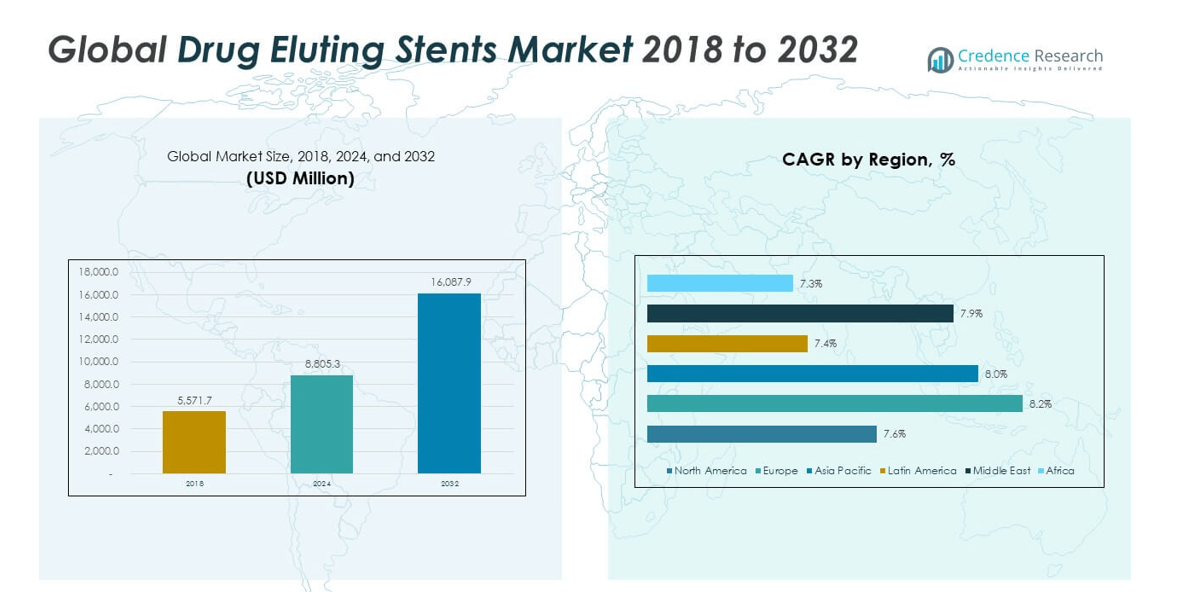
The Global Drug Eluting Stents Market size was valued at USD 5,571.7 million in 2018 to USD 8,805.3 million in 2024 and is anticipated to reach USD 16,087.9 million by 2032, at a CAGR of 7.85% during the forecast period.
| REPORT ATTRIBUTE | DETAILS |
|---|---|
| Historical Period | 2020-2023 |
| Base Year | 2024 |
| Forecast Period | 2025-2032 |
| Drug-Eluting Stents Market Size 2024 | USD 8,805.3 million |
| Drug-Eluting Stents Market, CAGR | 7.85% |
| Drug-Eluting Stents Market Size 2032 | USD 16,087.9 million |
The market growth is driven by rising incidences of cardiovascular diseases and increasing demand for minimally invasive procedures. Continuous innovation in stent materials and coatings has improved biocompatibility and reduced restenosis rates. Growing preference for polymer-free and bioresorbable stents, along with expanding healthcare access in emerging economies, supports strong adoption across hospitals and cardiac centers globally.
North America dominates the Global Drug Eluting Stents Market due to advanced healthcare infrastructure and high treatment awareness. Europe follows with robust R&D investments and widespread clinical adoption. The Asia-Pacific region is emerging rapidly, fueled by increasing cardiovascular cases, rising healthcare expenditure, and improving medical device distribution networks, particularly in China, India, and Japan.
Market Insights:
- The Global Drug Eluting Stents Market was valued at USD 5,571.7 million in 2018, reached USD 8,805.3 million in 2024, and is projected to reach USD 16,087.9 million by 2032, growing at a CAGR of 7.85% during the forecast period.
- North America leads with a 33% market share due to advanced healthcare systems, robust reimbursement policies, and strong presence of global medical device manufacturers. Europe follows with 26%, supported by high adoption of biodegradable stents and extensive R&D investments, while Asia Pacific holds 27%, driven by rapid healthcare expansion and large patient populations.
- Asia Pacific is the fastest-growing region with a CAGR of 8.0%, supported by increasing cardiovascular disease prevalence, expanding hospital infrastructure, and cost-effective production improving accessibility across major countries.
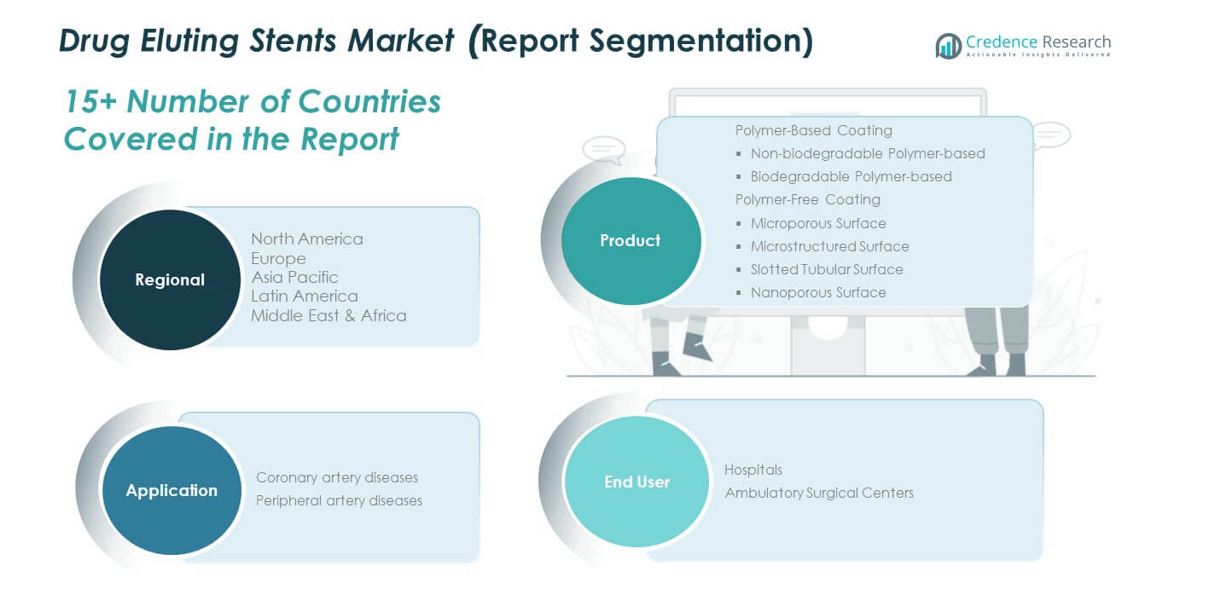
- Hospitals dominate the market with about 72% share, driven by well-equipped cardiac units, skilled specialists, and growing procedural volumes in both developed and developing countries.
- Ambulatory surgical centers account for nearly 28% share, benefiting from lower treatment costs, shorter recovery times, and increasing patient preference for minimally invasive cardiovascular procedures.
Market Drivers:
Rising Global Burden of Cardiovascular Diseases
The Global Drug Eluting Stents Market is driven by the growing incidence of cardiovascular diseases caused by sedentary lifestyles, unhealthy diets, and aging populations. Hospitals are witnessing a rise in angioplasty procedures, leading to greater demand for drug-eluting stents that reduce restenosis. Increasing awareness of early diagnosis and the availability of advanced interventional cardiology solutions also boost adoption. Government initiatives to expand cardiac care centers in emerging economies are strengthening treatment accessibility. Rising healthcare expenditure supports large-scale procurement of stents across public and private institutions.
- For instance, Abbott's XIENCE Skypoint stent achieved a 99% device success rate and demonstrated less than 1% stent thrombosis at 30 days in ST-elevation myocardial infarction patients, validated across multiple international clinical trials and patient registries.
Advancements in Stent Design and Coating Technologies
Technological innovations have significantly improved stent safety and performance in the Global Drug Eluting Stents Market. Modern stents use biodegradable polymers and next-generation coatings that allow controlled drug release and faster vessel healing. These improvements reduce the risks of late thrombosis and restenosis. Companies are focusing on thinner strut designs and flexible materials to enhance patient outcomes and procedure efficiency. Research into bioresorbable and polymer-free stents continues to open new growth avenues. Such innovations are fostering physician confidence and patient preference for advanced interventional therapies.
- For instance, Boston Scientific's Synergy stent platform reported very low target lesion failure and 0% stent thrombosis in real-world analysis, with a primary endpoint of less than 1% late loss confirmed in multicenter studies involving hundreds of patients.
Growing Preference for Minimally Invasive Cardiac Procedures
A strong shift toward minimally invasive treatments has been observed in the Global Drug Eluting Stents Market. Patients prefer procedures with shorter recovery times and fewer post-surgical complications. Drug-eluting stents align well with this demand, offering precise delivery and long-term vessel patency. Hospitals and clinics are investing in catheter-based technologies to meet this need efficiently. Increasing procedural success rates and reduced hospitalization costs encourage adoption among both patients and healthcare providers. Expanding access to skilled cardiologists also supports wider procedural acceptance globally.
Supportive Reimbursement and Healthcare Policies
Favorable healthcare policies are propelling growth in the Global Drug Eluting Stents Market. Governments and insurance providers are recognizing the cost-effectiveness of drug-eluting stents in reducing repeat interventions. National healthcare programs in developed countries ensure wider access to advanced coronary therapies. Developing nations are expanding insurance coverage for cardiac procedures to meet rising patient demand. Collaborative efforts between manufacturers and healthcare authorities are improving affordability and adoption. Supportive reimbursement frameworks are thus driving procedural volumes and sustaining market expansion worldwide.
Market Trends:
Shift Toward Bioresorbable and Polymer-Free Stents
A key trend in the Global Drug Eluting Stents Market is the transition to bioresorbable and polymer-free designs. These stents dissolve after vessel healing, minimizing long-term complications linked to permanent implants. The shift aligns with growing clinical interest in natural vessel restoration and reduced inflammatory response. Manufacturers are prioritizing development of stents with improved drug delivery kinetics and biodegradable coatings. Hospitals are increasingly adopting such products due to their superior biocompatibility. The trend signifies a move toward safer, next-generation coronary intervention technologies.
- For instance, results from the landmark MASTER DAPT study, which included patients with high bleeding risk, showed that the Ultimaster and Ultimaster Tansei drug-eluting stents were safe for those on a shortened one-month course of dual antiplatelet therapy (DAPT). A separate 2024 registry focusing on an unselected Korean population treated with the Ultimaster stent reported specific 12-month outcomes, including a cardiac death rate of 1.5% and a stent thrombosis rate of 0.6%.
Integration of Nanotechnology and Smart Materials
The adoption of nanotechnology in the Global Drug Eluting Stents Market is redefining performance standards. Smart coatings embedded with nanomaterials allow controlled drug diffusion and enhanced healing responses. These coatings help prevent clot formation and inflammation while improving drug adherence to vessel walls. Continuous research in nanostructured alloys enhances flexibility and corrosion resistance. The use of intelligent materials also supports real-time monitoring and longer device lifespan. Such technological integration is driving innovation and shaping future design strategies in the market.
- For instance, Biotronik's Orsiro ultrathin strut drug-eluting stent delivered up to 40% lower target lesion failure versus Abbott's Xience in three-year follow-up of the BIOFLOW-V trial, supported by US FDA approval and presented at major cardiology meetings.
Rise in Outpatient and Ambulatory Cardiac Interventions
The Global Drug Eluting Stents Market is witnessing an increase in outpatient-based cardiac procedures. Advancements in imaging, catheter systems, and anesthesia have made stenting procedures safer for same-day discharge. Hospitals are adopting cost-efficient models by shifting elective angioplasties to ambulatory centers. This approach lowers healthcare costs and improves patient convenience. Growing acceptance of radial artery access also supports quicker recovery and higher procedural success rates. The trend highlights the growing decentralization of interventional cardiology services.
Collaborative Research and Clinical Trials Expansion
R&D partnerships are expanding rapidly within the Global Drug Eluting Stents Market. Manufacturers are collaborating with academic institutions and hospitals to validate new product efficacy and long-term safety. Clinical studies focusing on novel drug formulations and coating compositions are accelerating regulatory approvals. The trend reflects industry commitment to evidence-based innovation. Increased clinical data availability improves physician confidence and supports broader adoption. Strategic collaborations continue to drive knowledge exchange and faster commercialization of new-generation stent technologies.
Market Challenges Analysis:
High Cost and Limited Access in Developing Regions
The Global Drug Eluting Stents Market faces challenges due to high treatment costs and limited accessibility in lower-income countries. The expensive nature of advanced stents restricts usage in resource-constrained healthcare systems. Limited reimbursement frameworks in emerging economies further impact affordability. Many hospitals rely on generic or bare-metal alternatives, slowing drug-eluting stent penetration. The lack of trained interventional cardiologists in rural areas adds another layer of difficulty. Manufacturers face pressure to balance innovation with cost-effectiveness while maintaining quality standards globally.
Regulatory Complexity and Long Approval Timelines
Regulatory hurdles are another key barrier in the Global Drug Eluting Stents Market. The stringent approval requirements for new stent materials and coatings prolong product launches. Variations in regional compliance frameworks create additional challenges for global distribution. Companies must conduct extensive clinical trials to prove safety and efficacy, delaying commercialization. The high cost of regulatory compliance discourages smaller firms from entering the market. Ongoing updates in device classification and testing norms further complicate product development and global rollout.
Market Opportunities:
Emerging Demand in Developing Healthcare Markets
The Global Drug Eluting Stents Market holds strong potential in emerging healthcare markets across Asia-Pacific, Latin America, and the Middle East. Rapid urbanization and growing awareness of cardiac health are increasing procedure volumes. Expanding medical infrastructure and investment in advanced catheterization labs are fueling regional adoption. Governments are improving reimbursement policies and supporting local manufacturing to ensure affordability. International players are partnering with regional firms to strengthen distribution networks and reach underserved populations. This rising demand is creating new avenues for market expansion.
Advancement in Biocompatible and Next-Generation Stent Technologies
The Global Drug Eluting Stents Market is witnessing opportunities through innovation in biocompatible and next-generation stent designs. Manufacturers are focusing on improving drug-release precision and vessel healing speed. Emerging materials such as magnesium and bioabsorbable polymers are gaining clinical acceptance. Continuous development of hybrid stent systems with digital monitoring capabilities enhances patient safety. Growing interest in precision-based cardiovascular treatments and hospital modernization will continue to drive future market expansion globally.
Market Segmentation Analysis:
By Product Type
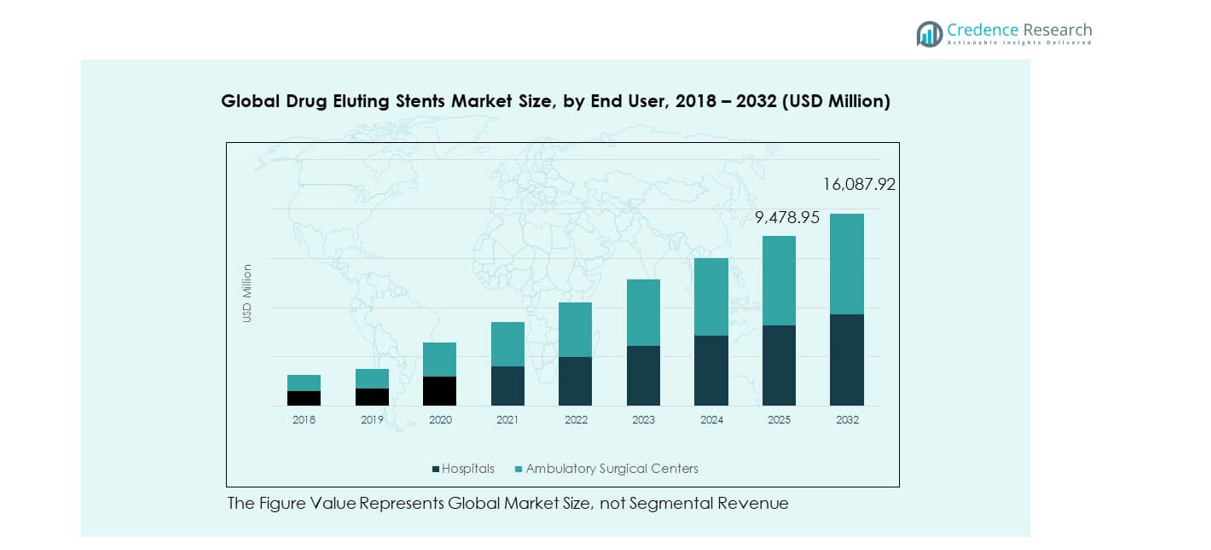
The Global Drug Eluting Stents Market is segmented by product type into polymer-based and polymer-free coatings. Polymer-based coatings include non-biodegradable and biodegradable variants, which dominate due to their controlled drug-release properties and proven clinical outcomes. Non-biodegradable stents offer longer durability, while biodegradable ones reduce late-stage thrombosis risks. Polymer-free coatings, featuring microporous, microstructured, slotted tubular, and nanoporous surfaces, are gaining traction for their superior biocompatibility and faster vessel healing. Continuous innovation in surface engineering and material science supports the shift toward next-generation stent designs.
By Application
The market is classified by application into coronary artery diseases and peripheral artery diseases. Coronary artery disease remains the leading segment due to the high global burden of ischemic heart conditions and widespread use of percutaneous coronary interventions. Drug-eluting stents play a critical role in reducing restenosis rates and improving patient survival outcomes. Peripheral artery disease applications are expanding steadily with rising adoption in limb revascularization procedures. Increasing awareness and advancements in minimally invasive interventions strengthen market growth across both segments.
- For instance, Medtronic's Onyx Frontier stent received FDA approval for treating non-left main bifurcation coronary lesions and has shown improved procedure success rates with enhanced deliverability, as validated by recent regulatory filings and published product information.
By End User
The end-user segmentation of the Global Drug Eluting Stents Market includes hospitals and ambulatory surgical centers. Hospitals account for a major share, driven by advanced infrastructure, skilled cardiologists, and access to high-end interventional technologies. Ambulatory surgical centers are witnessing growing demand due to shorter recovery times and cost-efficient procedures. The ongoing decentralization of cardiac care and rising preference for outpatient treatments support expansion across both segments globally.
Segmentation:
By Product Type:
- Polymer-Based Coating
- Non-biodegradable Polymer-Based
- Biodegradable Polymer-Based
- Polymer-Free Coating
- Microporous Surface
- Microstructured Surface
- Slotted Tubular Surface
- Nanoporous Surface
By Application:
- Coronary Artery Diseases
- Peripheral Artery Diseases
By End User:
- Hospitals
- Ambulatory Surgical Centers
By Region:
- North America
- U.S.
- Canada
- Europe
- Germany
- France
- Italy
- U.K.
- Russia
- Rest of Europe
- Asia-Pacific
- India
- China
- Japan
- Rest of Asia-Pacific
- Latin America
- Brazil
- Mexico
- Rest of Latin America
- Middle East and Africa
- GCC Countries
- South Africa
- Rest of Middle East and Africa
Regional Analysis:
North America
The North America Global Drug Eluting Stents Market size was valued at USD 1,839.78 million in 2018 to USD 2,872.43 million in 2024 and is anticipated to reach USD 5,162.61 million by 2032, at a CAGR of 7.6% during the forecast period. North America holds the largest regional share in the market, accounting for nearly 33% of global revenue. The region benefits from advanced healthcare infrastructure, a strong reimbursement framework, and widespread awareness of cardiovascular treatments. The U.S. leads with high procedure volumes, supported by early adoption of innovative stent technologies. Favorable regulatory approvals and strong presence of key manufacturers drive consistent product launches. Canada and Mexico are witnessing growing demand due to rising cardiac cases and investments in medical facilities. Continuous research collaborations and clinical trials further strengthen the regional position in global market growth.
Europe
The Europe Global Drug Eluting Stents Market size was valued at USD 1,380.67 million in 2018 to USD 2,219.70 million in 2024 and is anticipated to reach USD 4,147.47 million by 2032, at a CAGR of 8.2% during the forecast period. Europe accounts for nearly 26% of the global market share. The region’s growth is driven by a high prevalence of coronary artery diseases, well-established cardiac care centers, and increased healthcare spending. Germany, France, and the UK lead due to advanced medical infrastructure and adoption of biodegradable stent technologies. Favorable regulatory policies under the European Medical Device Regulation (MDR) framework support innovation and product safety. Expansion of cardiovascular research initiatives enhances regional market competitiveness. Growing patient preference for minimally invasive treatments continues to strengthen demand across hospitals and surgical centers.
Asia Pacific
The Asia Pacific Global Drug Eluting Stents Market size was valued at USD 1,466.47 million in 2018 to USD 2,336.43 million in 2024 and is anticipated to reach USD 4,314.78 million by 2032, at a CAGR of 8.0% during the forecast period. The region holds approximately 27% of the global share and represents the fastest-expanding market base. Rising incidences of cardiovascular diseases, expanding healthcare infrastructure, and favorable government programs are fueling growth. China, Japan, and India are key contributors due to large patient populations and increased healthcare investments. Local manufacturing capabilities and lower production costs attract global players to establish partnerships. Growing awareness of early diagnosis and availability of affordable stent options are boosting adoption. Technological innovations and medical tourism further strengthen regional market development.
Latin America
The Latin America Global Drug Eluting Stents Market size was valued at USD 407.85 million in 2018 to USD 628.32 million in 2024 and is anticipated to reach USD 1,108.46 million by 2032, at a CAGR of 7.4% during the forecast period. The region contributes about 7% to the global market share. Increasing healthcare reforms, expanding private hospital networks, and improving access to interventional cardiology procedures are driving market expansion. Brazil remains the primary market leader, supported by a strong public health system and emerging medical device distributors. Mexico and Argentina are experiencing growing adoption of modern cardiovascular devices. Regional demand is also supported by training programs aimed at improving procedural expertise. International collaborations and investments in healthcare modernization are fostering long-term market growth.
Middle East
The Middle East Global Drug Eluting Stents Market size was valued at USD 322.04 million in 2018 to USD 510.46 million in 2024 and is anticipated to reach USD 936.32 million by 2032, at a CAGR of 7.9% during the forecast period. The region accounts for nearly 5% of the global market share. Increasing cardiovascular disease prevalence, coupled with government initiatives for healthcare diversification, supports rapid market development. Gulf Cooperation Council (GCC) countries lead due to high healthcare spending and adoption of advanced stent systems. Investments in cardiac specialty hospitals and collaborations with global medical device manufacturers are improving treatment availability. Israel and Turkey are witnessing strong clinical research activity, supporting innovative product introduction. Growing awareness and regional health infrastructure development continue to enhance the market outlook.
Africa
The Africa Global Drug Eluting Stents Market size was valued at USD 154.89 million in 2018 to USD 238.00 million in 2024 and is anticipated to reach USD 418.29 million by 2032, at a CAGR of 7.3% during the forecast period. Africa represents nearly 3% of the global market share, driven by gradual improvements in healthcare infrastructure and access to cardiac treatment facilities. South Africa leads due to higher healthcare investments and expanding interventional cardiology practices. Egypt follows with rising awareness of coronary disease management and urban healthcare development. Limited affordability and shortage of skilled cardiologists remain key challenges. International aid programs and private-sector participation are helping improve accessibility and device availability. The growing prevalence of lifestyle-related heart diseases continues to create long-term market opportunities across the continent.
Key Player Analysis:
- Abbott
- Biotronik SE & Co. KG
- Reva Medical Inc.
- Elixir Medical Corporation
- Kyoto Medical Planning Co., Ltd
- Braun
- Medtronic
- Terumo Corporation
- Meril Life Sciences
- Boston Scientific Corporation
Competitive Analysis:
The Global Drug Eluting Stents Market is characterized by intense competition among major medical device manufacturers focusing on innovation and clinical reliability. Companies such as Abbott, Boston Scientific, Medtronic, and Terumo dominate the landscape through strong product portfolios and extensive R&D investments. It is driven by continuous improvement in polymer coatings, stent materials, and drug-release technologies. Emerging players are focusing on cost-effective bioresorbable solutions to capture unmet demand in developing economies. Strategic collaborations, acquisitions, and clinical trials are shaping competitive positioning. Product differentiation and regulatory compliance remain key determinants of long-term success.
Recent Developments:
- In September 2025, Abbott received Health Canada approval for the Esprit BTK Everolimus Eluting Resorbable Scaffold System-a new-generation dissolving stent designed for use below the knee. This product delivers the anti-proliferative drug Everolimus to support vessel healing prior to completely dissolving, advancing options for peripheral arterial disease treatment.
- In June 2025, Teleflex completed the €760 million acquisition of BIOTRONIK’s Vascular Intervention business, which includes the Freesolve drug-eluting resorbable stent (CE mark received in 2024) and Orsiro Mission Drug Eluting Stent. This move expands Teleflex’s suite for coronary and peripheral interventions and positions the acquired portfolio for global commercialization.
- In 2025, Elixir Medical announced the launch of its LithiX™ Hertz Contact (HC) Intravascular Lithotripsy System in Europe. This novel device uses advanced lithotripsy technology to fragment calcium plaque for easier stent deployment. Additionally, late-breaking clinical trial results at EuroPCR 2025 showed the DynamX® Bioadaptor sustained significantly lower target lesion failure rates (2.7% vs. 7.2%) and lower cardiac death rates (0.5% vs. 3.2%) over three years compared to conventional drug-eluting stents, highlighting its efficacy in complex coronary cases.
- In October 2025, Medtronic continued worldwide expansion of its Onyx Frontier Drug-Eluting Stent, featuring enhanced delivery for interventional cardiologists, following earlier FDA and CE mark approvals. The stent’s broad platform supports advanced vascular procedures for diverse patient needs.
- In October 2025, Terumo Aortic announced a collaboration with Bentley for a groundbreaking clinical study, while Terumo Neuro launched the Aneurysm Treatment Alliance at ESMINT 2025. These initiatives reinforce the company's commitment to innovative neurovascular and hemorrhagic solutions, including drug-eluting stent advancements.
Report Coverage:
The research report offers an in-depth analysis based on product type, application, and end user. It details leading market players, providing an overview of their business, product offerings, investments, revenue streams, and key applications. Additionally, the report includes insights into the competitive environment, SWOT analysis, current market trends, as well as the primary drivers and constraints. Furthermore, it discusses various factors that have driven market expansion in recent years. The report also explores market dynamics, regulatory scenarios, and technological advancements that are shaping the industry. It assesses the impact of external factors and global economic changes on market growth. Lastly, it provides strategic recommendations for new entrants and established companies to navigate the complexities of the market.
Future Outlook:
- Demand will continue to rise with growing global cardiovascular disease prevalence.
- Biodegradable and polymer-free stents will gain rapid clinical acceptance.
- Asia Pacific will emerge as a leading growth hub supported by healthcare modernization.
- Technological integration with imaging and diagnostic systems will enhance treatment precision.
- Strategic partnerships between OEMs and hospitals will expand access in developing regions.
- Innovation in drug coatings will improve healing rates and reduce thrombosis risks.
- Digital health integration will optimize post-procedure monitoring and data collection.
- Regulatory harmonization across regions will accelerate product approvals.
- Market consolidation through mergers will strengthen competitive positioning.
- Sustainable manufacturing and cost-optimized production will shape long-term profitability.

Request a Free Sample
Fill in your details and we'll send you a free sample report.
- Sample data tables & charts
- Research methodology
Market Dynamics
Rising Global Burden of Cardiovascular Diseases
Increasing prevalence of cardiovascular diseases due to aging populations, sedentary lifestyles, and unhealthy diets is driving demand for drug eluting stents, as hospitals see more angioplasty procedures and require advanced solutions to reduce restenosis.
Advancements in Stent Design and Coating Technologies
Continuous innovation in stent materials, such as biodegradable polymers and next-generation drug coatings, has improved biocompatibility and reduced complications, making drug eluting stents safer and more effective, thus boosting adoption.
Growing Preference for Minimally Invasive Cardiac Procedures
Patients and healthcare providers are increasingly favoring minimally invasive interventions, such as those enabled by drug eluting stents, due to shorter recovery times, fewer complications, and lower overall treatment costs.
Supportive Reimbursement and Healthcare Policies
Favorable reimbursement frameworks and government initiatives in both developed and emerging markets are expanding access to advanced stent technologies, encouraging hospitals and clinics to adopt drug eluting stents more widely.
Emerging Demand in Developing Healthcare Markets
Rapid healthcare infrastructure development, rising awareness of cardiac health, and improved distribution networks in Asia-Pacific, Latin America, and the Middle East are creating new opportunities for market expansion and increasing procedural volumes.
Need a Custom Version of This Report?
Tailor the scope, geography, or segments to your exact requirements.
- Custom geography or segment scope
- Direct access to our analyst team
Frequently Asked Questions
What is the current market size for Global Drug Eluting Stents Market, and what is its projected size in 2032?
At what Compound Annual Growth Rate is the Global Drug Eluting Stents Market projected to grow between 2025 and 2032?
Which Global Drug Eluting Stents Market segment held the largest share in 2024?
What are the primary factors fueling the growth of the Global Drug Eluting Stents Market?
Who are the leading companies in the Global Drug Eluting Stents Market?
Who are the major players in this Market?
Table of Content
Chapter 1 Market Segmentation
- 1.1 Segmentation Framework
- 1.1.1 Product and Service Classification
- 1.1.2 Application and End-Use Classification
- 1.1.3 Technology and Solution Classification
- 1.1.4 Customer and Distribution Channel Classification
- 1.1.5 Geographic Segmentation
- 1.1.6 Market Segment Definitions and Boundaries
- 1.2 By End User
- 1.2.1 Hospitals
- 1.2.2 Ambulatory Surgical Centers
- 1.3 By Application
- 1.3.1 Coronary Artery Diseases
- 1.3.2 Peripheral Artery Diseases
- 1.4 By Product Type
- 1.4.1 Non-biodegradable Polymer-Based Coating
- 1.4.2 Biodegradable Polymer-Based Coating
- 1.4.3 Microporous Surface Polymer-Free Coating
- 1.4.4 Microstructured Surface Polymer-Free Coating
- 1.4.5 Slotted Tubular Surface Polymer-Free Coating
- 1.4.6 Nanoporous Surface Polymer-Free Coating
Chapter 2 Introduction
- 2.1 Report Objectives and Scope
- 2.2 Product Definition and Industry Terminology
- 2.3 Market Inclusions and Exclusions
- 2.4 Research Process
- 2.4.1 Primary Research and Expert Interviews
- 2.4.2 Secondary Research and Source Review
- 2.4.3 Top-Down and Bottom-Up Estimation
- 2.4.4 Data Triangulation and Verification
- 2.5 Market Size Measurement Basis
- 2.5.1 2018: USD 5,571.7 million → 2032: USD 16,087.9 million
- 2.6 Historical and Forecast Reference Periods
- 2.6.1 Base Year: 2018
- 2.6.2 Forecast Period: 2018-2032
- 2.7 Research Assumptions and Limitations
Chapter 3 Executive Summary
- 3.1 Market Snapshot and Key Findings
- 3.2 Base-Year Market Size, 2018
- 3.3 Forecast Market Size, 2032
- 3.4 Revenue and Volume Growth Outlook
- 3.5 Key Demand and Supply Indicators
- 3.6 Leading Market Segments
- 3.7 Fastest-Growing Market Opportunities
- 3.8 Regional Performance Highlights
- 3.9 Technology and Industry Transformation
- 3.10 Competitive Landscape Summary
- 3.11 Analyst View and Strategic Implications
Chapter 4 Global Drug Eluting Stents Market Trends and Developments
- 4.1 Historical Industry Development
- 4.2 Recent Market Trends and Developments
- 4.3 Demand and Customer Behavior Trends
- 4.4 Technology and Product Innovation
- 4.5 Artificial Intelligence, Automation and Digitalization
- 4.6 Local Manufacturing and Supply Chain Realignment
- 4.7 Industry Partnerships, Mergers and Acquisitions
- 4.8 Sustainability and Circular Economy Developments
- 4.9 Government and Private Sector Investment Trends
- 4.10 Emerging Business Models and Commercialization
- 4.11 Industry Developments and Announcements
Chapter 5 Global Drug Eluting Stents Market Production, Supply and Demand Analysis
- 5.1 Demand Trend and Consumption Analysis
- 5.2 Demand Forecast, 2018-2032
- 5.3 Production and Output Trend
- 5.4 Production and Output Forecast, 2018-2032
- 5.5 Installed Capacity and Capacity Utilization
- 5.6 Company-Wise Production Plants and Statistics
- 5.6.1 Installed Production Capacity
- 5.6.2 Actual Production
- 5.6.3 Planned Capacity and Expansion Targets
- 5.7 Supply Chain Structure and Procurement Trends
- 5.8 Supply-Demand Gap and Bottlenecks
- 5.9 Import Dependence and Sourcing Structure
- 5.10 Contract Manufacturing and Outsourcing
- 5.11 Regional Supply and Demand Concentration
Chapter 6 Global Drug Eluting Stents Market Pricing Analysis
- 6.1 Pricing Structure and Measurement
- 6.2 Historical Pricing Trends
- 6.3 Pricing Outlook, 2018-2032
- 6.4 Average Selling Price and Unit Economics
- 6.5 Pricing by Product and Market Segment
- 6.6 Geographic Pricing Differences
- 6.7 Key Input, Energy, Labor and Logistics Costs
- 6.8 Contract Pricing and Purchasing Models
- 6.9 Pricing Sensitivity and Competitive Positioning
- 6.10 Price, Margin and Profitability Implications
Chapter 7 Global Drug Eluting Stents Market Dynamics
- 7.1 Market Growth Drivers
- 7.1.1 Demand-Side Drivers
- 7.1.2 Technology and Innovation Drivers
- 7.1.3 Infrastructure and Investment Drivers
- 7.1.4 Regulatory and Policy Drivers
- 7.2 Market Restraints
- 7.2.1 Cost and Affordability Constraints
- 7.2.2 Technology and Adoption Barriers
- 7.2.3 Supply Chain and Operational Constraints
- 7.3 Market Challenges
- 7.3.1 Competitive Pressure and Margin Erosion
- 7.3.2 Skills, Infrastructure and Implementation Gaps
- 7.4 Emerging Market Opportunities
- 7.5 Market Dynamics Impact and Time-Horizon Assessment
Chapter 8 Global Drug Eluting Stents Value Chain Analysis
- 8.1 Industry Value Chain Overview
- 8.2 Upstream Suppliers and Critical Inputs
- 8.3 Technology and Component Providers
- 8.4 Manufacturing or Service Delivery
- 8.5 Distribution, Channel Partners and Integrators
- 8.6 Downstream Applications and End Users
- 8.7 Value Addition and Profit Pools
- 8.8 Vertical Integration and Outsourcing
- 8.9 Supplier Concentration and Risk
- 8.10 Supply Chain Localization and Resilience
Chapter 9 Global Drug Eluting Stents Market Regulations and Policies
- 9.1 Relevant Laws, Standards and Compliance Frameworks
- 9.2 Product, Service, Safety and Quality Requirements
- 9.3 Government Policies, Incentives and Subsidies
- 9.4 Imports, Exports and Trade Barriers
- 9.5 Public Procurement and Local Content Requirements
- 9.6 Environmental and Sustainability Compliance
- 9.7 Upcoming Policy Changes and Market Implications
Chapter 10 Global Drug Eluting Stents Market Hotspots and Opportunities
- 10.1 Market Opportunity Mapping and Growth Hotspots
- 10.2 High-Growth Applications and Customer Groups
- 10.3 Underserved Markets and White-Space Opportunities
- 10.4 Emerging Technology and Product Opportunities
- 10.5 New Capacity and Investment Hotspots
- 10.6 Market Entry and Expansion Opportunities
- 10.7 Distribution and Partnership Opportunities
- 10.8 Near-Term and Long-Term Commercial Potential
- 10.9 Opportunity Attractiveness and Execution Risks
Chapter 11 Global Drug Eluting Stents Market Outlook, 2018-2032
- 11.1 Market Size and Analysis
- 11.1.1 Revenue (Market Measurement: 2018: USD 5,571.7 million → 2032: USD 16,087.9 million)
- 11.1.2 Market Volume and Quantity Sold
- 11.1.3 Historical Market Size
- 11.1.4 Base-Year Market Size, 2018
- 11.2 Market Forecast, 2018-2032
- 11.2.1 Revenue Forecast to 2032
- 11.2.2 Volume Forecast to 2032
- 11.2.3 CAGR and Year-on-Year Growth
- 11.2.4 Incremental Revenue Opportunity
- 11.3 Forecast Assumptions and Scenario Analysis
- 11.3.1 Base-Case Forecast
- 11.3.2 Optimistic and Conservative Scenarios
- 11.3.3 Technology, Pricing and Policy Sensitivities
- 11.4 Market Attractiveness and Growth Outlook
Chapter 12 Global Drug Eluting Stents Market Segmentation and Outlook
- 12.1 Segmentation Summary and Market Shares, 2018
- 12.2 Largest and Fastest-Growing Segments
- 12.3 By End User - Market Size and Forecast, 2018-2032
- 12.3.1 Segment Definition and Scope
- 12.3.2 Historical Market Size
- 12.3.3 Revenue Forecast, 2018-2032
- 12.3.4 Volume Forecast, 2018-2032
- 12.3.5 Base-Year Market Share, 2018
- 12.3.6 Segment CAGR and Growth Drivers
- 12.3.7 Subsegment Market Size and Forecast
- 12.3.7.1 Hospitals
- 12.3.7.2 Ambulatory Surgical Centers
- 12.3.8 Subsegment Pricing and Adoption Trends
- 12.3.9 Leading Suppliers and Competition
- 12.3.10 Regional Demand and Opportunities
- 12.4 By Application - Market Size and Forecast, 2018-2032
- 12.4.1 Segment Definition and Scope
- 12.4.2 Historical Market Size
- 12.4.3 Revenue Forecast, 2018-2032
- 12.4.4 Volume Forecast, 2018-2032
- 12.4.5 Base-Year Market Share, 2018
- 12.4.6 Segment CAGR and Growth Drivers
- 12.4.7 Subsegment Market Size and Forecast
- 12.4.7.1 Coronary Artery Diseases
- 12.4.7.2 Peripheral Artery Diseases
- 12.4.8 Subsegment Pricing and Adoption Trends
- 12.4.9 Leading Suppliers and Competition
- 12.4.10 Regional Demand and Opportunities
- 12.5 By Product Type - Market Size and Forecast, 2018-2032
- 12.5.1 Segment Definition and Scope
- 12.5.2 Historical Market Size
- 12.5.3 Revenue Forecast, 2018-2032
- 12.5.4 Volume Forecast, 2018-2032
- 12.5.5 Base-Year Market Share, 2018
- 12.5.6 Segment CAGR and Growth Drivers
- 12.5.7 Subsegment Market Size and Forecast
- 12.5.7.1 Non-biodegradable Polymer-Based Coating
- 12.5.7.2 Biodegradable Polymer-Based Coating
- 12.5.7.3 Microporous Surface Polymer-Free Coating
- 12.5.7.4 Microstructured Surface Polymer-Free Coating
- 12.5.7.5 Slotted Tubular Surface Polymer-Free Coating
- 12.5.7.6 Nanoporous Surface Polymer-Free Coating
- 12.5.8 Subsegment Pricing and Adoption Trends
- 12.5.9 Leading Suppliers and Competition
- 12.5.10 Regional Demand and Opportunities
- 12.6 Segment Growth Comparison
- 12.7 Segment Attractiveness and Priority Matrix
Chapter 13 Global Drug Eluting Stents End-Use and Application Market Outlook
- 13.1 End-Use Industry and Customer Demand Structure
- 13.2 Leading Applications and Customer Groups
- 13.3 End-Use Market Size, Share and Forecast
- 13.4 Major End-Use Industry Deep Dives
- 13.4.1 Customer Requirements and Use Cases
- 13.4.2 Demand and Replacement Cycles
- 13.4.3 Technical and Regulatory Considerations
- 13.4.4 Purchasing and Procurement Models
- 13.4.5 Leading Vendors and Distribution Channels
- 13.4.6 Forecast and Commercial Opportunities
- 13.5 Emerging Applications and Cross-Segment Demand
- 13.6 End-Use Industry Investment Priorities
Chapter 14 Global Drug Eluting Stents Geographic Market Outlook, 2018-2032
- 14.1 Regional Market Size and Share, 2018
- 14.2 Regional Market Forecast, 2018-2032
- 14.3 Regional Pricing, Production and Demand Differences
- 14.4 North America
- 14.4.1 United States
- 14.4.2 Canada
- 14.4.3 Mexico
- 14.5 Europe
- 14.5.1 Germany
- 14.5.2 France
- 14.5.3 Italy
- 14.5.4 United Kingdom
- 14.5.5 Spain
- 14.5.6 Poland
- 14.5.7 Russia
- 14.5.8 Netherlands
- 14.5.9 Belgium
- 14.5.10 Sweden
- 14.5.11 Denmark
- 14.5.12 Norway
- 14.5.13 Rest of Europe
- 14.6 Asia Pacific
- 14.6.1 China
- 14.6.2 India
- 14.6.3 Japan
- 14.6.4 South Korea
- 14.6.5 Thailand
- 14.6.6 Indonesia
- 14.6.7 Vietnam
- 14.6.8 Malaysia
- 14.6.9 Australia
- 14.6.10 Rest of Asia Pacific
- 14.7 Latin America
- 14.7.1 Brazil
- 14.7.2 Argentina
- 14.7.3 Colombia
- 14.7.4 Chile
- 14.7.5 Rest of Latin America
- 14.8 Middle East
- 14.8.1 Saudi Arabia
- 14.8.2 United Arab Emirates
- 14.8.3 Turkey
- 14.8.4 Israel
- 14.8.5 Iran
- 14.8.6 Rest of the Middle East
- 14.9 Africa
- 14.9.1 South Africa
- 14.9.2 Egypt
- 14.9.3 Nigeria
- 14.9.4 Morocco
- 14.9.5 Rest of Africa
- 14.10 Regional Investment, Policy and Supply Chain Differences
- 14.11 Regional Competitive Landscape
- 14.12 Geographic Growth Hotspots
Chapter 15 Global Drug Eluting Stents Technology, Innovation and Sustainability Outlook
- 15.1 Technology Landscape and Maturity
- 15.2 Product, Process and Service Innovation
- 15.3 AI, Automation and Digital Tools in the Industry
- 15.4 Technology Adoption and Performance Benchmarking
- 15.5 Innovation Pipeline and R&D Investment
- 15.6 Patent and Intellectual Property Trends
- 15.7 Energy Efficiency and Resource Management
- 15.8 Sustainability, Recycling and Circularity
- 15.9 Technology Roadmap, 2018-2032
- 15.10 Risks of Obsolescence and Technology Substitution
Chapter 16 Global Drug Eluting Stents Market Key Strategic Imperatives
- 16.1 Growth and Market Entry Priorities
- 16.2 High-Return Products and Segments
- 16.3 Pricing, Profitability and Cost Optimization
- 16.4 Technology Investment and Product Differentiation
- 16.5 Supply Chain Localization and Resilience
- 16.6 Distribution and Customer Acquisition
- 16.7 Partnership, Acquisition and Capacity Strategy
- 16.8 Regional Expansion Priorities
- 16.9 Short-, Medium- and Long-Term Actions
Chapter 17 Competition Outlook
- 17.1 Industry Competition Characteristics
- 17.2 Market Structure and Concentration
- 17.3 Market Share and Competitive Positioning, 2018
- 17.4 Company-Wise Revenue and Product Benchmarking
- 17.5 Production and Service Capacity Benchmarking
- 17.6 Technology, Pricing and Differentiation
- 17.7 Regional Footprint and Distribution Strength
- 17.8 Mergers, Acquisitions and Strategic Alliances
- 17.9 New Entrants and Competitive Threats
- 17.10 Porter's Five Forces and Industry Attractiveness
- 17.11 Competitive Outlook, 2018-2032
Chapter 18 Company Profiles
- 18.1 Company Coverage and Selection Criteria
- 18.2 Abbott
- 18.2.1 Business Description
- 18.2.2 Company Ownership and Geographic Presence
- 18.2.3 Product and Service Portfolio
- 18.2.4 Manufacturing and Operating Footprint
- 18.2.5 Production Capacity and Expansion Plans
- 18.2.6 Financial Performance and Investment
- 18.2.7 Market Share and Competitive Position
- 18.2.8 Technology and Innovation Capabilities
- 18.2.9 Strategic Alliances or Partnerships
- 18.2.10 Recent Developments
- 18.2.11 Growth Strategy and Outlook
- 18.3 Boston Scientific Corporation
- 18.4 Medtronic
- 18.5 Terumo Corporation
- 18.6 Biotronik SE & Co. KG
- 18.7 Elixir Medical Corporation
- 18.8 Reva Medical Inc.
- 18.9 B. Braun
- 18.10 Meril Life Sciences
- 18.11 Kyoto Medical Planning Co., Ltd
- 18.12 Other Relevant Market Participants
Note: Every listed company is profiled on the structure shown under the first company. The company list is preliminary and may change based on research findings, market developments, data availability and client requirements.
Chapter 19 Disclaimer
- 19.1 Research and Forecast Disclaimer
- 19.2 Data Source and Estimation Limitations
Note: The depth of individual sections depends on data availability for this market. Volume, capacity, trade and other unit-based metrics are included where applicable.

