Home » Healthcare » Hong Kong Trientine Hydrochloride Market

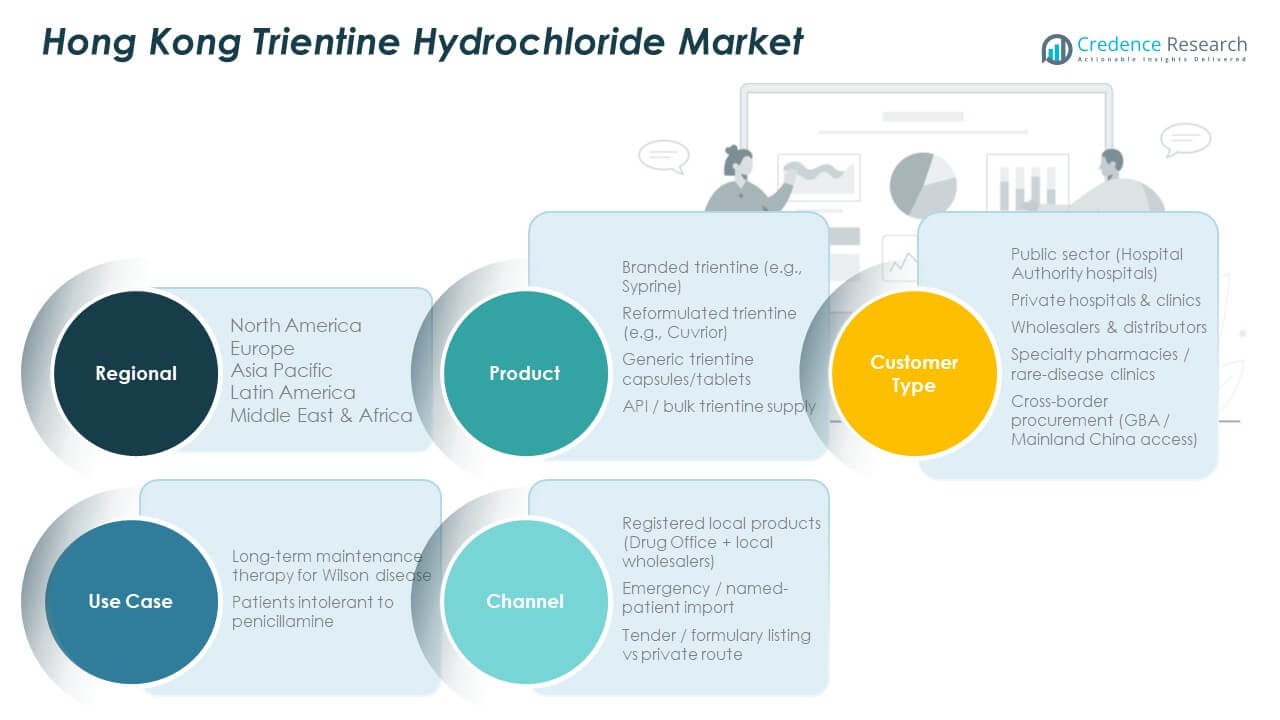
Hong Kong Trientine Hydrochloride Market By Product (Trientine Hydrochloride Capsule, Trientine Hydrochloride Tablet, Trientine Hydrochloride Oral Solution, Other Product Forms); By Customer Type (Hospitals, Clinics, Specialty Treatment Centers, Retail Pharmacies, Online Pharmacies, Other Institutional Buyers); By Use Case (Wilson’s Disease Primary Treatment, Copper Chelation for Long-Term Management, Maintenance Therapy After Initial Stabilization, Adjunct Use in Rare Copper Metabolism Disorders, Additional Clinical Indications); By Channel (Direct Sales, Hospital Procurement, Pharmacy Distribution, Online Sales Platforms, Distributor/Wholesaler Networks, Tender-Based Institutional Supply) – Growth, Share, Opportunities & Competitive Analysis, 2024 – 2032

Report ID: 174346 | Report Format : Excel, PDF

Market Overview:

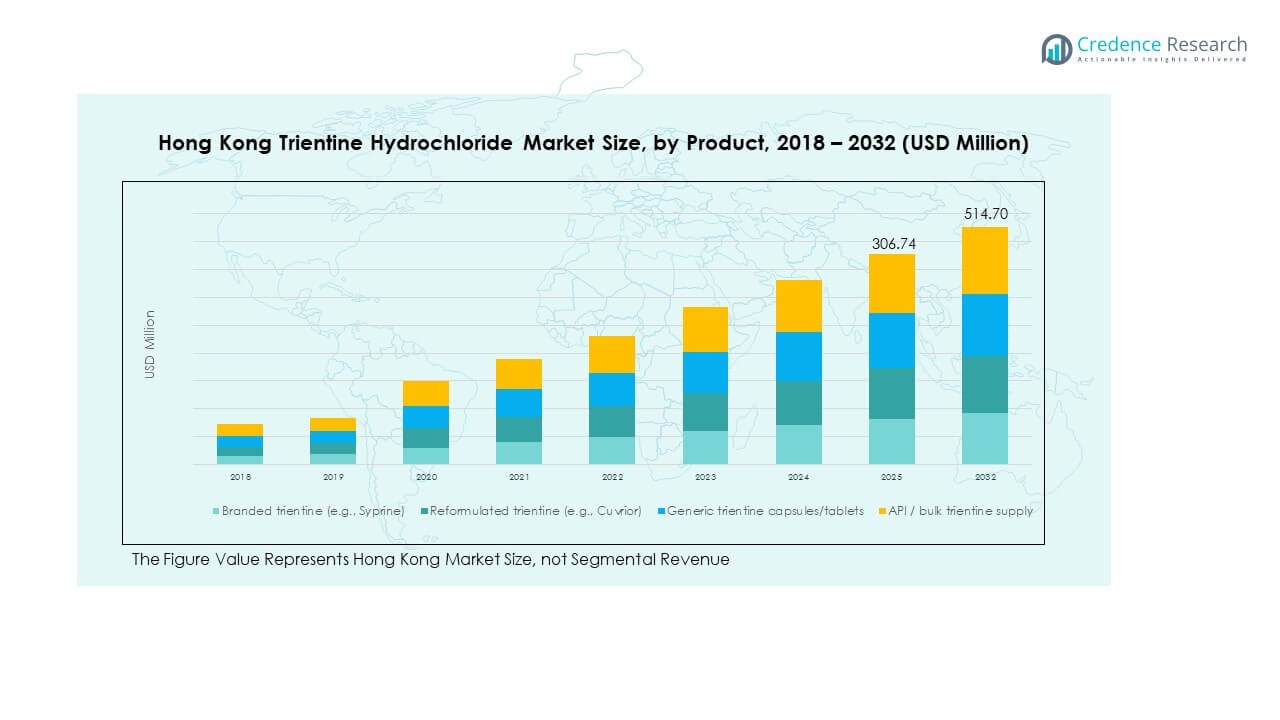
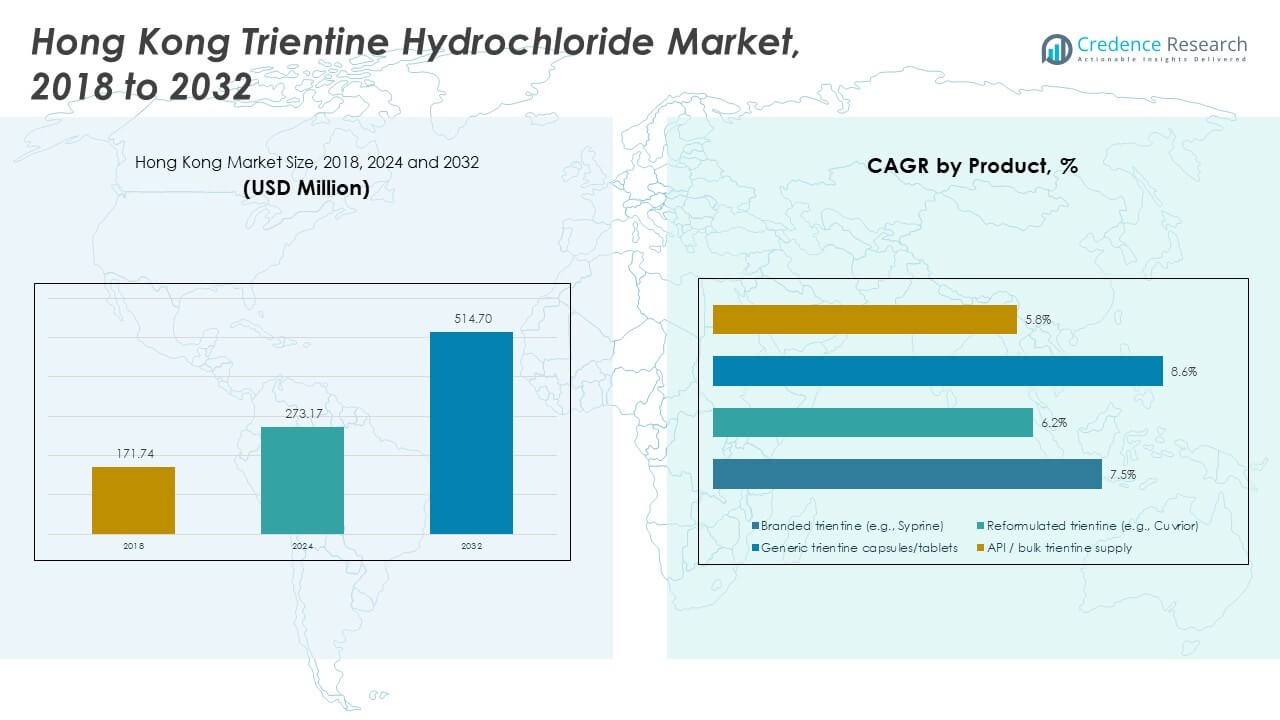
The Hong Kong Trientine Hydrochloride Market size was valued at USD 171.74 million in 2018 to USD 273.17 million in 2024 and is anticipated to reach USD 514.70 million by 2032, at a CAGR of 7.67% during the forecast period.

REPORT ATTRIBUTE DETAILS
Historical Period 2020-2023
Base Year 2024
Forecast Period 2025-2032
Hong Kong Trientine Hydrochloride Market Size 2024 USD 273.17 Million
Hong Kong Trientine Hydrochloride Market, CAGR 7.67%
Hong Kong Trientine Hydrochloride Market Size 2032 USD 514.70 Million


Demand grows as doctors prefer safer chelation drugs for long treatment cycles. Clinicians increase prescriptions due to reduced toxicity concerns linked with modern formulations. Hospitals expand procurement to support early intervention programs. Growth in specialty pharmacies improves availability across dense urban zones. Patients seek stable therapies that allow long-term adherence. Better screening helps detect copper overload early, raising the need for effective chelating agents. Policy support that strengthens rare disease care also helps market uptake. The driver aligns with growing reliance on controlled-dose oral therapies.

North Asian countries lead demand due to strong healthcare systems and early diagnostic reach. Japan and South Korea show steady uptake from advanced treatment centers. China expands access as specialty clinics rise across major cities. Emerging Southeast Asian markets strengthen interest as trained clinicians increase. Regions with maturing rare disease programs build higher awareness. Broader adoption links with better access to oral chelation pathways. Hong Kong’s regional hub status also supports cross-border distribution and clinical collaboration.

Access crucial information at unmatched prices!

Request your sample report today & start making informed decisions powered by Credence Research Inc.!

Download Sample

Market Insights:

  • The Hong Kong Trientine Hydrochloride Market grew from USD 171.74 million in 2018 to USD 273.17 million in 2024 and is projected to reach USD 514.70 million by 2032, supported by a steady 7.67% CAGR driven by rising Wilson’s disease diagnosis and long-term chelation demand.
  • North Asia holds ~45% share, supported by advanced diagnostics and specialist networks; Mainland China accounts for ~35%, driven by expanded rare disease programs; Southeast Asia captures ~15%, supported by improving clinical access and structured pharmacy channels.
  • The fastest-growing regional corridor (5% share) spans South Asia and select Middle Eastern markets, driven by cross-border sourcing, niche hospital procurement, and growing awareness of rare metabolic disorders.
  • Branded and reformulated trientine products together represent nearly 40% of the product share in the image, due to strong clinician preference for predictable stability and lower toxicity.
  • Generic capsules/tablets and API or bulk supply segments jointly account for approximately 60% of the share, reflecting rising affordability, wider procurement volume, and expanding hospital-driven demand.

Hong Kong Trientine Hydrochloride Market SizeMarket Drivers:

Rising Adoption of Advanced Chelation Therapies Across Specialty Care

The Hong Kong Trientine Hydrochloride Market sees steady movement due to rising clinical preference for safer chelation therapies across rare disease care. Hospitals strengthen treatment pathways to improve copper control for long-term patients. Clinicians adopt structured protocols that lower toxicity risks and improve quality of life. Patient groups gain clearer guidance that supports treatment continuity. Medical teams focus on predictable dosing that reduces unwanted reactions. Drug supply chains support stable volumes for hospital and pharmacy channels. Screening programs detect cases earlier and raise therapy needs. Awareness programs expand knowledge among patients and caregivers.

  • For instance, Orphalan’s trientine tetrahydrochloride (Cuvrior) demonstrated non-inferiority to d-penicillamine in a Phase 3 trial involving 53 patients, with a 24-week non-inferiority margin achieved using standardized copper control endpoints.

Strengthening Diagnostic Capabilities for Early Wilson’s Disease Identification

Growth links with wider adoption of diagnostic tools that help detect Wilson’s disease before organ damage emerges. Labs use improved biochemical panels that support quick decision-making in complex cases. Doctors trust structured markers that improve clarity of copper metabolism issues. Hospitals track patient outcomes to refine clinical pathways. Demand grows for therapies that support predictable copper clearance. Families seek early consultations due to rising awareness of hereditary risks. Patient follow-up systems maintain therapy continuity once diagnosis is confirmed. The market gains support from structured rare disease frameworks.

  • For instance, ARUP Laboratories reports that its ATP7B genetic testing panel covers over 500 known pathogenic variants, providing >99% analytical sensitivity for sequence and deletion/duplication detection in Wilson’s disease cases.

Greater Healthcare Investment in Rare Disease Management and Capacity Expansion

Stronger public and private investment supports new treatment lines that expand therapy access. Clinics open specialized units that improve patient flow and clinical supervision. Doctors choose therapies with stable response profiles across long durations. Digital platforms help track progress for high-risk groups. Hospitals rely on safer formulations that support sustained adherence. Patient bodies push for structured reimbursement discussions. Market growth gains momentum from stronger clinical coordination. It benefits from greater focus on rare genetic disorders.

Improved Patient Awareness and Support Programs for Long-Term Chelation Therapy

Patient education programs raise therapy understanding and empower individuals to manage treatment effectively. Advocacy groups publish guidance that supports informed decisions within families. Pharmacists deliver counseling focused on dose timing and tolerance. Hospitals encourage routine monitoring that reduces uncertainty for new patients. Doctors promote options that provide fewer adverse reactions. Reliable supply supports better continuity for chronic users. Digital reminders help maintain adherence during long courses. The market gains strength from stable patient engagement models.

Hong Kong Trientine Hydrochloride Market Share

Market Trends:

Shift Toward Precision Dosing Models and Personalized Therapy Protocols

Clinics refine dosing frameworks that match patient metabolism patterns for stable outcomes. Doctors adjust treatment lines to reduce variation in therapeutic response. Research groups track copper indicators to guide dose optimization. Hospitals favor models that lower adverse reaction risks. Patients respond well to therapy plans that adapt to clinical progress. Digital tools record trends that support precision in long-term care. The Hong Kong Trientine Hydrochloride Market aligns with rising interest in tailored chelation. Pharmacy teams review data to adjust refill cycles.

  • For instance, studies on Cuvrior showed improved dose precision due to its 150 mg scored tablet, which allows flexible administration compared with traditional 250 mg trientine hydrochloride capsules used in historical treatment regimens.

Growing Integration of Digital Health Tools for Monitoring Treatment Progress

Electronic platforms help clinicians observe response patterns with greater clarity. Apps support patient reporting that informs dose consistency. Hospitals track symptom logs to catch deviations early. Tools help reduce uncertainty in chronic treatment cycles. Doctors promote structured digital engagement to lift adherence. Patients use simple dashboards to review guidance. Nurses coordinate follow-up using secure systems. It gains support from faster clinical feedback loops.

Increasing Preference for Low-Toxicity Chelating Options Across Regional Treatment Plans

Stakeholders elevate interest in solutions known for safer profiles during extended use. Doctors shift away from therapies with high risk of intolerance. Patients report stronger comfort with predictable tolerance ranges. Hospitals add safer agents to therapy formularies. Policymakers encourage access to low-toxicity routes within rare disease guidelines. Families favor options that support stable daily activity. Providers highlight improved quality-of-life indicators during follow-up. The market sees stronger adoption due to risk-aware clinical culture.

Expansion of Cross-Border Clinical Collaboration and Data Exchange in Rare Disease Care

Clinical groups in neighboring regions share treatment insights that help refine care quality. Specialists engage in structured forums covering complex management issues. Data exchange supports consistent evaluation of therapeutic performance. Hospitals use shared guidance to align with evolving best practices. Patients gain better clarity through standardized education material. Regional clinics coordinate training on rare disease protocols. Research units review outcome trends to improve clinical pathways. The Hong Kong Trientine Hydrochloride Market benefits from knowledge-driven cooperation.

Market Challenges Analysis:

High Treatment Costs, Limited Awareness, and Complex Access Pathways Constrain Broader Uptake

The Hong Kong Trientine Hydrochloride Market faces constraints linked with the high cost of rare disease drugs. Many families struggle with long-term therapy budgets despite rising diagnosis rates. Awareness gaps create delays that complicate treatment initiation. Clinics face challenges in securing timely supply for new patients. Doctors report that some cases arrive late due to limited early screening participation. Pharmacy channels need support to ensure robust inventory stability. Patients often need guidance to understand therapy expectations. It requires coordinated policy efforts to narrow access barriers.

Shortage of Specialized Clinical Expertise and Limited Local Research Capacity

The market encounters pressure due to a limited pool of specialists trained in rare copper metabolism disorders. Hospitals rely on a small number of experts to manage rising patient loads. Training cycles remain slow due to narrow research exposure. Labs face constraints that reduce capability for complex monitoring. Doctors highlight the need for structured clinical education on long-term chelation. Patients seek clear communication but encounter inconsistent knowledge across providers. Supply gaps emerge during peak demand cycles. Coordination across institutions must improve to stabilize national rare disease care.

Market Opportunities:

Rising Expansion of Rare Disease Centers and Structured Diagnostic Networks Across the Region

The Hong Kong Trientine Hydrochloride Market gains new room for growth from rising investments in rare disease centers. Hospitals plan new units that strengthen patient flow and provider expertise. Screening expansion lifts the likelihood of early identification. Doctors adopt clearer therapy algorithms that support adoption momentum. Digital integration gives teams tools to reduce follow-up delays. Families engage more actively with structured guidance systems. Policy support for rare disease care builds confidence in long-term management. It stands to benefit from infrastructure improvements across the region.

Growing Focus on Safer Chelation Technologies and Collaborative Treatment Ecosystems

Clinics explore new therapies that offer stable performance with lower intolerance risks. Research groups review patient data to refine protocols. Hospitals plan expansion of pharmacy-led therapy management. Doctors choose stable formulations that support higher adherence. Patients respond well to options that lift confidence in daily routines. Regional partnerships strengthen knowledge sharing for complex cases. Awareness programs highlight improved long-term outcomes. The market gains momentum from broad collaboration across the healthcare ecosystem.

Market Segmentation Analysis:

By Product

The Hong Kong Trientine Hydrochloride Market progresses through strong adoption of capsules, tablets, and oral solutions. Capsules hold steady demand due to ease of adherence and predictable dosing. Tablets support patients who require structured titration schedules. Oral solutions help clinicians manage pediatric or elderly groups with swallowing concerns. Providers evaluate stability, purity, and shelf life to match treatment goals. It gains traction from broader acceptance of flexible formulations. Growth links with expanding diagnostic efforts that drive long-term therapy needs.

  • For instance, Univar Solutions reports that trientine hydrochloride API manufactured under EU-GMP conditions achieves ≥98.5% purity levels, supporting reliable conversion to final dosage forms used in chronic copper chelation.

By Customer Type

Hospitals remain the leading buyers due to their role in rare disease diagnosis and acute management. Clinics expand use to support follow-up care for stable patients. Specialty treatment centers manage complex cases that require structured monitoring. Retail pharmacies supply chronic users who need consistent access. Online pharmacies lift convenience for patients seeking discreet delivery. Institutional buyers maintain stock for targeted treatment programs. Each customer group influences demand patterns through unique service models.

  • For instance, studies using data from the Hong Kong Hospital Authority (HA) identified 211 patients with confirmed Wilson’s disease between 2000 and 2016, with an average annual incidence rate of 1.44 cases per million person-years, demonstrating the condition’s rarity. The HA’s extensive electronic medical records (CDARS) facilitate population-based studies that track outcomes like the 11.3% liver transplantation rate among these patients.

By Use Case

Primary treatment for Wilson’s disease holds dominant share due to clinical priority. Copper chelation for long-term management drives predictable volume across follow-up cycles. Maintenance therapy supports patients with stabilized copper levels. Adjunct use in rare metabolism disorders remains limited but steady. Providers adjust treatment paths to reduce risks tied to toxicity. Patients respond well to options that support stable daily routines. The market aligns with guidelines that promote safe copper reduction.

By Channel

Hospital procurement accounts for significant flow due to structured standards. Direct sales support large institutional orders. Pharmacy distribution maintains access for chronic users. Online platforms lift reach across remote zones. Distributors manage regulated storage and last-mile delivery. Tender-based supply supports controlled buyer groups. Each route shapes availability and responsiveness across the ecosystem.

Segmentation:

By Product

  • Product Segmentation (exact product names not provided in TOC; placeholder categories may include):
    • Trientine Hydrochloride Capsule
    • Trientine Hydrochloride Tablet
    • Trientine Hydrochloride Oral Solution
    • Any other product forms listed in dataset (to be filled based on final report inputs)

By Customer Type

  • Hospitals
  • Clinics
  • Specialty Treatment Centers
  • Retail Pharmacies
  • Online Pharmacies
  • Other Institutional Buyers

By Use Case

  • Wilson’s Disease Primary Treatment
  • Copper Chelation for Long-Term Management
  • Maintenance Therapy after Initial Stabilization
  • Adjunct Use in Rare Copper Metabolism Disorders
  • Any additional clinical indications supported in report data

By Channel

  • Direct Sales
  • Hospital Procurement
  • Pharmacy Distribution
  • Online Sales Platforms
  • Distributor/Wholesaler Networks
  • Tender-Based Institutional Supply

Regional Analysis:

North Asia Leadership and Strong Clinical Adoption

The Hong Kong Trientine Hydrochloride Market sees North Asia holding the largest share at nearly 45%, driven by advanced diagnostic systems and structured rare disease programs. Japan and South Korea sustain high adoption due to strong clinical governance and broad specialist networks. Providers in these countries rely on standardized protocols that improve therapy outcomes. Hospitals maintain stable demand due to long-term management needs. It strengthens positioning through consistent patient monitoring practices. Diagnostic penetration remains higher in this region compared to emerging markets. North Asia shapes treatment benchmarks that influence regional standards.

Growing Momentum Across Mainland China and Southeast Asian Markets

Mainland China holds about 35% share due to improved screening coverage and expanded specialty centers. Healthcare reforms support early engagement in rare disease treatment pathways. Clinics gain capability through new training programs focused on metabolic disorders. Southeast Asian markets contribute close to 15% share with gradual improvements in clinical access. Hospitals in Thailand, Malaysia, and Singapore show rising uptake supported by better patient awareness. It gains traction as more treatment centers adopt evidence-based chelation protocols. Market growth links with expanding pharmacy distribution across urban zones.

Emerging Regional Corridors Through Cross-Border Treatment and Supply Networks

Other regional participants, including South Asia and select Middle Eastern buyers, contribute the remaining 5% share through niche procurement patterns. Cross-border sourcing channels support patients who seek specialized treatment in Hong Kong and North Asia. Providers in these corridors expand demand with each improvement in diagnostic reach. Hospitals coordinate with regional suppliers to maintain continuity for chronic users. Patients explore treatment options that offer safer profiles and predictable adherence. It benefits from rising collaboration across healthcare networks. Broader visibility of rare disease care drives slow but sustained interest in these emerging markets.

Key Player Analysis:

Competitive Analysis:

The Hong Kong Trientine Hydrochloride Market reflects a concentrated competitive landscape shaped by regional distributors, specialty pharmaceutical suppliers, and cross-border procurement partners. Companies strengthen their positions through reliable supply chains that support rare disease management. Hospitals prioritize suppliers that deliver quality assurance and regulatory compliance for chronic therapies. Firms expand clinical access through targeted education programs for specialists. It sees rising focus on transparent sourcing models to maintain safety standards. Competitors aim to secure long-term agreements with treatment centers and pharmacies. Market players refine distribution networks to meet stable demand across acute and maintenance care settings. Strategic collaboration strengthens visibility in high-need patient groups.

Hong Kong Trientine Hydrochloride Market SegmentationRecent Developments:

  • In October 2025, Ikris Pharma Network announced the launch of Triokris™ (Trientine Hydrochloride 250 mg), representing a significant advancement in Wilson’s disease treatment. This product launch on October 15, 2025, demonstrates Ikris Pharma Network’s commitment to making trientine hydrochloride accessible to patients globally. The capsule formulation is manufactured in a US FDA-approved facility and supported by WHO-GDP and ISO-certified logistics capabilities, making it available for global export. The product is designed for healthcare providers, importers, distributors, NGOs, and government tenders worldwide, addressing the critical need for high-quality Wilson’s disease treatment options.
  • Apothecon Pharmaceuticals Pvt Ltd demonstrated its commitment to rare disease pharmaceuticals when it received recognition at the FICCI Awards in September 2025 for developing distribution pathways for newly approved drugs targeting select rare diseases. While not specifically focused on trientine hydrochloride, the company operates a manufacturing facility with WHO GMP, FDA, and UK MHRA approvals, positioning it as a capable supplier for complex pharmaceutical APIs.

Shape Your Report to Specific Countries or Regions & Enjoy 30% Off!

Report Coverage:

The research report offers an in-depth analysis based on product type, customer type, use case, and distribution channel. It details leading market players, providing an overview of their business, product offerings, investments, revenue streams, and key applications. Additionally, the report includes insights into the competitive environment, SWOT analysis, current market trends, as well as the primary drivers and constraints. Furthermore, it discusses various factors that have driven market expansion in recent years. The report also explores market dynamics, regulatory scenarios, and technological advancements that are shaping the industry. It assesses the impact of external factors and global economic changes on market growth. Lastly, it provides strategic recommendations for new entrants and established companies to navigate the complexities of the market.

Future Outlook:

  • Demand strengthens due to wider screening for hereditary copper disorders across hospitals.
  • Providers refine clinical pathways to improve long-term chelation outcomes with safer options.
  • Digital tools support treatment monitoring and improve adherence for chronic users.
  • Hospitals expand specialist units to manage rising diagnostic volumes.
  • Supply chains grow more resilient through regional procurement agreements.
  • Patient support programs improve awareness of structured therapeutic regimens.
  • New formulations aim to lift tolerance and reduce therapy discontinuation risks.
  • Cross-border sourcing evolves to address rising treatment activity across Asia.
  • Regulatory clarity supports stronger adoption of evidence-based chelation standards.
  • Market interest grows as rare disease frameworks expand across public health systems.

CHAPTER NO. 1 : INTRODUCTION 21

1.1. Report Description 21

Purpose of the Report 21

USP & Key Offerings 21

1.2. Key Benefits for Stakeholders 22

1.3. Target Audience 22

CHAPTER NO. 2 : EXECUTIVE SUMMARY 23

CHAPTER NO. 3 : TRIENTINE HYDROCHLORIDE MARKET FORCES & INDUSTRY PULSE 25

3.1. Foundations of Change – Market Overview 25

3.2. Catalysts of Expansion – Key Market Drivers 27

3.3. Momentum Boosters – Growth Triggers 28

3.4. Innovation Fuel – Disruptive Technologies 28

3.5. Headwinds & Crosswinds – Market Restraints 29

3.6. Regulatory Tides – Compliance Challenges 30

3.7. Economic Frictions – Inflationary Pressures 30

3.8. Untapped Horizons – Growth Potential & Opportunities and Strategic Navigation – Industry Frameworks 31

3.9. Market Equilibrium – Porter’s Five Forces 32

3.10. Ecosystem Dynamics – Value Chain Analysis 34

3.11. Macro Forces – PESTEL Breakdown 36

3.12. Price Trend Analysis 38

3.12.1. Price Trend by Hong Kong 39

3.12.2. Price Trend by Product 39

3.13. Buying Criteria 40

CHAPTER NO. 4 : COMPETITION ANALYSIS 41

4.1. Company Market Share Analysis 41

4.1.1. Hong Kong Trientine Hydrochloride Market Company Volume Market Share 41

4.1.2. Hong Kong Trientine Hydrochloride Market Company Revenue Market Share 43

4.2. Strategic Developments 45

4.2.1. Acquisitions & Mergers 45

4.2.2. New Product Launch 46

4.2.3. Agreements & Collaborations 47

4.3. Competitive Dashboard 48

4.4. Company Assessment Metrics, 2024 49

CHAPTER NO. 5 : HONG KONG MARKET ANALYSIS, INSIGHTS & FORECAST, BY PRODUCT 50

CHAPTER NO. 6 : HONG KONG MARKET ANALYSIS, INSIGHTS & FORECAST, BY CUSTOMER TYPE 55

CHAPTER NO. 7 : HONG KONG MARKET ANALYSIS, INSIGHTS & FORECAST, BY USE CASE 60

CHAPTER NO. 8 : HONG KONG MARKET ANALYSIS, INSIGHTS & FORECAST, BY CHANNEL 65

CHAPTER NO. 9 : COMPANY PROFILE 70

9.1. Hong Kong Medical Supplies Ltd. 70

9.2. Hong Kong DengYue Pharmaceutical Co. Ltd. 73

9.3. National Pharmaceutical Co., Ltd. (HK) 73

9.4. Ikris Pharma Network 73

9.5. Apothecon Pharmaceuticals Pvt Ltd 73

9.6. Company 6 73

9.7. Company 7 73

9.8. Company 8 73

9.9. Company 9 73

9.10. Company 10 73

9.11. Company 11 73

9.12. Company 12 73

9.13. Company 13 73

9.14. Company 14 73


List of Figures

FIG NO. 1. Trientine Hydrochloride Market Revenue Share, By Product, 2024 & 2032 50

FIG NO. 2. Market Attractiveness Analysis, By Product 51

FIG NO. 3. Incremental Revenue Growth Opportunity by Product, 2024 – 2032 52

FIG NO. 4. Trientine Hydrochloride Market Revenue Share, By Customer Type, 2024 & 2032 55

FIG NO. 5. Incremental Revenue Growth Opportunity by Customer Type, 2024 – 2032 56

FIG NO. 6. Incremental Revenue Growth Opportunity by Customer Type, 2024 – 2032 57

FIG NO. 7. Trientine Hydrochloride Market Revenue Share, By Use Case, 2024 & 2032 60

FIG NO. 8. Market Attractiveness Analysis, By Use Case 61

FIG NO. 9. Incremental Revenue Growth Opportunity by Use Case, 2024 – 2032 62

FIG NO. 10. Trientine Hydrochloride Market Revenue Share, By Channel, 2024 & 2032 65

FIG NO. 11. Market Attractiveness Analysis, By Channel 66

FIG NO. 12. Incremental Revenue Growth Opportunity by Channel, 2024 – 2032 67

List of Tables

TABLE NO. 1. : Hong Kong Trientine Hydrochloride Market Revenue, By Product, 2018 – 2024 (USD Million) 53

TABLE NO. 2. : Hong Kong Trientine Hydrochloride Market Revenue, By Product, 2025 – 2032 (USD Million) 53

TABLE NO. 3. : Hong Kong Trientine Hydrochloride Market Volume, By Product, 2018 – 2024 (Metric Tons) 54

TABLE NO. 4. : Hong Kong Trientine Hydrochloride Market Volume, By Product, 2025 – 2032 (Metric Tons) 54

TABLE NO. 5. : Hong Kong Trientine Hydrochloride Market Revenue, By Customer Type, 2018 – 2024 (USD Million) 58

TABLE NO. 6. : Hong Kong Trientine Hydrochloride Market Revenue, By Customer Type, 2025 – 2032 (USD Million) 58

TABLE NO. 7. : Hong Kong Trientine Hydrochloride Market Volume, By Customer Type, 2018 – 2024 (Metric Tons) 59

TABLE NO. 8. : Hong Kong Trientine Hydrochloride Market Volume, By Customer Type, 2025 – 2032 (Metric Tons) 59

TABLE NO. 9. : Hong Kong Trientine Hydrochloride Market Revenue, By Use Case, 2018 – 2024 (USD Million) 63

TABLE NO. 10. : Hong Kong Trientine Hydrochloride Market Revenue, By Use Case , 2025 – 2032 (USD Million) 63

TABLE NO. 11. : l Trientine Hydrochloride Market Volume, By Use Case , 2018 – 2024 (Metric Tons) 64

TABLE NO. 12. : Hong Kong Trientine Hydrochloride Market Volume, By Use Case , 2025 – 2032 (Metric Tons) 64

TABLE NO. 13. : Hong Kong Trientine Hydrochloride Market Revenue, By Channel, 2018 – 2024 (USD Million) 68

TABLE NO. 14. : Hong Kong Trientine Hydrochloride Market Revenue, By Channel, 2025 – 2032 (USD Million) 68

TABLE NO. 15. : Hong Kong Trientine Hydrochloride Market Volume, By Channel, 2018 – 2024 (Metric Tons) 69

TABLE NO. 16. : Hong Kong Trientine Hydrochloride Market Volume, By Channel, 2025 – 2032 (Metric Tons) 69

Request Free Sample

We prioritize the confidentiality and security of your data. Our promise: your information remains private.

Ready to Transform Data into Decisions?

Request Your Sample Report and Start Your Journey of Informed Choices


Providing the strategic compass for industry titans.

cr-clients-logos

Frequently Asked Questions:

What is the current market size for the Hong Kong Trientine Hydrochloride Market, and what is its projected size in 2032?

The Hong Kong Trientine Hydrochloride Market stands at USD 273.17 million in 2024 and is projected to reach USD 514.70 million by 2032. The outlook reflects stable diagnostic adoption and long-term therapy use.

At what Compound Annual Growth Rate is the Hong Kong Trientine Hydrochloride Market projected to grow between 2024 and 2032?

The Hong Kong Trientine Hydrochloride Market is expected to grow at a CAGR of 7.67% through the forecast period. Growth links with rising reliance on structured chelation protocols.

Which Hong Kong Trientine Hydrochloride Market segment held the largest share in 2024?

The Hong Kong Trientine Hydrochloride Market saw the product segment for capsules leading demand due to strong adherence and predictable dosing patterns. Hospitals supported volume growth through frequent prescribing.

What are the primary factors fueling the growth of the Hong Kong Trientine Hydrochloride Market?

The Hong Kong Trientine Hydrochloride Market grows due to wider screening, improved clinical protocols, and safer therapy preferences. Hospitals and clinics increase uptake through structured long-term management.

Who are the leading companies in the Hong Kong Trientine Hydrochloride Market?

The Hong Kong Trientine Hydrochloride Market includes key players such as Hong Kong Medical Supplies Ltd., Hong Kong DengYue Pharmaceutical Co. Ltd., National Pharmaceutical Co. Ltd. (HK), Ikris Pharma Network, and Apothecon Pharmaceuticals Pvt Ltd. These firms support regional supply stability.

Which region commanded the largest share of the Hong Kong Trientine Hydrochloride Market in 2024?

The Hong Kong Trientine Hydrochloride Market saw North Asia hold the largest share, driven by advanced diagnostics and strong specialist networks. Hospitals across Japan and South Korea supported high therapy adoption.

About Author

Shweta Bisht

Shweta Bisht

Healthcare & Biotech Analyst

Shweta is a healthcare and biotech researcher with strong analytical skills in chemical and agri domains.

View Profile

Related Reports

Freezing of Gait Treatment Market

Freezing of Gait Treatment Market was valued at USD 1478.5 million in 2024 and is anticipated to reach USD 2238.25 million by 2032, growing at a CAGR of 5.32 % during the forecast period.

Cocaine Rapid Test Kit Market

Cocaine Rapid Test Kit Market was valued at USD 1366.72 million in 2024 and is anticipated to reach USD 2330.77 million by 2032, growing at a CAGR of 6.9% during the forecast period.

Global Saliva Glucose Biosensor Market

Saliva Glucose Biosensor Market was valued at USD 9.66 billion in 2024 and is anticipated to reach USD 18.28 billion by 2032, growing at a CAGR of 8.3 % during the forecast period.

BCG Vaccine Market

The BCG vaccine market was valued at USD 178.11 million in 2024 and is projected to reach USD 285.60 million by 2032, expanding at a CAGR of 6.08% over the forecast period.

Hyaluronic Acid Products Market

Hyaluronic Acid Products Market was valued at USD 9.48 billion in 2024 and is anticipated to reach USD 16.9 billion by 2032, growing at a CAGR of 7.5 % during the forecast period.

Anti-epileptic Drugs Market

The global Anti-Epileptic Drugs (AED) Market was valued at USD 17.02 billion in 2024 and is projected to reach USD 24.38 billion by 2032, expanding at a CAGR of 4.6% during the forecast period.

H2-Receptor Antagonists Market

The H2-receptor antagonists market was valued at USD 7.92 billion in 2024 and is projected to reach USD 9.58 billion by 2032, reflecting a CAGR of 2.41% over the forecast period.

Alpha Emitters Market

The global Alpha Emitters Market was valued at USD 1,827.5 million in 2024 and is anticipated to reach USD 9,605.29 million by 2032, registering a CAGR of 23.05% during the forecast period (2025–2032).

Antihistamines Market

Antihistamines Market size was valued USD 541.69 million in 2024 and is anticipated to reach USD 995.23 million by 2032, at a CAGR of 7.9% during the forecast period.

Alzheimer’s Therapeutic Market

Alzheimer’s Therapeutic Market size was valued at USD 5219.5 million in 2024 and is anticipated to reach USD 10024.59 million by 2032, at a CAGR of 8.5% during the forecast period.

Antimicrobial Protein Hydrolysates Market

The global antimicrobial protein hydrolysates market was valued at USD 252.6 million in 2024 and is projected to reach USD 453.87 million by 2032, reflecting a compound annual growth rate (CAGR) of 7.6% over the forecast period.

Rare Hematology Disorders Market

Rare Hematology Disorders Market size was valued USD 15079.5 million in 2024 and is anticipated to reach USD 23142.31 million by 2032, at a CAGR of 5.5% during the forecast period.

Licence Option

The report comes as a view-only PDF document, optimized for individual clients. This version is recommended for personal digital use and does not allow printing. Use restricted to one purchaser only.
$3999

To meet the needs of modern corporate teams, our report comes in two formats: a printable PDF and a data-rich Excel sheet. This package is optimized for internal analysis. Unlimited users allowed within one corporate location (e.g., regional office).
$5999

The report will be delivered in printable PDF format along with the report’s data Excel sheet. This license offers 100 Free Analyst hours where the client can utilize Credence Research Inc. research team. Permitted for unlimited global use by all users within the purchasing corporation, such as all employees of a single company.
$10999

Report delivery within 24 to 48 hours

Europe

North America

Email

Smallform of Sample request
User Review

Thank you for the data! The numbers are exactly what we asked for and what we need to build our business case.

Materials Scientist
(privacy requested)

User Review

The report was an excellent overview of the Industrial Burners market. This report does a great job of breaking everything down into manageable chunks.

Imre Hof
Management Assistant, Bekaert

cr-clients-logos

Request Sample