
Market Overview
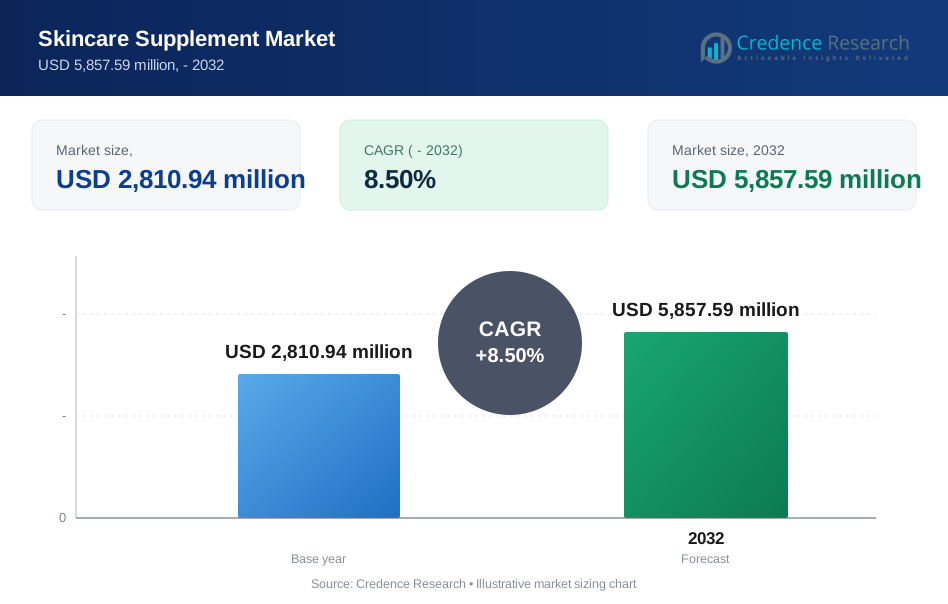
The global skincare supplement market was valued at USD 2,810.94 million in 2023. It is expected to reach USD 5,857.59 million by 2032, with a projected annual growth rate of 8.5% from 2024 to 2032. This growth is driven by rising awareness of how nutrition supports skin health and a shift toward preventive care.
| REPORT ATTRIBUTE | DETAILS |
|---|---|
| Historical Period | 2019-2022 |
| Base Year | 2023 |
| Forecast Period | 2024-2032 |
| Skincare Supplement Market Size 2023 | USD 2,810.94 Million |
| Skincare Supplement Market , CAGR | 8.50% |
| Skincare Supplement Market Size 2032 | USD 5,857.59 Million |
Several factors are pushing the market forward. These include improved supplement production methods, more research on nutrients for skin, and higher demand for natural products. Social media and celebrity endorsements have also increased product visibility. Aging populations are helping expand the market, along with higher disposable incomes in emerging countries.
Asia-Pacific holds the largest market share. Countries like South Korea, Japan, and China lead in both sales and consumer interest in skin-focused supplements. North America and Europe are also growing markets, supported by rising interest in wellness and strong company presence. Leading brands in this space include Amway, Pfizer, Murad Europe Ltd., and Herbalife Nutrition Ltd., all of which are investing in new product development to meet demand.
Market Drivers
Growing Awareness of Nutrition’s Role in Skin Health
More consumers are recognizing the connection between diet and skin health. A recent survey showed that 70% of people understand this link, and 50% have used supplements to improve their skin. Research supports the benefits of vitamins and minerals for skin hydration, elasticity, and overall condition. This trend is strong among millennials and Gen Z, who focus on preventive care and personal appearance.
Expansion of the Wellness and Self-Care Trend
The broader wellness movement has increased interest in products that support both health and appearance. Sales of wellness-related products, including skincare supplements, have risen by 20%. Many people now choose options with natural ingredients and no synthetic additives. Supplements are becoming a regular part of health routines, as more consumers treat skincare as part of self-care.
Advances in Product Formulation and Manufacturing
New technologies have made skincare supplements more effective and easier to use. Better manufacturing methods improve how well the body absorbs nutrients. Slow-release capsules and improved delivery systems help nutrients work longer and more efficiently. These advances have led to a 25% rise in customer satisfaction, thanks to better taste, longer shelf life, and more noticeable results.
Impact of Digital Marketing and Online Sales
Social media and online platforms have changed how skincare supplements are marketed and sold. Brands use influencer endorsements and targeted ads to reach more people and build trust. E-commerce makes these products more available, especially in areas with fewer retail stores. This easy access helps increase sales and boosts interest in supplements across different regions.
Market Trends
Personalized Skincare Supplements
Consumers are showing strong interest in skincare supplements tailored to their individual health goals and skin conditions. About 60% of people express a preference for products that meet their specific needs, rather than general formulas. Personalized supplements often rely on diagnostic tools and individual assessments to create targeted solutions. Advances in technology, including AI and machine learning, have made this level of customization more accessible. These tools help brands collect and analyze customer data to provide more accurate product recommendations. As consumers seek greater control over their health routines, personalized options are becoming a preferred choice.
Demand for Clean and Sustainable Ingredients
There is growing demand for skincare supplements made with natural, organic, and ethically sourced ingredients. Around 80% of consumers now prefer products that are both effective and environmentally responsible. This trend is driven by increasing environmental awareness and a desire to avoid synthetic additives. Shoppers are paying closer attention to sourcing practices, ingredient transparency, and sustainability efforts. Brands that use clean labels and emphasize eco-friendly packaging or ethical sourcing are seeing stronger support, especially from health-conscious consumers. These preferences are shaping how companies develop and market their products.
Blending Beauty with Wellness
The connection between skincare and overall health is becoming more important to consumers. Many are no longer separating beauty routines from wellness habits. Instead, they are looking for supplements that support both skin appearance and general health. This shift has led to the rise of nutricosmetics, which combine ingredients known to improve skin with nutrients that benefit the body. Products that support collagen production, hydration, and elasticity, while also promoting energy or immunity, are now in demand. Consumers want results that go beyond the surface and contribute to their overall well-being.
New Supplement Formats
While traditional capsules and tablets remain popular, alternative formats like gummies, powders, and liquids are becoming more common. About 30% of consumers prefer these newer forms, which are seen as more convenient and easier to include in daily routines. These options are often more appealing to younger buyers who want supplements that taste good and fit their lifestyle. Flavored gummies and mixable powders are especially popular for this reason. Brands are responding by expanding their format options to meet changing preferences and increase product accessibility across age groups.
More Interest Among Men
Men are becoming more engaged in skincare, and this includes using supplements to support skin health. This growing interest is prompting brands to develop products that meet the specific needs of male consumers. Skin texture, hydration, and signs of aging are among the concerns driving demand in this group. As men place more value on appearance and wellness, companies are offering supplements with targeted benefits and masculine branding. This shift is expanding the customer base and encouraging further product innovation within the category.
Growth in Emerging Markets
While the Asia-Pacific region continues to lead in skincare supplement sales, new markets are beginning to show promise. The Middle East and Africa, in particular, are seeing increased awareness of skin health and higher demand for quality products. More consumers in these regions are willing to invest in supplements that support their appearance and overall wellness. This growth is driven by rising disposable incomes and improved access to information through digital platforms. As awareness spreads, brands are expanding into these markets with localized products and marketing strategies.
Focus on Scientific Proof
Consumers are becoming more selective and are placing higher value on scientific backing. With more choices available, many buyers are seeking products supported by clinical research and proven results. This demand for credibility is pushing brands to invest in trials and studies that confirm the safety and effectiveness of their formulas. Products with visible outcomes and data to support their claims are earning more trust. As competition increases, scientific validation is becoming a key factor in shaping consumer preferences and influencing purchasing decisions.
Market Restraints and Challenges
Regulatory Compliance:
The skincare supplement industry operates under strict regulatory frameworks that vary significantly across different regions. Compliance with these regulations, which cover aspects from product formulation and safety testing to labeling and marketing, poses a significant challenge. The need to adhere to diverse international standards can delay product launches, increase costs, and complicate global distribution strategies.
High Cost of Product Development and Manufacturing:
Developing skincare supplements that are both effective and safe involves substantial investment in research, clinical trials, and high-quality ingredients. Moreover, manufacturing processes that comply with regulatory standards can be costly. These expenses can be prohibitive, especially for new entrants and smaller companies looking to establish themselves in the market.
Consumer Skepticism:
Despite growing awareness, there remains a degree of skepticism among consumers regarding the efficacy of skincare supplements. This skepticism is often fueled by products that fail to deliver on their promises or lack adequate scientific backing. Overcoming this challenge requires continuous education of the consumer base, as well as transparent communication about the benefits and limitations of these products.
Supply Chain Disruptions:
Like many other industries, the skincare supplement market is susceptible to supply chain disruptions that can affect the availability of raw materials and finished products. These disruptions, often caused by geopolitical tensions, environmental factors, or public health crises, can lead to fluctuations in prices and availability, impacting overall market stability.
Market Segmentation Analysis
By Product Type
The vitamins and minerals segment of the Skincare Supplement Market comprises supplements enriched with essential nutrients such as Vitamin C, D, E, zinc, and selenium, which are vital for maintaining skin health. These products are popular for their effectiveness in enhancing skin elasticity, reducing wrinkles, and improving overall skin health. Additionally, the herbal supplements segment, which features botanical extracts like green tea, chamomile, and aloe vera, is favored for its natural properties and minimal side effects. This segment appeals to consumers who prefer organic and holistic approaches to skincare, catering to a growing demand for natural and safe health products.
By Content Type
Collagen supplements are highly sought after for their ability to enhance skin firmness and reduce signs of aging. Similarly, antioxidant supplements, which include ingredients like coenzyme Q10 and resveratrol, are valued for their role in combating oxidative stress and providing anti-aging benefits. Additionally, supplements rich in omega-3 and omega-6 fatty acids are appreciated for their effectiveness in improving skin hydration and strengthening barrier function. Together, these supplements form a comprehensive approach to skincare, addressing various aspects from aging to overall skin health.
By Formulation
Tablets and capsules are the most prevalent formulations in the market, chosen for their convenience and precise dosage. Powders offer versatility as they can be easily mixed with foods or beverages, making them an attractive option for individuals who prefer not to swallow pills. Liquids are favored for their rapid absorption and ease of ingestion, which are particularly beneficial for the elderly and children, enhancing user compliance and satisfaction across diverse age groups.
By Gender
Traditionally, women have constituted the largest consumer base in the Skincare Supplement Market, largely due to their higher propensity to invest in skincare and wellness products. However, the male segment is experiencing rapid growth as societal norms evolve and more men actively seek out products specifically tailored to their skincare needs. This shift is contributing to a more diversified market landscape, where offerings are increasingly designed to cater to the distinct preferences and requirements of both genders.
By Distribution Channel
Online retail, pharmacies and drugstores, and specialty stores each play a pivotal role in the distribution of skincare supplements. Online retail channels have experienced explosive growth due to their convenience and the ability to offer a wide range of products, making it easier to reach a global audience with detailed product information and reviews. Pharmacies and drugstores are trusted for their personal service and professional advice, appealing to consumers who prioritize reliability and immediate product availability. Specialty stores, on the other hand, are valued for their specialized products and knowledgeable staff who provide tailored guidance and recommendations based on individual skin health needs. Together, these distribution channels enhance consumer access to skincare supplements through diverse and complementary approaches.
Segments
Based on Product Type
- Vitamins and Minerals
- Herbal Supplements
Based on Content Type
- Collagen
- Antioxidants
- Omega Fatty Acids
Based on Formulation
- Tablets and Capsules
- Powders
- Liquids
Based on Gender
- Female
- Male
Based on Distribution Channel
- Online Retail
- Pharmacies and Drugstores
- Specialty Stores
By Region
- North America
- The U.S.
- Canada
- Mexico
- Europe
- Germany
- France
- UK.
- Italy
- Spain
- Rest of Europe
- Asia Pacific
- China
- Japan
- India
- South Korea
- South-east Asia
- Rest of Asia Pacific
- Latin America
- Brazil
- Argentina
- Rest of Latin America
- Middle East & Africa
- GCC Countries
- South Africa
- The Rest of the Middle East and Africa
Regional Analysis
Asia-Pacific (35%):
The Asia-Pacific region holds the largest share of the Skincare Supplement Market, primarily driven by countries like South Korea, Japan, and China. The region's dominance is attributed to a culturally ingrained emphasis on skincare as part of overall health and wellness. Innovations in skincare products, including supplements, are often first introduced in these markets. The rising middle class and increasing disposable incomes also fuel the demand for premium skincare supplements.
North America (25%):
North America, particularly the United States, represents a significant portion of the market. This region's growth is powered by a strong wellness culture and high consumer awareness regarding the benefits of skincare supplements. The market is also bolstered by a well-established e-commerce infrastructure, making supplements readily accessible to a broad audience. Additionally, North America is home to several leading companies in the industry, driving innovation and market expansion.
Europe (20%):
Europe's market is driven by a growing demand for natural and organic products. Countries like Germany, France, and the UK are significant contributors, with consumers showing a keen interest in sustainable and ethically produced supplements. Regulatory support for natural and safe products further strengthens the market in this region. European consumers also tend to prefer high-quality, scientifically backed products, influencing market offerings.
Key players
- Amway
- Hum Nutrition, Inc.
- Nestle
- Meiji Holdings Co., Ltd.
- Plix The Plant Fix
- Unilever (Murad LLC)
- Johnson & Johnson Services, Inc (Neutrogena)
- Perricone MD
- TCH, Inc (Researveage )
- Vitabiotics Ltd.
Competitive Analysis
The Skincare Supplement Market is highly competitive, with players ranging from established multinational corporations to emerging specialty companies. Key players like Nestlé and Unilever leverage their extensive distribution networks and brand recognition to maintain a significant market presence. Innovators such as Hum Nutrition and Plix The Plant Fix differentiate themselves through targeted formulations and a focus on natural ingredients, appealing to health-conscious consumers. Meanwhile, companies like Perricone MD and TCH, Inc. emphasize scientific research and premium ingredients. The competitive landscape is marked by a continuous push for innovation, where companies strive to meet the evolving consumer demands for efficacy, safety, and sustainability. Strategic partnerships, research and development, and aggressive marketing campaigns are common strategies employed to capture and expand market share.
Recent Developments
- In May 2023, Amway's Artistry Skincare products garnered significant recognition by receiving a seal of recommendation from the Skin Cancer Foundation. This endorsement is a testament to the products' efficacy and safety in skin health, serving as a powerful promotional tool for the brand. Such a seal of approval not only enhances the product's credibility but also boosts consumer confidence, potentially increasing market visibility and sales.
- In May 2023, Perricone MD expanded its popular Vitamin C Ester Collection by introducing two innovative products: the Intensive Dark Spot Solution and the Brightening & Exfoliating Polish. These additions are specifically formulated to tackle stubborn pigmentation and enhance skin brightness. The launch of these products reflects Perricone MD's commitment to addressing specific skin concerns through targeted, scientifically backed solutions, further solidifying their position in the skincare market.
- In January 2023, Johnson & Johnson's Neutrogena partnered with Nourished, a company specializing in personalized supplements, to introduce a groundbreaking product in the skincare industry-3D-printed personalized beauty gummies. These gummies are customized to meet individual skin needs based on detailed personal assessments. This innovative approach to skincare supplements represents a significant leap forward in personalization, offering consumers a highly tailored solution to their skin health.
- In November 2023, the Neutrogena Corporation in the United States launched a new range of supplement gummies under the name Neutrogena Skin Supplements. This line includes Clear Complexion Gummies and Skin Hydration Gummies, designed to support gut health and address skin concerns. By entering the supplement market, Neutrogena is diversifying its offerings and catering to a broader audience seeking integrative approaches to maintain skin health and overall wellness.
Market Concentration and Characteristics
The Skincare Supplement Market is moderately concentrated, characterized by the presence of a mix of large multinational corporations and specialized niche players. These established companies, like Nestlé and Unilever, dominate the market due to their extensive distribution networks, strong brand recognition, and substantial marketing budgets. On the other hand, smaller companies and startups, such as Hum Nutrition and Plix The Plant Fix, carve out their own market share by offering innovative, targeted products that cater to specific consumer needs, such as organic or vegan supplements. This diversity in company size and product offerings results in a competitive landscape where innovation and strategic partnerships are crucial for growth. Additionally, the market is influenced by evolving consumer trends towards personalization and sustainability, prompting companies to continuously adapt and refine their offerings to meet the changing demands of consumers.
Report Coverage
The research report offers an in-depth analysis based on Product Type, Content Type, Formulation, Gender and Distribution Channel. It details leading market players, providing an overview of their business, product offerings, investments, revenue streams, and key applications. Additionally, the report includes insights into the competitive environment, SWOT analysis, current market trends, as well as the primary drivers and constraints. Furthermore, it discusses various factors that have driven market expansion in recent years. The report also explores market dynamics, regulatory scenarios, and technological advancements that are shaping the industry. It assesses the impact of external factors and global economic changes on market growth. Lastly, it provides strategic recommendations for new entrants and established companies to navigate the complexities of the market.
Future Outlook
- The Skincare Supplement Market is expected to continue its growth trajectory, driven by increasing consumer awareness of the benefits of supplements for skin health.
- Personalization will deepen in the skincare supplement space, with more brands offering customized solutions tailored to individual skin conditions and health needs.
- Innovations in production technology and product formulation are anticipated to enhance the efficacy and appeal of skincare supplements, making them more attractive to health-conscious consumers.
- The market segment for men will expand significantly as more skincare supplements targeting this demographic are developed and marketed.
- Sustainability will become a baseline expectation, not just a market differentier, prompting companies to prioritize eco-friendly practices in sourcing, manufacturing, and packaging.
- Emerging markets will see substantial growth in the skincare supplements sector as economic conditions improve and awareness of skin health increases.
- As the market grows, regulatory bodies will increase scrutiny of skincare supplements, leading to more stringent standards and compliance requirements for market participants.
- Integration with wearable technology and digital health apps will play a larger role in promoting and enhancing the use of skincare supplements through personalized data insights.
- Online sales channels will expand, complemented by strategic partnerships with physical retailers to provide a seamless omnichannel shopping experience.
- More robust scientific research and clinical trials will be essential to substantiate the health claims of skincare supplements, building consumer trust and market credibility.
Request a Free Sample
Fill in your details and we'll send you a free sample report.
- Sample data tables & charts
- Research methodology
Need a Custom Version of This Report?
Tailor the scope, geography, or segments to your exact requirements.
- Custom geography or segment scope
- Direct access to our analyst team
Frequently Asked Questions
What is driving the growth of the Skincare Supplement Market?
How large is the Skincare Supplement Market, and what are its future projections?
Which regions are leading in the Skincare Supplement Market?
What are the major challenges facing the Skincare Supplement Market?
How are companies in the Skincare Supplement Market adapting to consumer needs?
Table of Content
Chapter 1. Report Introduction
- 1.1 Report Description & Purpose
- 1.1.1 Report Title & Market Definition
- 1.1.2 Unique Selling Propositions (USP) & Key Differentiators
- 1.1.3 Value Proposition for Stakeholders
- 1.2 Research Objectives
- 1.2.1 Market Sizing Objectives (Volume & Revenue)
- 1.2.2 Segmentation Objectives
- 1.2.3 Competitive Intelligence Objectives
- 1.2.4 Forecast & Scenario Objectives
- 1.3 Report Scope
- 1.3.1 Skincare Supplement Scope – Types & Subtypes Covered
- 1.3.2 Geographic Scope – Regions & Countries Covered
- 1.3.3 Historical Period, Base Year & Forecast Period (the historical period; forecast to 2032)
- 1.3.4 Inclusions & Exclusions
- 1.4 HS Code & Classification Framework
- 1.5 Currency, Units & Pricing Basis
- 1.6 Target Stakeholders
- 1.7 Limitations & Assumptions
Chapter 2. Executive Summary
- 2.1 Global Skincare Supplement Market Snapshot
- 2.1.1 Market Size – Historical (the historical period) & Forecast (2032) (base year: USD 2,810.94 million → 2032: USD 5,857.59 million)
- 2.1.2 Volume & Revenue – Global Totals
- 2.1.3 Key Market Highlights – Top Five Facts
- 2.2 Skincare Supplement Market Segmentation Snapshot
- 2.2.1 Market Split by Region – vs. 2032
- 2.3 Competitive Snapshot
- 2.3.1 Top 10 Players by Revenue Share –
- 2.3.2 Top 10 Players by Volume Share –
- 2.3.3 Recent Strategic Developments (18-Month Summary)
- 2.4 Key Investment Highlights & Strategic Conclusions
Chapter 3. Skincare Supplement Market Dynamics & Industry Analysis
- 3.1 Market Overview & Context
- 3.1.1 Skincare Supplement Market Position in the Broader Automotive Value Chain
- 3.1.2 OEM vs. Replacement Market Dynamics
- 3.1.3 Market Maturity & Development Stage by Region
- 3.2 Skincare Supplement Market Drivers
- 3.3 Skincare Supplement Market Restraints & Challenges
- 3.4 Skincare Supplement Market Opportunities
- 3.5 Porter's Five Forces Analysis
- 3.5.1 Threat of New Entrants
- 3.5.2 Bargaining Power of Suppliers
- 3.5.3 Bargaining Power of Buyers
- 3.5.4 Threat of Substitutes
- 3.5.5 Competitive Rivalry – Intensity Assessment
- 3.6 Skincare Supplement Value Chain Analysis
- 3.6.1 Upstream – Raw Material/Input Suppliers
- 3.6.1.1 Raw Material/Input 1
- 3.6.1.2 Raw Material/Input 2
- 3.6.1.3 Raw Material/Input 3
- 3.6.2 Midstream – Production/Manufacturing/Service Delivery
- 3.6.2.1 Production/Process Overview
- 3.6.2.2 Key Facility Locations & Capacity by Manufacturer
- 3.6.3 Downstream – Distribution & End Consumer
- 3.6.3.1 Primary Channel – B2B/OEM
- 3.6.3.2 Secondary Channels – Dealer, Retail, Online, Direct
- 3.6.4 Value Chain Profitability Analysis
- 3.6.1 Upstream – Raw Material/Input Suppliers
- 3.7 PESTEL Analysis
- 3.7.1 Political Factors
- 3.7.2 Economic Factors
- 3.7.3 Social Factors
- 3.7.4 Technological Factors
- 3.7.5 Environmental Factors
- 3.7.6 Legal Factors
- 3.8 Skincare Supplement Supply Chain Analysis
- 3.8.1 Raw Material/Input Supply Risk Assessment
- 3.8.2 Manufacturing Concentration Risk (Geographic Exposure)
- 3.8.3 Trade Disruption Impact Analysis
- 3.9 Regulatory & Policy Landscape
Note: The regulatory and policy landscape section covers regulations based on their applicability to the market, Skincare Supplement category, geography, and scope of the study. Only regulatory frameworks with a material impact on operations, compliance, trade, sustainability, or market access are analyzed in detail.
Chapter 4. Key Investment Pockets & Opportunity Analysis
- 4.1 Skincare Supplement Market Attractiveness Analysis
- 4.1.1 By Region – Investment Attractiveness Matrix (Volume × CAGR)
- 4.2 Absolute Revenue Growth Opportunity
- 4.2.1 By Region – Absolute USD Growth Through 2032
- 4.3 Incremental Volume Opportunity
- 4.3.1 By Region – Incremental Volume Through 2032
- 4.3.2 Segment – Incremental Volume
- 4.4 Emerging Submarket Opportunity Deep Dive (Subject to Applicability)
- 4.5 Emerging Market Opportunity Scorecards
- 4.5.1 United States
- 4.5.2 Europe
- 4.5.3 Asia
- 4.5.4 Middle East & Africa
Note: Emerging Market Opportunity Scorecards will be included based on relevance and strategic importance. Regions listed are indicative and may vary depending on data availability and market dynamics.
Chapter 5. Skincare Supplement Import-Export Analysis & Trade Flows
- 5.1 Global Trade Overview
- 5.1.1 Global Export Value by Country (the historical period)
- 5.1.2 Global Export Volume by Country (the historical period)
- 5.1.3 Global Import Value by Country (the historical period)
- 5.1.4 Global Import Volume by Country (the historical period)
- 5.1.5 Net Trade Balance by Country (the historical period)
- 5.2 Export Analysis – Segment
- 5.2.1 Type 1 (HS Code)
- 5.2.2 Type 2 (HS Code)
- 5.2.3 Type 3 (HS Code)
- 5.2.4 Type 4 (HS Code)
- 5.2.5 Type 5 (HS Code)
- 5.3 Import Analysis – Segment
- 5.3.1 Type 1 (HS Code)
- 5.3.2 Type 2 (HS Code)
- 5.3.3 Type 3 (HS Code)
- 5.3.4 Type 4 (HS Code)
- 5.3.5 Type 5 (HS Code)
- 5.4 Average Unit Trade Prices
- 5.4.1 Average Export Price – Segment & Country
- 5.4.2 Average Import Price – Segment & Source Country
- 5.4.3 Price Trends (the historical period)
- 5.5 Key Trade Route Analysis
- 5.5.1 Trade Route 1
- 5.5.2 Trade Route 2
- 5.5.3 Trade Route 3
- 5.5.4 Trade Route 4
- 5.5.5 Trade Route 5
- 5.6 Trade Policy Impact Assessment
- 5.6.1 US Anti-Dumping & Section 301 Tariffs
- 5.6.2 EU Customs Union Impact
- 5.6.3 Major Free Trade Agreements
- 5.6.4 USMCA Rules of Origin
Note: Trade policy analysis will be included only where relevant to the Skincare Supplement market.
Chapter 6. Competitive Landscape & Company Benchmarking
- 6.1 Skincare Supplement Market Concentration & Structure
- 6.1.1 Herfindahl-Hirschman Index (HHI) – vs.
- 6.1.2 Tier 1, Tier 2 & Tier 3 Market Structure
- 6.1.3 Global, Regional & Local Player Dynamics
- 6.2 Skincare Supplement Market Share Analysis –
- 6.2.1 Global Revenue Share by Company
- 6.2.2 Global Volume Share by Company
- 6.2.3 Regional Revenue Share
- 6.2.4 Market Share Evolution ( vs. )
- 6.2.5 OEM Segment Share by Company
- 6.2.6 Replacement Segment Share by Company
- 6.3 Production/Delivery Capacity & Facility Analysis
- 6.3.1 Global Installed Capacity
- 6.3.2 Capacity Utilization Rates
- 6.3.3 Production/Output Volume
- 6.3.4 Facility Locations & Capacity Map
- 6.3.5 Planned Capacity Additions
- 6.4 Skincare Supplement Competitive Benchmarking Matrix
- 6.4.1 Revenue, Volume, CAGR & Profitability Comparison
- 6.4.2 Channel Revenue Mix
- 6.4.3 Geographic Revenue Exposure
- 6.4.4 R&D Intensity
- 6.4.5 Sustainability Maturity
- 6.5 Strategic Developments in Skincare Supplement (Last 24 Months)
- 6.5.1 Mergers, Acquisitions & Divestments
- 6.5.2 New Skincare Supplement Launches
- 6.5.3 Facility Expansions
- 6.5.4 Strategic Alliances, Joint Ventures & Partnerships
- 6.5.5 Distribution Expansion & Market Entry
- 6.5.6 Sustainability & ESG Initiatives
- 6.6 Competitive Strategy Mapping
- 6.6.1 Leader, Challenger, Follower & Niche Classification
- 6.6.2 Pricing Strategy Comparison
- 6.6.3 Channel Strategy Matrix
Note: Strategic developments are included based on their materiality and the availability of reliable information.
Chapter 7. Global Skincare Supplement Market – By Distribution Channel
- 7.1 Segment Overview
- 7.1.1 Volume & Revenue Split by Channel ( & 2032)
- 7.1.2 Channel Mix Evolution (2032)
Chapter 8. Regional Market Analysis – Global Overview
- 8.1 Global Regional Overview
- 8.1.1 Regional Volume Share
- 8.1.2 Regional Revenue Share
- 8.1.3 Regional Volume by Region
- 8.1.4 Regional Revenue by Region
- 8.1.5 Regional Forecast Through 2032
- 8.2 Cross-Regional Segment Analysis
- 8.2.1 By Distribution Channel
- 8.2.2 By Brand/Price Tier
Chapter 9. North America Skincare Supplement Market
- 9.1 United States
- 9.2 Canada
- 9.3 Mexico
Chapter 10. Europe Skincare Supplement Market
- 10.1 Germany
- 10.2 France
- 10.3 Italy
- 10.4 United Kingdom
- 10.5 Spain
- 10.6 Poland
- 10.7 Russia
- 10.8 Netherlands
- 10.9 Belgium
- 10.10 Sweden
- 10.11 Denmark
- 10.12 Norway
- 10.13 Rest of Europe
Chapter 11. Asia Pacific Skincare Supplement Market
- 11.1 China
- 11.2 India
- 11.3 Japan
- 11.4 South Korea
- 11.5 Thailand
- 11.6 Indonesia
- 11.7 Vietnam
- 11.8 Malaysia
- 11.9 Australia
- 11.10 Rest of Asia Pacific
Chapter 12. Latin America Skincare Supplement Market
- 12.1 Brazil
- 12.2 Argentina
- 12.3 Colombia
- 12.4 Chile
- 12.5 Rest of Latin America
Chapter 13. Middle East Skincare Supplement Market
- 13.1 Saudi Arabia
- 13.2 United Arab Emirates
- 13.3 Turkey
- 13.4 Israel
- 13.5 Iran
- 13.6 Rest of the Middle East
Chapter 14. Africa Skincare Supplement Market
- 14.1 South Africa
- 14.2 Egypt
- 14.3 Nigeria
- 14.4 Morocco
- 14.5 Rest of Africa
Chapter 15. Skincare Supplement Company Profiles
- 15.1 [Company 01]
- 15.1.1 Company Overview
- 15.1.2 Key Management Personnel
- 15.1.3 Products & Services Portfolio
- 15.1.4 Financial Performance
- 15.1.5 Key Market Focus & Geographic Presence
- 15.1.6 Recent Developments & Strategic Initiatives
Note: The company profile list is preliminary and may change based on research findings, market developments, data availability, and client requirements.
Chapter 16. Appendices
- Appendix A – List of Abbreviations & Acronyms
- Appendix B – Industry Classification Code Reference – Full Series
- Appendix C – Production & Capacity Data Tables
- Appendix D – End-Use & Demand Base Tables
- Appendix E – Consumption & Replacement Rate Assumptions
- Appendix F – ASP Reference Tables
- Appendix G – Manufacturing & Facility Database
- Appendix H – Import-Export Data Tables
- Appendix I – Regulatory Summary Tables
- Appendix J – Primary Research Participant List (Anonymized)
- Appendix K – Primary Research Questionnaire Framework
- Appendix L – Data Sources & Bibliography
- Appendix M – Market Size Divergence & Source Comparison
Chapter 17. Research Methodology
- 17.1 Research Framework & Philosophy
- 17.2 Secondary Research – Sources, Hierarchy & Data Extraction
- 17.3 Data Modeling – Bottom-Up & Top-Down Market Sizing
- 17.4 Primary Research – Stakeholder Framework, LOI & Sample Sizes
- 17.5 Forecast Methodology – Regression, Scenario & Sensitivity Analysis
- 17.6 Quality Control – Four-Layer Validation Framework
- 17.7 Limitations & Standard Assumptions
- 17.8 Disclaimer
