
| REPORT ATTRIBUTE | DETAILS |
|---|---|
| Historical Period | 2019-2022 |
| Base Year | 2023 |
| Forecast Period | 2024-2032 |
| Specialty Fats and Oils Market Size 2024 | USD 4195 Million |
| Specialty Fats and Oils Market, CAGR | 5.6% |
| Specialty Fats and Oils Market Size 2032 | USD 6486.991 Million |
Market Overview:
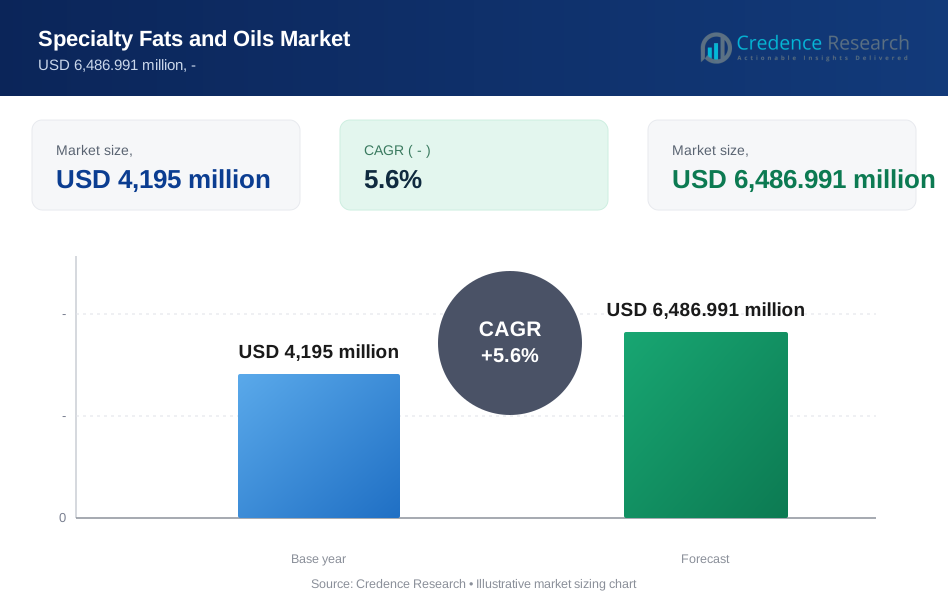
The Specialty Fats and Oils Market is projected to grow from USD 4195 million in 2024 to an estimated USD 6486.991 million by 2032, with a compound annual growth rate (CAGR) of 5.6% from 2024 to 2032.
Several factors are fueling the growth of the specialty fats and oils market. The growing awareness among consumers about health and wellness has spurred demand for products that offer better nutritional profiles and functionality. Specialty fats, such as cocoa butter substitutes, play a crucial role in the confectionery industry, where manufacturers seek cost-effective and sustainable alternatives. In the food and beverage sector, these fats and oils are valued for their role in improving texture, flavor, and shelf life. Additionally, the cosmetic and personal care industries are increasingly using specialty oils due to their moisturizing and emollient properties, which align well with the consumer shift toward natural and plant-based products. Advancements in processing technologies have also made it possible to customize fats and oils for specific applications, further enhancing their appeal across a broad range of industries. Furthermore, the emphasis on reducing trans fats and incorporating healthier oils in food products continues to drive market demand as regulatory guidelines evolve.
Regionally, Asia-Pacific holds a significant share of the specialty fats and oils market, driven by increasing urbanization, a growing middle-class population, and high demand from the food processing industry. Countries like China, India, and Indonesia are prominent contributors, benefiting from a rise in processed food consumption and increased awareness of healthy fats. North America follows closely, with robust demand from the bakery and confectionery sectors, where specialty fats and oils are critical for texture enhancement and product stability. The European market is also growing steadily, particularly in countries such as Germany, France, and the UK, where the food and cosmetic industries are embracing sustainable and functional fat alternatives. Meanwhile, Latin America and the Middle East & Africa are seeing gradual growth as the demand for processed foods rises and manufacturers increasingly utilize specialty fats and oils to improve product quality and meet changing consumer preferences.
Market Drivers:
Increasing Demand for Healthier Alternatives:
The rising awareness of health and wellness among consumers is a significant driver for the specialty fats and oils market. As more people seek alternatives to traditional trans fats, manufacturers are turning to specialty fats and oils for their healthier profiles. These products, such as palm-based fats and oils, offer lower saturated fat content and are often used in food formulations to reduce trans fats. The food and beverage industry, in particular, has responded to this trend by incorporating specialty fats in products like spreads, margarines, and dairy alternatives. As regulatory bodies continue to impose restrictions on trans fats, the demand for healthier, functional fats and oils is expected to increase, making specialty fats an attractive option for manufacturers and consumers alike.
Rising Applications in the Food and Beverage Sector:
The food and beverage industry is one of the largest consumers of specialty fats and oils, driven by the need for functional ingredients that enhance product quality. For example, a recent analysis of new product launches in the United States found that 300 new food products containing specialty fats or oils were introduced in 2023. Specialty fats, such as cocoa butter substitutes, are widely used in confectionery to improve texture, mouthfeel, and stability, while oils like palm oil and shea butter are essential for bakery products due to their solid fat content. Additionally, specialty oils are increasingly incorporated into plant-based food products, responding to the demand for dairy-free and vegan options. These fats and oils are also valued for their role in improving shelf life and flavor stability. With the continuous growth of processed and convenience foods, the food industry’s reliance on specialty fats and oils is expected to rise, particularly as manufacturers look to differentiate their products with unique flavors and textures.
Expansion of the Cosmetics and Personal Care Industry:
The cosmetics and personal care industry have become a significant driver for specialty fats and oils, fueled by the increasing preference for natural and plant-based ingredients. Specialty oils, such as coconut, argan, and avocado oils, are prized for their emollient properties and are used in various skincare and haircare formulations. These oils provide moisturizing benefits, making them popular in lotions, creams, and serums. Additionally, the shift towards clean beauty and sustainable sourcing has further bolstered the demand for specialty oils that align with consumer preferences for transparency and environmentally friendly products. As the personal care industry continues to grow, especially in regions like North America and Europe, specialty fats and oils are expected to play a more significant role in product innovation and formulation.
Technological Advancements and Customization:
Advancements in processing technologies have enabled manufacturers to customize specialty fats and oils for specific applications, enhancing their functionality and appeal. Techniques such as fractionation and interesterification allow for precise control over melting points, stability, and flavor, which is particularly important in industries like confectionery and bakery. These technologies also help improve the quality and performance of specialty fats, making them more versatile for a range of applications. Furthermore, with the increased focus on sustainable sourcing and eco-friendly production methods, companies are investing in refining processes that minimize waste and reduce environmental impact. As technological innovation continues to evolve, the specialty fats and oils market will likely see greater customization and improved product offerings, supporting a wide range of industries looking for tailored, high-quality fats and oils.
Market Trends:
Growing Popularity of Plant-Based and Vegan Products:
A major trend in the specialty fats and oils market is the rising demand for plant-based and vegan products, driven by increasing consumer awareness of health and environmental issues. Many consumers are shifting away from animal-based fats in favor of sustainable plant-based alternatives, which are perceived as healthier and more ethical. For example, the global population of vegans and vegetarians has grown to over 79 million, further fueling this demand. Specialty oils like coconut, avocado, and olive oil, as well as plant-derived fats, are now commonly used in vegan and plant-based food products. These fats and oils not only offer nutritional benefits but also enhance texture and flavor in various food applications, such as dairy-free spreads, plant-based cheeses, and non-dairy ice creams. As the plant-based movement continues to grow, manufacturers are developing more innovative and functional specialty fats and oils to meet the evolving preferences of this expanding consumer base.
Increased Focus on Sustainable Sourcing and Production:
Sustainability is becoming a core focus within the specialty fats and oils market, with both consumers and manufacturers prioritizing eco-friendly sourcing and production practices. There is a growing demand for sustainably sourced palm oil, cocoa butter, and other specialty fats, as consumers seek to minimize the environmental impact of their food and personal care products. For example, in 2023, the demand for sustainably sourced palm oil was estimated at 8 million metric tons. Companies are investing in certifications such as the Roundtable on Sustainable Palm Oil (RSPO) to ensure their products meet environmental and ethical standards. Additionally, manufacturers are adopting production methods that reduce waste, energy consumption, and greenhouse gas emissions. This emphasis on sustainability has not only improved the industry’s image but has also encouraged innovation in refining processes, such as using eco-friendly solvents and renewable energy sources, which align with global goals for reducing carbon footprints and promoting responsible sourcing.
Innovation in Functional Food and Nutraceutical Applications:
The specialty fats and oils market is also experiencing growth in the functional food and nutraceutical sectors, where there is a rising demand for ingredients that provide health benefits beyond basic nutrition. Specialty oils like MCT (medium-chain triglyceride) oil, high-oleic sunflower oil, and fish oils are increasingly incorporated into functional foods, energy bars, and supplements due to their perceived health benefits. These oils are often rich in omega-3 fatty acids, antioxidants, and other bioactive compounds that appeal to health-conscious consumers. The trend towards functional foods has driven manufacturers to develop specialty fats and oils that deliver specific health benefits, such as improving heart health or supporting cognitive function. As interest in wellness and preventative health continues to rise, specialty fats and oils are expected to play a larger role in the development of nutritionally enhanced products.
Advancements in Ingredient Customization and Processing Technologies:
Advancements in ingredient customization and processing technologies are transforming the specialty fats and oils market, allowing manufacturers to develop products with specific functional properties tailored to diverse applications. Techniques such as fractionation, hydrogenation, and interesterification have enabled precise control over melting points, stability, and texture, making specialty fats highly adaptable for various food, personal care, and pharmaceutical applications. For instance, fractionated fats are widely used in chocolate production to improve texture and melting characteristics. As consumers demand more personalized and versatile products, companies are leveraging these technologies to create specialty fats and oils that align with specific dietary needs and preferences, such as keto-friendly, low-saturated fat, or high-stability formulations. This trend toward customization has expanded the possibilities within the specialty fats and oils market, supporting innovation and providing greater flexibility for manufacturers in developing targeted product solutions.
Market Restraints and Challenges:
High Production Costs and Raw Material Price Volatility:
One of the major restraints in the specialty fats and oils market is the high production cost associated with these products. Specialty fats and oils often require advanced processing techniques, such as fractionation, interesterification, and hydrogenation, which increase production expenses. Additionally, fluctuations in the prices of raw materials, such as palm oil, cocoa butter, and other plant-based oils, create challenges for manufacturers. Weather conditions, geopolitical issues, and supply chain disruptions can lead to volatility in the availability and cost of these raw materials. This price instability impacts production costs, ultimately raising the prices of specialty fats and oils, which may affect demand, particularly in price-sensitive regions.
Regulatory Challenges and Compliance Issues:
The specialty fats and oils market faces stringent regulatory requirements, especially in the food, cosmetics, and nutraceutical sectors. Various countries have established standards for the labeling, sourcing, and processing of fats and oils, particularly concerning trans fats, saturated fats, and allergens. Complying with these regulations can be time-consuming and costly, particularly for smaller companies with limited resources. In addition, regulations around sustainability and ethical sourcing, such as certifications from the Roundtable on Sustainable Palm Oil (RSPO), require adherence to specific guidelines that may increase operational costs. For companies operating in multiple regions, inconsistent regulations across countries further complicate compliance, posing challenges to global expansion and market penetration.
Sustainability Concerns and Environmental Impact:
Sustainability is a growing concern for the specialty fats and oils market, as environmental groups and consumers increasingly scrutinize the impact of oil production on deforestation, biodiversity, and greenhouse gas emissions. Palm oil, for example, has faced significant criticism due to its association with deforestation and habitat loss in tropical regions. To address these concerns, manufacturers must invest in sustainable sourcing practices and certifications, which can increase operational costs. However, failure to meet sustainability standards can result in negative public perception and a loss of consumer trust, particularly among environmentally conscious consumers. The pressure to balance cost-effectiveness with sustainability is a continuing challenge for the specialty fats and oils industry.
Health-Related Perception Challenges:
The specialty fats and oils market also faces challenges related to consumer perceptions about fats in general. Despite the growing demand for healthier oils, some consumers remain wary of processed fats, particularly those associated with high saturated fat content. Products such as palm oil and hydrogenated fats can carry negative health perceptions, which may deter certain consumer segments. Educating consumers about the benefits of specialty fats and oils and differentiating them from less healthy options is essential for industry growth. However, changing consumer perceptions and addressing health concerns require sustained marketing efforts and transparent labeling practices, which can be costly and resource-intensive.
Market Segmentation Analysis:
By product type, the market includes fats and oils, with sub-segments such as cocoa butter alternatives (including equivalents, substitutes, and replacers), coating fats, and dairy fat replacers. Cocoa butter alternatives are in high demand within the confectionery industry, where they provide cost-effective and sustainable replacements. In the oils segment, products like palm oil, coconut oil, soybean oil, and sunflower oil are widely used for their varied functional properties in food processing and personal care applications.
By application, specialty fats and oils are utilized across bakery, confectionery, cosmetics, dairy products, home cooking, pharmaceutical products, and more. The bakery and confectionery sectors are prominent consumers, relying on specialty fats and oils for enhancing texture, stability, and flavor. The cosmetics industry also uses specialty oils for their moisturizing and emollient properties, which align with consumer preferences for natural ingredients.
By end user, the market caters to food & beverages, pharmaceuticals, hospitality, residential consumers, and other sectors. The food & beverage industry holds a substantial share, utilizing specialty fats and oils for various processed food products, while the pharmaceutical and cosmetics industries leverage these products for their health and skincare benefits.
By distribution channels, specialty fats and oils are available through both online and offline platforms. Offline channels, including supermarkets and specialty stores, remain dominant, though online channels are growing rapidly due to convenience and wider product variety, supporting broader market accessibility.
Segmentation:
By Product Type
- Fats
- Cocoa Butter Alternatives
- Cocoa Butter Equivalents
- Cocoa Butter Substitutes
- Cocoa Butter Replacers
- Coating Fats
- Dairy Fat replacers
- Others
- Oils
- Palm Oil
- Coconut Oil
- Soyabean Oil
- Sunflower Oil
- Others
By Application
- Bakery
- Confectionery
- Cosmetics
- Dairy Products
- Home cooking
- Pharmaceutical products
- Others
By End User
- F&B
- Pharma
- Hospitality
- Residential
- Others
By Distribution Channel
- Online
- Offline
- North America
- U.S.
- Canada
- Mexico
- Europe
- Germany
- France
- U.K.
- Italy
- Spain
- Rest of Europe
- Asia Pacific
- China
- Japan
- India
- South Korea
- South-east Asia
- Rest of Asia Pacific
- Latin America
- Brazil
- Argentina
- Rest of Latin America
- Middle East & Africa
- GCC Countries
- South Africa
- Rest of the Middle East and Africa
Regional Analysis:
Asia-Pacific: Leading the Market
Asia-Pacific holds the largest share of the specialty fats and oils market, accounting for approximately 35% of the global market. This dominance is fueled by the region’s rapid industrialization, a growing middle-class population, and increased consumption of processed foods. Countries such as China, India, and Indonesia are key players, as their expanding food processing industries rely heavily on specialty fats for bakery and confectionery products. The rising awareness of health and wellness has also driven demand for products like dairy fat replacers and plant-based oils. Moreover, the region benefits from a strong supply of raw materials, particularly palm oil, which supports a competitive pricing structure for specialty fats and oils. As these factors continue to evolve, Asia-Pacific is expected to retain its leading position in the market.
North America: High Demand for Health-Focused Products
North America represents around 25% of the global specialty fats and oils market, driven by strong demand in the United States and Canada. The region’s food & beverage industry is a significant consumer of specialty fats, particularly in the bakery and confectionery segments, where there is a focus on healthier and more sustainable ingredients. Specialty oils like coconut and sunflower oil are increasingly popular among consumers who prioritize natural and minimally processed products. Additionally, the growing demand for plant-based and vegan alternatives in the U.S. has supported market growth, as manufacturers incorporate specialty fats into dairy substitutes and non-dairy desserts. North America’s focus on clean-label and organic products continues to drive innovation and demand for high-quality specialty fats and oils.
Europe: Emphasis on Sustainable and Ethical Sourcing
Europe holds approximately 20% of the specialty fats and oils market, with significant demand from countries like Germany, France, and the United Kingdom. European consumers are highly focused on sustainability and ethical sourcing, which has led to increased demand for certified palm oil and cocoa butter alternatives. The region’s stringent regulatory environment, particularly regarding trans fats and saturated fats, has pushed manufacturers to adopt healthier and more sustainable ingredients. The cosmetics and personal care industries in Europe also contribute to demand, as specialty oils are widely used for their moisturizing properties and alignment with the trend toward natural beauty products. Europe’s commitment to sustainability and innovation supports steady growth in the specialty fats and oils market.
Latin America and the Middle East & Africa: Emerging Markets
Latin America and the Middle East & Africa collectively account for around 20% of the global market, with steady growth projected over the coming years. In Latin America, Brazil and Mexico lead the market, driven by increased demand for processed foods and rising disposable incomes. The region’s agricultural resources, including palm and soybean oil, further support market expansion. Meanwhile, the Middle East & Africa show potential due to growing urbanization and expanding food processing industries. Both regions are seeing gradual adoption of specialty fats and oils, particularly as awareness of health and wellness increases. With enhanced access to specialty fats and oils and a growing focus on healthier food options, these emerging markets are expected to contribute to the market’s future growth.
Key Player Analysis:
- Bunge Limited
- Cargill
- Golden Agri-Resources Ltd
- Henry Lamotte Oils GmbH
- IOI Corporation
- Kuala Lumpur Kepong Berhad
- Liberty Oil Mills Ltd.
- Savola Group
- Sime Darby Plantation Sdn Bhd
- Wilmar International Limited
Competitive Analysis:
The specialty fats and oils market is highly competitive, characterized by the presence of key players such as Cargill, Wilmar International, Bunge Limited, and AAK AB. These companies dominate the market due to their extensive product portfolios, advanced processing technologies, and strong global distribution networks. Their focus on research and development allows them to innovate and develop products that cater to evolving consumer demands for healthier, more sustainable, and functional fats and oils. Additionally, these industry leaders are increasingly investing in sustainable sourcing practices, such as certified palm oil and plant-based ingredients, to align with environmental and ethical standards. Smaller players and new entrants are also gaining traction by targeting niche markets, such as organic and non-GMO specialty fats, often appealing to health-conscious consumers. Strategic partnerships, acquisitions, and expansion into emerging markets further define the competitive landscape, enabling companies to broaden their reach and enhance market positioning.
Recent Developments:
- In November 2022, AAK acquired Arani Agro Oil Industries Ltd. to strengthen its presence in southeast India, expanding its specialty oils business to meet the rising demand for premium products in the region
Market Concentration & Characteristics:
The specialty fats and oils market is moderately concentrated, with a few large players such as Cargill, Wilmar International, and AAK AB-dominating a significant portion of the market. These companies benefit from economies of scale, advanced processing capabilities, and strong global distribution networks, allowing them to maintain a competitive advantage. The market is characterized by its focus on innovation and customization, as manufacturers work to meet diverse industry requirements, including the food, cosmetics, and pharmaceutical sectors. Demand for healthier, plant-based, and sustainably sourced fats and oils continues to shape the market, driving companies to invest in research and development to produce tailored, functional ingredients. Additionally, the increasing importance of certifications, such as those for sustainable palm oil, highlights the industry's shift towards ethical and environmentally friendly practices. This dynamic landscape reflects a blend of established market leaders and emerging players focusing on niche and value-driven segments.
Report Coverage:
The research report offers an in-depth analysis based on By Product Type, By Application, By End User and By Distribution Channel. It details leading market players, providing an overview of their business, product offerings, investments, revenue streams, and key applications. Additionally, the report includes insights into the competitive environment, SWOT analysis, current market trends, as well as the primary drivers and constraints. Furthermore, it discusses various factors that have driven market expansion in recent years. The report also explores market dynamics, regulatory scenarios, and technological advancements that are shaping the industry. It assesses the impact of external factors and global economic changes on market growth. Lastly, it provides strategic recommendations for new entrants and established companies to navigate the complexities of the market.
Future Outlook:
- Growing consumer preference for plant-based products will drive demand for specialty fats and oils in vegan and dairy-free foods.
- Increasing awareness of health benefits will boost the use of specialty oils in functional food and nutraceutical applications.
- Advancements in processing technologies will enable further customization, meeting specific industry requirements for texture and stability.
- Rising demand for sustainable ingredients will promote the adoption of certified palm oil and environmentally friendly sourcing practices.
- Expansion in emerging markets, particularly in Asia-Pacific, will support market growth as industrialization and disposable incomes rise.
- The cosmetics and personal care industries will continue to use specialty oils for their natural and moisturizing properties, aligning with clean beauty trends.
- Greater demand for bakery and confectionery products will fuel the need for cocoa butter alternatives and other specialty fats.
- Increasing government regulations on trans fats will push manufacturers to develop healthier specialty fat options.
- Ongoing R&D will drive innovation in specialty fats tailored to specific dietary needs, such as keto-friendly and low-saturated fat formulations.
- Growth in online retail channels will improve market accessibility, allowing consumers and businesses easier access to specialty fats and oils products.
Request a Free Sample
Fill in your details and we'll send you a free sample report.
- Sample data tables & charts
- Research methodology
Need a Custom Version of This Report?
Tailor the scope, geography, or segments to your exact requirements.
- Custom geography or segment scope
- Direct access to our analyst team
Frequently Asked Questions
What is the projected growth rate for the specialty fats and oils market?
What factors are driving the growth of the specialty fats and oils market?
Which region holds the largest share of the specialty fats and oils market?
What are the primary challenges in the specialty fats and oils market?
Table of Content
Chapter 1. Report Introduction
- 1.1 Report Description & Purpose
- 1.1.1 Report Title & Market Definition
- 1.1.2 Unique Selling Propositions (USP) & Key Differentiators
- 1.1.3 Value Proposition for Stakeholders
- 1.2 Research Objectives
- 1.2.1 Market Sizing Objectives (Volume & Revenue)
- 1.2.2 Segmentation Objectives
- 1.2.3 Competitive Intelligence Objectives
- 1.2.4 Forecast & Scenario Objectives
- 1.3 Report Scope
- 1.3.1 Specialty Fats and Oils Scope – Types & Subtypes Covered
- 1.3.2 Geographic Scope – Regions & Countries Covered
- 1.3.3 Historical Period, Base Year & Forecast Period (the historical period; forecast to the forecast period)
- 1.3.4 Inclusions & Exclusions
- 1.4 HS Code & Classification Framework
- 1.5 Currency, Units & Pricing Basis
- 1.6 Target Stakeholders
- 1.7 Limitations & Assumptions
Chapter 2. Executive Summary
- 2.1 Global Specialty Fats and Oils Market Snapshot
- 2.1.1 Market Size – Historical (the historical period) & Forecast (the forecast period) (base year: USD 4,195 million → forecast year: USD 6,486.991 million)
- 2.1.2 Volume & Revenue – Global Totals
- 2.1.3 Key Market Highlights – Top Five Facts
- 2.2 Specialty Fats and Oils Market Segmentation Snapshot
- 2.2.1 Market Split by Region – vs.
- 2.3 Competitive Snapshot
- 2.3.1 Top 10 Players by Revenue Share –
- 2.3.2 Top 10 Players by Volume Share –
- 2.3.3 Recent Strategic Developments (18-Month Summary)
- 2.4 Key Investment Highlights & Strategic Conclusions
Chapter 3. Specialty Fats and Oils Market Dynamics & Industry Analysis
- 3.1 Market Overview & Context
- 3.1.1 Specialty Fats and Oils Market Position in the Broader Automotive Value Chain
- 3.1.2 OEM vs. Replacement Market Dynamics
- 3.1.3 Market Maturity & Development Stage by Region
- 3.2 Specialty Fats and Oils Market Drivers
- 3.3 Specialty Fats and Oils Market Restraints & Challenges
- 3.4 Specialty Fats and Oils Market Opportunities
- 3.5 Porter's Five Forces Analysis
- 3.5.1 Threat of New Entrants
- 3.5.2 Bargaining Power of Suppliers
- 3.5.3 Bargaining Power of Buyers
- 3.5.4 Threat of Substitutes
- 3.5.5 Competitive Rivalry – Intensity Assessment
- 3.6 Specialty Fats and Oils Value Chain Analysis
- 3.6.1 Upstream – Raw Material/Input Suppliers
- 3.6.1.1 Raw Material/Input 1
- 3.6.1.2 Raw Material/Input 2
- 3.6.1.3 Raw Material/Input 3
- 3.6.2 Midstream – Production/Manufacturing/Service Delivery
- 3.6.2.1 Production/Process Overview
- 3.6.2.2 Key Facility Locations & Capacity by Manufacturer
- 3.6.3 Downstream – Distribution & End Consumer
- 3.6.3.1 Primary Channel – B2B/OEM
- 3.6.3.2 Secondary Channels – Dealer, Retail, Online, Direct
- 3.6.4 Value Chain Profitability Analysis
- 3.6.1 Upstream – Raw Material/Input Suppliers
- 3.7 PESTEL Analysis
- 3.7.1 Political Factors
- 3.7.2 Economic Factors
- 3.7.3 Social Factors
- 3.7.4 Technological Factors
- 3.7.5 Environmental Factors
- 3.7.6 Legal Factors
- 3.8 Specialty Fats and Oils Supply Chain Analysis
- 3.8.1 Raw Material/Input Supply Risk Assessment
- 3.8.2 Manufacturing Concentration Risk (Geographic Exposure)
- 3.8.3 Trade Disruption Impact Analysis
- 3.9 Regulatory & Policy Landscape
Note: The regulatory and policy landscape section covers regulations based on their applicability to the market, Specialty Fats and Oils category, geography, and scope of the study. Only regulatory frameworks with a material impact on operations, compliance, trade, sustainability, or market access are analyzed in detail.
Chapter 4. Key Investment Pockets & Opportunity Analysis
- 4.1 Specialty Fats and Oils Market Attractiveness Analysis
- 4.1.1 By Region – Investment Attractiveness Matrix (Volume × CAGR)
- 4.2 Absolute Revenue Growth Opportunity
- 4.2.1 By Region – Absolute USD Growth Through the forecast period
- 4.3 Incremental Volume Opportunity
- 4.3.1 By Region – Incremental Volume Through the forecast period
- 4.3.2 Segment – Incremental Volume
- 4.4 Emerging Submarket Opportunity Deep Dive (Subject to Applicability)
- 4.5 Emerging Market Opportunity Scorecards
- 4.5.1 United States
- 4.5.2 Europe
- 4.5.3 Asia
- 4.5.4 Middle East & Africa
Note: Emerging Market Opportunity Scorecards will be included based on relevance and strategic importance. Regions listed are indicative and may vary depending on data availability and market dynamics.
Chapter 5. Specialty Fats and Oils Import-Export Analysis & Trade Flows
- 5.1 Global Trade Overview
- 5.1.1 Global Export Value by Country (the historical period)
- 5.1.2 Global Export Volume by Country (the historical period)
- 5.1.3 Global Import Value by Country (the historical period)
- 5.1.4 Global Import Volume by Country (the historical period)
- 5.1.5 Net Trade Balance by Country (the historical period)
- 5.2 Export Analysis – Segment
- 5.2.1 Type 1 (HS Code)
- 5.2.2 Type 2 (HS Code)
- 5.2.3 Type 3 (HS Code)
- 5.2.4 Type 4 (HS Code)
- 5.2.5 Type 5 (HS Code)
- 5.3 Import Analysis – Segment
- 5.3.1 Type 1 (HS Code)
- 5.3.2 Type 2 (HS Code)
- 5.3.3 Type 3 (HS Code)
- 5.3.4 Type 4 (HS Code)
- 5.3.5 Type 5 (HS Code)
- 5.4 Average Unit Trade Prices
- 5.4.1 Average Export Price – Segment & Country
- 5.4.2 Average Import Price – Segment & Source Country
- 5.4.3 Price Trends (the historical period)
- 5.5 Key Trade Route Analysis
- 5.5.1 Trade Route 1
- 5.5.2 Trade Route 2
- 5.5.3 Trade Route 3
- 5.5.4 Trade Route 4
- 5.5.5 Trade Route 5
- 5.6 Trade Policy Impact Assessment
- 5.6.1 US Anti-Dumping & Section 301 Tariffs
- 5.6.2 EU Customs Union Impact
- 5.6.3 Major Free Trade Agreements
- 5.6.4 USMCA Rules of Origin
Note: Trade policy analysis will be included only where relevant to the Specialty Fats and Oils market.
Chapter 6. Competitive Landscape & Company Benchmarking
- 6.1 Specialty Fats and Oils Market Concentration & Structure
- 6.1.1 Herfindahl-Hirschman Index (HHI) – vs.
- 6.1.2 Tier 1, Tier 2 & Tier 3 Market Structure
- 6.1.3 Global, Regional & Local Player Dynamics
- 6.2 Specialty Fats and Oils Market Share Analysis –
- 6.2.1 Global Revenue Share by Company
- 6.2.2 Global Volume Share by Company
- 6.2.3 Regional Revenue Share
- 6.2.4 Market Share Evolution ( vs. )
- 6.2.5 OEM Segment Share by Company
- 6.2.6 Replacement Segment Share by Company
- 6.3 Production/Delivery Capacity & Facility Analysis
- 6.3.1 Global Installed Capacity
- 6.3.2 Capacity Utilization Rates
- 6.3.3 Production/Output Volume
- 6.3.4 Facility Locations & Capacity Map
- 6.3.5 Planned Capacity Additions
- 6.4 Specialty Fats and Oils Competitive Benchmarking Matrix
- 6.4.1 Revenue, Volume, CAGR & Profitability Comparison
- 6.4.2 Channel Revenue Mix
- 6.4.3 Geographic Revenue Exposure
- 6.4.4 R&D Intensity
- 6.4.5 Sustainability Maturity
- 6.5 Strategic Developments in Specialty Fats and Oils (Last 24 Months)
- 6.5.1 Mergers, Acquisitions & Divestments
- 6.5.2 New Specialty Fats and Oils Launches
- 6.5.3 Facility Expansions
- 6.5.4 Strategic Alliances, Joint Ventures & Partnerships
- 6.5.5 Distribution Expansion & Market Entry
- 6.5.6 Sustainability & ESG Initiatives
- 6.6 Competitive Strategy Mapping
- 6.6.1 Leader, Challenger, Follower & Niche Classification
- 6.6.2 Pricing Strategy Comparison
- 6.6.3 Channel Strategy Matrix
Note: Strategic developments are included based on their materiality and the availability of reliable information.
Chapter 7. Global Specialty Fats and Oils Market – By Distribution Channel
- 7.1 Segment Overview
- 7.1.1 Volume & Revenue Split by Channel ( & )
- 7.1.2 Channel Mix Evolution (the forecast period)
Chapter 8. Regional Market Analysis – Global Overview
- 8.1 Global Regional Overview
- 8.1.1 Regional Volume Share
- 8.1.2 Regional Revenue Share
- 8.1.3 Regional Volume by Region
- 8.1.4 Regional Revenue by Region
- 8.1.5 Regional Forecast Through the forecast period
- 8.2 Cross-Regional Segment Analysis
- 8.2.1 By Distribution Channel
- 8.2.2 By Brand/Price Tier
Chapter 9. North America Specialty Fats and Oils Market
- 9.1 United States
- 9.2 Canada
- 9.3 Mexico
Chapter 10. Europe Specialty Fats and Oils Market
- 10.1 Germany
- 10.2 France
- 10.3 Italy
- 10.4 United Kingdom
- 10.5 Spain
- 10.6 Poland
- 10.7 Russia
- 10.8 Netherlands
- 10.9 Belgium
- 10.10 Sweden
- 10.11 Denmark
- 10.12 Norway
- 10.13 Rest of Europe
Chapter 11. Asia Pacific Specialty Fats and Oils Market
- 11.1 China
- 11.2 India
- 11.3 Japan
- 11.4 South Korea
- 11.5 Thailand
- 11.6 Indonesia
- 11.7 Vietnam
- 11.8 Malaysia
- 11.9 Australia
- 11.10 Rest of Asia Pacific
Chapter 12. Latin America Specialty Fats and Oils Market
- 12.1 Brazil
- 12.2 Argentina
- 12.3 Colombia
- 12.4 Chile
- 12.5 Rest of Latin America
Chapter 13. Middle East Specialty Fats and Oils Market
- 13.1 Saudi Arabia
- 13.2 United Arab Emirates
- 13.3 Turkey
- 13.4 Israel
- 13.5 Iran
- 13.6 Rest of the Middle East
Chapter 14. Africa Specialty Fats and Oils Market
- 14.1 South Africa
- 14.2 Egypt
- 14.3 Nigeria
- 14.4 Morocco
- 14.5 Rest of Africa
Chapter 15. Specialty Fats and Oils Company Profiles
- 15.1 [Company 01]
- 15.1.1 Company Overview
- 15.1.2 Key Management Personnel
- 15.1.3 Products & Services Portfolio
- 15.1.4 Financial Performance
- 15.1.5 Key Market Focus & Geographic Presence
- 15.1.6 Recent Developments & Strategic Initiatives
Note: The company profile list is preliminary and may change based on research findings, market developments, data availability, and client requirements.
Chapter 16. Appendices
- Appendix A – List of Abbreviations & Acronyms
- Appendix B – Industry Classification Code Reference – Full Series
- Appendix C – Production & Capacity Data Tables
- Appendix D – End-Use & Demand Base Tables
- Appendix E – Consumption & Replacement Rate Assumptions
- Appendix F – ASP Reference Tables
- Appendix G – Manufacturing & Facility Database
- Appendix H – Import-Export Data Tables
- Appendix I – Regulatory Summary Tables
- Appendix J – Primary Research Participant List (Anonymized)
- Appendix K – Primary Research Questionnaire Framework
- Appendix L – Data Sources & Bibliography
- Appendix M – Market Size Divergence & Source Comparison
Chapter 17. Research Methodology
- 17.1 Research Framework & Philosophy
- 17.2 Secondary Research – Sources, Hierarchy & Data Extraction
- 17.3 Data Modeling – Bottom-Up & Top-Down Market Sizing
- 17.4 Primary Research – Stakeholder Framework, LOI & Sample Sizes
- 17.5 Forecast Methodology – Regression, Scenario & Sensitivity Analysis
- 17.6 Quality Control – Four-Layer Validation Framework
- 17.7 Limitations & Standard Assumptions
- 17.8 Disclaimer
