
| REPORT ATTRIBUTE | DETAILS |
|---|---|
| Historical Period | 2019-2022 |
| Base Year | 2023 |
| Forecast Period | 2024-2032 |
| UK Dashcams Market Size 2023 | USD 216.65 million |
| UK Dashcams Market , CAGR | 12.61% |
| UK Dashcams Market Size 2032 | USD 630.90 million |
Market Overview
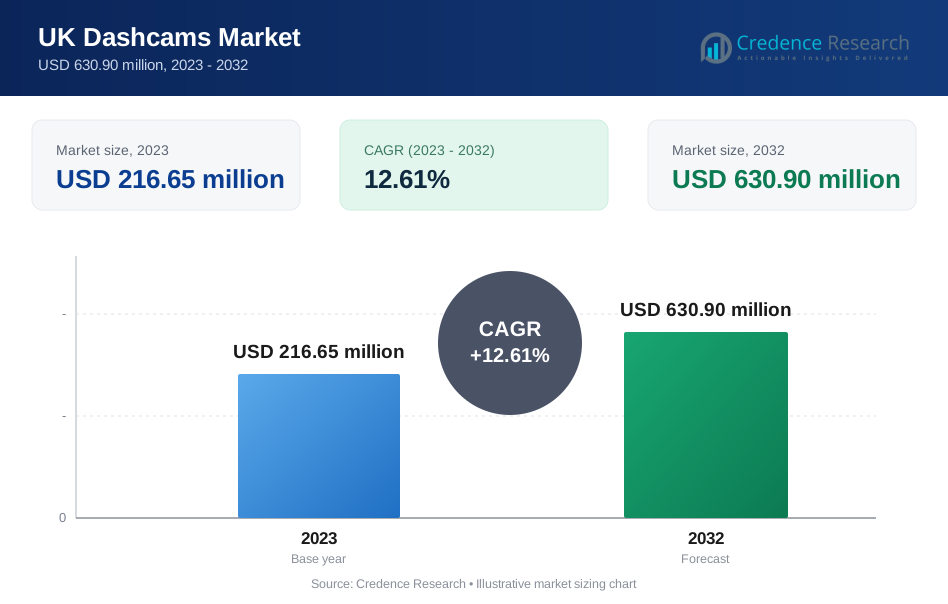
The UK dashcams market is projected to grow from USD 216.65 million in 2023 to USD 630.90 million by 2032, registering a CAGR of 12.61% during the forecast period.
The UK dashcams market is driven by increasing awareness of road safety, rising vehicle insurance fraud, and the growing adoption of advanced driver assistance systems (ADAS). Dashcams are becoming essential for providing evidence in road accidents and fraudulent claims, which has significantly boosted their demand. Government initiatives promoting road safety and the integration of smart technologies, such as GPS and Wi-Fi connectivity in dashcams, further propel market growth. Additionally, the trend of reducing insurance premiums through dashcam usage and growing consumer preference for compact, high-resolution cameras with night vision capabilities are positively influencing the market. The increasing availability of affordable dashcam options, coupled with rising e-commerce penetration, supports broader adoption across diverse vehicle segments. Moreover, advancements in AI-based features, such as real-time alerts and driver behavior monitoring, are expected to create lucrative opportunities for the UK dashcams market in the coming years.
The UK dashcams market is characterized by a diverse geographical landscape, with major regions such as London, Manchester, Birmingham, and Scotland contributing to market growth. London remains a significant hub due to its high vehicle density and emphasis on road safety technologies, while Manchester is rapidly adopting dashcams, driven by the logistics and fleet management sectors. Birmingham’s strategic location as a transportation hub boosts demand, especially among fleet operators. Scotland’s mix of urban and rural areas shows steady adoption, with a focus on road safety in challenging driving conditions. Key players in the UK dashcams market include established global brands like Nextbase, Garmin, Samsung Electronics, and Panasonic, along with regional players such as Steelmate Automotive (UK) Ltd. and WatchGuard Technologies. These companies are continuously innovating to meet the evolving demands for safety, connectivity, and high-definition recording, ensuring competitive growth across the regions.
Market Insights
- The UK dashcams market is valued at USD 216.65 million in 2023 and is projected to reach USD 630.90 million by 2032, growing at a CAGR of 12.61%.
- The increasing demand for road safety, insurance fraud prevention, and the rise in accidents are key market drivers.
- Technological advancements, such as AI integration, smart connectivity, and 4K video recording, are fueling market growth.
- Competition is intensifying with major players like Nextbase, Garmin, and Samsung Electronics, focusing on innovation and pricing strategies.
- Privacy concerns and legal regulations surrounding data protection remain significant market restraints.
- Regional growth is led by London, Manchester, and Birmingham, with rising adoption across urban and rural areas.
- The growing trend of fleet management and rising consumer awareness are expected to drive the continued adoption of dashcams in the UK.
Market Drivers
Rising Road Safety Awareness and Need for Evidence in Accidents
The increasing focus on road safety has become a significant driver for the UK dashcams market. With growing concerns about road accidents and fatalities, consumers and businesses are adopting dashcams to enhance vehicle safety and monitoring. For instance, the Department for Transport reported a notable number of road deaths in Great Britain in 2023, highlighting the need for improved safety measures. Dashcams provide video evidence in case of accidents or disputes, making them indispensable for drivers, fleet operators, and insurance companies. The demand for these devices is further supported by their ability to reduce instances of reckless driving and encourage safer driving practices, contributing to overall road safety.
Surge in Insurance Fraud and Claims Management
The rise in vehicle insurance fraud has accelerated the adoption of dashcams in the UK. These devices play a crucial role in combating fraudulent claims by recording real-time events and providing irrefutable evidence during disputes. For instance, a survey by the Association of British Insurers (ABI) found that dashcam footage helped resolve a significant number of disputed claims. Insurers are increasingly promoting dashcam usage by offering discounts on premiums for customers who use these devices. This incentive not only encourages their adoption but also strengthens the relationship between insurers and policyholders by improving claims management processes.
Technological Advancements in Dashcam Features
The integration of advanced technologies in dashcams is a key factor driving their popularity. Features such as high-definition recording, GPS tracking, night vision, and wide-angle lenses are making dashcams more versatile and efficient. Additionally, the incorporation of smart functionalities like real-time alerts, cloud storage, and AI-based driver behavior analysis is attracting tech-savvy consumers and fleet operators. These advancements are transforming dashcams from simple recording devices into comprehensive vehicle monitoring systems, further boosting their adoption across the UK.
E-Commerce Growth and Accessibility of Affordable Dashcams
The rapid growth of e-commerce platforms has made dashcams more accessible to a wider audience in the UK. Online marketplaces offer a diverse range of dashcam models at competitive prices, catering to various consumer preferences and budgets. The availability of affordable options has significantly contributed to the adoption of dashcams among individual drivers and small businesses. Moreover, the convenience of online shopping and extensive product reviews enable consumers to make informed purchasing decisions, fueling market growth.
Market Trends
Increasing Adoption of AI-Powered Dashcams
The integration of artificial intelligence (AI) into dashcams is emerging as a prominent trend in the UK market. AI-powered dashcams offer features such as real-time driver behavior monitoring, collision alerts, and predictive analytics, enhancing road safety and driving efficiency. For instance, a report by the UK Artificial Intelligence Council highlighted that AI-powered dashcams can reduce road accidents by analyzing driving patterns and providing real-time feedback to drivers. These advanced capabilities are particularly gaining traction among fleet operators who seek to minimize risks and improve operational efficiency. Additionally, AI-based systems enable the automatic categorization of recorded events, making it easier for users to access critical footage when needed.
Growing Popularity of Dual-Channel and 4K Dashcams
Consumers in the UK are increasingly favoring dual-channel dashcams that record both front and rear views of vehicles. These models provide comprehensive coverage and are especially useful for documenting rear-end collisions and parking incidents. Simultaneously, the demand for 4K ultra-high-definition (UHD) dashcams is rising, as they offer superior video clarity, enabling users to capture finer details such as license plates and road signs. This trend reflects the growing consumer preference for high-quality recording solutions.
Integration of Smart Connectivity Features
Dashcams with smart connectivity features, such as Wi-Fi, Bluetooth, and cloud storage, are gaining widespread popularity in the UK. These functionalities allow users to access and share recorded footage seamlessly through mobile apps, enhancing convenience and usability. Cloud-enabled dashcams also provide added security by storing data offsite, ensuring critical footage is not lost due to device damage or theft. The ability to connect dashcams with other smart devices is further driving their appeal among tech-savvy consumers.
Eco-Friendly and Compact Dashcam Designs
As environmental consciousness grows, manufacturers are focusing on producing eco-friendly dashcams with energy-efficient components. Simultaneously, compact and lightweight dashcam designs are becoming a preferred choice for consumers, as they occupy minimal space without compromising on performance. These trends align with the broader shift towards sustainability and user-centric design, ensuring the market adapts to evolving consumer preferences while maintaining its competitive edge.
Market Challenges Analysis
Privacy Concerns and Legal Regulations
Privacy concerns and complex legal regulations surrounding the use of dashcams present another significant challenge in the UK market. Users must adhere to strict data protection laws, such as the General Data Protection Regulation (GDPR), when recording and sharing footage. For instance, the Information Commissioner's Office (ICO) provides guidelines on how businesses should handle dashcam data to comply with GDPR. Public awareness of privacy rights has increased, raising concerns about the potential misuse of recorded data and surveillance. Moreover, certain jurisdictions impose restrictions on dashcam installation and usage, creating barriers to adoption. Manufacturers and users alike must navigate these legal complexities, which may deter potential buyers and limit market expansion.
High Competition and Price Sensitivity
The UK dashcams market faces intense competition, with numerous local and global players offering a wide range of products. This competitive landscape has led to significant price sensitivity among consumers, particularly in the budget segment. Manufacturers often struggle to balance cost efficiency with the integration of advanced features, resulting in pricing challenges. Additionally, the presence of low-cost, imported dashcams in the market creates further pressure on established brands to maintain competitive pricing without compromising on quality. This scenario makes it challenging for companies to achieve sustainable profit margins while addressing evolving consumer demands.
Market Opportunities
Rising Demand for Fleet Management Solutions
The growing adoption of fleet management systems presents significant opportunities for the UK dashcams market. Fleet operators in industries such as logistics, transportation, and delivery services are increasingly using dashcams to enhance operational efficiency and ensure driver safety. Dashcams equipped with GPS tracking, real-time monitoring, and driver behavior analytics enable businesses to reduce risks, lower operational costs, and comply with safety regulations. Moreover, the integration of cloud-based data storage and AI-powered features into dashcams provides actionable insights for fleet managers, further driving demand in the commercial vehicle segment. As the fleet industry continues to expand, the demand for advanced dashcam solutions is expected to grow substantially.
Expanding Consumer Awareness and Technological Advancements
The UK dashcams market has significant growth potential due to rising consumer awareness and continuous technological advancements. Increased public awareness of the benefits of dashcams, such as evidence in accident claims and improved road safety, is driving adoption among individual vehicle owners. Simultaneously, manufacturers are introducing innovative features like 4K recording, smart connectivity, and eco-friendly designs to meet the evolving preferences of tech-savvy consumers. The rising penetration of e-commerce platforms also facilitates easier access to a diverse range of dashcam models, expanding the consumer base. These factors, combined with supportive government initiatives promoting road safety, are creating a favorable environment for market growth in the coming years.
Market Segmentation Analysis:
By Technology:
The UK dashcams market is segmented into basic and advanced technologies, each catering to distinct consumer preferences. Basic dashcams are popular among cost-sensitive buyers who seek essential functionalities such as video recording and storage. These devices provide reliable performance at an affordable price point, making them a preferred choice for individual drivers and small businesses. On the other hand, advanced dashcams are equipped with cutting-edge features such as GPS tracking, AI-based analytics, night vision, and smart connectivity. These high-tech devices cater to tech-savvy consumers and fleet operators who prioritize safety, convenience, and enhanced monitoring capabilities. The increasing adoption of advanced dashcams, driven by rising demand for intelligent solutions and road safety initiatives, is expected to dominate the market in the coming years.
By Product:
By product, the UK dashcams market includes 1-channel, 2-channel, and rear-view dashcams. 1-channel dashcams, which record the front view of vehicles, remain a popular choice due to their affordability and simplicity. However, 2-channel dashcams, offering simultaneous front and rear recording, are witnessing significant growth as consumers seek comprehensive coverage for added security. Rear-view dashcams, designed to capture events occurring behind the vehicle, are gaining traction among fleet operators and drivers concerned about rear-end collisions and parking incidents. The growing consumer preference for multi-channel dashcams, combined with the availability of diverse options at competitive prices, is driving product innovation and expanding the market's reach.
Segments:
Based on Technology:
- Basic
- Advanced
Based on Product:
- 1-Channel
- 2-Channel
- Rear View
Based on Video Quality:
- SD & HD
- Full HD & 4K
Based on Application:
- Commercial Vehicle
- Personal Vehicle
Based on Distribution Channel:
- Online
- In-Store
Based on the Geography:
- London
- Manchester
- Birmingham
- Scotland
Regional Analysis
London
London holds the largest share of the UK dashcams market, accounting for approximately 35% of the total revenue in 2023. The city’s high vehicle density and increasing awareness of road safety drive the demand for dashcams among individual drivers and fleet operators. Rising incidents of traffic violations, coupled with the need to reduce insurance fraud, have made dashcams indispensable in London. Additionally, the availability of technologically advanced dashcams featuring GPS tracking, AI-powered analytics, and cloud storage has accelerated their adoption. Local initiatives promoting road safety, along with incentives from insurers, further fuel the growth of the dashcams market in this region. With continued investments in smart mobility and urban transportation, London’s dominance in the UK dashcams market is expected to persist.
Manchester
Manchester accounts for around 20% of the UK dashcams market share, making it a key region for market growth. The city’s commitment to reducing road accidents and enhancing fleet safety has significantly boosted dashcam usage among businesses and individual vehicle owners. Fleet operators in the logistics and ride-hailing sectors rely on advanced dashcams with dual-channel recording and GPS functionality to improve operational efficiency and comply with safety regulations. For private vehicle owners, the growing awareness of the role of dashcams in insurance claims and fraud prevention is a key factor driving adoption. With the rising demand for affordable and feature-rich dashcams, Manchester is poised to experience continued growth in the coming years.
Birmingham
Birmingham contributes approximately 15% of the UK dashcams market share, driven by the city’s strategic importance as a transportation hub. Fleet operators in Birmingham are increasingly adopting dual-channel and 4K dashcams to ensure road safety and minimize liability during traffic incidents. Additionally, individual drivers are embracing dashcams to document traffic violations and safeguard against fraudulent claims. The availability of diverse models catering to different budgets and preferences has further encouraged adoption in this region. Birmingham’s focus on promoting road safety and fostering digital innovation ensures its steady contribution to the UK dashcams market.
Scotland
Scotland represents about 10% of the UK dashcams market share, with adoption steadily growing in both urban centers and rural areas. Urban hubs like Glasgow and Edinburgh drive demand for advanced dashcams with smart features, while rural areas increasingly rely on basic models for essential safety purposes. Scotland’s challenging driving conditions, including adverse weather and remote roads, make dashcams a practical tool for enhancing road safety. Government initiatives and insurance discounts tied to dashcam usage further boost their adoption. Scotland’s unique mix of urban and rural demand ensures its ongoing role as a vital region in the UK dashcams market.
Key Player Analysis
- Nextbase
- Steelmate Automotive (UK) Ltd.
- Panasonic Corporation
- Hewlett-Packard Company
- Samsung Electronics Co., Ltd.
- Garmin Ltd
- WatchGuard Technologies, Inc.
- Xiaomi
- Thinkware Dash Cam
- Cobra Electronics Corporation
- Company 12
- Company 13
- Company 14
- Company 15
- Others
Competitive Analysis
The UK dashcams market is highly competitive, with several key players dominating the landscape. Leading companies such as Nextbase, Garmin, Samsung Electronics, Panasonic Corporation, WatchGuard Technologies, Steelmate Automotive (UK) Ltd., Xiaomi, Thinkware Dash Cam, and Cobra Electronics Corporation are at the forefront, each offering innovative solutions tailored to different consumer needs. Companies are also incorporating artificial intelligence (AI) and machine learning into their products, enhancing functionalities such as collision detection, real-time monitoring, and driver behavior analysis. Price competitiveness is another key factor, with many players offering tiered pricing structures to appeal to different market segments. For instance, Thinkware's T700 dashcam offers features like remote live view, real-time parking impact video, and vehicle status updates through a mobile app. High-end models, featuring 4K resolution and smart connectivity, cater to premium users, while budget-friendly options ensure that basic recording needs are met for cost-conscious consumers. Furthermore, fleet management solutions, with integrated GPS tracking and video surveillance capabilities, are gaining traction among businesses looking to improve operational efficiency and driver safety. Innovation plays a crucial role in differentiating players in this market, with an emphasis on improving camera quality, reducing installation complexity, and offering easy-to-use interfaces. As the demand for safer driving technologies and enhanced vehicle monitoring continues to rise, companies must adapt to the growing expectations of both consumers and businesses, maintaining a competitive edge through constant innovation and strategic partnerships.
Recent Developments
- In February 2024, LG Innotek made a significant advancement in automotive technology by creating a dashboard camera module equipped with a built-in heater, ensuring functionality in cold climates. This innovation is particularly targeted at enhancing the performance of autonomous vehicles in frosty conditions, such as in the South Korean region.
- In January 2024, Ficosa and indie Semiconductor partnered for the development of AI-based automotive camera solutions. The partnership would provide enhanced safety and help develop and commercialize automotive camera solutions by deploying neural network-based (NN) artificial intelligence (AI) processing.
- In October 2023, Qubo, a smart device brand owned by Hero Electronix, introduced new dashcam products called Dashcam Pro X and Dashcam Pro 3K, with advanced features such as GPS tracking, loop recording, time-lapse, and front and rear cameras to track vehicles in real-time.
- In September 2023, Firsttech LLC, launched DroneMobile XC Dash Cam. It seamlessly integrates with compatible remote start and security systems so users can see what is happening in and around their cars in real-time.
- In January 2023, Garmin Ltd. launched Garmin Dash Cam Live, which is connected to the LTE network and allows drivers to access a live exterior view of their vehicle.
Market Concentration & Characteristics
The UK dashcams market exhibits moderate to high market concentration, with a mix of established global players and regional competitors. While global brands dominate the high-end segment with advanced features such as 4K recording, GPS, and AI integration, local players also maintain a significant presence by offering cost-effective solutions for budget-conscious consumers. The market is characterized by a rapid pace of technological innovation, with companies continually enhancing the features and functionality of their dashcams to meet the evolving demands of both individual drivers and fleet operators. This includes the integration of advanced driver assistance systems (ADAS), real-time video streaming, cloud connectivity, and improved video quality. The growing emphasis on road safety, insurance fraud prevention, and the need for comprehensive surveillance solutions in commercial fleets has led to increasing competition among manufacturers. As a result, the market sees frequent product upgrades, competitive pricing, and varied product offerings to cater to different customer needs. Additionally, with the rise of smart technologies and the growing trend of connected devices, dashcam manufacturers are also focusing on providing seamless integration with mobile apps, cloud storage services, and other vehicle monitoring systems. The market’s characteristics indicate a dynamic and highly competitive environment where both technological advancement and pricing strategies play a crucial role in determining market success.
Report Coverage
The research report offers an in-depth analysis based on Technology, Product, Video Quality, Application, Distribution Channel and Geography. It details leading market players, providing an overview of their business, product offerings, investments, revenue streams, and key applications. Additionally, the report includes insights into the competitive environment, SWOT analysis, current market trends, as well as the primary drivers and constraints. Furthermore, it discusses various factors that have driven market expansion in recent years. The report also explores market dynamics, regulatory scenarios, and technological advancements that are shaping the industry. It assesses the impact of external factors and global economic changes on market growth. Lastly, it provides strategic recommendations for new entrants and established companies to navigate the complexities of the market.
Future Outlook
- The UK dashcams market is expected to continue growing due to rising awareness about road safety and insurance fraud prevention.
- Technological advancements, such as AI integration and 4K resolution, will drive demand for more advanced dashcam models.
- The increasing adoption of smart features like real-time video streaming and cloud connectivity will enhance user experience.
- Fleet management solutions will see significant growth as businesses seek to improve safety and operational efficiency.
- As consumer awareness about data protection grows, manufacturers will prioritize privacy features in their products.
- The popularity of driver assistance systems (ADAS) in dashcams will rise, offering enhanced safety and driver convenience.
- More government initiatives may be introduced to promote dashcam usage for road safety and fraud prevention.
- Regional players will continue to innovate, providing affordable and feature-rich options for budget-conscious consumers.
- The integration of dashcams with other vehicle monitoring systems and mobile apps will gain traction in the market.
- The shift towards electric and autonomous vehicles may increase the demand for dashcams with advanced features to support new vehicle technologies.
Request a Free Sample
Fill in your details and we'll send you a free sample report.
- Sample data tables & charts
- Research methodology
Need a Custom Version of This Report?
Tailor the scope, geography, or segments to your exact requirements.
- Custom geography or segment scope
- Direct access to our analyst team
Frequently Asked Questions
What is the current size of the UK Dashcams Market?
What factors are driving the growth of the UK Dashcams Market?
What are the key segments within the UK Dashcams Market?
What are some challenges faced by the UK Dashcams Market?
Who are the major players in the UK Dashcams Market?
Table of Content
Chapter 1. Report Introduction
- 1.1 Report Description & Purpose
- 1.1.1 Report Title & Market Definition
- 1.1.2 Unique Selling Propositions (USP) & Key Differentiators
- 1.1.3 Value Proposition for Stakeholders
- 1.2 Research Objectives
- 1.2.1 Market Sizing Objectives (Volume & Revenue)
- 1.2.2 Segmentation Objectives
- 1.2.3 Competitive Intelligence Objectives
- 1.2.4 Forecast & Scenario Objectives
- 1.3 Report Scope
- 1.3.1 UK Dashcams Scope – Types & Subtypes Covered
- 1.3.2 Geographic Scope – Regions & Countries Covered
- 1.3.3 Historical Period, Base Year & Forecast Period (2023; forecast to 2032)
- 1.3.4 Inclusions & Exclusions
- 1.4 HS Code & Classification Framework
- 1.5 Currency, Units & Pricing Basis
- 1.6 Target Stakeholders
- 1.7 Limitations & Assumptions
Chapter 2. Executive Summary
- 2.1 Global UK Dashcams Market Snapshot
- 2.1.1 Market Size – Historical (2023) & Forecast (2023-2032) (2023: USD 216.65 million → 2032: USD 630.90 million)
- 2.1.2 Volume & Revenue – Global Totals
- 2.1.3 Key Market Highlights – Top Five Facts
- 2.2 UK Dashcams Market Segmentation Snapshot
- 2.2.1 Market Split by Region – 2023 vs. 2032
- 2.3 Competitive Snapshot
- 2.3.1 Top 10 Players by Revenue Share – 2023
- 2.3.2 Top 10 Players by Volume Share – 2023
- 2.3.3 Recent Strategic Developments (18-Month Summary)
- 2.4 Key Investment Highlights & Strategic Conclusions
Chapter 3. UK Dashcams Market Dynamics & Industry Analysis
- 3.1 Market Overview & Context
- 3.1.1 UK Dashcams Market Position in the Broader Automotive Value Chain
- 3.1.2 OEM vs. Replacement Market Dynamics
- 3.1.3 Market Maturity & Development Stage by Region
- 3.2 UK Dashcams Market Drivers
- 3.3 UK Dashcams Market Restraints & Challenges
- 3.4 UK Dashcams Market Opportunities
- 3.5 Porter's Five Forces Analysis
- 3.5.1 Threat of New Entrants
- 3.5.2 Bargaining Power of Suppliers
- 3.5.3 Bargaining Power of Buyers
- 3.5.4 Threat of Substitutes
- 3.5.5 Competitive Rivalry – Intensity Assessment
- 3.6 UK Dashcams Value Chain Analysis
- 3.6.1 Upstream – Raw Material/Input Suppliers
- 3.6.1.1 Raw Material/Input 1
- 3.6.1.2 Raw Material/Input 2
- 3.6.1.3 Raw Material/Input 3
- 3.6.2 Midstream – Production/Manufacturing/Service Delivery
- 3.6.2.1 Production/Process Overview
- 3.6.2.2 Key Facility Locations & Capacity by Manufacturer
- 3.6.3 Downstream – Distribution & End Consumer
- 3.6.3.1 Primary Channel – B2B/OEM
- 3.6.3.2 Secondary Channels – Dealer, Retail, Online, Direct
- 3.6.4 Value Chain Profitability Analysis
- 3.6.1 Upstream – Raw Material/Input Suppliers
- 3.7 PESTEL Analysis
- 3.7.1 Political Factors
- 3.7.2 Economic Factors
- 3.7.3 Social Factors
- 3.7.4 Technological Factors
- 3.7.5 Environmental Factors
- 3.7.6 Legal Factors
- 3.8 UK Dashcams Supply Chain Analysis
- 3.8.1 Raw Material/Input Supply Risk Assessment
- 3.8.2 Manufacturing Concentration Risk (Geographic Exposure)
- 3.8.3 Trade Disruption Impact Analysis
- 3.9 Regulatory & Policy Landscape
Note: The regulatory and policy landscape section covers regulations based on their applicability to the market, UK Dashcams category, geography, and scope of the study. Only regulatory frameworks with a material impact on operations, compliance, trade, sustainability, or market access are analyzed in detail.
Chapter 4. Key Investment Pockets & Opportunity Analysis
- 4.1 UK Dashcams Market Attractiveness Analysis
- 4.1.1 By Region – Investment Attractiveness Matrix (Volume × CAGR)
- 4.2 Absolute Revenue Growth Opportunity
- 4.2.1 By Region – Absolute USD Growth Through 2032
- 4.3 Incremental Volume Opportunity
- 4.3.1 By Region – Incremental Volume Through 2032
- 4.3.2 Segment – Incremental Volume
- 4.4 Emerging Submarket Opportunity Deep Dive (Subject to Applicability)
- 4.5 Emerging Market Opportunity Scorecards
- 4.5.1 United States
- 4.5.2 Europe
- 4.5.3 Asia
- 4.5.4 Middle East & Africa
Note: Emerging Market Opportunity Scorecards will be included based on relevance and strategic importance. Regions listed are indicative and may vary depending on data availability and market dynamics.
Chapter 5. UK Dashcams Import-Export Analysis & Trade Flows
- 5.1 Global Trade Overview
- 5.1.1 Global Export Value by Country (2023)
- 5.1.2 Global Export Volume by Country (2023)
- 5.1.3 Global Import Value by Country (2023)
- 5.1.4 Global Import Volume by Country (2023)
- 5.1.5 Net Trade Balance by Country (2023)
- 5.2 Export Analysis – Segment
- 5.2.1 Type 1 (HS Code)
- 5.2.2 Type 2 (HS Code)
- 5.2.3 Type 3 (HS Code)
- 5.2.4 Type 4 (HS Code)
- 5.2.5 Type 5 (HS Code)
- 5.3 Import Analysis – Segment
- 5.3.1 Type 1 (HS Code)
- 5.3.2 Type 2 (HS Code)
- 5.3.3 Type 3 (HS Code)
- 5.3.4 Type 4 (HS Code)
- 5.3.5 Type 5 (HS Code)
- 5.4 Average Unit Trade Prices
- 5.4.1 Average Export Price – Segment & Country
- 5.4.2 Average Import Price – Segment & Source Country
- 5.4.3 Price Trends (2023)
- 5.5 Key Trade Route Analysis
- 5.5.1 Trade Route 1
- 5.5.2 Trade Route 2
- 5.5.3 Trade Route 3
- 5.5.4 Trade Route 4
- 5.5.5 Trade Route 5
- 5.6 Trade Policy Impact Assessment
- 5.6.1 US Anti-Dumping & Section 301 Tariffs
- 5.6.2 EU Customs Union Impact
- 5.6.3 Major Free Trade Agreements
- 5.6.4 USMCA Rules of Origin
Note: Trade policy analysis will be included only where relevant to the UK Dashcams market.
Chapter 6. Competitive Landscape & Company Benchmarking
- 6.1 UK Dashcams Market Concentration & Structure
- 6.1.1 Herfindahl-Hirschman Index (HHI) – vs. 2023
- 6.1.2 Tier 1, Tier 2 & Tier 3 Market Structure
- 6.1.3 Global, Regional & Local Player Dynamics
- 6.2 UK Dashcams Market Share Analysis – 2023
- 6.2.1 Global Revenue Share by Company
- 6.2.2 Global Volume Share by Company
- 6.2.3 Regional Revenue Share
- 6.2.4 Market Share Evolution ( vs. 2023)
- 6.2.5 OEM Segment Share by Company
- 6.2.6 Replacement Segment Share by Company
- 6.3 Production/Delivery Capacity & Facility Analysis
- 6.3.1 Global Installed Capacity
- 6.3.2 Capacity Utilization Rates
- 6.3.3 Production/Output Volume
- 6.3.4 Facility Locations & Capacity Map
- 6.3.5 Planned Capacity Additions
- 6.4 UK Dashcams Competitive Benchmarking Matrix
- 6.4.1 Revenue, Volume, CAGR & Profitability Comparison
- 6.4.2 Channel Revenue Mix
- 6.4.3 Geographic Revenue Exposure
- 6.4.4 R&D Intensity
- 6.4.5 Sustainability Maturity
- 6.5 Strategic Developments in UK Dashcams (Last 24 Months)
- 6.5.1 Mergers, Acquisitions & Divestments
- 6.5.2 New UK Dashcams Launches
- 6.5.3 Facility Expansions
- 6.5.4 Strategic Alliances, Joint Ventures & Partnerships
- 6.5.5 Distribution Expansion & Market Entry
- 6.5.6 Sustainability & ESG Initiatives
- 6.6 Competitive Strategy Mapping
- 6.6.1 Leader, Challenger, Follower & Niche Classification
- 6.6.2 Pricing Strategy Comparison
- 6.6.3 Channel Strategy Matrix
Note: Strategic developments are included based on their materiality and the availability of reliable information.
Chapter 7. Global UK Dashcams Market – By Distribution Channel
- 7.1 Segment Overview
- 7.1.1 Volume & Revenue Split by Channel (2023 & 2032)
- 7.1.2 Channel Mix Evolution (2023-2032)
Chapter 8. Regional Market Analysis – Global Overview
- 8.1 Global Regional Overview
- 8.1.1 Regional Volume Share
- 8.1.2 Regional Revenue Share
- 8.1.3 Regional Volume by Region
- 8.1.4 Regional Revenue by Region
- 8.1.5 Regional Forecast Through 2032
- 8.2 Cross-Regional Segment Analysis
- 8.2.1 By Distribution Channel
- 8.2.2 By Brand/Price Tier
Chapter 9. North America UK Dashcams Market
- 9.1 United States
- 9.2 Canada
- 9.3 Mexico
Chapter 10. Europe UK Dashcams Market
- 10.1 Germany
- 10.2 France
- 10.3 Italy
- 10.4 United Kingdom
- 10.5 Spain
- 10.6 Poland
- 10.7 Russia
- 10.8 Netherlands
- 10.9 Belgium
- 10.10 Sweden
- 10.11 Denmark
- 10.12 Norway
- 10.13 Rest of Europe
Chapter 11. Asia Pacific UK Dashcams Market
- 11.1 China
- 11.2 India
- 11.3 Japan
- 11.4 South Korea
- 11.5 Thailand
- 11.6 Indonesia
- 11.7 Vietnam
- 11.8 Malaysia
- 11.9 Australia
- 11.10 Rest of Asia Pacific
Chapter 12. Latin America UK Dashcams Market
- 12.1 Brazil
- 12.2 Argentina
- 12.3 Colombia
- 12.4 Chile
- 12.5 Rest of Latin America
Chapter 13. Middle East UK Dashcams Market
- 13.1 Saudi Arabia
- 13.2 United Arab Emirates
- 13.3 Turkey
- 13.4 Israel
- 13.5 Iran
- 13.6 Rest of the Middle East
Chapter 14. Africa UK Dashcams Market
- 14.1 South Africa
- 14.2 Egypt
- 14.3 Nigeria
- 14.4 Morocco
- 14.5 Rest of Africa
Chapter 15. UK Dashcams Company Profiles
- 15.1 [Company 01]
- 15.1.1 Company Overview
- 15.1.2 Key Management Personnel
- 15.1.3 Products & Services Portfolio
- 15.1.4 Financial Performance
- 15.1.5 Key Market Focus & Geographic Presence
- 15.1.6 Recent Developments & Strategic Initiatives
Note: The company profile list is preliminary and may change based on research findings, market developments, data availability, and client requirements.
Chapter 16. Appendices
- Appendix A – List of Abbreviations & Acronyms
- Appendix B – Industry Classification Code Reference – Full Series
- Appendix C – Production & Capacity Data Tables
- Appendix D – End-Use & Demand Base Tables
- Appendix E – Consumption & Replacement Rate Assumptions
- Appendix F – ASP Reference Tables
- Appendix G – Manufacturing & Facility Database
- Appendix H – Import-Export Data Tables
- Appendix I – Regulatory Summary Tables
- Appendix J – Primary Research Participant List (Anonymized)
- Appendix K – Primary Research Questionnaire Framework
- Appendix L – Data Sources & Bibliography
- Appendix M – Market Size Divergence & Source Comparison
Chapter 17. Research Methodology
- 17.1 Research Framework & Philosophy
- 17.2 Secondary Research – Sources, Hierarchy & Data Extraction
- 17.3 Data Modeling – Bottom-Up & Top-Down Market Sizing
- 17.4 Primary Research – Stakeholder Framework, LOI & Sample Sizes
- 17.5 Forecast Methodology – Regression, Scenario & Sensitivity Analysis
- 17.6 Quality Control – Four-Layer Validation Framework
- 17.7 Limitations & Standard Assumptions
- 17.8 Disclaimer
