
| REPORT ATTRIBUTE | DETAILS |
|---|---|
| Historical Period | 2020-2023 |
| Base Year | 2024 |
| Forecast Period | 2025-2032 |
| Hemodialysis Vascular Grafts Market Size 2024 | USD 265.84 million |
| Hemodialysis Vascular Grafts Market, CAGR | 4.87% |
| Hemodialysis Vascular Grafts Market Size 2032 | USD 387.81 million |
Market Overview:
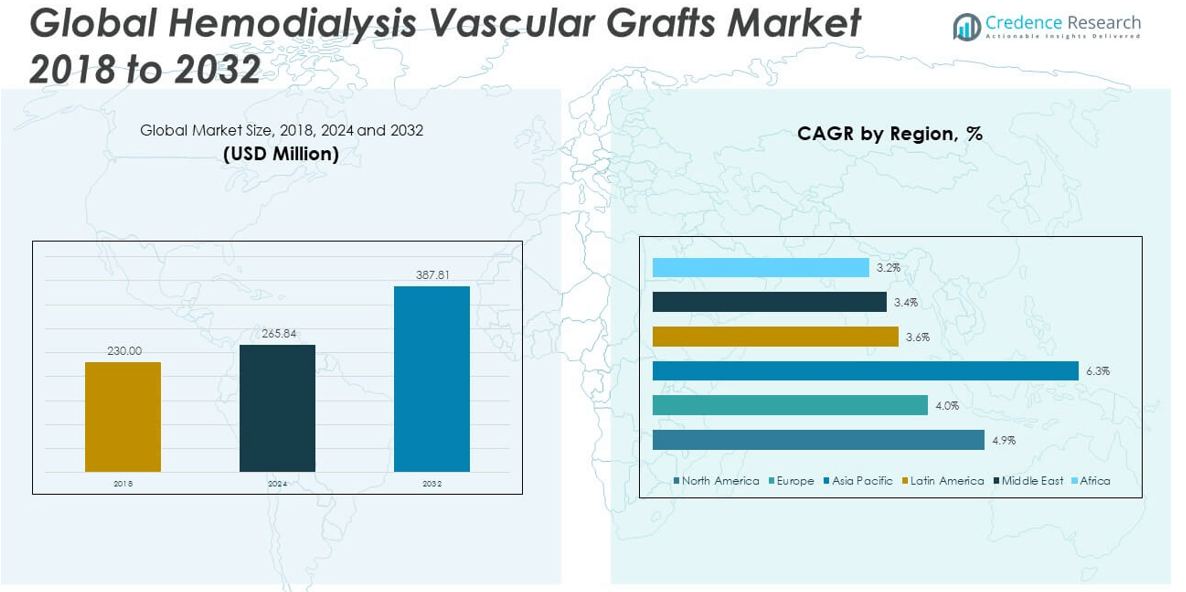
The Hemodialysis Vascular Grafts Market size was valued at USD 230.00 million in 2018 to USD 265.84 million in 2024 and is anticipated to reach USD 387.81 million by 2032, at a CAGR of 4.87% during the forecast period.
The growth of the hemodialysis vascular grafts market is primarily driven by the rising global incidence of chronic kidney disease (CKD) and end-stage renal disease (ESRD), which has significantly increased the need for reliable vascular access solutions. As diabetes and hypertension key risk factors for CKD continue to rise, particularly in aging populations, the number of patients requiring long-term hemodialysis is expanding rapidly. Technological advancements in graft materials, such as PTFE and polyurethane, have improved biocompatibility, durability, and resistance to infection, further enhancing treatment outcomes. In addition, innovations like anti-thrombotic coatings and minimally invasive implantation techniques are making vascular grafts more accessible and effective. Government initiatives and favorable reimbursement policies, especially in developed countries, are also contributing to market expansion by supporting dialysis accessibility and infrastructure. The increasing establishment of dialysis centers across emerging economies further accelerates demand, creating opportunities for global players to scale operations and enhance patient access to care.
North America dominates the global hemodialysis vascular grafts market due to its high prevalence of ESRD, advanced healthcare infrastructure, and well-established reimbursement systems. The United States, in particular, accounts for a significant share, driven by widespread access to dialysis services and a growing elderly population. Europe follows closely, with countries like Germany, France, and the U.K. witnessing steady demand, supported by aging demographics and the increasing burden of kidney-related diseases. However, the Asia-Pacific region is emerging as the fastest-growing market, fueled by the rapid rise in CKD cases, improving healthcare accessibility, and rising healthcare investments in countries such as China, India, and Japan. Government-supported programs aimed at expanding dialysis coverage are also contributing to regional growth. Meanwhile, Latin America and the Middle East & Africa are experiencing gradual market development, constrained by lower healthcare spending but supported by public health investments and expansion of dialysis infrastructure in urban centers.
Market Insights:
- The Hemodialysis Vascular Grafts Market was valued at USD 265.84 million in 2024 and is projected to reach USD 387.81 million by 2032, expanding at a CAGR of 4.87%.
- Rising global cases of CKD and ESRD, driven by aging populations and lifestyle diseases like diabetes and hypertension, are increasing the demand for vascular grafts in hemodialysis.
- Material innovations such as PTFE and polyurethane grafts are enhancing biocompatibility, durability, and infection resistance, improving clinical outcomes and patient safety.
- Emerging economies including India, China, and Brazil are expanding dialysis centers and insurance coverage, fueling market growth through greater accessibility and infrastructure.
- Strong government support and reimbursement policies, especially in North America and parts of Europe, are encouraging the adoption of advanced vascular access solutions.
- The market faces challenges from complications like thrombosis and infection, which impact patient outcomes and influence clinical decision-making.
- North America holds the largest share, driven by advanced healthcare systems, while Asia-Pacific is the fastest-growing region due to rising CKD incidence and healthcare investments.
Market Drivers:
Increasing Incidence of End-Stage Renal Disease (ESRD) and Chronic Kidney Disease (CKD) Drives Demand for Vascular Access
The rising global burden of ESRD and CKD significantly contributes to the expansion of the Hemodialysis Vascular Grafts Market. The prevalence of diabetes and hypertension has accelerated kidney damage among aging populations, increasing the number of patients requiring hemodialysis. According to clinical data, a substantial portion of ESRD patients depend on vascular grafts for reliable and repeated access to the bloodstream. The growing demand for long-term dialysis care has led healthcare providers to adopt synthetic grafts that offer superior durability and performance compared to traditional catheters. Governments and healthcare institutions are recognizing the urgency of enhancing renal care infrastructure. The Hemodialysis Vascular Grafts Market benefits directly from these developments, as healthcare systems worldwide prioritize long-term treatment solutions.
- For example, W.L. Gore & Associates reports that its expanded polytetrafluoroethylene (ePTFE) vascular grafts, designed for hemodialysis access, achieved a 5-year patency rate of 70% in clinical trials, highlighting their suitability for long-term dialysis care.
Material Advancements Improve Graft Performance and Clinical Outcomes
Advances in biomaterials have strengthened the functional performance of hemodialysis grafts and reduced complications. The development of synthetic materials like polytetrafluoroethylene (PTFE) and polyurethane has improved resistance to infection, thrombosis, and mechanical fatigue. These innovations have increased graft lifespan, reduced re-intervention rates, and lowered healthcare costs. Surgeons now prefer grafts with improved patency and better integration with native tissues. The Hemodialysis Vascular Grafts Market responds to this shift by accelerating research in antimicrobial coatings and personalized graft design. It continues to evolve with materials that meet both patient safety and procedural efficiency standards.
Expansion of Dialysis Infrastructure Across Emerging Economies Encourages Market Penetration
Emerging economies are investing in dialysis infrastructure to meet rising renal care needs. Countries such as India, China, and Brazil are building more dialysis centers and expanding insurance coverage for renal therapy. These investments help bridge the treatment gap and increase the adoption of synthetic vascular grafts. The Hemodialysis Vascular Grafts Market finds strong growth momentum in these regions where CKD awareness and early-stage diagnosis are improving. Medical device manufacturers are forming partnerships with regional healthcare providers to distribute products efficiently. It supports growing clinical demand through localized manufacturing and training initiatives.
- For example, in 2023, Fresenius Medical Care established 54 additional dialysis clinics across Asia-Pacific, with 22 new sites in China and 13 in India. By the end of the year, the company operated more than 1,000 clinics throughout the region. This expansion reflects Fresenius Medical Care’s ongoing strategy to enhance access to essential renal therapies in rapidly developing markets.
Favorable Reimbursement and Government Support Stimulate Clinical Adoption
Supportive reimbursement frameworks in developed countries help reduce the financial burden on patients and improve access to high-quality dialysis care. In the United States, Medicare covers a significant portion of ESRD treatment, including vascular access procedures. This policy environment drives the use of advanced vascular grafts that meet regulatory standards. Public health initiatives are also encouraging early CKD screening, leading to timely intervention with long-term dialysis solutions. The Hemodialysis Vascular Grafts Market aligns with national healthcare goals by offering products that support chronic care continuity. It remains well-positioned to serve expanding patient populations across both public and private healthcare systems.
Market Trends:
Rising Focus on Biologically Engineered Grafts to Mimic Native Vessel Functionality
Biologically engineered vascular grafts are gaining interest for their ability to replicate the natural behavior of blood vessels. Researchers are developing grafts with endothelial cell linings to reduce thrombosis and promote better integration with the patient’s circulatory system. These innovations aim to overcome limitations of synthetic materials by offering enhanced biocompatibility and functional healing. Companies are investing in tissue engineering technologies and collaborating with academic institutions to develop next-generation products. The Hemodialysis Vascular Grafts Market is witnessing a shift toward solutions that align more closely with human physiology. It is setting the stage for a new category of vascular access devices that offer both structural integrity and regenerative properties.
- For example, Humacyte, Inc.has developed the Human Acellular Vessel (HAV), a biologically engineered vascular graft designed to replicate natural blood vessel behavior. In the V007 Phase 3 clinical trial, Humacyte’s HAV demonstrated superior function and patency at both 6 and 12 months compared to the standard autogenous fistula in patients requiring arteriovenous (AV) access for hemodialysis.
Integration of Artificial Intelligence in Graft Selection and Post-Operative Monitoring
Artificial intelligence (AI) tools are becoming more prevalent in clinical decision-making, particularly in selecting appropriate vascular access methods. Predictive algorithms help clinicians assess patient-specific risk factors such as vessel diameter, blood flow rate, and clotting history. This integration supports more personalized and accurate graft selection, improving clinical outcomes. AI is also supporting remote monitoring of post-operative complications like infection or stenosis. The Hemodialysis Vascular Grafts Market is responding to this shift by incorporating smart sensors and digital tools into graft care management. It enables healthcare providers to track patient progress and intervene promptly to minimize graft failure.
Customization and 3D Printing Technologies Transform Manufacturing and Design
The demand for patient-specific grafts is pushing manufacturers to adopt 3D printing technologies and rapid prototyping methods. These tools allow precise customization of graft diameter, wall thickness, and curvature based on individual anatomy. Hospitals and research centers are experimenting with biocompatible polymers and hybrid materials that can be shaped and produced in real time. The Hemodialysis Vascular Grafts Market is adapting to these developments with growing investment in additive manufacturing capabilities. It supports faster product development cycles, reduces inventory pressure, and opens pathways for niche clinical applications. Customization is becoming a key differentiator in competitive procurement environments.
Strategic Collaborations Between Medical Device Companies and Dialysis Centers Enhance Market Reach
Medical device manufacturers are forming strategic partnerships with dialysis networks, specialty clinics, and integrated care providers to expand their distribution footprint. These alliances streamline the supply chain, reduce procurement delays, and enable direct clinician feedback for product refinement. Co-branded clinical programs and training workshops also support best practices in graft usage and maintenance. The Hemodialysis Vascular Grafts Market benefits from these collaborations by improving market access and clinical trust. It is positioning itself as a solution-focused segment within the broader dialysis ecosystem. This trend enhances both product innovation and real-world outcomes through closer alignment with clinical end-users.
- For example, Becton, Dickinson and Company (BD)expanded its vascular access portfolio by acquiring TVA Medical, developer of the everlinQ endoAVF System. This minimally invasive technology creates arteriovenous fistulas for hemodialysis using magnetic catheters and radiofrequency energy, reducing vessel and skin trauma compared to open surgery.
Market Challenges Analysis:
High Risk of Graft-Related Complications Limits Widespread Adoption
Despite technological improvements, graft-related complications such as thrombosis, infection, and stenosis continue to present serious clinical concerns. These complications often lead to hospitalization, repeat surgical procedures, and increased treatment costs, which burden both patients and healthcare systems. Infection control remains a persistent challenge, particularly in patients with compromised immune function or poor vascular health. The Hemodialysis Vascular Grafts Market must address these safety concerns to maintain long-term device performance and patient trust. It faces clinical scrutiny regarding graft patency and durability, especially when compared to arteriovenous fistulas, which are still considered the gold standard in vascular access. Negative outcomes reduce physician preference and can delay product adoption despite potential efficiency benefits.
Stringent Regulatory Approval Processes and Cost Sensitivities Restrict Market Expansion
Regulatory requirements for vascular grafts are stringent, involving complex clinical trials and post-market surveillance that lengthen the time to commercial launch. Startups and smaller manufacturers often struggle to meet these compliance benchmarks due to high development costs and resource constraints. Reimbursement disparities between regions also limit market access, especially in countries with underfunded healthcare systems. The Hemodialysis Vascular Grafts Market faces pricing pressure from hospital procurement teams and insurance providers seeking cost-effective alternatives. It must balance innovation with affordability, particularly in emerging markets where price sensitivity drives purchasing decisions. These factors slow down penetration and restrict the availability of advanced grafts in cost-conscious healthcare environments.
Market Opportunities:
Expanding Dialysis Access in Underserved Regions Creates Strong Growth Potential
Emerging economies are scaling up dialysis infrastructure to meet the rising burden of kidney disease. Governments in Asia-Pacific, Latin America, and parts of Africa are investing in public-private partnerships to increase the number of dialysis centers and improve accessibility. These regions present a large untreated patient base where advanced vascular access solutions remain underutilized. The Hemodialysis Vascular Grafts Market has an opportunity to address this gap by offering cost-effective, durable graft options tailored to regional needs. It can leverage mobile dialysis units, decentralized care models, and community health initiatives to expand its reach. Growth in healthcare expenditure and insurance coverage further supports long-term market entry strategies.
Innovation in Biocompatible and Antimicrobial Grafts Can Unlock New Clinical Applications
Research into next-generation grafts with anti-infective coatings, improved patency, and tissue regeneration potential is gaining momentum. These innovations have the potential to reduce complications and extend graft life, making them attractive to both clinicians and patients. The Hemodialysis Vascular Grafts Market can capitalize on this shift by collaborating with biotechnology firms and academic institutions to accelerate product development. It also benefits from regulatory support for breakthrough devices addressing chronic conditions. Expanding the graft portfolio to include biologically engineered and hybrid designs opens new avenues in long-term renal therapy.
Market Segmentation Analysis:
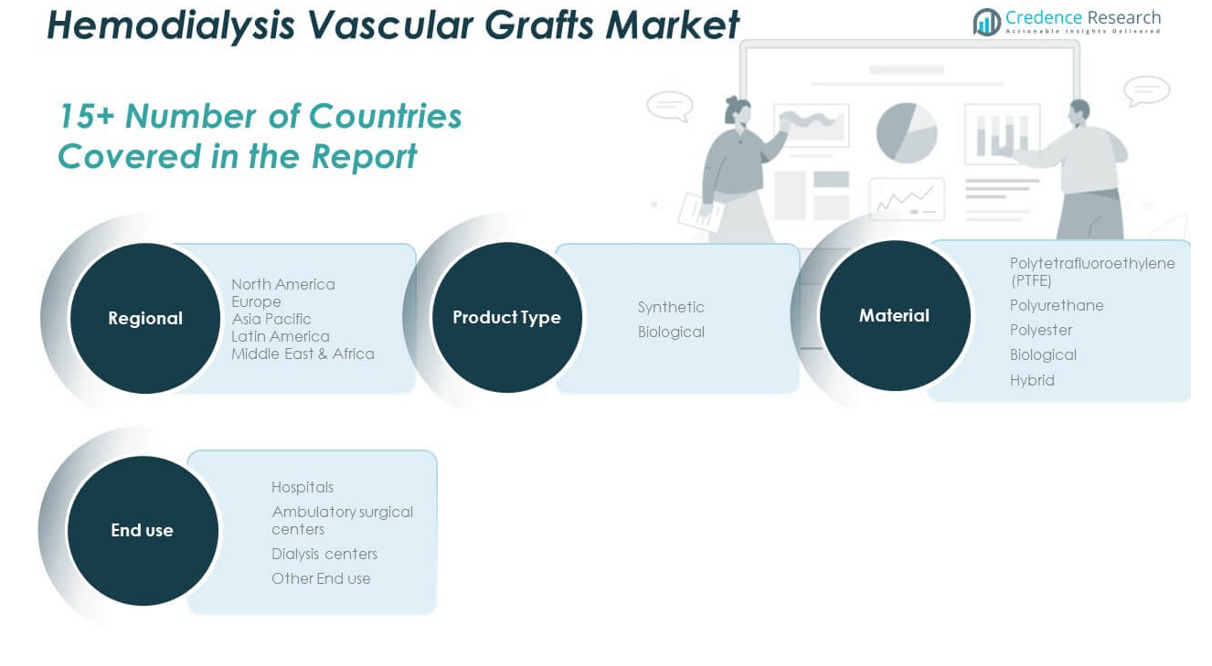
The Hemodialysis Vascular Grafts Market is segmented by product, material, and end use, reflecting varied clinical needs and material preferences across healthcare settings.
By product, synthetic grafts account for a larger market share due to their durability, ease of availability, and strong performance in long-term dialysis access. Biological grafts, while less common, are gaining interest for their improved biocompatibility and reduced thrombogenic risks in select patient populations.
- For instance, LeMaitre Vascular’s XenoSure® Biologic Patch, derived from bovine pericardium, is gaining traction for its reduced thrombogenicity and improved biocompatibilityin select patient populations.
By material, polytetrafluoroethylene (PTFE) dominates the market owing to its proven track record in reducing infection rates and maintaining long-term patency. Polyurethane and polyester grafts are also in use for their flexibility and strength, while biological and hybrid grafts represent emerging segments focused on minimizing immune response and enhancing graft integration.
By end use, hospitals lead the market due to high patient volumes and access to advanced vascular surgery. Dialysis centers form a growing segment driven by expanding ESRD populations and outpatient care models. Ambulatory surgical centers and other end users are adopting graft solutions where procedural efficiency and recovery times are critical. The market continues to evolve with a focus on performance, safety, and cost-effectiveness.
- For example, DaVita Inc. reported a year-over-year increase in outpatient vascular access procedures at its dialysis centers, driven by the growing ESRD population and a shift toward outpatient care models.
Segmentation:
By Product:
- Synthetic
- Biological
By Material:
- Polytetrafluoroethylene (PTFE)
- Polyurethane
- Polyester
- Biological
- Hybrid
By End Use:
- Hospitals
- Ambulatory Surgical Centers
- Dialysis Centers
- Other End Use
By Region:
- North America
- U.S.
- Canada
- Mexico
- Europe
- Germany
- France
- U.K.
- Italy
- Spain
- Rest of Europe
- Asia Pacific
- China
- Japan
- India
- South Korea
- South-east Asia
- Rest of Asia Pacific
- Latin America
- Brazil
- Argentina
- Rest of Latin America
- Middle East & Africa
- GCC Countries
- South Africa
- Rest of the Middle East and Africa
Regional Analysis:
North America
The North America Hemodialysis Vascular Grafts Market size was valued at USD 97.75 million in 2018 to USD 111.81 million in 2024 and is anticipated to reach USD 162.92 million by 2032, at a CAGR of 4.9% during the forecast period. North America holds the largest share of the global market, accounting for 37% of total revenue in 2024. Strong reimbursement frameworks, early adoption of advanced medical technologies, and a high prevalence of ESRD drive market dominance in this region. The United States leads due to its dense dialysis network and favorable Medicare policies that cover vascular access procedures. High healthcare expenditure and an aging population further contribute to consistent demand. The Hemodialysis Vascular Grafts Market in North America remains attractive for manufacturers due to strong clinical infrastructure and regulatory clarity. It is positioned to maintain its leadership with continuous product innovation and hospital collaborations.
Europe
The Europe Hemodialysis Vascular Grafts Market size was valued at USD 54.05 million in 2018 to USD 59.75 million in 2024 and is anticipated to reach USD 81.73 million by 2032, at a CAGR of 4.0% during the forecast period. Europe represents 20% of the global market share in 2024, supported by a growing elderly population and increasing incidence of chronic kidney conditions. Countries such as Germany, France, and the U.K. contribute significantly due to their advanced healthcare systems and patient access to long-term dialysis. Regulatory oversight across the region ensures the availability of clinically validated grafts. Government support for ESRD management and structured nephrology care pathways help sustain demand. The Hemodialysis Vascular Grafts Market in Europe benefits from innovation hubs and ongoing clinical research. It continues to attract regional manufacturers looking to expand their footprint in a quality-driven healthcare environment.
Asia Pacific
The Asia Pacific Hemodialysis Vascular Grafts Market size was valued at USD 51.29 million in 2018 to USD 62.17 million in 2024 and is anticipated to reach USD 100.95 million by 2032, at a CAGR of 6.3% during the forecast period. Asia Pacific holds 21% of the global market in 2024 and is the fastest-growing region. Rising healthcare investments and expanding dialysis infrastructure are driving demand across India, China, and Japan. Increasing awareness of CKD and early diagnosis has improved treatment access, particularly in urban areas. The Hemodialysis Vascular Grafts Market in Asia Pacific is gaining from public-private partnerships and localized manufacturing. It is supported by growing middle-class populations and favorable government initiatives aimed at increasing renal care coverage. Global companies are forming distribution alliances to capitalize on unmet clinical needs in this region.
Latin America
The Latin America Hemodialysis Vascular Grafts Market size was valued at USD 11.25 million in 2018 to USD 12.84 million in 2024 and is anticipated to reach USD 16.97 million by 2032, at a CAGR of 3.6% during the forecast period. Latin America represents 4.8% of the global market share in 2024. Brazil and Mexico are leading contributors, driven by improvements in public healthcare and ESRD awareness. Dialysis centers are expanding in urban hubs, though rural access remains limited. The Hemodialysis Vascular Grafts Market in Latin America is experiencing gradual growth, supported by international donations and health-focused non-governmental organizations. Market entry is challenged by pricing pressures and regulatory delays. It is creating opportunities for low-cost and mid-tier graft solutions suited for budget-constrained healthcare providers.
Middle East
The Middle East Hemodialysis Vascular Grafts Market size was valued at USD 8.19 million in 2018 to USD 8.82 million in 2024 and is anticipated to reach USD 11.52 million by 2032, at a CAGR of 3.4% during the forecast period. The Middle East contributes 2.9% to the global market in 2024. Rising lifestyle-related diseases such as diabetes and hypertension are increasing the CKD burden. Countries like Saudi Arabia and the UAE are investing in specialized renal care infrastructure. The Hemodialysis Vascular Grafts Market in the Middle East benefits from a growing number of private dialysis providers and government-funded programs. It remains dependent on imports, which creates opportunities for international suppliers. Demand is strongest in urban centers where healthcare access is centralized.
Africa
The Africa Hemodialysis Vascular Grafts Market size was valued at USD 7.48 million in 2018 to USD 10.45 million in 2024 and is anticipated to reach USD 13.72 million by 2032, at a CAGR of 3.2% during the forecast period. Africa holds 3.4% of the global market share in 2024, with growth driven by expanding healthcare coverage and donor-funded dialysis programs. Access to renal treatment remains limited in many countries, but urban centers are witnessing improved diagnostic and therapeutic capabilities. The Hemodialysis Vascular Grafts Market in Africa is in its early stages, with a growing focus on affordable and durable access solutions. Import dependency and logistical challenges limit availability in remote areas. It presents long-term growth potential as governments prioritize non-communicable disease management and healthcare modernization.
Key Player Analysis:
- Artivion
- Becton Dickinson and Company
- BIOVIC
- Cook Medical
- CryoLife
- Getinge
- Laminate Medical Technologies
- LeMaitre Vascular
- Merit Medical Systems
- ParaGen Technologies
- Proteon Therapeutics
- Terumo Medical
- Vascudyne
- Vascular Genesis
- L. Gore & Associates
- ConvaTec, Inc.
Competitive Analysis:
The Hemodialysis Vascular Grafts Market features a competitive landscape marked by the presence of several global and regional players focused on innovation, product quality, and market expansion. Key companies include W. L. Gore & Associates, Becton, Dickinson and Company, Medtronic plc, LeMaitre Vascular, and Getinge AB. These firms invest in research to develop grafts with improved biocompatibility, longer patency, and reduced infection risk. Strategic collaborations with dialysis centers and healthcare systems enhance their distribution networks and brand presence. The Hemodialysis Vascular Grafts Market continues to witness product launches and regulatory approvals aimed at strengthening portfolio differentiation. It remains highly competitive due to ongoing technological advancements and growing clinical demand for reliable vascular access. Companies that offer cost-effective, durable, and patient-friendly solutions are better positioned to capture emerging opportunities across both developed and developing regions.
Recent Developments:
- In June 2025, Biovica announced new financial targets following recent key partnerships, including a significant partner agreement with Tempus AI in the U.S. and another with a leading healthcare provider announced in December 2024.
- In February 2025, BD announced its intent to separate its Biosciences and Diagnostic Solutions business to enhance strategic focus and drive growth. This move is designed to unlock substantial value for shareholders and position BD as a pure-play MedTech leader, while allowing the separated business to realize its full market potential as a differentiated leader in life sciences tools and diagnostics.
Market Concentration & Characteristics:
The Hemodialysis Vascular Grafts Market exhibits moderate market concentration, with a few dominant players controlling a significant share of global revenues. It is characterized by steady demand, high clinical need, and a focus on quality and safety due to the critical nature of vascular access in ESRD treatment. Product differentiation is driven by material innovation, infection resistance, and long-term patency. Regulatory compliance and clinical validation play central roles in product success and market entry. The Hemodialysis Vascular Grafts Market features a mix of established medical device companies and specialized manufacturers, each competing through innovation, pricing, and regional expansion strategies. It continues to evolve in response to technological advances and shifting healthcare delivery models.
Report Coverage:
The research report offers an in-depth analysis based on product, material, and end use. It details leading market players, providing an overview of their business, product offerings, investments, revenue streams, and key applications. Additionally, the report includes insights into the competitive environment, SWOT analysis, current market trends, as well as the primary drivers and constraints. Furthermore, it discusses various factors that have driven market expansion in recent years. The report also explores market dynamics, regulatory scenarios, and technological advancements that are shaping the industry. It assesses the impact of external factors and global economic changes on market growth. Lastly, it provides strategic recommendations for new entrants and established companies to navigate the complexities of the market.
Future Outlook:
- Demand for vascular grafts will rise with the growing global burden of end-stage renal disease and chronic kidney conditions.
- Technological advancements will lead to the development of grafts with better patency, lower infection risk, and enhanced biocompatibility.
- Emerging markets in Asia-Pacific and Africa will offer untapped growth potential due to expanding dialysis infrastructure.
- Adoption of personalized and 3D-printed grafts will improve patient outcomes and open niche clinical applications.
- Collaborations between manufacturers and dialysis service providers will strengthen distribution and training networks.
- Regulatory support for innovative access devices will accelerate product approvals in key markets.
- Biologically engineered grafts will gain traction, offering regenerative healing capabilities and long-term functionality.
- Reimbursement frameworks will evolve to include advanced grafts, improving affordability and access.
- AI-based tools will enhance graft selection, post-operative monitoring, and complication prediction.
- Competitive dynamics will intensify, with players focusing on material innovation and global expansion.

Request a Free Sample
Fill in your details and we'll send you a free sample report.
- Sample data tables & charts
- Research methodology
Market Dynamics
Rising Incidence of CKD and ESRD
The increasing prevalence of chronic kidney disease and end-stage renal disease, driven by aging populations and higher rates of diabetes and hypertension, is expanding the patient pool requiring long-term hemodialysis and reliable vascular access solutions.
Material and Technological Advancements
Innovations in graft materials such as PTFE and polyurethane, along with anti-thrombotic coatings and minimally invasive implantation techniques, are improving graft durability, biocompatibility, and infection resistance, making vascular grafts more effective and attractive to clinicians.
Expansion of Dialysis Infrastructure in Emerging Markets
Countries like China, India, and Brazil are investing in new dialysis centers and expanding insurance coverage, increasing access to hemodialysis and driving demand for vascular grafts in previously underserved regions.
Favorable Reimbursement and Government Support
Supportive reimbursement policies and government initiatives, especially in North America and Europe, are reducing financial barriers for patients and encouraging the adoption of advanced vascular grafts for hemodialysis.
Shift Toward Outpatient and Ambulatory Care Models
The growing trend of outpatient vascular access procedures and the expansion of dialysis centers are increasing the utilization of vascular grafts, as these settings prioritize procedural efficiency and rapid patient recovery.
Need a Custom Version of This Report?
Tailor the scope, geography, or segments to your exact requirements.
- Custom geography or segment scope
- Direct access to our analyst team
Frequently Asked Questions
What is the current size of the Hemodialysis Vascular Grafts Market?
What are the key segments within the Hemodialysis Vascular Grafts Market?
What are some challenges faced by the Hemodialysis Vascular Grafts Market?
Who are the major players in the Hemodialysis Vascular Grafts Market?
Table of Content
Chapter 1 Market Segmentation
- 1.1 Segmentation Framework
- 1.1.1 Product and Service Classification
- 1.1.2 Application and End-Use Classification
- 1.1.3 Technology and Solution Classification
- 1.1.4 Customer and Distribution Channel Classification
- 1.1.5 Geographic Segmentation
- 1.1.6 Market Segment Definitions and Boundaries
- 1.2 By End Use
- 1.2.1 Hospitals
- 1.2.2 Ambulatory Surgical Centers
- 1.2.3 Dialysis Centers
- 1.2.4 Other End Use
- 1.3 By Product
- 1.3.1 Synthetic
- 1.3.2 Biological
- 1.4 By Material
- 1.4.1 Polytetrafluoroethylene (PTFE)
- 1.4.2 Polyurethane
- 1.4.3 Polyester
- 1.4.4 Biological
- 1.4.5 Hybrid
Chapter 2 Introduction
- 2.1 Report Objectives and Scope
- 2.2 Product Definition and Industry Terminology
- 2.3 Market Inclusions and Exclusions
- 2.4 Research Process
- 2.4.1 Primary Research and Expert Interviews
- 2.4.2 Secondary Research and Source Review
- 2.4.3 Top-Down and Bottom-Up Estimation
- 2.4.4 Data Triangulation and Verification
- 2.5 Market Size Measurement Basis
- 2.5.1 2024: USD 265.84 million → 2032: USD 387.81 million
- 2.6 Historical and Forecast Reference Periods
- 2.6.1 Base Year: 2024
- 2.6.2 Forecast Period: 2024-2032
- 2.7 Research Assumptions and Limitations
Chapter 3 Executive Summary
- 3.1 Market Snapshot and Key Findings
- 3.2 Base-Year Market Size, 2024
- 3.3 Forecast Market Size, 2032
- 3.4 Revenue and Volume Growth Outlook
- 3.5 Key Demand and Supply Indicators
- 3.6 Leading Market Segments
- 3.7 Fastest-Growing Market Opportunities
- 3.8 Regional Performance Highlights
- 3.9 Technology and Industry Transformation
- 3.10 Competitive Landscape Summary
- 3.11 Analyst View and Strategic Implications
Chapter 4 Global Hemodialysis Vascular Grafts Market Trends and Developments
- 4.1 Historical Industry Development
- 4.2 Recent Market Trends and Developments
- 4.3 Demand and Customer Behavior Trends
- 4.4 Technology and Product Innovation
- 4.5 Artificial Intelligence, Automation and Digitalization
- 4.6 Local Manufacturing and Supply Chain Realignment
- 4.7 Industry Partnerships, Mergers and Acquisitions
- 4.8 Sustainability and Circular Economy Developments
- 4.9 Government and Private Sector Investment Trends
- 4.10 Emerging Business Models and Commercialization
- 4.11 Industry Developments and Announcements
Chapter 5 Global Hemodialysis Vascular Grafts Market Production, Supply and Demand Analysis
- 5.1 Demand Trend and Consumption Analysis
- 5.2 Demand Forecast, 2024-2032
- 5.3 Production and Output Trend
- 5.4 Production and Output Forecast, 2024-2032
- 5.5 Installed Capacity and Capacity Utilization
- 5.6 Company-Wise Production Plants and Statistics
- 5.6.1 Installed Production Capacity
- 5.6.2 Actual Production
- 5.6.3 Planned Capacity and Expansion Targets
- 5.7 Supply Chain Structure and Procurement Trends
- 5.8 Supply-Demand Gap and Bottlenecks
- 5.9 Import Dependence and Sourcing Structure
- 5.10 Contract Manufacturing and Outsourcing
- 5.11 Regional Supply and Demand Concentration
Chapter 6 Global Hemodialysis Vascular Grafts Market Pricing Analysis
- 6.1 Pricing Structure and Measurement
- 6.2 Historical Pricing Trends
- 6.3 Pricing Outlook, 2024-2032
- 6.4 Average Selling Price and Unit Economics
- 6.5 Pricing by Product and Market Segment
- 6.6 Geographic Pricing Differences
- 6.7 Key Input, Energy, Labor and Logistics Costs
- 6.8 Contract Pricing and Purchasing Models
- 6.9 Pricing Sensitivity and Competitive Positioning
- 6.10 Price, Margin and Profitability Implications
Chapter 7 Global Hemodialysis Vascular Grafts Market Dynamics
- 7.1 Market Growth Drivers
- 7.1.1 Demand-Side Drivers
- 7.1.2 Technology and Innovation Drivers
- 7.1.3 Infrastructure and Investment Drivers
- 7.1.4 Regulatory and Policy Drivers
- 7.2 Market Restraints
- 7.2.1 Cost and Affordability Constraints
- 7.2.2 Technology and Adoption Barriers
- 7.2.3 Supply Chain and Operational Constraints
- 7.3 Market Challenges
- 7.3.1 Competitive Pressure and Margin Erosion
- 7.3.2 Skills, Infrastructure and Implementation Gaps
- 7.4 Emerging Market Opportunities
- 7.5 Market Dynamics Impact and Time-Horizon Assessment
Chapter 8 Global Hemodialysis Vascular Grafts Value Chain Analysis
- 8.1 Industry Value Chain Overview
- 8.2 Upstream Suppliers and Critical Inputs
- 8.3 Technology and Component Providers
- 8.4 Manufacturing or Service Delivery
- 8.5 Distribution, Channel Partners and Integrators
- 8.6 Downstream Applications and End Users
- 8.7 Value Addition and Profit Pools
- 8.8 Vertical Integration and Outsourcing
- 8.9 Supplier Concentration and Risk
- 8.10 Supply Chain Localization and Resilience
Chapter 9 Global Hemodialysis Vascular Grafts Market Regulations and Policies
- 9.1 Relevant Laws, Standards and Compliance Frameworks
- 9.2 Product, Service, Safety and Quality Requirements
- 9.3 Government Policies, Incentives and Subsidies
- 9.4 Imports, Exports and Trade Barriers
- 9.5 Public Procurement and Local Content Requirements
- 9.6 Environmental and Sustainability Compliance
- 9.7 Upcoming Policy Changes and Market Implications
Chapter 10 Global Hemodialysis Vascular Grafts Market Hotspots and Opportunities
- 10.1 Market Opportunity Mapping and Growth Hotspots
- 10.2 High-Growth Applications and Customer Groups
- 10.3 Underserved Markets and White-Space Opportunities
- 10.4 Emerging Technology and Product Opportunities
- 10.5 New Capacity and Investment Hotspots
- 10.6 Market Entry and Expansion Opportunities
- 10.7 Distribution and Partnership Opportunities
- 10.8 Near-Term and Long-Term Commercial Potential
- 10.9 Opportunity Attractiveness and Execution Risks
Chapter 11 Global Hemodialysis Vascular Grafts Market Outlook, 2024-2032
- 11.1 Market Size and Analysis
- 11.1.1 Revenue (Market Measurement: 2024: USD 265.84 million → 2032: USD 387.81 million)
- 11.1.2 Market Volume and Quantity Sold
- 11.1.3 Historical Market Size
- 11.1.4 Base-Year Market Size, 2024
- 11.2 Market Forecast, 2024-2032
- 11.2.1 Revenue Forecast to 2032
- 11.2.2 Volume Forecast to 2032
- 11.2.3 CAGR and Year-on-Year Growth
- 11.2.4 Incremental Revenue Opportunity
- 11.3 Forecast Assumptions and Scenario Analysis
- 11.3.1 Base-Case Forecast
- 11.3.2 Optimistic and Conservative Scenarios
- 11.3.3 Technology, Pricing and Policy Sensitivities
- 11.4 Market Attractiveness and Growth Outlook
Chapter 12 Global Hemodialysis Vascular Grafts Market Segmentation and Outlook
- 12.1 Segmentation Summary and Market Shares, 2024
- 12.2 Largest and Fastest-Growing Segments
- 12.3 By End Use - Market Size and Forecast, 2024-2032
- 12.3.1 Segment Definition and Scope
- 12.3.2 Historical Market Size
- 12.3.3 Revenue Forecast, 2024-2032
- 12.3.4 Volume Forecast, 2024-2032
- 12.3.5 Base-Year Market Share, 2024
- 12.3.6 Segment CAGR and Growth Drivers
- 12.3.7 Subsegment Market Size and Forecast
- 12.3.7.1 Hospitals
- 12.3.7.2 Ambulatory Surgical Centers
- 12.3.7.3 Dialysis Centers
- 12.3.7.4 Other End Use
- 12.3.8 Subsegment Pricing and Adoption Trends
- 12.3.9 Leading Suppliers and Competition
- 12.3.10 Regional Demand and Opportunities
- 12.4 By Product - Market Size and Forecast, 2024-2032
- 12.4.1 Segment Definition and Scope
- 12.4.2 Historical Market Size
- 12.4.3 Revenue Forecast, 2024-2032
- 12.4.4 Volume Forecast, 2024-2032
- 12.4.5 Base-Year Market Share, 2024
- 12.4.6 Segment CAGR and Growth Drivers
- 12.4.7 Subsegment Market Size and Forecast
- 12.4.7.1 Synthetic
- 12.4.7.2 Biological
- 12.4.8 Subsegment Pricing and Adoption Trends
- 12.4.9 Leading Suppliers and Competition
- 12.4.10 Regional Demand and Opportunities
- 12.5 By Material - Market Size and Forecast, 2024-2032
- 12.5.1 Segment Definition and Scope
- 12.5.2 Historical Market Size
- 12.5.3 Revenue Forecast, 2024-2032
- 12.5.4 Volume Forecast, 2024-2032
- 12.5.5 Base-Year Market Share, 2024
- 12.5.6 Segment CAGR and Growth Drivers
- 12.5.7 Subsegment Market Size and Forecast
- 12.5.7.1 Polytetrafluoroethylene (PTFE)
- 12.5.7.2 Polyurethane
- 12.5.7.3 Polyester
- 12.5.7.4 Biological
- 12.5.7.5 Hybrid
- 12.5.8 Subsegment Pricing and Adoption Trends
- 12.5.9 Leading Suppliers and Competition
- 12.5.10 Regional Demand and Opportunities
- 12.6 Segment Growth Comparison
- 12.7 Segment Attractiveness and Priority Matrix
Chapter 13 Global Hemodialysis Vascular Grafts End-Use and Application Market Outlook
- 13.1 End-Use Industry and Customer Demand Structure
- 13.2 Leading Applications and Customer Groups
- 13.3 End-Use Market Size, Share and Forecast
- 13.4 Major End-Use Industry Deep Dives
- 13.4.1 Customer Requirements and Use Cases
- 13.4.2 Demand and Replacement Cycles
- 13.4.3 Technical and Regulatory Considerations
- 13.4.4 Purchasing and Procurement Models
- 13.4.5 Leading Vendors and Distribution Channels
- 13.4.6 Forecast and Commercial Opportunities
- 13.5 Emerging Applications and Cross-Segment Demand
- 13.6 End-Use Industry Investment Priorities
Chapter 14 Global Hemodialysis Vascular Grafts Geographic Market Outlook, 2024-2032
- 14.1 Regional Market Size and Share, 2024
- 14.2 Regional Market Forecast, 2024-2032
- 14.3 Regional Pricing, Production and Demand Differences
- 14.4 North America
- 14.4.1 United States
- 14.4.2 Canada
- 14.4.3 Mexico
- 14.5 Europe
- 14.5.1 Germany
- 14.5.2 France
- 14.5.3 Italy
- 14.5.4 United Kingdom
- 14.5.5 Spain
- 14.5.6 Poland
- 14.5.7 Russia
- 14.5.8 Netherlands
- 14.5.9 Belgium
- 14.5.10 Sweden
- 14.5.11 Denmark
- 14.5.12 Norway
- 14.5.13 Rest of Europe
- 14.6 Asia Pacific
- 14.6.1 China
- 14.6.2 India
- 14.6.3 Japan
- 14.6.4 South Korea
- 14.6.5 Thailand
- 14.6.6 Indonesia
- 14.6.7 Vietnam
- 14.6.8 Malaysia
- 14.6.9 Australia
- 14.6.10 Rest of Asia Pacific
- 14.7 Latin America
- 14.7.1 Brazil
- 14.7.2 Argentina
- 14.7.3 Colombia
- 14.7.4 Chile
- 14.7.5 Rest of Latin America
- 14.8 Middle East
- 14.8.1 Saudi Arabia
- 14.8.2 United Arab Emirates
- 14.8.3 Turkey
- 14.8.4 Israel
- 14.8.5 Iran
- 14.8.6 Rest of the Middle East
- 14.9 Africa
- 14.9.1 South Africa
- 14.9.2 Egypt
- 14.9.3 Nigeria
- 14.9.4 Morocco
- 14.9.5 Rest of Africa
- 14.10 Regional Investment, Policy and Supply Chain Differences
- 14.11 Regional Competitive Landscape
- 14.12 Geographic Growth Hotspots
Chapter 15 Global Hemodialysis Vascular Grafts Technology, Innovation and Sustainability Outlook
- 15.1 Technology Landscape and Maturity
- 15.2 Product, Process and Service Innovation
- 15.3 AI, Automation and Digital Tools in the Industry
- 15.4 Technology Adoption and Performance Benchmarking
- 15.5 Innovation Pipeline and R&D Investment
- 15.6 Patent and Intellectual Property Trends
- 15.7 Energy Efficiency and Resource Management
- 15.8 Sustainability, Recycling and Circularity
- 15.9 Technology Roadmap, 2024-2032
- 15.10 Risks of Obsolescence and Technology Substitution
Chapter 16 Global Hemodialysis Vascular Grafts Market Key Strategic Imperatives
- 16.1 Growth and Market Entry Priorities
- 16.2 High-Return Products and Segments
- 16.3 Pricing, Profitability and Cost Optimization
- 16.4 Technology Investment and Product Differentiation
- 16.5 Supply Chain Localization and Resilience
- 16.6 Distribution and Customer Acquisition
- 16.7 Partnership, Acquisition and Capacity Strategy
- 16.8 Regional Expansion Priorities
- 16.9 Short-, Medium- and Long-Term Actions
Chapter 17 Competition Outlook
- 17.1 Industry Competition Characteristics
- 17.2 Market Structure and Concentration
- 17.3 Market Share and Competitive Positioning, 2024
- 17.4 Company-Wise Revenue and Product Benchmarking
- 17.5 Production and Service Capacity Benchmarking
- 17.6 Technology, Pricing and Differentiation
- 17.7 Regional Footprint and Distribution Strength
- 17.8 Mergers, Acquisitions and Strategic Alliances
- 17.9 New Entrants and Competitive Threats
- 17.10 Porter's Five Forces and Industry Attractiveness
- 17.11 Competitive Outlook, 2024-2032
Chapter 18 Company Profiles
- 18.1 Company Coverage and Selection Criteria
- 18.2 W. L. Gore & Associates
- 18.2.1 Business Description
- 18.2.2 Company Ownership and Geographic Presence
- 18.2.3 Product and Service Portfolio
- 18.2.4 Manufacturing and Operating Footprint
- 18.2.5 Production Capacity and Expansion Plans
- 18.2.6 Financial Performance and Investment
- 18.2.7 Market Share and Competitive Position
- 18.2.8 Technology and Innovation Capabilities
- 18.2.9 Strategic Alliances or Partnerships
- 18.2.10 Recent Developments
- 18.2.11 Growth Strategy and Outlook
- 18.3 Becton, Dickinson and Company
- 18.4 LeMaitre Vascular
- 18.5 Getinge AB
- 18.6 Medtronic plc
- 18.7 Terumo Medical
- 18.8 CryoLife
- 18.9 Cook Medical
- 18.10 Fresenius Medical Care
- 18.11 Humacyte, Inc.
- 18.12 Other Relevant Market Participants
Note: Every listed company is profiled on the structure shown under the first company. The company list is preliminary and may change based on research findings, market developments, data availability and client requirements.
Chapter 19 Disclaimer
- 19.1 Research and Forecast Disclaimer
- 19.2 Data Source and Estimation Limitations
Note: The depth of individual sections depends on data availability for this market. Volume, capacity, trade and other unit-based metrics are included where applicable.

